|
Special Session A & B
The Florida Legislature was slated to meet last week for interim committee meetings, however extreme weather in Tallahassee led to the cancellation of these meetings.
This week, the Florida Legislature convened for two special sessions, designated as Special Session A and Special Session B, primarily focusing on immigration policy.
Special Session A: Initiated by Governor Ron DeSantis (R), this session was called to advance his proposed immigration measures, intended to support President Trump’s agenda. Other issues included in the call were providing aid to hurricane victims, revisiting condominium inspection and assessment requirements, and reforming Florida’s citizen ballot initiative process. However, legislative leaders gaveled in and then swiftly adjourned, opting to convene their own session to address immigration issues after calling the Governor's special session "premature" and expressing frustration with the lack of communication from the Governor’s Office regarding the proposals.
Special Session B: In this self-convened session called by the Senate President Ben Albritton (R-Wauchula) and Speaker of the House Danny Perez (R-Miami), the Legislature introduced and passed SB 2B, the "Tackling and Reforming Unlawful Migration Policy Act" (TRUMP Act), allocating $500 million to support federal immigration enforcement. The bill was drafted in consultation with the White House and mandates cooperation between state and local entities with federal immigration authorities, includes civil fines for officials that do not comply, repeals in-state tuition for undocumented students, and imposes stricter penalties for crimes committed by undocumented individuals.
Notably, the bill assigns immigration enforcement responsibilities to the Agriculture Commissioner rather than with the Executive Office of the Governor. The immigration legislation proposed by the Legislature highlighted the complexities of immigration policy within the state's agriculture industry, which depends heavily on immigrant labor. While DeSantis aimed to expand state immigration enforcement and align with federal deportation efforts, lawmakers found many of his proposals “overly bureaucratic”. House Speaker Danny Perez noted that DeSantis’ approach risked duplicating federal immigration enforcement and interfering with local law enforcement operations.
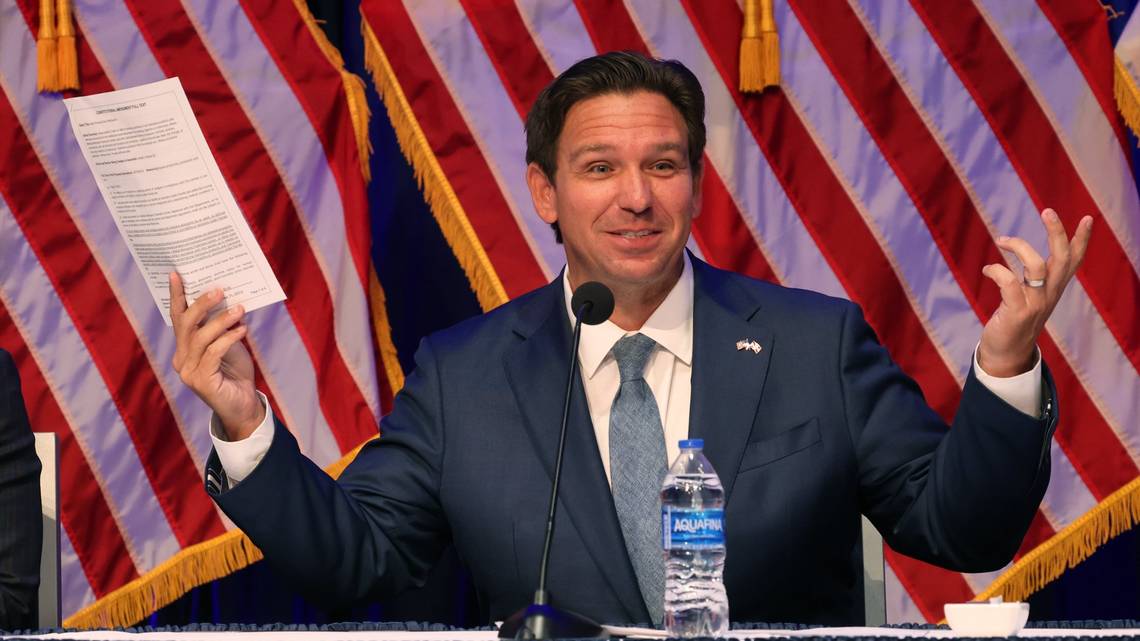
Governor DeSantis lambasted the legislative plan in a telephonic town hall Monday evening, on conservative radio and television programs, and on social media saying it was “weak” and a “watered down” version of what he was offering and asserting that his proposal was based on a wish list gleaned from President Trump’s advisors.
Florida lawmakers also took the rare step during this special session of overriding Governor Ron DeSantis’ line-item veto in the FY 2024-25 budget, restoring $28.3 million for Senate support services and $28.4 million for House support services. Lawmakers stated this funding was critical for the legislature’s operations and funds various staff positions essential to the policymaking process. This marks the first time the Legislature has defied the Governor’s wishes during his two terms. The Governor had vetoed the funding last year as part of nearly $1 billion in budget cuts, due to concerns over language that required the Office of Economic and Demographic Research to conduct a study and present policy options on the effect of interchange fees charged by credit card companies on sales taxes collected by retailers.
Senate President Ben Albritton emphasized the importance of maintaining a balance of power, while House Speaker Danny Perez suggested the veto either misunderstood the funding’s significance or was an attempt to undermine legislative independence. The override passed with bipartisan support—111-0 in the House and 35-1 in the Senate, with only Sen. Blaise Ingoglia (R-Spring Hill), a close DeSantis ally, voting against it. Some legislators hinted that more veto overrides could follow if support continues to build.
|