|
Dear Parishioners,
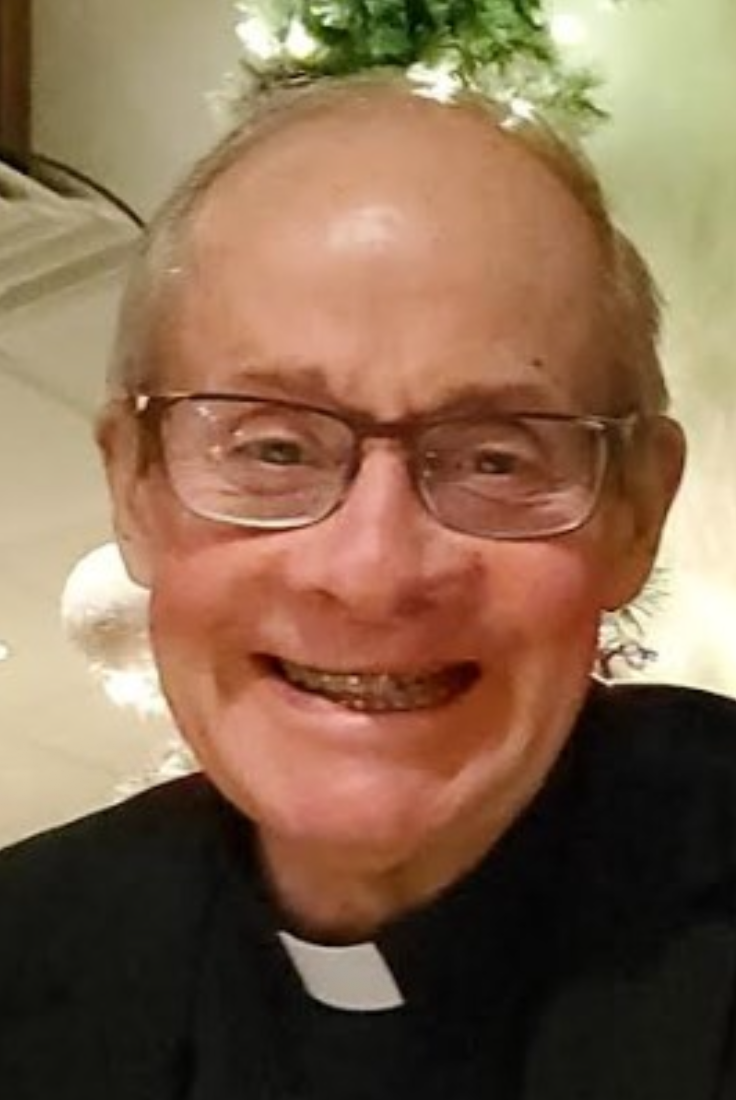
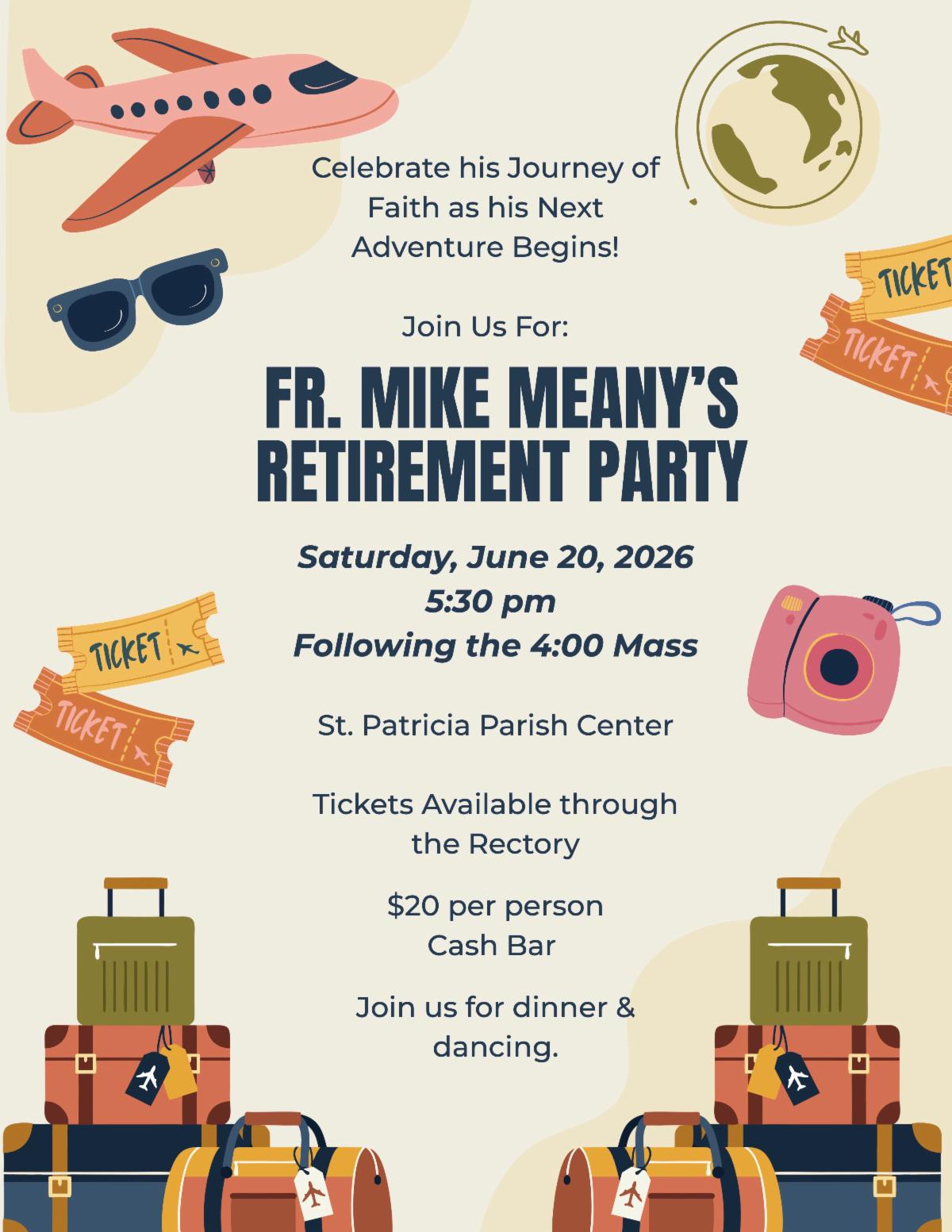
As you can imagine, I have been busy packing my things and reducing the number of books in my personal library as I prepare to move to Holy Name Cathedral (“HNC”), where I will have a very small two room associate pastor suite—like what Fr. Chris now enjoys! This will be my last weekend at St. Patricia. I need to take a break before I start at HNC July 1st.
One book I will not let go of is a scriptural reflection on St. Paul’s letters by Jerome Murphy-O’Connor, OP entitled, “Becoming Human Together, The Pastoral Anthology of St. Paul.” In the inside front cover, I wrote that I received it when taking classes for my Masters in Applied Spirituality at the University of San Francisco in July of 1987. Fr. Murphy-O’Connor taught the class and used his own book. Incidentally, I met him several ensuing years both at the famous Ecole Biblique in Jerusalem where he was a Professor of New Testament when my brother Fr. John, OP lived there for three years. I also took his class at the Catholic Theological Union, in Chicago and had dinner with him and was at a lecture that he gave at a parish in Chicago’s north suburbs. So, I have a personal connection to him and his writings.
I have found that St. Paul’s letters animated my pastoral style and Fr. Murphy-O’Connor helped make them come alive in my imagination. He writes in the forward of this book, “Despite the prevailing mood of pessimism, people always crowd to the window of promise. They continue to dream of better things, because only such withdrawal from reality makes life bearable.” His oversized Irish personality made him a dynamic professor that kept your attention, which also drew me to his perspective on St. Paul, Christ and the world. And yes, like some other Irish folks I know, sometimes he was too much! He has now has returned to the Lord. May He Rest in Peace.
My thoughts are from his book and from my years reflecting on St. Paul’s letters. I write this as a farewell letter to you who have been loyal parishioners, trusted colleagues and, yes, my friends.
St. Paul wrote his letter to a particular community; and, therefore, his writings are practical and are dealing with situations that he was fully aware of. He is not writing a thesis in the abstract, but is trying to be a cheerleader while also being a problem solver. He did not need Christ’s gospel to be aware that human situation was distorted and twisted. This awareness was communicated to him by two cultures with which he came in contact, and by the conditions in the port cities in which he worked. His first-hand experiences told him that they were hardly conducive to a favorable view of human nature. Therefore, his conviction that humanity had fallen had nothing to do with Christ. However, his belief in the humanity of Christ helped him to understand the conditions and factors that contributed to this state of affairs and more importantly a way out.
Thus, St. Paul was very aware of the stresses and strains of a fallen human existence. He writes that on one hand we have the desire for authenticity, to be what God intended us to be, that is to be directed towards “life.” This instinct, however, is overridden by a stronger orientation which leads to a “doing things that lead to ‘death.’” “I do not do the good I want, but the evil that I do not want is what I do. Now, if I do what I do not want, it is no longer I who do it but Sin which dwells within me.” (Rom 7:19-20.) St. Paul zeros in on the fact that humanity loses its true identity despite all the striving. He believed that humanity has the sensation of being no longer in control of its own destiny.
In our time, Pope Leo XIV in his new encyclical on AI: “Magnifica Humanitas: On the Protection of the Human Person in the Age of Artificial Intelligence” offers a decisively important vision for our human future, not only for people of faith but for all people of good will. Like St. Paul who always starts his letters in a hopeful tone, Pope Leo XIV recognizes the promises of humanity and the better life that we can enjoy through AI; but, again, like St. Paul, he warns of the possibility of the downward spiral for the human family. Everything depends on our response and the path forward that we pursue together. I encourage you to read the encyclical.
We can learn a lot from St. Paul’s letters as we face a new moment in history. He accurately sensed the malaise affecting humanity which is relevant for our day. The nameless anxiety that permeates our world is rooted in the hopeless feeling that things have gone too far to ever be brought back under control. There is no need to list the behaviors that have risen as a result of this frustrated restlessness.
My friends, we need to understand our situation in order to get out of it and St. Paul helps us to get a handle on the human condition. St. Paul believes we cannot blame anyone but ourselves for our moral collapse which leads him to believe that we can also bring about transformation of ourselves and the world. Christ, in all His humanity shows us a better way and like a good friend Jesus gives us the strength and vision to find this path to greater integrity. Remember, He calls us “friends.” Christ broke the bonds of sin which bound humanity. Christ’s death brought “life” where there had been only “death.” We have a new understanding of our situation, “It is no longer I who live, but Christ lives in me, and the life I now live in the flesh I live by faith.”
Returning back to AI: We all see the news that clearly makes us aware of how fragile human dignity is and how often it is violated. Those who have power - in any of its forms - can build up or alternatively tear down human dignity. AI is a form of power. It can be exercised in a constructive way, especially when people are in respectful dialogue that recognizes the inherent goodness of a human being like St. Paul did. When individuals willfully exercise that power, for example for their profit, that damages human dignity by marginalizing, excluding and even domination of others. Obviously, the stakes are high.
Friends, the tensions between the powerful and the weak that were present in St. Paul’s day are still there today, but it is not hopeless - we have a path out. This grace we receive at Confirmation, we now have an “Advocate” — “The Spirit of Truth.” “Come Holy Spirit, renew the face of the earth.”
THANK YOU FOR ALL YOUR LOVE AND SUPPORT! FAREWELL!!
→ Fr. Mike Meany
|