|
Dear Sisters & Brothers of Saint Patricia!
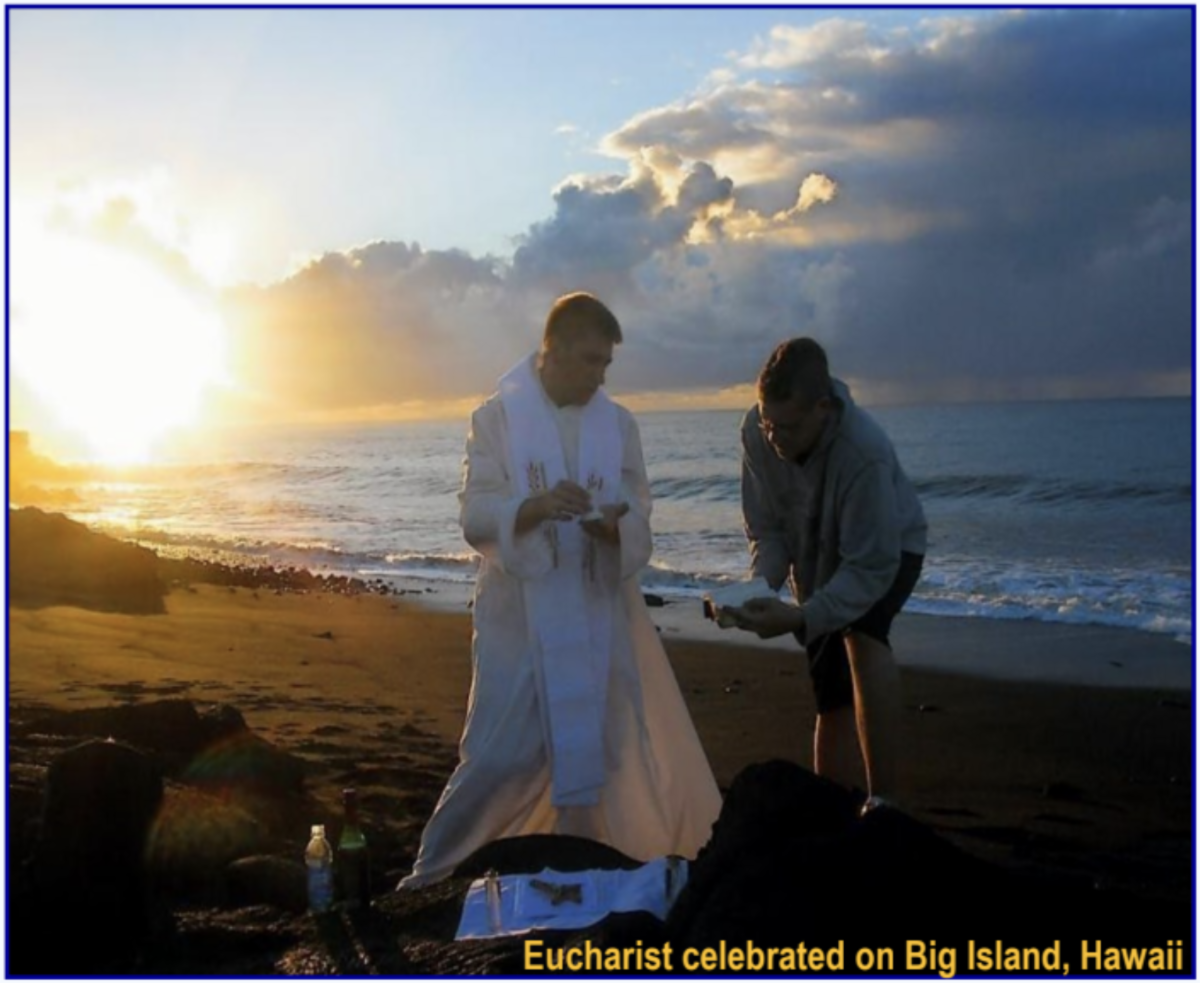
The feeding of the five thousand by Jesus has long been understood in Christian tradition as a major foreshadowing of the Eucharist, the sacrament in which bread and wine become the Body and Blood of Christ.
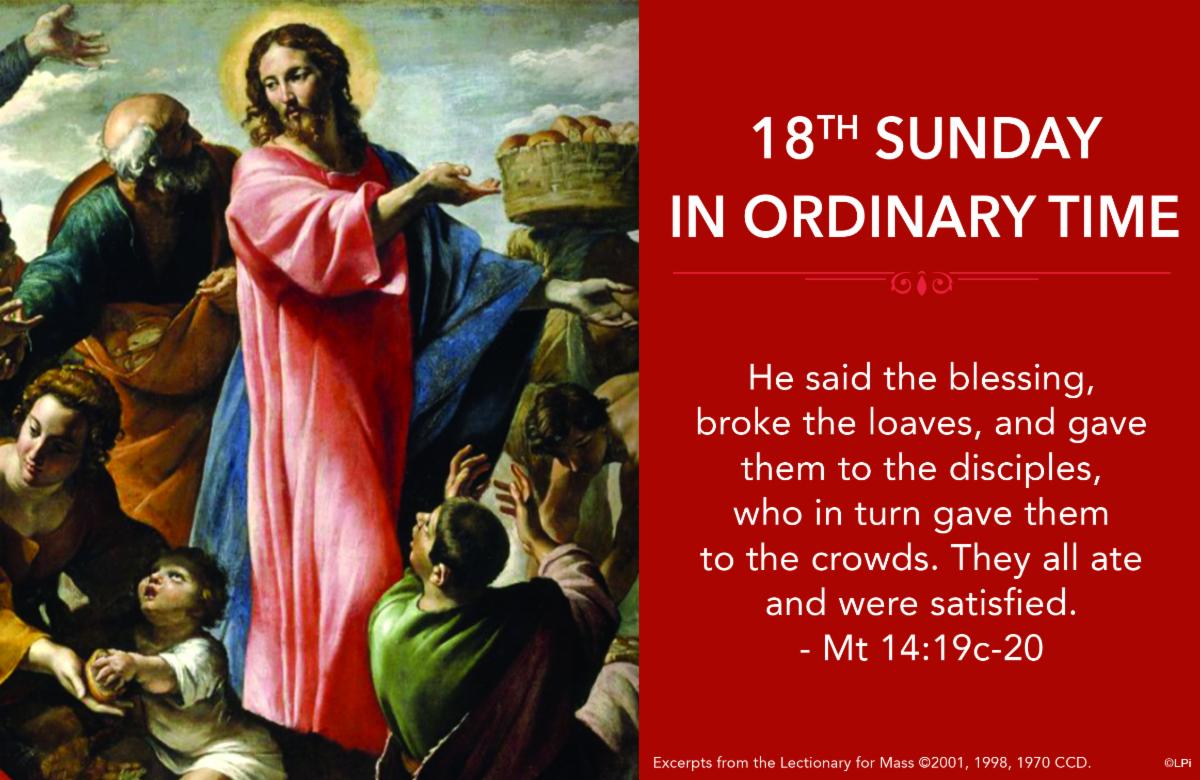
The feeding of the five thousand is the only miracle of Jesus that is recounted in all four books of Gospel.
In all four Gospel accounts of the feeding, Jesus performs a sequence of actions that closely parallel the words of the institution at the Last Supper:
- He takes the bread
- He gives thanks
- He breaks it
- He gives it to the disciples to distribute
These are the same four verbs that appear in the accounts of the Last Supper. Early Christians immediately recognized the verbal and structural parallel.
From the second century onward, Church Fathers explicitly connected the two events:
-
Cyril of Alexandria, Augustine, Ambrose, and others treated the multiplication as a visible sign of the invisible reality of the Eucharist.
- The miracle demonstrated Christ’s power to transform ordinary bread into something that nourishes far beyond its natural capacity—an image of what happens in the consecration.
The Feeding of the Five Thousand is not treated merely as a spectacular miracle of provision. Across the Christian tradition, it is read as a deliberate preview of the Eucharist: Christ takes what is small and ordinary, gives thanks, breaks it, and distributes it so that a multitude is satisfied—and there is still more left over. The physical feeding of bodies anticipates the sacramental feeding of souls.
May God bless you!
Father Andrew
Pastor
|