Март 2026., година 6., бр. 83 | March 2026, Volume 6, Issue 83 | |
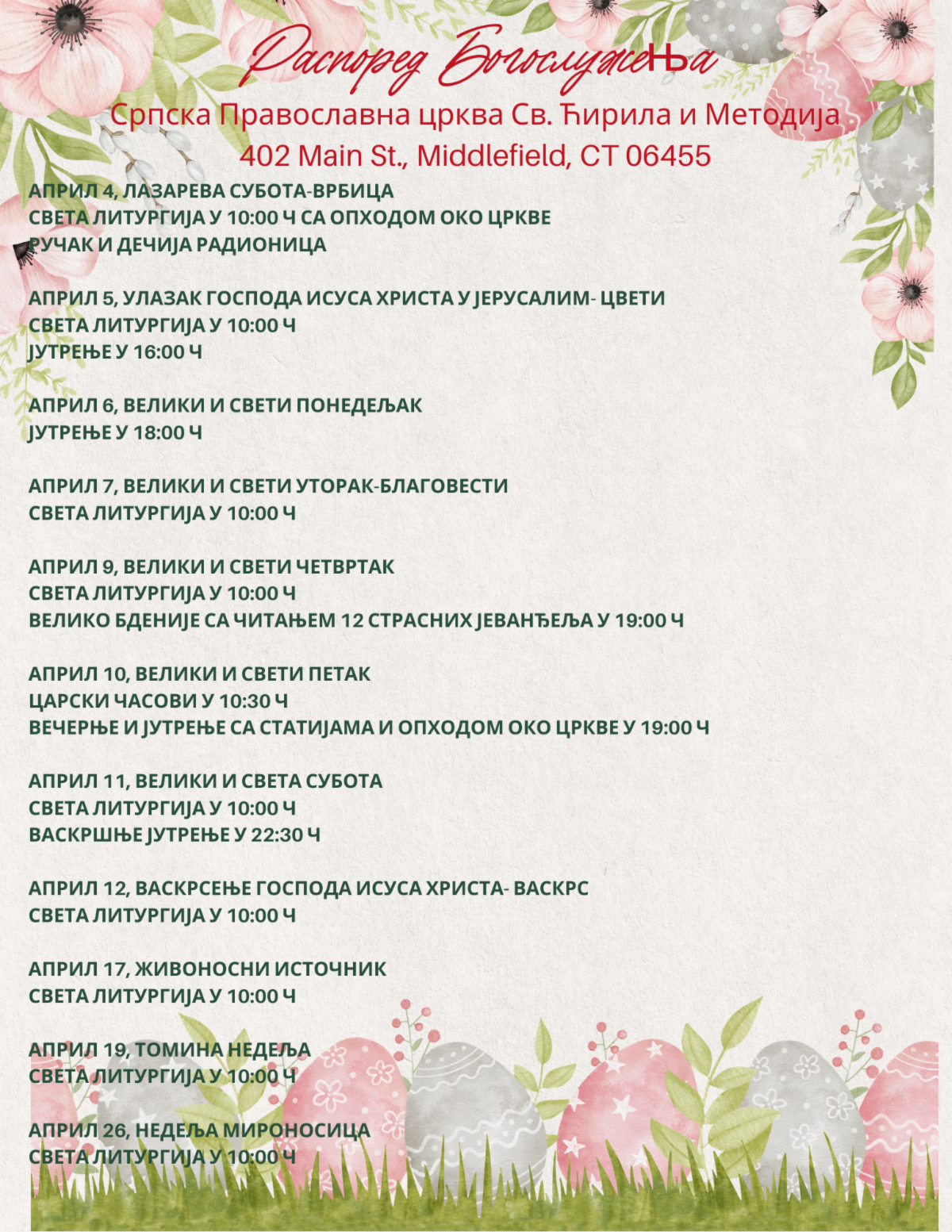
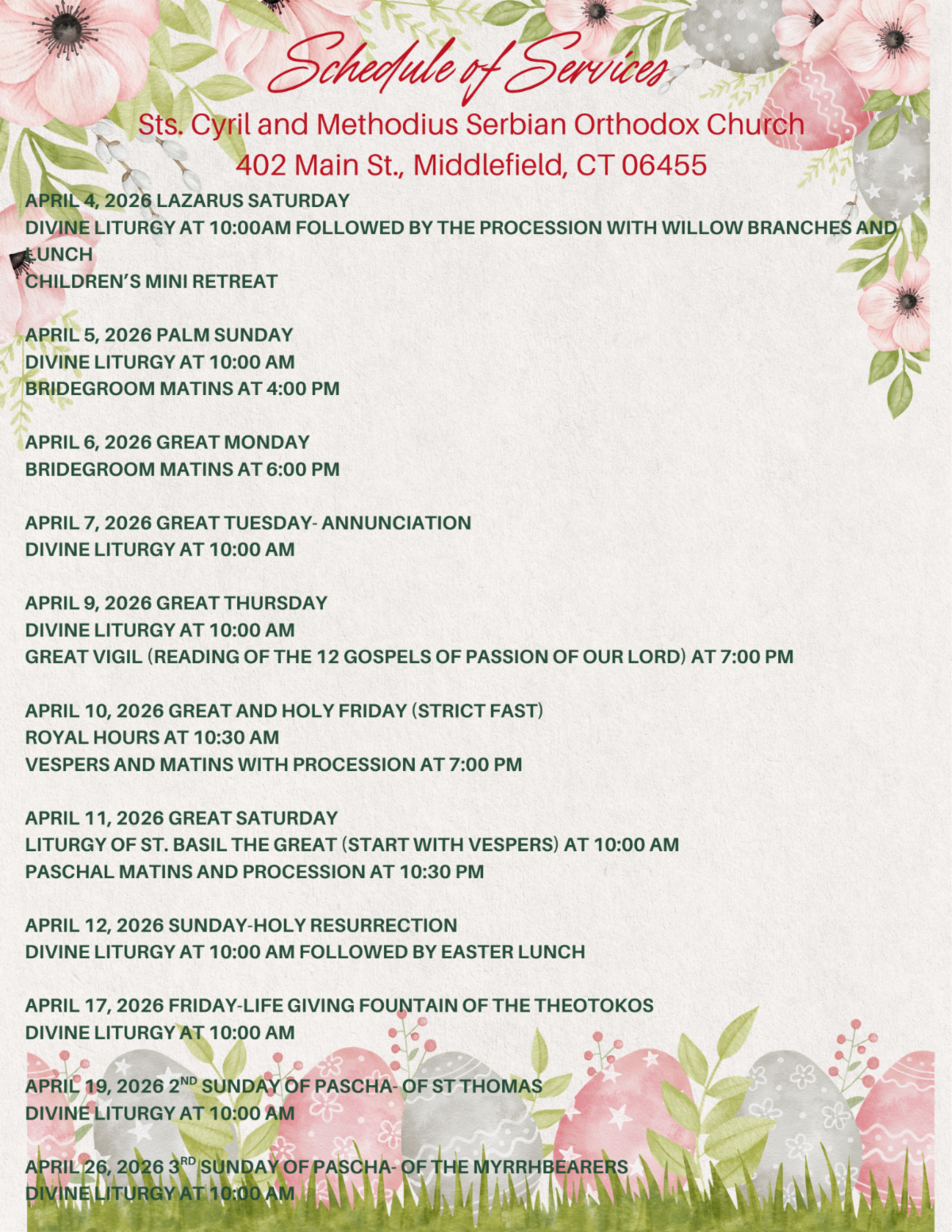
- 27.март - Друго Бденије - 18 ч
- 29.март - Литургија у 10 ч
402 Main St., Middlefield, CT 06455
| | | Пета Недеља Свете Четрдесетнице |
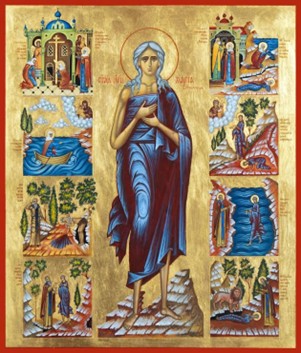
| |  | Пета недеља Свете и Велике Четрдесетнице посвећена је великој дивној подвижници и угодници Божјој, преподобној и богоносној матери нашој Марији Египћанки. Ово пету недељу Великог поста красе прекрасне богослужбене особености које су садржане у такозваном Првом и Другом бденију. Спомен преподоне Марије Египћанке у пету недељу потиче из 12. века. Житије преподобне Марије Египћанке приписује се јерусалимском патријарху Софронију, а то нам сведочи и преподобни Јован Дамаскин. Свети Андреј Критски, кога је патријарх јерусалимски Теодор послао на Трулски, VI Васељенски сабор (680-681), донео је Житије преподобне Марије заједно са својим Великим покајним каноном. Читање канона светог Андреја и Житија свете Марије Египатске на јутрењу у четвртак пете седмице установљено је управо на VI Васељенском Сабору. Из житија преподобне исијава њено покајање, остављање грешног и трулежног живота и њено одевање у одежду усрдног подвига у пустињи. Из светог живота ове угоднице произилазе две крајности: дубина греховног живота, али и висина покајања и подвижничког живота. Са друге стране из њеног светог живота бивамо поучени да не постоји грех који је јачи од човека јер Господ по својој неизмерној љубави прихвата све који му са вером и љубављу у покајању прилазе.
| | | |
Синаксар (грч. συναξάριον) је у православном богослужењу кратка повест, житије светитеља или прича о догађају који се прославља тог дана. Чита се на јутрењу, обично након шесте песме канона, а служи да поучи вернике о значају празника
. Поред житија, често садржи и стихове посвећене светитељу или догађају.
Наглашава истину о празнику и поучава вернике, посебно током великих дана као што је Велика седмица. У буквалном преводу, реч синаксар означава "скупштина" или "сабрање"
Акатист је похвала (панагерик) Богомајци, састављен од 24 песме – 12 кондака и 12 икоса, распоређених саобразно двадесет четирма словима Грчког алфавита.
Међу онима који се најчешће помињу као могући аутори Акатиста су Роман Мелод (VI век), Сергије I Цариградски (VII век), Форије I Цариградски (IX век), као и други.
Свака песма почиње одговарајућим јој по редоследу словом алфавита – кондак се завршава псаломским: алилуја, а икос архангелским поздравом Богомајци: Радуј се. Акатист се завршава кратком молитвом Пресветој Дјеви да Она свагда буде избавитељица хришћана од невоља и искушења.
| | | |
Пастирска реч:
У једној од богослужбених химни ове недеље појемо:
„Испрва блудом испуњена, покајањем си невеста Христова постала, подражавајући англески живот победила си демоне оружјем Крста. Због тога си се показала и невестом Царства, Маријо преславна."
Како је записано у синаксару ове недеље да се људи, који су лењи за духовне подвиге, не би заборавили, у богослужењу пете седмице ради подсећања имамо поново читање Великог покајног канона Светог Андреја Критског. У четвртак пете седмице на јутрењу имамо читање Великог покајног канона и житија Преподобне Марије Египћанке. Из богате богослужбене ризнице налазимо да неки пак ово богослужење називају стајање Маријино. По речима Григорија Дебољског Велики канон неизмериву дирљивост има: сваку, пак, повест Старог и Новог завета забележио је и сабрао, од Адама до самог Христовог вазнесења и апостолске проповеди, поучавајући сваку душу како да ревнује у добру и подражавању у сили: зле да избегава и увек да тежи покајању, сузама, исповедању и другим богоугађањима. Тај канон је толико широк и умилан да може и најжешћу душу довољно да омекша и покрене на добро, само ако се скрушеним срцем и са пажњом поји. Канон се овај назива великим због мисли и спомена који се у њему налазе: његов плодни аутор га је сложио од осталих канона који у себи не садрже више од по 30 тропара, а овај има 250 тропара и сваки тропар излива неизразиву сладост.
Химнографија пете недеље Свете четрдесетнице великим делом је посвећена преподобној Марији Египћанки.Тако на вечерњем богослужењу величамо преподобну речима:
" Мачем уздржања посекла си духовне замке и телесне страсти, грешне помисли уништила си тиховањем. Потоком молитвених суза твојих напојила си пустињу и родила си нам плодове покајања. Зато, преславна са љубављу прослављамо свештени спомен твој.
Уселила си се у пустињу и обличје страсти из душе си уклонила, написавши у њој слику богопознања. Изобилно си заблистала у врлинама, те си лако и по води ходила и у молитви се од земље уздизала. И сада у смелости свагда хваљена Маријо, која пред Христом Богом стојиш, моли се за душе наше."
Сва химнографија овог недељног дана побуђује у нама актуализацију оне подвижничке клице која је дубоко усађена у бићу човечијем, те због тога многи Свети оци говори да је сваки човек подвижничко биће које свагда трага за подвигом. Пример и идеал тог благопријатног и душекорисног подвига исијава из пресветле личности преподобне Марије Египћанке. Хришћански живот нас учи да сваку душу красе врлине, управо оне спасоносне врлине које су красиле преподобну Марију Египћанке, ону угодницу Божију која задобијала врлину за врлином уздижући се тако у меру раста висине Христове.
| | | |
Апостол
Посланица Светог Апостола Павла Јеврејима, зачало 321 (9, 11-14)
Али кад је дошао Христос, Првосвештеник будућих добара, кроз већу и савршенију скинију, нерукотворену, то јест не од ове творевине, не са крвљу јарчијом ни јунчијом, него са својом крвљу уђе једном за свагда у Светињу извршивши вечно искупљење. Јер ако крв јараца и јунаца и пепео од јунице, којом кад се кропе нечисти освећује их да буду телесно чисти, колико ли ће више крв Христа, који Духом вечним принесе себе непорочна Богу, очистити савест вашу од мртвих дела, да би служили Богу живоме и истинитоме.
Посланица Светог Апостола Павла Галатима, зачало 208 (3,23-29)
23. А пре доласка вере бисмо под законом чувани и затворени за веру која се имала открити.24. Тако нам закон постаде васпитач за Христа, да би се вером оправдали;25. а када дође вера, више нисмо под васпитачем.26. Јер сте сви синови Божији вером у Христа Исуса.27. Јер који се год у Христа крстисте, у Христа се обукосте.28. Нема више Јудејца ни Јелина, нема више роба ни слободнога, нема више мушког ни женског, јер сте ви сви један (човек) у Христу Исусу.29. А кад сте ви Христови, онда сте семе Авраамово и наследници по обећању.
| | | |
О МОЛИТВИ
Кондак гл. 6.
Душо моја, душо моја, устани што спаваш, крај се приближује, и уплашићеш се; прени се, дакле, да те поштеди Христос Бог, Који је свуда и све испуњава.
| | | |
Освећење домова
Време је да се закаже освећење вашег дома. Сваке године после Богојављења планирамо освећење наших кућа и станова. Као што се наше цркве сваке године на Богојављење освећују Светом водом, тако се освећују и наши домови! За заказивање посете можете позвати оца Нектарије на телефон 224-4138024 или послати имејл: priest@serbianchurchct.org
| | | |
Старатељство
Срдачно вас позивамо да размислите о томе да постанете део групе старатеља, који подржавају нашу мисионарску парохију путем месечних прилога. Ове донације су од суштинског значаја за покривање трошкова и очување живота наше црквене заједнице.
Молимо вас да попуните старатељски формулар и да га вратите на admin@serbianchurchct.org
Да бисте подесили месечну донацију посетите: https://serbianchurchct.org/donate
| |
Потврде за порез за 2025. годину - Писма захвалности за ваше донације (за пореске сврхе) су послата углавном путем имејла. Уколико нисте примили своје писмо, молимо вас да се јавите Марку Самарџији или Александру Лазаревићу како бисмо вам помогли.
Нова поштанска адреса - Обавештавамо вас да ће стари PO Box 299 бити укинут крајем марта. Молимо вас да ажурирате своје податке и да сва будућа писма и донације шаљете искључиво на нашу нову адресу:
402 Main Street Middlefield, CT 06455
| | | |
Недеља Глувна - Јеванђеље по Марку и Луки
А кад иђаху путем у Јерусалим, Исус иђаше пред њима, а они се чуђаху, и за Њим иђаху са страхом. И узевши опет дванаесторицу поче им казивати шта ће бити од Њега: Ево идемо у Јерусалим, и Син човечји предаће се главарима свештеничким и књижевницима и осудиће Га на смрт, и предаће Га незнабошцима; И наругаће Му се, и биће Га, и попљуваће Га, и убиће Га, и трећи дан устаће. И пред Њега дођоше Јаков и Јован, синови Зеведејеви, говорећи: Учитељу! Хоћемо да нам учиниш за шта ћемо Те молити. А Он им рече: Шта хоћете да вам учиним? А они Му рекоше: Дај нам да седнемо један с десне стране Теби, а други с леве, у слави Твојој. А Исус им рече: Не знате шта иштете: можете ли пити чашу коју ја пијем, и крстити се крштењем којим се ја крштавам? А они Му рекоше: Можемо. А Исус рече им: Чашу, дакле, коју ја пијем испићете; и крштењем којим се ја крштавам крстићете се; Али да седнете с десне стране мени и с леве, не могу ја дати него којима је уготовљено. И чувши то десеторица почеше се срдити на Јакова и на Јована. А Исус дозвавши их рече им: Знате да кнезови народни владају народом и поглавари његови управљају њим. Али међу вама да не буде тако; него који хоће да буде већи међу вама, да вам служи. И који хоће први међу вама да буде, да буде свима слуга. Јер Син човечји није дошао да Му служе него да служи, и да да душу своју у откуп за многе.
Мољаше Га пак један од фарисеја да би обедовао у њега; и ушавши у кућу фарисејеву седе за трпезу: И гле, жена у граду која беше грешница дознавши да је Исус за трпезом у кући фарисејевој, донесе скленицу мира; И ставши састраг код ногу Његових плакаше, и стаде прати ноге Његове сузама, и косом од своје главе отираше, и целиваше ноге Његове, и мазаше миром. А кад виде фарисеј који Га је дозвао, рече у себи говорећи: Да је он пророк, знао би ко и каква га се жена дотиче: јер је грешница. И одговарајући Исус рече му: Симоне! Имам ти нешто казати. А он рече: Учитељу! Кажи. А Исус рече: Двојица беху дужни једном дужнику, један беше дужан пет стотина динара, а други педесет. А кад они не имадоше да му врате, поклони обојици. Кажи који ће га од њих двојице већма љубити. А Симон одговарајући рече: Мислим онај коме највише поклони. А Он му рече: Право си судио. И окренувши се к жени рече Симону: Видиш ли ову жену? Ја уђох у твоју кућу, ни воде ми на ноге ниси дао; а она сузама обли ми ноге, и косом од главе своје отре. Целива ми ниси дао; а она откако уђох не преста целивати ми ногу. Уљем ниси помазао главе моје; а она миром помаза ми ноге. Зато кажем ти: опраштају јој се греси многи, јер је велику љубав имала; а коме се мало опрашта има малу љубав. А њој рече: Опраштају ти се греси. И стадоше у себи говорити они што сеђаху с Њим за трпезом: Ко је Овај што и грехе опрашта? А жени рече: Вера твоја поможе ти; иди с миром.
| | |
- March 27 - Akathistos - 6 pm
- March 29 - Liturgy at 10 am
402 Main St., Middlefield, CT 06455
| | | Fifth Sunday of the Great Lent | |
The Fifth Sunday of the Holy and Great Fast is dedicated to the great and wondrous ascetic, the venerable and God-bearing Mother of ours, Mary of Egypt.
This fifth Sunday of Great Lent is adorned with profound and beautiful liturgical services, expressed in what is known as the First and Second Vigil. The commemoration of Saint Mary of Egypt on this day dates back to the 12th century. Her holy Life was written by Sophronius of Jerusalem, as also witnessed by John of Damascus.
Andrew of Crete, who was sent by Patriarch Theodore of Jerusalem to the Trullo Council, brought with him the Life of Saint Mary together with his Great Canon of Repentance. The Church, in her divine wisdom, established that the Great Canon of Saint Andrew and the Life of Saint Mary of Egypt be read at Matins on Thursday of the fifth week of the Fast, offering the faithful a deep call to repentance.
From the Life of this venerable mother shines forth the radiant mystery of repentance: her complete turning away from a life of sin and corruption, and her putting on the bright garment of ascetic struggle in the desert. In her, we behold both the abyss of sin and the immeasurable height of repentance and holiness.
Through her holy example, the Church teaches us that there is no sin that can overcome the mercy of God. For the Lord, in His boundless love and compassion, receives all who come to Him with faith, humility, and true repentance, granting them forgiveness, renewal, and salvation.
| | | |
The Synaxarion (Greek: συναξάριον) in Orthodox liturgical practice is a short account—either the life of a saint or a narrative of the event being commemorated on that day. It is read during Matins, usually after the sixth ode of the Canon, and serves to instruct the faithful about the meaning and spiritual significance of the feast.
In addition to the life or narrative, it often includes verses dedicated to the saint or event. The Synaxarion emphasizes the truth of the feast and offers spiritual instruction to believers, especially during great liturgical periods such as Holy Week. Literally translated, the word Synaxarion means “assembly” or “gathering.”
An Akathist is a hymn of praise, most often dedicated to the Most Holy Theotokos. It consists of 24 stanzas—12 kontakia and 12 ikoi—arranged according to the 24 letters of the Greek alphabet.
As authors most often mentioned are Romanos the Melodist (6th Century), Sergios Patriarch of Constantinople (7th Century), and St. Photios (9th Century), among others.
Each stanza begins with the corresponding letter of the alphabet. The kontakion concludes with the doxology “Alleluia,” while the ikos ends with the angelic greeting to the Mother of God: “Rejoice!” The Akathist concludes with a short prayer to the Most Holy Virgin, asking that she always be the deliverer of Christians from troubles and temptations.
| | | |
Pastoral Message:
In one of the liturgical hymns of this Sunday, we chant:
“Having once been filled with fornication, through repentance you became a bride of Christ; imitating the angelic life, you overcame demons by the weapon of the Cross. Therefore, O most glorious Mary, you have been revealed as a bride of the Kingdom.”
As it is written in the Synaxarion of this day, so that those who are negligent in spiritual struggles might not fall into forgetfulness, during the services of the fifth week we again hear the Great Canon of Andrew of Crete as a reminder. On Thursday of the fifth week, at Matins, the Great Canon is read together with the Life of our venerable mother, Mary of Egypt. From the rich treasury of liturgical tradition, we also find that this service is sometimes called “The Standing of Mary.”
According to the words of Gregory of Debar, the Great Canon possesses immeasurable compunction: it gathers and recounts every story from the Old and New Testaments—from Adam to the Ascension of Christ and the preaching of the Apostles—teaching every soul how to zealously pursue the good and imitate strength in virtue, to flee from evil, and always to strive toward repentance, tears, confession, and all things pleasing to God. This Canon is so profound and tender that it can soften even the hardest soul and move it toward goodness, if it is chanted with a contrite heart and attentive mind. It is called “Great” both because of the depth of its thoughts and remembrances, and because of its length: while other canons contain no more than thirty troparia, this one contains about 250, each pouring forth ineffable spiritual sweetness.
The hymnography of the Fifth Sunday of the Holy Forty Days is largely dedicated to the Venerable Mary of Egypt. Thus, at Vespers we glorify her with these words:
“By the sword of abstinence you cut down spiritual snares and bodily passions; through stillness you destroyed sinful thoughts. With the stream of your tears in prayer you watered the desert and brought forth fruits of repentance for us. Therefore, O most glorious one, we lovingly celebrate your holy memory.
You dwelt in the desert and removed the image of passions from your soul, inscribing within it the image of divine knowledge. You shone abundantly in virtues, and thus you walked upon the waters and were lifted above the earth in prayer. And now, ever-praised Mary, standing with boldness before Christ God, pray for our souls.”
All the hymnography of this Sunday awakens within us the ascetical seed deeply planted in human nature. For this reason, many of the Holy Fathers teach that every person is an ascetic being, always seeking spiritual struggle. The example and ideal of this blessed and soul-profiting struggle shines forth from the radiant life of Mary of Egypt. The Christian life teaches us that every soul is adorned with virtues—those very saving virtues that adorned this holy servant of God, who acquired virtue upon virtue, ascending into the measure of the stature of the fullness of Christ.
| | | |
EPISTLE TO THE HEBREWS (9:11 – 14)
Brethren: Christ being come an high priest of good things to come, by a
greater and more perfect tabernacle, not made with hands, that is to say, not of
this building; Neither by the blood of goats and calves, but by his own blood he
entered in once into the holy place, having obtained eternal redemption for us.
For if the blood of bulls and of goats, and the ashes of an heifer sprinkling the
unclean, sanctifieth to the purifying of the flesh: How much more shall the bloodof Christ, who through the eternal Spirit offered himself without spot to God,
purge your conscience from dead works to serve the living God?
EPISTLE TO THE GALATIANS (3:23 - 29)
Brethren: before faith came, we were kept under the law, shut up unto the
faith which should afterwards be revealed. Wherefore the law was our
schoolmaster to bring us unto Christ, that we might be justified by faith. But
after that faith is come, we are no longer under a schoolmaster. For ye are all the
children of God by faith in Christ Jesus. For as many of you as have been
baptized into Christ have put on Christ. There is neither Jew nor Greek, there is
neither bond nor free, there is neither male nor female: for ye are all one in
Christ Jesus. And if ye be Christ’s, then are ye Abraham’s seed, and heirs
according to the promise.
| | | |
ON PRAYER
Kontakion: My soul, my soul arise! Why art thou sleeping? The end is
drawing near and thou wilt be confounded. Awake then and be watchful, that
thou mayest be spared by Christ God, Who is everywhere and fillest all things.
| | | |
House Blessing
It is time to schedule house blessings. Each year after Theophany, we make it a priority to bless our homes. Just as our churches are blessed with Holy Water each year at Theophany, so it is with our homes.
To schedule a house blessing, please call fr. Nektarije on his cell phone:
(224) 413-8024 or email: priest@serbianchurchct.org
| | | |
Stewardship
We kindly invite you to join a dedicated group of stewards who support our Mission parish through monthly contributions. These offerings are essential to sustaining the life of our church and covering our operational expenses.
Please complete the Stewardship form and return it to admin@serbianchurchct.org.
Please consider supporting our mission parish through monthly contributions, if you have not already https://serbianchurchct.org/donate
| |
2025 Tax Receipt Letters: "Thank You" letters for your donations (for tax purposes) have been sent primarily via email. If you have not received yours yet, please contact Marko Samardzija or Aleksandar Lazarevic directly so we can assist you.
New Mailing Address (Effective Immediately): Please note that our old PO Box 299 will be cancelled at the end of March. We kindly ask everyone to update their records and send all future letters and donations to our new address immediately:
402 Main Street Middlefield, CT 06455
| | |
Sunday of St. Mary of Egypt - Gospel of Mark and Luke
Now they were on the road, going up to Jerusalem, and Jesus was going before them; and they were amazed. And as they followed they were afraid. Then He took the twelve aside again and began to tell them the things that would happen to Him: “Behold, we are going up to Jerusalem, and the Son of Man will be betrayed to the chief priests and to the scribes; and they will condemn Him to death and deliver Him to the Gentiles; and they will mock Him, and scourge Him, and spit on Him, and kill Him. And the third day He will rise again.” Then James and John, the sons of Zebedee, came to Him, saying, “Teacher, we want You to do for us whatever we ask.” And He said to them, “What do you want Me to do for you?” They said to Him, “Grant us that we may sit, one on Your right hand and the other on Your left, in Your glory.” But Jesus said to them, “You do not know what you ask. Are you able to drink the cup that I drink, and be baptized with the baptism that I am baptized with?” They said to Him, “We are able.” So Jesus said to them, “You will indeed drink the cup that I drink, and with the baptism I am baptized with you will be baptized; but to sit on My right hand and on My left is not Mine to give, but it is for those for whom it is prepared.” And when the ten heard it, they began to be greatly displeased with James and John. But Jesus called them to Himself and said to them, “You know that those who are considered rulers over the Gentiles lord it over them, and their great ones exercise authority over them. Yet it shall not be so among you; but whoever desires to become great among you shall be your servant. And whoever of you desires to be first shall be slave of all. For even the Son of Man did not come to be served, but to serve, and to give His life a ransom for many.”
Then one of the Pharisees asked Him to eat with him. And He went to the Pharisee’s house, and sat down to eat. And behold, a woman in the city who was a sinner, when she knew that Jesus sat at the table in the Pharisee’s house, brought an alabaster flask of fragrant oil, and stood at His feet behind Him weeping; and she began to wash His feet with her tears, and wiped them with the hair of her head; and she kissed His feet and anointed them with the fragrant oil. Now when the Pharisee who had invited Him saw this, he spoke to himself, saying, “This Man, if He were a prophet, would know who and what manner of woman this is who is touching Him, for she is a sinner.” And Jesus answered and said to him, “Simon, I have something to say to you.” So he said, “Teacher, say it.” “There was a certain creditor who had two debtors. One owed five hundred denarii, and the other fifty. And when they had nothing with which to repay, he freely forgave them both. Tell Me, therefore, which of them will love him more?” Simon answered and said, “I suppose the one whom he forgave more.” And He said to him, “You have rightly judged.” Then He turned to the woman and said to Simon, “Do you see this woman? I entered your house; you gave Me no water for My feet, but she has washed My feet with her tears and wiped them with the hair of her head. You gave Me no kiss, but this woman has not ceased to kiss My feet since the time I came in. You did not anoint My head with oil, but this woman has anointed My feet with fragrant oil. Therefore I say to you, her sins, which are many, are forgiven, for she loved much. But to whom little is forgiven, the same loves little.” Then He said to her, “Your sins are forgiven.” And those who sat at the table with Him began to say to themselves, “Who is this who even forgives sins?” Then He said to the woman, “Your faith has saved you. Go in peace.”
| | | |
Contact Information:
Mailing Address: Post Office Box 299, Avon, CT 06001
Phone: 860/357-7788
E-mail: sscm@serbianchurchct.org
Web site: www.serbianchurchct.org
Presiding Priest: Very Rev. Protosyngellos Nektarije (Tesanovic)
E-mail: priest@serbianchurchct.org
Cell phone: 224/413-8024
| | | | |