By Ofer Fridman, PRISM Vol. 8, No. 2
/ Published Oct. 4, 2019
The first week of March 2019 was very exciting for Western experts on Russian military affairs. On March 2, the Russian Academy of Military Sciences held its annual defense conference with Chief of the General Staff, Army General Valery Gerasimov, giving the keynote address. Two days later, official Ministry of Defense newspaper
Krasnaya Zvesda published the main outlines of Gerasimov's speech, igniting a new wave of discourse on Russian military affairs among Western experts.
1
The
New York Times' claim that "Russian General Pitches 'Information' Operations as a Form of War" was augmented by an interpretation claiming that Gerasimov had unveiled "Russia's 'strategy of limited actions,'" which was "a new version of the 'Gerasimov Doctrine'" that was to be considered the "semi-official 'doctrine' of the Russian Armed Forces and its General Staff."
2 Interestingly enough, this echo chamber-style interpretation of Gerasimov's speech emphasized only the one small part of it that discussed information/propaganda/subversion/nonmilitary aspects of war. The main question, however, is whether this part deserves such attention-after all, this topic was discussed only in one short paragraph entitled "Struggle in Informational Environment." Was there something in his speech that deserved greater attention? And if so, why was it missed?
Did Russia Surprise the West? Or Was the West Surprised by Russia?
Since 2014, Western experts on Russian military affairs have been trying to understand the Russian discourse on the character of war in the 21
st century, as it manifested itself in Ukraine and later in Syria. These attempts produced several terms, such as "Gerasimov Doctrine" and "Russian hybrid warfare."
3 While these terms were initially popular in the professional and academic communities, they failed to endure. After all, Mark Galeotti, who introduced the term "Gerasimov Doctrine," publicly apologized for coining the phrase, and, as Dmitriy Adamsky predicted, an attempt to utilize the Western concept of hybrid warfare to define the Russian approach to war resulted in an inaccurate analysis of Russian modus operandi.
4 This attempt to understand Russian military thought through the Western conceptual prism has had two main interconnected consequences. First, the West has been constantly failing to read the message coming from Moscow. Second, as an outcome of this failure, it has been repeatedly surprised by Russia. Fiona Hill, director of the Brookings Institution's Center on the United States and Europe, put it best in 2015: "Why are we constantly surprised? They [Russians] do all these things, and sometimes they do signal quite clearly, but we missed a lot."
5
The Russian reaction to the Ukrainian crisis in Crimea and eastern Ukraine was the first main surprise to the Western community. In January 2014, North Atlantic Treaty Organization Defence College expert Heidi Reisinger stated that Russian military forces are "neither a threat, nor a partner," claiming that:
Many years of continual reform, underfunding, and the devastating effects of demographic trends have led the Russian armed forces to a situation where even senior military personnel raise doubts about the ability to provide national defence without tactical nuclear weapons. . . . All this makes Russia's military capabilities less efficient and hardly interoperable.
6
Just 10 months later, Reisinger's assessment had entirely changed:
Russia's recent behaviour and actions are often referred to as "Hybrid Warfare." They have been an effective and sometimes surprising mix of military and non-military, conventional and irregular components, and can include all kinds of instruments such as cyber and information operations. None of the single components is new; it is the combination and orchestration of different actions that achieves a surprise effect and creates ambiguity, making an adequate reaction extremely difficult, especially for multinational organisations that operate on the principle of consensus.
7
This surprise gave birth to the ill-fated terms "Gerasimov Doctrine" and "Russian hybrid warfare."
8 While these concepts tried to attribute to Moscow the invention of a new blend of military and nonmilitary (political, diplomatic, economic, informational, cyber and other) means and methods, there was in fact very little conceptual novelty in what the Kremlin did in Crimea.
9 Moreover, an analysis of the conceptual roots of this idea in Russian academic, political, and military discourse "can be easily traced well back to the early 2000s."
10 For some reason, the Western community of Russian experts completely missed this discussion-clear signals of a shift in the conceptual approach to war that were sent from Russia for more than a decade.
In September 2015, Russia surprised the West again when president Vladimir Putin announced Russian intervention in Syria.
11 Why Western politicians and experts were so surprised by the Kremlin's decision to intervene is unclear. On the tactical level, those who closely monitored Russian affairs could see the upcoming signs, since the transfer of military hardware and troops from Russia to Syria had begun already in August and was well reported by different media outlets and social networks.
12 But also on the strategic level, Moscow's desire to play a greater role in international affairs had been signaled to the West since the early 2000s. While many experts refer to President Putin's famous speech at the Munich Security Conference in 2007, a better example of how Moscow had communicated this desire can be seen in a comparative analysis of Russian self-definition in its Foreign Policy Concepts.
13 While the 2000 concept cautiously stated that "the Russian Federation has a real potential for ensuring itself a worthy place in the world," the 2008 concept proclaimed Russia as "the largest Euro-Asian power . . . one of the leading States of the world and a permanent member of the [United Nations] Security Council."
14 Тhe 2013 concept already clearly stated that "Russia's foreign policy . . . reflects the unique role our country has been playing over centuries as a counterbalance in international affairs and the development of global civilization."
15 The inability of Western experts to comprehend (or to believe) this transformation in Russia's position on the global arena is probably the main reason why they were surprised when the Kremlin decided to counterbalance the West in Syria in 2015.
While Russian actions in Ukraine and Syria can be considered "strategic surprises," in the past several years the West also found itself surprised many times on the tactical level. One of the best examples was the demonstration of the T-14 Armata, a next-generation Russian main battle tank, during the 2015 Moscow Victory Day parade. The T-14 appears to have caught Western military experts completely unprepared, as if they were unaware of its development-according to a United Kingdom military intelligence assessment, "The tank has caused a sensation."
16 The T-14 was so surprising to the Western militaries that its demonstration was followed by urgent calls to upgrade existing fleets of battle tanks.
17 The main question, however, is why the demonstration of the T-14 during the 2015 parade was so surprising; after all, the Kremlin had never hidden its development. In 2010, the Russian Ministry of Defense had stopped financing the development of the T-95 in favor of the Armata family of land armored vehicles.
18 In 2011, General Major Yuri Kovalenko, former first deputy of the main automotive-armored directorate of the Ministry of Defense, stated that by 2015, Russia would deploy a new main battle tank titled Armata.
19 In 2012, Aleksander Sukhorukov, the first deputy of the Minister of Defense, promised that vehicles based on the Armata platform "might start first trials a year before the promised deadline."
20 In 2013, Russian deputy prime minister Dmitri Rogozin announced that the new tank was to be presented in the classified section of the 2013 Russia arms exhibition in Nizhny Tagil.
21 Moreover, since 2012, military-oriented media in Russia had started to speculate about the characteristics of the new T-14 (most of which proved to be right).
22 Why the T-14 was such a big surprise to the Western military is unclear, as the Russians had signaled not only the fact that they had developed a new tank but also its characteristics. It is unclear why the UK military intelligence was so excited about the fact that in the T-14, "a tank crew is embedded within an armored capsule in the hull front," as General Kovalenko openly stated as early as 2012 that "a crew will be separated from the turret."
23
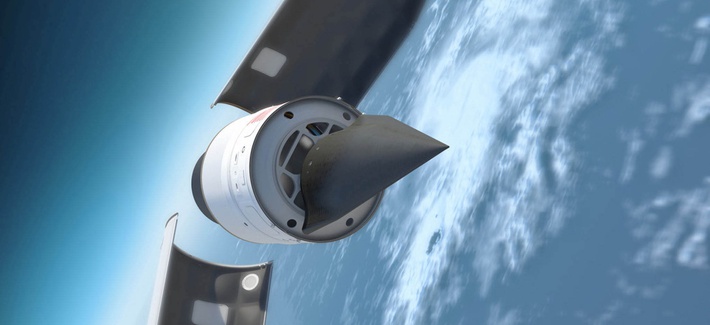
Another "tactical" surprise for the West was Putin's 2018 address to the Federal Assembly in which he declared that Russia had finished the development of hypersonic weapons.
24 It seems inconceivable that Western intelligence agencies had no idea that Russia was developing these armaments, especially considering that for a few years before Putin's speech, the Ministry of Defense was openly stating that the development of hypersonic weapons was in its final stages.
25 It is unclear why Putin's announcement that the multi-billion-dollar U.S. missile defense system is useless against new Russian missiles was so surprising to the Western community.
These are just a few examples from a long series of "surprises" that the Kremlin has sprung upon the West in the past decade, but the reason for their success probably can be explained better by the Western inability to read and interpret (and believe in) the messages being sent by Moscow rather than by Russia's intention to surprise the West. In other words, to answer American foreign affairs specialist Fiona Hill's question, "Why are we constantly surprised?" we need to understand how the West perceives contemporary Russia and whether this perception helps to interpret Russia's signals and allows the West to adequately meet and parry Russian actions.
(Mis)Understanding Russia
The examples above clearly show that the Kremlin was trying to communicate its intentions to the West long before taking actions. The signals were clearly there. The question is whether there was somebody with sufficient insight to interpret these signals and powerful enough to change the Western perception of Russia as "an over-geared, under-invested, over-securitized, and under-legitimate" state.
26
As the last several years have proven, the perception of Russia as weak does not represent the trend. While many politicians and experts compared the Russian economy to those of Italy and Spain in an attempt to diminish the power of the Kremlin, this comparison is very misleading.
27 After all, with the same budget as Italy or Spain, Russia has one of the most ambitious space programs, the biggest nuclear arsenal, and one of the most powerful militaries in the world. As Michael McFaul, former ambassador to Russia and senior advisor to President Barack Obama on Russian and Eurasian affairs, put it:
The mistake that was made 20 years ago was assuming Russia's a weak power, a declining power. Whether they're a great power or a middling power, we can argue about. But they are a major power, in the top 5 or 10 economies in the world, a top nuclear country in the world and now, given the investment Putin's made in the military, they're one of the major military powers in the world. Those trends are not changing in the next 20 or 30 years.
28
Moreover, the assumption of a weak Russia misleads and creates an unhelpful delusion regarding the state of Russian affairs, preventing the West from understanding the messages that the Kremlin attempts to communicate.
On the one hand, regarding the possibility of understanding Russia, it is difficult not to recall the famous verse written by Fyodor Ivanovich Tyutchev in 1866:
Russia cannot be known by the mind
Nor measured by the common mile:
Her status is unique, without kind-
Russia can only be believed in.
29
On the other hand, an assumption that Russia "is a riddle wrapped in a mystery inside an enigma" seems to be exaggerated; after making this famous statement, Winston Churchill continued: "But perhaps there is a key. That key is Russian national interest."
30 George Kennan in his "Long Telegram," wrote:
We must see that our public is educated to realities of Russian situation. I cannot over-emphasize importance of this. . . . I am convinced that there would be far less hysterical anti-Sovietism in our country today if realities of this situation were better understood by our people.
31
These words seem as relevant today as they were in 1946, but the reason why the West has been repeatedly surprised by the Kremlin is that Kennan's recommendations were forgotten as soon as the Cold War ended. Since the end of the Cold War, the field of Russian studies has suffered significant losses. The U.S.-based Association for Slavic, East European, and Eurasian Studies (ASEEES) stated in 2015 that "Russian studies within the social sciences are facing a crisis: an unmistakable decline in interest and numbers, in terms of both graduate students and faculty."
32 While ASEEES outlined several different reasons for this decline, the main one was the decreased government funding for Russia-related research, "including cuts of over 50 percent to critical language training, and near complete elimination of advanced research fellowships for Americans on Russia and the region."
33 In conclusion of its analysis, ASEEES stated:
Due both to trends within political science away from area specific knowledge (and in the direction of broader theoretical and comparative studies and more sophisticated quantitative methods) and to a decline in interest on the part of the American public and government in Russia following the end of the Cold War, there are fewer faculty in political science departments who work on Russia than there were even a decade ago and also fewer PhD students. This is the gravest crisis facing the field.
34
It is not surprising, then, that the West has been constantly caught off guard by Russia. Since the end of the Cold War, the West has lost interest in Russia, slowly losing the cadre of Russian experts able to understand and interpret signals sent from or actions conducted by the Kremlin.
Resonating Kennan's advice, Ivan Ilyin, a renowned Russian philosopher in exile, wrote in 1944: "Russia, as a nation and culture, still appears to Western Europe as a hidden world, as a problem that cannot be understood, a kind of Sphinx."
35 Unfortunately, this observation seems as relevant today as it was more than 70 years ago. In his book
Should We Fear Russia? Dmitri Trenin, director of the Carnegie Moscow Center, concluded that "Russia should not be feared but, rather, always be handled with care."
36 Such "handling," however, requires a deep knowledge of Russia's history, culture, religion, and other aspects that have been shaping its social-political-military behavior since Ivan the Formidable's reign in the 16
th century to the present day. Without such knowledge, it is not only very difficult to stop fearing the unknown Russia, it is also impossible to understand any signals sent from the Kremlin in the form of words (speeches, articles, or doctrines) or deeds (from military interventions to deployment of a new piece of hardware). Without an understanding that Russia is "both strong and weak; authoritarian and lawless; traditionalist and valueless," any analysis of Russia's communications with the West would be too superficial, failing to read between the lines and misunderstanding the message.
37
Back to General Gerasimov
In 2013, General Valery Gerasimov published his famous article, "The Value of Science Is in the Foresight."
38 By interpreting (or misinterpreting)
39 Gerasimov's article, many Western experts found in this article a conceptual rationale for Russian actions in Ukraine, dubbing it the Gerasimov Doctrine.
40 However, the so-called Gerasimov Doctrine was neither by Gerasimov, nor was it doctrine. First, Gerasimov's article was based on the writings of two Russian officers, Colonel Sergey Chekinov and Lieutenant General Sergey Bogdanov, whose joint publications on the changing nature of contemporary conflicts have played a vital role in shaping the views of the Russian military establishment since the late 2000s.
41 Second, regarding whether it was a doctrine, Mark Galeotti, who was responsible for the popularization of the term "Gerasimov Doctrine," later recanted, saying that "it doesn't exist. And the longer we pretend it does, the longer we misunderstand the-real, but different-challenge Russia poses."
42
Moreover, despite the warnings of scholars who questioned the practicability and conceptual relevance of the Gerasimov Doctrine and the following idea of Russian hybrid warfare, many Western experts preferred to see how Gerasimov "envisions new forms and means of armed combat . . . with the aim of achieving political and strategic objectives under the cover of ambiguity."
43 While trying to explain "why Gerasimov's statement that non-military means are four times as important than military means is relevant," the West seems to have failed to see the forest for the trees; according to Gerasimov:
Regardless of the increasing importance of the non-military means in the resolution of interstate confrontations, the role of the armed forces, in providing the security of a state, is not decreasing, but only growing. Therefore, the requirements from the armed forces capabilities are [also] extending.
44
While Gerasimov's speeches and articles were made and published in the context of Russia's ongoing conceptual discourse on the role of the military in international confrontations, it seems that many Western interpreters of Gerasimov saw more what they wanted to see rather than what Gerasimov wanted to say. Since the collapse of the Soviet Union, the Russian conceptual debate on the nature of international confrontations was flooded by opinions that promoted the rising importance of nonmilitary means. This trend led many Russian military thinkers, including Gerasimov, to realize that the subsiding status of war as an armed conflict also meant the declining eminence of armed forces. While for most of this period the Russian military had avoided participating in this debate, the rising popularity of nonmilitary means and methods among Russia's political leadership by the end of the 2000s forced the military to intervene. In other words, Gerasimov was not presenting "an expanded theory of modern warfare"
45 or announcing a new Russian "vision of total warfare;" rather, he was outlining the need for adequate investment in the development and modernization of the Russian military, its weapons and capabilities, in the context of an increasing belief among Russian political leadership that conflicts can be fought and won without the military.
46 Therefore, as Charles K. Bartles rightfully points out, Gerasimov decided to publish his articles in the journal
Military-Industrial Courier (
Voyenno-Promyshlennyy Kurier), as his intended audience was not the Russian armed forces, and definitely not the Western audience, but "Russia's senior political leadership."
47 Many Western experts generally failed to put Gerasimov into this context, spending time, money and much ink exploring the nonexistent "Gerasimov Doctrine" and allowing Russia to repeatedly surprise the West with its new hardware and military performance in Ukraine and Syria.
This year, Gerasimov's speech at the Russian Academy of Military Sciences annual defense conference created another wave of attention to the "signature strategy of Russia under President Vladimir V. Putin . . . [that is] a mix of combat, intelligence, and propaganda tools that the Kremlin has deployed in conflicts such as Syria and Ukraine."
48 While this reaction was initiated by a short summary of Gerasimov's speech published by
Krasnaya Zvesda,
49 his full address was published a few days later by
Military-Industrial Courier.
50 A closer examination of this article shows again that what many Western experts preferred to see in Gerasimov's speech was not necessarily what Gerasimov wanted to say.
Summarizing his analysis of the 2013 Gerasimov article, Bartles accurately concluded:
Gerasimov's view of the future operational environment is in many ways very similar to our own. Like us, he envisions less large-scale warfare; increased use of networked command-and-control systems, robotics, and high-precision weaponry; greater importance placed on interagency cooperation; more operations in urban terrain; a melding of offense and defense; and a general decrease in the differences between military activities at the strategic, operational, and tactical levels.
51
On the one hand, a summary of the 2019 article would not be much different. On the other, Gerasimov discusses several important details that deserve special attention.
While many in the West interpret Gerasimov's speech as another Russian attempt to pitch information operations as a form of war, Gerasimov, in fact, pays very little attention to this topic. His speech included several references to the increasing role of the information dimension.
52 For example, he stated that:
An analysis of the nature of contemporary wars has showed a significant increase in the importance of informational dimension. A new reality of future wars will also include the transfer of hostilities precisely into this area. Information technology essentially is becoming one of the most promising types of weapons.
53
However, anyone who is interested in the role of information operations (IO) on the battlefields of the 21
st century would find that this understanding is neither new nor particularly Russian. For example, the U.S. Joint Chiefs of Staff share quite a similar view:
As the strategic environment continues to change, so does IO. Based on these changes, the Secretary of Defense now characterizes IO as the integrated employment, during military operations, of IRCs [information-related capabilities] in concert with other lines of operation to influence, disrupt, corrupt, or usurp the decision making of adversaries and potential adversaries while protecting our own. This revised characterization has led to a reassessment of . . . how IRCs can be effectively integrated into joint operations to create effects and operationally exploitable conditions necessary for achieving the joint force commander's objectives.
54
On the one hand, many Western interpreters of Gerasimov decided to emphasize how "Gerasimov accused the West of covert preparations to instigate mass public protests and so-called 'color revolutions' as well as of using 'soft power' to overthrow objectionable regimes in order to undermine and eventually destroy (break up) undesirable states."
55 On the other, there is nothing new in this Russian rhetoric of the "evil West that tries to undermine Russia," as it has been going for more than two decades.
56 Therefore, the main value of Gerasimov's speech seems to lie not with the repetition of this old narrative, but rather with other important details that may shed some light on the real state of affairs in the Russian military and possible directions of its development in the near future.
The first important detail Gerasimov gave was his call to learn the lessons of Russian involvement in Syria and develop a capability to implement what he calls "a strategy of limited action." In his words:
Syrian experience has an important role in the development of strategy. Its generalization and implementation allowed us to identify a new practical area. This area is the achievement of the aims related to protecting and advancing national interests outside the territory of Russia-a strategy of limited actions. The basis for its implementation is the creation of a self-sufficient group of troops (forces) based on the formations of one of the branches of the Armed Forces, which has high mobility and is able to make the greatest contribution to the achievement of the defined aims.
57
The second interesting fact Gerasimov provided was his assessment of the development and deployment of new Russian high-precision strike systems:
Serial production of new models of armaments and outfitting of the Armed Forces with them have begun. The "Avangard" [hypersonic glide re-entry vehicle]
, the "Sarmat" [intercontinental ballistic missile]
, and the newest "Peresvet" [laser cannon]
and "Kinzhal" [air-launched hypersonic missile]
weapons have shown their high effectiveness, and the "Poseidon" [autonomous, nuclear-armed torpedo]
and "Burevestnik" [nuclear-powered, nuclear-armed cruise missile]
complexes are going through successful tests. Scheduled work is proceeding on creation of the "Tsirkon" hypersonic sea-launched cruise missile.
58
He also assured that these modern capabilities are not another case of Russian pokazuha (a staged event for officials, international observers, and/or domestic propaganda), as "the part of modern weapon systems in our nuclear capability has [already] reached 82 percent."
59
Another important statistic given by Gerasimov was regarding the increasing level of professionalism among Russian forces:
Nowadays, we proceed with the fulfillment of the planned program to staff the Armed Forces of the Russian Federation with contract servicemen. By the end of 2025, their number will reach 475,000 troops. . . .
Today, the officer corps of the Armed Forces is staffed with trained professional personnel. All commanders of military districts, combined-arms formations, formations of the Air Force and Air Defense, as well as 96 percent of the commanders of combined-arms units have combat experience.
60
Finally, he concludes with the call to continue investment in the modernization of the armed forces, as:
The modern weapons are so complex that it would be unlikely to adjust their production after the start of the hostilities. Therefore, everything necessary should be produced in the required quantity and be deployed already in peacetime. We must, by all means, ensure technical, technological, and organizational superiority over any potential adversary.
61
While these four important observations by Gerasimov may seem to be quite separate, they in fact represent different pieces of one puzzle. There is one message that Gerasimov tries to communicate between the lines of his speech: that Russia needs to create doctrinal and material capability of a highly professional intervention force with the potential to act worldwide, under the protection of a highly effective, modernized nuclear umbrella. Interestingly enough, it seems that while Western experts identified this message, they almost immediately rejected it. For example, interpreting Gerasimov's "strategy of limited actions," Roger McDermott assessed that it "does not represent a declaration to conduct 'power projection' on a global scale, given Russia's economic as well as military obstacles that would limit such ambitions."
62 And translating Gerasimov's call to build and stock modernized weapons systems, Pavel Felgenhauer compared modern Russia to the Soviet Union, forecasting for the former the destiny of the latter:
Building up vast stockpiles of tanks and other hardware in a vain attempt to achieve global military supremacy-as promoted for decades by the Soviet General Staff-pushed the mighty Soviet Union to economic and social ruin and eventual disintegration in 1991. Gerasimov and the Russian Armed Forces are clearly not content to limit their ambitions. . . .
Today, they are boldly challenging the entire world and pledging to build the biggest military they can. The end result may prove as devastating as in 1991.
63
The purpose of this article is not to suggest that Gerasimov's message (or anyone's from the Kremlin) should be taken for granted. But dismissing them as too ambitious for a Russia that is "politically isolated, economically sanctioned and with few options to improve its lot" does not seem right either. Punching above its weight is a sign of strong leadership in the Russian cultural-political-military context.
64 As the past two decades show, the Kremlin has been quite consistent in delivering its promises, especially in the political-military sphere. The West has also been very consistent in dismissing Moscow's promises, finding itself surprised time after time. Unfortunately, in analyzing how Gerasimov's latest promise was discussed in the West, it is likely to follow the same path, and we all will be "surprised" in a few years when Russia will deploy an intervention force to "protect" its interests abroad.
Conclusion: Know Your Enemy
Sun Tzu's famous maxim asserts that "if you know the enemy and know yourself, you need not fear the result of a hundred battles." While the topic of "knowing yourself" should be discussed separately, "knowing the enemy" is the very message of this article. During the Cold War, the West constantly overestimated the Soviet Union. The evidence of that was the level of surprise that the end of the Cold War and the following dissolution of the Soviet Union created in the West. Since the end of the Cold War, however, the West has constantly underestimated the Kremlin. As it seems, even today, after Moscow has proven its ability on so many occasions, the West struggles to accept that the Kremlin may deliver what it promises.
This should not be interpreted as a call to return to Cold War practices. An overwhelming overestimation of the enemy also has social, political, and economic prices that nobody in the West wants to (or should) pay. However, it is about time that the West starts taking Russia seriously-or, more precisely, perceiving Russia as it wants to be perceived. After all, as the current state of global affairs shows, Russia's self-perception is not far from the reality. For example, the Kremlin has been talking for years about the restoration of Russia's role as a "counterbalancing factor in international affairs."
65 As the events in Syria and Venezuela show, this factor has been well restored.
66
To truly understand Russia, the West should stop looking east through the prism of the Western worldview. There is no doubt that the Russian political system is different from the Western one, but it does not necessarily mean that it is weaker. During the 20
th century, the Russian people proved twice that when they are truly unhappy with their leadership, they bring it down, regardless of the devastating consequences. Anticipating that the Russian people will soon repeat this exercise is misleading, not only because the current leadership has learned the lessons of 1917 and 1991, but also because the memory of the 1990s is still too fresh in the hearts and minds of the Russian people. The West should accept the fact that Russia is a major power that is going to stay around, with Putin or without, protecting its interests and, most importantly, delivering on its promises. Only through this prism will the West truly understand what messages are coming from the Kremlin and be prepared to beat Russia to the punch.
PRISM
Notes
1 Valery Gerasimov, "Vektory razvitiya voyennoy strategii" [Vectors of Military Strategy Development],
Krasnaya Zvezda, March 4, 2019, . The main bullet points of Gerasimov's speech were published in English on March 2, 2019, in
Sputnik: "Russia's Geopolitical Rivals Preparing for High-Tech Wars in Space-Gen Staff," .
2 Andrew Kramer, "Russian General Pitches 'Information' Operations as a Form of War,"
New York Times, March 2, 2019, ; Roger McDermott, "Gerasimov Unveils Russia's 'Strategy of Limited Actions',"
Eurasia Daily Monitor 16, Issue 31, March 6, 2019, ; Pavel Felgenhauer, "A New Version of 'Gerasimov Doctrine',"
Eurasia Daily Monitor 16, Issue 31, March 6, 2019, .
3 For example, Oscar Jonsson and Robert Seely, "Russian Full-Spectrum Conflict: An Appraisal After Ukraine,"
Journal of Slavic Military Studies 28, Issue 1 (2015): 1-22; Dave Johnson, "Russia's Approach to Conflict: Implications for NATO's Deterrence and Defence," research paper no. 111, NATO Defence College, April 2015; Janis Berzins, "Russia's New Generation Warfare in Ukraine: Implications for Latvian Defense," Policy Paper no. 2, National Defence Academy of Latvia, Centre for Security and Strategic Research, April 2014; Diego Ruiz Palmer, "Back to the Future? Russia's Hybrid Warfare, Revolutions in Military Affairs, and Cold War Comparisons," research paper no. 120, NATO Defence College, October 2015; Mark Galeotti,
Hybrid War or Gibridnaya Voina? Getting Russia's Non-Linear Military Challenge Right (Prague: Mayak Intelligence, 2016).
4 Dmitry Adamsky,
Cross-Domain Coercion:The Current Russian Art of Strategy (Paris: IFRI Security Studies Center, November 2015).
5 Fiona Hill, quoted in Karoun Demirjian, "Lack of Russia Experts Has Some in U.S. Worried,"
Washington Post, December 30, 2015, .
6 Heidi Reisinger, "Does Russia Matters? Purely Political Relations Are Not Enough in Operational Times," NATO Defence College conference report, January 31, 2014, 3.
7 Heidi Reisinger and Aleksandr Golts, "Russian Hybrid Warfare: Waging War Below the Radar of Traditional Collective Defence," research paper no. 105, NATO Defence College, November 2014, 3.
8 Fridman,
Russian "Hybrid Warfare," chap. 6.
9 Galeotti, "I'm Sorry for Creating the 'Gerasimov Doctrine'"; Fridman,
Russian "Hybrid Warfare."
1
0 Fridman,
Russian "Hybrid Warfare," 168.
1
1 Vladimir Putin, address to the 70th session of the United Nations General Assembly, September 28, 2015, .
1
2 Alec Luhn, "Russia Sends Artillery and Tanks to Syria as Part of Continued Military Buildup,"
The Guardian, September 14, 2015, ; "Russian Troops 'Fighting Alongside Assad's Army against Syrian Rebels',"
The Telegraph, September 2, 2015, .
1
3 Vladimir Putin, 2007 Speech at the Munich Security Conference, ; A. Smirnov, "Kontseptsii vneshney politiki Rossiyskoy Federatsii: sravnitel'nyy analiz [The Foreign Policy Concept of the Russian Federation-Comparative Analysis]'," in
Vneshnyaya politika Rossii: teoriya i praktika [The Foreign Policy of Russia: Theory and Practice], ed. S. Smul'skii, O. Abramova, and V. Buyanov (Moscow: Kniga i Biznes, 2013), 58-83.
1
4 Ministry of Foreign Affairs of the Russian Federation,
The Foreign Policy Concept of the Russian Federation-2
000, Moscow, 2000; Ministry of Foreign Affairs of the Russian Federation,
The Foreign Policy Concept of the Russian Federation-2008, Moscow, 2008.
1
5 Ministry of Foreign Affairs of the Russian Federation,
The Foreign Policy Concept of the Russian Federation-2
013, Moscow, 2013.
1
6 Robert Mendrick, Ben Farmer, and Roland Oliphant, "UK Military Intelligence Issues Warning Over Russian Supertank Threat,"
The Telegraph, November 6, 2016, .
1
7 Marco Giannangeli, "UK Must Prepare for War with Russia: Army Calls for Fleet of Battle Tanks to Take on Putin,"
Express, September 30, 2015, ; Dave Majumdar, "Surprise: Russia's Lethal T-14 Armata Tank Is in Production,"
The National Interest, March 13, 2016, ; Dave Majumdar, "Get Ready, Russia: This European Power Has Plans For a Lethal New Tank,"
The National Interest, February 18, 2016, ; Mendrick, Farmer, and Oliphant, "UK Military Intelligence Issues Warning."
1
8 "Rossiya primet na vooruzheniye novyy tank 'Armada'" [Russia will adopt the new tank "Armada"],
Lenta.ru, April 28, 2011, .
1
9 "Novyy tank 'Armata' mozhet poyavit'sya v rossiyskoy armii v 2015 godu" [New tank "Armata" may appear in the Russian army in 2015],
Ria Novosti, April 28, 2011, .
2
0 "Kakim budet budushchiy rossiyskiy tank 'Armata"' [What will be the future Russian tank "Armata"],
Armeyskii Vestnik, September 19, 2012, .
2
1 "Noveyshiy Tank 'Armata' vpervyye pokazhut rukovodstvu strany v sentyabre" [The newest tank "Armata" will be demonstrated for the first time to country's leadership in September],
Ria Novosti, July 8, 2013, .
2
2 For example, "Kakim budet budushchiy rossiyskiy tank 'Armata'."
2
3 Mendrick, Farmer, and Oliphant, "UK Military Intelligence Issues Warning."; "Novyy tank 'Armata' mozhet poyavit'sya v rossiyskoy armii v 2015 godu."
2
4 Vladimir Putin, 2018 Presidential Address to the Federal Assembly, March 1, 2018, Moscow, .
2
5 For example, "Kakoye giperzvukovoye oruzhiye ozhidayet rossiyskuyu armiyu" [What hypersonic weapons are coming to the Russian military], TASS, February 1, 2017, .
2
6 Galeotti,
Hybrid War or Gibridnaya Voina? 98-99.
2
7 Lindsey Graham, quoted in Lauren Carroll, "Graham: Russia 'has an economy the size of Italy',"
Politifact, July 27 2014, ; Jim Edwards, "Russia's Economy Has Shrunk So Much It's Now Almost the Same Size as Spain," Business Insider, December 2, 2014, .
2
8 Michael McFaul, quoted in Demirjian, "Lack of Russia Experts."
2
9 Fyodor Tyutchev,
Izbrannoe [Favorites] (Rostov-na-Donu: Phenix, 1996).
3
0 Winston Churchill, "The Russian Enigma," BBC Broadcast, London, October 1, 1939, .
3
1 George Kennan, "Telegram: The Charge in the Soviet Union (Kennan) to the Secretary of State," Moscow, February 22, 1946, .
3
2 Association for Slavic, East European, and Eurasian Studies (ASEEES),
The State of Russian Studies in the United States (Pittsburgh: University of Pittsburgh, July 2015), 4.
3
3 Mathew Rojansky, "George F. Kennan, Containment, and the West's Current Russia Problem," research paper no. 127, NATO Defence College, January 2015, 9.
3
4 ASEEES,
The State of Russian Studies, 45.
3
5 Ivan Ilyin,
Sushchnost'i svoyeobraziye Russkoy kul'tury [The Essence and Peculiarity of Russian Culture] (Moscow: Russkaya Kniga-XXI Vek, 2007), 15.
3
6 Dmitri,Trenin,
Should We Fear Russia? (Cambridge: Polity Press, 2017), xiii.
3
7 Ibid, xii.
3
8 Valery Gerasimov, "Tsennost' nauki v predvidenii: Novyye vyzovy trebuyut pereosmyslit' formy i sposoby vedeniya boyevykh deystviy" [The Value of Science Is in the Foresight: New Challenges Demand Rethinking the Forms and of Carrying Out Combat Operations],
Voyenno-Promyshlennyy Kurier, no. 8 (2013). The English translation of this article was published by Military Review in 2016, see Valery Gerasimov, "The Value of Science Is in the Foresight: New Challenges Demand Rethinking the Forms and Methods of Carrying Out Combat Operations," trans. Robert Coalson,
Military Review (January-February 2016): 23-29.
3
9 Charles Bartles, "Getting Gerasimov Right,"
Military Review (January-February 2016): 30-38.
4
0 For example, Jonsson and Seely, "Russian Full-Spectrum Conflict"; Johnson, "Russia's Approach to Conflict"; Berzins, "Russia's New Generation Warfare in Ukraine"; Ruiz Palmer, "Back to the Future?"; Galeotti,
Hybrid War or Gibridnaya Voina?
4
1 Fridman, Russian
"Hybrid Warfare," 127-136.
4
2 Galeotti, "I'm Sorry for Creating the 'Gerasimov Doctrine'."
4
3 For example, Bettina Renz and Hanna Smith, eds., "After 'Hybrid Warfare', What Next? Understanding and Responding to Contemporary Russia," Publications of the Government
's analysis, assessment, and research activities 44/2016, Helsinki, 2016; András Rácz, "Russia's Hybrid War in Ukraine: Breaking the Enemy's Ability to Resist,"
FIFA Report, no. 43, June 2015; Lawrence Freedman, "Ukraine and the Art of Limited War,"
Survival 56, no. 6 (2014): 7-38; Adamsky, "Cross-Domain Coercion"; Bartles, "Getting Gerasimov Right"; Johnson, "Russia's Approach to Conflict," 5.
4
4 Jonsson and Seely, "Russian Full-Spectrum Conflict," 8; Valery Gerasimov, "Po opytu Sirii: Gibridnaya voyna trebuyet vysokotekhnologichnogo oruzhiya i nauchnogo obosnovaniya" [According to the Experience in Syria: Hybrid War Requires the High-Tech Weaponry and Scientific Foundation],
Voyenno-Promyshlennyy Kurier, no. 9, 2016, .
4
5 James Brown, "Japan Woos Russia for Its Own Security,"
Nikkei Asian Review, December 11, 2017, .
4
6 Mckew, Molly, "The Gerasimov Doctrine: It's Russia's New Chaos Theory of Political Warfare. And It's Probably Being Used on You,"
Politico, September/October, 2017, ; Fridman,
Russian "Hybrid Warfare," chap. 7.
4
7 Bartles, "Getting Gerasimov Right," 31.
4
8 Kramer, "Russian General Pitches 'Information' Operations as a Form of War."
4
9 Gerasimov, "Vektory razvitiya voyennoy strategii."
5
0 Valery Gerasimov, "Genshtab planiruet udary po tzentram prinyatiya reshenii, puskovym ustanovkam i 'pyatoi kolonne"' [The General Staff Plans Strikes on the Centers of Decision-Making, Launchers, and the "Fifth Column"],
Voyenno-Promyshlennyy Kurier, no. 9, 2019, .
5
1 Bartles, "Getting Gerasimov Right," 36.
5
2 Kramer, "Russian General Pitches 'Information' Operations as a Form of War."
5
3 Gerasimov, "Genshtab planiruet udary po tzentram prinyatiya reshenii, puskovym ustanovkam i 'pyatoi kolonne'."
5
4 Joint Chiefs of Staff, Joint Publication 3-1,
Information Operations (Washington, DC: Joint Chiefs of Staff, 2014), I-1.
5
5 Felgenhauer, "A New Version of 'Gerasimov Doctrine'"; see also McDermott, "Gerasimov Unveils Russia's 'Strategy of Limited Actions'."
5
6 Fridman,
Russian "Hybrid Warfare," chap. 7.
5
7 Gerasimov, "Genshtab planiruet udary po tzentram prinyatiya reshenii, puskovym ustanovkam i 'pyatoi kolonne'."
5
8 Ibid.
5
9 Ibid.
6
0 Ibid.
6
1 Ibid.
6
2 McDermott, "Gerasimov Unveils Russia's 'Strategy of Limited Actions'."
6
3 Felgenhauer, "A New Version of 'Gerasimov Doctrine'."
6
4 Galeotti,
Hybrid War or Gibridnaya Voina? 98-99; Trenin,
Should We Fear Russia? 27.
6
5 Sergey Lavrov, "Vneshnepoliticheskaya filosofiya Rossii" [Russian Foreign Policy Philosophy], Mezhdunarodnaya Zhizn', no. 4, 2013, 7.
6
6 Tom Phillips, "Venezuela: Russia Urges U.S. to Abandon 'Irresponsible' Plan to Topple Maduro,"
The Guardian, May 5, 2019, .

 Fire officials have warned that they expect more intense and devastating California wildfires due, in part, to climate change.