Partners in Prayer & Prevention Newsletter
Edition 14

August / 15 / 2017
reaching_hands.jpg
Virginia Partners in Prayer & Prevention
 
Virginia Partners in Prayers & Prevention newsletter continues to be a resource to help educate and support our communities in which we all live, work, and worship. P3 Newsletter is a resource for you.  Continue to spread the word and share with others. 

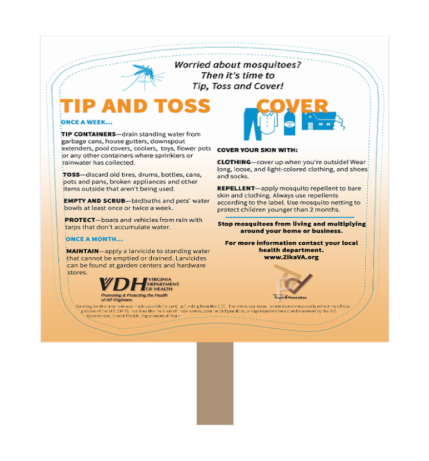
Tip, Toss & Cover Fans are available

 
For more information email Veronica Cosby at  veronica.cosby@vdh.virginia.gov
In This Issue
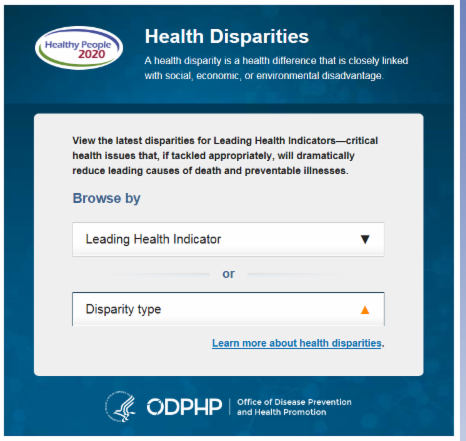
Healthy People 2020 Health Disparities Data Widget
 
The Office of Disease Prevention and Health Promotion (ODPHP), National Center for Health Statistics (NCHS) and the Office of Minority Health (OMH) are pleased to announce the release of a new HealthyPeople.gov data search function. The Health Disparities widget is a new way for you to access this health disparities information.

The new widget provides an easy way to find health disparities data related to the Healthy People 2020 objectives for the Leading Health Indicators (LHIs). LHIs are critical health issues that when addressed will help reduce the leading causes of death and preventable illnesses.


It's easy to embed the widget on your site and give your stakeholders easy access to the latest available disparities data. Once you've added the widget, there's no technical maintenance required. The content will update automatically with the latest available data.
The widget provides charts and graphs of disparities data at your fingertips. Use the widget to browse data by:
  • Disparity type-including disability, education, income, location, race and ethnicity, and sex)
  • Leading Health Indicator
Explore, use and share the widget to help inform issues related to health equity.
Utilize this Widget now

Virginia Partners in Prayer & Prevention
  Community Health Champions Events 

A Crisis of Addiction

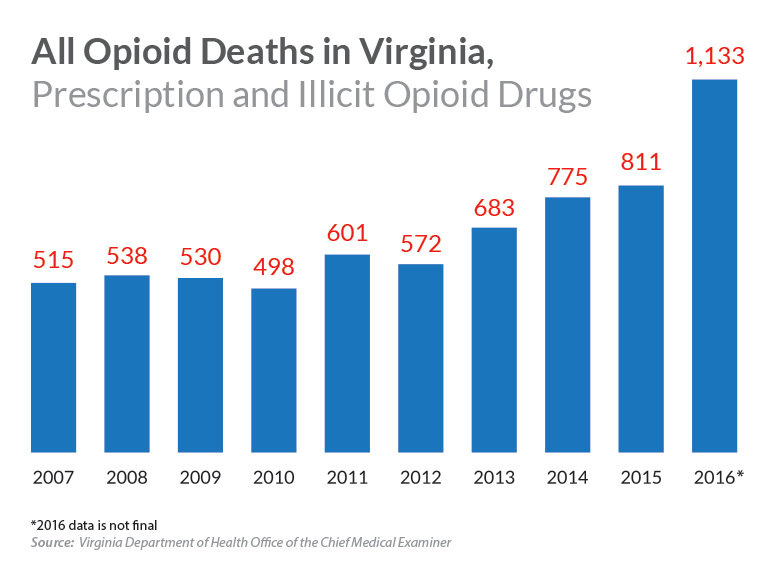
In 2014 Virginia Governor Terry McAuliffe convened a Task Force on Prescription Drug and Heroin Abuse to address the crisis in opioid addiction and overdose that the Commonwealth ­- and indeed, our entire country - is facing. More Virginians now die every year from an overdose than in automobile accidents, and nationally there is an overdose death every 20 minutes.


Find more information and resources:


Including Oral Health in Diabetes Management 
 
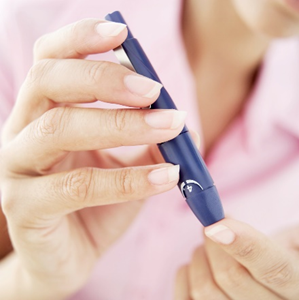
According to the American Diabetes Association (ADA), more than 830,000 Virginians have diabetes and an additional 2.2 million have prediabetes.  For people living with diabetes, having healthy teeth and gums can help them better manage their blood sugar and even avoid hospital admissions.  Individuals with diabetes may experience oral issues like dry mouth, tooth loss, cavities, fungal infections, and burning mouth syndrome; periodontal disease is also more common in people with diabetes.  Studies show that successfully treating periodontal disease can reduce hospitalizations by 33% and lower medical costs by $1,814 for those with diabetes.
 
The Centers for Disease Control & Prevention (CDC) and the ADA offer useful tools for individuals to prevent diabetes or manage existing disease.  The CDC's National Diabetes Education Program (NDEP) 
provides tools to delay the onset of Type 2 diabetes and prevent diabetes complications, and includes resources for specific populations, such as African Americans, Hispanic Americans and those in rural communities.  The NDEP also provides a training course on how to provide a community-based diabetes self-management (DSME) program or for people with diabetes.  Additionally, the ADA releases a new Standards of Medical Care in Diabetes each year to offer comprehensive guidance on diabetes self-management for health providers, patients and others involved in diabetes care.  The ADA guideline also includes specific information for children, pregnant women, older adults and others with complex health issues.  Patients and families can use these resources to learn more about diabetes and better advocate for their health care in multiple settings, like the dentist's office. 

If you know a person living with diabetes, tell them about DSME and encourage them to search for a local DSME program.  You can find a diabetes program in your area by visiting DiabetesLocal.org .  Health providers are especially poised to refer patients to DSME programs as part of a comprehensive care plan.  DSME programs can help an individual create a healthier lifestyle and living environment, and provide ongoing support. For more information on the connections between oral health and wellness, visit www.vaoralhealth.org .  


National Breastfeeding Awareness Month

Resources, guidelines, & recommendations for breastfeeding:

Upcoming Webinars
 
August 16, 2017  There is Hope: Treatment, Recovery, & Prevention.
Sponsored by Substance Abuse and Mental Health Services Administration (SAMHSA) and the Centers For Disease Control and Prevention (CDC)
12:00-1:15 PM EDT  Learn More and Register  
 
August 22, 2017  Learning from Rare Events Infant Mortality Data
Sponsored by National Institute for Children's Health Quality (NICHQ)
2:00-3:00 pm ET Learn More and Register
 
August 24, 2017  Promoting Health Equity Through Programs and Policies
Sponsored by The National Partnership for Action to End Health Disparities (NPA)
3:00-4:00 pm ET  Learn More and Register  
 
August 31, 2017  The Role of State Health Leaders in Addressing Neonatal Abstinence Syndrome.
Sponsored by National Institute for Children's Health Quality (NICHQ) and The Association of State and Territorial Health Officials (ASTHO)
2:00-3:30 pm ET Learn More and Register  


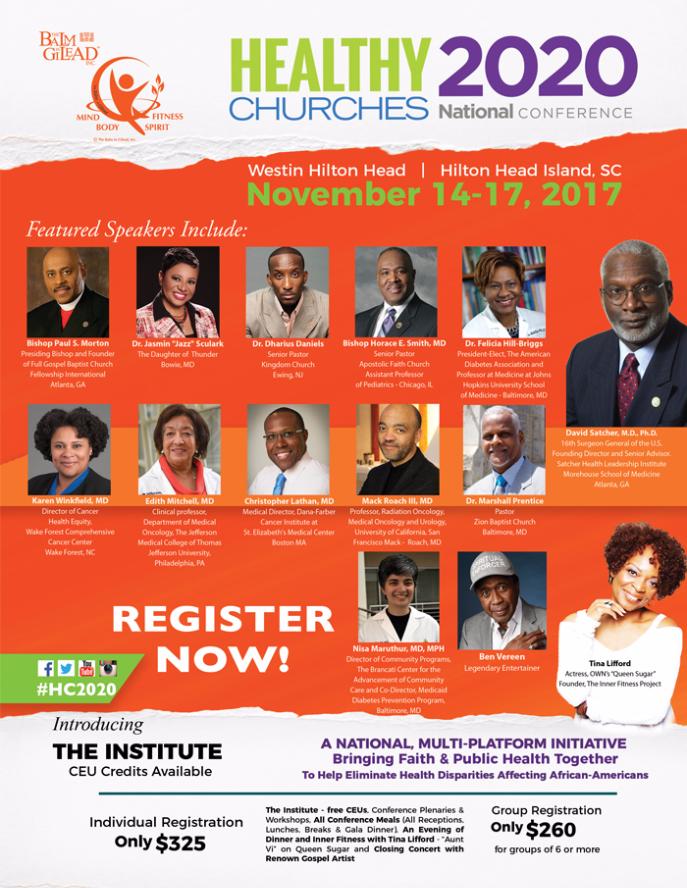
Learn more about the Healthy Churches 2020 National Conference now!
http://healthychurches2020conference.org/
 

Prevent heart attacks and stroke by knowing your A-B-C-S

August means it's time to get the kids ready to go back to school. It's also a good time for parents, grandparents and other adults to check in on their health. While the kids are learning their ABCs, adults can brush up on the ABCS of blood disease and stroke prevention:
  • "A" stands for taking Asprin when appropriate.
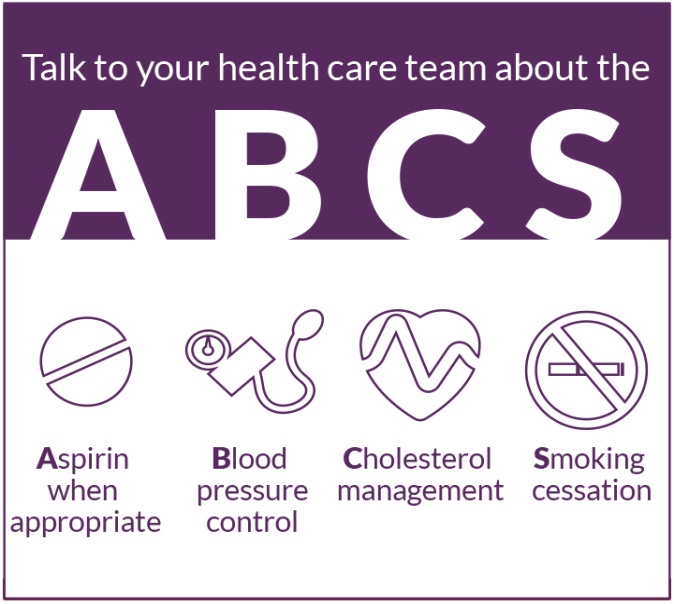
  • "B" stands for Blood Pressure control. Do you know your numbers? Make sure to check them regularly and stay on top of your blood pressure.
  • "C" stands for managing your Cholesterol by eating heart healthy foods. Stay away from high sodium and processed foods.
  • "S" stands for Smoking Cessation. Smoking increases you risk of heart disease and stroke. Quitting smoking or not smoking in the first place are the best ways to boost your health.
 
While the ABCS are the building blocks of education, the ABCS of heart disease and stroke prevention are the building blocks of good health. So, while the kids are shopping for pencils and new backpacks, be sure to get out and shop for heart healthy foods. And while the kids try out for new sports, adults should be thinking about how to get in the 30 minutes a day of recommended exercise.

Heart disease and stroke are among the most widespread and costly health problems facing the nation today. They account for more than 800,000 deaths each year - that's 1 in every 3 deaths.

The good news is that you don't have to become a statistic. Talk to your doctor or other health care providers about how you can stay heart healthy. Ask them about the ABCS of heart disease and stroke prevention.

Million Hearts® 2022 Partner Resources
American College of Preventative Medicine
 
American Heart Association
 
American Heart Association and American College of Cardiologists
 
American Medical Association
 
American Pharmacists Association
 
Association of State and Territorial Health Officials
 
Cardio Smart: American College of Cardiology
 
Centers for Disease Control and Prevention
 
The Community Guide
 
Million Hearts® 2022
 
National Forum for Heart Disease and Stroke Prevention
 
Preventive Cardiovascular Nurses Association
 
Together we can defeat the enemy of health disparities by educating and promoting equal opportunities for good health throughout all of our communities.
 
For more information on P3 (Partners in Prayer & Prevention), contact Veronica Cosby at veronica.cosby@vdh.virginia.gov veronica.cosby@vdh.virginia.gov