Welcome from the Program Manager, Pierre Guigon | | |
Welcome to the latest edition of the Partnership for Market Implementation (PMI) newsletter, highlighting the work of PMI and its partners to help countries advance carbon pricing and carbon market implementation.
In this edition, we explore a key topic at the heart of the global carbon pricing agenda: why compatibility across monitoring, reporting, verification, and accreditation (MRVA) systems matters for building trust in emissions data and enabling its use across different policy and market applications. We also share updates from PMI-supported programs in Bhutan, Thailand, and Côte d’Ivoire; the launch of Thailand’s ETS Lab with the International Carbon Action Partnership (ICAP); and new technical guidance on digital MRV and carbon market integrity developed by the Integrity Council for the Voluntary Carbon Market (ICVCM) with PMI support. Other highlights include a regional knowledge event on carbon taxes in Europe and Central Asia and work under the Compact with Africa–Green Business Fund to advance sustainable finance for the blue economy.
Finally, we are pleased to announce the launch of the new PMI LinkedIn channel. Follow us for the latest developments, insights, and updates from across our global community.
Enjoy reading!
| | Many Systems, One Outcome: Why MRVA Compatibility Matters | | Photo credit: Adobe Stock | | |
As emissions information is used for more purposes, from carbon taxes and emissions trading systems to Article 6 cooperation, corporate disclosures, and trade-related climate measures, countries and companies face growing reporting demands. In a new blog, Giovanni Ruta explains why the answer is not a single global MRVA system, but greater compatibility and mutual recognition across different approaches.
Compatibility can help reduce duplicated reporting and verification, lower administrative costs, and allow credible emissions information to be collected once and used for multiple purposes. The blog also highlights the often-overlooked role of accreditation in building trust in verification and supporting interoperability across systems. Read the blog
| | Updates from PMI Country Programs | |
PMI Regional Program in Africa:
Integrating Carbon Pricing into Fiscal and Economic Policy
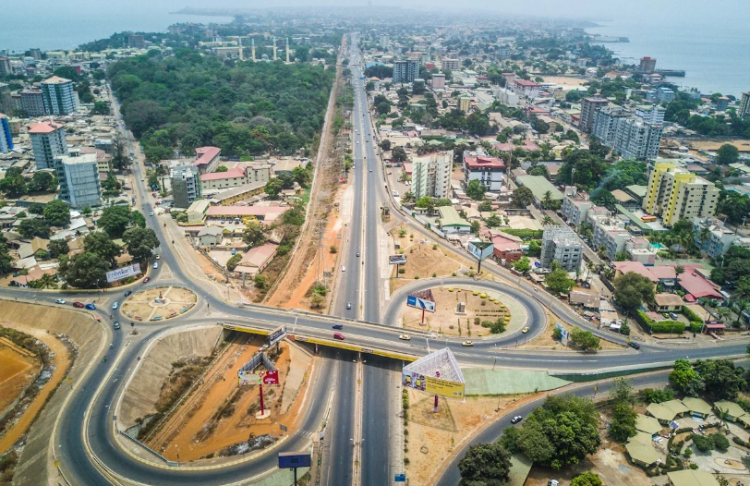
| | Across Africa, the PMI Regional Program is helping countries consider carbon pricing alongside broader fiscal and economic priorities, including domestic resource mobilization, competitiveness, and the potential distributional impacts of policy choices. The program draws on the World Bank Group’s (WBG) engagement with ministries of finance, tax administrations, and other government institutions to connect carbon pricing analysis with Public Finance Reviews, Medium-Term Revenue Strategies, Development Policy Financing, and wider tax policy discussions. | | Conakry, Guinea | Photo credit: Vincent Tremeau, World Bank | | Country-led work is underway in Tanzania, Uganda, Zambia, Benin, Guinea, and Togo. In Côte d’Ivoire, the WBG is supporting the Directorate General of Taxes to develop a methodological guide for assessing fiscal instruments and identifying opportunities to align fiscal policy with environmental and development objectives. The work contributes to the country’s broader fiscal reform agenda, including its Medium-Term Revenue Strategy and forthcoming Green Fiscal Report. Read the Story | | Building the Bhutan Climate Fund to Connect Carbon Projects with International Investment | | Bhutan is taking steps to connect its carbon projects with international investment through the Bhutan Climate Fund. At the inaugural Bhutan Climate Investment Forum in July 2026, project developers, financial institutions, and market intelligence firms shared interest in potential investments across methane reduction, renewable energy, waste management, and hydropower. | View of Taktshang Monastery in Bhutan | Photo credit: Adobe Stock | Supported by the WBG, including through PMI, Bhutan has developed a policy and institutional foundation for participation in international carbon markets. The Bhutan Climate Fund is designed to aggregate smaller projects, connect project proponents with buyers, and support earlier-stage projects as they move toward market readiness. Engagement with investors and buyers is helping shape the Fund’s design and build demand for Bhutanese carbon credits. Read the story | | Thailand: Connecting Carbon Pricing Policy with Low-Carbon Investment | | Bangkok, Thailand | Photo Credit: World Bank | | |
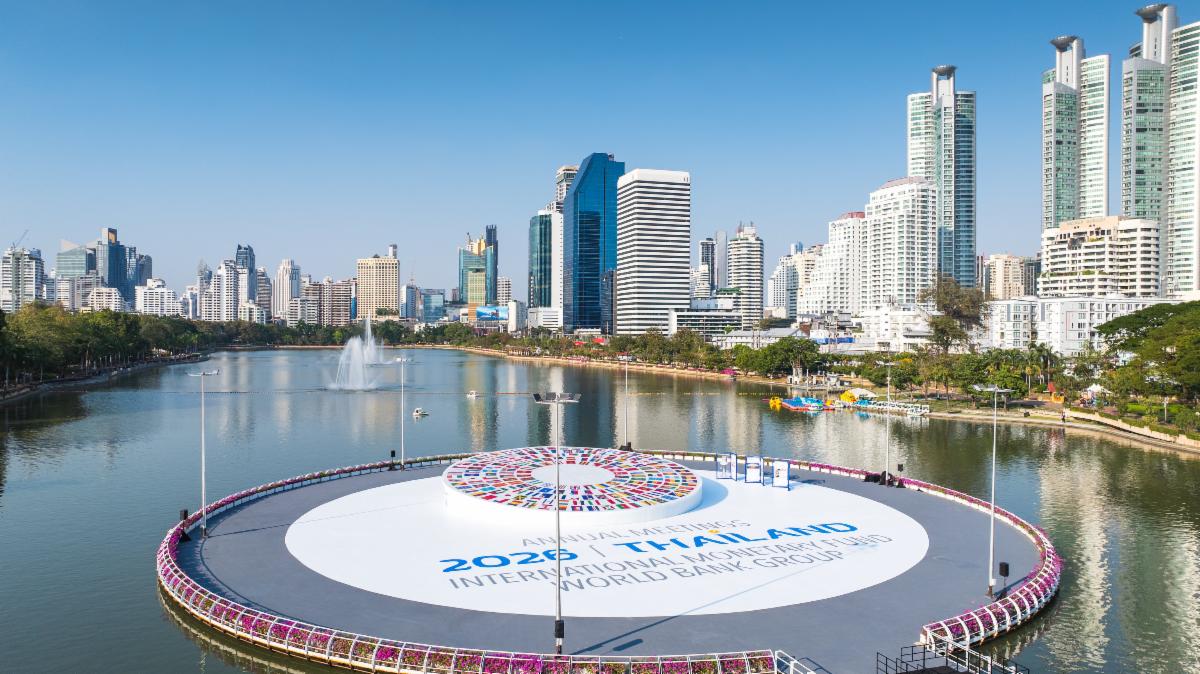
At the 2026 IMF–WBG Annual Meetings in Bangkok, the Royal Thai Government and the WBG highlighted an integrated approach to supporting Thailand’s low-carbon transition, connecting upstream policy and long-term planning with investment on the ground. Through the PMI, the WBG is supporting Thailand in developing carbon-pricing instruments and related policy mechanisms, while the Climate Support Facility (CSF) is supporting the country’s long-term climate strategies and economic modelling towards net zero by 2050.
Together, these efforts advance Thailand’s climate policy and regulatory frameworks alongside the WBG’s US$200 million Low Carbon Cities and Carbon Market Development Project, which aims to scale up energy-efficiency and renewable-energy investments across the public sector through innovative financing mechanisms and the integration of carbon markets. By linking policy development, long-term climate planning and investment delivery, this integrated approach seeks to mobilize private capital, unlock the potential of carbon markets to support low-carbon investments, and accelerate Thailand’s transition to a low-carbon economy.
Read more in The Nation Thailand: Thailand and World Bank Launch Low-Carbon Push to Turn Climate Policy into Bankable Project
| | PMI Knowledge & Innovation | | PMI Launches ETS Lab to Bring Emissions Trading to Life | | |
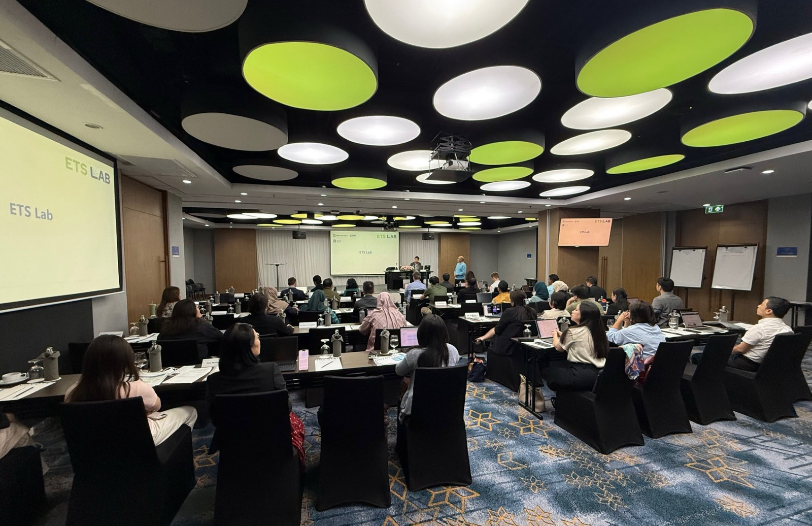
PMI and ICAP have launched the ETS Lab, an interactive simulation that helps policymakers experience an emissions trading system from the perspective of regulated entities. Participants make abatement, allowance, trading, and compliance decisions while seeing how choices on issues such as cap design, allocation, and offsets can influence market behavior.
| | ETS Lab | Photo credit: World Bank | | Nearly 40 government officials from India, Indonesia, Malaysia, the Philippines, Thailand, and Vietnam tested the tool during ICAP’s Asia Summer School on ETS Design in Bangkok. Designed to complement traditional training, the ETS Lab can be adapted for capacity building, national training programs, and research as countries explore and implement carbon pricing systems. Read the blog | | ICVCM and PMI Advance on Technical Guidance for Digital MRV | | Digital monitoring, reporting, and verification can reduce costs, speed up processes, and expand access to carbon markets. It also introduces new risks, as errors or manipulated data can be replicated across projects and jurisdictions. | | |
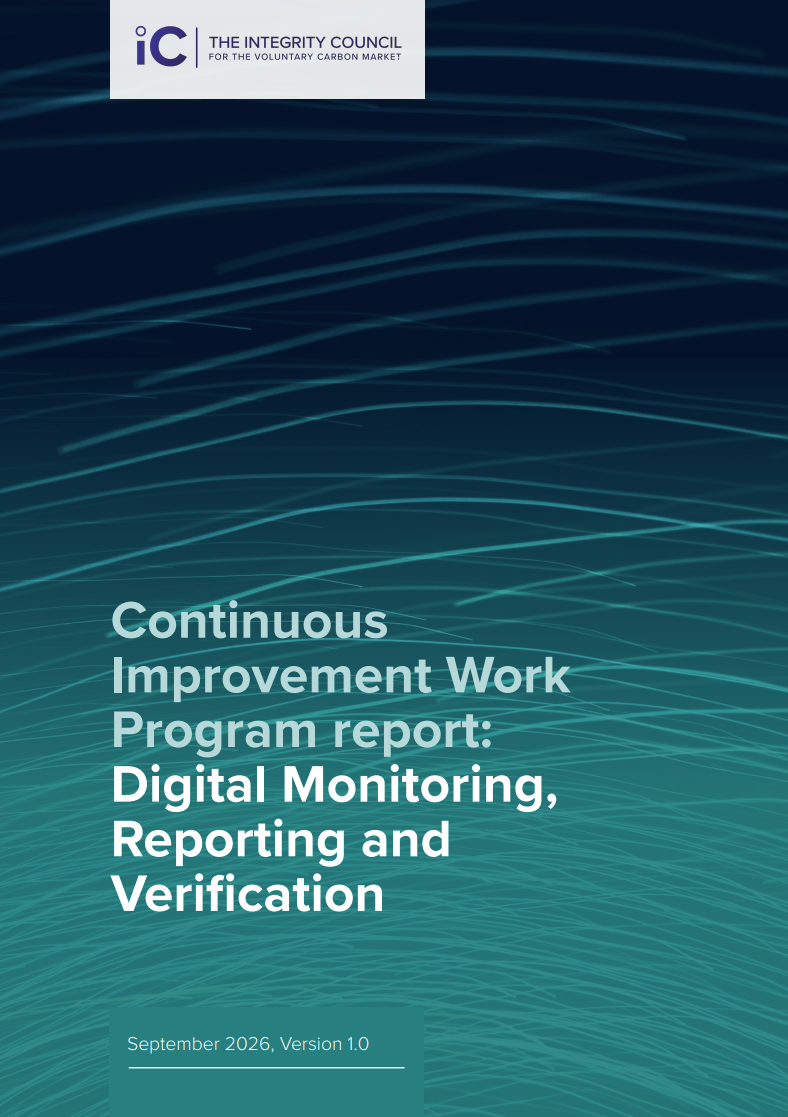
A new report from the ICVCM, developed through its Continuous Improvement Work Program on DMRV and co-facilitated by the WBG, sets out 16 recommendations to help address these challenges.
Building on foundational work supported by PMI’s Carbon Markets Infrastructure Working Group, the report examines data quality, uncertainty, governance, cybersecurity, transparency, verification, equity, and access. It provides practical guidance for applying digital approaches across voluntary and Article 6 carbon markets while maintaining confidence in the integrity of carbon market outcomes.
Read the blog
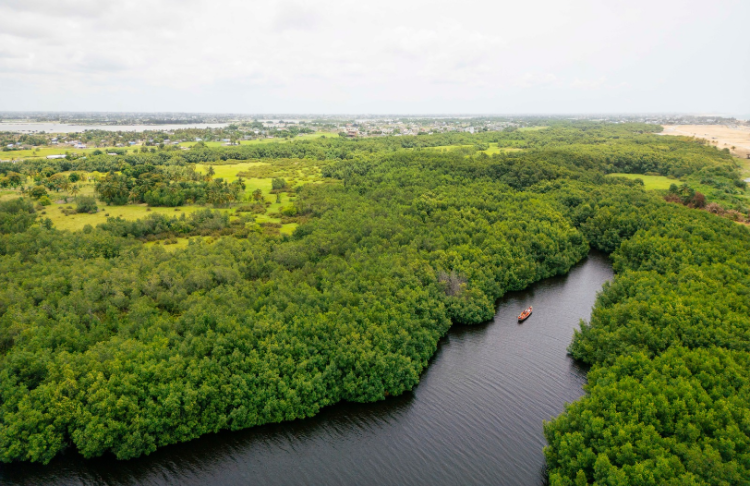
| | | Taxing Carbon for Growth and Resilience in Europe and Central Asia | | Governments across Europe and Central Asia are exploring how carbon pricing can respond to climate pressures while strengthening fiscal resilience, competitiveness, and energy security. With the European Union’s Carbon Border Adjustment Mechanism (CBAM) applying to selected imports from 2026, countries are also assessing the implications for carbon-intensive sectors and trade. | | Participants at the May 5–6, 2026 for Navigating Global Tax Shifts: Regional Approaches for ECA Countries in Carbon Taxation event at the Vienna Development Knowledge Center (VDKC) | Photo Credit: World Bank | | At a May 2026 workshop hosted by the Vienna Development Knowledge Center, policymakers and experts discussed carbon tax design, CBAM, complementary policies, and the institutional requirements for implementation. The exchange highlighted the importance of credible pricing pathways that broaden the revenue base, encourage cleaner investment, protect vulnerable groups, and reflect national circumstances. Read the story | | Compact with Africa - Green Business Fund | | The Compact with Africa—Green Business Fund (CwA-GBF) is a PMI-associated trust fund dedicated to supporting small and medium enterprises (SMEs) in boosting development with positive climate impacts, along with country partners in the Compact with Africa G20 initiative. The fund achieves these objectives through policy dialogue, fostering enabling environment, capacity building, technical assistance, and in designing and piloting innovative financial instruments. The following offers a snapshot of developments under two activities: Capacity Building and Technical Assistance; and Innovative Financial Instrument Pilots. | | Sustainable Finance Knowledge Center Responds to Growing Interest in Blue Economy | | Benin landscape | Photo Credit: Nathan Ochole, World Bank | | |
The Sustainable Finance Knowledge Center for Africa is helping respond to growing interest in blue economy finance among policymakers, financial institutions, and small and medium-sized enterprises in West Africa. Supported in part by the Compact with Africa–Green Business Fund, the Center is working to strengthen market readiness, expand access to finance, and help financial institutions integrate climate-related risks and opportunities into their decisions.
A market sounding and stakeholder mapping exercise in May 2026 identified priority capacity-building needs and opportunities to strengthen the blue finance ecosystem. Building on this work, the Center is developing further support under the West Africa Coastal Areas Plus Management Program, including capacity building for blue economy SMEs and technical assistance for financial institutions. Initial experience in Benin is helping inform potential expansion to other participating countries. Read the story
| | |
We are bringing together the PMI and Innovate4Climate (I4C) communities on a new LinkedIn channel. Follow us for updates on how countries are developing carbon-pricing policies and participating in carbon markets to mobilize finance, support private investment, and advance development priorities.
The channel will continue to feature news, insights, and conversations from I4C, the World Bank Group’s annual platform for dialogue and innovation on carbon pricing and carbon markets. Follow us to stay connected!
| | The Partnership for Market Implementation (PMI) is program managed by the World Bank that supports over 38 countries in designing and putting in place the policies needed to introduce carbon pricing and participate in carbon markets — helping raise revenue, attract private investment, and drive economic development. Established in 2021, the program is supported by 12 development partners: Australia, Canada, the European Commission, Finland, Germany, Italy, Japan, Norway, Spain, Sweden, Switzerland, and the United Kingdom. | | | | |