|
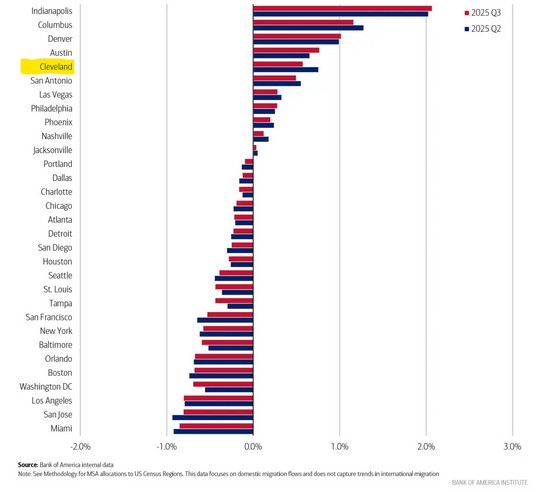
New data from Bank of America shows domestic moving activity fell again in the third quarter of 2025, extending a three-year slide as fewer Americans pack up for new jobs or new states.
Yet amid the slowdown, a small cluster of Midwestern cities has quietly emerged as a bright spot.
Indianapolis and Columbus ranked as the two fastest-growing major metro areas for the second quarter in a row, with Cleveland not far behind — making the Midwest home to three of the top five growth markets nationwide.
The draw, analysts say, is simple: lower housing costs, steady employment, and large-scale infrastructure investments like data centers that promise long-term job stability even if the economy softens.
That stands in sharp contrast to much of the Sunbelt, where cities that boomed during the pandemic affordability rush are now seeing momentum fade.
Miami, Orlando, Tampa and Houston — all former magnets for remote workers — have slipped into population declines or near-zero growth as high prices, oversupply and cooling migration dampen demand.
Across the country, nearly two-thirds of the major metro areas saw domestic outflows in the third quarter, including much of the Northeast and West Coast. Housing costs are a major reason fewer people are moving at all.
The steep rise in mortgage rates and home prices since 2022 has pushed many would-be buyers to stay put, or rent.
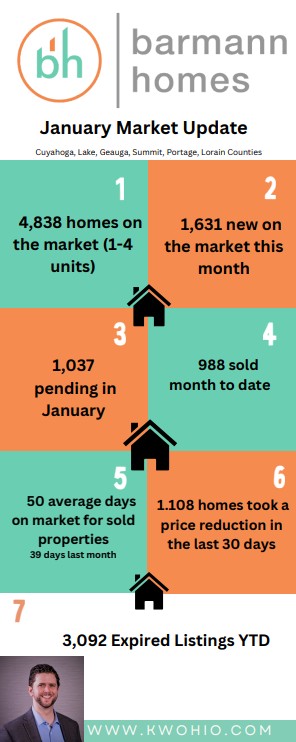
What this means to you is that you're in one of the top areas of the United States to buy, sell, or invest in real estate. Most of what you see in the news is "doom and gloom" but that is far from the case here. We're lucky to live here and the data is very strong, especially compared to most of the country.
|