Issue 105, October 21st, 2026

CAREER PATH WISDOM

THREE PODCASTS, THREE IDEAS THAT STUCK

One of the things I like best about hosting Career Sessions is that I get to learn from some really interesting people. I've now had more than 230 conversations about careers, leadership, and personal growth. And while I take something away from every discussion, occasionally a guest shares an idea that really sticks with me.


Three recent conversations have done just that. The ideas are simple, practical, and relevant well beyond the workplace:


Support the conversation, don't shift it.

Sales expert Andy Paul introduced me to the distinction between a "support response" and a "shift response." Imagine someone tells you about a terrible vacation experience. A shift response would be, "That happened to me once, too!" Suddenly, the conversation is about you.

A support response would be, "That's awful. What did you do, and were you able to salvage the vacation?" The focus stays on the other person.


Most of us shift conversations more often than we realize. We're trying to connect by sharing our own experiences, but we inadvertently make the conversation about ourselves. Andy's advice? Try asking three questions before saying anything about yourself. I've been practicing this, and it's a surprisingly effective way to become a better listener.


Follow the 24-hour rule.

Kristen Hadeed, author of the forthcoming book, Human Leadership, shared a practice she calls the 24-hour guideline.


When something bothers her or she observes behavior that needs addressing, she commits to having the conversation with the relevant person or group within 24 hours.


Her approach is about overcoming our natural tendency to avoid uncomfortable conversations – something Kristen acknowledges she struggled with for a long time. The problem is - the longer we wait, the more the issue festers, the harder the conversation becomes, and the bigger the issue seems (even if it really wasn’t a big deal).


In our discussion, Kristen acknowledged that she doesn’t always strictly meet her 24-hour target and that these conversations still make her nervous. The goal isn't to eliminate discomfort, and your expectation shouldn’t be to execute this perfectly. It's about having the courage to act despite it. I particularly like this idea because it can be applied equally to colleagues, friends, and family. Small conversations today prevent much bigger problems tomorrow.


Agreement first, enforcement second.

Matt Hunter shared an approach to accountability that also resonated: agreement first (he calls it consent), enforcement second. Too often, managers hold people accountable for expectations that were never clearly established, mutually understood, or agreed-upon.


Matt's argument is that accountability begins with an explicit agreement about what's expected. People need to understand the goals, accept them, and commit to delivering. Only then does holding them accountable become fair and constructive. It sounds obvious, but think about how often we get this backward, at work and elsewhere.


The common thread?

All three ideas come down to how we treat other people: listening with genuine curiosity, addressing issues with courage, and establishing expectations with clarity. None requires a fancy framework or extensive training, but rather just a little more intentionality in our everyday interactions.


And sometimes, those are the ideas that make the biggest difference.


JR and the PathWise team


October 19 – Podcast: You’re Always in the Job Market: How to Manage Your Career Before You Need To, with Kelly Kay. A lot of people spend plenty of time focusing on how to succeed in their jobs but far less time thinking about how to choose the right jobs in the first place. Kelly, a managing partner at executive search firm Heidrick & Struggles, shares an insider’s perspective on how to manage your career more deliberately. The discussion offers plenty of advice for active job seekers and the rest of us. Available here.

October 19 – Resources: Deliberate Practice. As professional athletes know, there’s practice and there’s deliberate practice. Practice means putting in the time, sometimes more than is really needed, under the belief that more is better. Deliberate practice adds the notion of working on specific skills in each session, and that sharper focus often translates into higher performance with less time practicing. This approach can benefit not just pro athletes but you as well. Posts available on LinkedIn and in the A to Z Guide in the PathWise Member Community.

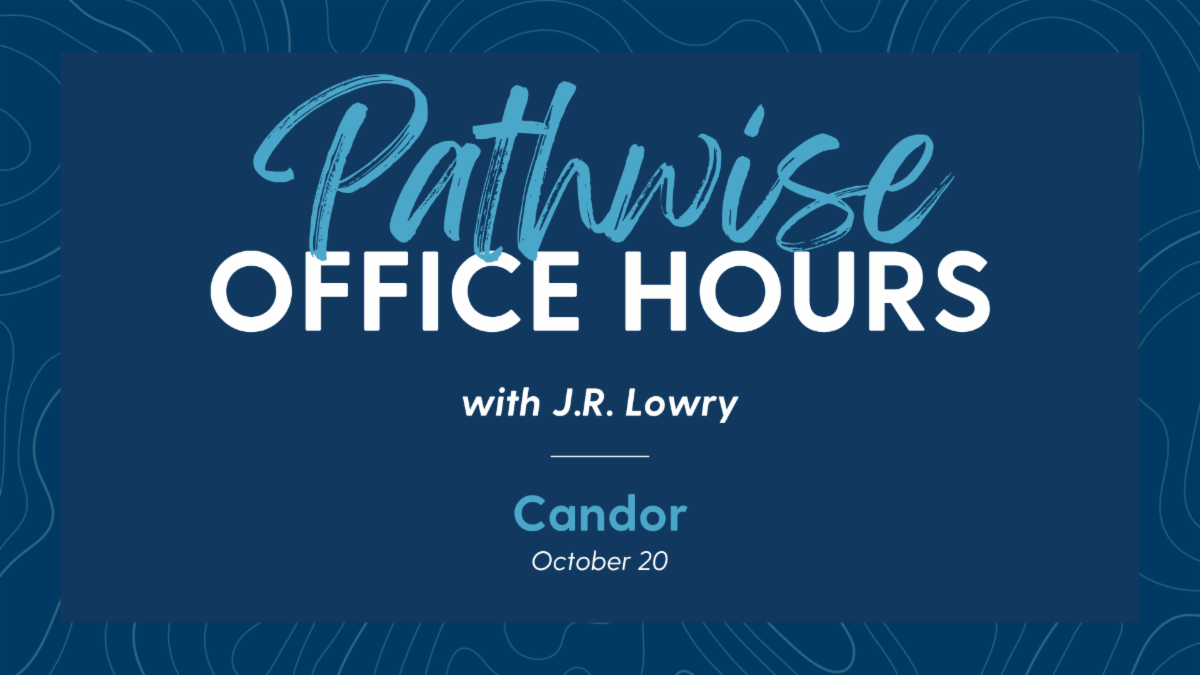
October 20 – Office Hours: Candor. Candor is essential to strong relationships and high-performing teams, but being honest doesn’t mean being harsh. Join us to explore how to communicate openly, give and receive difficult feedback, address issues before they grow, and create an environment where people can speak honestly while maintaining trust, respect, and strong working relationships. Check out the replay

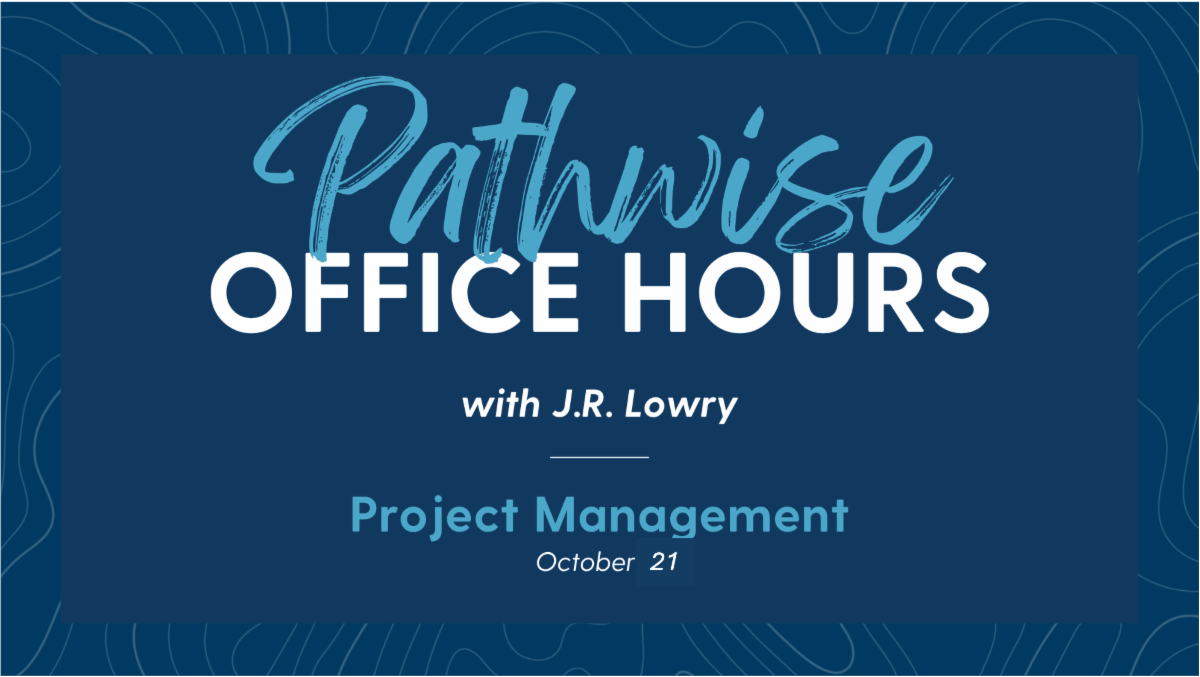
October 21 – RESCHEDULED: Office Hours: Project Management. You don't need to have "project manager" in your job title for project management skills to be important. Almost every task you complete at work is a "project" of sorts, and success is about getting the right things done, with the right people, at the right time. Join us for practical guidance on setting priorities,

building realistic plans, managing stakeholders, staying ahead of risks, and keeping projects moving when things don’t go as expected. Watch the recording here.

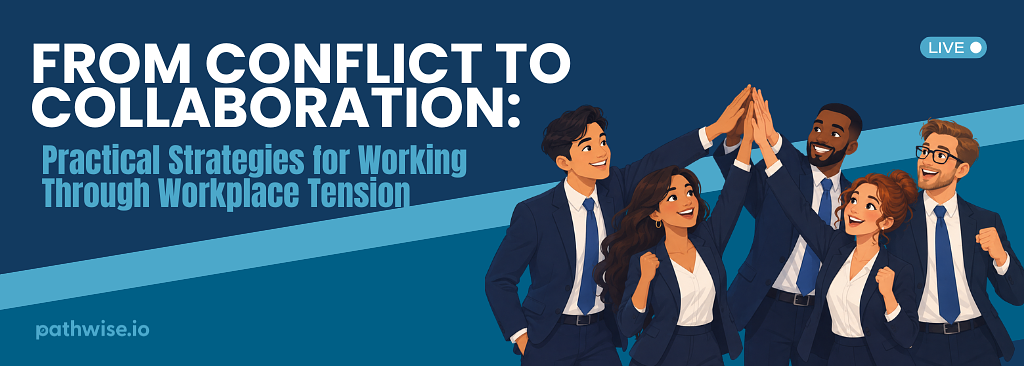
October 22 – PathWise Live: From Conflict to Collaboration – Practical Strategies for Working Through Workplace Tension. Conflict is inevitable at work - but handled well, it can strengthen relationships, improve decisions, and move teams forward. Join this PathWise Live session to learn practical approaches for addressing disagreements, navigating difficult conversations, managing emotions, and finding common ground. You’ll leave better equipped to handle conflict constructively and confidently.

October 26 – Podcast: When Putting People First Results in Putting Yourself Last, with Kristen Hadeed. Kristen Hadeed, author of Human Leadership, learned the hard way that putting everyone else's needs first can come at a steep personal cost. In our latest Career Sessions conversation, Kristen shares why she walked away from the business she built, how she rethought her approach to leadership, and why caring for others requires caring for yourself. We also explore the importance of candor, vulnerability, and difficult conversations. Available here.

October 26 – Resources: Digital Body Language. When you move from an in-person discussion to a virtual one, how do you avoid losing ways to use your body language to amplify and reinforce your message? That’s what we’ll explore this week. Posts available on LinkedIn and in the A to Z Guide in the PathWise Member Community.

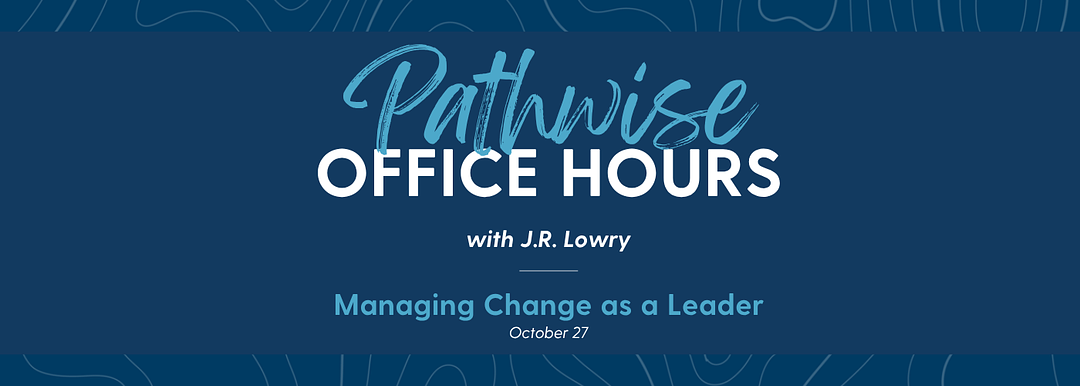
October 27 – Office Hours: Managing Change as a Leader. Coping with change is difficult enough as an individual, but how do you lead your team through change when you’re a manager? We’ll dive into how to do it well in this week’s Office Hours. Register here.

Do you want to be the boss you wish you’d had (or maybe even the one wish you had now)? Of course you do!! So check out J.R. and Daniela’s forthcoming book, available for pre-order on Amazon, Barnes & Noble, and through other book retailers.

If you haven’t signed up yet for our member community, do it today! You can keep your free membership or upgrade to one of our paid member tiers. Sign up here.


Know others who need career support – and don’t we all? Send them this newsletter and encourage them to check us out!


And please give us your feedback, on this newsletter and PathWise more generally! You can drop a suggestion in the Suggestion Box in the new member community or email us at info@pathwise.io.

STAY CONNECTED:

follow us on:

Facebook  Instagram  LinkedIn  TikTok  YouTube

About Us | Contact Us | Privacy Policy