|
As I write this issue of PathWisdom, I’m hurtling south toward London on a train from northeast England. It was a beautiful, brisk sunny morning when I left, but weather in the UK never lasts long, and it has already turned cloudy and now sunny again. Spring is in full effect, with trees greening and flowers everywhere. I’m alone and a bit weary, having parted with my three traveling companions last evening.
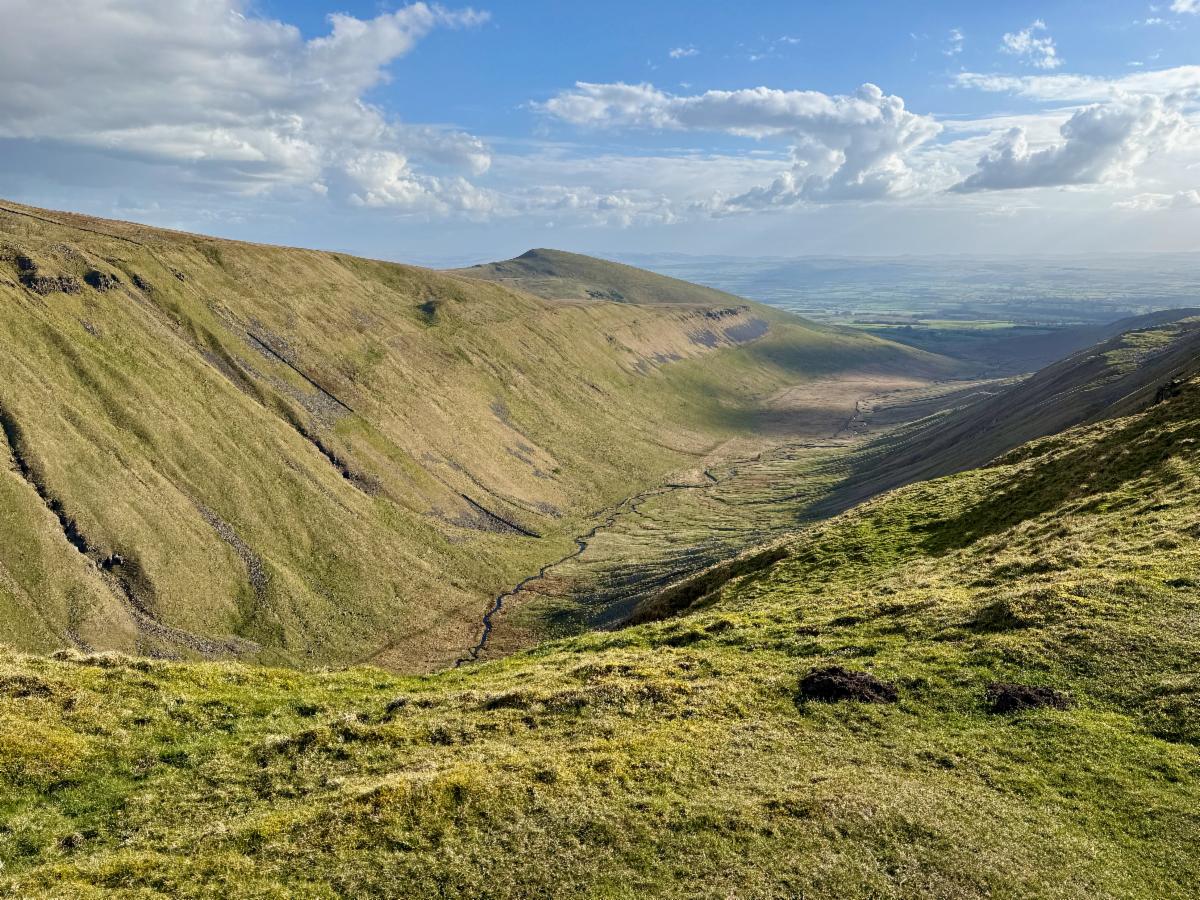
Just three weeks ago, we were all together and on a train headed in the opposite direction to begin our trip, as a dreary English winter was beginning to give way to spring. We were energized and excited, but also a bit wary of what we’d signed ourselves up for: a trek of the UK’s Pennine Way, which meanders from Edale in England’s Derbyshire to Kirk Yetholm, just over the Scottish border.
In the time in between, we walked more than 280 miles in distance and went up and down about 9 miles of elevation change. The Pennine Way is the UK’s oldest national trail, dating to 1965. It’s hilly, muddy, windy, rainy, remote, and often relentless. Our total hiking time was about 120 hours, so for these few weeks, it was akin to a full-time job.
Walking for so much time, pushing up the many hills, climbing over numerous stone walls, sharing the landscape with countless sheep and their newborn lambs, and traipsing across the many (oh so many!) boggy moors, I had a lot of time to think and reflect. Here are just a few of my takeaways and their relevance for our career journeys:
1. You walk as a team. There’s little point in racing ahead of your fellow walkers. If you do, you’ll just need to pause at some point and wait for them, and in that time you’ll lose your rhythm and get cold. You check in with each other – physically and mentally. If someone is struggling, you step in to help them, whether in the form of a snack, an extra layer of clothing, an offer to take some of their load, or just a word of encouragement. You offer advice on how to navigate a wet section of the trail. And you finish each day together, as a team. Losing anyone along the way – to injury or fatigue – would have taken away a lot from the sense of collective accomplishment we all got in finishing together.
2. You live in the moment. For almost three weeks, we enjoyed a very simple existence. We fell into a consistent daily routine: awake, eat, walk, clean-up, eat, plan the next day, sleep. One of us (not me) made a commitment to tune out the news for the entire trip. When you’re up on the moors, where cell service is spotty, you’re rewarded with the opportunity to take in all of nature’s beauty around you without outside distractions. It was a stark change from the norm and incredibly refreshing.
3. Focus was an imperative. Footing was tricky at times. If you weren’t careful, you’d slip in a muddy section or find yourself ankle deep (or worse) in a bog. It was mentally fatiguing, more so than I had expected. You learned quickly that multi-tasking was out of the question if you wanted to stay dry and on our your feet. If you wanted to check
navigation, get something out of your pack, or (at times) even look up, you needed to stop. It was a good reminder that focus and not fragmentation is a winning strategy.
4. It is indeed about the journey. When you hike a long trail, there are the high points but also the many miles in between them. On the days that offered less in terms of sights or scenery, we were truly walking for the journey itself. This, too, was a good reminder that we need to appreciate the little things and not just seek out the spectacular.
5. Taking on challenges is how we grow. I have done a lot of hiking but not done a trip anywhere near as long as this one. It was taxing, both physically and mentally. If you’ve read this far, you may well be thinking, “Why on earth would you do this to yourself? And the answer to that question lies in a quote from John F. Kennedy that I was reminded of while listening to a book along the way: “We do these things not because they are easy, but because they are hard.”
JR and the PathWise team
|