The Safety Net
October 2026
| Stay informed with the latest insights, updates, and initiatives dedicated to enhancing patient safety. | | Board of Directors Update | | |
Following the AGM of June 25 and the board meeting of July 14, I assumed the role as Chair of your board. We said good-bye to Allison Kooijman and Angie Hamson, both of whom provided valuable input to our board discussions. Arvin Minocha resigned from the board as of the end of September. He has been a valuable board member as well. We look forward to their continued involvement with the work of our organization.
We welcome Diane Aubin and Donna Davis to our board. Both Diane and Donna, who need no introduction, will bring their patient safety skills, expertise and commitment to the board, contributing to rich discussions and effective decision-making.
We have 3 board committees. Maryanne D’Arpino continues as Chair of the Governance Committee, Pauline Warden as Chair of the Finance, Audit and Resources Committee and Kathy as Chair of the Communications Committee. All board members are asked to sit on at least one board committee.
The key issues being discussed within your board include:
-
Finalization of the Conflict of Interest Policy, Privacy and Confidentiality Policy and Code of Conduct Policy. This has led to the Confidentially statement that all of us will sign in order to demonstrate that we have read and will uphold the details of those policies.
- With the confirmation of our funding that was received in July, active recruitment for a new Executive Director (ED) through a national search began at the end of July and was completed in September with the appointment of Hina Laeeque. Some of you may remember Hina when she worked for Healthcare Excellence Canada / Canadian Patient Safety Institute (CPSI). She brings new energy and valuable expertise to lead PFPSC through the next year. This is a one-year appointment. Re-appointment hinges on obtaining funding. Please give Hina your strong support as she assumes her responsibilities. I’m confident that we will experience enhanced coordination and productivity with Hina ‘at the helm’! Patient safety will once again begin to emerge as a critical area of focus for healthcare leaders, patients/families, and all stakeholders.
-
You received a copy of the Think Tank report. The next step is to merge the strategic recommendations within that report with our existing Strategic Plan. This will be undertaken beginning in October.
-
I attended the International Society for Quality in Health Care (ISQua) annual conference in Dublin, Ireland in September. This is an organization with which I’ve been a member for 25 years. I had the honour of presenting a session on our Mutual Healing Program. There were many rich plenary and workshop sessions covering areas such as patient safety, quality improvement, AI and accreditation. This conference in 2027 will be held in Vancouver Sept 19 – 22.
-
Canadian Patient Safety Week (October 26-30) is rapidly approaching. Our thanks is extended to the KT Working Group, Communications Working Group, Janet and Binary Logic (our webmaster) for organizing our messaging for this event.
I give you my commitment to open and transparent communication. Feedback and suggestions are welcomed. With all that is happening (as you can see throughout this newsletter), I may have left something off the list from a governance perspective. Please contact Janet at janet.bradshaw@patients4safety.ca or myself at wendynicklin2189@gmail.com.
Together we make the difference!
Wendy Nicklin
Board Chair
| |
The View From Here Working Group Update
| | |
As noted in the most recent newsletter, a new working group “The View From Here” has been formed by combining the former Patient Safety/Incident Management WG and the Mutual Healing WG. Our focus will be to promote and utilize the incident management/mutual healing resource that was developed. The four infographics and accompanying handbook have received very positive reviews. They are posted on the PFPSC website here.
Please contact hello@patients4safetycanada if you'd like to learn more about how this resource and PFPSC can assist in education on these two important subjects as well as engaging and working with PFPSC members.
Wendy included in her Board Chair report that she delivered, at the ISQua Conference in Ireland this past September, a presentation on Mutual Healing which was created by Diane Aubin, Donna Davis and Wendy. Thank you, Wendy for amplifying the message of Mutual Healing to others beyond our shores.
We are so thankful for the dedication and expertise of those who sit on this working group. Please reach out if you are interested in joining this dynamic group.
Together for healing,
The View From Here WG
Chair-Donna Davis, Wendy Nicklin, Dale Nixon, Linda Hughes, ad hoc members- Diane Aubin, Alice Watt, Amy Nakajima.
| | Knowledge Transfer (KT) Working Group Update | | |
The Knowledge Transfer group with the Communication Group worked over the summer to write or record the lived experiences of Patients for Patient Safety Canada Members who live with chronic diseases as well as their vision for how their healthcare could be safe. This was in celebration of World Patient Safety Day 2026, ‘Safe Care for Life’ for people who have non-communicable (chronic) conditions. Over the month of September their lived experiences were posted on Instagram, Facebook and LinkedIn. We applaud the PFPSC who took the time to create these inspirational messages. We need the help of all PFPSC Members to view what they have shared on the PFPSC website and/ or on social media platforms. Together we can elevate the patient safety messages we all want to be visible.
In October, the KT Group will celebrate Canadian Patient Safety Week (Oct. 26-30/26), around the theme, ‘What Shapes Safer Care?’ and supporting ideas of ‘Every moment is an opportunity to shape safer care. Every moment counts’. Look for a link from Janet to share your ideas about what shapes safe care for you – one word or a short statement. Also let us know if you have a connection to community groups who would benefit hearing about the CPSW messages. Please support and share the lived experience videos which will be posted on the PFPSC website and on social media. Your can help raise the visibility of these messages. Thank you for taking on the task of being social media supporters.
Finally, the KT group always welcomes new members, especially if you have an interest in or experience with social media. The KT Group is also looking for a new Chair for this group; contact Theresa Malloy-Miller if you are interested.
PFPSC Knowledge Transfer Group
Theresa Malloy-Miller, Chair, Paula Orecklin, Esha Ray Chaudhuri, Kathy Kovacs Burns, Andrew Milroy
| |
Communications Working Group Update
Supporting Communication and Connection
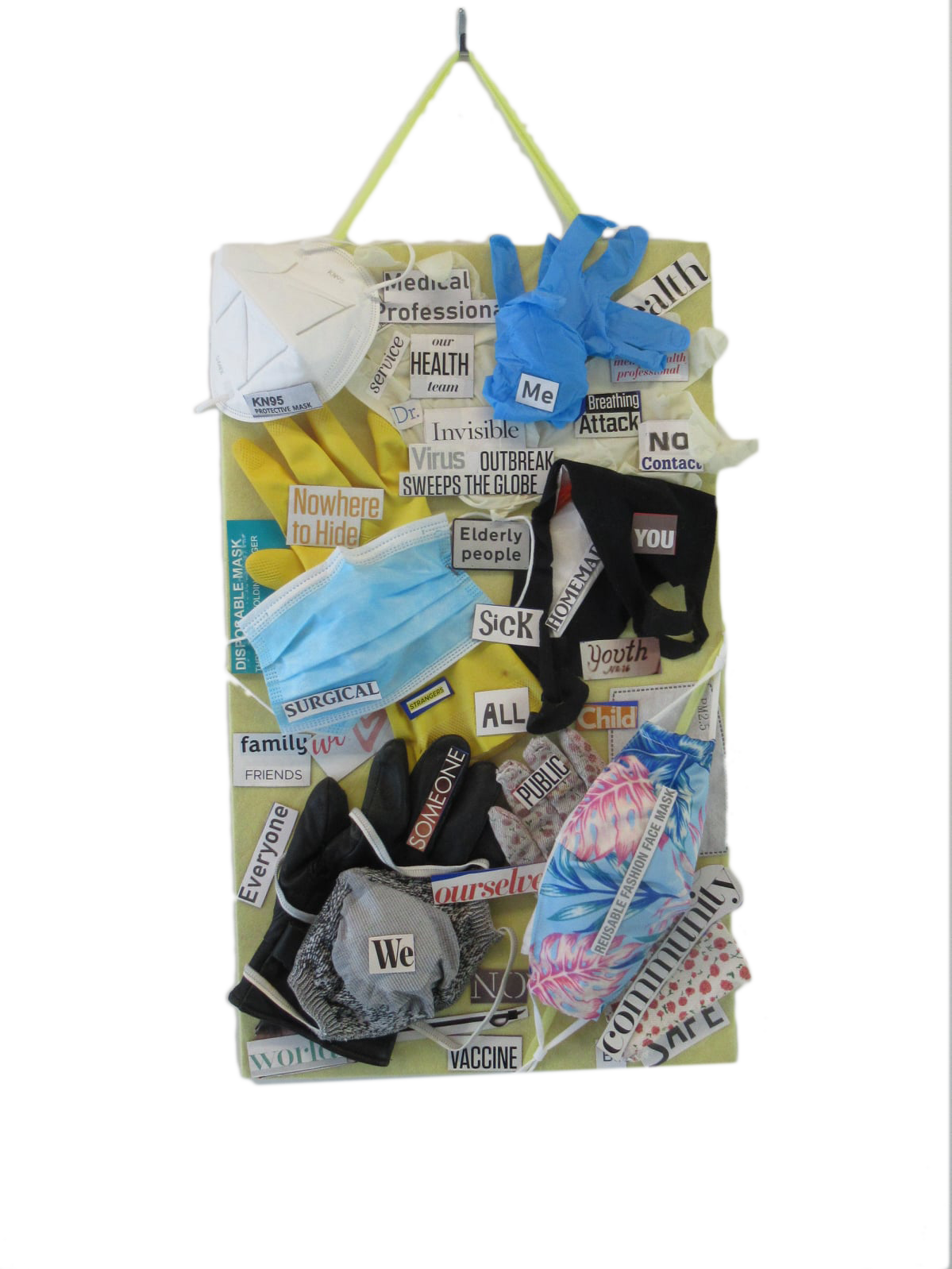
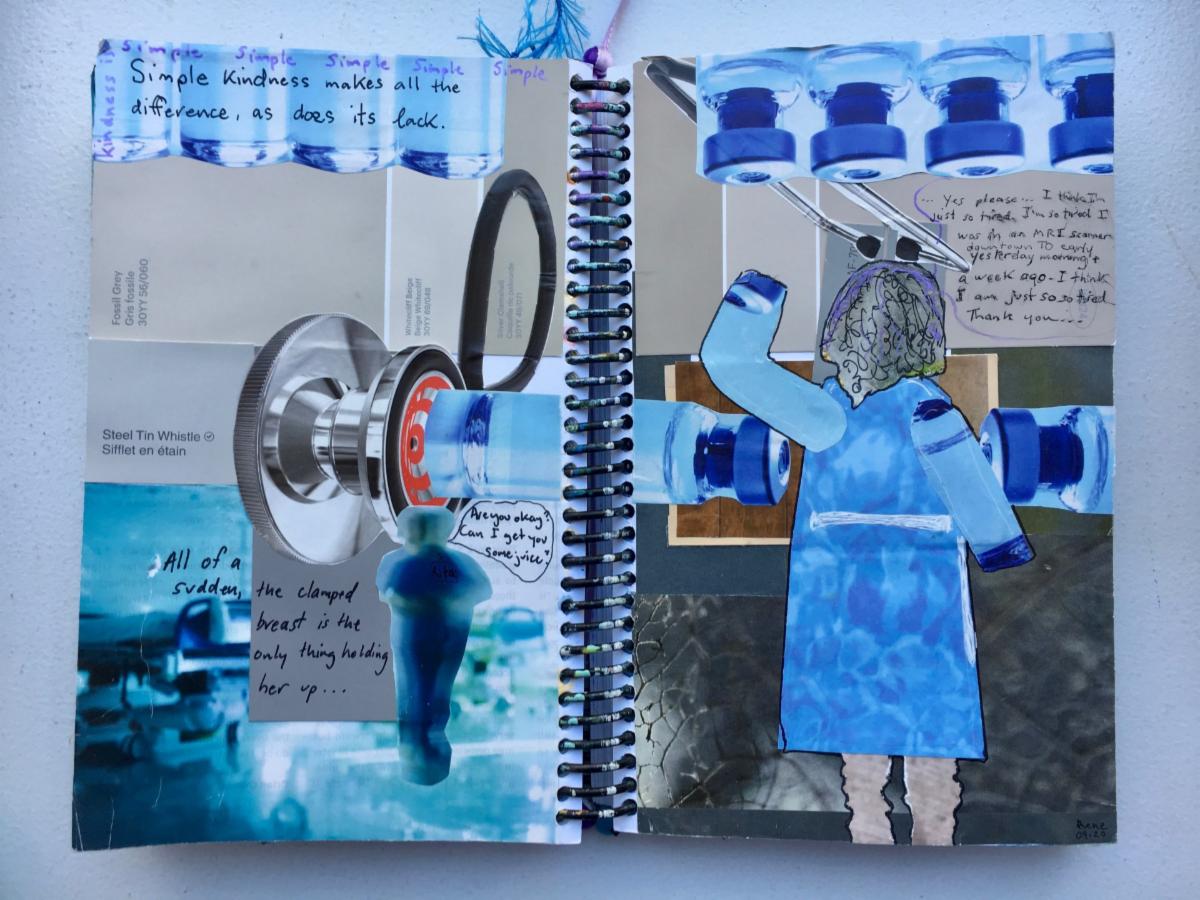
| | Stop the Spread, by Janine Lindgren from HeART of HealthCARE virtual art gallery | |
We are pleased to welcome Clare Robertson, who recently became a member of PFPSC, to the CWG. Thank you Clare for jumping right into the work of PFPSC!
The Communication Working Group's ( CWG) main focus recently has been to plan and execute social media posts to raise awareness of Patients for Patient Safety Canada aimed at bringing forth some of the burning issues in healthcare today. The intent of the posts is also to inspire patients, families and healthcare providers who have a lived experience of harm, or those with an interest in improving patient safety and quality healthcare, to become members.
We are working on reviewing and updating the PFPSC website. We support the Knowledge Transfer Working Group on the various healthcare campaigns-most recently for Canadian Patient Safety Week October 26-30. Go to the PFPSC website to view PFPSC's contribution to Canadian Patient Safety Week.
Further work may include developing a new PFPSC brochure for dissemination across Canada and utilizing the Communication Toolkit resource to enhance internal and external communication.
We welcome Hina Laeeque as ED and look forward to working with her. With Hina on board we will try our best to resume the monthly member update email that keep the members informed of important info/opportunities etc.
Together for Patient Safety,
The CWG
Chair-Donna Davis, Shalini Periyalwar, Sanja Pavolvic,Paula Orecklin, and Clare Robertson
| | |
Two new members have recently joined us Bonnie Lantz and Clare Robertson. So pleased they have joined us and both are already involved in our work. Three other persons are currently in the process of applying.
Linda participated at an exhibit booth ( space provided free of charge by the Association of Registered Nurses of Manitoba) at the Canadian Nurses conference which was held in Winnipeg which 700 nurses attended. There was strong interest in PFPSC and we hope to recruit more members through this initiative as well as increase awareness about PFPSC.
Membership criteria are under revision and being handled by our communications working group. The intent is to make it clearer that people with a desire to work to improve patient safety but who or their family have not experienced unintended harm are welcome to apply.
More to come.
Membership Working Group
Linda Hughes (chair), Melissa Sheldrick,Donna Davis ,
| | |
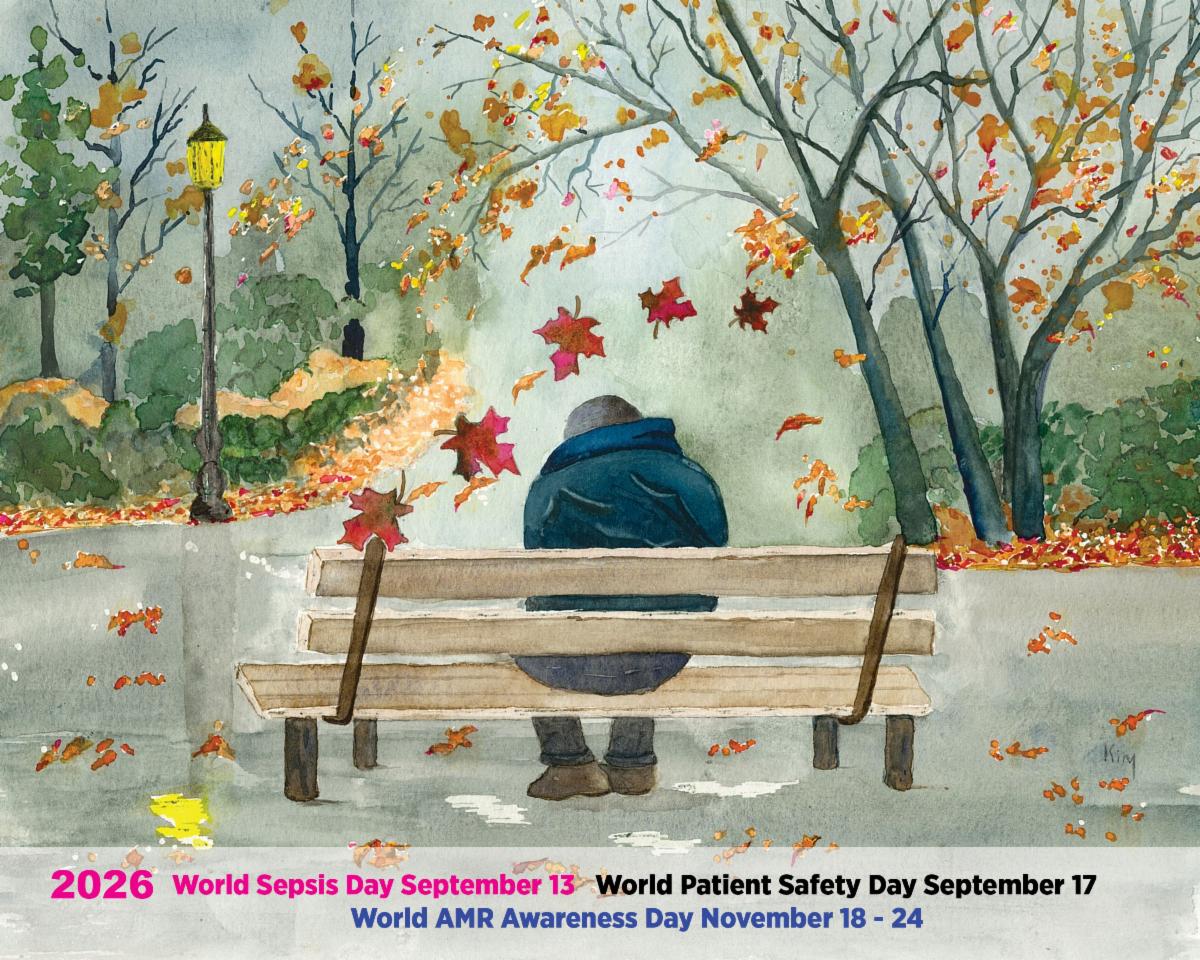
The Heart of Healthcare Gallery is sitting quietly in the background for members to browse and make reference to as you promote patient safety in your specific areas of interest.
Please let Janet know if using any piece in your promotions and always credit the author.
Please review the galleries and submit performing or written or visual art, if so moved.
You may be inspired by the Canadian Patient Safety Week (Oct 26-30) campaign
or by The World AMR Awareness Week campaign (Nov 18-24).
We look forward to seeing the gallery refreshed this year.
Kim Neudorf
HeART of HeathCARE Virtual Gallery
| | Canadian Alliance for Patient Safety- October 2026 Update | | |
On September 14, 2026, the Canadian Alliance for Patient Safety (a project of PFPSC) held their quarterly meeting. Fifteen members from across Canada came together to discuss the appropriate use of anti-psychotic medications with seniors.
At the September Alliance meeting, Christina Jeong from the Institute for Safe Medication Practices (ISMP) Canada, presented the ISMP Canada project- Appropriate Use of Anti-psychotic Medications in Long Term Care (LTC). This project was done in partnership with the Ontario Ministry of Long Term Care. The objective was to reduce the risk of adverse events and preventable harm with residents in (LTC). In 2021, the project started with 10 champion Homes, 60 Trailblazer Homes, and up to 100 Innovator Homes. The project included physicians, nurses, pharmacists, residents and caregivers. The project provided tools, education and coaching. This was an 8-month collaborative with the intent to develop quality improvement goals which focused on increasing patient-centred care and the use of non-pharmacological strategies (i.e. pet therapy, music therapy, doll therapy etc). It was also hoped that the medication risks of stroke, falls, pneumonia and mortality would be reduced.
Video: It Takes a Team to Care for a Resident:
All resources for ISMP Canada’s LTC initiative are found here
Handbook
Tara Walton, from Choosing Wisely Canada added details about efforts at a national level by the ‘Appropriate Use Coalition’, started in 2023 as a ‘grass-roots’ group. In January 2025, they set a quality indicator target of 15% use of anti-psychotic medications in LTC settings. If facilities are over this target they try for a 15% reduction in use annually. In February 2026 they started a certificate process which LTC centres can submit data to gain a certificate. When medications are tapered off, families find that residents converse and engage more. Families are very excited about this.
https://www.cda-amc.ca/appropriate-use-antipsychotics-long-term-care
https://ltcmeds.ca/
These are very encouraging projects which are clearly designed to increase patient safety for residents in LTC. Well done ISMP Canada and the National Appropriate Use Coalition!
Also at the September meeting, the Co-Chair transition plan for 2027-28 was announced. Health Quality Alberta will assume the Co-Chair role with PFPSC starting in January 2027. The Institute for Safe Medication Practice Canada (ISMP Canada) will complete their two-year term as Co-Chair with PFPSC in December 2026. Thank you to all the partners in the Canadian Alliance for Patient Safety -together we can make a difference for patient safety in Canada.
| | |
Hina Laeeque
Hello PFPSC members!
I'm delighted to introduce myself as the new Executive Director of Patients for Patient Safety Canada.
Patient safety has always held a special place in my heart. I have spent nearly two decades in healthcare, including positions federally, provincially, and at not-for-profit organizations. Over a decade of this time was with the Canadian Patient Safety Institute and Healthcare Excellence Canada, leading national patient safety initiatives and collaborating with patients, families, healthcare leaders, and governments across Canada on building a national patient safety strategy. Some of the most meaningful moments of my career have come from listening to patients and families share their experiences and seeing how their voices can influence real change.
After several years exploring entrepreneurship and building a health and wellness business, I'm excited to return to the patient safety community in this new leadership role. I have many passions, including healthcare leadership, entrepreneurship, a fitness enthusiast and teacher, and proud mother of children who keep me on my toes in Edmonton, Alberta.
My message to our members is simple: You are the heart of Patients for Patient Safety Canada.
Your lived experiences, courage, and commitment to making healthcare safer are what make this organization so important. I recognize the tremendous contributions of those who have built and sustained PFPSC over the years, and I look forward to learning from you.
As we begin this next chapter together, my hope is to strengthen our community, create meaningful opportunities for members to contribute, build new partnerships, and ensure that the patient and family voice continues to influence healthcare across Canada.
I believe that meaningful change happens when we listen, collaborate, and turn our shared experiences into action. I certainly bring passion and purpose, with a bias towards action.
I look forward to meeting you, hearing your stories, and working alongside you to advance our vision of Every Patient Safe.
Warmly,
Hina Laeeque, MSc, CHE
Executive Director
Patients for Patient Safety Canada
Hina.laeeque@patients4safety.ca
| | |
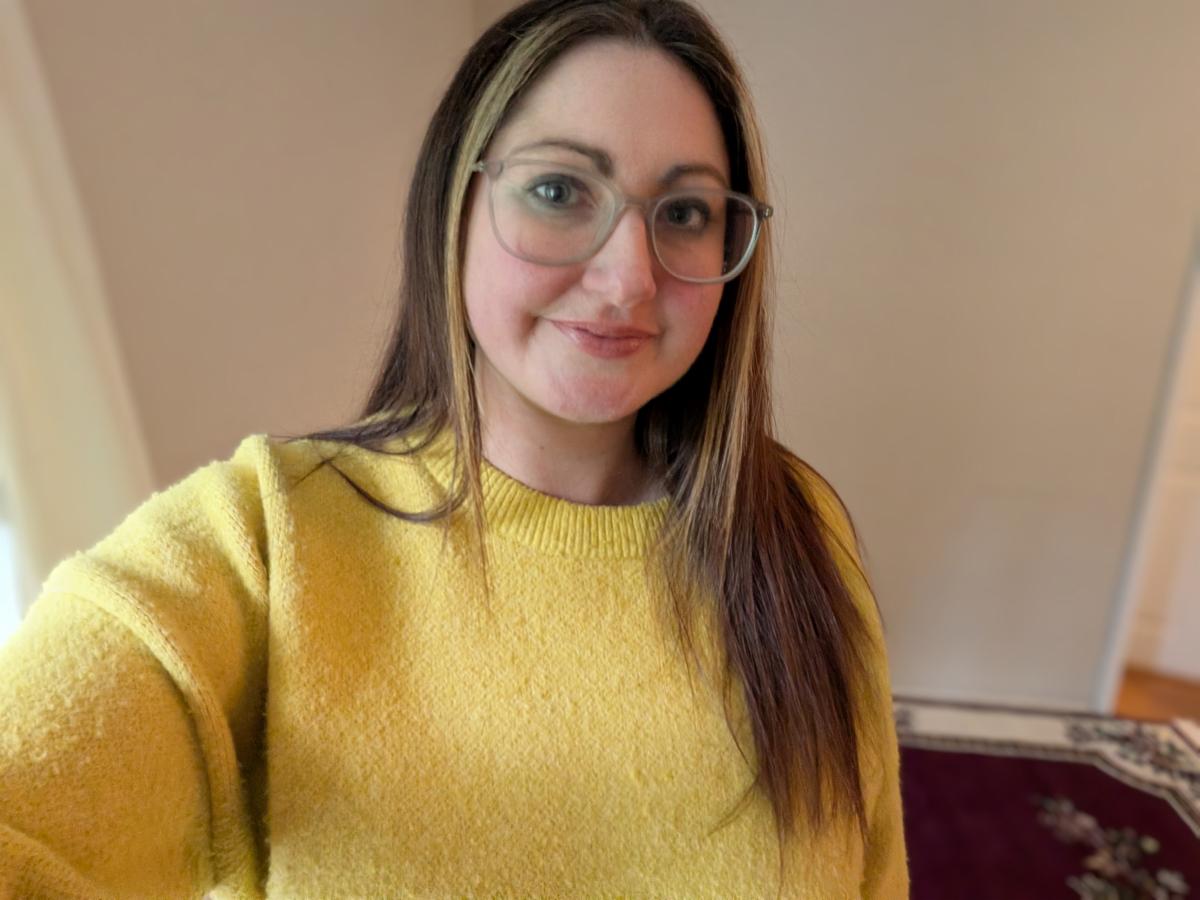
Clare Robertson
I’m a 35-year-old woman with a permanent, life-altering disability caused by a pill my
doctor gave me when I was 21.
I recently moved to Canada from England, and have a background in marketing and communications. Since understanding more about my iatrogenic ( healthcare related)harm, I have volunteered with organizations supporting people who have been harmed by medication, worked with my British MP to communicate issues to the Department of Health and Social Care, communicated my lived experience to researchers, and taken part in informational webinars alongside psychologists, psychiatrists, and other people with lived experience. I hope to be able to help raise awareness of the importance of patient safety through volunteering with Patients for Patients Safety Canada.
Growing up, I was a shy, emotional, artistic, empathetic person. Music and art were
my life. I was clever in school, had lots of close friends, and a loving supportive
family. Before university, I was so excited to shape the rest of my life. I was a cellist
who studied music, art, film, and literature. I loved exercise and took extra-curriculars
— overall, I was a well-rounded, happy person who enjoyed whatever I did and took
pride in it.
I could not have had any way of expecting that my life would turn out the way it did.
Unfortunately, a chain of events led me to temporarily forget the parts of my life I had
valued so deeply. I was dealing with some emotions that were too big to understand,
which led me to drop out of university. I was a perfectionist and could not accept
what I’d done. At the same time, a close friend of mine had taken his own life, and I
was devastated.
I needed time to process what had happened, but I was given Prozac.
When doctors give you antidepressants, they say things like “you might get worse
before you get better” — part of a narrative that minimizes drug harms. After Prozac,
I cried for about 2 weeks, then I entered an altogether different state, which I now
recognize as a manic response.
Because of comments like the former, I was unaware my reaction wasn’t typical.
Because medication reviews are subjective, and are not built to monitor for adverse
effects, my doctor did not pick up that something was wrong.
In time, I noticed that I was not sad anymore, but I also noticed that I was not
anything — I lost my capacity to feel. Particularly, I no longer experienced
excitement, romantic emotions, attachment, attraction, or desire. I lost my sexuality
entirely. It also became apparent down the line that my body did not respond
physically to those feelings anymore, and that I have physical sensory numbness. As
well, I had gained a huge amount of weight due to the medication, which led to me
isolating myself and losing confidence at a critical stage of social development.
I reported my symptoms to my doctor, who then acted strangely, and did not tell me
they were “side effects” — if she had told me, I would have stopped then. But my
doctor did not reveal this information, and I continued to take Prozac for three years.
Unfortunately, these symptoms didn’t resolve and are now permanent — this condition is known as PSSD. Over the years, doctors told me it was down to
trauma and depression, so I initially didn’t understand my situation. But later, only when more information became available, I realized it was caused by the pills and obtained a formal diagnosis.
If my doctor had been honest with me, I might have been able to stop taking Prozac
sooner. If I had understood my symptoms were caused by the medication I was given, I might not have
internalized them, thought I was different or blamed myself for my entire twenties
and half of my thirties.
If I had been given informed consent, I would not have agreed to take
antidepressants, and my life would have continued its original trajectory. How I relate
to myself and others would be entirely normal.
| | | We will feature 2-3 member profiles in each newsletter to get to know each other better. Please send your profile and picture to hello@patients4safety.ca | | |
Your voice matters: Help Advance Connected Care for Canadians Act
The Connected Care for Canadians Act (Bill S-5) is federal legislation intended to improve patient safety and care coordination by enabling the secure, timely exchange of electronic health information and prohibiting “data blocking” by health-information technology vendors. The legislation is designed to help Canadians and their health-care providers access and share relevant health information when needed, reducing the risks associated with fragmented records, unavailable information, duplicate testing and other gaps in care.
The current Bill S-5 was introduced in the Senate in February 2026, passed second reading, committee consideration, report stage and third reading in the Senate on May 26, 2026. It was subsequently introduced in the House of Commons on May 28, 2026. As of October 3, 2026, it has completed first reading in the House but has not yet proceeded through second reading.
https://www.canada.ca/en/health-canada/news/2026/02/the-government-of-canada-introduces-legislation-to-build-a-more-connected-health-care-system.html
The CMA has provided a very concise and clear overview of the intent of the Connected Care Act at the link below.
https://www.cma.ca/latest-stories/what-connected-care-act-means-you-whether-youre-patient-physician
Patient safety depends on information following the patient — not the other way around.
Timely access to complete health information is an important component of safe, person-centred care. Like so many other patients, some PFPSC members have experienced how missing information, lack of exchange of information etc. have impacted their care and safety. PFPSC and our members will be watching closely the progress of this bill through Parliament and we support its intent.
| | Do you have contributions you'd like to highlight for the next newsletter? Please reach out to hello@patients4safety.ca | |
-
Our next all member meeting is on October 28, 2026. We are offering one time slot: 11:00 am PT/12:00 pm MT/ 3:00 pm CT/ 2:00pm ET. If you need the invite please contact Janet at hello@patients4safety.ca.
-
Canadian Patient Safety Week is October 26 - 30 watch for update on our webpage
- The World AMR Awareness Week is November 18 - 24
| |
"This poem comes from the great niece of our member Donna Davis. Avery is in the Bachelor of Nursing program. With insight like this poem describes, patients and families of Avery will be in good hands...." | | | |
|
Walking in Balance Capstone
Avery McConnell
The Things We Cannot Measure
They taught me to count.
Respirations
Heartbeats.
Blood pressures.
Glasgow Coma Scores.
Milligrams.
Millilitres.
Seconds.
In emergency nursing,
Numbers become a language.
A rising heart rate.
A dropping oxygen saturation.
A blood sugar too high.
A blood pressure too low.
I learned to trust what could be measured.
Because measurements save lives.
But somewhere between the monitors
And the medication carts,
I realized
they never taught me how to measure grief.
Or loneliness.
Or the weight of a person
who has spent a lifetime
being unheard.
No monitor tells me
when trust has been broken
generations before I ever walked
into the room.
No lab value
measures the silence
left behind by colonialism.
No imaging scan
reveals the strength it takes
to keep showing up
after a healthcare system has repeatedly taught you
that you do not belong.
This course asked me
to look through another lens.
Not to abandon
what I have learned,
but to widen it.
To open one eye
to Western medicine –
to evidence,
science,
assessment,
intervention.
And the other
to something I had not fully understood.
Relationship
Community.
Spirit.
Land.
Story.
Healing.
I learned that these are not separate from health.
They are health.
The medicine wheel
did not ask me
to choose one dimension.
It reminded me
that none can exist
without the others.
The body
cannot heal
while the spirit is forgotten.
The mind
cannot find peace
when relationships are fractured.
The heart
cannot carry endless grief
without asking the body
to bear its weight.
Wellness
is not balance
because life is perfect.
It is balance
because we keep returning
to ourselves,
again
and again.
The seven Grandfather Teachings
stopped feeling
like lessons.
They became mirrors.
Wisdom
is realizing
that every patient
knows something
I never will.
Love
is choosing compassion
when judgement
would be easier
Respect
is understanding
that another person’s way of healing
does not need to resemble mine
to deserve honour.
Bravery
is questioning systems
that have always existed,
even when doing so
feels uncomfortable.
Honesty
is admitting
how much I still have to learn.
Humility
is recognizing
that a nursing degree
does not make me
the expert
in someone else’s life.
And Truth…
Truth
is understanding
that reconciliation
is not a destination.
It is a decision.
One I will have to make
every single day
I wear this uniform.
I once believed
that caring meant
having the answers.
Now I think
it begins with asking better questions.
Not,
“What’s wrong with you?”
But,
“What happened to you?”
“Who walks beside you?”
“What gives you strength?”
“How can I walk with you?”
Wiidooktaadyang
showed me
that healing
was never meant
to happen behind separate doors.
It is not
health here,
housing there,
mental health somewhere else.
It is people
gathering around one another
the way families always have.
Like grandmothers
bringing food.
Neighbours
raising a wall together.
Communities
sharing what they have
because someone else
needs it more.
No wrong door
No one
Left behind
Not because every answer
already exists
but because no one
should have to search
for healing
alone.
I think differently now.
Not because I have rejected
Western nursing.
But because I have learned
that evidence
and lived experience
can stand
beside one another.
Two-Eyed Seeing
isn’t choosing
which way is right.
It is understanding
that wisdom grows
when both are honored.
One eye
still watches
the cardiac monitor.
The rhythm.
The medications.
The laboratory results.
The other
searches
for the things
machines
will never measure.
Hope.
Identity.
Belonging.
Purpose.
The stories
patients carry
long before
they become
my patients.
Walking in balance
does not mean
I will always get it right.
There will be days
when I forget.
Days
when I become distracted
by alarms
instead of people.
Days
when the pace of healthcare
tries to convince me
that efficiency
matters more
than humanity.
On those days,
I hope I remember this.
Healing
has never belonged
to medicine alone.
Sometimes it begins
with listening.
Sometimes
with sitting in silence.
Sometimes
with making space
for a family’s traditions,
an Elder’s wisdom,
or a ceremony
that reminds someone
who they are.
Sometimes
the greatest intervention
is allowing someone
to be seen
without asking them
to become someone else.
So I will keep learning.
I will keep listening.
I will carry
science
in one hand,
and humility
in the other.
I will remember
that every person
who comes through the emergency department
brings far more
than a diagnosis.
They bring
their family,
their culture,
their losses,
their resilience,
their spirit,
and generations
of stories
I may never fully understand.
My responsibility
is not
to know every story.
It is to make sure
every story
has a place to be heard.
Because the most important things
I will ever witness
as a nurse
are the things
I cannot measure.
| | | |
| |
October is Cyber Security Awareness Month in Canada
Cyber Security Awareness Month (Cyber Month) is an internationally recognized campaign held each October to help the public learn more about the importance of cyber security. The campaign helps Canadians stay secure online by teaching them simple steps to protect themselves and their devices.
| | | | Reading/Listening Suggestions | | |
Follow CBC Health’s Second Opinion for the latest news on what’s happening in healthcare across the country. CBC News Second Opinion
Dialogue Health Technologies Inc. has expanded its Medical Second Opinion (MSO) program to employers across Canada. Servicing over one million Canadians, the end-to-end service connects plan members with specialists from leading Canadian universities and hospitals for indepeneant reviews of complex diagnoses and treatment plans supported be a dedicated care team from intake to follow up. https://www.canhealth.com/2026/06/17/dialogue-launches-medical-second-opinion-service/
A surgeon amputated the wrong leg of Mr. Kennedy. On Nov. 22, 2024, the WRHA, through Grace Hospital officials, disclosed to Kennedy that the processes for surgery preparation and consent did not follow standard procedures for the amputation, which was deemed a critical incident, the claim says.https://www.canhealth.com/2026/08/26/wrong-leg-amputated-man-sues-hospital/
Informative infographics summarizing patient harm statistics for 2025-2026.https://www.cihi.ca/en/patient-harm-in-canadian-hospitals-it-does-happen
In a study of more than 2,000 patients, those who suffered from medical professionals’ diagnostic errors were twice as likely to be described with stigmatizing language in their medical records. Once labeled difficult, patients were more likely to face barriers and receive poor care.
To be sure, there are problematic patients, even dangerous ones. But for the rest of us, the imbalance between our defenselessness and the doctor’s discretion can create an unhelpful dynamic, one that pushes us to stop advocating and start accommodating.
Doctors can’t be expected to recognize every time patients hold their tongue or downplay their pain, but it is the doctors’ responsibility to create a climate of psychological safety so patients feel comfortable speaking.
https://www.nytimes.com/2026/08/22/opinion/women-pain-doctors-medical-system.html?unlocked_article_code=1.7lA.pH6T.L1UKYLtotJeo&smid=nytcore-ios-share
| | |
Our Company | Contact Us | FAQs | Privacy Policy |
| | | |