Now is a good time to join us in our work for justice and peace!
To become a member of EPF, click here
|
|
Peace Out!
Week One Hundred Thirty-seven
|
|
THE TWO ESCAPES
offered by the Rt. Rev. Dan Edwards
EPF National Chair
Lord make me an instrument of your peace, we pray. Clearly God needs more instruments of peace today. We want peace. We want to be instruments of peace. But we usually are not such instruments. Being an instrument of God’s peace isn’t easy. So we usually escape from the mission in one of two ways. Simply not escaping would mean showing up and, as the adage goes, that’s 90%.
The Escape Inward. A common avenue of escape for many centuries has been the escape inward. New Agers and spiritual Christian’s didn’t invent it. Classical philosophy in the West and Vedic philosophy in the West often lapsed into the escape inward.
The escape inward may deny that the turmoil in the outside world is real or that it is important or that it will last. Or it may embrace a helpless despair. What can I do about it? We shrug rather than act. We disconnect from humanity, from the Body of Christ, detach, get ourselves into a zone. The stress of life in the world is hard. Many people, especially those who lack a strong core of faith, cannot handle it. So they resort to the escape inward and their silence becomes assent to the oppression and injustice of the world.
The Escape Outward. The opposite route is even more problematic. What actually goes on inside us isn’t a bliss zone. We all have our fears, our traumas, our griefs, our angers, our resentments and grievances. It’s messy in there. The most common way to escape our inner demons (actually they are not demons but they are painful experiences) is to turn our attention outward, but what we see isn’t what’s really out there. We see what’s in here as if it were out there. That’s called projection. It means seeing in another person’s face the things we don’t want to experience in our own heart.
The first act of peacebuilding is to withdraw our projections, to stop seeing others as the incarnations of our pain. When we become addicted to trauma, we need villains. Our world is reduced to an us against them battle. Peace requires us to come to terms with the inner turmoil. But the problem is that when we isolate, we usually don’t engage our messy selves. We go into an escapist zone of happy thoughts. Reencountering other people disrupts that escapist spirituality.
I do not intend to prescribe either a way inward or a way outward. There are various approaches to both ways. My point is simply that it takes both, together, in balance. We cannot engage others for peace without healing our inner brokenness; and we cannot find our inner brokenness except through our relationships with each other. An option you might consider just as a part of your journey is to participate in our Peacebuilding Online Series. The next offering is on dealing with trauma, our trauma and our neighbor’s trauma. It’s free, online, one hour, Sept. 5. You can learn more and register here. https://www.eventbrite.com/e/episcopal-peace-fellowship-peacebuilding-online-project-emu-trauma-tickets-154283569309?aff=ebdssbeac
Elizabeth O’Connor was a sainted lay leader of the Church of the Savior in Washington, DC, a community famously dedicated to justice and peace. Her book, Journey Inward, Journey Outward stressed the necessary link between spirituality and political engagement. It isn’t a recipe for how to do it. There are different ways. But O’Connor made the simple point: peace must be worked out both inwardly and outwardly. We can’t have one without the other.
|
|
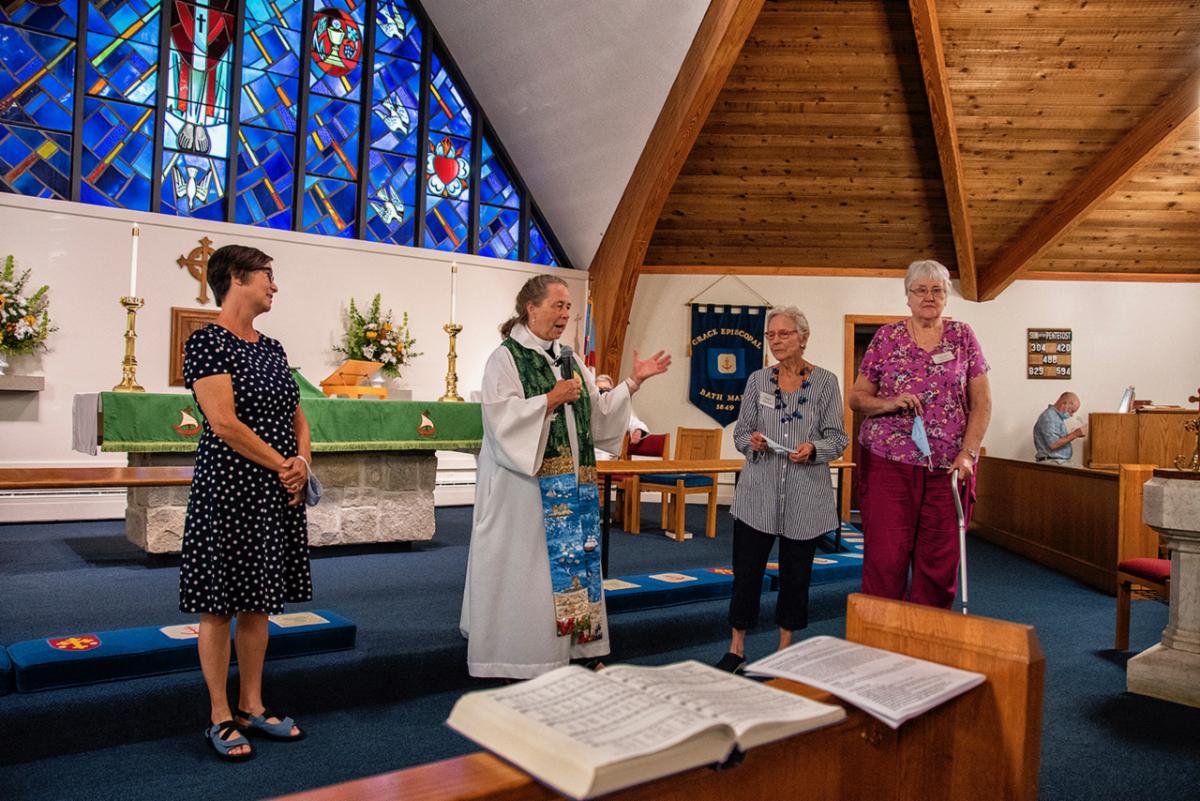
Melanie Atha, the Rev. Pamela Mott, and EPF Maine leadership
Diane Patterson and Glenis Elliot share the Gospel on Sunday, August 15, 2021
|
|
GRACE AT GRACE EPISCOPAL CHURCH, BATH, MAINE |
|
Grace is a name we give to God’s mysterious interplay with reality, her way of sneaking into everyday life and taking us by surprise. Grace is also the name of a place, an Episcopal parish in midcoast Maine striving to put itself together on the other side (we hope) of the Covid pandemic. Grace happened at Grace, it seems to us EPF locals, on the recent beautiful Sunday morning in August when Melanie Atha stopped in Bath to spend time with us.
You can’t make it happen—grace just happens. But it helped to have the new Priest-in-Charge Pamela Mott highlight Episcopal Peace Fellowship by turning the sermon into a conversation about EPF and its presence in Maine as a diocesan-wide chapter. A couple of us active members were asked to reflect with Melanie on our commitment to the mission and work of peacemaking. Our talk was abbreviated but intense, leaving us with questions, those posed and others, lingering still in our hearts and heads. Why did we get involved with EPF, what are some of the issues that energize us, and if and how we relate our commitment to a sense of God’s call and living out the Gospel? Oh yes, and that thorny one: just how do we answer the charge that “politics” has no place in church? The debate goes on.
Meditating on the why and wherefore of being an active member of EPF is a little like renewing one’s baptismal vows. It’s easy to get discouraged doing peace work in today’s world—how can I translate my sorrow and distress over tragic events in occupied Palestine into doing something that really matters? Or—now that my awareness of pernicious but subtle racism has been sharpened, where do I go with that? Reviewing one’s commitment to EPF can refresh the spirit and renew ambition to be part of this extraordinary gathering across the Church of lovers of justice and peace. And national EPF, with the inspiration of Melanie Atha, offers answers and avenues, resources and programs made more available than ever.
After our worship, parishioners ambled out to the memorial garden to meet Melanie informally and to chat with other EPF members. The moment sparkles in memory: yes, the bright sun and fresh air vivifying the scene, the cloud of witnesses we sensed around us, the heightened commitment to advocating for justice: a moment of Grace in the journey we are all on.
Diane Paterson, EPF-Maine
“Never underestimate the power of a small group of dedicated people to change the world.” Margaret Mead
|
|
THIS FRIDAY!
Join us for our monthly Peace Partner Chapter Support call on Friday, August 27 at 2:00 p.m. Eastern. We will feature EPF NEC member the Rev. Deacon Chris Sabas who will give us an hour on the Doctrine of Discovery. We'll spend time learning and sharing around this bedrock concept which underlies much of our work for racial reparations. (For the Zoom link, email Melanie Atha at epfactnow@gmail.com.)
From Deacon Chris:
Papal Bulls of the 15th century gave Christian explorers the right to claim lands they “discovered” and lay claim to those lands for their Christian Monarchs. Any land that was not inhabited by Christians was available to be “discovered,” claimed, and exploited. These Papal Bulls laid the groundwork for what we know today as international law, because they were generally accepted as legal rules that governed the conduct of monarchs (or nations), vis-à-vis other monarchs (or nations).
This Discovery Doctrine, or ‘Doctrine of Discovery,’ then became a notion of public international law proffered by the United States Supreme Court in a series of decisions, initially in Johnson v. M’Intosh in 1823. Under it, title to newly discovered lands lay with the government whose subjects discovered new territory. The doctrine has been primarily used to support decisions invalidating or ignoring Indigenous possession of land in favor of colonial or post-colonial governments. The Doctrine of Discovery governs United States Indian Law today.
Please join us for a powerpoint presentation offered by the Rev. Deacon Chris Sabas, showcasing the doctrine’s history and how it still impacts US jurisprudence today. Prior to being ordained to the vocational diaconate, Deacon Chris was a licensed attorney, focusing on US immigration law. After closing her practice, she joined Christian Peacemaker Teams and served within a variety of Indigenous communities where she focused on how the Doctrine of Discovery currently impacted the communities’ claims to sovereignty. She also is a member of the Episcopal Peace Fellowship's National Executive Council.
Read EPF's statement on the Indigenous Boarding Schools HERE
|
|
Katie Mansfield,
Eastern Mennonite University
|
|
Next in our Peacebuilding Online series, on Sunday, September 5, at 4 pm Eastern, Dr. Katie Mansfield will introduce STAR, Strategies for Trauma Awareness & Resilience. Our bodies hold traumas we don't even recognize and they determine how we see the world. The people we meet carry traumas to which we can bring a caring presence. Click HERE to learn more and register.
|
|
Listen here to hear Katie Mansfield, Trainer for the STAR program, discuss trauma and abusing power through action and inaction. Herein, Katie leads us in an exercise to reset our bodies in times of stress.
|
|
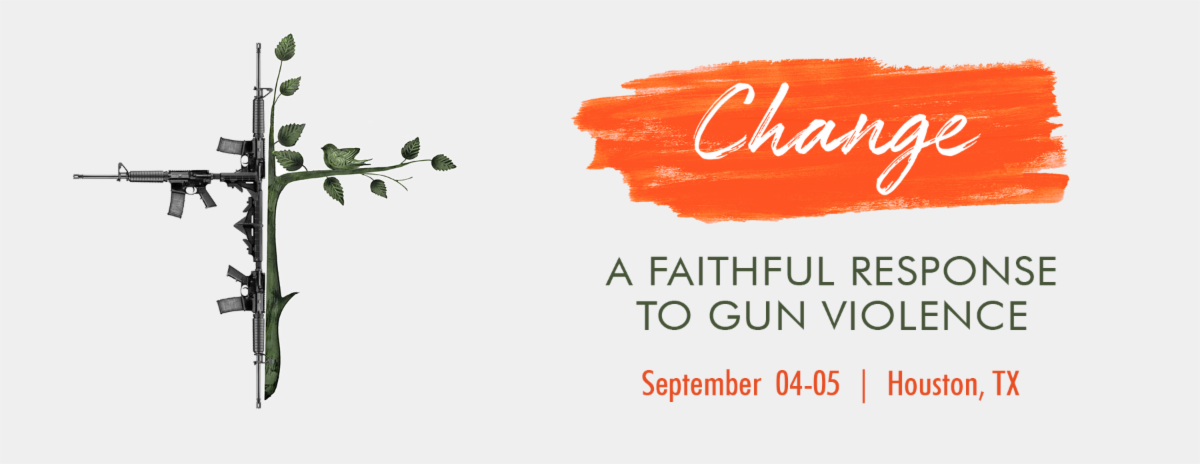
Click HERE to read how you can join Red Letter Christians in person and online for a time of reflection, repentance, and response to the crisis of gun violence in America. As the NRA commemorates 150 years of fighting for their agenda on Labor Day weekend, faith leaders from across the country are also coming together to issue a call to turn away from violence and make peace for the next 150 years. In unity, we are saying “NO MORE” to a world where gun industry profits are valued more than human life. Together, we will create a world free from gun violence.
|
|
|
|
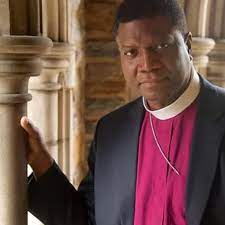
Reparations: More than Money: an interview with Bishop Eugene Sutton of the Episcopal Diocese of Maryland. Read it here
|
|
Save the Date: Thursday, October 7, at 6:00 pm EST
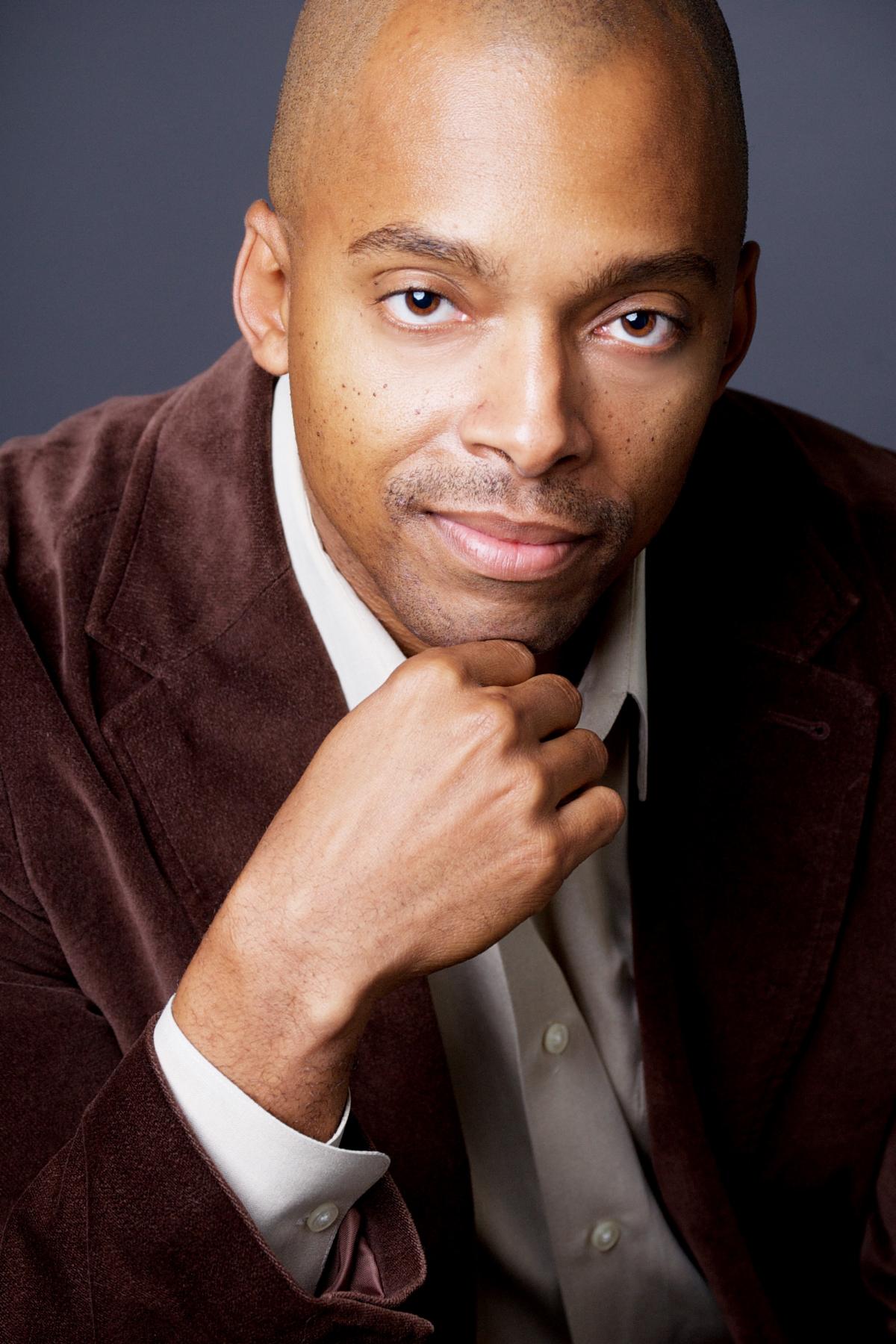
Dr. Khalil Gibran Muhammad, the author of The 1619 Project’s essay on the barbaric history of sugar production in America, will be joining EDS at Union on the evening of October 7, 2021.
Widely known as one of the most influential authorities on racial justice in America, Muhammad is redefining our understanding of diversity, with his work featured in the likes of the New York Times’ landmark 1619 Project, and Ava DuVernay’s 13th.
As Harvard Kennedy School Professor of History, Race, and Public Policy, he explains how “bias education”—race education—can help individuals and institutions reconcile the past within the present, and move towards greater equity, together.
Khalil Gibran Muhammad is the author of The Condemnation of Blackness: Race, Crime, and the Making of Modern Urban America, which won the John Hope Franklin Best Book Award in American Studies, also the Suzanne Young Murray Professor at the Radcliffe Institute for Advanced Studies. Read his full bio here.
EDS will share more information and an RSVP for this public address and audience Q&A in the coming weeks.
|
|
|
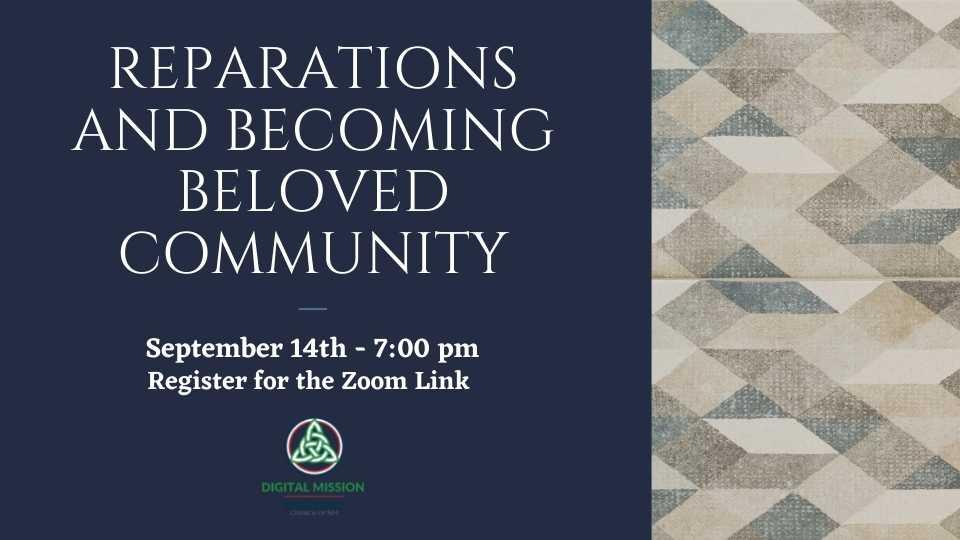
September 14 , 2021
Episcopal Church of New Hampshire
Digital Mission- Reparations & Becoming Beloved Community
Most people think of reparations as monetary payment for slavery. But reparations is about much more than financial recompense. It is about racial reconciliation. Thus, reparations work is a social endeavor.
It is what the Church is striving for with our Becoming Beloved Community. As described in the Becoming Beloved Community Long Term Plan, it starts with Telling the Truth about who we are so that we can Proclaiming the Dream of who we could be so we can be informed about how to Repair the Breach through Practicing the Way of Love.
This gathering will examine why we need reparations as a society and what steps we can take to make it manifest to bring about God's Kingdom on Earth.
September 14, 2021 07:00 PM Eastern time
|
|
The EPF pilgrimage continues:
August 29: Parish of the Epiphany, Winchester, MA
Sept. 4: Feast Day of Bishop Paul Jones
Sept. 5: Peacebuilding Online Project, Zoom
|
|
|
|
|
|
|