|
Pomodoro,
Simbolo della Cucina Italiana!
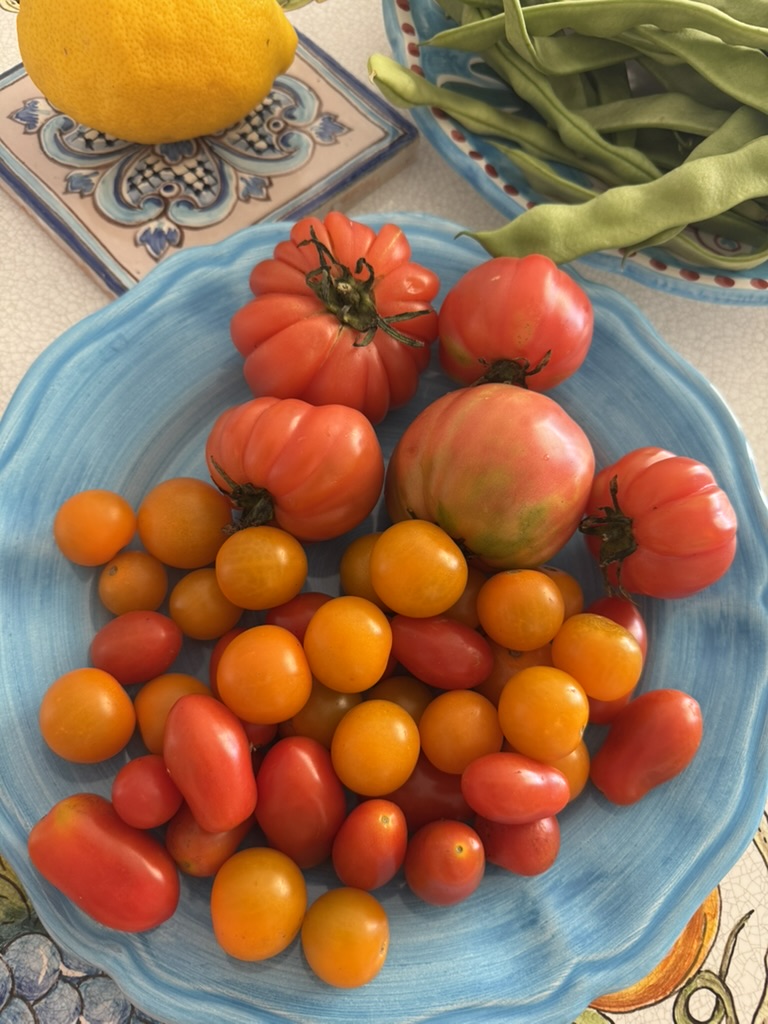
The tomato is the symbol of the Italian kitchen. And even though it is the key ingredient for pizza, sauces, and salads - what would a Caprese be without it - it's not indigenous to Italy. The tomato was transported to Italy by the Spanish conquistadors in the 16th century - even before Italy was a united republic. When it first arrived, it was used only as a table decoration. Everyone thought it was a poisonous fruit.
Today, Italians worship tomatoes - from San Marzano, Cuore di Bue, Datterini, Ciliegini to Pachino - and they are celebrated at festivals and sagres at this time of year. Here is a short list of Italy's most important festivals -
The Tomato Festival of Cappella
This festival is celebrated in Scorzè, Venezia, in July and August. There are many food displays with vendors, evening concerts, and lots of tomatoes from the region.
Pomo Fest
This event is a big pizza party that's celebrated in Nocera, Salerno, in September and showcases the San Marzano tomato. Well-known pizza chefs unite and make traditional Neapolitan pizza for everyone.
The Tomato Festival
Hosted in Parma in August, this festival combines traditional Emilian agriculture with scientific and horticultural seminars on the biodiversity of tomatoes.
San Marzano Festivals and Sagre
Celebrate tomatoes in Campania throughout the areas of Mount Vesuvius and Nocerino with the San Marzano tomato. This giant festival happens in late summer.
____________________________________
The pomodoro, which translates to golden apple, is a fruit that grows best in August. And, in the high heat of summer, every family participates in the harvest. Immediately following the harvest, the tomatoes are washed, slow-cooked in giant pans, then placed in ice-cold water to stop the cooking. The next step involves putting them through a sieve to remove the seeds and skin, then the juice is poured into glass jars that have previously been boiled and sealed. Hundreds of jars are then stacked on shelves in a cool place, which carry families through the winter.
Insalata Caprese
We can thank Filippo Tomasso Marinetti, a famous Italian poet, for the Insalata Caprese.
Signor Marinetti spent every summer on Capri at the posh Hotel Quissisa. Then, on one hot August day in 1924, he protested that he could not eat yet another plate of pasta. The chef improvised and created a tomato and mozzarella salad. He called it the Caprese in honor of the island. It became an instant hit, and soon everyone was ordering it.
An authentic Caprese salad requires a few ingredients, excluding balsamico - vinegar is acidic and not usually added to milk products in Italy.
Start with ripe Sorrentino tomatoes, well-drained Campania buffalo mozzarella or fior di latte, cow's milk mozzarella, fresh basil, dried oregano, sea salt, and extra virgin olive oil.
Think of Signor Marinetti when you make it, and remember to follow the Italian rule: no balsamico on mozzarella.
|