|
Peter Gray Hatchery Report
March 2017
|
|
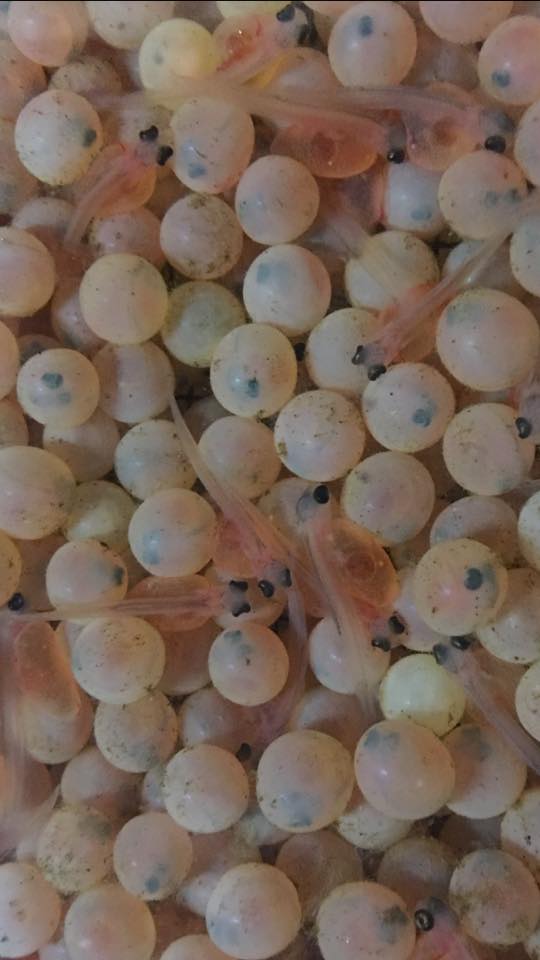
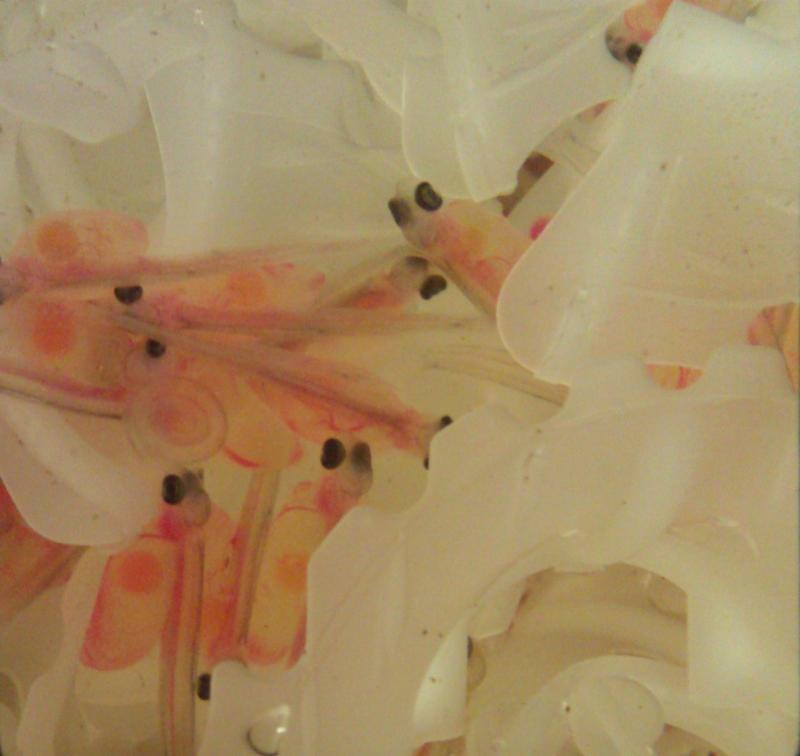
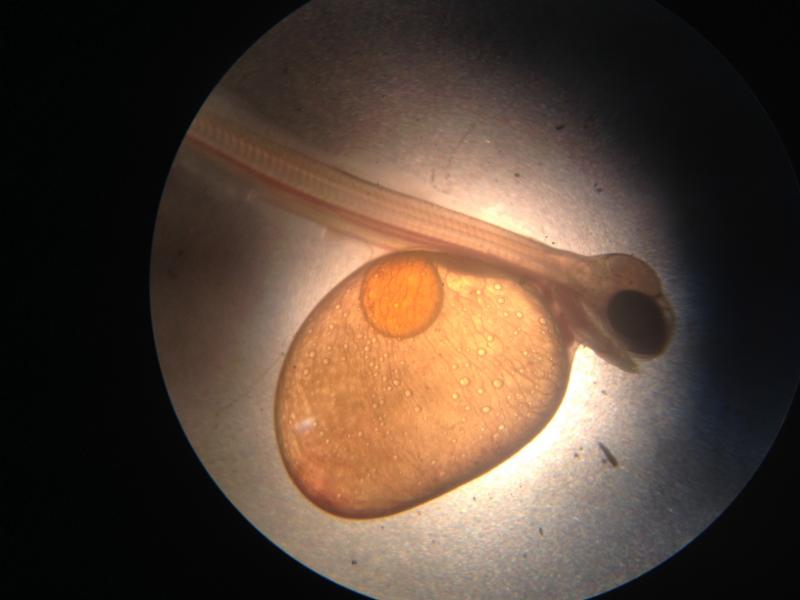
The salmon eggs are hatching! Winter hasn't wanted to let go yet, as they are calling for a possibility of more snow later this week. The East Machias River has been ranging from 2 to 3.5 degrees Celsius over the month of March, but as weather warms the river is sure to follow. About half of the salmon we currently have at the Peter Gray Hatchery have left their egg shells behind and are now alevin. Alevin have a yolk sac full of nutrients that they absorb while developing in the early spring. When salmon are in the wild during this life stage they are still in the gravel of the redd (nest) where the female Atlantic salmon deposited them in the fall. In the Peter Gray Hatchery these alevin get transferred into our Substrate Incubation Boxes (SIB) that mimic a salmon redd. Our salmon will continue to develop in the SIBs for a couple months, until they are ready to emerge and start feeding.
|
|
|
|
|
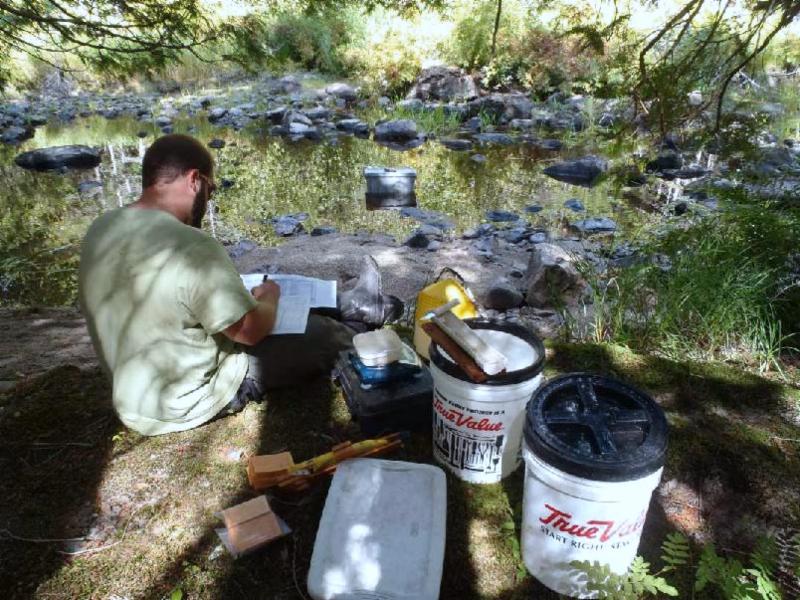
The beginning of March started with our biannual Parr Project meeting with the project's partners. The partners represented were the Maine Department of Marine Resources, NOAA, and Atlantic Salmon Federation. At these meetings we discuss results from the data we have collected both from hatchery operations and assessment in the field. Below are some takeaways from the meeting, but if you would also like to look at the presentations given during this meeting please click on Hatchery Report, DMR Electrofishing Report, and the DMR 2016 Smolt Report.
|
|
|
- 199,644 fall parr were stocked in 2016 at the highest densities to date - 150 parr/unit in most places.
- The size of parr at stock-out has been statistically the same for 2015 and 2016, and those sizes are smaller than the parr stocked in previous years. This has led to a better smolt age distribution that is closer to that of wild East Machias smolts than other hatchery strategies. Since one of the goals of the Parr Project is to produce salmon that are as wild as possible, this result points towards achieving that goal.
- There were 12 redds physically counted during redd counts in 2016. DMR's return rate equation estimated 16 adult returns to the East Machias River. Although this is only one year of data, the smolt-to-adult return rate of 1.6% is comparable to return rates from natural spawning and better than fry and smolt return rates.
- Smolt numbers in 2016 were an estimated 1223 =/- 297, with another 23 estimated smolts produced in habitat that was stocked below our smolt trap.
- The Parr Project has created an upward trend in smolt production. In 2016, parr stocking produced 2.5 times more smolt/unit then unfed fry stocking from 2013.
- Electrofishing data has been collected on the East Machias River since 1976.
- In 2016 the drainage-wide median large parr density (i.e. how many parr are in the East Machias River watershed) was 14.9 parr/unit. This is the highest median large parr density observed since the mid-1980s and is three times higher then the large parr density observed at the beginning of the Parr Project.
- Statistical analysis has shown that parr stocking produced significantly more parr/unit when compared to other stocking strategies in certain size streams. One place parr stocking excels is in mid-size streams like Northern Stream and Beaverdam Stream, where parr stocking produce more parr/unit than any other stocking strategy including: unfed fry, fed fry, captive reared adults, and natural spawning.
- At one site in the mainstem of the East Machias River a parr density of around 50 parr/unit was observed, an amount never expected at the start of this project.
All of this information is very positive for the Parr Project moving forward! As always, if you have any questions on this information feel free to reach out to me at zach@mainesalmonrivers.org.
|
|
|
|
|
In other news, the Fish Friends program that involves visiting local schools to teach them about the wonderful world of the salmon is moving forward. The eggs have started to hatch for our classrooms and the kids are already looking forward to getting into the river in the spring to look for macro-invertebrates and stock their salmon.
The expansion to the Peter Gray Hatchery is continuing to take shape. As discussed before it will be a 36' x 44' building designed for 15 Peter Gray style, black rearing tanks. This will more than double the number of tanks at our hatchery. This extra space will be utilized to spread out the salmon on station, further increasing our ability to create "little athletes" ready to survive and thrive in the East Machias River. Permits and quotes for the work have been gathered, contractors selected, and work should begin in April once the snow and ice have subsided. Funders have generously donated to get us started, but we are continuing to raise funds for this project to ensure it is completed this year.
Smolt trap deployment is coming right up in late April - stay tuned for information in our next Peter Gray Hatchery Report.
I hope this report finds you well and you enjoyed reading about the Parr Project. Thank you for all you have done, and continue to do, in the pursuit of Atlantic salmon restoration!
Zach Sheller - DSF Hatchery Manager
|
|
|
If you'd like to read more on the Parr Project's beginnings and future please read our
Parr Project Booklet
There is a short Parr Project video on our website
HERE
|
|
|
DONATE TODAY!
If you believe in the importance of restoring Atlantic salmon to our U.S. rivers, then please consider making a gift to the Parr Project for 2017. We will be continuing our work to restore salmon to downeast Maine and would appreciate your help! Click HERE
|
|
|
Leave a Legacy by
Making a Planned Gift to DSF
|
|
A planned gift to Downeast Salmon Federation is a wonderful way to contribute to the health of our rivers and fisheries for future generations while also meeting your financial goals. You can create a legacy gift that will help DSF continue to improve river ecology, restore Atlantic salmon populations, increase fish passage, run educational programs, and much more. Click on the link below for more information about planned giving.
|
|
|
Wild Atlantic salmon numbers in the U.S. have been at a record low, but DSF is working to bring them back. Please support our work by becoming a member of the Downeast Salmon Federation. Together, we can restore sea-run fisheries in Maine.
Downeast Salmon Federation
|
|
|
|
|
|
|