Peter Gray Hatchery Update
|
|
Hatchery Update
Holy smokes...it is May 1st as I write this update from the
Peter Gray Hatchery
.
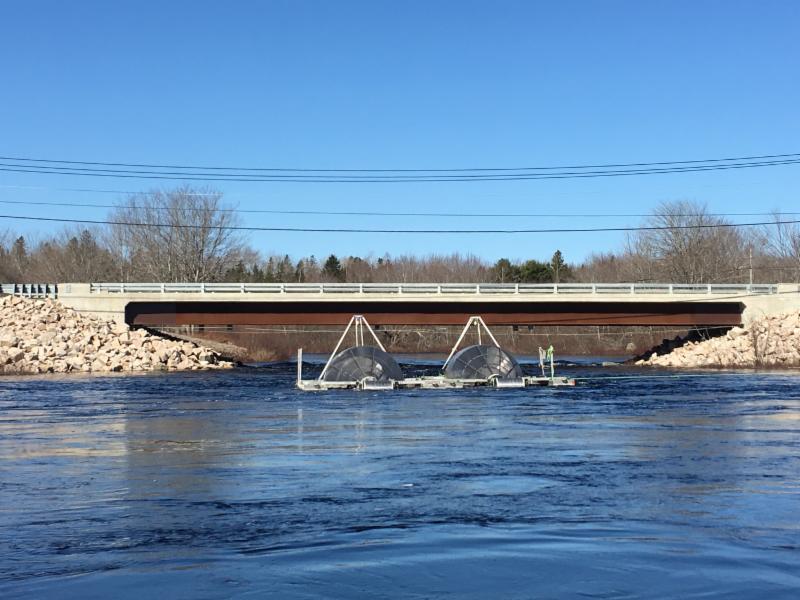
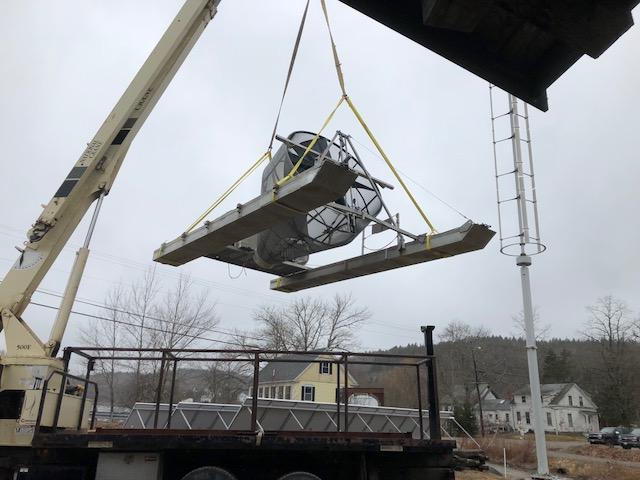
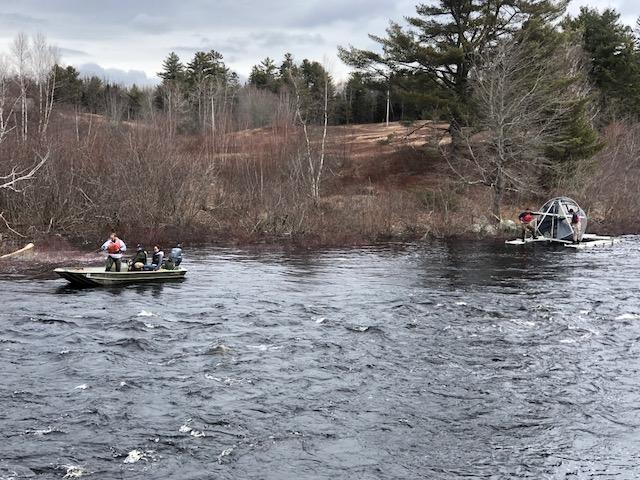
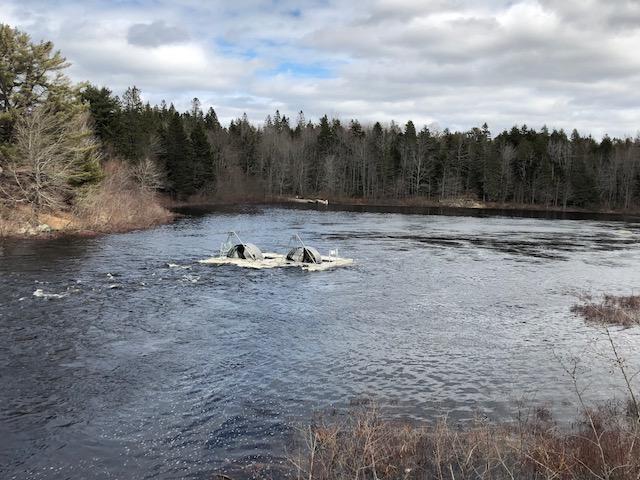
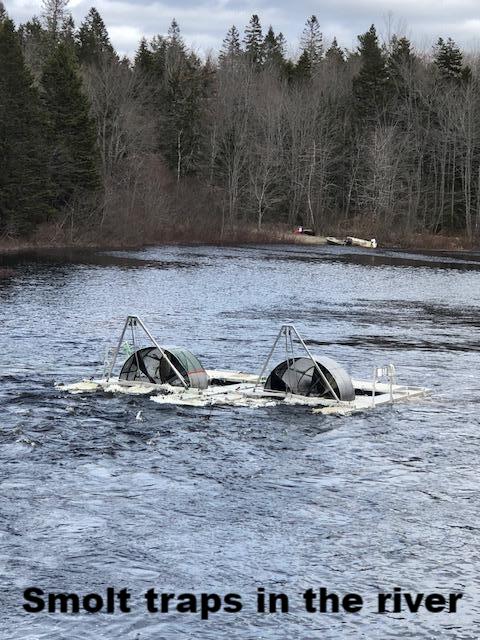
What's the saying: time flies when you're having fun? April was a busy month as it is each and every year. One of the biggest events that transpires in April is the deployment of our smolt traps.
As part of the
Peter Gray Parr Project,
DSF --
in partnership with Maine DMR--operates two 8 foot diameter rotary screw traps. These traps have large cones that spin once lowered into the water flow. The cones funnel migrating fish down into a live car (box on the back of the trap that keeps the fish contained and alive once caught) at the back of the trap, which is checked daily. The goal of operating these traps is to capture a portion of the out-migrating Atlantic salmon smolt population that is heading from the East Machias River to the Atlantic Ocean.
Once an Atlantic salmon smolt is captured, we perform a full biological workup. Scales are taken for aging, a caudal punch is taken for genetics and used as a daily mark, and length and weight are observed and recorded. Any other marks on the fish (i.e. an adipose fin clip like the one we give the fish we stock from the Peter Gray Hatchery), their smolt score (how far along on the transition from parr to smolt a fish is), injuries, etc are also recorded.
This year the smolt traps were deployed on April 18th and we caught our first smolt on the 21st. Current smolt totals for the traps on the East Machias River can be found
HERE
along with more information on the smolt trapping process. The river temperature is right and we are expecting a big slug of smolts to move through in the next couple weeks, so stay tuned!
Smolt Trapping 2018
Hatchery Origin Smolts
(these are salmon smolts that have been stocked from the Peter Gray Hatchery!):
7
Naturally Reared Smolts
(these are salmon smolts that have come from limited natural spawning and limited fry stocking):
1
Recaps
(salmon smolts that were captured once in the smolt traps, taken a kilometer upriver, released and captured again. These smolts determine the capture efficiency of the smolt traps):
1
|
|
|
|
|
Hatchery Expansion
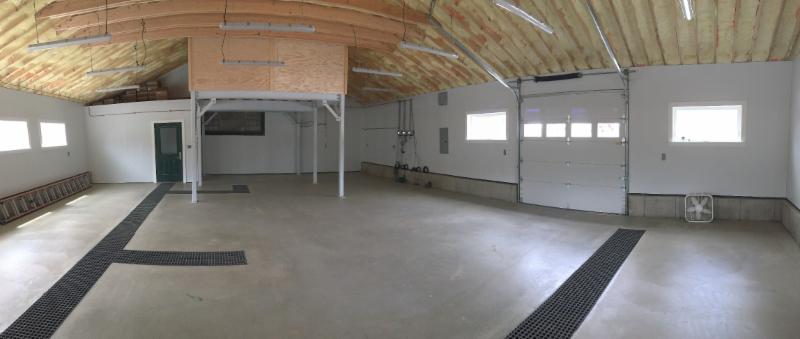
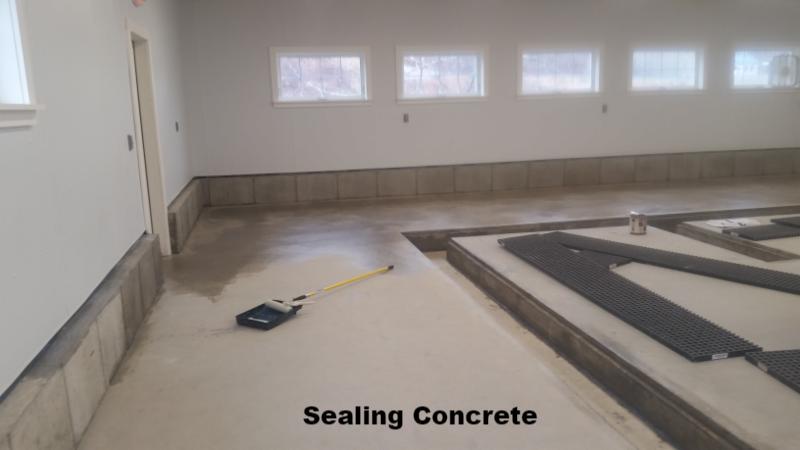
Things are moving forward with the hatchery expansion. The concrete floor has been sealed, the head tank liner has been installed, and cedar shingles are finished on the exterior, so after a few other items are buttoned up we'll be moving tanks inside and getting started on plumbing.
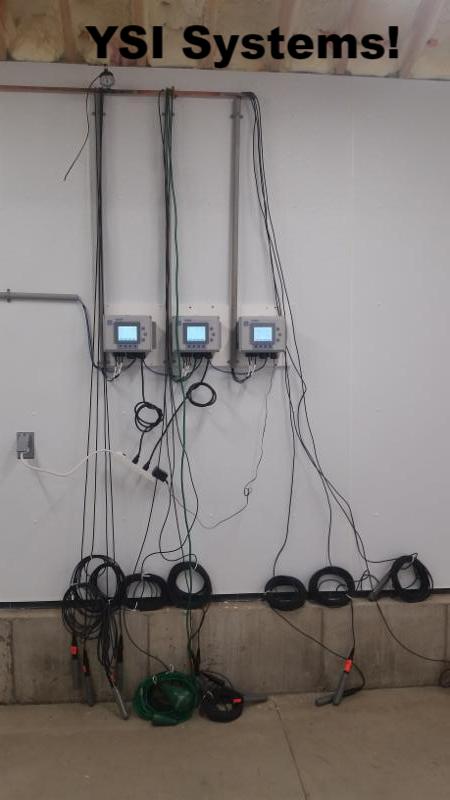
We were privileged to have Darrin from YSI, Inc come up last week and help us set up the expansion monitoring system and tie it into the monitoring system we currently use in the
Peter Gray Hatchery
. This system allows us to monitor temperature, dissolved oxygen, and pH in the water flowing through our facility. The system also alarms us whenever something is wrong. Thank you for all of your help Darrin!
Our new oxygen system has been installed throughout the hatchery expansion and connected into the current hatchery so we are ready to rock in mid-May when we start pumping oxygen.
As I've mentioned in previous reports, this expansion will allow the salmon growing in the
Peter Gray Hatchery
to be spread out into more tanks. We will be going from having 10 tanks on station to 25 tanks! Decreasing the densities in each tank will help lower the stress of the salmon and give them an even better environment to develop into the "little athletes" that will survive in the East Machias River, and later, the Atlantic Ocean. Lean, mean swimming machines!
|
|
If you would like to support DSF, please consider buying some DSF swag! Hats, vests, and shirts can be found
HERE
.
Thank you to all that purchased
Peter Gray Parr Project
t-shirts and sweatshirts! A family picture of Peter Gray Parr Project supporters can be seen to your left! If you would like one of your own please email rachel@mainesalmonrivers.org.
As always, if you have any questions, concerns, or comments, feel free to reach out to me at zach@mainesalmonrivers.org. I hope this hatchery update finds you well and you enjoyed reading about the
Peter Gray Parr Project
. Thank you for all you have done, and continue to do, in the pursuit of Atlantic salmon restoration!
Kind Regards,
Zach Sheller
Hatchery Manager
|
|
Thomas & Thomas Fly Rod Purchase Supports the Peter Gray Parr Project
There are a few different ways to help save wild American Atlantic salmon. One way is to purchase a Thomas & Thomas fly rod--for yourself or as a gift for someone special!
With two-handed rods seeming ubiquitous on many famous salmon and steelhead rivers, at times it seems as though single-hander’s have been forgotten. That’s not the case at T&T. The “Salmon and Steelhead Special” rods are designed to offer salmon and steelhead anglers the ultimate balance of sensitivity and fish fighting prowess. These rods are deadly accurate for dry fly work and still perfectly capable of lifting a long line off the water as you step and swing flies through the pool.
The medium fast action facilitates smooth, controlled casts, even with highly wind resistant flies. Strength in the lower sections of the rod enables good hook setting and provides the power to battle these magnificent migratory fish.
To purchase this or another gift, or to donate to this effort to restore Atlantic salmon, please visit
www.wildatlanticsalmon.org
.
|
|
There is a short Parr Project video on our website
HERE.
|
|
DONATE TODAY!
If you believe in the importance of restoring Atlantic salmon to our U.S. rivers, then please consider making a gift to the Peter Gray Parr Project. We will be continuing our work to restore salmon to Downeast Maine and would appreciate your help! Click
HERE
|
|
Leave a Legacy by
Making a Planned Gift to DSF
|
A planned gift to Downeast Salmon Federation is a wonderful way to contribute to the health of our rivers and fisheries for future generations while also meeting your financial goals. You can create a legacy gift that will help DSF continue to improve river ecology, restore Atlantic salmon populations, increase fish passage, run educational programs, and much more. Click on the link below for more information about planned giving.
|
|
Wild Atlantic salmon numbers in the U.S. have been at a record low, but DSF is working to bring them back. Please support our work by
becoming a member
of the Downeast Salmon Federation. Together, we can restore sea-run fisheries in Maine.
Downeast Salmon Federation
|
|
www.wildatlanticsalmon.org
|
|
|
|
|
|
|