April 9th - April 12th, 2026 | | |
THIS WEEK'S TASTING FLIGHT:
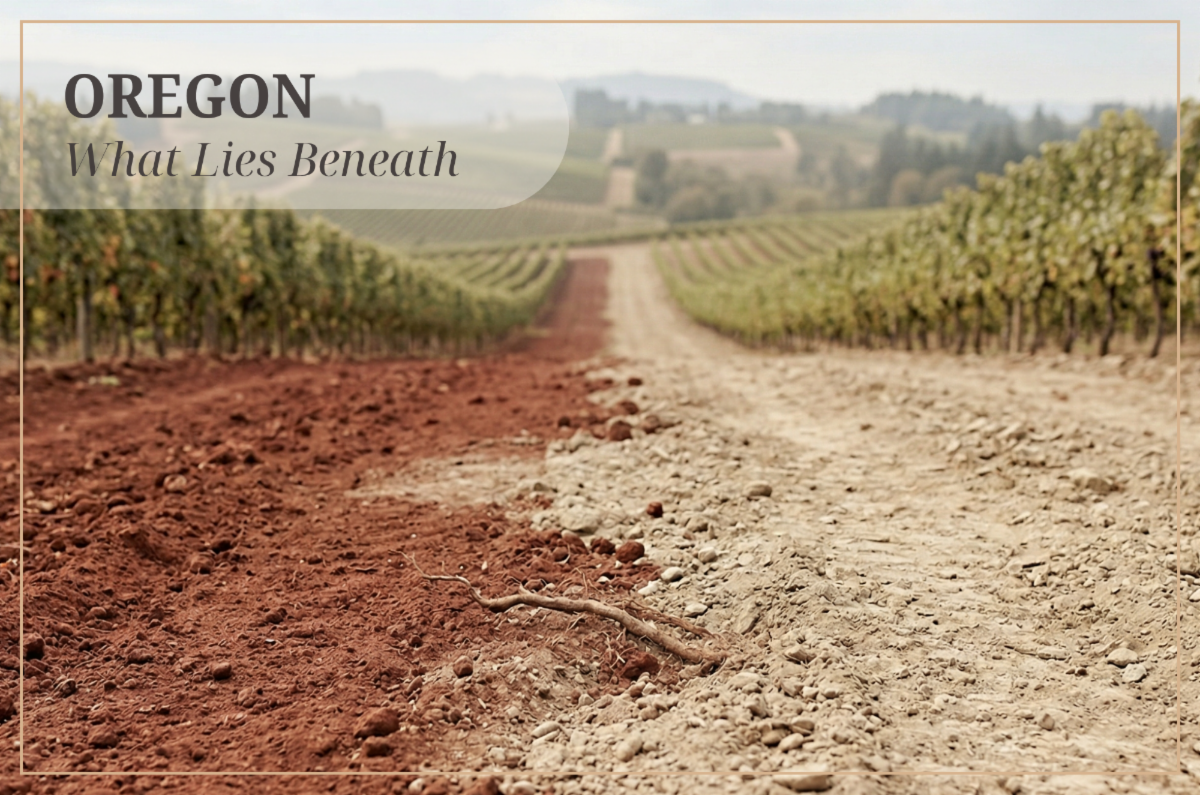
Oregon: What Lies Beneath
| |
Same grape. Same valley. Completely different soil.
Experience how the ground beneath the vines
changes what ends up in your glass.
| |
THIS WEEK AT PETIT PHILIPPE
-
$32 Oregon Flight: Three Pinot Noirs exploring volcanic vs marine sedimentary soils in Willamette Valley.
-
$15 Bonus Flight Pour: Bergström Silice 2023, a single-vineyard marine sedimentary Pinot that completes the comparison.
-
Upcoming Events: Charlotte Wine + Food dinner, Papapietro Winemaker tasting with David Low, April Atelier Workshop and Rosefest.
| |
Not all Oregon Pinot Noir tastes the same.
Same grape. Same valley. Often the same vintage.
But in Willamette, some of the biggest differences start below the surface.
This week’s $32 tasting flight looks at how two soil types (volcanic and marine sedimentary) shape what you taste in the glass.
The point isn't a geology lesson or to memorize soil types. It's to taste what they do.
Volcanic sites often bring darker fruit, breadth, and a certain earth-driven warmth. Marine sedimentary sites can lean more lifted, brighter, and more structured by acidity.
Same valley, different ground beneath it. Can you taste the difference?
We are pouring three Pinots that make that comparison easy to follow: two estate wines that establish the contrast, and a single-vineyard volcanic wine that brings even more site definition into focus.
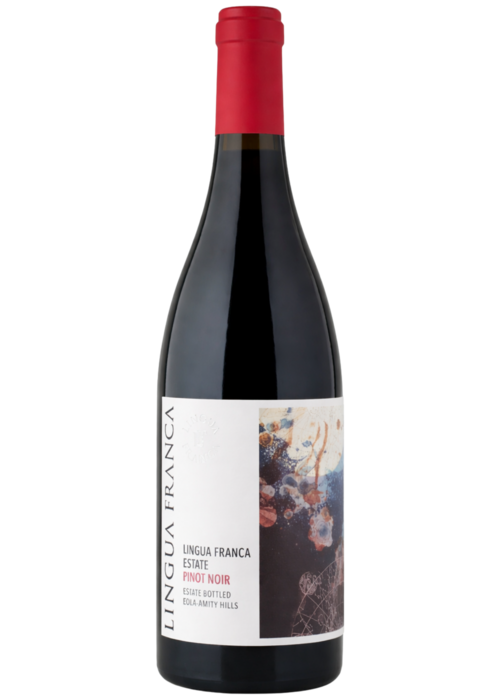
Lingua Franca Estate Pinot Noir 2022 | $56
- Volcanic soil baseline with dark red fruit and a subtle savory edge that's balanced and easy to drink.
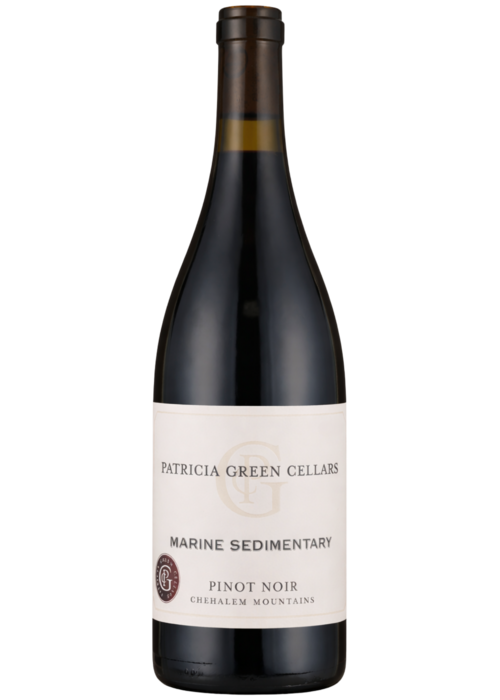
Patricia Green Cellars 'Marine Sedimentary' Pinot Noir 2022 | $40
- Marine sedimentary contrast with red fruit, bright acidity, and a fresher, more linear profile.
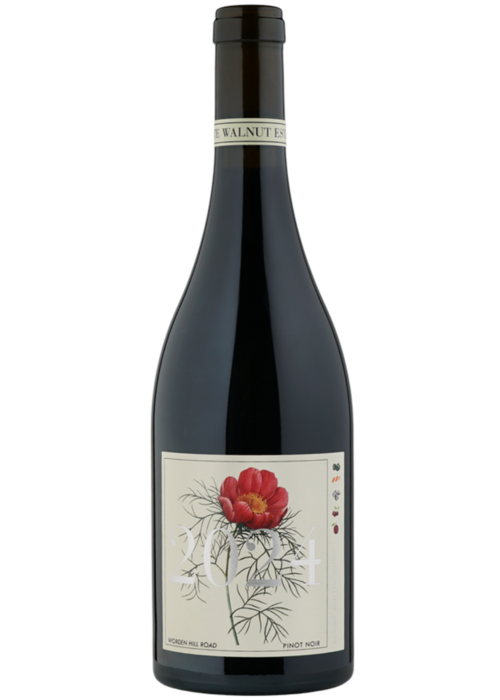
White Walnut Estate 'Worden Hill Road' Pinot Noir 2024 | $84
- Single-vineyard volcanic Pinot with dark red fruit and firm tannins that's deeper and more structured.
These three wines make the comparison clear: two different directions, one from volcanic soils and one from marine sedimentary, with the single-vineyard bringing it into sharper focus.
However, if you'd like to take your flight experience and discovery even further, this week we are offering an optional bonus pour:
Add a 2 oz bonus pour for $15
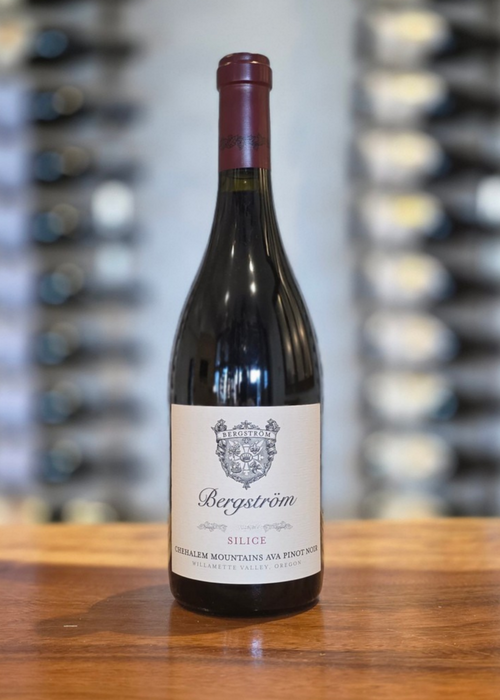
Bergström 'Silice' Willamette Valley Pinot Noir 2023 | $124
- Single-vineyard marine sedimentary Pinot with red fruit and fine acidity, with a long, persistent finish.
'Silice' brings the marine sedimentary side into sharper focus at the single-vineyard level. It sharpens the contrast with White Walnut, giving the flight a more complete finish. It’s also a chance to taste one of Oregon’s more sought-after Pinots, a wine we don’t get to pour in a flight often.
Whether you come in for the fun of choosing a side or for getting a closer look at what shapes Oregon Pinot Noir, the difference here is not subtle once it is in the glass.
Come taste with us today through Sunday, while the wines last.
Cheers,
The Petit Philippe Team
| | Join us for guided tastings, winemaker dinners, and hands-on workshops. | | | |
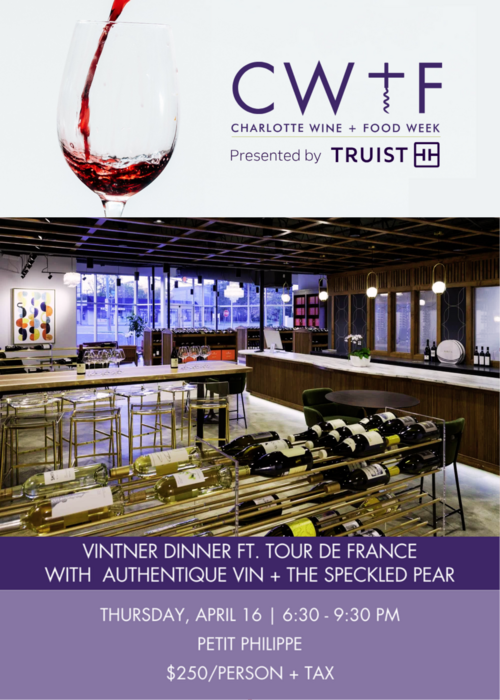
Thursday, April 16th | 6:30 - 9:30PM
immersive dining | curated pairings | limited seats
We’re partnering with Charlotte Wine + Food for a special one-night dinner in La Cave, featuring a seasonal menu from The Speckled Pear alongside a wine selection presented by Tyler Morgan of Authentique Vin, focused on small producers from some of France’s classic wine regions.
A part of Charlotte Wine + Food’s annual fundraising efforts supporting local children’s charities across the Charlotte community, this evening is a more intimate, coursed experience designed to explore how wine and food interact in real time.
📅 Thursday, April 16
⏰ 6:30–9:30 PM
🎟 $250 per person + tax
Reserve through Charlotte Wine + Food →
| | | |
Thursday, April 23rd | 6:30 PM - 8 PM
guided tasting | climate, place, & perception
What happens to wine when the world around it changes?
Not in theory, but in the glass.
Across this workshop, we’ll taste through three side-by-side comparisons designed to make those changes visible.
We’ll begin with a blind comparison built around Burgundy, looking at how warmer and cooler growing conditions show up in fruit, acidity, and body.
Then we look beyond the fruit at minerality and structure, and how those elements connect back to place.
The final pair looks at emerging regions and evolving styles, showing how climate and environment are shaping balance.
As we taste, we’ll connect the experience back to the fundamentals:
- how warmer and cooler conditions influence fruit, acidity, and body
- how minerality and non-fruit character reveal place more clearly
- how structure shapes balance, texture, and energy in a wine
This is not about predicting the future. It’s about learning how to recognize those shifts as they show up in the glass.
📅 Thursday, April 23
⏰ 6:30–8:00 PM
🎟 $100 | Atelier Members receive preferred pricing
Includes a $5 wine credit toward a featured workshop bottle.
Seating is intentionally limited to keep the experience conversational.
View workshop details and reserve your seat →
Explore Atelier Memberships →
| | | |
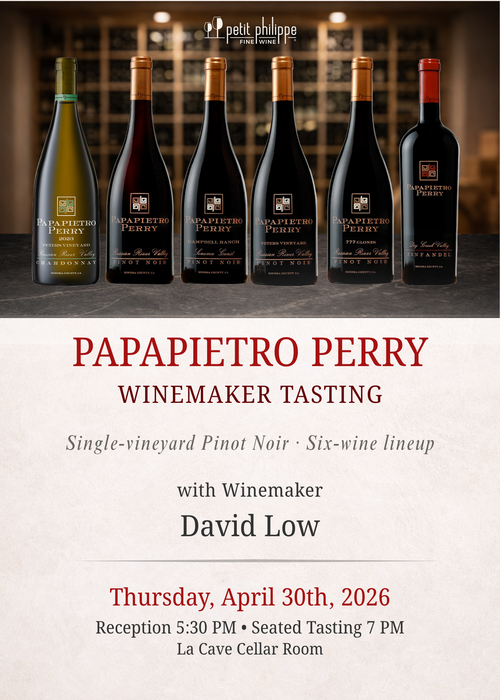
Thursday, April 30th | 5:30 PM - 7:00 PM
winemaker-guided | single-vineyard Pinot Noir
Winemaker David Low will lead a seated tasting of six Papapietro Perry wines in La Cave, including four single-vineyard Pinot Noirs from the 2022 vintage, the Peters Vineyard Chardonnay, and a Dry Creek Zinfandel to close.
Special event pricing will be available on the full lineup for guests during the tasting.
A focused opportunity to taste across the range with the winemaker and determine which wines are worth bringing home and adding to your collection.
📅 Thursday, April 30
⏰ 5:30–7:00 PM
🎟 $60 per person + tax
Reserve your seat →
| | | |
Friday, May 8th | 6 PM - 8 PM
Saturday, May 9th | 3 PM - 5 PM
RoséFest 2026 (SAVE THE DATE!)
walkaroiund tasting | taste across regions | event-only pricing
RoséFest returns.
Our annual walkaround tasting is back for another year, bringing together a wide range of rosés from across France, Italy, Spain, the U.S., and beyond.
This is one of our most anticipated events of the year: a chance to explore, compare, and discover wines that define the season, all in a relaxed, open tasting format.
Whether it’s your first RoséFest or part of your annual ritual, this is where summer begins at Petit Philippe.
Save the date:
Friday, May 8th
Saturday, May 9th
Tickets will be released soon.
| | Three Oregon Pinots that show how different soils can shift fruit, texture, and structure, all within the same valley. | | |
Join Us for Weekly Tasting Flights
Available during the hours below
11:00 am - 9:00 pm | Thursday
11:00 am - 9:00 pm | Friday
11:00 am - 9:00 pm | Saturday
1:00 pm - 7:00 pm | Sunday (depending on availability)
| | | | |
Eola-Amity Hills, Willamette Valley • Oregon
$56 retail
| |
Lingua Franca farms in the Eola-Amity Hills, where volcanic soils and steady afternoon winds shape a more structured, savory style of Pinot Noir. This estate bottling leans into that profile, showing how darker fruit and subtle earth tones can come through clearly in a broader, site-driven expression.
Varietal: 100% Pinot Noir
Vinification
Fermented with a mix of whole cluster and destemmed fruit, then aged in French oak. The whole cluster adds herbal lift and structure, while the oak provides frame and integration without dominating the fruit.
Tasting Notes
Dark cherry and raspberry on the nose, with dried herbs and a touch of black tea. The palate carries ripe red fruit with a savory edge, supported by fine tannins and a steady, composed finish.
A strong reminder that Oregon Pinot does not need to be delicate to feel precise. There is real substance here, but it never tips out of balance.
| | | | |
Ribbon Ridge, Willamette Valley • Oregon
$40 retail
| |
Patricia Green Cellars has built its reputation on single-vineyard Pinot Noir, but this bottling focuses on something more specific: soil. Sourced entirely from Willakenzie soils, the marine sedimentary formation found across Ribbon Ridge and the Chehalem Mountains, it shows how these sites tend to produce wines with brighter fruit, higher-toned aromatics, and more linear structure.
Varietal: 100% Pinot Noir
Vinification
Fermented in small lots and aged in mostly neutral French oak. This keeps the wine focused on fruit and acidity, without adding extra weight or overt oak character.
Tasting Notes
Red cherry and cranberry lead, with orange peel and light spice adding lift. The palate is bright and linear, driven by fresh acidity with a clean, lightly structured finish.
Grounded in what marine sedimentary soil brings to a Pinot, this is the bottle that makes the contrast click. Brighter, firmer, and more defined by acidity than weight.
| | | | |
Dundee Hills, Willamette Valley • Oregon
$82 retail
| |
White Walnut is a small Dundee Hills estate working with volcanic Jory soils, and the Worden Hill Road bottling narrows that profile to a single vineyard. Where the estate wines show the general character of the site, this brings more structure and depth into focus, showing what that soil can do with a bit more precision.
Varietal: 100% Pinot Noir
Vinification
Hand-harvested fruit, fermented in small lots, and aged in French oak with a modest percentage of new barrels. The oak adds structure and depth, reinforcing the tannins rather than softening them.
Tasting Notes
Dark red fruit with black cherry and plum, layered with baking spice and a touch of earth. The palate is fuller, with firmer tannins and a more structured feel from start to finish.
This is where the volcanic side starts to feel more serious. Darker, firmer, and built with more structure than the wines before it.
| | | |
*OPTIONAL BONUS POUR*
Willamette Valley • Oregon
$124 retail
| |
Bergström is one of the defining producers in Oregon, and Silice is one of its most recognized vineyard sites. Planted on marine sedimentary soils in the Chehalem Mountains, this wine shows how that soil can translate into more detailed aromatics, finer texture, and a longer, more persistent finish.
Varietal: 100% Pinot Noir
Vinification
Fermented with partial whole cluster and aged in French oak. The whole cluster adds aromatic lift and structure, while the oak provides subtle framing without overshadowing the fruit.
Tasting Notes
Wild strawberry and red cherry, with rose petal and orange zest. The palate is focused and persistent, with fine acidity and a long, clean finish that continues to build.
This is the kind of wine that shows why certain bottles earn their reputation. More layered, more persistent, and worth slowing down for.
| | What Lies Beneath:
How Soil Shapes What's In Your Glass
| |
Most conversations about wine focus on the grape variety, the winemaker, or the vintage. Soil gets mentioned occasionally, usually as a detail, rarely as a reason. But soil is one of the most direct levers in what a finished wine actually tastes like, and understanding even the basics changes how you experience the flight in front of you.
Here's how it works at a high level. Soil influences wine through three main pathways: drainage, mineral availability, and temperature. Freely draining soils (volcanic basalt, for instance) push vine roots deep in search of water, stressing the vine in a way that concentrates flavor and forces a focus on quality over quantity. Soils with more water retention (like marine sedimentary clays) can produce vines with slightly different fruit profiles and textural qualities in the wine. Mineral content in the soil doesn't translate directly into mineral flavors in the wine in a literal, molecule-by-molecule way -- the science is more complicated than that -- but soil composition influences yeast populations, pH, drainage behavior, and vine stress in ways that collectively show up as character in the glass.
The Two Soils in This Flight
|
Jory Basalt (Volcanic)
Jory is the rust-red volcanic basalt that covers the hilltops and upper slopes of the Chehalem Mountains, Dundee Hills, and Eola-Amity Hills AVAs. It formed from ancient lava flows, is iron-rich, relatively shallow, and drains exceptionally well. Vines in Jory soils tend to be naturally stressed, producing smaller yields and wines with lifted aromatics, bright acidity, and a mineral tension that reads as precise and structured. The Lingua Franca Estate and White Walnut Worden Hill Road are both grown in Jory.
|
Willakenzie (Marine Sedimentary)
Willakenzie is a marine sedimentary formation found primarily in Ribbon Ridge and the Chehalem Mountains, derived from ancient seafloor sediment. It is finer-textured than Jory, with more clay content, better water retention, and a different mineral composition. Wines from Willakenzie soils tend to show slightly darker fruit, a richer mid-palate texture, and a more rounded, grounded mineral quality compared to the lifted tension of volcanic-grown Pinot. The Patricia Green 'Marine Sedimentary' and Bergstrom 'Silice' are both from Willakenzie-type soils.
|
The AVAs and What They're Sitting On
The Willamette Valley contains eleven recognized sub-appellations, most of which are defined as much by geology as by geography. The Dundee Hills and Eola-Amity Hills are predominantly Jory -- volcanic-dominant, which is why they produce Pinot of a particular character. Ribbon Ridge and the Chehalem Mountains contain significant Willakenzie marine sedimentary deposits, giving those AVAs a distinct textural profile. McMinnville sits on marine sedimentary siltstones of a different origin. Yamhill-Carlton contains older sedimentary and alluvial material. The variation is not subtle, and it's why a Pinot from Ribbon Ridge and a Pinot from the Dundee Hills, made by equally skilled producers from the same vintage, can taste like they're from different places entirely.
That's the question this flight is designed to answer.
| | |
info@petitphilippe.com | www.petitphilippe.com
Wine emergency? Text us at 415.306.4283
| | BE WELL + STAY CONNECTED | | | | |