PHILIP CORBIN OF NEW BRITAIN, CONNECTICUT
We found out in the last edition that Ormond Beach was originally called New Britain, named by early settlers after their hometown in Connecticut, and that they had been sent by their employer, Philip Corbin of the Corbin Lock Company, to find a suitable location in Florida for retirement homes for his employees.
We are indebted to Doug Welch, an OBHS member, who is from Connecticut,
for sending us the following delightful and informative story.
Ormond Beach historians know the name
New Britain as the name which the original settlers of a small settlement on the west side of the Halifax River gave their community. They named their new home after the town they had left in Connecticut in 1874. The name of
Philip Corbin is also familiar to historians as the New Britain businessman who sponsored the search for a place for his aging workers and friends to retire to, currently known as Ormond Beach, Florida.
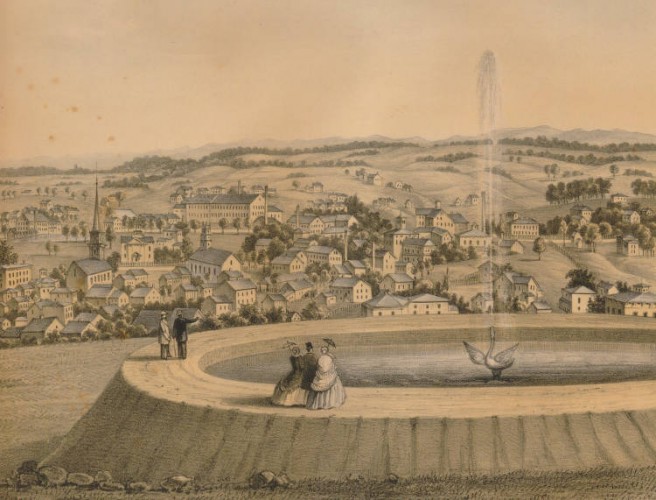
New Britain, Connecticut began much the same as New Britain, Florida, a farming community. The first land grant in the area of Connecticut known as the "Great Swamp" was made to Hartford businessman Jonathan Gilbert in 1661. The term "swamp" did not refer to the wet, spongy land we know in Florida as swamp land. There were roads traversing it. Although it was excessively wet in parts, the land was fertile and provided excellent soil for farming. Above the Great Swamp to the west were the rocky ledges under which the shops and meeting houses of the town were eventually built.
|
|
|
|
Trades people such as blacksmiths moved into the community to offer services the farmers were too busy to provide for themselves, such as making and repairing tools and making nails, spikes and other hardware. The first blacksmiths to venture out of town were James North, Joseph Booth and Joseph Shipman who went to Stockbridge, Massachusetts to learn the business of brass manufacturing. All three of these young men returned to New Britain with their knowledge and became pioneers in the manufacture of brass goods, such as sleigh bells. Small shops began sprouting up around town about 1800 involved in the manufacture of various types of small hardware.
It was not until about 1830, however, that the little city began to change its production of hardware from small shops to mass-production in factories. Thus began the industry in which New Britain became the self-proclaimed
“Hardware Capital of the World.”
The prominent New Britain name “Stanley” is still today a well-known name in hardware.
The New Britain Lock Factory was built in 1835 and operated on Washington Street opposite the Lock Shop Pond. After several changes in management, Henry E. Russell and Cornelius B. Erwin took over the business in 1846 and began to specialize in what was called "builders’ hardware" (hinges, locks, bolts, etc.). A young man by the name of
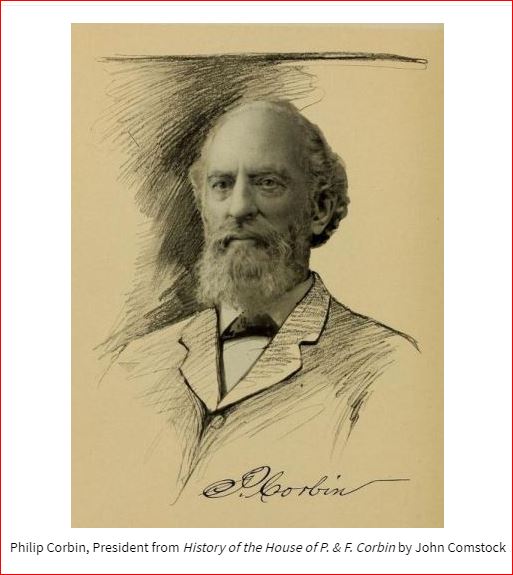
Philip Corbin
went to work for Russell and Erwin as an apprentice. In 1849, he joined his brother Frank and another partner, Edward Doen, to set up a small factory for the production of metal articles. The Corbin brothers formed their corporation in 1853 with capital stock of $50,000. Later the
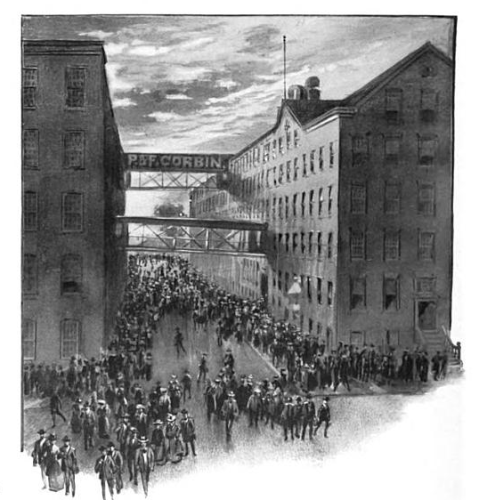
P. and F. Corbin Company
began to specialize in builder's hardware, as were their competitors Russell and Erwin.
|
|
|
|
Of the 1,447 patents issued to New Britain during the 19th century, at least 90% were related to hardware manufacture. Of these patents, 192 were issued to the firm of P. and F. Corbin, most of them covering inventions by the skilled mechanics working for the firm. In 1902, the P. and F. Corbin Company, the Corbin Screw Company and the Corbin Cabinet Lock Company merged with former competitor Russell and Erwin to form the American Hardware Corporation, of which Philip Corbin became the first president.
|
|
|
|
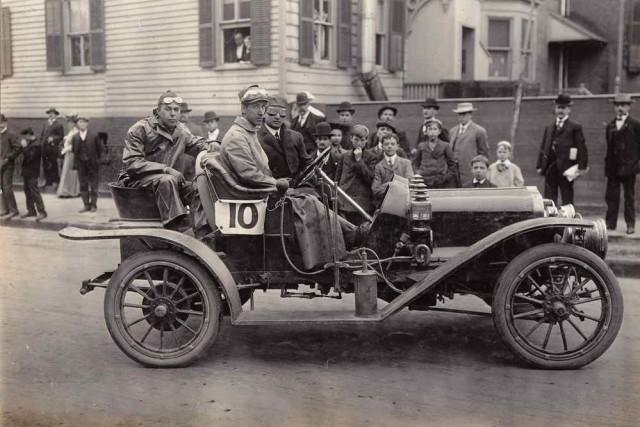
Old Photo of P.& F. Corban Company
|
|
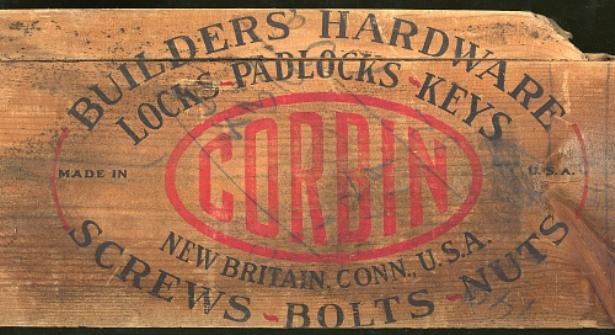
P.& F. Corban hardware shipping crate, New Britain - National Museum of American History, Smthsonian Institution
|
|
|
|
Since New Britain was manufacturing almost everything made of metal, and since the big companies were making money rapidly and seeking new mechanical worlds to conquer, it was logical that one or more of the companies would become interested in producing an automobile. So it happened that the
Corbin Motor Vehicle Corporation was launched in 1903, the same year that racing began on Ormond’s beach, with a capital of $200,000. It is said that approximately $1,000,000 (roughly $25M in today’s money) of the reserves of the Corbin Cabinet Lock Company, which had been immensely successful, went into the new motor car company.
For the next few years, the Corbin Motor Vehicle Corporation struggled to build a car that would meet the competition of the score or more of other car companies, such as the Winton Company, for example, and get its share of the market. In its relatively brief existence, the Corbin automobile won several awards in competition with other pioneer automobiles and compared favorably with the best. In 1908, a “fully-jeweled" Corbin car raced Barney Oldfield's car on the Kansas City track and beat/set a record by traveling a mile in I:01 3/5. It appears, however, the Corbin automobile never raced on Ormond Beach, even with Corbin`s connection to the area.
|
|
|
|
The early 1900's was a transition period, when `the good old horse and buggy days were destined to pass, but the new horseless contraption was not yet ready for mass-production. All kinds of experiments were in the making. During its brief existence, the Corbin “motor vehicle" changed its air-cooled motor to a water-cooled one -- an expensive change-over in factory operations. And there were new “bugs" developing daily in the cars already on the road. Some companies were making cars with wheels the size of buggy wheels; some were convinced that steam was the only dependable source of motive power; others pinned their hopes on a slower but surer electric vehicle; and no one could be certain whether air or water provided the better cooling agent for the motors.
Few persons were able to afford the $2,500 or so price tag for a Corbin automobile, or one of its competitors, and few of the early auto companies survived. On the other hand, bicycle riding was very popular at the time and was fairly inexpensive. Strangely enough, during 1898-1899, the Corbin Company was also manufacturing coaster brakes for bicycle companies which were replacing the bicycles' awkward and unreliable hand brake. In the end, the
Corbin Motor Vehicle Company's attempt to enter the world of automobile manufacture lost its backers about $2,000,000, which the company was fortunately able to absorb without serious effects to their standing or productive capacity.
|
|
|
|
Philip Corbin passed away in 1910 at the age of 86. An account of his death called him the "Dean of New Britain`s Captains of Industry." In 1912, the Corbin Motor Vehicle Corporation sold "all its cars which have been finished up including the car bodies, numbering about 75." A newspaper article stated, “The car was a good one, but it required an immense amount of money to put it on the market."
Substantially reprinted from "
A History of New Britain" by Herbert E. Fowler, New Britain Historical Society,
New Britain, Connecticut, 1960
|
|
|
|
Look for our next edition of History Happenings…
|
|
|
|
The Ormond Beach Historical Society relies on income from its special events and rentals at the Anderson-Price Building for meetings, weddings, etc., to fund its preservation, education programs and staff. Unfortunately, the current COVID-19 crisis has led to the cancellation of these events and rentals, creating a loss of much-needed income, with the promise of more losses to come. If you believe in our mission, and feel that you benefit from the many opportunities to enjoy our events and programs, socialize with our members, and learn about the rich history of our beautiful city, please consider donating below.
|
|
|
|
Michelle Roshaven, Office Manager
MacDonald House Museum and Welcome Center
38 E. Granada Blvd., Ormond Beach, FL 32176
Hours: Tues. - Sat. | 10 a.m.- 3 p.m.
Phone (386) 677-7005
|
|
|
|
|
|