July 2025

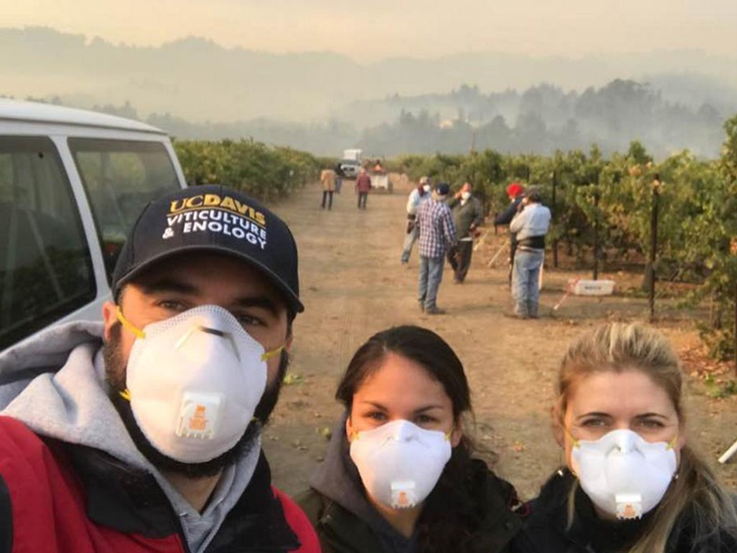
Smoke research in the field*

THE PIZZA TEST

Research takes time. And really big, complex research projects require teams of people, collaborating, advising and managing the work to accomplish game-changing results, typically within four or five years. That’s a long time to work together, managing millions of dollars and attempting to solve priority problems with people you may not know very well—if at all. I recently chatted with Oregon State University professor and viticulture extension specialist Patty Skinkis about the long-term, high-stakes collaboration research requires on an episode of the podcast she produces for the HiRes Vineyard Nutrition project.


As Patty and I discuss on air, unlike other grape-research focused organizations, NGRA initiates research projects vs. receiving proposals to fund. We’re so proud of the HiRes project--a product of the process by which our industry-led organization identifies vital new research to pursue. As they brainstormed research themes, NGRA’s Integrated Production Systems Research Committee, then chaired by Russ Smithyman (now at Gallo), hit on the idea to develop new tools or technologies that could enable grape growers to assess grapevine nutrition status in real time, right in the field. Virginia Tech’s legendary Tony Wolf (then a member of the committee, now retired) graciously helped us outline the project. And we were thrilled that Washington State University viticulture professor Markus Keller, who literally wrote the book on The Science of Grapevines, accepted our invitation to lead it. A star-studded scientific team of co-directors and collaborators from universities across the country contribute their expertise to this consequential USDA Specialty Crop Research Initiative-funded project. Many of them didn’t know one another previously or had never worked together. So, how did they come together here?


By virtue of our national, grape-sector-spanning membership, relationships with federal agencies and academic institutions nationwide, and robust attendance at industry and academic conferences, NGRA can help to identify and introduce experts who are best-positioned to address issues we seek to solve. Working with our project directors (in this case, Markus), we connect the best and brightest scientists—like Patty, a HiRes project co-director, who said yes to leading the outreach, social science and economics team—to help tackle our collective industry challenges.


But none of it would work without the pizza test. We learned this highly technical concept from some of our scientific colleagues over the years. Basically, the concept is, if you wouldn’t be happy to share a pizza (or, some say, a beer) with someone, you wouldn’t want to be stuck with them for years, sharing accountabilities for research dollars and deliverables. So, as we work to help assemble project teams, we use our gut (so to speak) to suggest collaborators who might enjoy a slice or two of pepperoni together.


The HiRes Vineyard Nutrition project is now in its fifth and final year, having been granted a no-cost extension to wrap up its findings. I’m proud to serve on the project advisory panel with several other NGRA stakeholders. We’re excited to see how much this far-flung group of researchers accomplished to advance grapevine nutrition in just five years. Take a listen to the project’s podcast to tap into some of the learnings, and watch this space for more news, coming soon!


P.S. I’ve been producing NGRA’s monthly newsletter since April 2017. So, incredibly, this is my 100th column! Thanks for reading!

Donnell Brown

President

*ABOUT THE IMAGE

This month’s Research Focus article (below) is by Arran Rumbaugh, who leads the smoke exposure research program for USDA’s Agricultural Research Service. Her interest in smoke exposure was sparked when she was working on her PhD with UC Davis’ Anita Oberholster, who passed away earlier this year. Arran is shown here at center with Anita (right) and Raul Cauduro Girardello (UC Davis). Raul snapped this timeless selfie of the team collecting wildfire data in real time in 2017.


AROUND THE INDUSTRY

Register for the October 15 NVEELC Meeting!

NGRA proudly supports the National Viticulture and Enology Extension Leadership Community (NVEELC), which regularly gathers viticulture and enology extension and industry outreach specialists for professional development, best-practice sharing, research and regional reports, collaboration and dialogue on the unique challenges in V&E extension. The goal? To lift up, connect and support the vital extension function for the American grape and wine industry. 


If you work in an extension or outreach (non-sales) role, mark your calendar for the two upcoming NVEELC virtual meetings between now and the in-person NVEELC Conference in April 2026. Each 90-minute virtual meeting will feature regional reports from two US production regions and a timely topic. Registration is now open for our fall meeting on October 15, featuring reports from the Midwest and Northeast Regions and a special guest speaker TBD. See the full schedule of NVEELC events and register for the October 15 meeting now!

Budget Bill Includes Increases for Research

The One Big Beautiful Bill Act (or H.R.1) was signed into law on the Fourth of July as the first major piece of legislation passed by this Congress. Among many other immigration and tax priorities, it addressed research funding via USDA programs:


  • Increased the Specialty Crop Research Initiative from $80 million to $175 million per year 
  • Increased the Specialty Crop Block Grant program from $85 million to $100 million per year
  • Increased funding for the Plant Pest and Disease Management and Disaster Prevention program (known as PPA 7721) from $75 million to $90 million per year
  • Provides $125 million in mandatory annual funding starting in 2026 for competitive grants under the Research Facilities Act to modernize research infrastructure
  • Allocates $37 million to the Foundation for Food and Agriculture Research to promote public-private partnerships supporting USDA’s research mission


The changes will take effect with the federal government’s 2026 fiscal year, which begins October 1.

USDA Is Reorganizing

Last week, Secretary of Agriculture Brooke Rollins announced a sweeping reorganization to reduce the USDA’s size and budget. The plan relocates more than half of its Washington, DC, workforce to five hub locations “closer to the people [the agency] serves,” where there are “existing concentrations of USDA employees” and a lower cost of living. The hubs are in Raleigh, NC; Kansas City, MO; Indianapolis, IN; Fort Collins, CO; and Salt Lake City, UT. USDA plans to retain no more than 2,000 employees in the capital region. Since 15,364 employees accepted deferred resignations this year, “focused and limited Reductions in Force will be implemented only if needed.”


In addition, the reorg plan reduces operations at or closes some regional offices and consolidates agency resources. Among the changes, the Agricultural Research Service (ARS) will eliminate its area offices; residual functions will be performed by the Office of National Programs. The National Agricultural Statistics Service and Natural Resources Conservation Service will consolidate their operations into the five USDA hubs. Sadly, due to “a backlog of costly deferred maintenance” and low occupancy, the Beltsville Agricultural Research Center and George Washington Carver Center, places where grape research was once done, will close. “This is only the first phase of a multi-month process,” the press release says.

Judge Vaden Sworn in as USDA Deputy Secretary

On July 7, Judge Stephen Alexander Vaden was sworn in as USDA’s Deputy Secretary, joining Ag Secretary Brooke Rollins to execute US agriculture and nutrition policies. He previously served as General Counsel to the USDA during the first Trump administration, and in 2020, was appointed to serve on the United States Court of International Trade. Judge Vaden is a native of Union City, TN, and he continues to help manage his family farm.

USDA-APHIS Issues Updated Guidance for Nonregulated GE Organisms

This month, the USDA’s Animal and Plant Health Inspection Service (APHIS) announced updated guidance for petitions for nonregulated status for organisms altered or produced through genetic engineering. The update ensures APHIS’ process aligns with recent developments related to the National Environmental Policy Act and its authority in the Plant Protection Act (PPA). According to the process, “To grant a petition for nonregulated status, APHIS must find the modified organism is unlikely to pose a greater plant pest risk (than) an appropriate comparator.” It further notes that “APHIS has no ability under the plant pest provisions of the PPA to consider or mitigate environmental impacts” for nonregulated organisms. APHIS resumed reviewing petitions for nonregulated status in March 2025 after a federal court vacated the biotechnology rule in December 2024.

Richard Smart Passes Away

On July 2, legendary viticulturist Richard Smart passed away at his home in Melbourne; he was 80 years old. “He had suffered from mouth, tongue and throat cancer four times since the 1980s but until relatively recently managed to carry on his glorious career, unbowed by its effects on his speech and palate,” writes Jancis Robinson, whose Oxford Companion to Wine he served as viticulture editor for. But the disease caused him to speak out against the dangers of wine consumption toward the end of his life.


Known as “The Flying Vine Doctor,” Dr. Smart practiced viticulture around the globe, from his native Australia to New Zealand (where he founded the New Zealand Society for Viticulture and Oenology) to the UK and US, and many countries in between. He was “known for his pioneering studies in canopy management, including his development of the Smart-Dyson trellis system, which was designed to reduce vine vigor and thereby improve grape quality, and his book [co-authored by Mike Robinson] Sunlight into Wine, a handbook which details the principles of the canopy microclimate and management,” WineTitles writes. His research interests also included winemaking. He developed (with Angela Sparrow) the ACE (accentuated cut edges) winemaking technique and did considerable research into carbon capture during fermentation.


Dr. Smart earned his PhD at Cornell University, studying under Professor Nelson Shaulis. “He rejected the idea that he was the father of canopy management—preferring the honor go to his friend and mentor Nelson Shaulis,” writes David Allen for Wine-Searcher. But with “his advocacy of the ideas of canopy management, (he) taught the world to properly and reliably ripen grapes, helping to define the style of modern wines.”

UC Davis Viticulture Professor Mark Kliewer Passes Away

W. Mark Kliewer, renowned Professor of Viticulture, Emeritus, in the Department of Viticulture and Enology at UC Davis, passed away on May 22, in Davis, CA. He was 91. Dr. Kliewer is best known for his applied research on grapevine canopy management, says the UC Davis tribute. He introduced Vertical Shoot Positioning (or VSP) in California in the late 1980s, a trellis system now used extensively in coastal wine growing regions throughout the state. In addition to VSP and other grapevine trellis and training systems resulting from his research, his work on vine spacing, basal leaf removal, shoot thinning, and crop load management led to the development of management practices that remain in common practice today. The late Dr. Richard Smart was a close colleague and research collaborator, remembering Dr. Kliewer for “his seminal work on the impact of canopy microclimate on grape and wine composition (that) was highly regarded and led to the wide-scale adoption of improved trellis/training systems and canopy management practices throughout California and beyond.”   


Dr. Kliewer taught the core grape production courses at UC Davis for several decades, training a generation of students in grapevine physiology, vineyard development and vineyard management. During his tenure, he published 125 peer reviewed research papers; co-authored the seminal viticulture textbook, General Viticulture; and trained and directed the research of 43 master’s students and 17 PhDs, including NGRA Board member Nick Dokoozlian, Vice President of Winegrowing Research at Gallo. “Dr. Kliewer was extremely humble, but his research was fundamental in advancing the grape and wine industries during a period of rapid growth. His influence is present today in almost every vineyard in the world,” Nick says.

Kyle Knipper Receives a Sammie

Congratulations to USDA-ARS Research Physical Scientist Kyle Knipper, who is a 2025 Samuel J. Heyman Award honoree. The “Sammies” are considered the Oscars of public service, spotlighting the remarkable accomplishments of career federal employees. Kyle is recognized for his work developing satellite-based models to transform traditional irrigation practices, including as part of the GRAPEX project. His models provide grape growers with detailed, near real-time information about how much water their crops use to improve irrigation scheduling and crop health.

Four UC Davis V&E Faculty Are Promoted

Four faculty members in the UC Davis Department of Viticulture and Enology were promoted this month. Congratulations to Associate Professor Megan Bartlett, Associate Professor Mason Earles, Professor Ben Montpetit and Distinguished Professor David Block—all listed with their well-deserved new titles. The promotions reflect their scientific contributions, breakthrough research and inspiration to the next generation of grape and wine industry leaders.

Ohio State Welcomes a New Enology Extension Scientist

The Ohio State University Grape and Wine Team this month welcomed Lisa Dunlap as a Research Scientist leading the Enology Extension Program, based on the Wooster campus. She was a summer intern at the Ohio Agricultural Research and Development Center, and later received her master’s and PhD degrees in horticulture from Ohio State, with graduate research focused on enology.

OWB Awards Six Grants for Scientific Research   

In late May, the Oregon Wine Board approved funding for six viticulture and enology research projects identified as addressing OWB’s strategic research aim of “championing the continuous improvement of Oregon’s capacity to produce world-class wines.” They include five continuing projects and one new project to start in the upcoming fiscal year beginning July 1. Topics range from red blotch vectors and mealybug management, to rootstock research and malolactic fermentation timing in Pinot noir. 


RESEARCH FOCUS

Safeguarding US Vines and Wines from Wildfire Smoke

By Arran Rumbaugh, USDA Agricultural Research Service

As the severity and frequency of wildfires increase globally, the grape and wine industry faces the risk of smoke exposure in its vineyards. Researchers across grape-growing regions are dedicated to elucidating the complex impacts of smoke exposure on grapevine physiology, grape chemistry and wine quality. While it is well known that vineyard smoke exposure can lead to smoke taint in wine—characterized as smoky and ashy flavors—it is unknown how much smoke is too much. Therefore, USDA-ARS partnered with NGRA, with support from the West Coast Smoke Exposure Task Force, to organize a two-day workshop in November 2024 to sift through the “smoke signals” to find solutions. More than 50 university researchers, ARS scientists and industry members met in Corvallis, OR, for two days of structured discussions across five topic areas: detection and monitoring, establishing thresholds and baseline values, prevention in the vineyard, mitigation in the winery, and utilizing atmospheric modeling to assess risk. 


There are many factors that determine whether a wildfire event will affect vineyards, such as distance from fire, duration of smoke exposure, and vineyard topography. When smoke lingers in vineyards, grape berries absorb volatile compounds in smoke that are then metabolized to form odorless compounds, sequestered in the grape skin and pulp. However, during fermentation, and even during consumption, these compounds are released back into their odor-active form. With high enough concentrations, this process leads to smoky, ashy and medicinal flavors on the palate that can obscure a wine’s intended profile. Not all smoke-exposed fruit yields smoke tainted wines, which is why ongoing research aims to identify the threshold at which exposure results in grapes unsuitable for quality wine production. 


In addition, researchers are working to establish best practices that will enable growers and winemakers to detect smoke impact early, even before any sensory changes are apparent in the wine. Analytical tools like gas and liquid chromatography (done at a lab), alongside small-scale fermentations, known as nanofermentations (that winemakers can do themselves), can measure key chemical markers of smoke taint. Among them are compounds like guaiacol, cresols, syringol, and their glycoconjugates, as well as a newly identified group called thiophenols, which may be specifically responsible for that lingering ashy aftertaste.


Yet detection alone is not enough. The industry needs actionable guidance on prevention and real-time decision-making. Growers want to know: Is my fruit even worth harvesting? What treatments in the winery work? Can we anticipate (e.g., via modeling) smoke impacts that may be incurred during a fire event? 


A roadmap to guide this research resulted from the November smoke workshop, viewable on the West Coast Smoke Exposure Task Force website. In it, ongoing research priorities include:


  • Building a baseline database of smoke compounds in grapes and wines, understanding that not all varieties are affected equally—and some, like Syrah, naturally exhibit compounds related to smoke exposure
  • Developing quick, affordable testing tools for vineyards and wineries
  • Using atmospheric models to predict vineyard-level risk when smoke events happen
  • Exploring prevention strategies like barrier sprays or breeding smoke-resistant vines
  • Designing techniques winemakers can use to reduce smoke compounds in finished wine


The Task Force will be rolling out information from the roadmap in digestible sections.


Scientists from across the country—often joined by colleagues around the world—meet quarterly to collaborate, share their findings and keep the drumbeat going. While progress is being made, many knowledge gaps remain. Grapevine physiological responses are still being investigated to properly develop prevention and mitigation tools. As mentioned above, grape varieties may react differently to the same level of smoke exposure. Complicating matters further, variables such as environmental conditions, vineyard management practices, and winemaking styles make it unlikely that a universal solution will emerge. Instead, future strategies will need to be flexible and based on regional conditions.


Ultimately, researchers hope that, by better understanding the science of smoke taint, the industry can make more informed choices during fire seasons and preserve the quality, identity, and economic viability of American wines. This work is about safeguarding a tradition rooted in the land, the fruit, and the people who cultivate it.


Arran Rumbaugh is a Research Chemist at the USDA-ARS Crops Pathology and Genetics Research Unit in Davis, CA. She leads the ARS smoke exposure research program.


Funding Opportunities

PPA 7721

The USDA-APHIS Plant Protection Act Section 7721 (or PPA 7721) Plant Pest and Disease Management and Disaster Prevention Program is offering funding opportunities for projects that address its six goal areas representing critical needs to strengthen against, prevent, detect, and mitigate invasive plant pests and diseases. Learn more and apply by August 6.


DARPA

The Defense Advanced Research Projects Agency’s (DARPA) Biological Technologies Office (BTO) is looking for innovative ideas to develop novel capabilities to defend agriculture against both naturally occurring and manmade threats. Areas of interest potentially related to grape include:


  • Advances to early warning systems for chemical and biological threats
  • Rapid-response agricultural countermeasures to defend against threats
  • Massively accelerated and expanded crop engineering for long-term threat defeat
  • Integrated and comprehensive threat prediction and modeling for ag systems


BTO encourages participation by new or non-traditional submitters. Learn more and apply by August 31.


Rapid Outcomes from Agricultural Research (ROAR)

The Foundation for Food and Agriculture Research’s ROAR Program awards research grants year-round in response to emerging and unanticipated food and agriculture threats. These one-year grants are up to $150,000, intended to develop diagnostics, monitoring and mitigation strategies. Matching funds are required for this opportunity. There is no application deadline.

Applying for a grant? Request a letter of support!

NGRA is pleased to provide letters of support for research projects that directly address our industry research priorities. Request a letter via our online request form at least two weeks prior to the grant deadline (or any internal deadline you may have). Requests are reviewed and approved by NGRA Research Committee leadership, so processing times may vary.


IN THE NEWS

Harvesting Insight: How AI Is Helping Winegrape Growers

July 24, 2025 | Wine Business Monthly

There are many uses for AI in viticulture, said Ros Harvey, founder of ag-tech innovator The Yield (which was recently acquired by Yamaha) a Napa Valley Grapegrowers event focused on AI. Uses include yield forecasts; crop health and risk management; labor and logistics cost reduction; climate, weather, and microclimate predictions; and supply chain optimization. But, as she and other speakers said, it all relies on data. “Realizing AI’s full potential…will depend on grower readiness, clean data/data management and thoughtful implementation.”


‘You Can’t Spray Your Way out of the Problem’: MD Winemaker on Fighting Spotted Lanternflies

July 17, 2025 | WTOP News

Seasoned grape growers are used to seeing invasive insects come and go, but spotted lanternfly “is different. It’s a real issue,” says Robert Butz of Windridge Vineyards in MD. Noting that SLF can damage grapevines so completely, they kill the plant, he’s had to step up his spray program. But, he believes, chemical control is not the answer. He advocates a multi-pronged approach—including scraping and even torching egg masses, and removing SLF host plants like tree of heaven—to try to interrupt the lifecycle.


Smoke Taint Researchers Work to Develop Tools to Better Address and Mitigate the Effects of Smoke Taint

July 16, 2025 | Wine Business Monthly

The West Coast Smoke Exposure Task Force’s Smoke Summit on July 15 featured promising reports on research to prevent smoke impacts in wildfire-adjacent vineyards. Researchers at UC Davis are developing barrier sprays and rapid assessment tools to help predict and prevent smoke taint. Geneticists at USDA-ARS, Albany, are exploring gene editing approaches to better understand the genes involved in the expression of smoke exposure in grapevines--and potentially switch them off. And scientists at USDA-ARS, Corvallis, are developing smoke exposure risk maps to predict exposure and risk down to the vine level.


Assessing Drought, Heat, and Cold Tolerance in Hybrid Bunch Grapes in South Mississippi

July 11, 2025 | Southern Region Small Fruit Consortium

The grape and wine industry in the subtropical Gulf South region is ripe for expansion, but Pierce’s disease and more frequent extreme weather events—drought, heatwaves and spring frosts—make choosing resilient cultivars challenging. Nine hybrid varieties were trialed at the Mississippi State University South Mississippi Branch Experiment Station in 2023, each exhibiting unique responses to drought, heat and cold, and showing signs of seasonal adaptation, too. With this data and a repeated 2024 trial, the study team plans to develop predictive models that connect controlled simulations with actual vine performance.


Fruit Update: Herbicide Drift on Grapes

July 9, 2025 | University of Minnesota Extension Fruit and Vegetable News

Shoe-stringing. Epinasty. Leaf strapping. Do you know what these words mean? If you’ve experienced herbicide drift on grapevines, you’ve seen these tell-tale signs, even if you didn’t know their names. Grapes show more dramatic symptoms of drift than other crops, explains UMN Extension Educator Madeline Wimmer. Read her tips for preventing drift, whether from outside or within your vineyard. 


A Hybrid Wine Revolution Is Fermenting in New York

July 8, 2025 | New York Wine & Grape Foundation

Research at Cornell University to advance breeding innovations, field trials at Cornell Cooperative Extension to inform management practices and winemakers’ own experimentation in the cellar have helped hybrids shine in New York State. Speaking about the hybrid grape varieties Regent, Seyval Blanc and Vignoles in their vineyard, one winery manager says, “They deserve respect. We don’t believe that a grape needs to have been farmed by monks since the 13th century to warrant respect, and we don’t sacrifice quality or price for hybrids.”


Daily Consumption of Grapes Improves Muscle Strength Markers in Postmenopausal Women

July 8, 2025 | California Table Grape Commission

A new study from UC Davis published in the journal Food & Function provides the first clinical evidence that regular consumption of grapes—just 1.5 cups per day—can help postmenopausal women build and maintain muscle. In a six-week trial, postmenopausal women who consumed grape powder every day showed improved grip strength and gait speed and higher levels of irisin, a hormone released by muscle tissue that helps regulate metabolism and is beneficial for muscle and bone growth. The results suggest a promising strategy against age-related muscle decline, also known as sarcopenia.


The Importance of Mycorrhizal Fungi for Vineyard Health with Dr. R. Paul Schreiner

July 8, 2025 | Vineyard Underground Podcast

Tune into this podcast to hear Paul Schreiner (USDA-ARS, retired) discuss the important symbiotic relationship between arbuscular mycorrhizal fungi (AMF) and grapevines. AMF function almost like root hairs, Paul explains, reaching out beyond the root zone for nutrients in the soil. But their role goes beyond vine nutrition. Paul says, “AMF also help plants tolerate drought, play a role in helping plants ward off pathogens, and help make soil more stable and less susceptible to erosion.”


Uncorking White Wine Liking: Combining Analytical Chemistry and Chemometrics with Crowd-Sourced Data to Predict Quality Ratings

July 7, 2025 | Food Chemistry

New research uses machine learning to relate white wines’ chemical composition with consumer scores, using crowdsourced app-based wine ratings. Scientists analyzed the chemical profiles of 89 white wines, zeroing in on stand-out features like aroma, sweetness and acidity, then used regression modeling to predict the app’s quality ratings. What they found was, chemical properties can indeed predict consumer-perceived quality attributes, showing the promise of predictive models to inform the assessment of wine quality.


Carryover Effects of Yield Regulation on the Following Year’s Grapes

July 2, 2025 | IVES Technical Reviews

There are two ways to achieve vine balance, or the ideal leaf-to-fruit ratio: increasing canopy size or limiting crop load (crop thinning). In this trial, dropping fruit was shown to promote both grape ripening and nitrogen assimilation, as well as storage of nitrogen and carbon in the roots. Cluster thinning also alters the proportions of amino acids in the must for at least two years, which makes it a potential tool for modulating the organoleptic profile of wine. These carryover effects suggest that grape composition and nutrient management require long-term planning.


Rethinking Yield Management in Premium Pinot Noir Production

July 2025 | American Journal of Enology and Viticulture

A 10-year Oregon State citizen-science study led by viticulture professor Patty Skinkis found that raising Pinot noir yields by 39% had no consistent negative effects on quality. Instead of doggedly dropping fruit to achieve rigid standards, growers were surprised to find they could balance crop load and production goals for their specific sites. The findings challenge a long-held assumption in cool-climate viticulture and point toward a more economically sustainable and flexible model for crop load management.


Table Grapes with a Twist

June 26, 2025 | Good Fruit Grower

Grape breeders at Cornell, University of Minnesota, University of Arkansas, Texas A&M and private Arkansas-based fruit breeding company Gardens Alive are all working on new table grape varieties. Whether they’re vinifera or muscadinia crosses, the fresh-market cultivars they’re breeding promise to expand not only the traits of traditional table grapevines but also the markets where they can be grown, sold and consumed. “The wine grape scene in Minnesota has become commonplace,” a grower is quoted. “It would be fun to see the same thing happen in table grapes.”


What Are Those Speckles on My Grape Leaves?

June 26, 2025 | American Vineyard Magazine

Yellow Speckle viroid? Rupestris Speckle? Mostly, these colorful spots on grape leaves don’t signify problems in production, Dean Volenberg (University of Missouri) reports. But symptoms can mimic black rot, which is another story. Best to know your dots!


Comprehensive Management Strategies for Vineyards After Hailstorms

June 23, 2025 | Michigan State University Extension 

Following a hail event in several Michigan winegrowing regions in late June, the Michigan State University Extension viticulture team issued this guidance on post-hail recovery and resilience strategies. “The first seven days following a hail event represent a critical window during which targeted interventions, such as strategic pruning, disease protection and canopy management, can dramatically influence the vine’s ability to recover both this season and next,” Paolo Sabbatini writes. “At this stage, every hour counts.”


Identification of Vitis Riparia as Donor of Black Rot Resistance

June 19, 2025 | Agronomy

German scientists identified two black rot resistance genes—RGB1 and RGB2—in Vitis riparia. When both are present, they provide additive protection, supporting the strategy of pyramiding resistances in breeding. The finding paves the way for developing grapevines that are resistant to multiple types of fungal foes, a key goal as climate pressure and disease complexity grow.


Ripening Period Stresses: Recognizing the Onset & Minimizing the Impacts – Part One

June 16, 2025 | Lodi Wine Growers

Did you know that, as grape berries ripen, they demand more potassium than any other mineral nutrient? In fact, “the peak demand for potassium in grapevines occurs during the ripening period, coinciding with peak seasonal temperatures, sunlight intensity and vineyard water use,” writes viticulturist Stan Grant on the Lodi Growers blog. Because California vineyard soils are typically low in potassium and are deficit irrigated, he explains, potassium deficiency is a common ripening period stress and it is one that inhibits fruit maturation. 


EcoVineyards Inspiration for Eastern Washington

June 12, 2025 | Good Fruit Grower

Mary Retallack, the visiting viticulturist from Australia who gave the Ravenholt Lecture in Washington in April, urged grape growers to “cover your soils wherever you can.” It may seem counterintuitive, she said, but “pioneer plants” like weeds will attract worms; it’s nature’s way of “trying to open the soil.” “Bare soil puts the microbes on a starvation diet and the soil becomes like concrete, with little to no water infiltration,” she said. “I’m on a real quest to reclaim the area under vines.”


The Insect That Turns Vineyards Into Graveyards: The Glassy-Winged Sharpshooter

June 11, 2025 | Discover Wild Science

The glassy-winged sharpshooter—best known as the vector of Pierce’s disease—is native to the southeastern US and feeds on many more plants than grapes. Warmer winters and wetter springs have extended its range and shortened the time between generations. Areas once too cold and crops too far removed are now vulnerable to GWSS. The bacterium it carries has already been found in Italy’s olive groves.


Why California Is the Coldest State in the Nation

June 10, 2025 | American Vineyard Magazine

“There is more refrigerated space in California than any other state in the union,” says Nicola Twilley, author of Frostbite: How Refrigeration Changed Our Food, Our Planet and Ourselves. That’s because the state produces the nation’s—and most of the world’s—fruit and vegetables, which are kept fresh in cold storage. In turn, that “cold chain” of refrigeration has changed “the physics of freshness” (the expectations around time and distance from harvest) and what it means for produce, including table grapes, to be fresh.


Vine Nutrition Sensor Passes First Field Test

May 29, 2025 | LinkedIn

A new real-time vine nutrition sensor developed at the UC Davis Digital Ag Lab passed its first field test at the Cornell Lake Erie Research and Extension Laboratory in late May, correctly identifying nitrogen, potassium and phosphorus levels in grape leaves in situ. “This is the first-ever real-time leaf monitor capable of scanning for 10 nutrients (N, P, K, Ca, Mg, Zn, Mn, Fe, Cu, B) and 6 physiological traits (chlorophyll, carotenoids, anthocyanins, equivalent water thickness, leaf mass per area, structural nitrogen), all in one go,” writes Ali Pourreza, a PI on the team. It’s part of the NGRA-initiated HiRes Vineyard Nutrition project.


Vineyard Design Revised From First Principles, To Maximise Yield, Wine Quality and Mechanisation

May 2024 | Acta Horticulturae

This article represents among the last research iconic viticulturist Richard Smart was involved in before his passing on July 2. Appropriately, it is on canopy design and sunlight interception, reflecting new thinking (and climate change impacts) on the techniques he proposed in his seminal book (with co-author Mike Robinson), Sunlight into Wine in 1991. Here, Dr. Smart and his co-authors propose narrow row spacing and wide vine spacing, two spur-pruned canopy tiers (one trained upward; the other, down), all aided by mechanization and imaging. “We anticipate doubling yield and improving quality,” they write.


Find these stories and more, published every weekday, on our Facebook and X (Twitter) feeds. You can also find us on LinkedIn. Use #graperesearch to join and grow the conversation!


UPCOMING EVENTS

August 7, 2025

Sonoma County Vineyard Technical Group

Mothballing and Maintenance: Strategies for Vineyards Without a Harvest

Santa Rosa, CA


August 12, 2025

Ohio State University

New Sprayer Technologies and Best Practices Field Day: Vineyards and Orchards

Berlin Heights, OH


August 19, 2025

Oregon State University

SOREC Grape Field Day

Central Point, OR


August 21-22, 2025

Michigan State University

Dirt to Glass Conference

Traverse City, MI


August 25-26, 2025

North American Grape Breeders Meeting

Bloomfield, MN


October 15, 2025

National Viticulture & Enology Extension Leadership Community (NVEELC) Meeting

Virtual event


October 21-24, 2025

Extension Disaster Education Network Annual Conference

Portland, ME


October 31-November 4, 2025

Old Vine Conference

Lodi, CA


November 5, 2025

NGRA-UC Davis Grapevine Improvement Workshop: Grapes for the 22nd Century

Davis, CA


November 6, 2025

NGRA Year-End Board Meeting

Davis, CA

Find all upcoming events on the NGRA website.
 

National Grape Research Alliance


The monthly NGRA newsletter is provided as a service to the US grape and wine industry.

Not a member of NGRA? Please consider joining us.

Facebook  X  LinkedIn