|
I have another book report on God Gives the Increase: The History of the Episcopal Church in North Dakota, by Winona H and Robert F. Wilkins. As I read, I was struck by the way vitality was measured in the first hundred years of this diocese. Some congregations were formed, churches built, attendance wafted and waned, some were closed and others remain. In every case, with no exceptions, the statistics offered in describing these congregations were how many "communicants in good standing” and how many people were in attendance on Sunday, what we might call "average Sunday attendance” or “ASA.”
The book relates the early struggles of establishing and growing the church in the remote parts of North Dakota. It begins with a tone of dismay and discouragement and ends in growth and hope.
Because it ends in 1959.
All church attendance, in every denomination, in every region of the United States, saw an increase in attendance after World War II. Families were larger, they were more affluent following the war (proceeds from the Marshall Plan and the benefits of the GI bill), and they had more kids (the Baby Boom). In short, attendance increased because the population increased.
And those are the days many of us remember, when our congregations were packed with families and we had Sunday school rooms overflowing with kids and coffers overflowing with funds. Most of us who look back longingly to those times of abundance were the kids in those Sunday School rooms. What we don’t remember, were the years before WWII. If you look at weekly attendance in our congregations before 1945 and after 1975, you will note that they were roughly the same. In short: the overflowing churches of our memory were a blip. They were an anomaly.
For the vast majority of the history of this diocese, small gatherings of local people who could only just or absolutely not support full time clergy was the rule. In short, if we measure vitality by ASA, what we are now is what we have always been.
Which is where the esteemed Wilkins’ suffered under the misapprehension of their time. Average attendance is not a measure of the vitality of the church, it is a measure of the population of the region.
The business of our churches is not to make members.
It is to make disciples.
So the measure of vitality is not attendance, it is impact.
Over the course of the past few months, you may have seen a box in the PlainSpeaking called InSpired. This box describes in brief terms the impact our work together is having on the world around us. How many people attended an informational gathering, how many backpacks were blessed, how many pounds of produce donated, etc.
There is no corresponding box telling the ASA of any church or the diocese. We are overlooking the vitality of our congregations because we are measuring the wrong thing.
Think about it, Jesus did not go from town to town asking, “Do you have a church building? How many people are in the seats every week? How many meet the amorphous and semi-random qualifications for “communicant in good standing”?
No, He went from community to community asking, “Who is hungry? Who needs shelter? Who is suffering? How can I help?”
When we do that, when we feed Christ’s sheep in all the ways we know how, we may not ever see our ASA go up, zero new people may learn about the Episcopal Church, and we may not make a single new member. But every person who receives the unconditional love we offer in service, every one of them knows Christ, every one is potentially a new disciple of our loving God. That is the measure that matters.
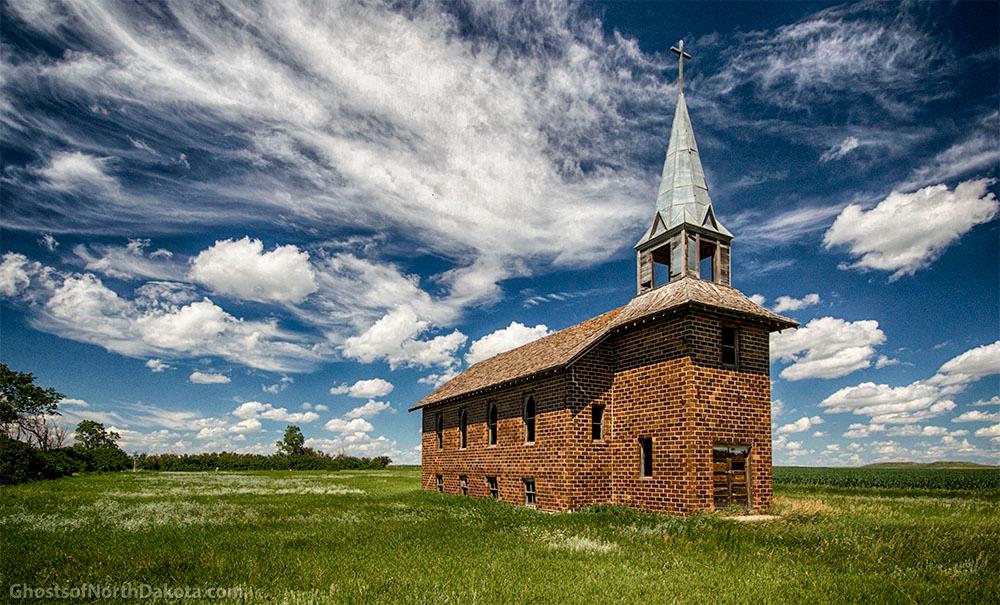
We love our buildings and the people who gather to worship in them. We work to preserve them because they are meaningful and powerful for us. That is a core value for us and we hold it dear.
But it is not a measure of our vitality.
That happens outside those doors, because of that liturgy, as a reflection of that scripture, inspired by that Spirit and fed on the bread and wine found at that holy table - that is the work of the church.
One of the things I am learning to do as a bishop is called by the appropriately uninspiring term: “the audit.” When I visit a church I check their church record book for attendance, baptisms, regular services… and then I sign and date the book. That is great, it really is. But you know what would give me greater joy? You know what would help dispel the myth of scarcity told on the pages of that book?
Could you put a post-it note in those pages as well. As often as it occurs to you? Something like, “Grace Church folks packed X many brown back lunches to give away this week.” or “At St John's, Dickinson, we had to replace the door mats at the back door because so many 12-step groups are using our space” … you get the idea. Let's measure vitality the way Jesus did: by feeding sheep.
Together we will write the next volume of the history of this diocese that tells the story that has been true all along, God was always giving the growth.
You remain in my prayers,
+Shay
|