Jan/Feb 2023 | VOL XXIV, ISSUE 1 | |
|
As State legislatures continue to meet and debate budget appropriations for the 2023 spending year, high on the list of critical agenda items are correctional facilities. In some areas, this means adequate staffing and operational programming. In others, it's time to look at the facilities themselves and determine if renovations to existing structures, or new construction, offer the right path forward.
Designing correctional facilities requires careful consideration of a range of factors, from safety and security (priority #1) to operational efficiency and sustainability. The design team plays a crucial role in this process, as they are responsible for implementing systems to keep these facilities running smoothly.
In this edition of Plains Talk, we will explore some of the key design considerations for correctional facilities from a mechanical and electrical engineering perspective. Some are obvious (emergency power, video surveillance, gates), while others come from years of experience and understanding of the end users.
| |
Keeping Up With the Times | |
Mike Durfee State Prison Barracks HVAC Upgrade | |
|
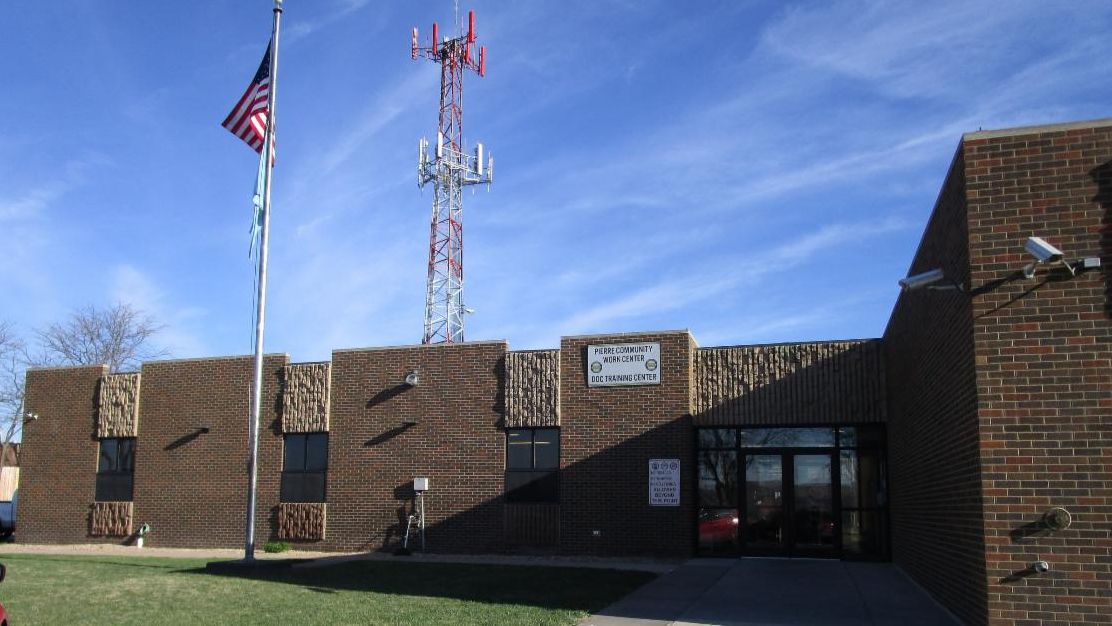
The Mike Durfee State Prison (MDSP) in Springfield, SD is the definition of facility re-use, re-imagination, and renovation. The complex was created in 1984 when the State of South Dakota approved a new corrections facility in the former home of the University of South Dakota, which had since moved to Vermillion. Existing spaces like dormitories, classrooms, and libraries were renovated into secure barracks, commons, and kitchens that initially housed female inmates.
The now all-male facility continues to grow and shift to support the needs of its low to medium-security population. In fact, the prison has come somewhat full circle and now includes areas dedicated to inmate education such as classrooms and vocational training.
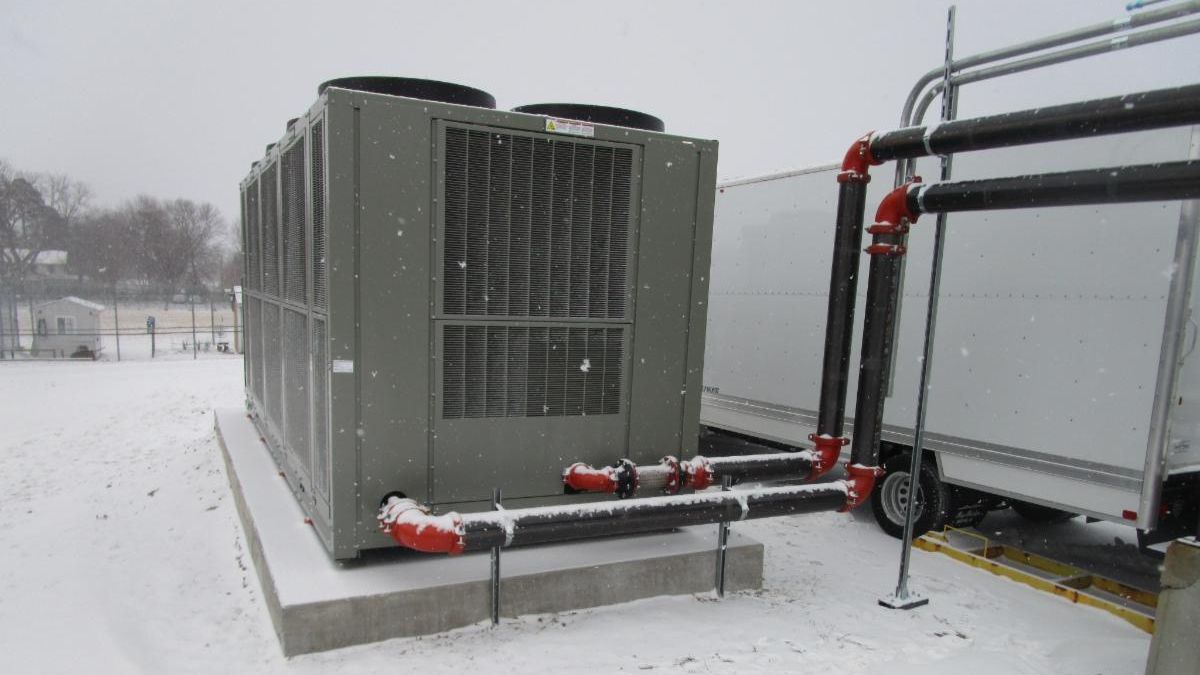
As the complex has evolved, WPE has been involved in system upgrades to support realignment and security improvement. We’ve also supported critical maintenance and repair work needed to keep the aging facility functioning with modern efficiency and control. One such modernization was a recent HVAC upgrade to the air handling units (AHU) serving the main prisoner barracks and dietary building. The AHUs were originally installed without cooling but had extended coil sections that included drain pans to allow cooling coils to be installed in the future. Based on the size of the air handling systems and discussions with the facility about maintenance and security, we decided to use air-cooled, chilled water systems to provide cooling to these buildings.
Our team designed the chilled water systems around efficient and reliable packaged air-cooled chillers located at the barracks and dietary buildings. The new chilled water systems included new chilled water coils in the existing AHUs, new chilled water piping through each building, new chilled water pumps and associated chilled water specialties, upgrades to the existing building automation system, insulation of existing supply air ductwork, and extending power from existing distribution panels to the new chillers.
This project is the first at MDSP that included using propylene glycol in the chilled water systems. Until now, all other air-cooled chilled water systems on campus had been filled with standard city water.
The project was developed with several alternates to provide the State some control to manage costs. High labor, material, and equipment costs were difficult issues to manage along with long equipment lead times. Ultimately, the State decided to award it and all alternates rather than face the uncertain future of the changing construction market/industry. Construction was successfully completed on time and without any additional costs.
| |
|
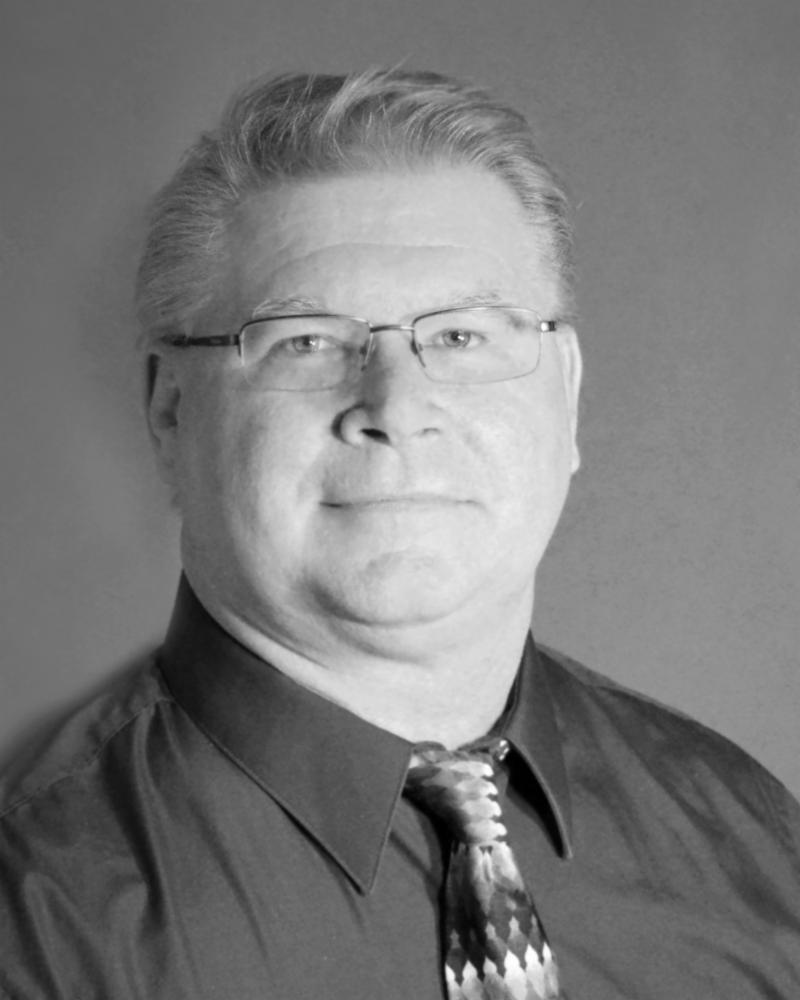
Rick Ames is a Mechanical Designer in our Sioux Falls office with more than 30 years of experience. He routinely works with the South Dakota Department of Corrections on facility upgrades at the Mike Durfee State Prison, SD State Penitentiary, and SD Women's Prison.
Email Rick
| |
|
System Design for Secure Prison Spaces | |
|
One of the primary concerns when designing correctional facilities is obviously...security. Mechanical and electrical engineers work closely with architects and security consultants to develop systems that support this critical consideration by preventing breaches and protecting inmates and staff. For example, this might involve designing complex access control systems that use biometric identification, security cameras, and alarms to monitor, limit and control access to different areas of the facility.
MEP designs also include tamper-resistant measures such as placing bars within ductwork to prevent the passage of items or people through those spaces. Instead of CMU with grout, the design team may instead consider the use of stainless steel, pre-cast or poured-in-place concrete as these materials are less likely to be chipped away over time, reducing the potential to open a wall. For inmate safety, fixtures and finishes should also be tested and approved as anti-ligature. Fixtures, air openings, and other finishes within the secured zone must be affixed to walls and ceilings so they are not able to be opened or removed.
Fire safety is another critical consideration in correctional facility design. Mechanical and electrical engineers must design and install fire suppression systems that are robust enough to contain a fire in its early stages and prevent it from spreading. This might include installing sprinkler systems, smoke detection systems, fire alarms, and possibly smoke evacuation systems.
An often-undervalued design detail is that toilets should not be plumbed back-to-back. If the waste connections to the plumbing fixtures within adjacent cells are piped to the main with too little of an offset, it may be possible for inmates to pass material from one cell to the next through these fixtures.
While safety and security come first, here are a couple of other primary considerations from an MEP perspective:
Operational Efficiency
Efficiency is also essential in correctional facility design. Mechanical and electrical engineers must design systems that minimize (or virtually eliminate) downtime and reduce maintenance requirements and costs. This might involve systems that are easy to access and maintain, or incorporating automation technologies that can detect and correct issues before they become major problems.
Energy Efficiency
Sustainability is becoming an increasingly important consideration in correctional facility design, and mechanical and electrical engineers have a significant role to play in this area. They must design systems that minimize energy consumption while still meeting the facility's operational needs. This might involve incorporating energy-efficient lighting systems, heating and cooling systems, and water conservation technologies.
Designing correctional facilities is a complex process that requires input from a range of stakeholders, including mechanical and electrical engineers. These professionals must consider a wide range of factors, from security and safety to energy efficiency and accessibility, in order to design systems that meet the needs of the facility and its occupants. By working closely with facility staff, architects, security consultants, and other professionals, mechanical and electrical engineers can create correctional facilities that are safe, secure, and efficient.
| |
Article collaboratively authored by WPE mechanical and electrical engineering staff. | |
Cross-Functional Corrections | |
South Dakota State Women's Prison | |
|
Since 1995, female inmates in the State of South Dakota have been housed at the South Dakota Women’s Prison (SDWP) in Pierre. The facility is part of a larger law enforcement and corrections complex known as the Solem Public Safety Center (PSC), which is also home to the Department of Corrections, Pierre Police Department, Hughes County Sheriff’s Office, State Highway Patrol, and the State Division of Criminal Investigation.
We often think about multi-use spaces in terms of housing, hospitality, and commercial construction. But as is the case with the Solem PSC, cross-functionality within a single building envelope is common across industries. The key to designing for any building serving multiple end users is to understand the needs and challenges of each. For corrections, that usually means focusing on safety, security, and reliability.
In the past decade, WPE has supported more than a dozen projects at the Solem PSC, each addressing a different type of system usage. Our electrical team has led the way for updates to fencing, door/cell intercom systems, standby generators, and lighting to enhance the security of inmate areas by assuring electrical systems are not only functioning properly but are backed up by a redundant power supply.
Mechanically, we’ve upgraded the HVAC and plumbing not only in the Women’s Prison but also in those areas housing law enforcement and administrative offices. Even in these non-inmate areas, we keep an eye on putting measures in place like tamper-resistant equipment and system diversification, in the event the space is compromised. Again, as a multi-use facility, we need to operate under the understanding that although areas may not be designated for inmates, they could potentially be breached during an emergency. Our job is to make sure those areas remain as secure as possible in that event.
The Next Step
While the Solem PSC complex has operational benefits by housing law enforcement and corrections in a central location, the reality is that the population of the Women’s Prison has begun to outgrow the space. The State recently began planning to accommodate that growth with a new female facility in Rapid City. West Plains Engineering is part of a design team working through the programming stage of the complex, which could potentially include housing, education, visitation, recreation, health services, dietary, laundry, and warehouse space – among others. Funding for this project is currently being reviewed by the State Legislature.
| |
|
Mike Sigman, P.E. is an Electrical Engineer and the Rapid City Office Manager for West Plains Engineering. He has more than 30 years of experience and is currently part of the design team working through the programming stage of the new State Women's Prison for the South Dakota Department of Corrections.
Email Mike
| |
|
6th Judicial District Facility Improvements | |
|
The 6th Judicial District for the Iowa Department of Correctional Services provides services for more than 3,600 offenders, more than 250 of which are held in residential facilities in Cedar Rapids and/or Coralville, IA.
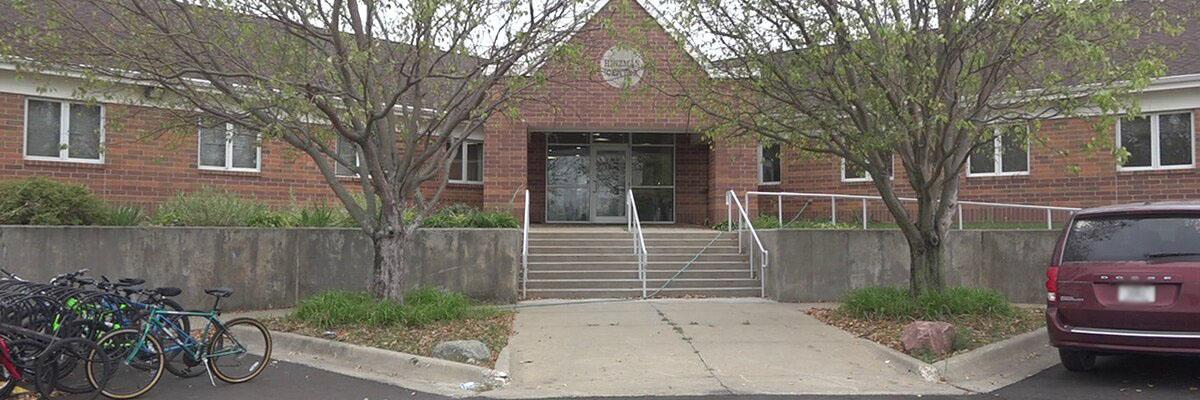
In the past two years, West Plains Engineering has supported improvements to both the Hinzman Center, which houses nearly 90 male and female inmates, and the Nelson Center, which has the capacity for nearly 100 male offenders. In each project, inmate safety was a significant factor and special care was taken to specify equipment that couldn’t be altered for self-harm or violence against staff.
In 2019, our team was the consultant to add a fire sprinkler system to the Hinzman building. The 35,000 square foot space also required a new water service to accommodate the system. While a fire sprinkler system itself is important for life safety, additional consideration had to be given to the type of sprinkler head installed. It was critical to select an institutional sprinkler head type that could not be broken off and fashioned into a weapon or used in a suicide attempt.
Two years later, we went back and designed a similar fire sprinkler system for the adjacent Nelson Center. As part of the project, we upgraded the lighting and replaced the HVAC grilles. Security-type fasteners were specified for installation methods so that the devices were tamper-resistant.
Both projects required careful attention to construction planning and phasing. It was important to make sure areas of construction were secured for contractors to perform the new work and keep inmates away from the area and associated tools. This required frequent shuffling of inmates into separate resident wings or creating barriers throughout the duration of the project to assure isolation from the active construction area. When work was performed in the common areas, security staff were available to increase monitoring of the inmate activities.
| |
|
Mike Drahos, P.E. is a Mechanical Engineer and Office Manager in Cedar Rapids, IA. He has more than 30 years of experience and was the lead mechanical engineer for both the Hinzman and Nelson Center projects.
Email Mike
| |
|
West Plains Engineering News | |
Mentele Creates Senior Design Project for WWII B17 | |
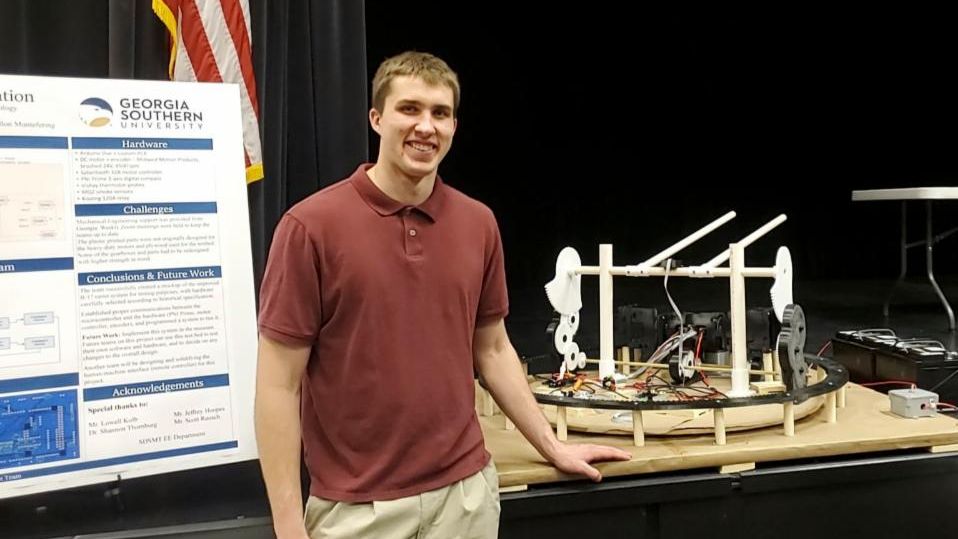
Chris Mentele with the 3D printed prototype to test the system before installation on actual B17. | |
|
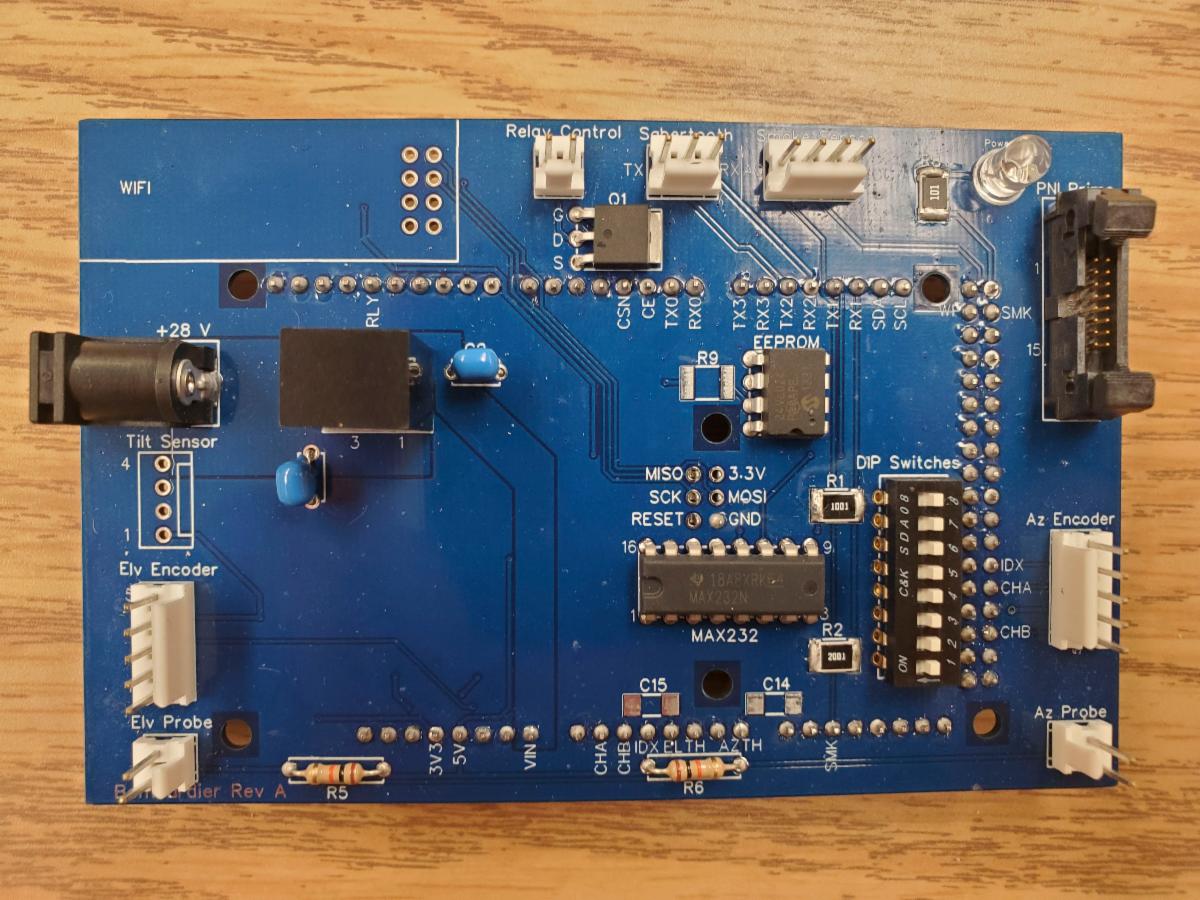
WPE electrical intern Chris Mentele was part of a design team from SD Mines that partnered with mechanical engineers from Georgia Southern University to automate three 50-caliber rotating turrets aboard the "City of Savannah", a World War II era B17 Bomber.
The plane is currently exhibited in the Museum of the the Mighty Eighth Air Force in Georgia, where tour guides regularly give demonstrations of its historical features. This project's goal was to provide a remote control capability of the turrets to aid those guides in demonstrations.
The electrical team upgraded the entire system to modern components for system safety and simplicity. The new design features safer 24V motors, contemporary PWM driver, and a digital Arduino microcontroller. The mechanical team provided the adapters and mounts to integrate the new system with the old, and also provided a mock-turret testbed to aid in design, programming and testing since the team did not have access to the actual B17.
Mentele, who will begin work with WPE full time this Spring, travels to Georgia in March to begin system installation at the museum.
| Inset photo above: Turret Controller Motherboard | |
Linn County Building Earns Design Honor | |
|
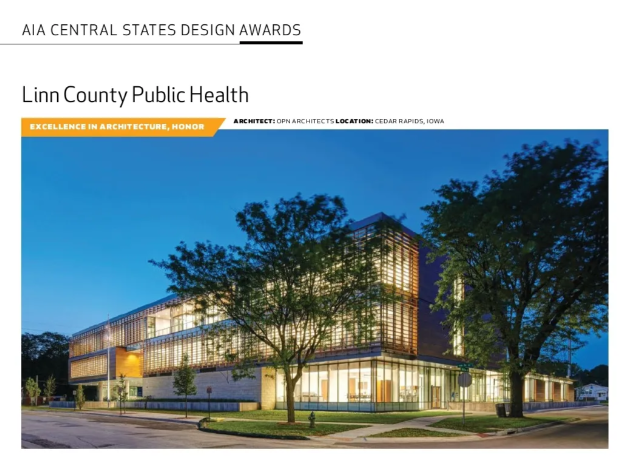
The Linn County Public Health (aka Dr. Percy & Lileah Harris) Building was recently awarded an AIA-Central States Excellence in Architecture award. The 63,000 sf space was completed in 2019 to replace an aging exiting facility, adding much-needed space for critical services to Cedar Rapids and surrounding communities in Iowa.
Congratulations to the design team on the recognition for this beautiful community space!
| |
WPE Celebrates E-Week 2023 | |
|
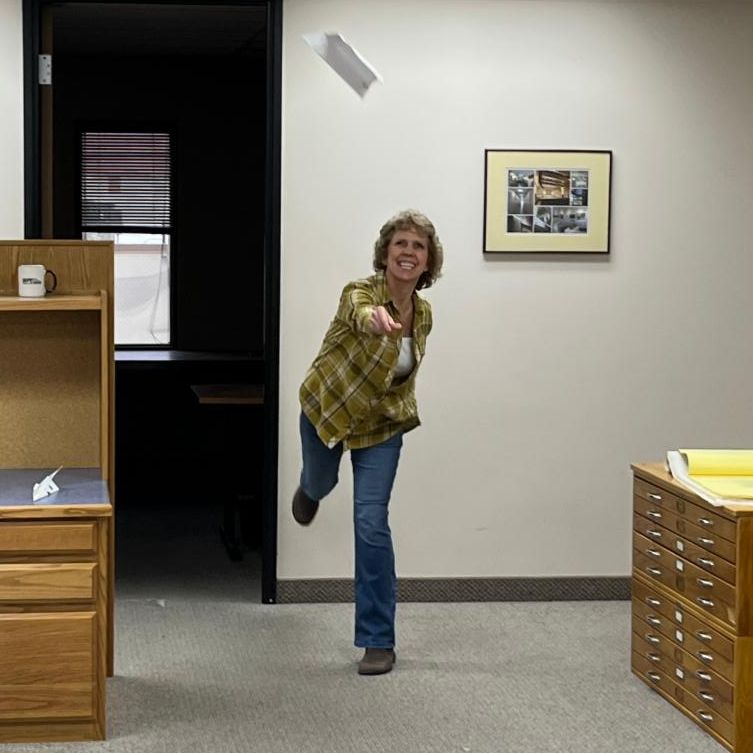
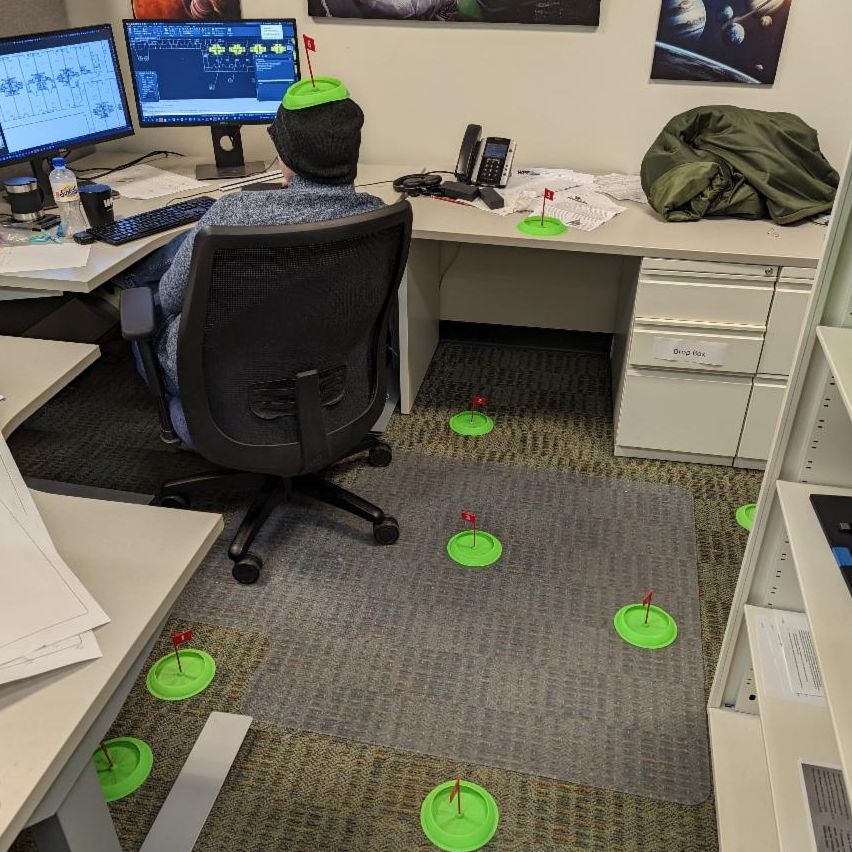
West Plains Engineering joined with firms around the country to celebrate national Engineer's Week, February 19-25. Each year, the week is dedicated to recognizing and promoting our industry and the incredible professionals in it.
This year’s theme was Creating the Future! Engineers play a vital role in innovating solutions to global challenges that impact future generations. By working together to develop new technologies, products, and opportunities, engineers create new possibilities that make the world a better place.
Below are a few photos from around the firm, and visit us on Facebook to view the full album, plus content we shared in honor of the event.
| |
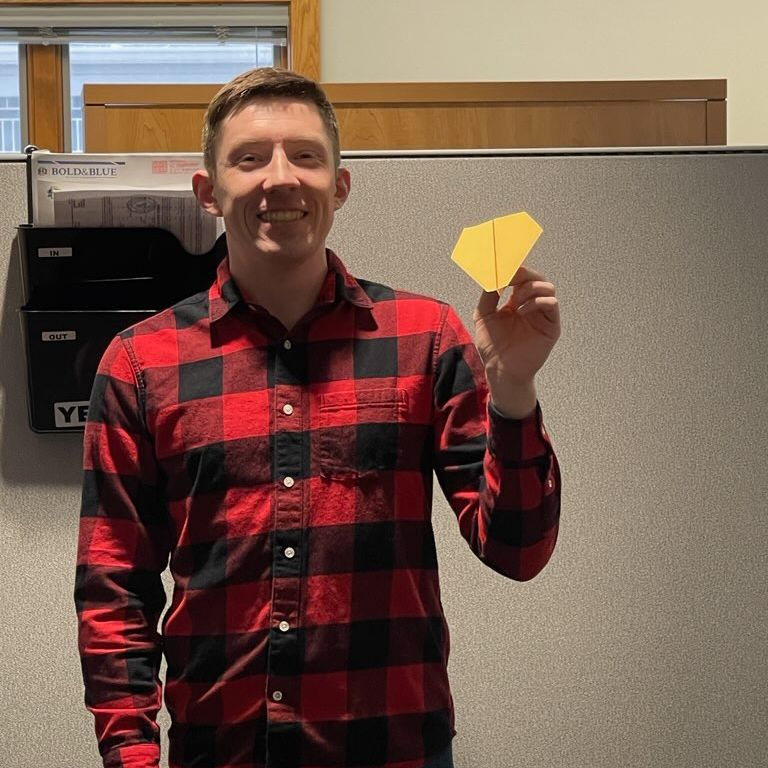
Nate Reynhout won our Paper Airplane contest in Sioux Falls! | |
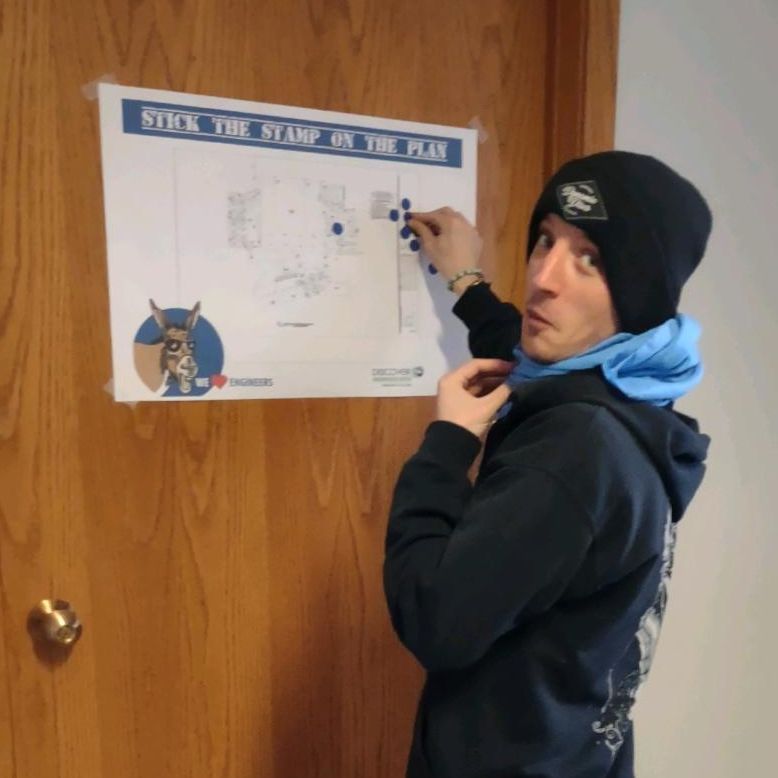
Matt McTee got closest to the mark in Stick the Stamp on the Plan (pin the tail on the donkey for engineers) in Rapid City. | |
Julie Morton's airplane flying form was flawless in Casper. | |
We hope Richard Panton put on a hardhat before the chip shots started during the mini golf game in Cedar Rapids. | |
Christensen Supports Junior Achievement | |
|
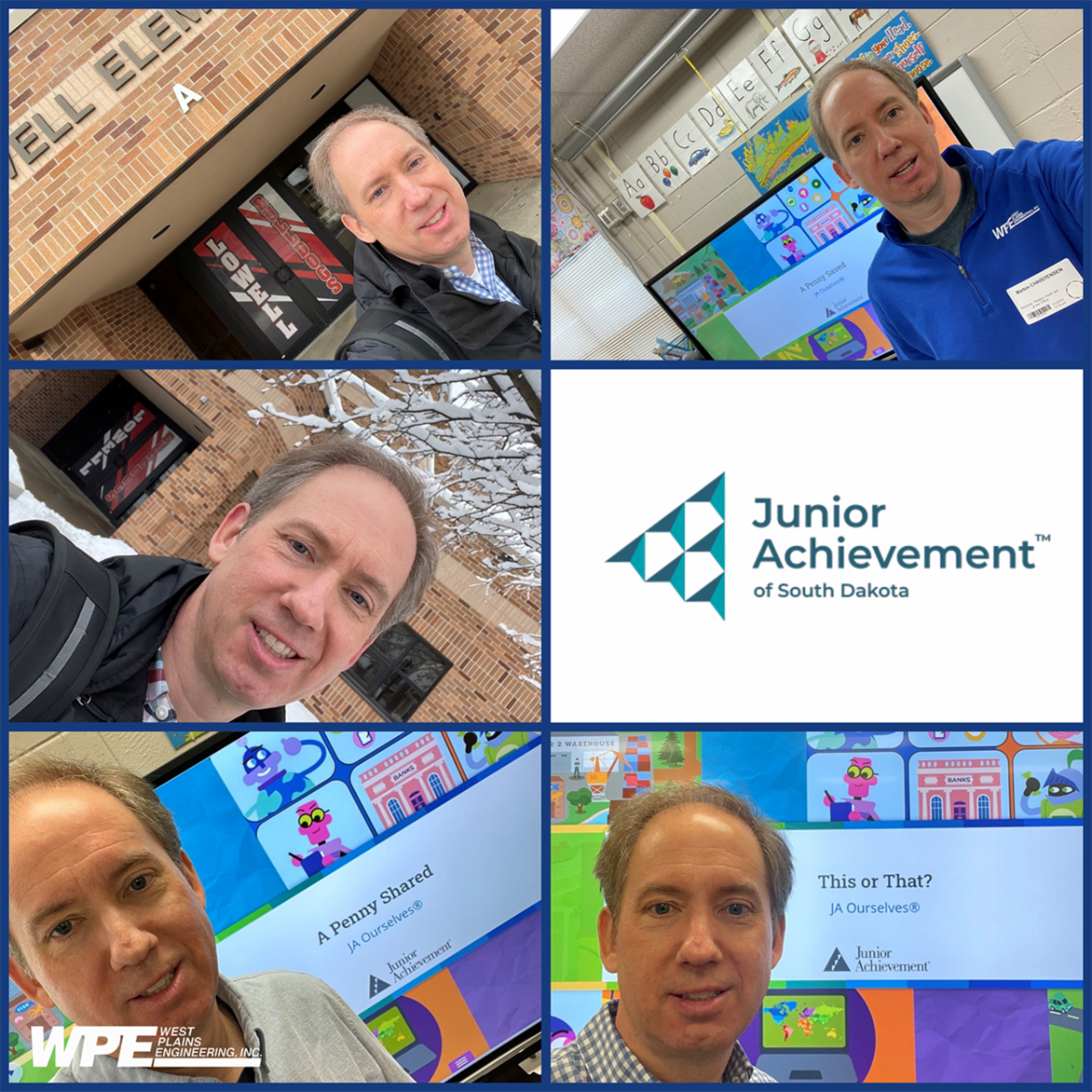
Marty Christensen wrapped up his time with the K02 class at Lowell Elementary in Sioux Falls in February as part of JA Ourselves.
He's still waiting on his "Favorite Teacher Ever" award, but for now he'll settle for the hugs, fist bumps and awesome eager minds he met each week.
| |
Swiontek Attends ASHRAE National Convention | |
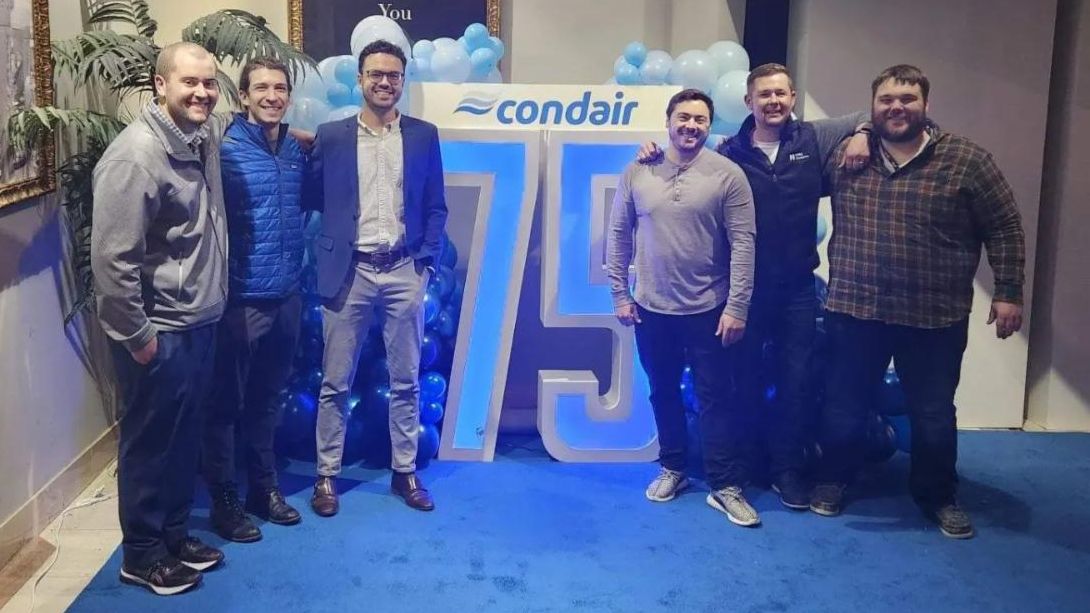
Mechanical Engineer Connor Swiontek (right) looking good against that on-brand blue at the ASHRAE Winter Conference in Atlanta in February. Connor and like-minded mechanicals from across the country got together in The Peach State to learn from some of the best. | |
Rapid City, SD | Sioux Falls, SD | Casper, WY | Cedar Rapids, IA | | | | |