|
Plastics News Alert
A publication of the KIN Plastics in Humans Working Group
Amplifying experts and their initiatives
| | Alain Chetrit, Co-Founder, Chairman, Knowledge Impact Network | | |
Solutions Start With Knowledge
"As the global plastics crisis intensifies—threatening human health, ecosystems, and future generations—this newsletter is your resource for real solutions and actionable opportunities.
Inside, you'll find expert insights, innovative proposals, and diverse voices from the front lines of science, policy, and business.
Our mission isn’t just to raise awareness. It’s to empower a growing community of changemakers with the knowledge, connections, and tools needed to drive lasting impact."
| | Dr. Sarah McCue, Chair, KIN Plastics in Humans Expert Working Group | | |
We Cannot Take Decades to Solve This
"It took decades to ban lead, mercury, and asbestos in products, and to convince people that smoking was limiting their longevity.
We cannot take decades to solve the plastics threat – we need the research, philanthropic and investment community to build a path to scale solutions.
We will continue to share research studies on the health harms caused by plastic among the INC5.2 plastic treaty negotiators who will meet at the United Nations in Geneva in August.
We will continue to identify efforts that are developing solutions to remove plastic particulates from the human body.
And we will work within the United Nations and World Bank system to collaborate on establishment of a global fund to remove plastic from our bodies, soil, water, and air."
| | News About Microplastics & the Solution Hunters ... | |
World In $1.5tn ‘Plastics Crisis’ Hitting Health From Infancy To Old Age, Report Warns
What: Plastics are a “grave, growing and under-recognised danger” to human and planetary health, a new expert review has warned. The world is in a “plastics crisis”, it concluded, which is causing disease and death from infancy to old age and is responsible for at least $1.5tn (£1.1tn) a year in health-related damages.
Cause: The driver of the crisis is a huge acceleration of plastic production, which has increased by more than 200 times since 1950 and is set to almost triple again to more than a billion tonnes a year by 2060. While plastic has many important uses, the most rapid increase has been in the production of single-use plastics, such as drinks bottles and fast-food containers.
read article ...
| |
Hot Drinks May Be Bigger Source Of Microplastics Than Previously Thought
Who: A research team at the University of Birmingham tested 155 common soft drinks, including hot and cold drinks, for microplastics to get a picture of average human exposure through a realistic spectrum of daily drinks available in one country.
What: The study, believed to be the first of its kind, found the highest concentrations of microplastics were in hot tea and hot coffee.
read article ...
| |
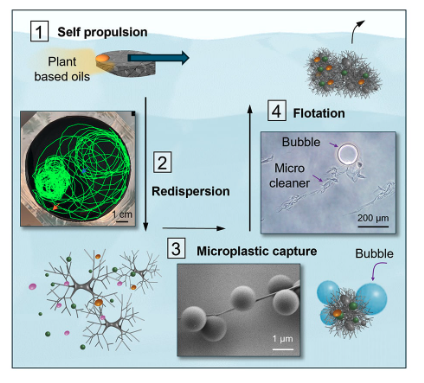
New Water Microcleaners Self-Disperse, Capture Microplastics and Float Up for Removal
Who: Researchers at North Carolina State University show proof of concept for a system that, in a single cycle, actively removes microplastics from water.
What: The findings, described in the journal Advanced Functional Materials, hold the potential for advances in cleansing oceans and other bodies of water of tiny plastics that may harm human health and the environment.
| | |
How: “The idea behind this work is: Can we make the cleaning materials in the form of soft particles that self-disperse in water, capture microplastics as they sink, and then return to the surface with the captured microplastic contaminants?” said Orlin Velev, the S. Frank and Doris Culberson Distinguished Professor of Chemical and Biomolecular Engineering at NC State and corresponding author of the paper.
“We demonstrated how multiple principles can be integrated into a system that works in a single cycle.”
read article ...
| |
University of Missouri Developing Solvent‑Based Nanoplastics Removal
Who: Researchers at Mizzou developed a biocompatible solvent that selectively absorbs nanoplastics from both freshwater and saltwater with over 98% efficiency. After treatment, the solvent floats and can be removed along with the nanoplastics.
Why it matters: While still in the lab stage, this innovation could lead to scalable water‑cleaning plants or even packaged treatment kits for industrial and municipal use.
read article ...
| |
Cornell Engineering Enzymes To Break Down Microplastics
What: There are over 5 billion tons of plastic waste accumulated across the planet, much of which are microplastics that may harm human health and pose a long-term threat to agricultural productivity and food security.
The gargantuan task of cleaning up this pollution could be aided by a tiny protein: a specialized enzyme designed to break down plastics into simple components that natural bacteria in the environment can use as a food source.
Who: Julie Goddard, professor of food science, and her research team are engineering a unique enzyme that targets polyethylene terephthalate (PET), a common plastic used in packaging and textiles. Her lab has successfully engineered a new enzyme capable of breaking down plastic in the complex conditions found in sewage sludge, and she envisions a system in which these enzymes could someday help reduce microplastics in treated wastewater.
read article ...
|
New Device Yanks Microplastics From Your Laundry
Who: Three Case Western Reserve University engineering alumni have fabricated a special washing machine filtration system to capture microplastics. CLEANR technology is rolling out at three universities while selling online at $249 for home use.
Why it matters: “It just turned into this project where we realized [that] microplastics seemed like they’re going to be a big issue,” CLEANR co-founder and CEO Max Pennington, 24, told The Post. “We were passionate about [spending] our free time, really, whenever we could, to develop this technology.”
read article...
|
Columbia University Developing Tech For Wastewater Filtration
Who: Scientists at Columbia’s Lamont‑Doherty Earth Observatory are exploring advanced filtration and adsorption methods to extract nanoplastics from laundry and wastewater.
Why it matters: Their focus includes membranes, magnetic particles, electro‑chemical separation, and biodegradable polymers.
These efforts are aimed at integrating solutions into existing water treatment systems and reducing plastic release via consumer activities.
read article ...
| | KIN Post Event Summary: July 31st Lightning Round | | |
It's "Falling From The Sky," One Scientist Reports
The fast-paced discussion focused on research, solutions, investment and policy needed to remove plastic from the human body, soil, and water.
| | | | | |
One of the ten speakers, aerospace scientist Terry Trevino, who discovers plastic particles in extremely remote pristine locations, says "We’re working to secure access to hyperspectral satellite imaging so we can detect algal blooms that may be the first sign of phytoplankton under stress from nanoplastic exposure, what we call NP poisoning."
"With nanoplastics now falling from the sky in snow and rain, and the Atlantic’s slowing circulation delaying but not preventing their arrival, we believe Nunavut and the Nunamiut (geographic areas in northern Canada) deserve to know what’s coming and how to fight back."
read article ...
| | | Letters to the Editor ... | | |
Washington Machine Filters a No-Go
Dear Editor,
I would like you to consider that filters on washing machines may not be the answer for several reasons:
1. They cannot efficiently filter out the smallest particles. Which are the ones that can easily cross biological barriers, such as the blood brain barriers or the placental barrier.
2. They soon become clogged up. So they may have to be designed with a bypass so they can go on working even if the filter is full.
3. Who will actually clean the filters?
Read letter ...
| | Next-Gen Solution Builders | | |
High Schoolers Take On Microplastics
They are rising high school seniors from Northern Virginia, right outside Washington, D.C., and they’re taking on microplastics.
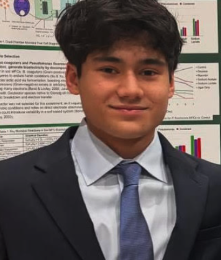
Alex Hejmo, Max Alfert, and Labeed Zaib told the participants of the recent KIN Lightning Round meeting on plastics they have formed the Northern Virginia Microplastics Advocacy Association (NVMAA), a 501(c)(3) nonprofit and high school club for community education and awareness.
The main point of the organization is to “share is how vital it is to take action and build community efforts to tackle the massive issue of microplastic pollution,” Lebeed said. “We hope to inspire others and emphasize how deeply invested the youth is in such a passionate/driven community.”
read article ...
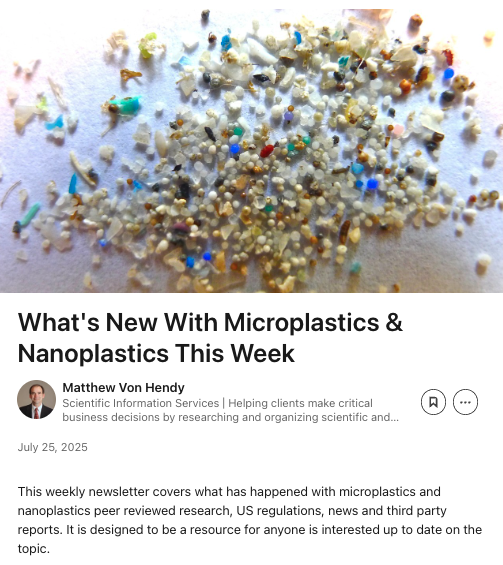
| | Inspiring Newsletters We're Reading ... | | Read Matthew Von Hendy's newsletter here ... | | KIN partners with Earth05; Will help judge new prizes | | "We’re proud to partner with Earth05, a global platform accelerating breakthrough innovations at the nexus of water, ocean, energy, food, and AI," KIN Co-founder Alain Chetrit says. | | |
We invite KIN members to join this collective action effort!
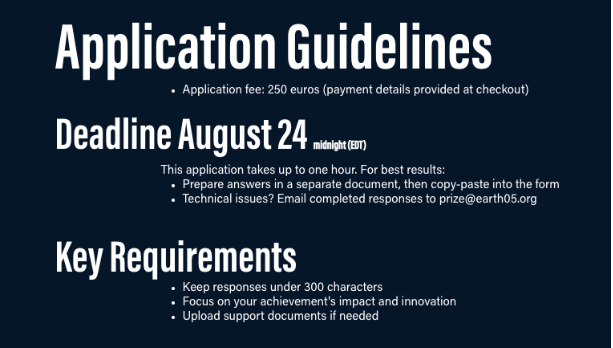
Applications close: August 24, 2025.
Earth05 is currently inviting scientists, researchers, and startups working at the intersection of water, ocean, energy, food, and AI to apply for the 2025 Earth05 Co-Creation Prize.
Apply here (https://www.earth05.org/co-creationprize) or https://www.earth05.org/co-creationprize
More info here (https://www.earth05.org/co-creationprize) or https://www.earth05.org/co-creationprize
| | |
ABOUT Earth05:
Earth05 is a global innovation platform accelerating breakthrough solutions at the intersection of water, energy, food, and AI. It convene scientists, entrepreneurs, and corporate leaders to tackle humanity's most pressing challenges through its flagship Co-Creation Prize.
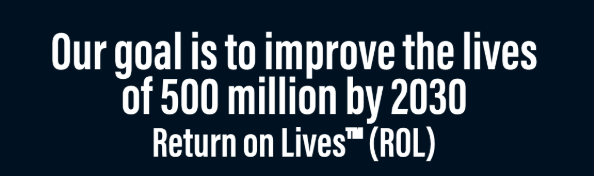
Its mission is bold: achieve transformative 2050 goals including zero wastewater, 100% renewable energy adoption, microplastics elimination, and responsible AI infrastructure. In an era of rapid technological advancement, it uses proprietary Return on Lives (ROL) framework to ensure innovations genuinely enhance—rather than displace—human potential.
| | KIN to co-host plastic conference during UN General Assembly week in New York | | |
Expert Lightning Talks at the #WINLounge by Women Inspiring Network
September 24, 2025 3:00 PM ET
31 West 52nd St. NY, NY
In person or come online
Join us for a powerful hour of rapid-fire insights on a growing health emergency.
Astronomical amounts of plastic are accumulating in our bodies, soil, water, and air. In this Lightning Talk Session, leading scientists, advocates and innovators will share bold, five-minute ideas and solutions on how we can eliminate plastic from our ecosystems, and ourselves.
Please register here.
Let's turn knowledge into impact!
| |
From Our Sponsor
... with the compliments of Philippe Chetrit
| | |
Too healthy to be a shake.
Too good to be a smoothie.
| | |
Coolside Superfood Protein tastes like a treat, but fuels like a plan.
Packed with plant protein, prebiotics, and real superfoods, served in 3 indulgent flavors - chocolate, vanilla and strawberry. They’re built to keep you energized, smiling, and moving through real life — with real strength.
Plant protein. Superfoods. Prebiotics.
Nothing extra, nothing complicated — just simple, indulgent, powerful fuel for everyday movers.
Available only in the United States, and with every order Coolside will make a donation to KIN.
Pick your flavor here.
| | |
About The Knowledge Impact Network:
Founded by YPO members, the Knowledge Impact Network (KIN) is a nonprofit organization dedicated to repurposing and redistributing knowledge — one of the world’s most underutilized assets.
KIN showcases leading experts and their initiatives to accelerate scalable social impact.
| |
KIN Plastics in Humans Working Group curates some of the most informative news updates on the plastics crisis and amplifies the work of the leading experts in the field.
Read our previous newsletter here.
| |
Knowledge Impact Network™ is a 501(c)(3) tax-exempt
organization. FEIN number is 85-3426545
| | | | |