|
The Boston Celtics begin another season this month. For those of us who have followed the Celtics for most of our lives, the beginning of a new season always brings a familiar combination of anticipation, optimism and memories.
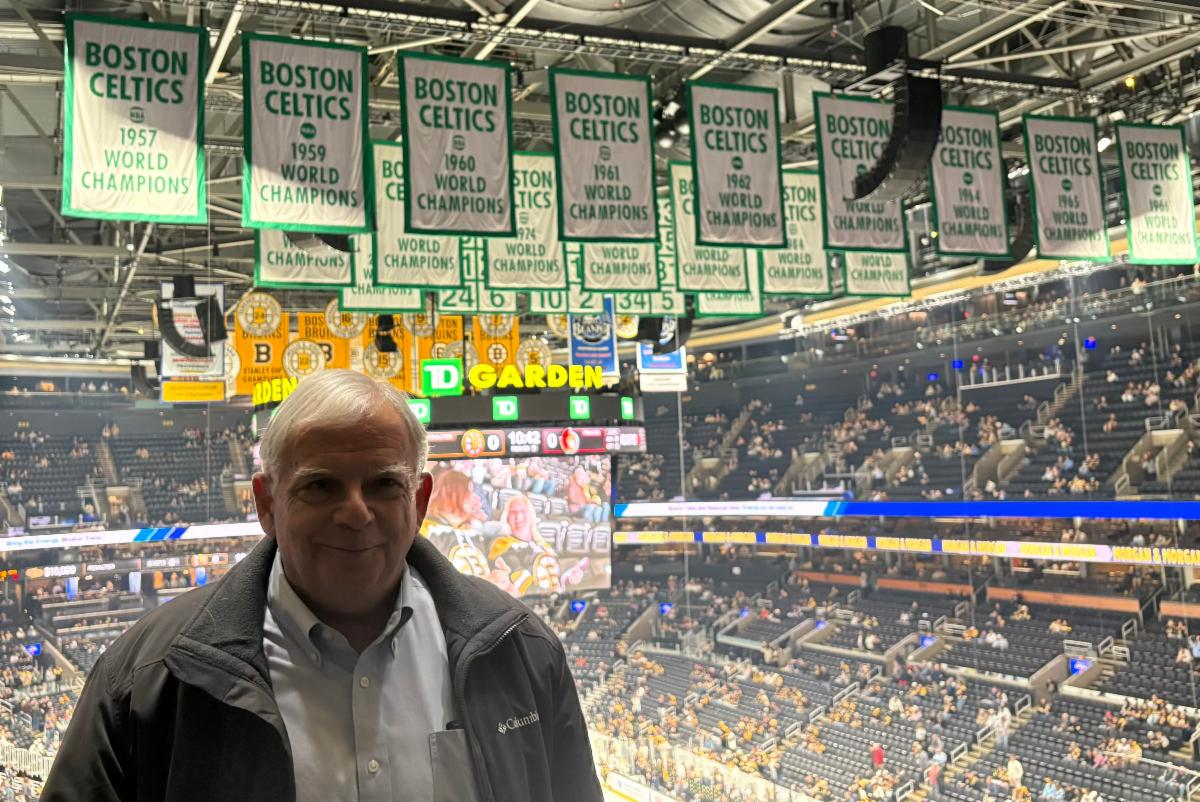
Eighteen championship banners hang above the court in Boston, earned by different generations, different coaches, different stars and very different styles of play.
But through all those years, there has been something we simply call Celtics Basketball. That phrase got me thinking about what Celtics Basketball actually means. It isn't just making shots. It's moving the ball, finding the open person, protecting possession, rebounding after a miss, knowing your role and putting the team ahead of individual statistics. Ultimately, it is finding a way to get the ball through the basket more often than the other team.
The more I thought about it, the more I realized that sounds an awful lot like leadership. And that's when I started thinking that maybe, in a strange way, we are all basketballs.
| | |
We Are All Basketballs
Not basketball players. Basketballs. Stay with me.
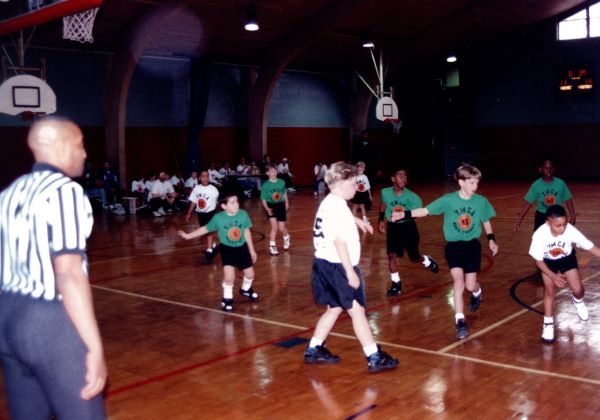
Throughout our lives and careers, we bounce around. Sometimes slowly and sometimes pretty quickly. If we have worked for an organization for any length of time, we have probably been passed from one leader to another, from department to department, or from job to job.
Sometimes it happens so quickly that it feels as though we are moving around the court without ever touching the floor.
We even use the expression ourselves: “I've been bouncing around.” We bounce from job to job, role to role and company to company. Athletes bounce from team to team. We even hear the expression used about relationships. Apparently, we spend a lot of our lives bouncing.
And like a basketball, we don't always go through the hoop. Sometimes we hit the rim, getting incredibly close to reaching our goal but falling just short. Sometimes we are an air ball and miss completely. Other times, we bounce one off the backboard and go in—not as directly or elegantly as we had hoped, perhaps, but the goal is still accomplished.
And every once in a while, everything works perfectly.
Swish.
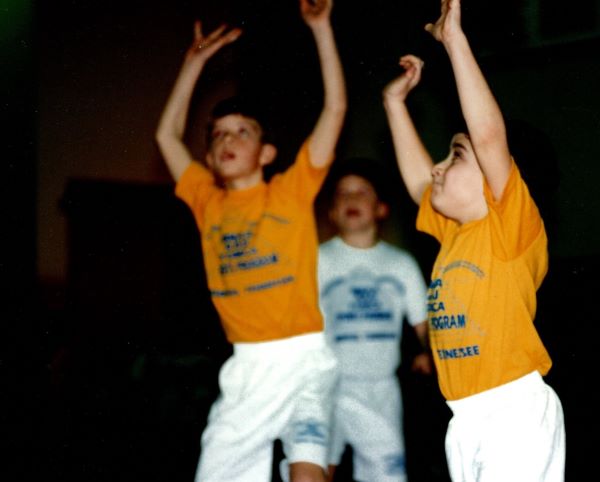
Or we are slam dunked. We reach the goal so quickly and decisively that everybody notices. But there is another possibility that may be even more important: we miss, hit the rim, and before we reach the floor somebody grabs the rebound and puts us back up. This time we go in.
That may be my favorite part of the metaphor, because leadership has a lot to do with what happens after the miss.
Who Has the Ball?
| |
If we are the basketballs, our leaders are often the players. So, what determines how frequently the ball goes through the hoop?
Probably not the pounds per square inch of air inside the basketball. It is largely determined by the person handling it.
A good basketball player knows when to dribble, when to shoot, when to pass, when to slow things down and when to move quickly. Most importantly, a good player understands that sometimes somebody else has the better shot. Good leaders understand that too.
Our job as leaders isn't to score every point personally. Our job is to increase the chances that the team scores. In fact, maybe we could evaluate leadership using some of the same statistics we use in basketball. What is our shooting percentage? How frequently do the people we lead achieve their goals? How often do we turn the ball over by losing talented people to another department or another company?
We could also ask how often we pass the ball. Do we recognize when somebody else has the better opportunity and give that person the chance to take the shot? And how good are we at rebounding? When somebody misses, do we stand there staring at the rim, or do we help create another opportunity?
Those aren't bad leadership statistics.
| |
Protect the Ball
Basketball teams that constantly turn the ball over don't win very often. Neither do organizations that constantly lose good people. In fact, we use exactly the same word in business: turnover.
Every time a talented employee leaves because of poor leadership, we have turned the ball over. Sometimes the competition gets the ball. Sometimes nobody does. Either way, we don't have it anymore.
Good basketball teams protect the ball, and good leaders protect their people.
That doesn't mean preventing someone from ever leaving. It means creating an environment where talented people have reasons to stay, contribute, develop and succeed. It means recognizing that the people on our team are valuable assets—not possessions, but people whose talents deserve to be developed and whose contributions deserve to be recognized.
| |
Pass the Ball
There are basketball players who seem to believe every possession should end with them taking the shot. There are leaders like that too. We want the credit. We want the recognition. We want to make the decision. We want to be standing in front when everyone starts applauding.
Great basketball players, however, see the entire court. If somebody else has the open shot, they pass the ball. Great leaders do the same thing. We create opportunities for other people, give them visibility, let someone else make the presentation and recommend someone else for the promotion. We develop people who might someday become better than we are.
In basketball, the assist can be just as important as the basket. The same is true in leadership. Sometimes the most important thing a leader does isn't scoring—it is putting someone else in a position to score.
Know Where the Basket Is
| |
Imagine playing basketball without knowing which basket you are supposed to shoot at. It sounds ridiculous, yet organizations sometimes do the equivalent. We work hard, hold meetings, send emails and produce reports. Everybody looks busy. Then we ask five people what success looks like and get five different answers.
Great basketball teams know where the basket is, and great leaders provide that same clarity. We make sure people understand what they are trying to accomplish, why it matters and how they will know when they have succeeded.
A basketball team whose goal is to win about as many games as it loses is unlikely to become a champion. Neither is an organization whose people don't clearly understand where they are trying to go. Effort matters, but effort without direction can simply produce exhausted people running up and down the court.
| |
Rebound
Not every shot goes in. Larry Bird missed shots. Bill Russell missed shots. John Havlicek missed shots. Paul Pierce missed shots. Jayson Tatum misses shots. Championship teams know that missing is part of the game, so they don't expect perfection. They expect the next play.
The same thing happens in organizations. Projects fail. Sales are lost. Candidates turn down offers. Good employees leave. Strategies that looked brilliant in January don't look nearly as brilliant in June. The miss doesn't always determine the outcome. What we do next often does.
Good leaders don't spend all their time staring at the rim wondering why the shot didn't fall. They go after the rebound. They learn, adjust and give the team another opportunity to score.
Persistence isn't pretending the first shot went in. It is being ready for what happens when it doesn't.
| |
Celtics Basketball
Growing up around Boston, there is another phrase that makes this metaphor even more meaningful to me: Celtics Basketball.
The Boston Celtics have won 18 NBA championships, more than any other franchise. Those championships stretch across generations—from Red Auerbach and Bill Russell, to John Havlicek and Dave Cowens, to Larry Bird, Kevin McHale and Robert Parish, to Paul Pierce, Kevin Garnett and Ray Allen, and most recently to Jayson Tatum and Jaylen Brown.
The players changed. The coaches changed. The game itself changed. But there has been a remarkable consistency in what the organization has traditionally meant by Celtics Basketball: play for each other, move the ball, accept your role, give the extra effort, rebound, sacrifice an individual opportunity when somebody else has the better shot, and put winning ahead of individual statistics.
Red Auerbach didn't build the most successful dynasty in NBA history by teaching five individuals to play basketball independently. He built teams. From 1957 through 1969, the Celtics won 11 championships in 13 seasons, including eight consecutive championships. Decades later, the names on the jerseys changed, but the banners kept appearing.
There is a leadership lesson hanging from every one of them. The best teams don't merely have great shooters. They play great team basketball. And the best organizations don't merely have talented individuals. They have leaders who know how to use all that talent together.
| |
Sometimes We Are the Ball. Sometimes We Are the Player.
Of course, there is a flaw in my original metaphor. We aren't really basketballs. We can think, make choices, influence what happens to us and even leave the court if we don't like the game being played. Throughout our careers, most of us are actually both the basketball and the player.
Sometimes we are the basketball in somebody else's hands. Sometimes we are the player with the ball in ours. That's where the metaphor becomes more important, because when somebody else has the ball, we hope that person knows what to do with it. When we have the ball, somebody else is depending on us.
That “ball” may be a person, a career, an idea, an opportunity or perhaps even somebody's future. What do we do with it? Do we protect it? Do we know where the basket is? Do we pass when somebody else has the better shot? Do we help our people rebound after a miss? Do we understand that sometimes a simple layup is smarter than attempting a spectacular three-pointer?
And perhaps most importantly, are we more interested in our personal statistics or the final score?
There are lots of ways to put a basketball through a hoop—a layup, a bank shot, a three-pointer, a rebound or a dunk. They all count. The leader's job isn't to take every shot. The leader's job is to help the team score.
Maybe that's one reason 18 championship banners hang above the Celtics' court. For generations, the names and faces have changed, but the fundamental idea hasn't. Protect the ball. Move the ball. Know the goal. Rebound when you miss. And above all, play for each other.
In other words, Play Celtics Basketball.
That's not a bad way to lead, either.
| | Surprise Photo at the End: | | If you are reading this on a social media platform, click below and you'll automatically receive a 'different' story every week on Wednesday. | | |
The Roll Call of states and countries where readers reside: Arizona, California, Colorado, Connecticut, Delaware, Florida, Georgia, Hawaii, Illinois, Indiana, Iowa, Kansas, Kentucky, Louisiana, Maine, Massachusetts, Michigan, Mississippi, Missouri, Montana, New Hampshire, New Jersey, New Mexico, New York, North Carolina, North Dakota, Ohio, Pennsylvania, Puerto Rico, Rhode Island, South Carolina, South Dakota, Tennessee, Texas, Vermont, Virginia, Washington and Washington DC, Wisconsin plus Canada, Conch Republic, Australia and the United Kingdom.
| | |
Ed Doherty
774-479-8831
www.ambroselanden.com
ed-doherty@outlook.com
Forgive any typos please.
| | | | | |