In this issue: Latest funding opportunities, message from the VPRI, new ORIS deadline policy, OneDrive information, coming events, and more. Links display as blue text. | |  |
|
Message from the Vice-President, Research and Innovation | |
|
Happy New Year! As we step into 2025, I reflect on an incredibly busy and productive 2024 with great pride and gratitude for all we’ve achieved together. Research, scholarship, and creative activity continue to thrive at the University of Windsor, thanks to your dedication, commitment, and partnership.
This year brings new opportunities to implement our Academic and Research Strategy, finalize organizational changes to better support our goals, embrace technological and process efficiencies, and forge stronger and strategic partnerships, locally and globally. By working as an integrated ecosystem— with faculties, ADRs, Deans, and external community, industry and government partners— we can address challenges and position ourselves for success.
Together, we will advance our mission, strengthen our impact, and achieve greater things. Here’s to a year of collaboration, innovation, and shared success.
— Shanthi Johnson
| |
|
New internal deadline policy for grant proposals and related documents
In order to facilitate the vetting and processing of grant proposals and boost the likelihood of success, researchers must submit their documents no fewer than 10 business days before external deadlines, unless otherwise stated. Internal data shows a substantial increase in success rates with these timelines. Researchers are required to complete an ORIS External Funding Checklist in the ERSO Research Portal no fewer than 15 days before the external deadline. Final versions of proposal documents must be submitted no fewer than three business days before the agency deadline or the proposal will not be forwarded.
| |
Important information from ITS about OneDrive accounts and research | |
|
To ensure security and continuity of research efforts, all research-related files should be saved to a dedicated SharePoint site rather than an individual OneDrive account, particularly those belonging to students. When students graduate, their OneDrive accounts are disabled, resulting in the loss of any files stored in their personal OneDrives. This can pose a significant risk to the preservation of research documents, data, and materials.
Using a dedicated SharePoint will allow files to remain accessible to all authorized team members, even after students graduate or if faculty or researchers transition.
In preparation for Microsoft’s new storage limitations, IT Services will be deleting content associated with alumni OneDrives Feb. 14. Please ensure that all existing files that may be stored in OneDrive accounts have been saved or migrated to a dedicated SharePoint or that they are saved in the OneDrive belonging to the research lead.
If you need assistance with the migration process or the set-up of a SharePoint account please connect with IT services by:
- Chatting
- Opening a ticket
- Calling 519-253-3000 ext. 4440
- In person by visiting the IT Service desk located in the lower level of the University Computer Centre (UCC) between 8:30 a.m. and 4:30 p.m.
| |
Engineering prof to lead $1 million research project on timing devices | |
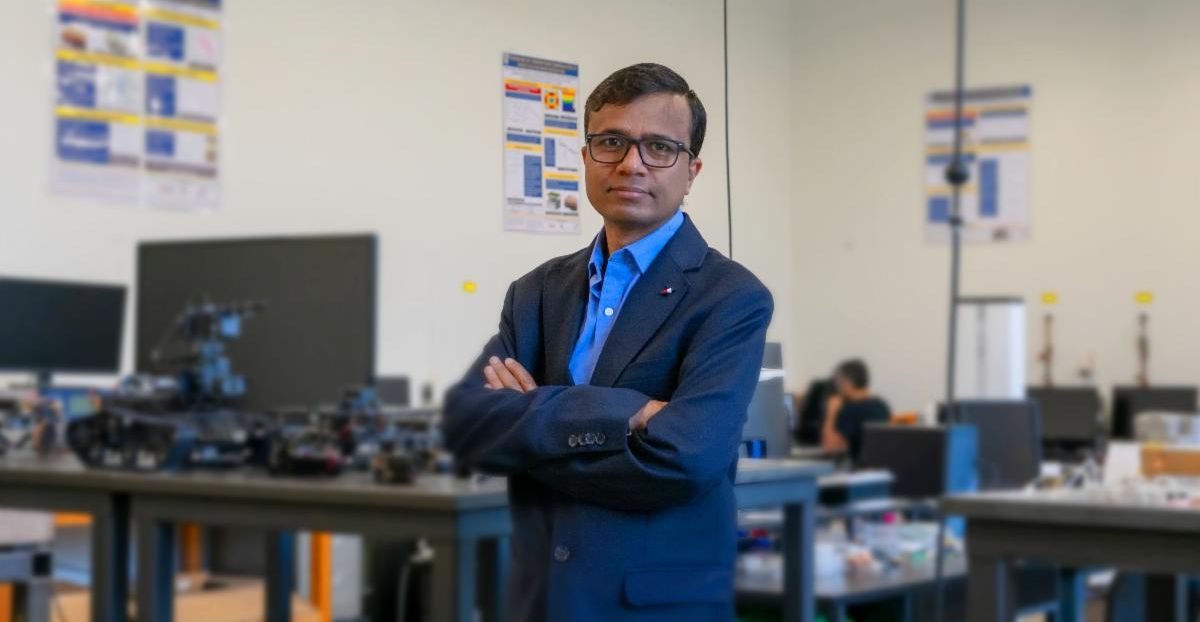
Engineering professor Jalal Ahamed is partnering with a Montreal-based company that specializes in micro-electro-mechanical systems to develop a better timing chip for electronic devices. The $1 million project is being funded through the Natural Sciences and Engineering Research Council of Canada, Mitacs, and industry partner Strathera Inc. | |
Writing retreat spots available
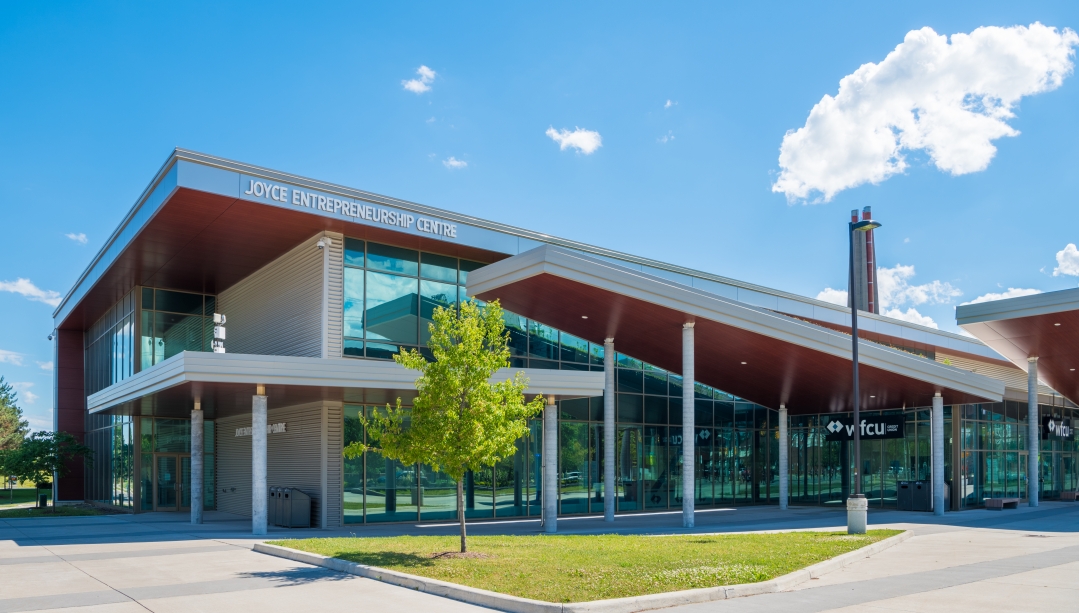
With winter grant deadlines approaching, the Office of Research and Innovation Services is offering a second on-campus writing retreat this month in the Joyce Entrepreneurship Centre's workshop room (second floor). These retreats offer dedicated time to work on grant proposals and consult with a grant writing expert, get help completing ORIS External Funding Checklists in the ERSO Research Portal, and ask about risk assessment forms and other required documentation. Coffee and tea will be provided.
Friday, Jan. 24 – 8:30 a.m. to 4:30 p.m.
Register for this workshop
| | |
Workshops to focus on research ethics | |
|
Research Ethics Board chair Suzanne McMurphy is hosting a series of 10 workshops beginning Jan. 23. The workshops will focus primarily on the Canadian Tri-Council Policy Statement: Ethical Conduct for Research Involving Humans – TCPS 2 (2022) guidelines, but will also provide information on U.S. ethics regulations, international ethics requirements, and tips on writing research ethics applications.
Individual questions about research projects and REB applications are welcome.
The sessions will be offered in person from 4 to 5 p.m. in Dillon Hall, Room 254.
| |
|
Workshop to discuss research opportunities in national urban park
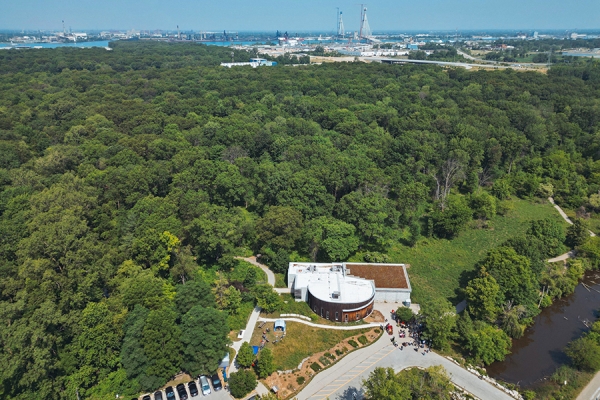
The University of Windsor National Urban Park Hub will host a workshop to discuss opportunities and challenges associated with interdisciplinary and community-engaged research in the proposed National Urban Park on Jan. 22 from noon to 2 p.m. at the Great Lakes Institute for Environmental Research.
| |
The Black Scholars Institute at the University of Windsor and WE-Spark Health Institute are hosting a virtual think tank on Feb. 14, presenting topics including a holistic approach to men's health, chess as an educational and mental health tool, and post-partum breast cancer. | | |
|
Conference to spotlight
health research excellence
WE-Spark Health Institute is hosting its annual Health Research Conference March 22 at Caesars Windsor. The event is an opportunity for the health research community to connect, collaborate, and showcase ground-breaking work.
Follow this link to learn more and register.
| | |
|
Form 100D – Consent to Provide Limited Personal Information about HQP to NSERC
All NSERC applicants must ensure that they have a Form 100D completed for all HQP where their limited personal information is described in your CCV and/or your application. Follow the link above for more detailed information.
| |
|
NSF-NSERC Designing Materials to Revolutionize and Engineer our Future
The DMREF program offers the opportunity for Canadian academic researchers to work with US colleagues to build the fundamental knowledge base needed to advance the design and development of materials in pursuit of the following goals:
- Unify the Materials Innovation Infrastructure (MII), a framework of integrating advanced modelling, computational and experimental tools, and quantitative data
- Harness the power of materials data
- Educate, train, and connect the materials research and development workforce
Internal deadline: Jan. 21
Main NSF application and the simplified NSERC application are due Feb 4.
Contact your research coordinator for more information.
| |
|
Law Foundation of Ontario Responsive Grant
Providing up to $250,000 per year for up to two years, Responsive Grants support unmet financial needs of nonprofits, charities, and Indigenous groups working to improve access to justice for the people of Ontario.
- New Expression of Interest to Foundation – No deadline
- Invited application due UWindsor – 15 days before submission to Foundation
| |
|
FHSS Book Publication & Translation Grants
- The Federation for the Humanities and Social Sciences (FHSS) offers grants to offset the costs of publishing or translating scholarly books that make important contributions to the humanities and social sciences.
- Canadian authors may apply. Grants are paid to the publisher.
| |
|
Understanding Identity-Based Violence and Marginalization
This initiative of the Office of the Vice-President, Research and Innovation seeks to foster research aimed at advancing peace, reducing violence, and addressing marginalization.
Applications will open in Spring 2025.
- Award value: $7,000
- Number of awards: 4
- Award duration: 1 year
Faculty researchers from any discipline are invited to submit proposals that explore identity-based violence and marginalization on campuses and in communities. The focus may include, but not limited to, experiences of anti-Arab and anti-Palestinian racism, anti-Asian racism, anti-Semitism, Islamophobia, anti-Black racism, homophobia, ableism, and gender-based marginalization. Applicants must not have other funding for developing the research project in question. Priority will be given to early career researchers.
Consult the ORIS website here for a listing of funding opportunities for research related to identity-based violence.
| |
|
Canadian Heritage - Events: Multiculturalism and Anti-Racism Program
- Funding amount - Up to $100,000
- Deadline to apply: rolling intake
Expected results are that participants and communities will gain knowledge, develop strategies and take action to:
- increase awareness of Canada’s cultural diversity
- increase awareness of issues affecting full participation in society and the economy, related to culture, ethnicity and/or religion
- increase capacity within communities to address racism and discrimination
| |
|
Funding Opportunities for Health Research
Notify your faculty and contact Dominika Boron for details on how to apply, funding and contact information is found at the Research Net links attached.
CIHR has issued a policy statement on the use of Artificial Intelligence-based technology in peer review meetings. Find the policy statement here.
Operating Grant: Pandemic Research Platforms Interim Funding
Supports existing research platforms that address the most critical research functions and key gap areas that persist in Canada related to ongoing responses to health emergencies. Offers up to $1.5 million per year for up to two years
Full application deadline: Feb. 4 (internal application deadline was Jan. 15)
New! Team Grants: Bringing Biology to Cancer Prevention
The CIHR Institute of Cancer Research (ICR) and partners have launched this funding opportunity to unite interdisciplinary research teams to advance the biological and mechanistic understanding of cancer etiology, genesis, and risk to identify new targets and approaches for cancer prevention, risk reduction and early detection.
Registration deadline: April 1
Application deadline: June 19
ICR will be hosting two webinars for this funding opportunity:
Jan. 29, 12:30 - 2 p.m. | Register here
Feb. 5, 12:30 - 2 p.m. | Register here
Health Canada - Addressing Racism and Discrimination in Canada’s Health Systems Program
This program was established to foster health systems free from racism and discrimination. The program advances Health Canada’s mandate to help everyone in Canada maintain and improve their health by striving to ensure high quality health services are efficient and accessible, and by reducing health inequities.
- Funding amount: $100,000 - $1,000,000
- Deadline to apply: May 15
| |
|
OICR Innovation to Implementation (I2I)
OICR is currently inviting applications for:
- Projects aimed at facilitating the adoption of research output, interventions, policies, or practices in the healthcare system using scientific methods and drawing on implementation science.
- Projects focused on developing and testing implementation science methods or strategies to facilitate uptake and integration of research outputs, interventions, policies, or practices in the healthcare system.
- Projects investigating the barriers to implementation or developing optimal solutions to implementation challenges in the context of the Ontario healthcare system.
- Projects evaluating the comparative effectiveness and cost effectiveness of different implementation strategies in the oncology ecosystem.
Full application deadline: April 10 by 5 p.m. (if Letter of Intent was submitted by Dec. 5)
Please contact Dominika Boron for information.
| |
|
Heart and Stroke Foundation awards
Contact Dominika Boron if you are interested in applying.
Personnel Awards for Black Scholars
Heart & Stroke and Brain Canada are sponsoring awards to promote strategic growth in heart and brain health science with Black communities by supporting Black students pursuing their post graduate studies. Doctoral awards provide up to $120,000. Master's awards provide up to $53,000.
Internal deadline: Feb. 20 at 4 p.m.
Competition closes March 20 at 4 p.m.
Personnel Awards for Indigenous Scholars
Heart & Stroke and Brain Canada are sponsoring awards to promote strategic growth in heart and brain health science with Indigenous communities by supporting Indigenous students pursuing their post graduate studies. Doctoral awards provide up to $120,000. Master's awards provide up to $53,000..
Internal deadline: Feb. 20 at 4 p.m.
Competition closes March 20 at 4 p.m.
| |
|
HIV Endgame Program funding competition
The HIV Endgame Program supports people and projects with the potential to:
- Meet the needs of Ontario populations most affected by HIV.
- Drive changes in HIV prevention, engagement, and care policy and practice
- Lead to more integrated health and social services.
- Identify effective ways to address the social determinants that have a negative impact on the health of communities most affected by HIV.
- Contribute to a rapid-learning HIV health and social system.
The deadline for LOIs has passed. Full Application due Jan. 22 at noon EST
The OHTN offers six types of grants:
-
Breaking New Ground Grant: project funding for innovative, high-reward projects that will break new ground and build evidence and programs to dramatically improve the prevention, treatment, and care cascade in Ontario. This funding stream supports the piloting, evaluation, or scale up of HIV interventions. Between $50,000 - $150,000 of funding for up to two years.
-
Implementation Science Grant: project funding for the development of sustainable, effective HIV programs and services. This funding stream will support implementation science initiatives that will contribute to a rapid learning system for HIV. Between $150,000 - $250,000 of funding for up to three years.
-
Winston Husbands Leadership Award in Strengthening the Response to HIV Among Black Communities: salary support for emerging Black scholars, knowledge users, and service providers who work collaboratively with community stakeholders to understand and address the impact of HIV on African, Caribbean, and Black communities in Ontario. LOI application not required. Up to $75,000 in funds for up to two years.
-
Junior Investigator Grant: salary support for emergent leaders who are interested in working closely and collaboratively with the OHTN to drive change, contribute to rapid learning and improvement in our sector, and build HIV innovation capacity in Ontario. Up to $75,000 in funds for up to two years.
-
Postdoctoral Grant: salary support for postdoctoral fellows who are interested in working closely and collaboratively with the OHTN to drive change, contribute to rapid learning and improvement in our sector, and build HIV innovation capacity in Ontario. Up to $50,000 for up to three years.
-
Community-Based Project and Participatory Evaluation Grant: support for community-based agencies, their staff, and people living with HIV to undertake projects, needs assessments, quality improvements, and evaluation activities that help develop and modify effective programs, services, and policies or generate data to make the case for additional HIV inquiry relevant to Ontario’s needs. Between $25,000 to $50,000 of funding up to 18 months. This grant is non-renewable.
Contact Dominika Boron to apply.
| |
Other Internal and External Funding Opportunities | |
|
This purpose of this grant is to allow researchers to present research or artistic works and to support the organization of small-scale knowledge mobilization activities to encourage collaboration and dissemination of research results both within and beyond the academic community.
Applicants cannot apply more than every fourth cycle.
The deadline to apply is Feb. 10 at 4 p.m.
| |
|
New! Canada-China Scholars' Exchange Program
This program aims to foster deeper mutual understanding, build strong academic and professional ties between Canada and China, and develop future Canadian leaders with expertise and experience in China. Learn Chinese and/or pursue post-secondary studies or research at leading institutions across China.
- Students (undergraduate and graduate), faculty and researchers, and mid-career professionals are eligible to apply.
- Stays can range from one month to two years, allowing applicants to pursue short-term opportunities or obtain a graduate degree from a designated institution.
- The deadline to apply is March 10.
| |
|
ARDAA supports academics and artists displaced through war, conflicts or threats of violence and who, prior to their displacement, were engaged in innovative and entrepreneurial research activity, demonstrating a commitment to interdisciplinary collaboration, leadership and responsibility to their communities, making meaningful contributions to society.
The deadline to apply is Feb. 21.
| |
|
The objective of HIIFP is to encourage Ontario’s academic community to research projects that contribute to generating solutions to current technical challenges encountered by the Ontario Ministry of Transportation in the construction and maintenance of the provincial highway infrastructure network.
Application deadline: Jan. 27, 5 p.m. (if draft was submitted to ORIS by Jan. 13 deadline)
Contact Nicole Noël in ORIS if you intend to apply.
| |
|
Research on Research Joint Initiative
The aim of this program is build knowledge and understanding on metaresearch, and the practices of how that research is funded, communicated, applied and evaluated.
-
Application due UWindsor – Jan. 20 at noon
-
Application due in Convergence Portal – Feb. 20 at 4 p.m.
| |
Marine Environmental Observation, Prediction and Response Network | |
|
MEOPAR has launched multiple Calls for Proposals to advance marine research and innovation in Canada:
-
Ship Time Fund to support the purchase of research vessel time
-
Postdoctoral Fellowship Awards to kick start the next generation of outstanding early career PhD-holders
-
Knowledge Mobilization Fund to support efforts to increase the uptake of research in society through unconventional and effective communication
| |
Canadian Statistical Sciences Institute (CANSSI Ontario) Ontario Funding Opportunities
CANSSI Ontario AI Applications in Statistical Sciences Research: Offers up to $12,500 to support research that uses AI to enhance statistical methodology or theory. The goal of the program is to support a nascent research program or proof of concept that could go onto more substantive grants. The deadline to apply is Feb. 3.
CANSSI Ontario Postdoctoral Fellowship in Statistics: Offers up to $70,000 per year plus benefits for two years. While the primary focus is on theoretical statistics, other statistical research areas will also be considered.
Postdoctoral fellow applications are due by Jan.17.
CANSSI Ontario Postdoctoral Fellowship in Genome Data Science: Open to early-career researchers, this fellowship supports work in genomics and data science, with a focus on new genomic technologies or multi-omic integration, offering up to $50,000 in salary support per year. Application deadline is Jan. 20.
Banting-CANSSI Discovery Awards in Biostatistics: These one-year grants, up to $30,000 each, support early-career biostatisticians in the first three years of their academic appointment. The grants are intended for those collaborating with scientists in biomedicine, occupational health, or environmental health. Four awards are available, with two specifically reserved for biostatisticians based in Ontario.
Full application due Jan. 24. (Notice of Intent must have been submitted by Nov. 1.)
Data Access Grants: Up to $5,000 to cover costs associated with accessing large data sources for data-intensive research. Each proposal must involve two faculty members from different academic units across CANSSI Ontario's 12 partner universities.
Applications accepted on a rolling basis.
Workshop/ Lecture Program: Up to $1,000 to facilitate workshops and lectures in emerging fields including applied statistics such as biostatistics and financial statistics, organized by faculty at CANSSI Ontario partner institutions. Applications accepted on a rolling basis.
Contact Dominika Boron to apply and for additional information.
| |
Equity, Diversity, and Inclusion Resources | |
|
Applying for a grant with an equity, diversity and inclusion component?
Please see the resources below or contact Riley Garno (he/him), the ORIS EDI in Research consultant, to schedule a consultation.
| |
|
EDI Training and Guides:
Tri-Agency Resources
CIHR Related Resources:
NSERC Related Resources:
SSHRC Related Resources:
| |
Find more funding opportunities | | |
| |
Find funding opportunities on Pivot, a research funding database and more. To register, visit the Pivot website, and log in using your institutional credentials. See video below for how to search for opportunities. | | | | |