Methylene blue is an FDA-approved agent for the treatment of acquired methemoglobinemia and a phenothiazine dye that has long been utilized for a variety of diagnostic applications. Increasing clinical data indicate a therapeutic role for methylene blue in distributive shock states. In particular, multiple case reports describe its successful administration in dihydropyridine calcium channel blocker (CCB) vasoplegia, where it has been associated with improved hemodynamics in patients with hypotension refractory to standard resuscitative measures. Methylene blue is available to the public, marketed as a dietary supplement in many formulations.
Mechanisms of Therapeutic Effect
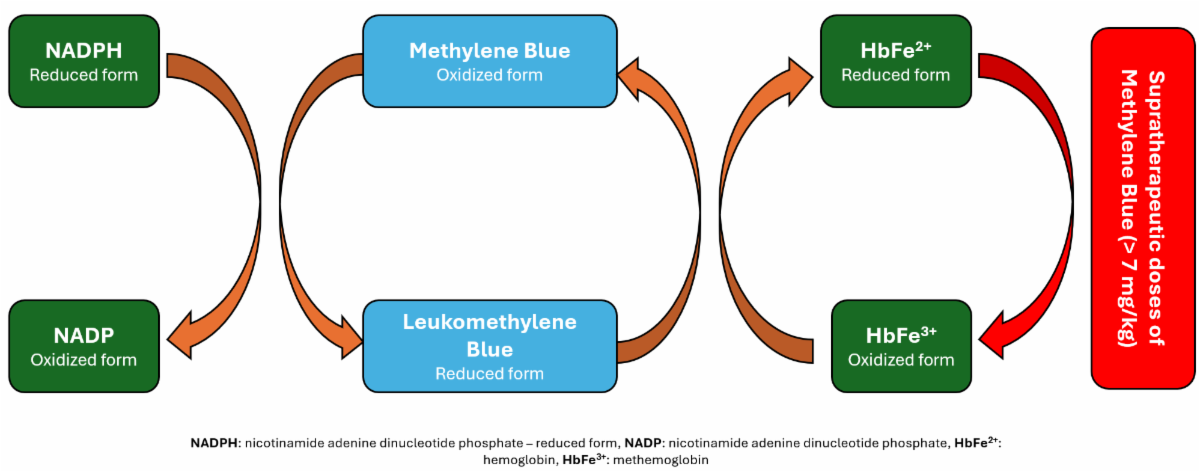
Methemoglobinemia:Methylene blue is reduced to leukomethylene blue, which in turn reduces ferric iron (Fe³⁺) in methemoglobin (MetHgb) back to the ferrous state (Fe²⁺), thereby regenerating functional hemoglobin capable of binding and transporting oxygen. This restoration of hemoglobin’s oxygen-carrying capacity improves tissue oxygen delivery and perfusion.
Dihydropyridine CCB Vasoplegia:Methylene blue inhibits endothelial and inducible nitric oxide synthase as well as soluble guanylate cyclase, leading to reduced nitric oxide production and decreased cyclic guanosine monophosphate (cGMP) signaling. The resulting attenuation of nitric oxide–mediated vasodilation produces a net physiological effect of increased vascular tone and vasoconstriction.
Dosing
Methemoglobinemia:1-2 mg/kg administered intravenously over 5-30 minutes (Hartmann et al., 1938). Dosing can be repeated in 30-60 minutes if the MetHb level is greater than 30% OR clinical symptoms are present.
Dihydropyridine CCB Vasoplegia: 1-2 mg/kg administered intravenously over 5-30 minutes (Jang et al., 2011).
Mechanism of Toxicity
At supratherapeutic doses, described as > 7 mg/kg (Bodansky, 1950), methylene blue can reverse the mechanism of reducing MetHb to hemoglobin, resulting in paradoxic MetHgb formation and thus methemoglobinemia.
Key Points
Methylene blue should be considered in patients with acquired methemoglobinemia
Medications associated with methemoglobinemia: dapsone, benzocaine, nitrites/nitrates, sulfamethoxazole/trimethoprim
Methylene blue has been used for refractory distributive shock due to dihydropyridine calcium channel blockers
Supratherapeutic doses (> 7 mg/kg) are associated with the paradoxic development of methemoglobinemia
Written by: Dr. Nick Sebree, PharmD, PGY2 Emergency Medicine
Pharmacy Resident, University of Cincinnati Medical Center
Reviewed by: Dr. Goertemoeller, Dr. Hays, Dr. Pancioli, Dr. Yin