|
Background
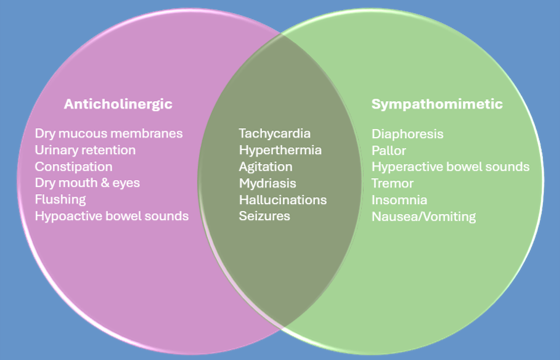
Anticholinergic and sympathomimetic toxidromes share several overlapping clinical features, including tachycardia, hyperthermia, agitation, and mydriasis. Despite these similarities, the underlying pharmacologic mechanisms differ substantially and result in distinct clinical findings that can aid in bedside differentiation. Accurate recognition of these distinguishing features is critical for guiding appropriate management and minimizing the risk of complications.
Anticholinergic Agents
Mechanism of action: Anticholinergic agents inhibit the effects of acetylcholine at central and peripheral cholinergic receptors, thereby reducing parasympathetic nervous system activity. These agents may act through blockade of muscarinic receptors (antimuscarinic) or nicotinic receptors (antinicotinic), though most clinically relevant anticholinergic toxicities result from muscarinic receptor antagonism.
Examples: Some anticholinergic medications include atropine, antihistamines (diphenhydramine, hydroxyzine), antiemetics (scopolamine), antipsychotics (quetiapine, olanzapine), urinary incontinence agents (oxybutynin), Parkinson’s disease agents (benztropine), and plants (jimson weed, Atropa belladonna).
Side effects: Tachycardia, xerostomia, blurred vision, constipation, urinary retention, decreased lacrimation (Ghossein et. al, 2023).
Overdose presentation: Flushing, anhidrosis, dry mucous membranes, mydriasis, altered mental status, hyperthermia, urinary retention, delirium, hallucinations, agitation, restlessness, confusion, seizures, QT prolongation (Broderick et. al, 2023).
Management: Management is primarily supportive and includes benzodiazepines for agitation or seizures, intravenous fluids, and external cooling for hyperthermia. Activated charcoal may be considered in appropriate early presentations. In select cases with severe anticholinergic delirium, physostigmine (no longer widely available in the US) or rivastigmine may be used.
Sympathomimetic Agents
Mechanism of Action: Sympathomimetic agents exert their effects by increasing catecholamine activity within the central and peripheral nervous systems. This may occur through enhanced release of catecholamines, inhibition of their reuptake or metabolism, or direct agonism at adrenergic receptors. The net effect is increased stimulation of the sympathetic nervous system, producing the physiologic “fight-or-flight” response (Farzam et al., 2023).
Examples: Some sympathomimetic agents include those used in the treatment of attention-deficit/hyperactivity disorder (mixed amphetamines, methylphenidate), nasal or sinus congestion (pseudoephedrine), and recreational (caffeine) or illicit substances (cocaine).
Side Effects: Loss of appetite, insomnia, weight loss, headache, nausea, vomiting, hypertension, tachycardia (SAMHSA, 1999).
Overdose Presentation: Agitation, tremor, hyperactivity, diaphoresis, pallor, hyperthermia, mydriasis, seizures, arrhythmias, QT prolongation, hallucinations, hyperactive bowel sounds (Shaffer & Richards, 2025; Farzam et al., 2023).
Management: Management is largely supportive and guided by the specific agent and clinical manifestations. Benzodiazepines are first-line therapy for agitation and to mitigate sympathetic overactivity. Intravenous fluids and external cooling measures are used to treat hyperthermia and reduce the risk of rhabdomyolysis. In cases of cocaine toxicity, β-blockers are generally avoided due to concern for unopposed α-adrenergic stimulation (Smollin et al., 2019). Ongoing monitoring is essential for early detection and management of complications (Farzam et al., 2023).
|