|
Background
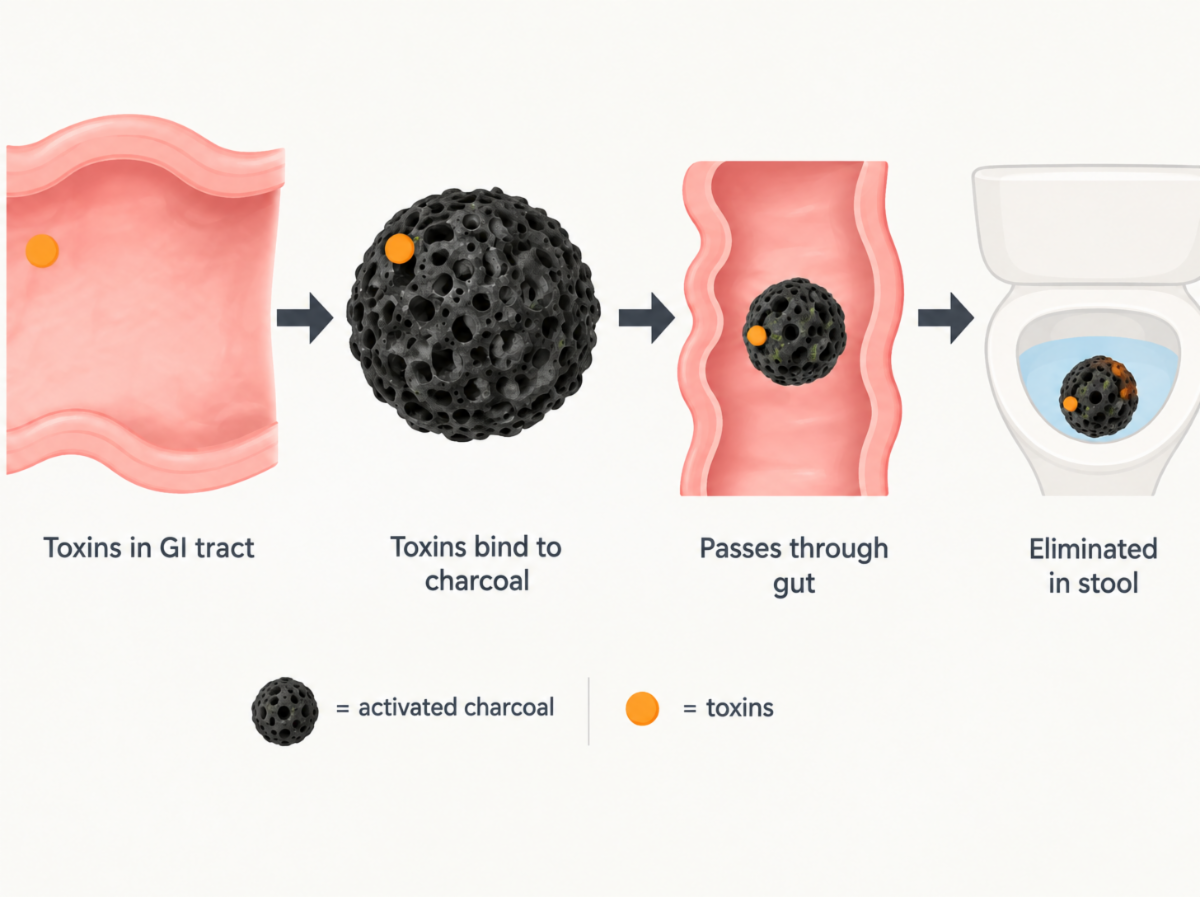
Activated charcoal (AC) is a highly processed, “activated” carbon material with an enormous surface area (over 1,000 m² per gram), created through steam or chemical treatment that opens millions of micropores. Clinically, it works through adsorption, meaning toxins bind to the charcoal’s surface via hydrophobic interactions and ionic attraction, preventing gastrointestinal absorption and promoting elimination in stool. It is most effective for large, lipophilic, non‑polar drugs such as many cardioactive agents, antidepressants, anticonvulsants, and extended‑release formulations, while offering little benefit for metals, alcohols, caustics, or hydrocarbons. Single‑dose AC can be used early after ingestion, and multiple‑dose charcoal can be considered for drugs with enterohepatic or enteroenteric recirculation, always balancing benefit against aspiration risk and using patient selection criteria (Taylor et al., 2026).
|