NASN Opposes the Proposed Transfer of Special Education and Civil Rights Functions from Department of Education | |
| |
The National Association of School Nurses strongly condemns the transfer of key components of IDEA from the US Department of Education to the Department of Health and Human Services and from the Office of Civil Rights to the Department of Justice.
Students with disabilities and other vulnerable populations rely on strong federal oversight to ensure they receive the services, accommodations, and protections guaranteed under law. The Office for Civil Rights plays a critical role in investigating discrimination and safeguarding equal access to education, while IDEA oversight helps ensure students with disabilities receive the supports they need to succeed. NASN is extremely concerned that this proposed transfer of special education oversight to other agencies will weaken the protections to which students are legally entitled.
Moving these functions to other agencies risks weakening accountability, creating confusion, and reducing the focus on students' educational needs. Disability rights advocates have warned that separating special education oversight from the Department of Education could ultimately result in fewer students receiving federally mandated services. At a time when students face growing academic, health, and mental health challenges, we should be strengthening—not dismantling—the systems that protect their rights and support their success.
School nurses are often the first line of support for students with disabilities, ensuring access to education, health services, and a safe participation in school life. Prior to IDEA’s passage, 50 years ago, many children with disabilities were denied access to public education entirely. IDEA serves as a vital safeguard for millions of students, ensuring their access to services and supports that promote educational success and lifelong opportunity.
NASN urges Congress to preserve strong federal oversight of special education and civil rights protections and to keep these essential functions within the U.S. Department of Education.
Join NASN in telling Congress to preserve IDEA at the Department of Education.
| NASN Endorses the School Access to Naloxone Act | |
NASN endorses the School Access to Naloxone Act, which would help ensure access to naloxone and that school personnel are trained in administering lifesaving medication to students in the case of an opioid overdose. This bipartisan, bicameral legislation is co-led in the House by U.S. Representative Kelly Morrison (D-MN) and Representative Dave Joyce (R-OH) and in the Senate by U.S. Senators Jeff Merkley (D-OR) and Rick Scott (R-FL).
“School nurses know firsthand that access to emergency medication can save lives. No school community should be left unprepared for an opioid-related emergency. The National Association of School Nurses supports the School Access to Naloxone Act because schools need both access to opioid-overdose reversal medication and trained personnel ready to respond in an emergency. Expanding access to these medications in schools is a practical, evidence-informed step that protects students, supports school communities, and strengthens the ability of school nurses and trained personnel to respond when minutes matter,” said National Association of School Nurses President Lynn Nelson, MSN, RN, NCSN.
Read the full text of the bill HERE. | | National Nursing Organizations File Nurse-Forward Lawsuit Against the Department of Education Over Professional Degree Designation | |
|
On May 29, 2026, the American Nurses Association (ANA) and nine other national nursing organizations filed a lawsuit challenging the Department of Education’s exclusion of advanced nursing degrees from the definition of “professional degree” programs in the final rule implementing federal post-baccalaureate student loan borrowing limits.
On June 2, 2026, ANA filed a motion for a preliminary injunction against the Department of Education, seeking to prohibit the Department from enforcing the rule while the case is still pending in court. This injunction seeks to provide relief for all nurses who otherwise would lose access to higher education due to financial constraints on July 1, 2026, when the rule goes into effect.
ANA, together with these nursing organizations, is pursuing litigation to defend nurses’ access to adequate federal loan support because the healthcare system cannot function effectively without a strong, well-prepared nursing workforce.
There are legal actions by others challenging the Department of Education's rule that excludes nursing and other health professions from the professional degree category used to determine federal student loan limits. ANA supports other efforts to vacate the rule. ANA and other national nursing organizations have filed their own separate suit to focus on the case for including nursing as a professional degree.
On May 7, 2026, the Nursing is a Professional Degree Act (H.R.8691) was introduced by Representatives Jen Kiggans (R-VA), David Joyce (R-OH), Jack Bergman (R-MI), Brian Fitzpatrick (R-PA), and Don Bacon (R-NE) in the US House of Representatives. This bill would explicitly classify post-baccalaureate nursing programs as "professional degrees" under the Higher Education Act, making it easier for nurses to pursue them. Senators Jeff Merkley (D-OR), Roger Wicker (R-MS), Cynthia Lummis (R-WY), Lisa Murkowski (R-AK) and Susan Collins (R-ME) introduced an identical bill in the US Senate on May 20 (S.4568). The legislation would add post-baccalaureate nursing programs to the federal definition of “professional degree.” NASN fully endorses this legislation. The Nursing is a Professional Degree Act (H.R. 8691/S. 4568) would reverse the Department of Education’s decision to exclude post-baccalaureate nursing from the professional degree category and offer access to adequate federal loans for nurses pursuing advanced education. Read the press release.
On May 7, House Nursing Caucus Vice Chair Rep. Suzanne Bonamici (D-OR-01), House Nursing Caucus Vice Co-Chair, Rep. Lauren Underwood (D-IL-14), Rep. John Mannion (D-NY-22), Senate Nursing Caucus Co-Chair, Sen. Jeff Merkley (D-OR), and Sen. Angela Alsobrooks (D-MD) announced they will introduce a Congressional Review Act (CRA) resolution to repeal the Department of Education’s final rule on federal student loan limits. Read the press release.
Join NASN in telling Congress that nursing is a professional degree.
| | NASN Brings the Voices of School Nursing to Capitol Hill | | |
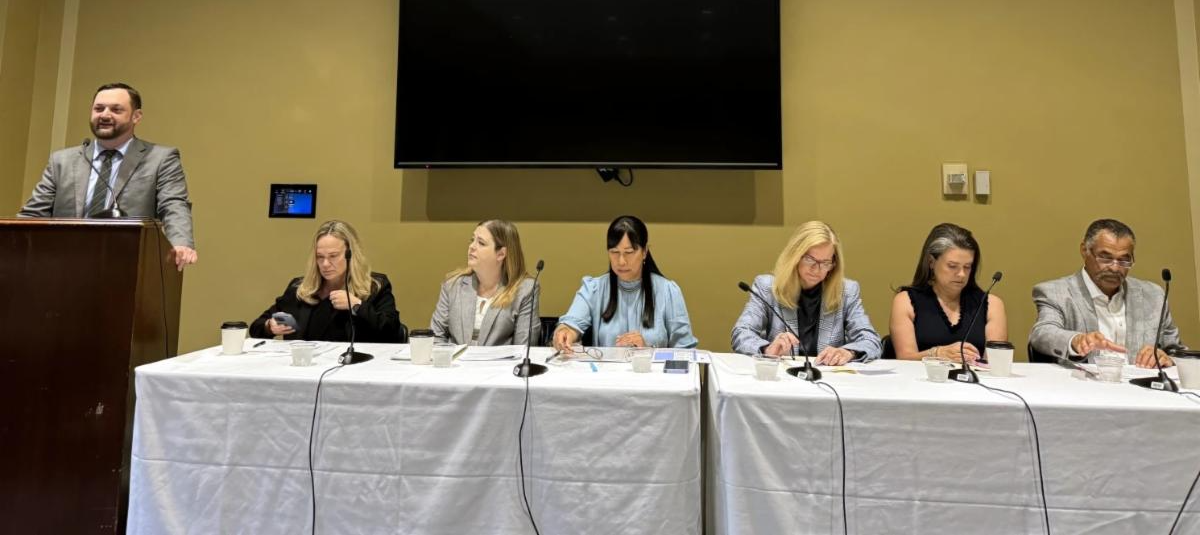
On May 19, NASN participated in a congressional briefing at the U.S. House of Representatives and U.S. Senate focused on the critical role school-based health professionals play in student success. These events were intended to highlight the different roles played by school-based providers and school health care, and to emphasize that each role is necessary and not interchangeable for student success.
Representing the voice of school nursing alongside national education and health organizations, NASN helped highlight the connection between student health, well-being, and academic achievement—and the need for continued federal support for school-based health services and workforce development. Read more about the congressional briefing in this Education Week article.
| | CMS Requires More Restrictive Definition of Medical Frailty in New Medicaid Work Requirements Rule | On June 1, 2026, the Centers for Medicare and Medicaid Services (CMS) issued an interim final rule on Medicaid work requirements that adopts a restrictive definition of medical frailty, differing from states’ early expectations. The more restrictive definition of medical frailty adopted by the Trump Administration will be challenging for states to implement and could lead to more people falling through the cracks and losing coverage. Read more. | As SNAP Participation Declines, Child Advocates Call for Action | | |
In 2024, 16 million children lived in families that relied on SNAP to access healthy food, a program proven to improve nutrition, health, educational achievement, and long-term economic outcomes. However, cuts enacted in the House-passed budget legislation (H.R. 1) are already contributing to significant declines in participation, with more than 700,000 children losing SNAP benefits across 12 reporting states and many more likely affected nationwide.
As the Senate prepares its own farm and nutrition legislation, child advocates are urging lawmakers to take a different approach by extending delays to state cost shifts and increased administrative funding requirements that are placing new financial and operational burdens on states. Unlike the House measure, which shifts more SNAP costs to states and creates implementation pressures that can restrict access for eligible families, advocates are calling on the Senate to preserve participation and strengthen program administration.
These changes are especially urgent given the well-documented consequences of food insecurity, including poorer health, developmental challenges, lower educational attainment, and greater family stress. SNAP remains one of the nation’s most effective tools for protecting children from these harms while also providing automatic access to benefits such as free school meals and, for some families, WIC. With bipartisan governors from all 50 states warning that the new requirements could undermine program integrity and access, advocates argue that Senate action is needed to prevent further losses in nutrition assistance for children and families.
| | FY27 Labor-HHS Bill Would Reshape Federal Health Priorities | | |
The House Appropriations Committee has released its FY27 Labor-HHS spending bill, proposing significant reductions to federal health programs and research infrastructure. The bill would eliminate the Agency for Healthcare Research and Quality (AHRQ) and permanently rescind all FY27 funding for the Patient-Centered Outcomes Research Trust Fund (PCORTF), effectively defunding the Patient-Centered Outcomes Research Institute (PCORI) and weakening the nation's capacity to evaluate healthcare quality and effectiveness.
The legislation also cuts $440 million from the Health Resources and Services Administration, including funding for Title X Family Planning and the Ending the HIV Epidemic initiative, and reduces Centers for Disease Control and Prevention funding by $1 billion, including major cuts to HIV prevention and research while eliminating firearm injury prevention research, the Preventive Health and Health Services Block Grant, and the Climate and Health Program. Funding for the National Institutes of Health and Centers for Medicare & Medicaid Services would remain flat.
Meanwhile, FY26 AHRQ funding remains largely withheld by HHS, with only a small fraction of expected grant funding released to date. The Senate is expected to release its FY27 Labor-HHS bill before the July 4 recess.
| | VA Celebrates School Nurse Appreciation Day at the State Capitol | | |
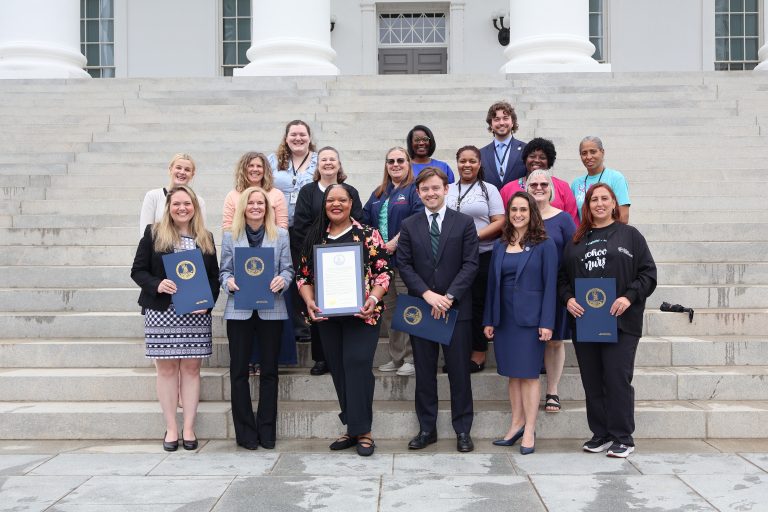
Virginia leaders in education, public health, and school nursing joined together at the Virginia State Capitol on May 6 to celebrate School Nurse Appreciation Day and recognize the vital contributions school nurses make to student health, well-being, and academic success throughout the Commonwealth.
The event, held during National Nurses Week, featured a proclamation ceremony attended by representatives from the Virginia Association of School Nurses (VASN). Among the speakers was Lauryn Walker, Deputy Secretary of Health and Human Resources, who highlighted the meaningful impact school nurses have on students, families, and school communities across the state.
“School nurses are not peripheral to education, you are central to it,” Walker said. Drawing on her experience as a nurse, Walker spoke about the unique and trusted role school nurses play each day, addressing students' physical and emotional health needs while helping ensure they are ready to learn. Read the full article.
| | Task Force on School Nurse Orientation in Louisiana – HCR 28 | |
Louisiana House Concurrent Resolution (HCR) 28 establishes a Task Force on School Nurses Orientation to develop a standardized orientation program for newly graduated registered nurses (RN) entering public school settings. The task force will review existing orientation models, identify core competencies and essential skills for entry-level school nurses, recommend a standardized curriculum and mentorship resources, and propose strategies for ongoing evaluation and improvement. Membership brings together education and health stakeholders, including representatives from nursing programs, charter schools, state and health departments, the school superintendent group, nursing organizations and boards, and experienced school nursing programs; the Louisiana Department of Health will staff the effort. The task force is charged with producing written recommendations (including possible legislation) for the legislature and the Legislative Research Library, and will conclude its work by February 12, 2027, unless its work is completed earlier. Dr. Sylvia Guidry-Brown, DNP, FNP, NCSN, and representatives from the Louisiana School Nurses Organization testified in the Louisiana Representatives and Senate Health and Welfare Committee meetings in favor of the resolution. Dr. Guidry-Brown co-wrote the resolution with its author, Representative Dustin Miller. HCR 28 passed favorably through both committees and has been signed by Senator Cameron Henry, Senate President.
Rationale: School nurses are often the sole health professionals on a campus, managing chronic conditions, responding to emergencies, supporting students with complex needs, and ensuring compliance with health and educational laws. In 2023, the Louisiana State Board of Elementary and Secondary Education (BESE) voted to remove the two-year experience requirement for school nurse certification to allow districts to hire newly graduated RNs to gain school nursing experience under the supervision of an RN. However, this intended model of supervised entry has not been the prevailing trend in Louisiana schools. Instead, many novice RNs—particularly in independently operated charter schools and small districts with a single nurse—are hired without structured clinical oversight, mentorship, or formal orientation. This gap increases safety risks for students and places significant stress on new nurses, contributing to early-career burnout and turnover. A standardized orientation and mentorship program would ensure consistent baseline competencies, improve clinical decision-making and confidence for nurses working autonomously, reduce turnover, and promote retention. By creating a collaborative task force of education, public health, nursing education, and practicing-school-nurse representatives, HCR 28 aims to produce practical, scalable recommendations to strengthen school health services and student safety.
| | Legislation to Modernize Epinephrine Access Passes Illinois Legislature | | |
On May 31, the Illinois General Assembly passed HB 3454, a bipartisan bill that enhances access to epinephrine in school settings.
In the school setting, HB 3454 will allow students to self-administer and self-carry any form of epinephrine delivery system, and school nurses may use any epinephrine delivery system for students experiencing anaphylaxis. It also updated the notice and documentation requirements after administration. Annual training will also be required for personnel authorized to provide such treatments.
Outside the school setting, HB 3454 makes similar changes, allowing trained law enforcement officials to provide any form of epinephrine delivery system in the course of their duties.
The legislation now awaits Governor JB Pritzker’s signature.
NASN Resources: Listen to this episode of Beyond Bandaids, where host NASN CEO Terri Hinkley, EdD, MBA, BScN, RN, CAE, explores one of the most urgent responsibilities school nurses manage: recognizing and responding to anaphylaxis. She is joined by allergist Dr. Lara Gross, who shares her clinical expertise on the signs of severe allergic reactions, the life-saving role of rapid epinephrine administration, and the importance of removing treatment hesitation when symptoms begin.
| | Seizure-Smart Schools Save Student Lives: PA House Passes Legislation Requiring Mandatory Epilepsy Training for School Nurses and Staff | | |
The Pennsylvania House of Representatives today passed state Rep. Carol Kazeem’s H.B. 1045, which would require school nurses and staff to complete training approved by the state Department of Health to help them recognize the signs and symptoms of a seizure and how to provide first aid treatment.
Currently, state law makes epilepsy training optional for school staff. Read the full article.
| |
| | | |