|
Jordan Bisell, abc.net.au, October 11, 2026
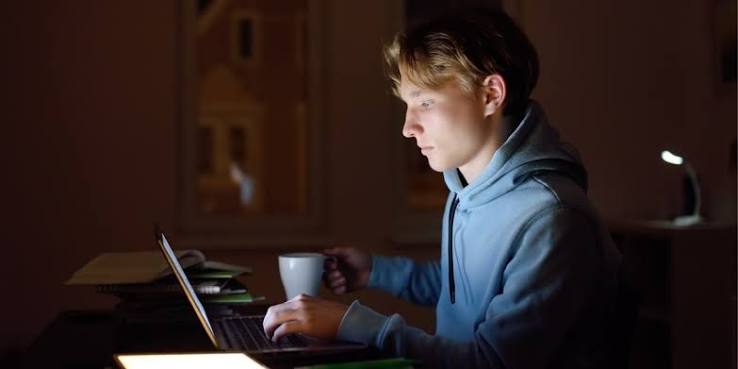
This ABC News (Australia) story reports that teenage boys in Queensland are being shown misogynistic "manosphere" content even though they never search for it, share it, or engage with it. The boys interviewed, ages 17 and 18, said such videos keep showing up among their music and other interests. The reason is that platform algorithms factor in age and gender, and watching even one clip brings more of the same. A QUT digital media researcher explained that once enough young males watch this material, the system treats it as likely to perform well with the rest of that demographic. Researchers in an EU-funded adolescent internet-use project ran an experiment with fake male accounts. Feeds that started with ordinary gym and fitness content shifted quickly toward anti-feminist material, which made up over 70% of the feed by the end. The researchers noted that negative, threat-like content holds attention longer than neutral content. The article places this within broader concern about rising misogyny. It cites an August University of Melbourne study finding that boys aged 13 to 17 were the group most likely to hold hostile attitudes toward women. It also mentions teacher reports of students, some as young as six, quoting figures like Andrew Tate to justify defying female staff. Experts cautioned that social media isn't solely to blame and stressed that the home environment and positive male role models are critical. The piece closes on Australia's proposed law requiring platforms to offer an algorithm opt-out. Experts call that step insufficient, since algorithms run through every part of the social media experience. They argue for a broader rethink of how feeds could give users more control.
Cole Mercer, medicaldaily.com, October 14, 2026
A JAMA Pediatrics study published October 12 found that about one in six U.S. adolescents ages 12 to 20 report moderate to severe anxiety symptoms. Those with severe symptoms often also had depression, suicidal thoughts, or substance use. Many went untreated: roughly 41–48% received no mental health care in the past year. The 2024 data are the first national baseline, so they can't show whether anxiety is rising. Males reported anxiety at less than half the rate of females (6.0% vs. 13.4% moderate; 3.7% vs. 10.8% severe), yet they were among the most likely to go without care. The researchers suggested stigma, provider shortages, and cost barriers may explain this gap. Because the data are self-reported, some boys' symptoms may also go unrecognized or unreported.
Maria Asimopoulos, Physician’s Weekly, October 14, 2026
A study in Sexual Health found that STI testing among U.S. adolescents is infrequent and only loosely follows USPSTF screening recommendations. Researchers analyzed online survey data from 785 teens ages 13 to 17 who had discussed sexual activity with a healthcare provider. Among females, only a third reported chlamydia and gonorrhea testing at their most recent screening, even though USPSTF recommends routine screening for sexually active adolescent females. About a fifth reported syphilis testing. For males, USPSTF recommends no routine chlamydia or gonorrhea screening, only syphilis screening for those at increased risk. Just 17.8% of male participants reported syphilis testing. More than a quarter (27.8%) said they were tested for infections not covered by any screening recommendation, a higher share than among females (19.2%). Among males, transgender, nonbinary, and other gender-diverse adolescents were about three times as likely as cisgender males to report syphilis testing. Overall, the findings suggest that testing for adolescent males is inconsistent and not well matched to guidelines. The authors called for strategies to improve adherence to screening recommendations.
Tavishi Dogra, healthshots.com, October 12, 2026
The author, a clinician who treats gynecomastia, argues that conversations about body image focus almost entirely on women. That leaves teenage boys and young males who struggle with enlarged breast tissue largely unseen. Gynecomastia is common during puberty and often resolves within about a year, but for many boys it persists. Adults around them often dismiss it as baby fat. In the author's clinic, the pattern is consistent. Boys avoid swimming and sleepovers, keep their shirts on, wear layers in hot weather, and grow anxious about any situation that requires undressing. Some mention, almost in passing, that they've been teased or given cruel nicknames, and most have kept it to themselves for years, often without telling their parents. The author's central concern is that boys lack the cultural permission and the vocabulary that girls have to talk about how they feel about their bodies. So the distress goes unspoken and erodes their confidence during formative years. Medically, the condition is often simple to address once its cause is identified, sometimes through lifestyle changes and sometimes through a minor procedure. The real obstacle, the author concludes, is getting a young male to talk about it in the first place.
JD Gorman, and Charlie Sabgir, Young Men Research Project, Substack, October 15, 2026
The Young Men Research Project, drawing on a May 2026 Equimundo/YouGov survey of U.S. males ages 18–29 conducted for State of American Men 2026, examined the audience of Braden Peters ("Clavicular"). Peters is the "looksmaxxing" influencer recently charged with drugging and raping a Florida teenager. Although 55% of young males recognized him, only 10% follow him. Among those familiar with him, just 14% like and trust his content, tied for the lowest of 16 figures tested, and 46% dislike him. That puts his trusting fan base at about 8% of young males overall. Those fans are economically and racially similar to their peers but heavily online, with a mixed media diet that includes Andrew Tate and Nick Fuentes as well as Hasan Piker and MrBeast. Clavicular's fans reported a stronger sense of purpose than young males overall (81% vs. 64%). The authors tie this to Equimundo's "Man Box" research, which finds that adhering to rigid masculine scripts gives a clear sense of direction but is linked to isolation, emotional concealment, and suicidal ideation. About four in ten of his fans reported recent suicidal thoughts. Fans were also far more likely to hold controlling or sexist views: 78% agreed a man deserves to know where his partner is at all times, compared with 47% of young males overall. More than 70% endorsed authoritarian "strongman" politics. The authors caution that the data show association, not causation, but argue that such influencers reinforce existing views and profit from young males' insecurities. They link this online culture to real-world harms, including the alleged Cornell fraternity assault.
Daniel Otis, CTV News, October 15, 2026
A new PNAS Nexus study by Clotilde Napp found that in all 61 countries studied, covering more than 750,000 fifteen-year-olds, boys valued academic effort less than girls. The gap held regardless of family income or structure, was larger in more developed countries, and was especially pronounced in Canada. Countries with wider effort gaps also had larger achievement gaps and fewer males in higher education. Napp attributes the pattern partly to the stereotype that boys are naturally talented and needn't work hard. Canadian experts weren't surprised. One said boys in his research told him it "wasn't cool to try too hard," and urged adults to raise their expectations. Suggested remedies include challenging the idea that effort is for girls, teaching a growth mindset, and promoting role models who defy traditional gender norms. The findings are cross-country correlations, so they suggest but don't prove that attitudes drive the achievement gap.
thebaynet.com, October 14, 2026
At the Baltimore Banner Impact Summit, Governor Wes Moore announced a new fatherhood program as part of Maryland's Young Men and Boys Initiative. Starting next week, the state will partner with the Parent Encouragement Program to offer a free eight-week virtual course for up to 300 fathers. Fathers will meet weekly in small groups led by trained facilitators who are themselves graduates of the program. The course covers practical parenting, family connection, children's mental health, and school success. It prioritizes fathers from communities in the state's ENOUGH anti-poverty initiative, and the release frames it as a way to close opportunity gaps for boys and young males. The broader Young Men and Boys Initiative, led by the Governor's Office for Children, serves males from birth to age 34. It focuses on three areas: physical and mental health, economic readiness, and engagement with family and community. Recent related efforts include expanded access to 988 crisis services, a "Supporting Young Men & Boys" wellness guide developed with Movember, and a literacy and mentorship pilot for middle-school boys with Boys Who Write and the Maryland Alliance of Boys and Girls Clubs. The initiative also addresses risks such as gambling, social isolation, and technology-related harms. Partner organizations fund the programs, and the state acts as a convener.
|