|
Porsche + Bugatti + Rimac
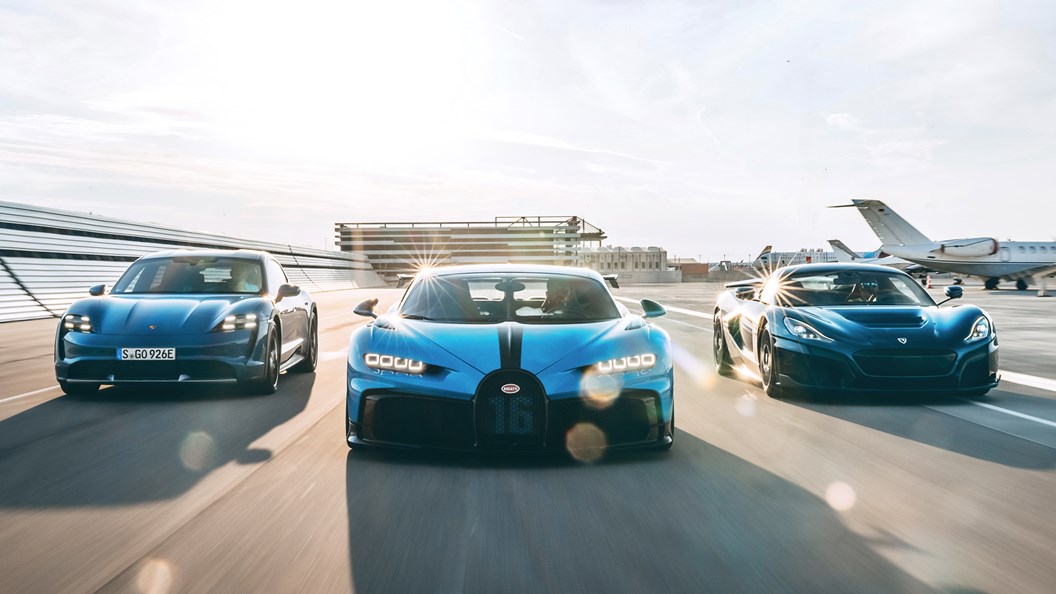
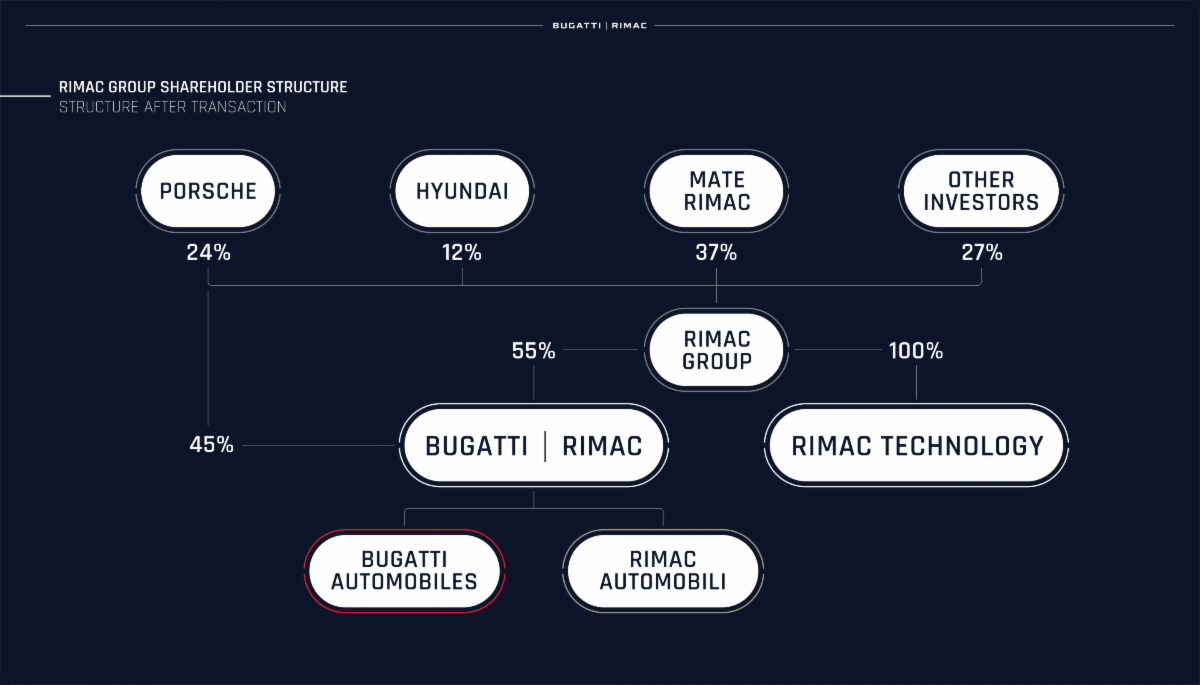
Announced earlier in the week, the VW Group transferred its shares in Bugatti to Porsche, who have joined forces with Rimac to take control of the storied brand. In a complex corporate restructuring, Porsche will continue to own 24% of the Rimac Group, which will own 55% of the new entity, with Porsche owning the other 45%. Mate Rimac will be CEO of both the Rimac Group and Bugatti. Production of the Chiron will stay in Molsheim, France and the Rimac Nevera will continue to be built at near Zagreb, Croatia.
Porsche bought into Rimac in 2018 with 10% stake, upped it in 2019 to 15%, and earlier this year invested a further 70M Euros to now own 24% of the company. Hyundai has a 12% interest with Mate Rimac retaining the largest piece at 37%. Smaller investors make up the rest.
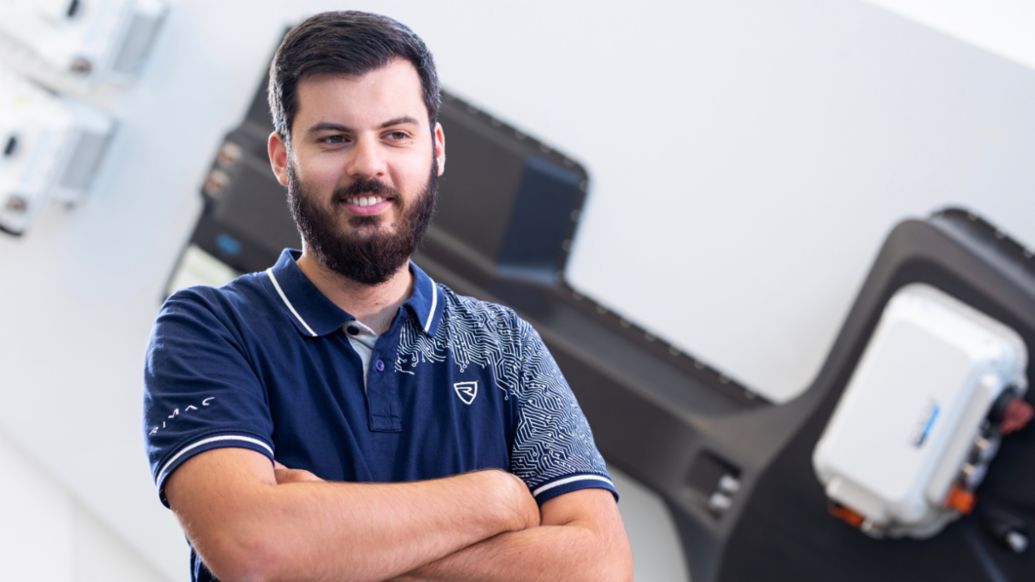
For the 33 year old Mate Rimac, the rise to the CEO of Bugatti, and 37% owner of an automotive group said to be worth north of $6B, must be beyond his wildest dreams. He started his company in his parents' garage in 2009 in a country that had no automotive industry. He literally created everything from scratch, and anybody he ever talked to told him what he wanted to do was impossible.
Last week I wrote about how mergers and acquisitions as a method to achieve profits takes focus away from making competitive products, without which car companies are nowhere, no matter how large. This group of companies certainly doesn’t have any shortage of interesting machinery, and the synergies could be very interesting.
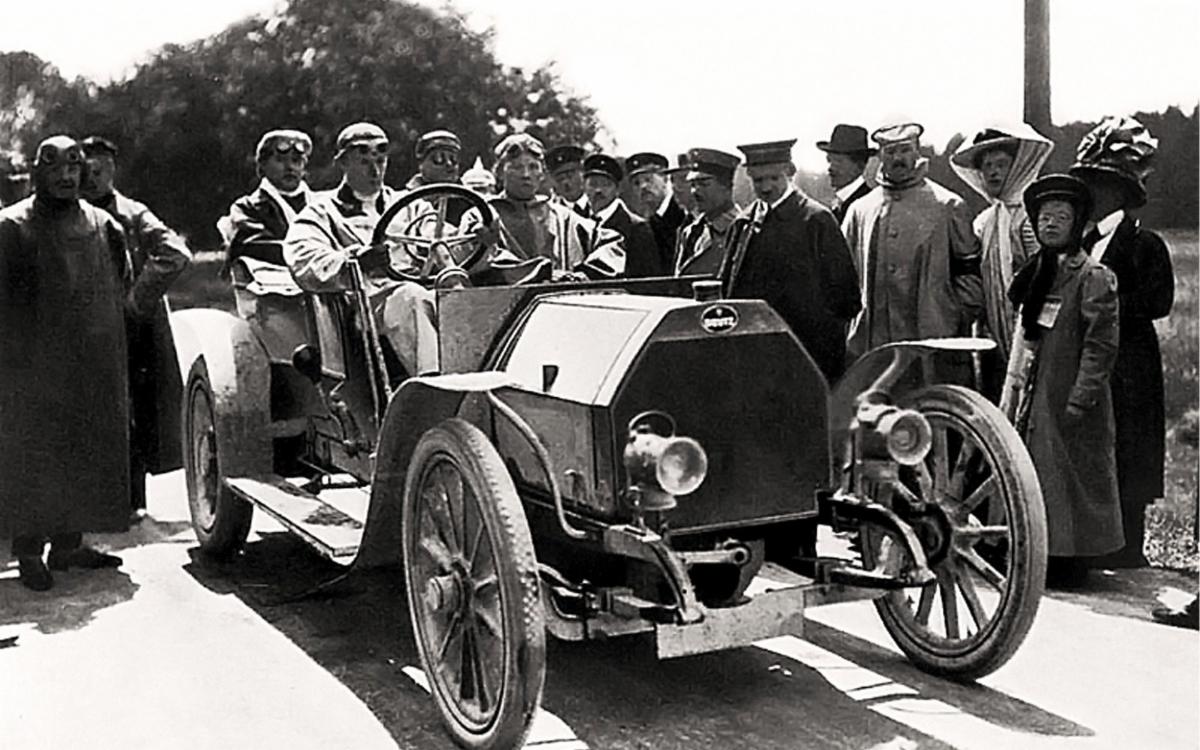
The origins of two of these brands go back a long way. Ferdinand Porsche designed his first car - which happened to be electric - in 1900 with the Lohner Porsche. Bugatti started making cars in 1909. Both men believed in competition as the best way to advance R&D and promote their designs. They both even raced against each other driving vehicles of their own design.
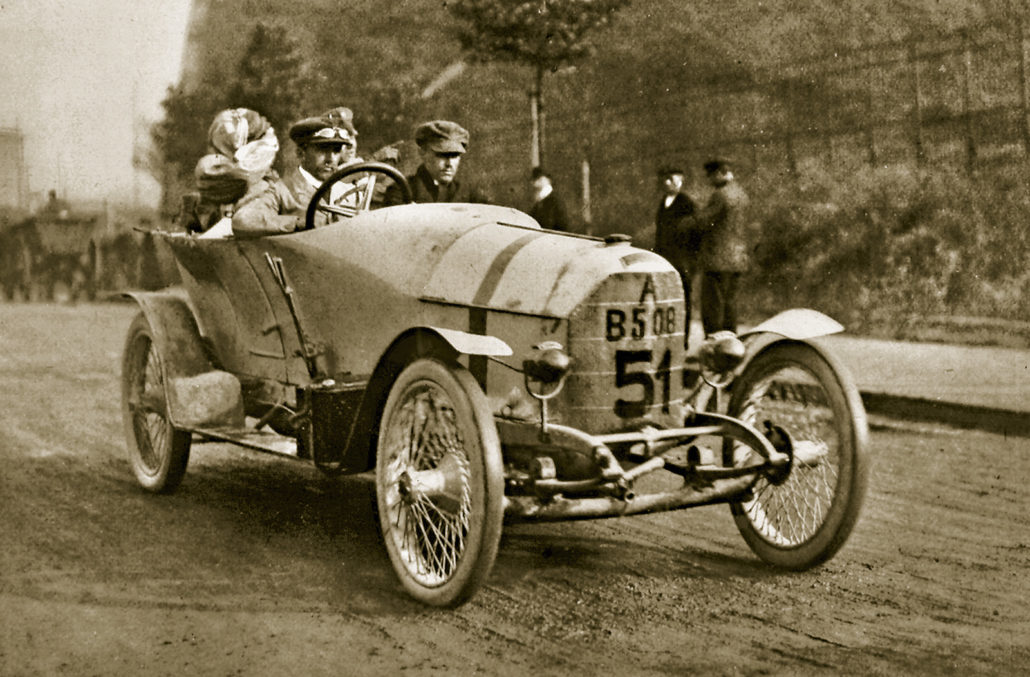
In the 1910 Prince Heinrich Tour - Europe’s most prestigious motor race at the time - Ferdindand Porsche lined up his Austro-Daimler against Ettore Bugatti and his first car, the Type 13. Both cars were advanced - being smaller and lighter than the conventional racers of the day. The Austro-Daimler had a high-revving 5.7 litre engine, the design of which was taken from an engine Porsche designed for an airship. Early streamlining efforts were taken to reduce the frontal area, and Porsche even went as far as to grind down the fasteners on the bodywork to achieve less wind resistance. Bugatti developed his first 4-valve per cylinder head on his racing car. The 1910 race was dominated by the Austro-Daimler, taking the top three positions, with Porsche (and his wife!) in the winning car.
Both men had different trajectories. Porsche headed the engineering for Lohner, Austro-Daimler, Daimler Benz (Mercedes) and Steyr before setting up his own automotive consultancy firm in 1931 in Stuttgart. He designed an incredible array of mechanized transport from the VW Beetle to the V16 Auto Union Grand Prix car, to giant tanks and ‘road trains’ - many of which used electric/gas hybrid drive. It wasn’t until 1948 that he started, with his children Ferry and Louise, the Porsche car company that we know today.
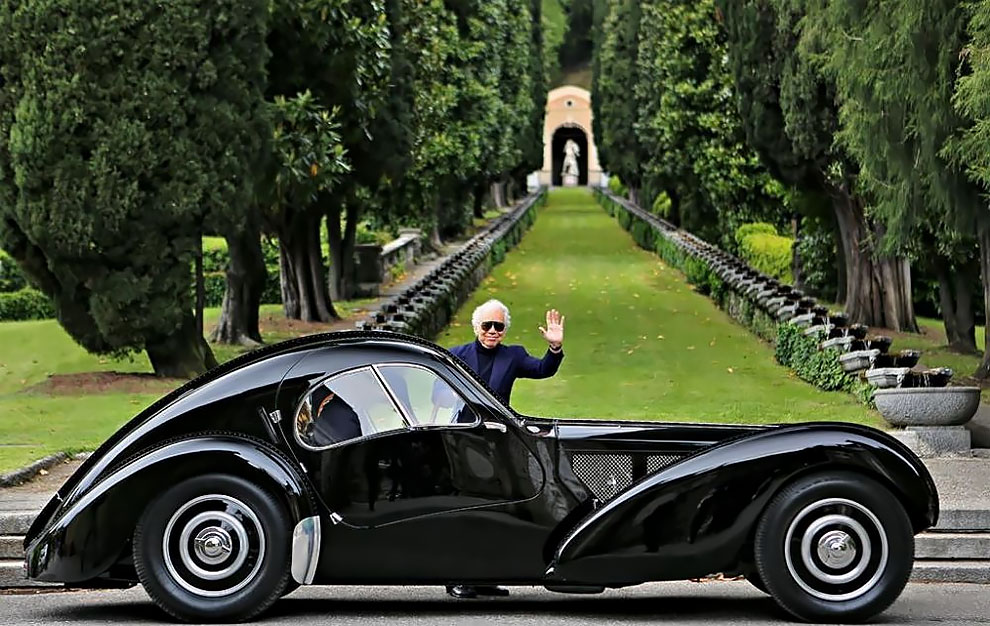
Bugatti came from a family of artists, and designed technologically advanced - and often stunningly beautiful - road and race cars. From the ornately carved wooden doors at the factory to the exquisite machine tools, every part of the Bugatti company was focused on beauty as much as performance and luxury. His cars, particularly those from the 1930’s, have become some of the world’s most valuable collector cars, selling in the tens of millions of dollars. One of the two remaining Bugatti Type 57 SC Atlantics might even sell for $100M in the unlikely event that either Ralph Lauren or Peter Mullin would sell theirs.
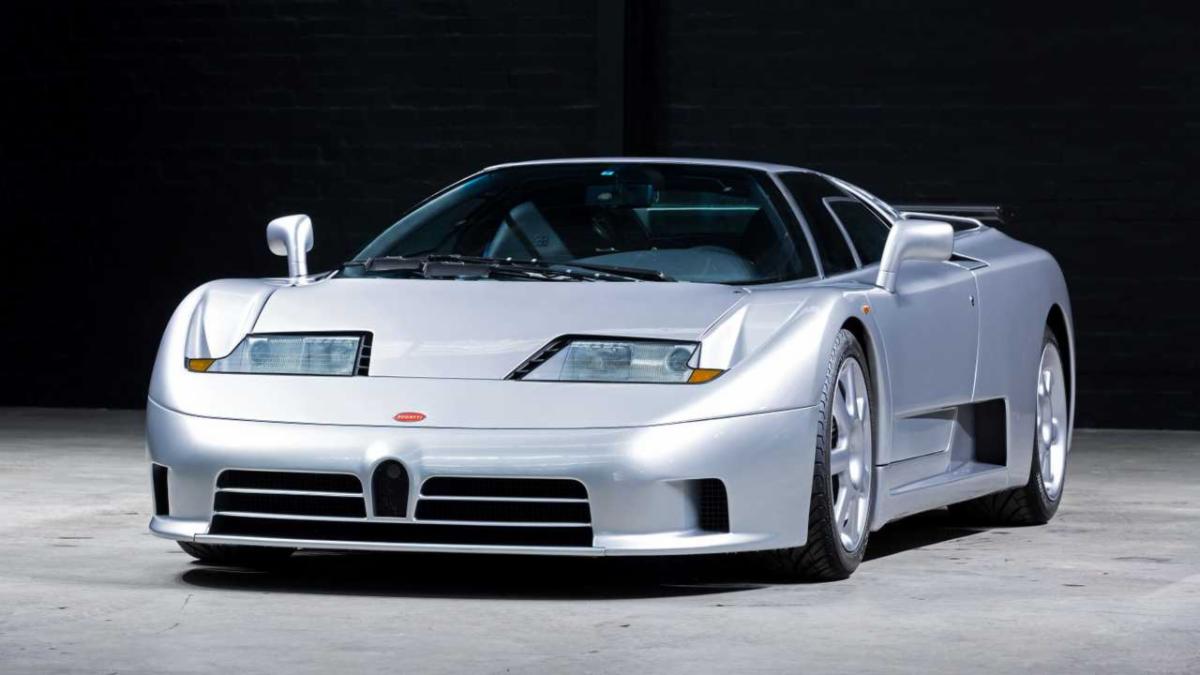
Automobiles E. Bugatti was mostly destroyed during the war, and Ettore died in 1947. The company, after a slow decline, ceased operations in 1952. The name was resurrected in 1997 by the Italian, Romano Artoli, who bought the Bugatti trademark and manufactured the Bugatti EB110 in a new factory in Modena, Italy from 1991-1995. Artoli recruited many former Lamborghini engineers for the design, which featured one of the first carbon fibre monocoques. The EB110 was powered by a bespoke 3.5L quad-turbo V12 with AWD. It was too ambitious a project for the limited quantity of cars they could sell, and the company folded with one hundred thirty nine EB110’s produced.
Fast forward to 1998 and the Bugatti name is purchased by the VW Group, at the behest of CEO Ferdinand Piech - the grandson of Ferdinand Porsche Sr. and father of the Porsche 917 and Audi Quattro. Piech shared the fascination of complex engineering projects with his grandfather, and created the Bugatti Veyron 16.4. It used a 16 cylinder quad-turbo version of the narrow angle ‘V’ series of engines featured in many VWs, Audis and Bentleys. The 1,000hp Veyron went into production in 2005, and was succeeded by the Chiron in 2016.
Porsche has gone from being a Bugatti competitor to corporate cousin, to owner. Rimac has gone from absolutely nothing to high-tech component supplier to hypercar manufacturer and now co-owner of Bugatti with Porsche. What do each of these companies have to gain from each other and what are the challenges?
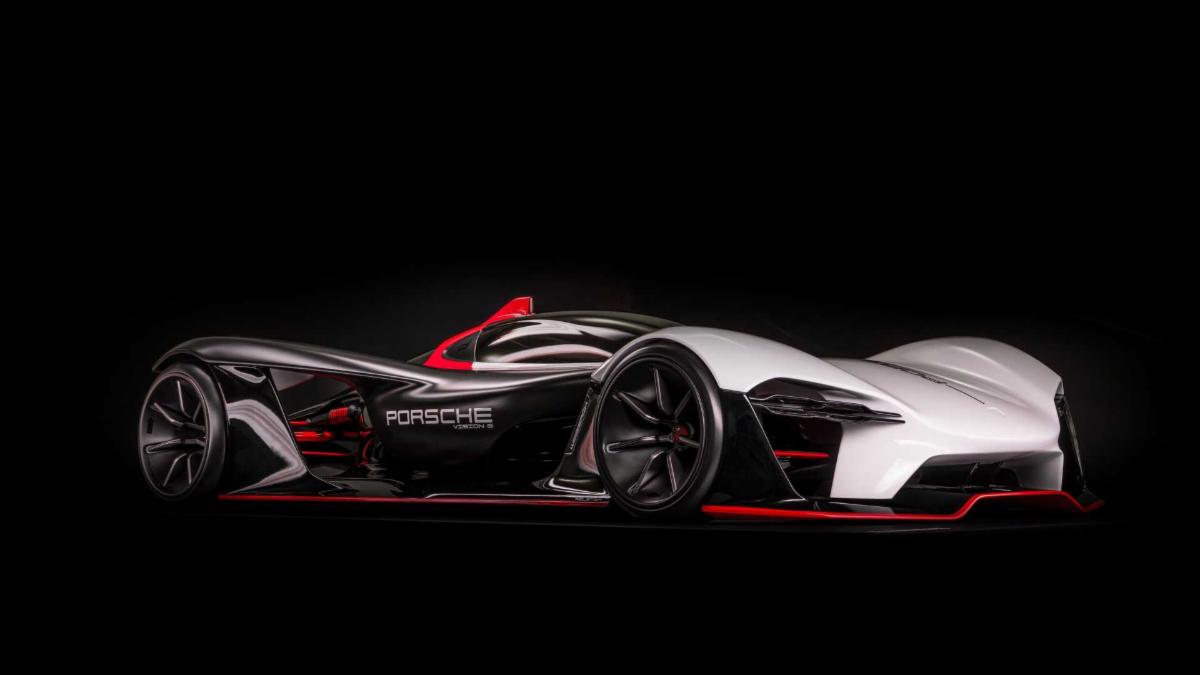
Porsche: They will certainly get all the help they need with their next hypercar, which wealthy enthusiasts are expecting once a decade after the 2004 Carrera GT and the 2014 918 Spyder. Whether this will be an advanced hybrid that may be homologated as a Le Mans GTH entry, or all-electric using the Nevera platform remains to be seen. Porsche has had an active styling department, led by Michael Mauer, and have several full-scale concept cars ‘on the shelf’ that could fast-track the next hypercar.
Beyond halo projects, Porsche and the VW Group need an entrepreneurial visionary to lead the group’s electrification strategy, and compete with Tesla. I believe they have this with Mate Rimac.
Bugatti: With Ferdinand Piech passing in 2019, Bugatti lost its main supporter. Subsequent VW Group CEO’s have made it clear that they are not interested in ‘Hobby’ projects that don’t contribute to shareholder value. That’s left the future of Bugatti (as well Ducati) uncertain. The Veyron was fantastically expensive to develop with hard-to-solve packaging and thermal problems. Trying to cool a 8.0L quad-turbo V16 engine in a mid engine sports car isn’t easy, especially when it needs to have low drag for a 400km/hr top speed. The current Chiron traces its architecture back 20 years and there is no replacement platform.
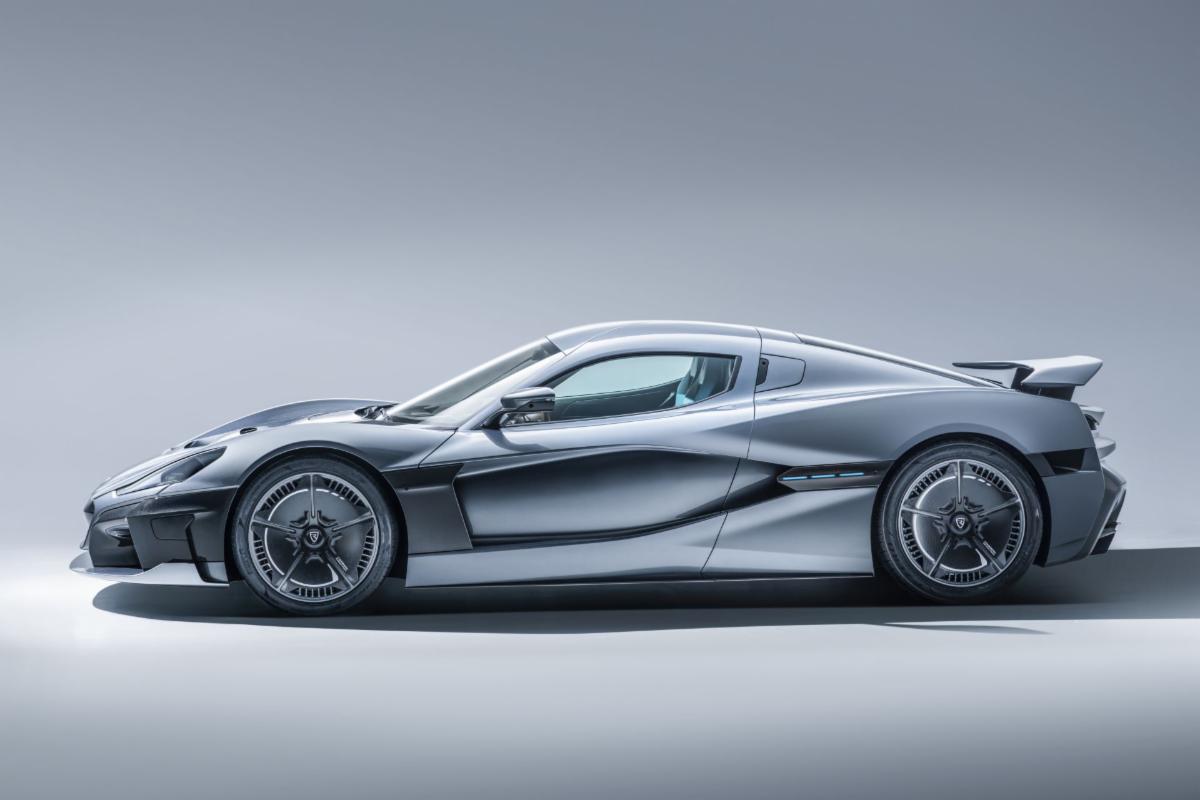
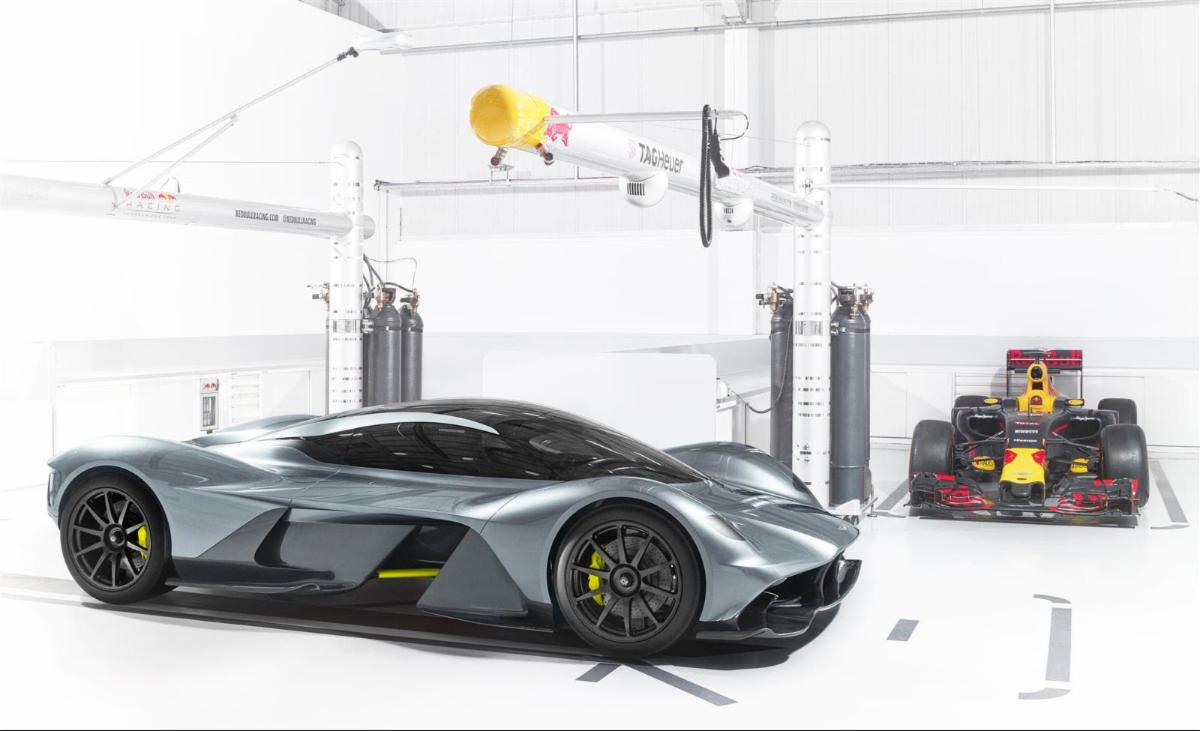
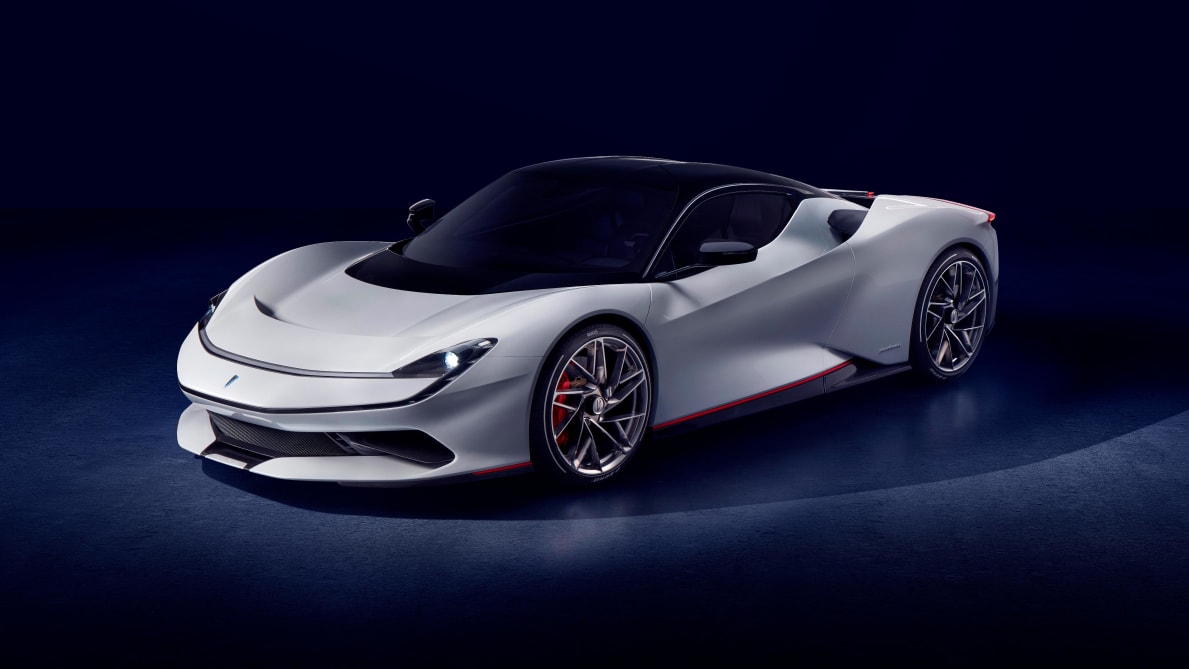
Rimac can offer the Nevera all-electric 1,900hp platform, which they have also sold to Pininfarinia for their Battista hypercar. They also have developed the hybrid systems for the Adrian Newey designed Aston Martin Valkyrie, and the Koeinegsegg Regera. Mate Rimac has hinted that the Chiron successor will be a highly electrified Hybrid. Also, that he would expand Bugatti’s line up beyond the two-seat hypercar to other body configurations that Bugatti built pre-war i.e. coupes and sedans.
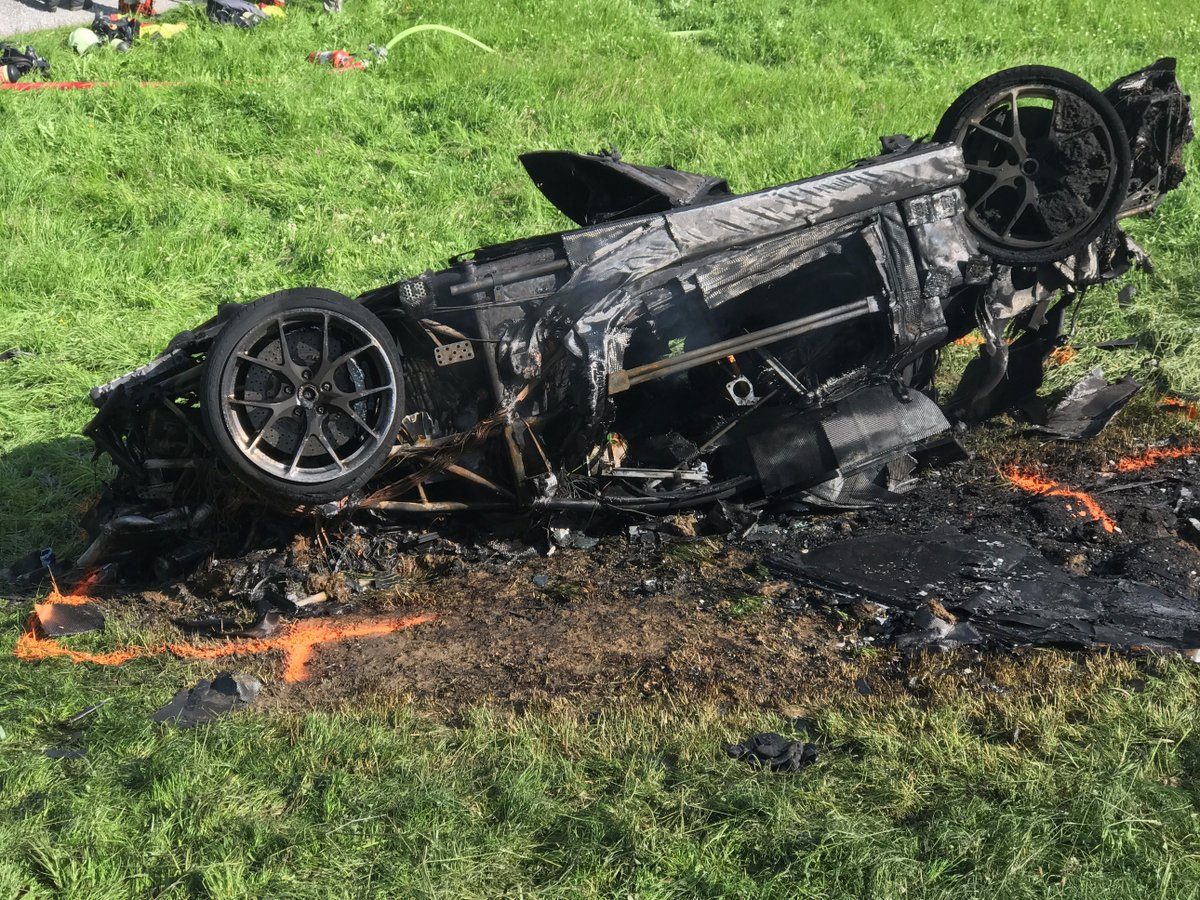
Rimac: At this point, Rimac has only delivered a few customer cars! Richard Hammond crashed one of the eight Concept 1’s, and the Concept 2 (Nevera) is just in the final stages of global homologation. Mate Rimac needs scale to realize his dreams of a 2,500 person campus, and global ‘Tier 1’ automotive supplier. The opportunity to take charge of one of the greatest automotive brands, and have the capital to do something with it - is extraordinary.
It will be interesting to see what happens to Rimac Automobili, as it has no history. If you create one platform, and share it between Porsche, Rimac and Bugatti (and Pininfarina) how would you differentiate the Rimac? Or would you forget about Rimac being an automotive brand, and focus on Bugatti which has the DNA and the distribution network?
What may make sense is to make the Rimac brand the technology leader. Rimacs already have cameras inside and out, telemetry, state-of-the-art connectivity, driving ‘coaches’, lidar, facial recognition etc. They could develop these technologies for a younger, but no less rich, customer base. Porsches could focus on driving involvement and racing, and Bugatti on luxury. They could have the $1M + market segment all but locked up!
|