|
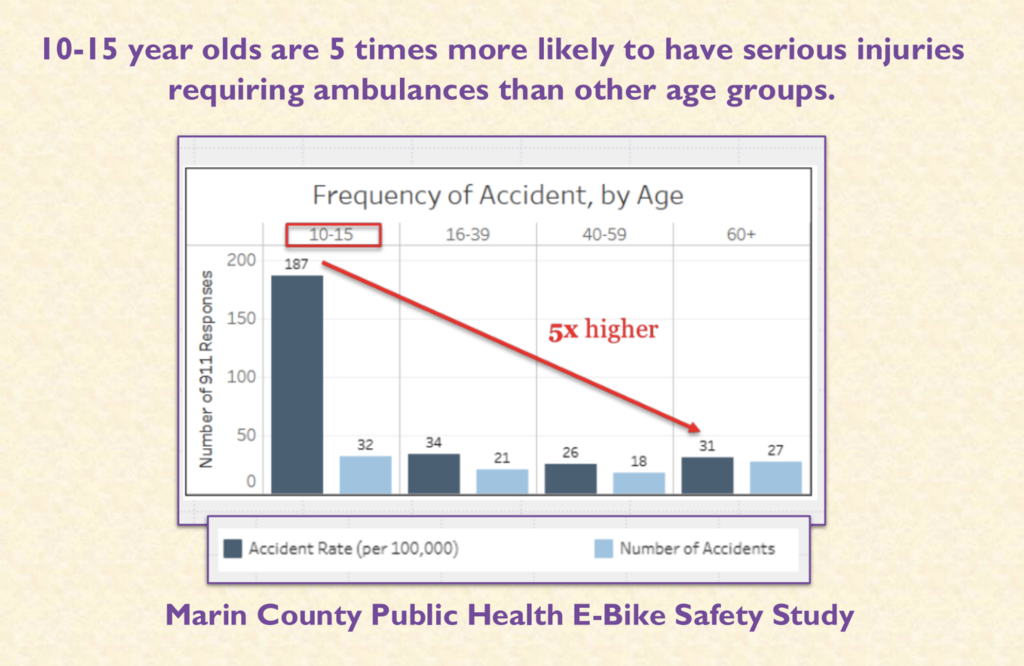
There is still research happening around e-bikes but this graph was pretty startling so I am including it in my post so that others understand what is being seen.
The Illegal E-Bike Problem
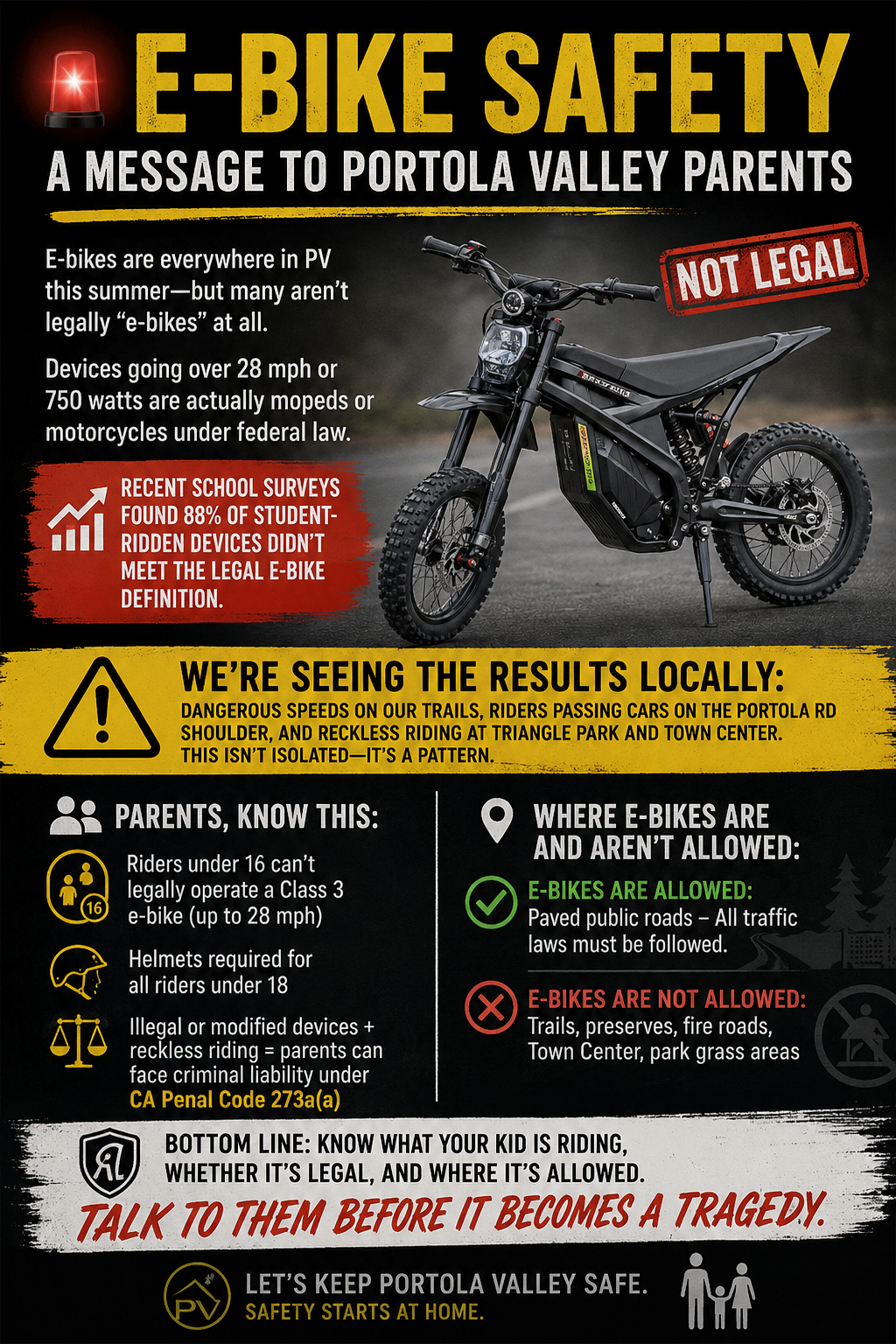
A major driver of community frustration isn't legal e-bikes at all — it's illegal ones. Devices exceeding 750 watts or 20/28 mph speed limits are legally classified as mopeds or motorcycles and require registration and licensing. Surveys at Marin and San Mateo County schools found that roughly 88% of student-ridden devices didn't meet the legal definition of an e-bike. Because illegal and legal devices look nearly identical, enforcement is difficult.
Legal Liability for Parents
In the City of Murrieta, due to injury collisions across Riverside County, the District Attorney’s Office has issued a safety advisory reminding parents that unsafe or reckless e-bike use by juveniles can lead to criminal liability for parents.
What Parents Need to Know
- E-bikes can reach speeds similar to small motorcycles.
- Many juvenile collisions involve speeding, riding against traffic, or ignoring stop signs and signals.
- Parents may be held criminally responsible if their child is riding an inappropriate e-bike, not using required safety equipment, or riding in a manner that puts others at risk.
Relevant Law
California Penal Code 273a(a) allows for criminal charges, including felony exposure, when a parent’s actions or lack of action place a child or others at risk of serious injury.
More information can be found on the City’s website at:
https://www.murrietaca.gov/1448/Electric-Bicycles
Recent Legislation
Meanwhile, the State of California has been active in considering legislation around e-bikes. Key laws already on the books include:
- Prohibiting speed-boosting modifications and apps (AB 1774, AB 545)
- Clarifying speed caps in the e-bike definition (SB 1271)
- Banning Class 3 e-bike sales to minors under 16 (AB 965)
- Authorizing officers to remove unlicensed, illegally fast devices (AB 875)
Several bills are currently advancing in the California Legislature:
SB 1167 is the most comprehensive, revising e-bike definitions, tightening labeling and disclosure requirements for manufacturers and sellers, cracking down on false advertising, and requiring law enforcement to collect better data on e-bike crashes. The author notes the current three-class system creates confusion that bad actors exploit.
AB 2595 would create an e-bike enforcement pilot in San Mateo County, allowing local authorities to prohibit children under 12 from operating Class 1 or Class 2 e-bikes through 2031.
AB 1569 would direct the California Department of Education and CHP to develop a standardized e-bike safety training program for grades 7–12, with an online curriculum covering rules of the road, device classes, safety equipment, and the consequences of riding illegal devices.
AB 1614 addresses bicycle passenger safety, requiring passengers to be properly seated and prohibiting operators from carrying passengers not in an appropriate seat.
Your legislators are trying to thread a difficult needle — encouraging e-bikes as a clean, affordable transportation option while reining in the illegal, high-speed devices causing the most harm. Better data collection, clearer labeling, and youth education are emerging as the consensus tools. I fully expect new laws to be in place by Jan. 1, 2027 that will assist with managing e-bikes.
Best,
Councilmember Helen Wolter
|