|
Written by Kieran Delamont, Associate Editor, London Inc. | |
REMOTE WORK
Worship me at the office alter
A six-year study point to narcissistic leaders — not productivity — as the real driving force behind the hatred of remote work
| | |
“GOD, MY BOSS — what a jerk,” you might grumble to yourself as you head back into your mandated in-office days. And, it turns out, you would be right: there is a correlation between the personality of your boss and the push we’ve seen over the past year to get more workers in-office.
According to a study that looked at data from Fortune 500 companies and their chief executives over the past six years, a team led by Wharton Business School organizational psychologist Adam Grant found a correlation not between mandates for in-office work and things like productivity, teamwork, collaboration or positive metrics. Instead, they found it correlated with personality.
“Narcissistic leaders resist remote work because it threatens their motivations for power and status,” the research team wrote in their paper. “Because in-person work offers richer channels for controlling and commanding reverence from employees, in their pursuit of authority and admiration, narcissists are likely to resist remote work.”
In an accompanying op-ed in The New York Times, the research team couched their findings a bit, but not much. “Case by case, there may be good reasons for teams to work together in person,” they wrote. “As a general rule, though, it turns out that ordering people back to the office full-time is a power and status move. It’s a signature strategy of leaders who exhibit narcissistic qualities. They see any kind of remote work as a threat to their authority and admiration. They want to be worshipped at the office altar.”
Writing about the findings, CharterWork’s Brian Elliott said he wasn’t surprised by the findings. So much of the remote work conversation seems to take place orthogonally to the actual data on costs and productivity, with vibes (about how much employees are or aren’t working) standing in for hard data.
“I’m not surprised to see this research get so much attention,” Elliott wrote. “I regularly get calls from CHROs on the pros and cons of office mandates, driven by CEOs who think people are slacking off.”
Elliott writes that there exists a tension at the human resources level of many organizations, trying to reconcile what workers want and what leaders want. “Today, I’m hearing more leaders concede to CEOs’ demands, picking their battles as they try to reshape their organizations with AI, and manage CEOs’ push for productivity through layoffs,” he wrote, adding that many HR leaders are simply letting the ego-driven CEOs win the battle. “But the data suggests it’s still a battle worth fighting.”
The researchers behind the study (which is itself agnostic on whether remote work is actually better or not) recommend instead that organizations adjust by developing better structures to determine if, and how much, remote work is appropriate for their firm.
“Organizational policies shouldn’t be vanity projects. The responsibility of leaders is not to mould the world to their needs,” they wrote. “It’s to adapt themselves to the world’s needs, even if it means learning to live without the thrill of a live audience.”
| |
DEMOGRAPHICS
The march of the aging workforce
The share of older workers in Canadian firms doubled over the past two decades, with manufacturing showing the steepest shift
| | |
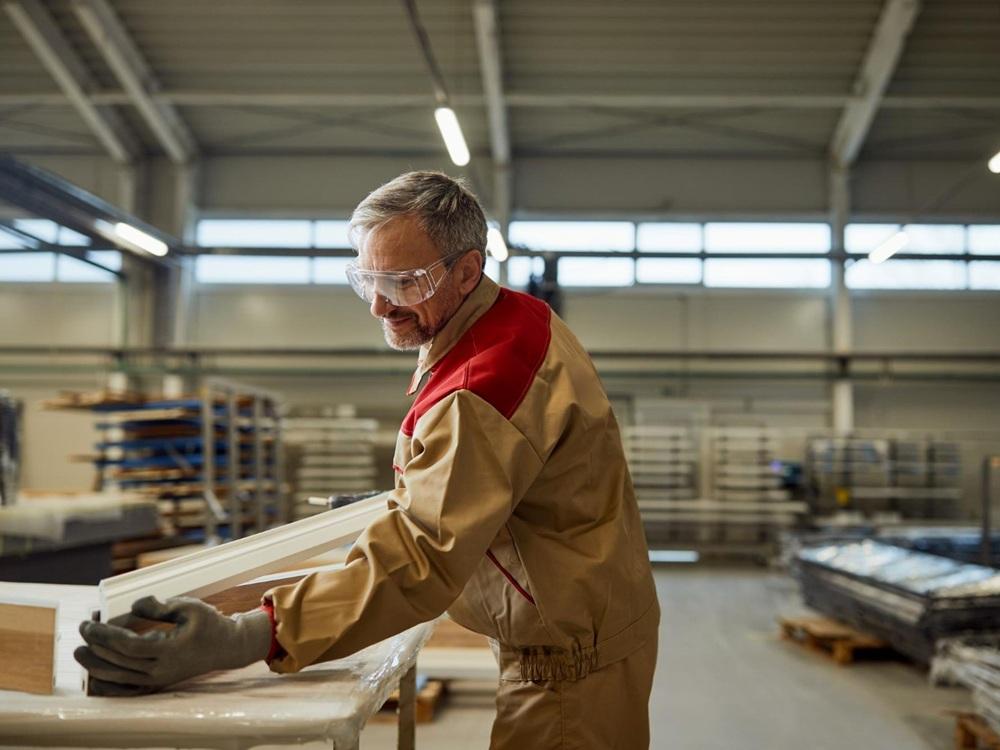
IT’S A MIDDLE-AGERS’ economy now. That may not come as news to Gen Z or millennials, but a new study from Statistics Canada put actual numbers to the sentiment, finding that over the last two decades, in addition to the broader aging of the population, the average age of employees at the firm level has also increased, with more than four in ten (42.3 per cent) companies now having an average age over 40 years old.
“The proportion of firms with an average worker age over 40 increased by more than 16 percentage points [since 2001], and the share of workers aged 55 and older doubled, on average,” the study reads. It notes this aging has been particularly sharp in the manufacturing sector (something that echoes concerns held by the Canadian Manufacturers and Exporters lobby group), which experienced the most pronounced change, with nearly 60 per cent of manufacturing firms now having an average age over 40.
While we’ve known intuitively that the Canadian population, and thus the workforce, is aging, the authors note that what this new survey found was the average age of companies is increasing as well, and suggests this will inevitably have qualitative effects, both now — as companies continue working with older employees — and in the future, as experience and skills fail to trickle down through the broader working population.
“In general, workforce aging is associated with reduced productivity,” the authors write. “While older workers bring valuable experience that can enhance their labour productivity, they often have less familiarity with new technologies, which is essential for improving productivity.”
The survey notes that we should treat these findings like an outcome of years in which the goal was to keep people in the workforce. “Policy changes have played a role,” wrote Louise Smith for Human Resources Director, “including the elimination of mandatory retirement in several provinces during the mid to late 2000s, and the introduction of income tax incentives designed to encourage older workers to remain in the labour market.”
The big takeaway? For some analysts it suggests that Canada may be increasingly becoming a “wisdom economy,” where long-range skills and knowledge become the key asset that workers bring to companies.
“It’s less about being an expert in a product or a process or a system, and it’s more about moving into, ‘Do you know what your requirements are in your complex environment? Do you know why things matter? Do you how to allocate resources?’” said University of Guelph professor Nita Chhinzer, speaking to Global News. “Wisdom is this amalgamation of skills or competencies around knowing what matters and knowing how to get things done.”
| |
| |
Terry Talk: Why change efforts fail, and the leadership mistake costing you results
| In this Terry Talk, Ahria Consulting president & CEO Terry Gillis discusses the hidden reason most change initiatives never deliver the results leaders expect. It’s not resistance. It’s false alignment. When leadership teams can’t clearly explain what is changing, why it’s changing and what success looks like, confusion grows and momentum disappears. Before your next change initiative, learn to ask one critical question. | | | |
AI
Claude talk less. Claude save tokens
Businesses are teaching AI chatbots to talk like a caveman. Here’s why
| | |
CLAUDE, CODEX AND many other enterprise AI tools have grown increasingly expensive over the past couple months (Uber reportedly burned through its entire annual AI budget in four months), leaving lots of large firms scrambling for ways to cap or reduce costs. Some are capping usage. Others are trying to clamp down on token spend on tasks that don’t require an LLM. And some are doing something else: making their chatbots talk like cavemen.
A little lesson on how LLMs work: every sentence you write costs tokens, at a rate of around one or two per word; every sentence Claude or ChatGPT writes in response costs more tokens. If you can cut tokens out of those two sides of the equation, you can leave more for the internal reasoning work the model does.
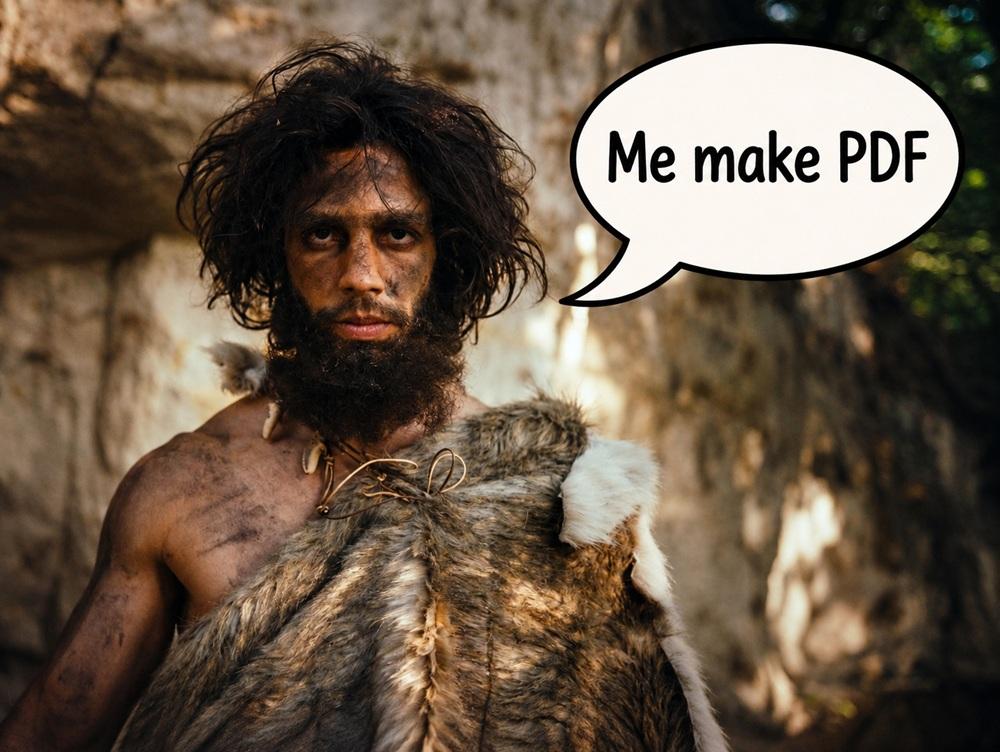
So, in short, “Sure, let me generate that PDF for you!” is more expensive than, say, “Me make PDF, you download.”
This, anyways, was the thought process (proven more or less correct in tests of token usage) of Julius Brussee, a developer who created the Claude caveman plugin. It does one thing: teaches your Claude to talk like caveman.
Companies are beginning to take note of this and, in a desperate attempt to curb AI costs, starting to implement Caveman mode. Digital infrastructure company Legrand, for instance, recently told its employees they should “use caveman skill” to keep their usage in check.
The plugin has become a viral tool within the coding and tech world. “I’ve heard from many individual developers and engineers inside companies using or testing it, including people at OpenAI, NVIDIA, GitHub and DEPT,” Brussee told 404 Media. “It makes the model speak less like a polite chatbot and more like a terse tool. Same substance, fewer words.” Brussee estimates it cuts output tokens by about 65 per cent.
Silly though it may be, the caveman mode is getting at a real problem — one that other companies are keen to monetize themselves. According to 404 Media, global consulting firm Accenture is looking to corner the market on helping companies reduce their AI spend. “What we’re seeing right now is just rapid escalation in AI token spend,” one Accenture consultant said in a leaked meeting, noting that at many companies, the proliferation of AI usage on menial tasks — converting PDFs, having it read your emails, etc. — are driving it. “It’s really not a niche problem. It is a problem that every enterprise will face if they are bullish on AI, if they haven’t already.”
If this sounds like how you are using AI, it might be time to go caveman mode — although tech experts say that when it comes to dealing with token spend, it’s a bit like bringing a watering can to a house fire.
“Caveman is useful. It is not a budget strategy on its own,” wrote Gadget Review’s Alex Barrientos. “[But] something telling is happening regardless. OpenAI’s director of engineering Shayne Sweeney contributed. Engineers at Nvidia and GitHub are reportedly experimenting with it. Formal AI style guides specifying token budgets per workflow — and a new specialty called ‘token economist’ — may arrive sooner than anyone planned.”
| |
ENVIRONMENT
The heat is on
Heat waves are becoming more frequent and intense — and so are their economic consequences
| | |
|
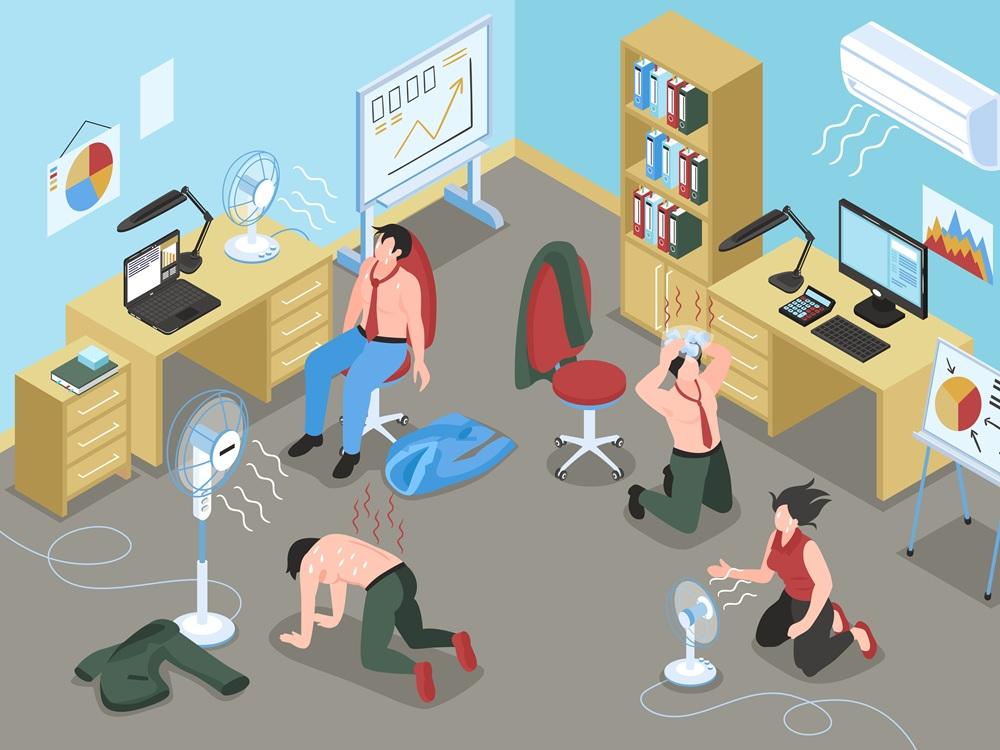
IN CASE YOU hadn’t noticed, it was really hot last week. With the feels-like temperatures eclipsing 40 degrees on at least a couple days, going to work probably felt miserable: sticky clothes, hot cars, and if you’re a bike commuter, well, our sympathies.
Maybe it will make you feel a bit better to know that it’s not just you that feels the heat wave — the whole economy is starting to show signs that extreme heat is becoming, as The Wall Street Journal put it, a “chronic drag on the economy.”
It makes sense that construction crews are less productive and work more slowly in the heat, and in order to stay safe delivery workers need to work slower to keep from overheating. But what is of interest to economists now that climate change is producing more frequent and hotter heat waves, is the aggregate cost that they have on the economy more generally — something experts are now able to see more clearly in economic indicators.
“It’s no longer something that’s going to happen after our generation,” said George Buckley, chief European economist for the bank Nomura, speaking to WSJ.
Economists are now starting to see that heat waves have more knock-on effects that show up in data. Indoor workers aren’t immune from heat waves, either. According to Fortune, workers in both indoor and outdoor settings experience an increased injury likelihood in heatwaves, ranging from five per cent to 45 per cent more when temperatures get into the high 20s and low 30s.
“We now know that not only are hotter places much poorer on average — we've known that for a while — but that hotter-than-average years lead to lower-than-average GDP growth and output generally in many settings,” said Wharton School economist R. Jisung Park. “Heat affects everything from students taking important exams to workers. Industrial accidents. You name it.”
Within the white-collar world, many office managers are likely to first see it show up as costs — of paid time off for anyone who prefers to stay inside, for one, but in a host of indirect costs. “Let’s say the office worker might not feel it directly, but the expenditure, when it comes to how much is paid for hydro, how much is paid for electricity for cooling the place, the cost is being paid by the employer,” noted Godfred Boateng, speaking to HR Reporter. Last year’s heat waves in Europe caused a lot of health concerns, but also caused a reduction of around USD$43 billion in economic activity, according to one study.
One thing economists are starting to wrap their heads around is that while the heatwaves are occasional events, the effect of warmer summers overall creates a smaller, but more persistent, drag on productivity.
“Heat gets a lot of attention when you see these 100-degree, record-breaking heat waves, as we just saw in Europe,” said Park. “But the data actually suggests that the bulk of the damage is actually being done in hidden ways during the less extreme events that occur with far greater frequency. They just don't seem to be on our radar.”
|
| | | | |