|
Practical and Powerful Changemaking | | |
Creating meaningful change starts with understanding the systems we're working to improve.
At a time when communities are navigating growing challenges, shifting resources, and increasing uncertainty, leaders are being asked to make critical decisions about where to focus, what to prioritize, and how to create lasting impact. Yet we don't always have the full picture.
We know inequities exist, but not always where they're most concentrated. We know progress is happening, but not always what's making the difference. For those working to advance well-being and equity, meaningful change starts with seeing the system more clearly.
This month's research explores three practical ways to do just that: mapping where challenges and opportunities are concentrated, identifying what's missing from the evidence, and designing systems that support healthier outcomes from the start. Together, they offer a simple but powerful reminder: before we can change systems, we have to learn how to see them more clearly.
When we understand where needs exist, where strengths can be amplified, and where blind spots remain, we're better equipped to make decisions that create lasting impact.
| | | | |
Map Health Gaps Before You Act
Seeing the whole picture starts with understanding where challenges are concentrated and where opportunities for change already exist.
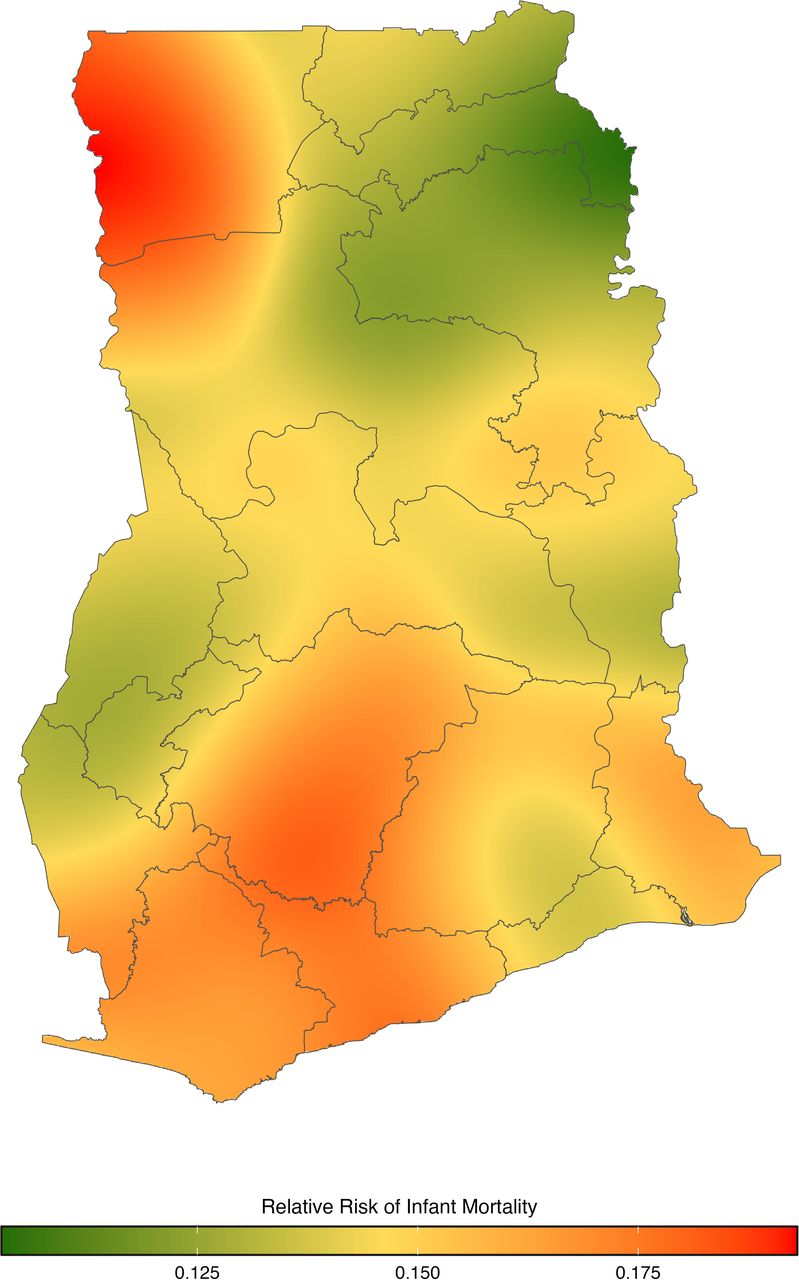
In this study, researchers looked beyond overall infant mortality rates to understand where outcomes differed across communities. Using spatial analysis, they identified geographic hotspots alongside protective factors, including maternal education, early prenatal care, health insurance coverage, and vaccination, that contribute to healthier outcomes.
The lesson extends far beyond infant mortality. By mapping both need and resilience, organizations can move beyond one-size-fits-all approaches and target resources where they can have the greatest impact. This approach offers a practical model for equity-focused planning, helping leaders identify not only where challenges exist, but also the conditions that help communities thrive.
Read more to see how mapping need and identifying community strengths can help organizations make more strategic investments, advance equity, and create lasting change.
| Source: Geospatial disparities in infant mortality in Ghana: evidence from national data (BMJ Global Health)
https://gh.bmj.com/content/11/6/e023249 | | | | | |
Where the Evidence Is Missing
Seeing the whole picture requires understanding not only what we know, but also what we may be missing.
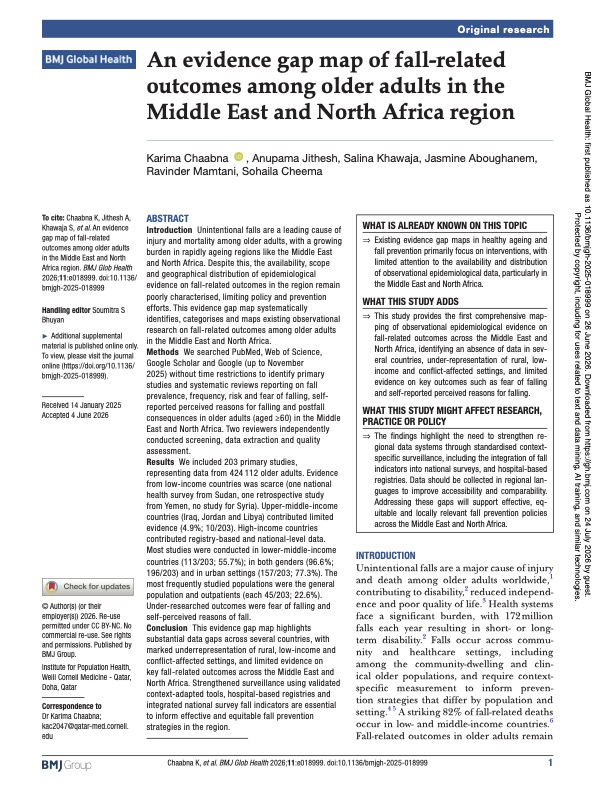
In this study, researchers created an evidence gap map of falls among older adults across the Middle East and North Africa, revealing where research, surveillance, and data systems are strong and where significant blind spots remain. The analysis found major gaps in lower-income, rural, and conflict-affected settings, along with limited evidence on several important outcomes.
While the study focuses on healthy aging, its broader lesson is about visibility. Evidence gap mapping offers a practical tool for identifying overlooked populations, prioritizing future investments, and ensuring decisions are informed by a more complete understanding of community needs. When important voices, experiences, or places are missing from the evidence base, they can easily be overlooked in planning and resource allocation.
Read more to see how identifying evidence gaps can help organizations focus resources, strengthen decision-making, and build more equitable systems for research, policy, and practice.
| |
Source: Chaabna K, Jithesh A, Khawaja S, et al. An evidence gap map of fall-related outcomes among older adults in the Middle East and North Africa region. BMJ Global Health. 2026;11:e018999.
https://gh.bmj.com/content/11/6/e018999.full.pdf
| | | | | |
Making Healthy Cities Work for Everyone
Seeing the whole picture means recognizing that health is shaped not only by healthcare, but by the systems and environments that influence everyday life.
In this study, researchers examined how China's Healthy City initiative has been incorporated into long-term urban planning. They found growing attention to factors such as green space, climate resilience, transportation, environmental quality, healthcare services, and public infrastructure, while also identifying ongoing gaps in equity-focused, transparent, and people-centered planning.
The findings reinforce an important lesson for changemakers: lasting improvements in health and well-being require more than individual programs. They require embedding health and equity into the policies, governance structures, and cross-sector decisions that shape how communities live, work, and connect. While progress is being made, the study highlights the need to ensure that planning processes are inclusive and that the benefits of healthy community design reach everyone.
Read more to explore how integrating health and equity into planning, governance, and decision-making can help create communities where everyone has the opportunity to thrive.
| |
Source: Zhang Y, Cheng J, Duan L. Uneven integration of health in China's territorial spatial planning 2035. BMC Public Health. 2026.
https://doi.org/10.1186/s12889-026-27930-z
| | | | | |
The Missing Ingredient in Health Care AI? Community Voices
Source: Commonwealth Fund podcast
As health systems lean on AI and data to guide decisions, this episode asks a question that runs through this whole issue: whose voice actually shapes what the data measures? It's a fitting companion to the Data for Power reflections from We Rise & Win Together Week — a reminder that maps and models are only as equitable as the people who inform them.
| | | |
Evidence & Gap Maps (Cochrane / Campbell Collaboration)
A methodology and living library of evidence gap maps across health and social policy topics—a practical starting point for any organization that wants to build its own gap map, like the falls study featured in this issue's Deep Dive.
| | | |
Enterprise community
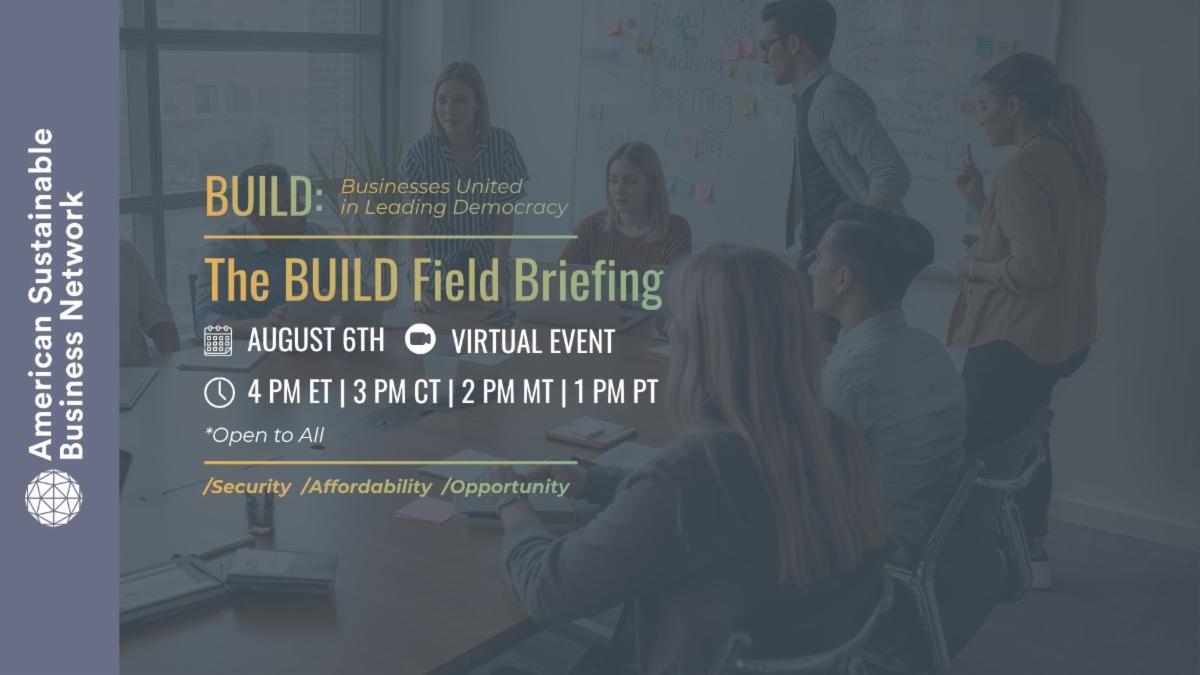
This recurring call provides business leaders and state/local partners with a nonpartisan space to align on engagement strategies centered on the BUILD Framework: Security, Affordability, and Economic Opportunity. Register HERE., Before the call complete the BUILD form to access the Resource Hub Join us to move past partisan politics and focus on policies that foster a sustainable, regenerative, and just economy. Your voice is vital to our collective impact.
When: First Call June 25th, then meetings are Monthly, on the first Thursday
4:00 PM ET
| |  | |
REI - racialequityintstitute
IN-PERSON Groundwater 3-Hour Presentation
"REI’s Groundwater presentation is designed to develop the capacity of participants to better understand racism in its institutional and structural forms. Moving away from a focus on personal bigotry and bias, this workshop presents a historical, cultural, and structural analysis of racism. With shared language and a clearer understanding of how institutions and systems are producing unjust and inequitable outcomes, participants should leave the training better equipped to begin to work for change."
Thursday, July 30, 2026
1:00 PM 4:00 PM
| | | |
Frances R. Dewing Foundation
The Frances R. Dewing Foundation is accepting applications from U.S.-based 501(c)(3) nonprofits and schools for projects that directly benefit children through early childhood and elementary education (up to sixth grade). Grants are awarded twice yearly (April 1 and October 1 deadlines) and prioritize innovative, project-based initiatives with clear, measurable impact. If you are launching or expanding a child-focused education program, this could be strong seed funding to support your work.
Deadline: October 1, 2026
| |
|
Foundation for a Healthy High Point
Funding: $50,000
Overview:
The Foundation for a Healthy High Point offers free grant writing support to eligible nonprofits serving Greater High Point (High Point, Jamestown, Archdale, and Trinity) that have identified an external funding opportunity of at least $50,000 aligned with social determinants of health and upstream solutions. Applications are rolling, decisions are made within two weeks, and if approved, the Foundation pays the grant writer directly, removing one of the biggest barriers to pursuing large state, federal, or national foundation grants.
Eligible organizations must:
• Be a 501(c)(3) for at least 3 years
• Serve High Point, Jamestown, Archdale, or Trinity
• Be pursuing a grant outside Guilford County of $50,000+
• Align with focus areas like healthcare access, economic stability, housing, education, and community conditions
Applications are accepted year-round, reviewed on a rolling basis, and organizations are typically notified within two weeks. This is an especially powerful opportunity for small and mid-sized nonprofits that don’t have full-time development staff but are ready to go after transformational funding.
| |
| | Well-Being and Equity In The World Institute | 252 Daniel Webster Highway #1017 | Nashua, NH 03060 US | | | | |