|
NOTICE
Illinois Urban Manual (IUM)
Standard Updates
| | | |
U.S. ARMY CORPS OF ENGINEERS
CHICAGO DISTRICT
ILLINOIS URBAN MANUAL PRACTICE STANDARDS:
Dry Detention Basin Code 809
Extended Detention Basin Code 810
Wet Bottom Detention Basin Code 811
Wetland Detention Basin Code 812
COMMENT PERIOD BEGAN: March 17, 2026
COMMENT PERIOD EXPIRES: April 17, 2026
The above-referenced IUM practice standards are currently utilized for sediment control on construction/development sites. Each referenced standard and associated drawing (attached) is being updated by the IUM Technical Review Committee (TRC). The TRC is comprised of representatives of various regulatory agencies, consultants, developers, and other stakeholders. The Illinois Urban Manual is the primary technical manual for Erosion and Sediment Control in the State of Illinois. The practice standards must be updated due to advances in product development and associated operation and maintenance practices.
The Corps of Engineers and the IUM Technical Review Committee are requesting comments from erosion and sediment control professionals, developers, engineers, contractors, and other interested parties on the enclosed standards. The comments are reviewed by the Technical Review Committee prior to the finalization of an IUM update. The approved standard will be incorporated into the Illinois Urban Manual immediately upon approval by the IUM Steering Committee, and the Illinois Environmental Protection Agency.
| |
New IUM Standard Published
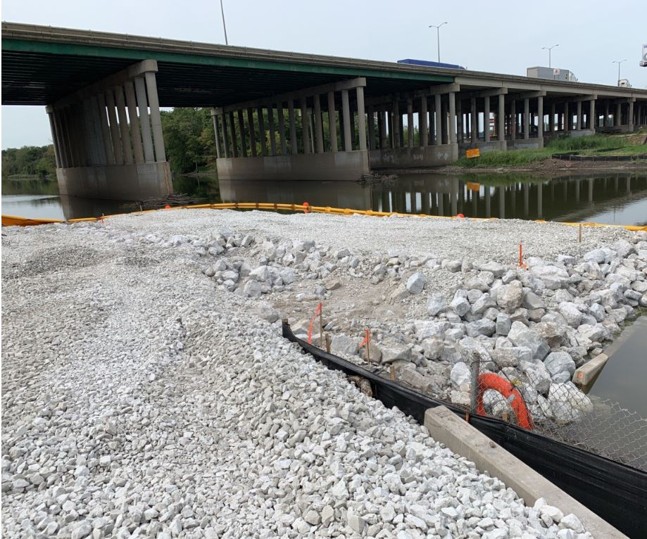
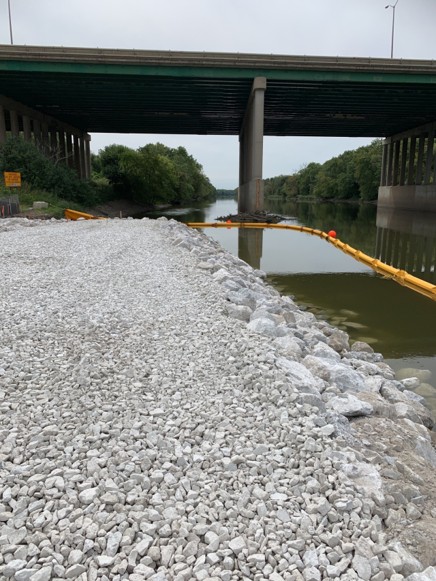
Code 956- Temporary Rock Riprap Causeway
When developing a plan or any projects in or near water bodies, the temporary causeway is a practice that should be explored to keep the waterways clean and workers safe. Using a causeway may not always be the best option for every project, so understanding the project conditions will help determine if it is the correct practice to utilize.
Causeways should be used only where a culvert, bridge, ford, or another stream crossing method may not be appropriate, but access is still needed to work within the waterway. There should also not be an existing stream crossing or other work access available. Causeways should only be used in areas where no endangered or threatened species would be impacted.
Location is key! The stream, overbank, lake bed or shoreline should be able to support any embankment related to the causeway. So certain factors, like hydric soils and riparian wetlands, can be problematic. Compensatory mitigation may be needed for temporary or permanent impacts, so be sure to follow local, state, and federal regulations. There should not be any underlying utilities or approval should be obtained prior to design.
| | | If thinking about implementing a Temporary Causeway in your next in-stream work plan, check out the newest IUM practice standard as well as the additional associated standards that help keep our water clean and soils where they should be. | | | |
Resources
Looking for grant opportunities? Permit information or sample ordinances? The Resources tab on the IUM website includes those and more:
- Certification Programs
- Other BMP Manual Examples
- Additional Resource Links
Email suggested additions
| |
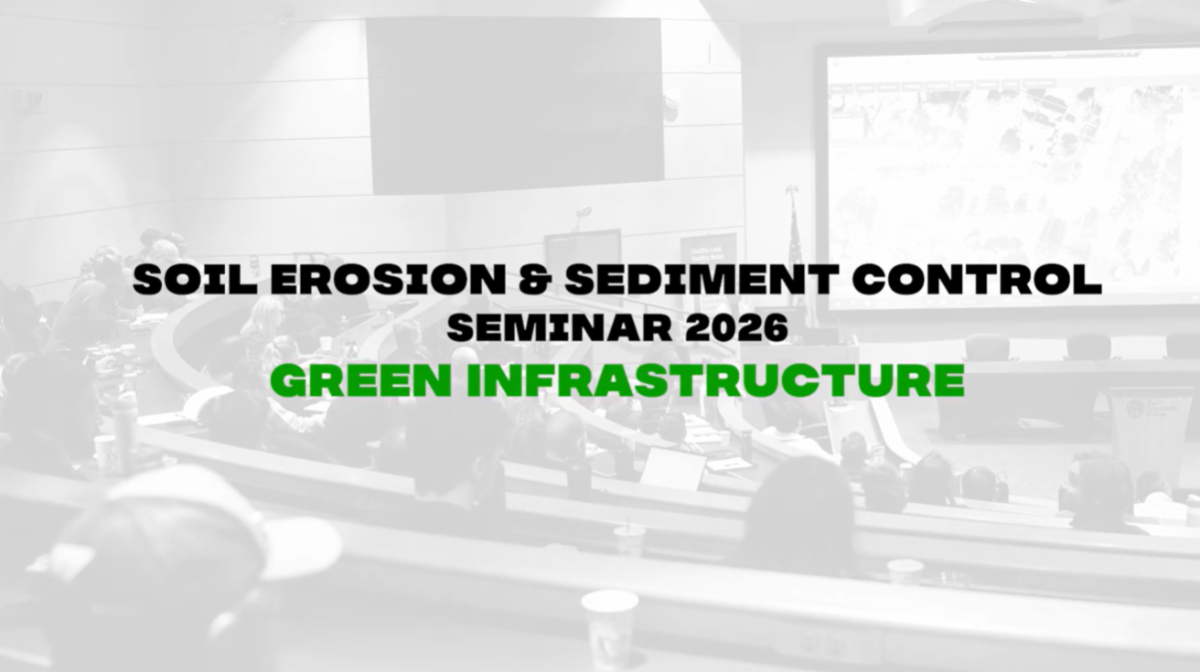
KDSWCD 23rd Annual Soil Erosion & Sediment Control Seminar ~ Green Infrastructure
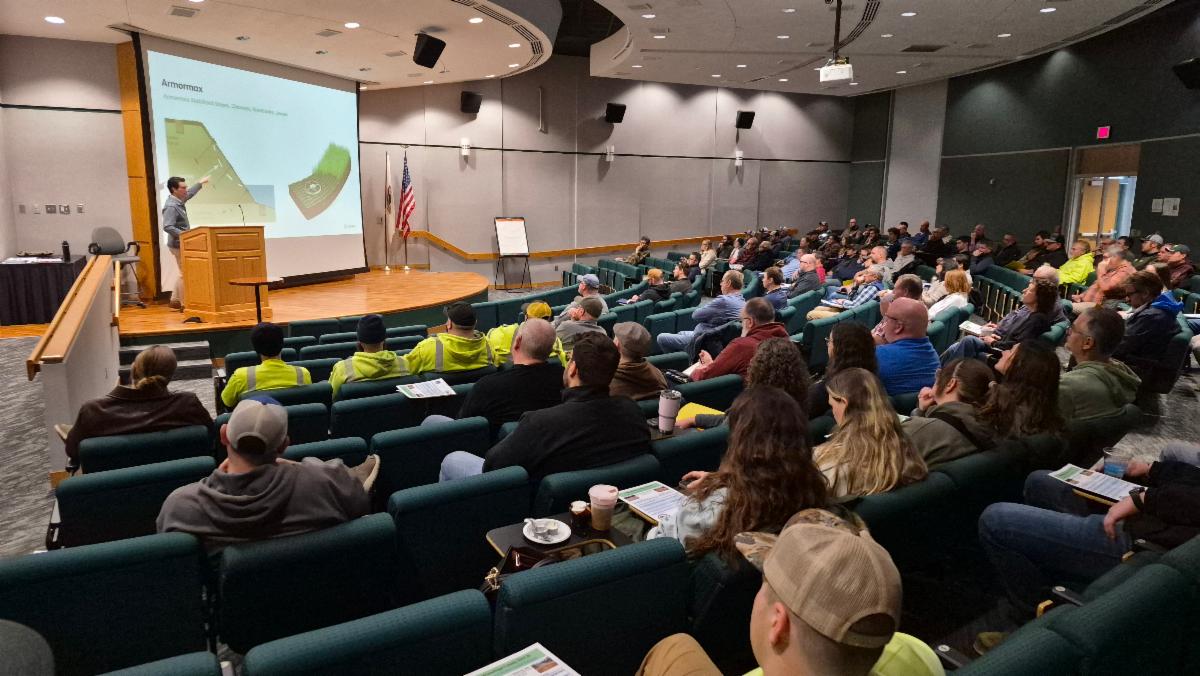
More than 130 municipal, county and engineering professional attended this year's SESC Seminar held at Elgin Community College in January.
| | | | | |
Presentations included case studies from throughout NE Illinois, discussion of digital tools for infrastructure asset management and implementation of sustainability plans.
Sponsored in part by the Illinois Environmental Protection Agency.
| | | |
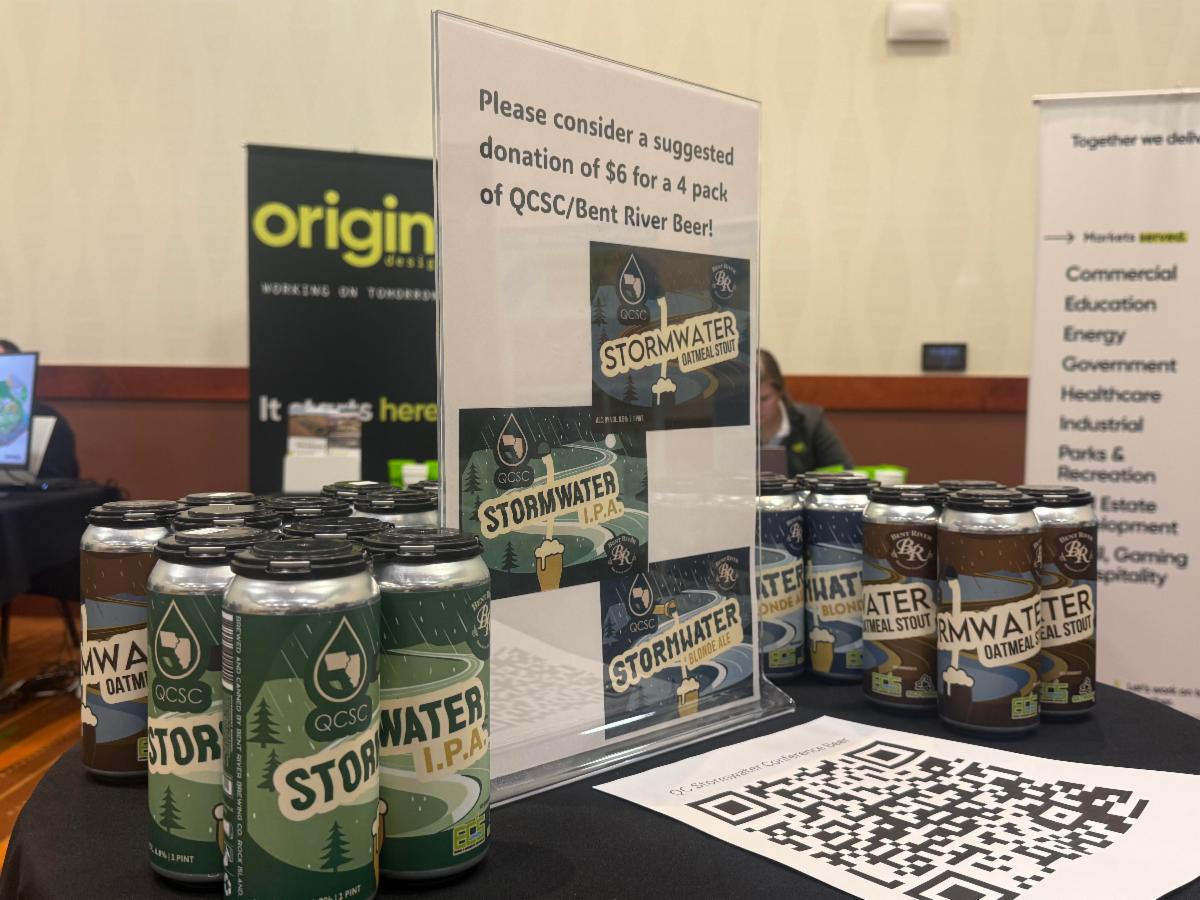
Stormwater Beer!
(Sadly, sold out)
12th Annual Quad Cities Stormwater Conference
Walking the Talk: Engineering, Construction and Conservation
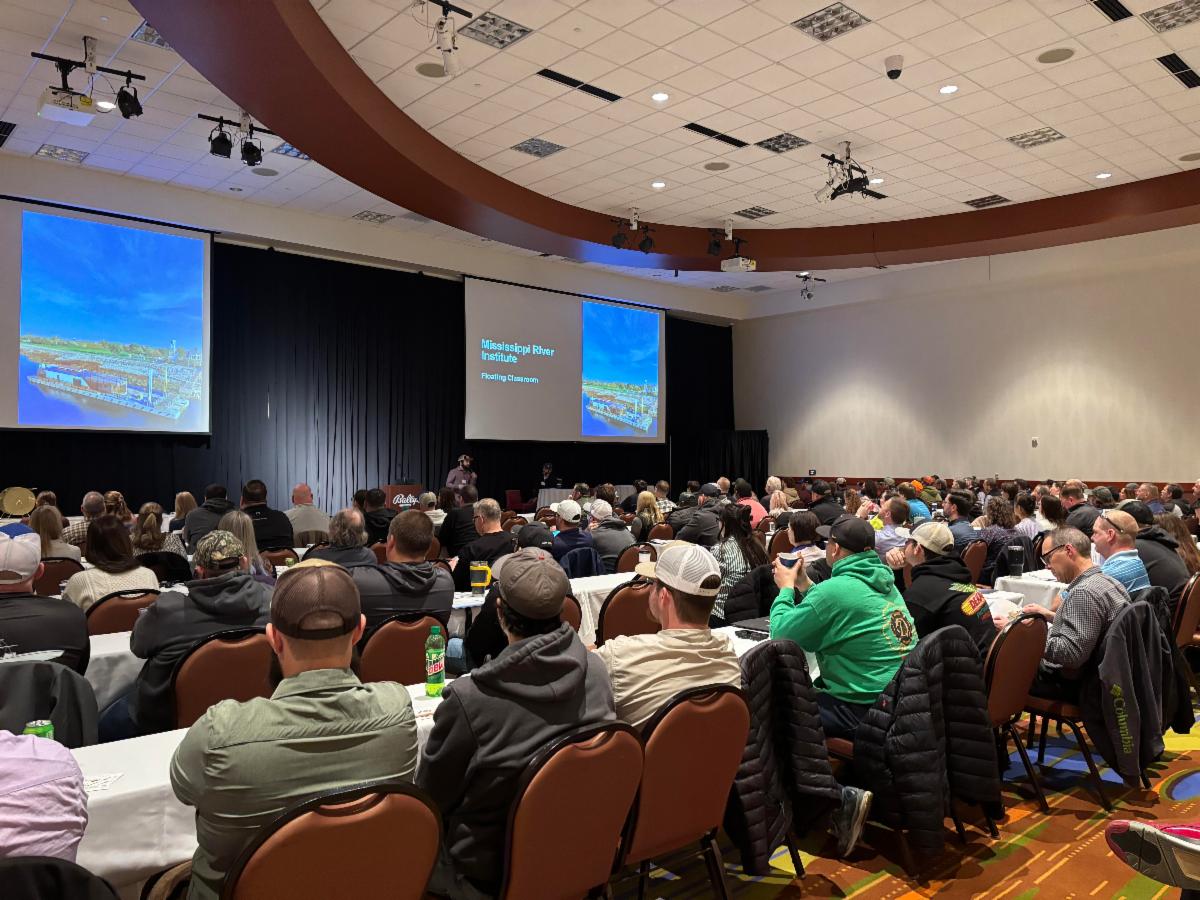
| | The 12th Annual QC Stormwater Conference, organized by the QC Stormwater Committee, was a strong success, with over 150 attendees who came eager to learn from industry experts. | | |
The conference featured a series of engaging presentations from knowledgeable speakers, covering topics such as Basin Inspections – Preserving Critical Function, Protecting Water Through Smarter Design – A Clean Water Freak’s Guide to Doing it Right, Evaluation of Various Perimeter Barrier Products, and many others.
A key highlight of this year’s conference was the Excellence in Stormwater Award Ceremony, where committee members recognized individuals and businesses demonstrating outstanding stormwater management practices in the Quad Cities.
The conference also continues its panel discussion for a second year, bringing together engineers, inspectors, contractors, developers, and project managers for a collaborative conversation focused on practical problem-solving and shared learning.
The conference concluded with attendees enjoying a lively networking reception featuring live music, a beer tasting, and a fun raffle prize drawing, creating a perfect blend of learning, networking, and entertainment. In partnership with Bent River Brewing Company, the committee even debuted three custom beers: an IPA, a blonde ale, and an oatmeal stout. They were brewed for the conference and featured exclusive QC Stormwater Conference labels, adding a memorable and local touch to the conference.
| |
Winnebago SWCD SESC Seminar 2026
The Winnebago County SWCD hosted a workshop on February 26th, at the Northern Illinois University – Rockford campus. The purpose of the workshop was to provide technical information and resources to the development community, including engineers, consultants and construction managers.
| | |
Speakers from the private and public sector covered a wide range of topics including: gabion baskets and stabilization of steep slopes; common misuses of practices or products in the field; high flow inlet protection and dewatering devices, permitting requirements with the Army Corp of Engineers; and a panel discussion on conducting inspections.
There was an afternoon session regarding MS4 permit changes and new reporting requirements, and the implementation of municipal pollution prevention best management practices.
| | | |
DECI Workshop
The presentations from the 2026 Designated Erosion Control Inspector (DECI) Webinar hosted by the Lake County Stormwater Management Commission on Tuesday, February 10, are now available.
| |
Communities invited to apply for local planning assistance
The annual call for technical assistance — a resource tailored to help communities throughout northeastern Illinois prosper — is now open. The Chicago Metropolitan Agency for Planning (CMAP) — the regional metropolitan planning organization — and the Regional Transportation Authority (RTA) — the transit agency with responsibility for oversight, funding, and regional planning for the transit service boards (Chicago Transit Authority, Metra, and Pace) — have partnered every year for the last decade to help local governments build capacity and plan for their communities.
While CMAP and the RTA have separate technical assistance programs, both agencies offer the same online application during the joint call for projects. This coordinated approach allows CMAP and the RTA to offer planning and implementation assistance to a larger base of eligible applicants. Both agencies are also able to align these efforts with ON TO 2050, the comprehensive plan for northeastern Illinois, as well as Transit is the Answer, the regional transit strategic plan.
| | | | |
Resilient Energy for Wastewater Infrastructure Grant Program
The Resilient Energy for Wastewater Infrastructure (REWI) Grant Program funds the implementation of solar energy and battery storage at publicly owned wastewater treatment plants (WWTPs).
| |
Small Utility Clean Energy Planning Grants
The Small Utility Clean Energy Planning Grant Program, funded by congressionally approved and lawfully awarded funds from U.S. EPA’s Climate Pollution Reduction Grants (CPRG), is designed to facilitate the transition of municipal and cooperative utilities to cleaner energy sources by supporting their planning efforts. The program will provide financial assistance for technical assessments, procurement strategies, and implementation planning to help these utilities secure renewable power purchase agreements (PPAs) and integrate clean energy generation into their portfolios.
| | | | |
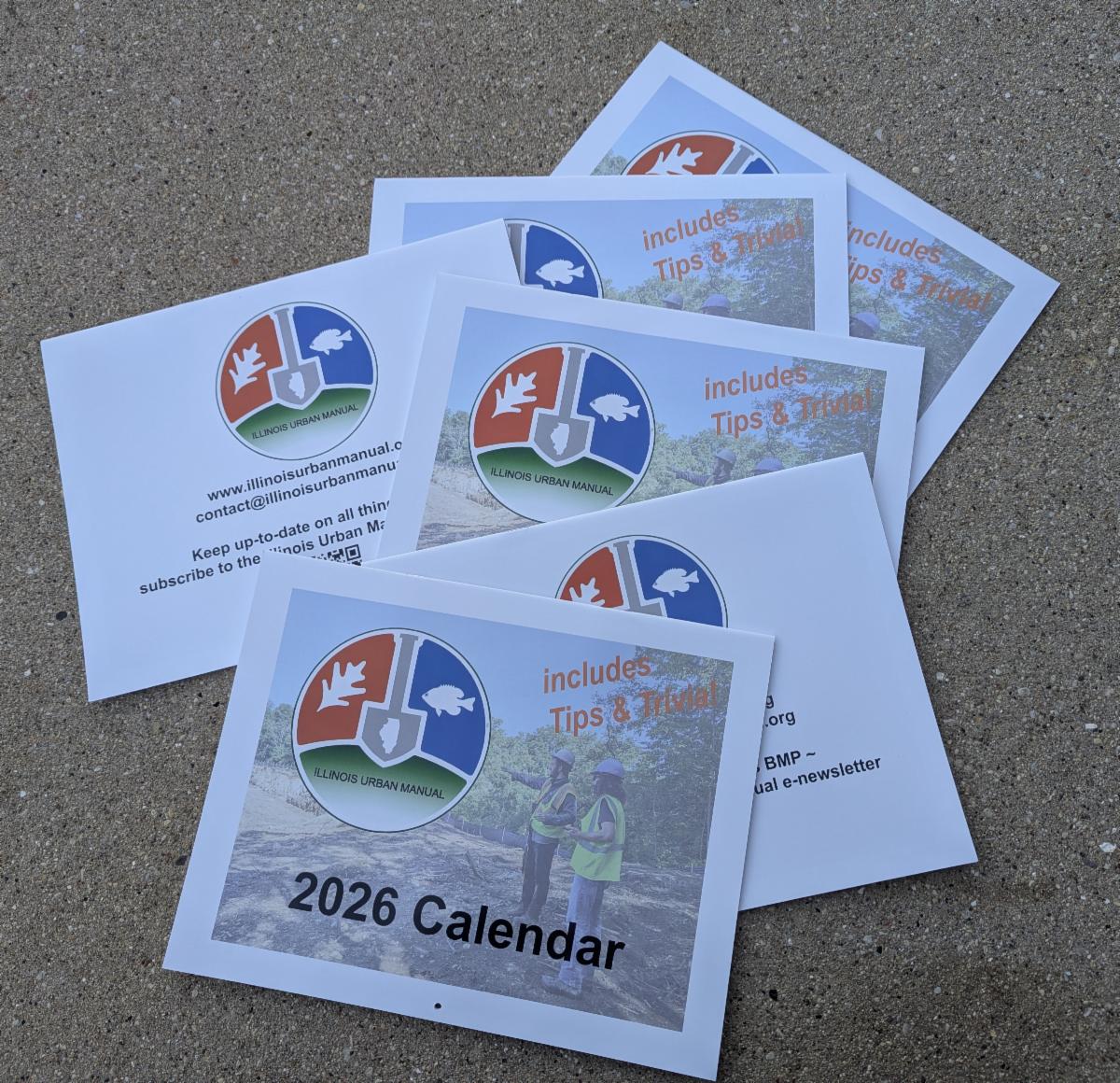
Just a few Calendars still available!
Don't let 2026 pass without your IUM Calendar featuring BMPs, Pro Tips and Trivia!
Available from your local SWCD.
Funding for this project provided, in part, by the Illinois Environmental Protection Agency through Section 604 of the Clean Water Act.
| |
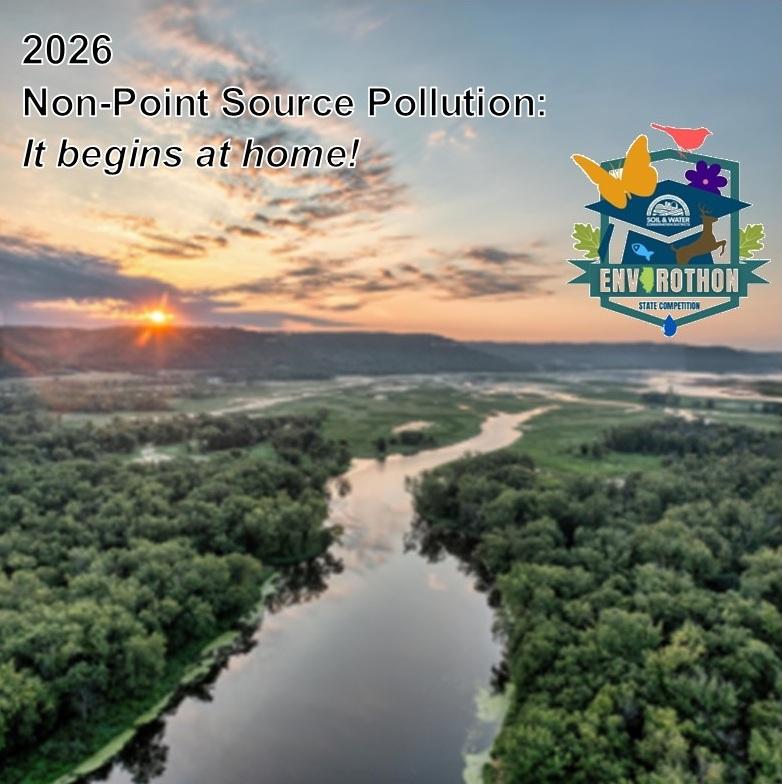
Envirothon - State Competition
As regional Envirothon competitions continue around the state, the 4H Memorial Camp and Retreat Center in Monticello is preparing for the state competition.
Winning teams from each of the 16 Soil and Water Conservation District Land Use Councils will gather April 29 - 30 to compete for the opportunity to advance to nationals in Mississippi in July.
Regional winners reported so far: Lane Tech and Richland County High Schools.
| | |
IUM E-News Sponsored By
Seeking Sponsors for your IUM E-Newsletter!
| | | |
Our commitment to excellence is reflected in the impressive array of projects we are undertaking across multiple states. From infrastructure development to cutting-edge design initiatives, Pinnacle Engineering Group is at the forefront of civil engineering solutions that make a tangible impact on communities. Our diverse portfolio showcases our ability to handle complex challenges while ensuring quality and sustainability. As we continue to expand our footprint, our focus remains on integrating the insights and fresh perspectives of our young engineers with the wisdom of our experienced mentors. This synergy drives our accomplishments and helps us maintain a competitive edge in the engineering sector.
Pinnacle Engineering Group is not just building projects; we are building careers and creating a legacy of engineering excellence.
| | Supporting residents, landowners, and businesses in Kane and DuPage Counties in Illinois by leading efforts to ensure healthy soil, clean water, sustainable land development and regenerative agriculture. | |  | | | | | | A statewide competition promoting critical thinking & environmental stewardship | | |
Illinois Urban Manual News
Funding for this project is provided, in part, by the Illinois Environmental Protection Agency through Section 604 of the Clean Water Act
managed by
Kane DuPage Soil and Water Conservation District
2315 Dean Street
Suite 100
St. Charles IL 60175
Mon-Fri 8am - 4:30pm
illinoisurbanmanual.org
contact@illinoisurbanmanual.org
| | | | |