| | |
September 2026
Progress Newsletter
| | Practicing a Culture of Repair | | |
Guest Post by Vita Wells & Liliana Coelho
Founder and Director of Operations at Culture of Repair, a fiscally sponsored project of PVF
| |
At The Culture of Repair Project, we believe the world is a better place when we take care of what we have. We also believe communities and individuals thrive when we turn to fix, tend, and mend what’s broken – giving us a sense of capacity and empowerment. But ever-increasingly, consumption-based capitalism is crushing this repair mindset of material objects. This throw away culture impoverishes us as human beings, destroys the Earth, and rips across the grain of our fundamental nature to offer care. We are of the material world.
It doesn’t have to be this way.
Our vision is that instead of reflexively tossing a broken object, people will turn to repair as their first course of action. We envision a world where the first thought isn’t, “Oops, gotta get a new one,” but, “Hmmm … how am I going to fix this?”
Repair offers more than a practical response to waste. It offers a different way of relating with the things we have, and ultimately with the material world we inhabit. We’re working to reestablish repair as a cultural value, a prevailing mindset, and an accessible practice.
Our approach focuses on youth. We believe that if repair is going to become a practiced cultural value, it has to begin with how young people learn how to see and relate to the material objects in their lives. Our strategy is to support educators and "repair advocates," teaching youth about repair in primary and secondary schools and other educational settings.
| | |
The Culture of Repair Project participates in a rapidly growing and robust global repair movement. Our colleagues are involved in grassroots action, state and national policymaking, community events, international organizing, research, and publishing in popular media and scholarly quarters, and more.
Our focus is to strengthen a growing ecosystem of repair education. Our principal tactics currently take five forms:
-
Our Educator Resource Library is a growing collection of over seventy repair-focused teaching resources that can be freely downloaded: curriculum, videos, hands-on activities, program guides, classroom materials, etc. The library is filterable by topic: e-waste, fashion, the environment, economics, events, skills, etc. We gather existing resources, support translation, and fund projects creating new resources. The Library is the only comprehensive collection of resources to teach repair in the world.
-
Through Notes from the Field, we share essays by educators, students, and repair advocates who are putting repair education into practice. Their stories are windows into what teaching repair looks like on the ground – the what, why, and how – building a shared body of knowledge and offering first-hand guidance and inspiration.
-
Our Grants Program supports educators, students, and community advocates by establishing programs, creating new resources, and expanding the visibility of the potential of repair in education.
- Our networking helps people establish and enrich programs through connecting them with experienced practitioners, relevant organizations, meaningful information, funding opportunities, and other resources.
-
We make visible the exciting possibilities inherent in teaching about repair through writing, speaking, and participating in conferences, as well as through our newsletters, social media, and website.
| |
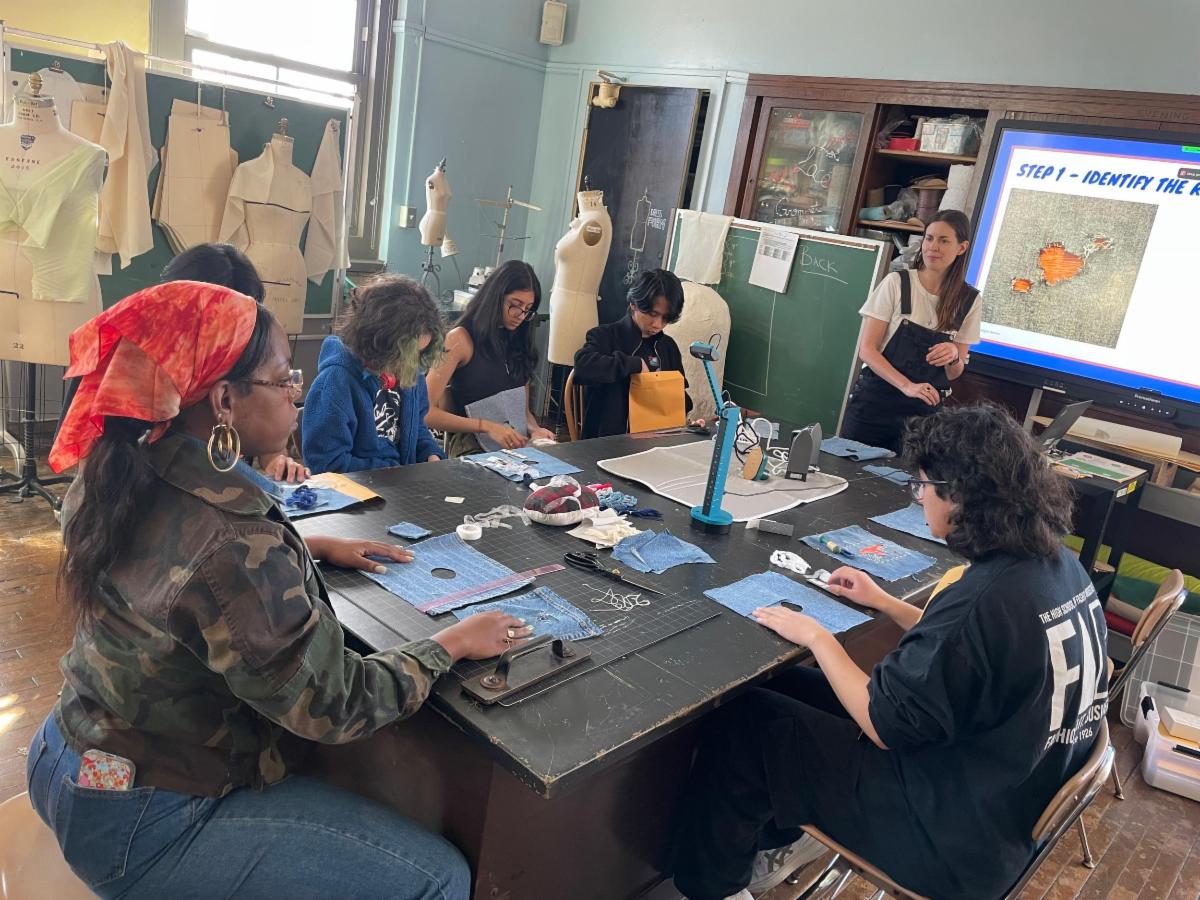
A 2024 collaboration between The High School of Fashion Industries and Repair Shop, to cultivate a multi-generational after school program between fashion-focused high school students and NYC’s fashion industry experts and Garment District workers to generate a more sustainable fashion future across generations. This project was supported by The Culture of Repair Project.
Photo credit Sam Bennett.
| |
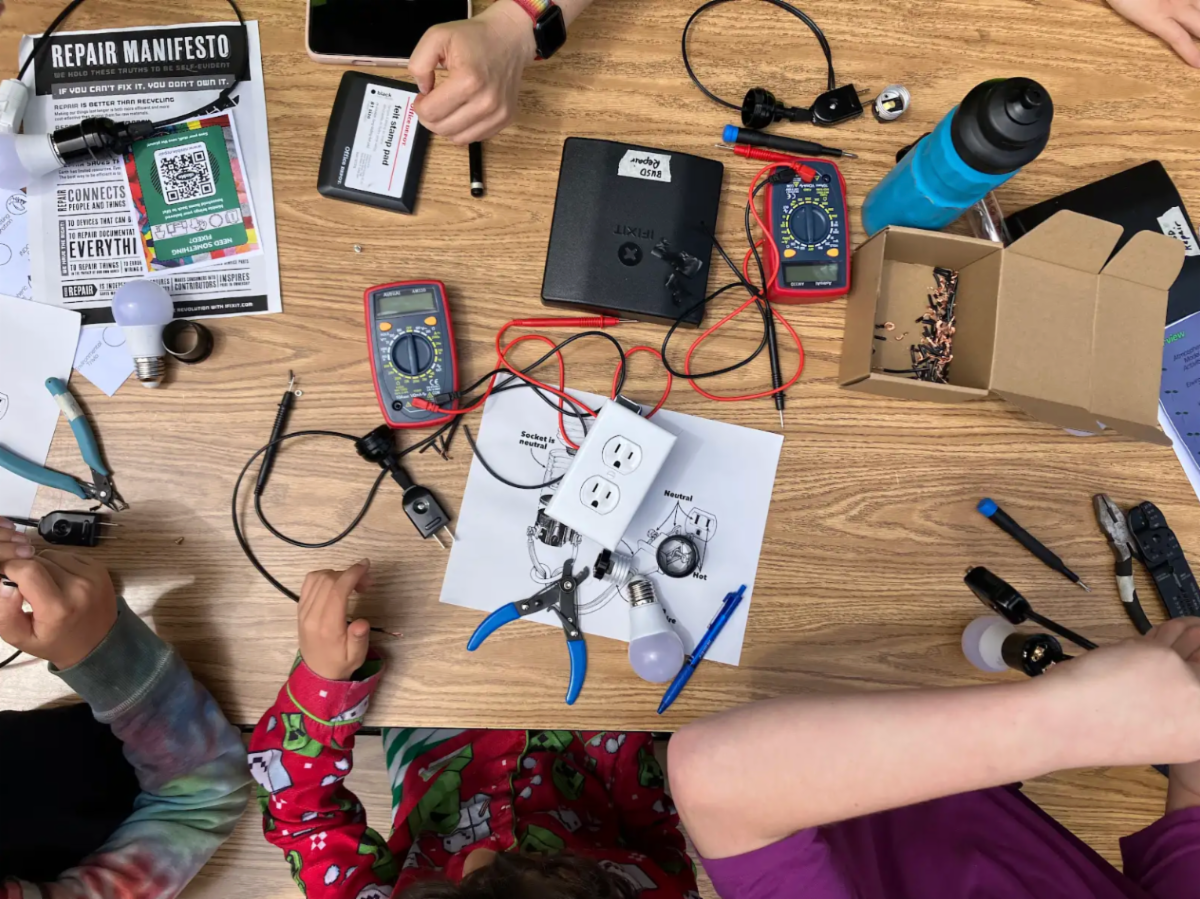
Perhaps the greatest opportunity for us now is helping educators see the rich pedagogical potential inherent in teaching about repair. For example: integrating repair into climate literacy programs makes climate challenges more immediate and actionable; bringing repair into makerspaces makes the subject matter accessible, compelling, and inspiring; teaching electricity through repairing lamps in physics class makes concepts relevant and applicable.
In addition to teaching cognitive and hands-on skills, teaching about repair also incorporates many aspects of repair relevant to students’ development as healthy and responsible citizens of the world. For example, it encourages a holistic view of society, promotes discussions about values and well-being, cultivates collaborative team work, and develops practical organizational skills. There’s more potential in repair than many educators realize at first glance. Subject matter becomes richer, more meaningful, and engaging. Instruction has traction. And enthusiasm grows rapidly when we help educators see the potential of repair and provide them with the resources they need to execute it.
When Vita Wells established The Culture of Repair Project in 2017, there were few repair programs for youth and teaching resources weren’t readily available. We changed that. And, there’s a lot of work yet to do. Our fiscal sponsorship with Philanthropic Ventures Foundation provides the nonprofit infrastructure that lets us focus directly on the work, supporting repair education programming. With PVF's support, we're able to advance a movement that sees broken things not as waste, but as opportunities to practice creativity, responsibility, connection, and care. "Repair" asks us to recognize both our interdependence and our agency. At its core, our work is about cultivating a culture of care through repair – care for humans, non-humans, and for the material world we share.
We invite you to visit the community of projects that we’ve helped secure funding for to see the wide range of what people are doing. Check out the Educators Resource Library for a taste of what we make available. Drop into Notes from the Field to read about some outstanding people doing amazing work. And finally, the next time something breaks, we invite you to pause and ask yourself, “Hmmmmm, how am I going to fix this?”.
| | Next-Level Impact: How Peninsula Book Collaborative Continues to Expand Its Horizons | | |
Guest Post by Raquel España, Founder & Executive Director of Peninsula Book Collaborative
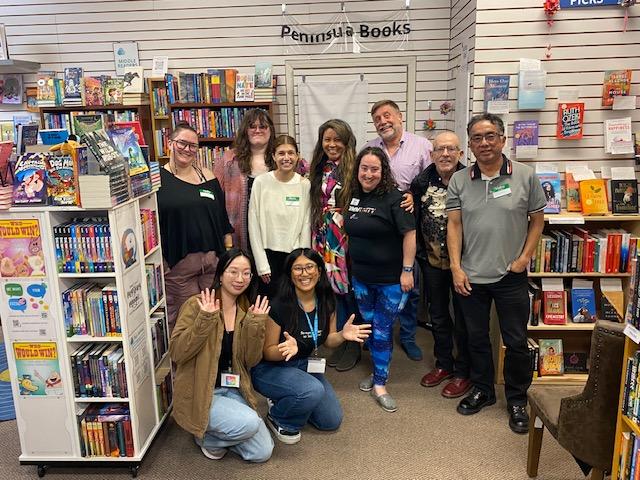
In the fall of 2023, a small dream of having a nonprofit bookstore came to life with the motto: books, access, community. With the belief that books should be celebrated as tools for growth and connection, we are both a bookstore and a literacy organization centered in community. Peninsula Book Collaborative, or fondly known as Peninsula Books, is in North San Mateo County — a book desert that had few bookstore options and limited library hours in surrounding areas. With seed funding from Philanthropic Ventures Foundation, we began as a pop-up, had a narrow selection of books, and were completely volunteer-led.
Currently, we have six part-time staff, a strong Board, and many committed volunteers that lead programs, activities, and share their love of books and reading.
| | |
| James Higa, Executive Director, brings 28 years of executive experience from Silicon Valley, working with Steve Jobs to change the face of technology. He was at the birth of the personal computer revolution as a member of the original Macintosh team and was deeply involved in the creation of many products and services at Apple over 3 decades. He has a long history of public service as a board member of Stanford's Haas Center and in grassroots relief efforts. | | |
| Cayman Bentley, Social Media Manager, is responsible for PVF's communications management, development, materials, and content creation. Cayman has a communications and public relations background and is a member of the Public Relations Society of America, San Francisco Bay Area Chapter. | |
PVF is a demonstration foundation practicing unique forms of grantmaking
and innovative philanthropy. Our primary interest is in the creative
and significant use of the philanthropic dollar.
| | Philanthropic Ventures Foundation | 1222 Preservation Park Way, Oakland, CA 94612 info@venturesfoundation.org | (510) 645-1890 | | | See what's happening on our social sites: | | | | |