|
Prayer • Study • Action
Week 3, March 8-14
| | |
As we brace ourselves for deeper conflict in Iran and across the Middle East, we recognize that the nonviolent peace with justice which we strive for is woven with many threads -- threads of racial justice, disarmament, ecological justice, and human rights for all.
This week's PSA was created by members of the Pax Christi USA nonviolence working group and nuclear disarmament working group. The opening is an excerpt from a reflection written by Alex Mikulich, a member of the nonviolence working group and a former member of the Pax Christi USA Anti-Racism Team (PCART).
| | |
In her beautiful and prophetic reflection on the Samaritan woman at the well, Amy Woolam Echeverria calls us to hear the cries of the Samaritan women in this world, including Subanens, and hear the cries of Mother Earth. In his 2015 encyclical letter Laudato Si’: On Care for Our Common Home, Pope Francis calls people of faith to bend our ears to the cries of women and the earth who both suffer the deadly consequences of racial capitalism (Laudato Si', #49).
Yet we seem to be blind to an even deeper transformation to which Pope Francis and Amy invite us to engage so that we may enjoy the abundance of God’s living water here on earth. Although traditional Indigenous lands have been reduced to 22 percent of the earth’s land area—due to white settler colonialism and practices of capitalist resource extraction—scientists find that “80 percent of the world’s biodiversity is found on territories stewarded by Indigenous peoples.” (Hannah Rundle, Indigenous Knowledge Can Help Solve the Biodiversity Crisis, Scientific American, October 12, 2019). As capitalist practices, including ecotourism and militarism, “modernize” Indigenous ways of life, “and accelerate consumerism and urbanization,” these and other factors “are driving a cultural die-off.”
As the US president finds fault with Bad Bunny speaking Spanish at the Super Bowl, scientists link linguistic diversity with a plentitude of biodiversity. Hannah Rundle explains that as the world loses one language every two weeks, eroding the global diversity of seven thousand languages, the earth and all its inhabitants lose the diversity of local species.
The task before Pax Christi USA in this moment of destruction of Black and Indigenous peoples and their lands throughout the earth, is not one of protection. Black and Indigenous peoples know well how to live in harmony with the earth. The task is one of transformation where we shift away from destructive economic growthism to living in harmony with the earth’s own metabolisms, its cycles of regeneration, that have provided living waters of life since the beginning of God’s creation. ...
Use this link to read Alex's entire reflection on our website.
Alex is the author of Unlearning White Supremacy: A Spirituality for Racial Liberation (Orbis Books, 2022) which includes this chapter, Embracing ecological intimacy.
| | |
Sacred waters
Reflection by Amy Woolam Echeverria
Pax Christi USA Nonviolence Working Group
Justice, Peace and Integrity of Creation Coordinator, Missionary Society of St. Columban
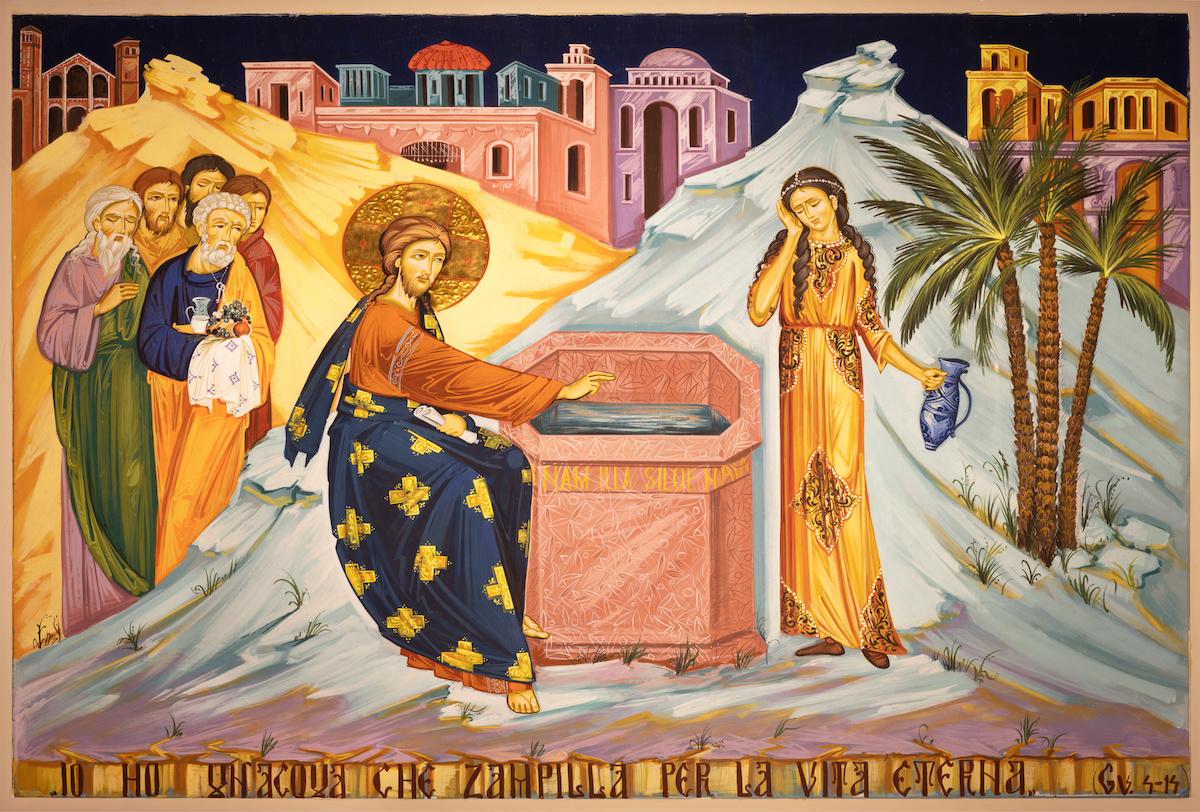
The Gospel for this Sunday is John 4:5-42, the Samaritan woman at the well.
| | |
The story of Jesus meeting the woman at the well is a deep source of hope and comfort for Christians. By encountering the Samaritan alone at the well and asking her for a drink, Jesus demonstrated that his love was not constrained by social norms and cultural expectations. The woman quickly realized that the water Jesus offered her was to the living water of eternal life. Does this mean that the Samaritan woman’s well is reduced to being a symbolic backdrop to the deeper well that was Jesus? I don’t think so. Jesus showed us that the spiritual and material intermingle at the well, at the table, by the sea, and on the land. What would have happened if the Samaritan woman could not have gone to the well?
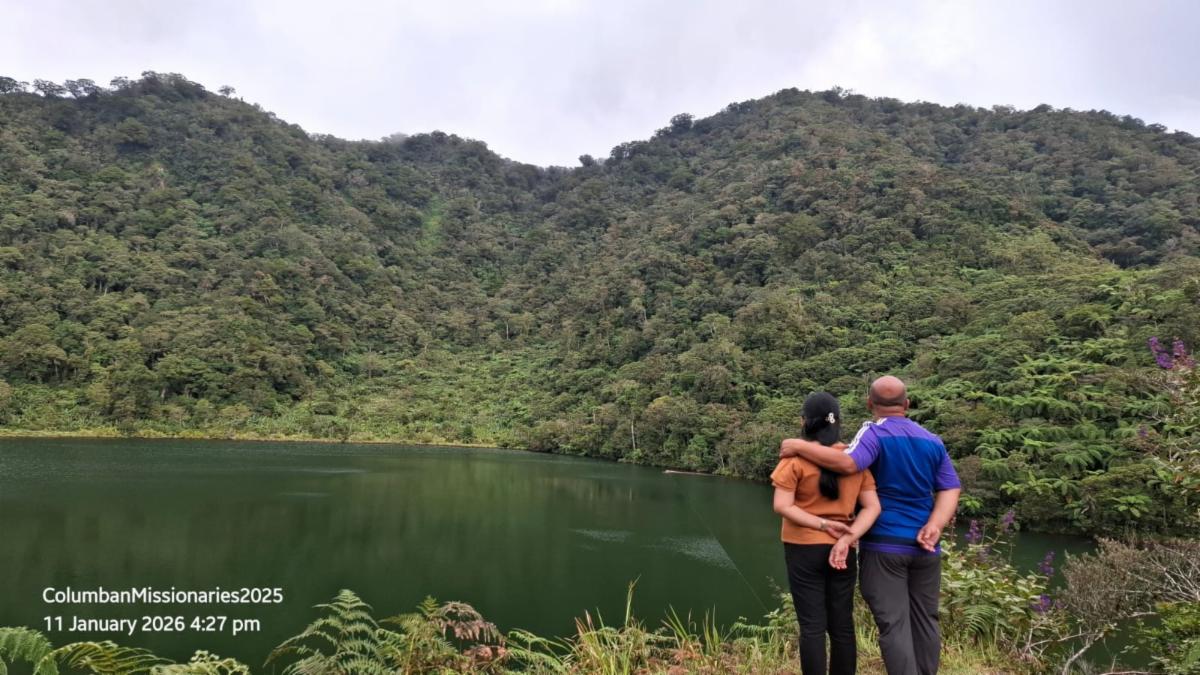
For many Indigenous Peoples around the world, this is a very real question because their sacred waters are under threat. For Subanens in Mindanao, Philippines, their sacred lake, Duminagat, is under just such threat. This lake, tucked in the protected park of Mt. Malindang, will soon be overtaken by eco-tourism. While people still need to hike in order to reach the lake, the governor of the province has greenlighted the project that is right now stripping the mountain (also sacred) to make roads so that tourists can consume the lake’s beauty.
I met with Subanen women who spoke of the deep sadness, anger, and vulnerability they feel to be losing access to their sacred living waters despite their best efforts to protect the lake. Their ancient rituals, beliefs, and identity still practiced today are intimately tied to Duminagat. I imagine them much like the Samaritan woman, who expressed a deep sense of connection to land and the well by noting that the mountain where she and Jesus met was sacred for her ancestors. In our own country of the United States, industrial pollution and radioactive contamination cause cancer and other life-threatening health conditions to many people especially in rural communities.
This Lent, let us remember that the sacred waters of the well for both the Samaritan and the Subanen were and are real places of encounter with the Creator. Let us find ways to protect the sacred waters wherever we are.
| | |
>>Click on this link to download "Venturing outwards in love," a new eco-theology resource from Catholic Climate Covenant
| | Monday night prayer services during Lent | | |
Join Pax Christi USA for a 30-minute prayer service each Monday in Lent -- March 9, March 16, March 23, and March 30, 8:30-9 PM Eastern. Use this link to register with Zoom -- you will be automatically registered for each session.
| |
-
Join the Catholic Climate Covenant TODAY, Thursday, March 5 at 1 PM (Eastern) for a webinar exploring the impacts of data centers.
-
Click here to read "Embracing ecological intimacy," a chapter excerpt from Alex Mikulich's book Unlearning White Supremacy: A Spirituality for Racial Liberation (Maryknoll, New York: Orbis Books, 2022).
-
Pray, reflect and study Vilma Seelaus's Crisis and Transformation: Turning Over the Compost Heap.
-
Watch the film First We Bombed New Mexico. (Information on the film and screening at the link.)
-
Read Atomic Pilgrim by Pax Christi USA member Jim Thomas, especially the second part about his years of advocacy for downwinders. Available here.
-
Study the Radiation Exposure Compensation Act; here is a good start.
-
The Catholic Climate Covenant invites you to pre-register to receive the upcoming 2026 Earth Day program, Energizing our faith.
| |
|
The development of nuclear weapons has created a two-fold danger. The most recognized threat is the creation of nuclear weapons, which are now capable of destroying our earthly home. The less-recognized threats are the byproducts of the development of nuclear weapons: the contamination of our air, soil and water for decades and beyond. Often waste products are improperly disposed of and often deposited on lands of poor and indigenous populations. Nuclear weapons threaten our planet's continued existence. It is urgent to abolish nuclear weapons.
-
Learn more about H Res 317, a resolution that "urg[es] the United States to lead the world back from the brink of nuclear war and halt and reverse the nuclear arms race."
-
Learn more about witnesses for peace and ecological justice such as Robert Alvarez (d. 2025), a Senate aide in the mid-1970s who focused mainly on American Indian affairs. He learned from the Navajos that their work in uranium mines caused many illnesses. When he attempted to get them federal medical coverage, he came up against opposition from the nuclear energy and weapons industry who feared negative publicity. This led to a life-long pursuit of environmental justice.
| |
 | |
-
Use this link to access a land acknowledgement exercise designed by the Gesturing Toward Decolonial Futures Collective (a collective of Indigenous peoples who live in British Columbia and Brazil). It is a first step for Pax Christi members and locals to become reoriented to the land where we live, work, and play.
-
Native Land Digital offers a way to reorient ourselves to Indigenous ways of mapping and "locating" where we live. It can be utilized in concert with the land acknowledgement tool above: https://native-land.ca/about/how-it-works
- Organize a letter-writing evening to urge your federal elected officials to prohibit nuclear testing either underground or on the earth's surface.
- Organize other letter-writing evenings centered around one issue or piece of legislation like the resolutions urging the current administration to begin talks on new nuclear weapons limitation treaties. Letters written to state and local officials often have a more immediate impact on environmental issues.
- Contact your bishop to request disinvestment from any corporations that pollute the air, earth and/or water.
-
Composting food waste as an act of resistance: https://earth.org/composting-food-to-reduce-food-waste/
-
Contact your Member of Congress and urge him/her to co-sponsor H. Res. 317, Rep. Jim McGovern's resolution mentioned above (or, if already a co-sponsor, thank them).
-
Then follow up with your local and state elected officials: Urge them to sign this support letter for H.Res. 317; deadline for signatures is March 27.
| > Click here to find additional resources for prayer, study and action throughout Lent. | | | | |
Help build the peace of Christ!
If you can make a contribution to support our work for peace with justice, we'd be so grateful! Just click on the donation button to the left to give securely and quickly online. Thanks!
| | |
Pax Christi USA
202-635-2741 | 415 Michigan Ave NE, Suite 340, Washington, DC 20017
www.paxchristiusa.org
| | | | |