Friday, November 17, 2023

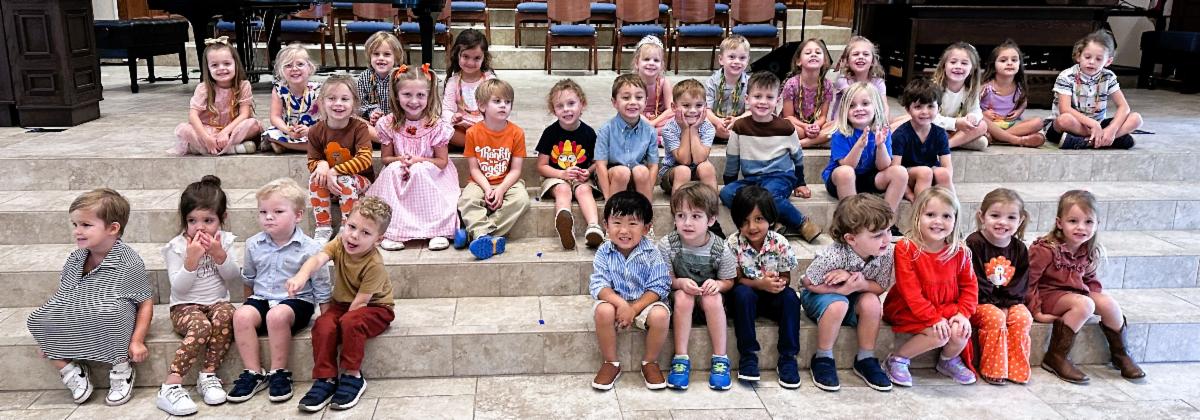
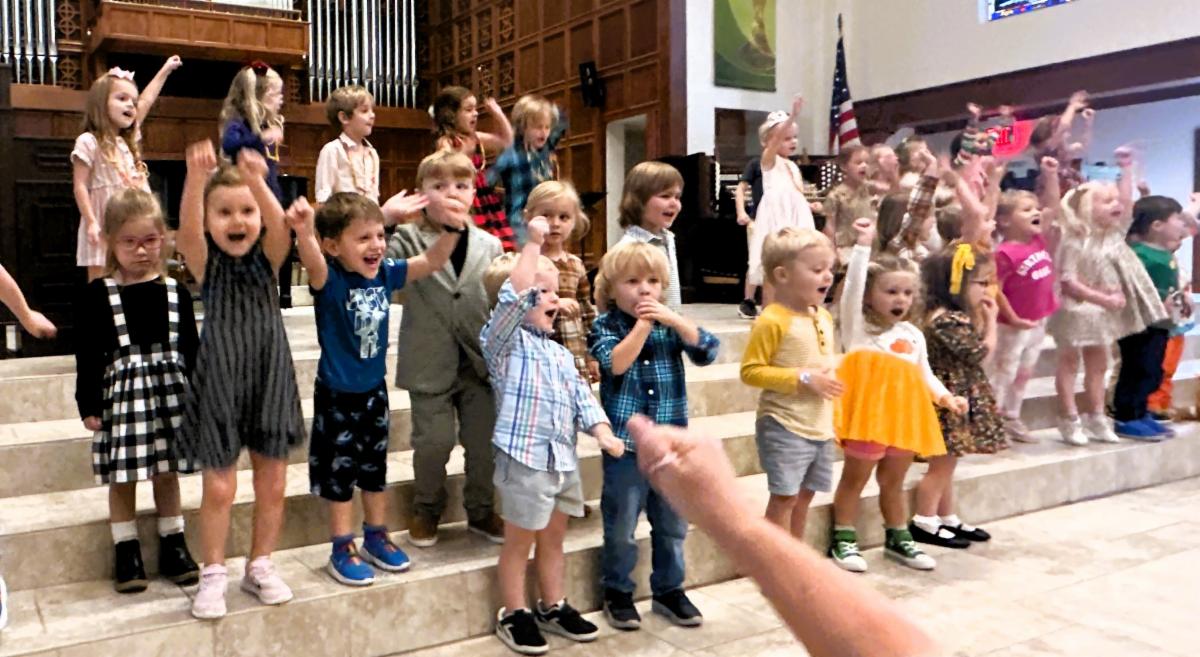
Gathering in our beautiful sanctuary in person is a gift the teachers and I always love. Seeing everyone's smiling faces and your precious children sing was truly a gift.


Thank you, Pastor Tim Boggess, for coming to our Thanksgiving program and sharing such a sweet and special prayer. We are thankful for you and look forward to spending many more holiday seasons together.


Thank you to all of our families. The teachers and I can't begin to thank you for all you do to support our school. Special and HUGE thanks to Kristin and Sofia Musolino, Kaitlin Kandefer, Laitlin Sterling, Lynn-de Smuts, Ashley Palizzolo, all our room parents, everyone who donated pies, and the Family Connection Committee for all they did to Transform the fellowship hall on Thursday and Friday for our Thanksgiving pie party - we are grateful for you!


As we head into the holiday season, we hope you can take this next week to take a few deep breaths, relax, and put your feet in the sand...or grass or the snow, depending on where your holiday travels take you. We hope you feel surrounded by the love of family and friends and that you have a happy and blessed Thanksgiving.


With love,

Your First Presbyterian Preschool Family

Thanksgiving Songs


Because we know you're still singing!

Here are the lyrics and the tune name,

just in case you can't quite pick up all the words.


MAHALO

(Hawaiian Thank You Song)

Laurie Berkner


Mahalo for the urchin

Mahalo for the sea

Mahalo for the skies above

Mahalo for you and me


(chorus)

Sing mahalo, mahalo, mahalo

    for everything

Mahalo that means thank you

Mahalo, mahalo, mahalo


Mahalo for the air I breathe

Mahao for my Dad and my Mom

My sisters and my brothers

    and my good friends

Mahalo for sharing my song


(chorus)


IF YOU’RE THANKFUL AND YOU KNOW IT

(“If You’re Happy and You Know It”)


If you’re thankful, and you know it, clap your hands

If you’re thankful, and you know it, clap your hands

If you’re thankful, and you know it,

Then your face will surely show it,

If you’re thankful and you know it, clap your hands.


If you’re thankful and you know it, shout HOORAY,

If you’re thankful and you know it, shout HOORAY,

If you’re thankful, and you know it,

Then your face will surely show it,

If you’re thankful and you know it, shout HOORAY.


THANK YOU FOR THE WORLD SO SWEET

(“Mary Had a Little Lamb”)


Thank you for the world so sweet

Thank you for the food we eat

Thank you for the birds that sing

Thank you, God, for everything.


AMEN


GOBBLE SONG

(“Turkey in the Straw”)


With a gobble, gobble, gobble

And a peck, peck, peck

I stretch my wings

And I stretch my neck

I’m a little brown turkey, and I’m here to say:

“Have a happy turkey day!”


(repeat)

Raising a Thankful Child

By Julie A. Riess


As we enter this season of Thanksgiving, we may find ourselves reflecting more often on how to raise a thankful child. At first glance, parents might think about how to teach the social scripts of thank you. Should a 2-year-old be forced to say thank you to Grandma for a gift? Should a 4-year-old sign a thank you note for a birthday present? Should a 6-year-old show appreciation for a large helping of spinach and cranberry sauce on his or her Thanksgiving plate?


Parents often have the best intentions of raising a thankful child as part of their parental job descriptions. We tend to use the social graces of please and thank you as one index of raising a “good kid.” Indeed, manners such as these are important tools for getting along and working together with others in our society.


Even young children can be taught to say please and thank you. Giving them prompts (“What do you say?”), withholding the requested item (“You can’t have the cookie unless I hear the magic words”), and modeling (“Could you please pass the juice?”) are ways to encourage learning these manners. But is learning to say thank you the same as being thankful?


Think about something in the past year for which you are thankful. Is it a person, place, or thing? an event? a state of being? Did you say thank you? How did you express your gratitude? Did it feel sincere or more like satisfying a social grace?


The development of morality is marked in part by the emergence of the moral emotions such as shame, pride, guilt, embarrassment, and empathy. As these emotions develop, they allow children to feel a response in relationship to their own actions toward others. The emotional feedback contributes to that sense of sincerity.


Our gut reactions may highlight a comparison of manners vs. morals. While both reflect an aspect of how we treat others, children can use manners just by learning a script. The problem in learning scripts for manners for a child too young or separated from meaning is that children satisfy the social grace without experiencing the emotional response or acting upon their own intent. For example, 4-year-old Beth runs to greet her grandmother. “Thanks, Grandma!” she says, grabbing the present out of her grandmother’s hand. She opens the box to find six pairs of white socks. Crestfallen, she says, “Thank you, Grandma, for my socks.” Beth’s first thanks is genuine appreciation for receiving a present, but her second thank you is the script that she is supposed to say.


Teaching manners is a fine art of modeling but not always the making of meaning. Raising thankful children is a fine art of helping them make their own meaning. Maybe it is a rumpled, crayon-scribbled card. Maybe it is a fresh bouquet of dandelions (and a few other weeds) from the back yard or local park. Maybe it is just a warm hug after a cold ice cream treat.


Children express some sense of thankfulness and desire to be appreciated all the time. It is our role as parents to model appreciation and reflect those genuine feelings back to the child. With a warm smile and a sincere voice, we can say, “Thank you for my beautiful card. I can tell you worked hard on it. You used so many different colors! It makes me feel really good and happy inside. I’m going to put it up right here on the refrigerator so our whole family can enjoy it.”


Thankfulness also emerges from children raised with the Golden Rule: “Do unto others as you would have them do unto you.” Like adults, children need to be exposed to genuine appreciation and to feel appreciated.


Many years ago on our family vacation, my 8-year-old daughter saved some of her carnival money and schemed a way to buy me a small candle and matching stand. The gift brought tears to my eyes, and we both knew our appreciation was genuine. And yes, I said thank you.

PRESCHOOL REMINDERS


Monday - Friday

November 20 - 24

Thanksgiving Holiday

School closed


Monday, November 27

Classes Resume


Thursday and Friday

December 14 & 15

Christmas Programs

noon dismissal


Christmas Break

December 22 - January 5

School Closed


Tuesday, January 8

Classes resume


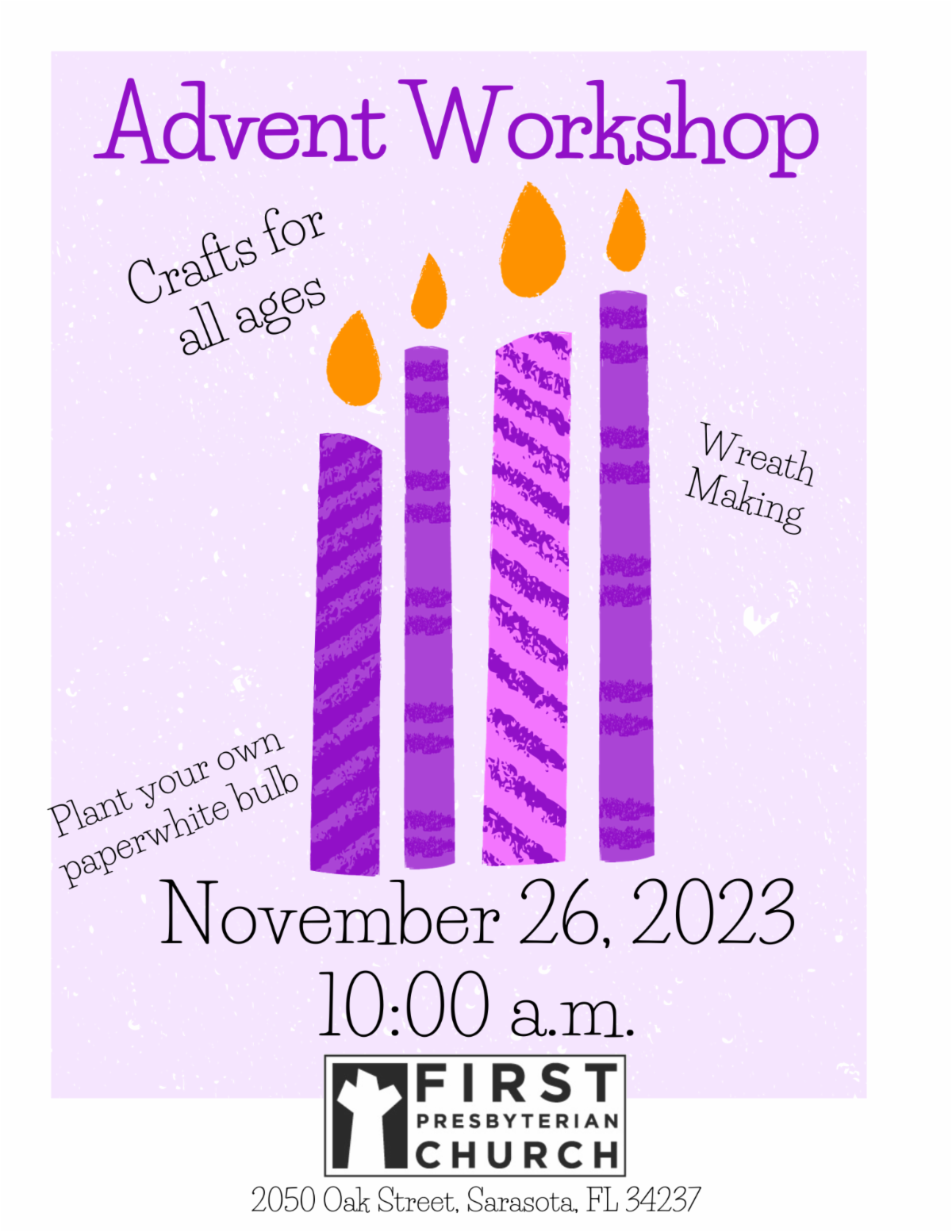
FPC Advent Workshop  

The four weeks before Christmas--the season of Advent--is a time of waiting and preparation as we anticipate the birth of Jesus. We are excited to begin Advent with our annual workshop on Sunday, November 26th, starting at 10 am in The Courtyard.  There will be activities for all.


One way to teach children about watching and waiting--but not waiting in vain--is with flower bulbs. We will have all the supplies you need to plant your paperwhite and watch it grow at home. 


Join the fun and fellowship and make some holiday crafts--including an Advent Blessing Jar to encourage acts of kindness through the Christmas season. We will also have fresh greens, ribbon, decorations, and candles for your family to create your own beautiful Advent wreath. 


 We hope to see you there!

Facebook  Instagram