Using Fire to Enhance Wildlife Habitat | |
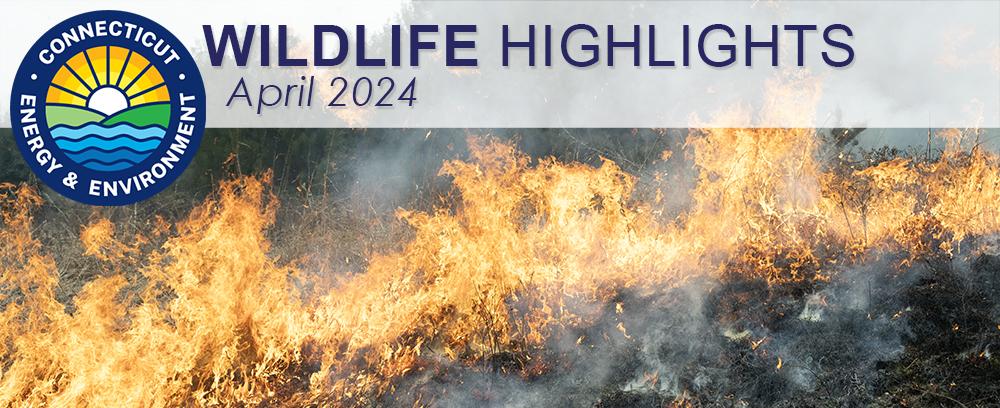
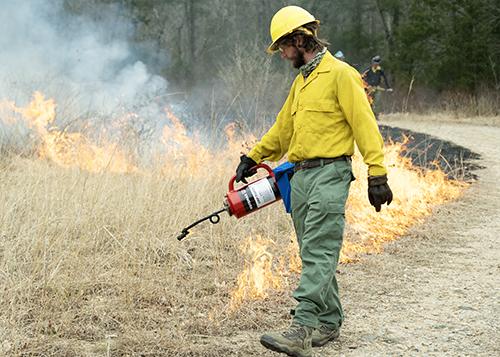
Earlier this month, DEEP staff conducted prescribed burns at Machimoodus State Park in Moodus, Suffield Wildlife Management Area in Suffield, and Matianuck Natural Area Preserve in Windsor.
Prescribed or controlled fire is an important management practice that has many benefits, including promoting native, warm season grasses and suppressing above-ground vegetative growth (including invasive species). This effort will ultimately help improve wildlife habitat for a variety of species that depend on grasslands and shrublands, habitat types that have become very limited across Connecticut's landscape.
Prescribed burns are planned for specific locations and must meet strict environmental conditions to take place. As a precaution, wildlife sweeps are conducted prior to ignition. Many of the species that rely on these habitats are either still overwintering or are returning migrants (i.e., grassland birds). By the time most of these species are active, these sites will already have filled in with thick, new growth.
Prescribed burns are a collaborative effort, conducted with fire-trained personnel from DEEP's Forestry and Wildlife Divisions, along with staff from State Parks and Support Services.
| Prevent Wildlife Conflicts with Electric Fencing | |
|
Conflicts can occur when wildlife has easy access to unprotected crops and livestock. Bears, bobcats, and coyotes will not think twice about going after unsecured backyard chickens and other livestock, while deer, rabbits, and other herbivores can damage gardens and crops. The best way to manage these types of wildlife conflicts is to prevent them in the first place.
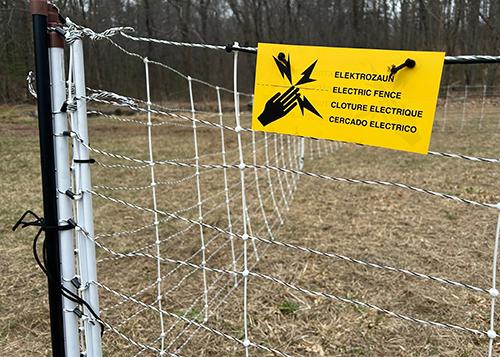
Electric fencing is by far the most effective way to protect beehives, chicken coops, livestock enclosures, gardens, and feed storage. Not only is electric fencing cost effective, it is also portable, relatively easy to set up, and can be incorporated into existing barriers, including existing wooden or metal fencing.
Not sure where to begin? The Wildlife Division and BearWise have resources to help you get started!
Electric fence tips handout . . .
Electric fence tips from BearWise . . .
| |
Spring Turkey Hunting Season Is Upon Us! | |
|
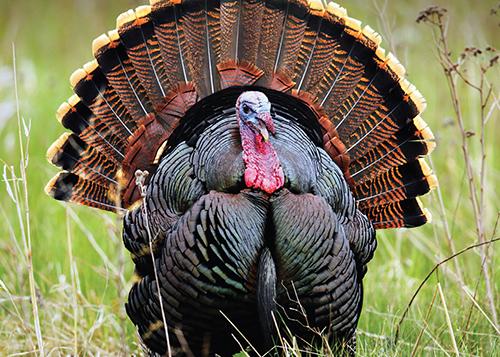
The 2024 Spring Turkey Hunting Season runs from April 24 to May 25 (excluding Sundays). Turkey hunting requires a great deal of skill and advance planning to be safe and successful.
Connecticut hunters are major contributors to wildlife conservation, not only in Connecticut but across the country! Through the Federal Aid in Wildlife Restoration Program, popularly known as the Pittman-Robertson Act, hunters support the restoration, rehabilitation, and improvement of wildlife habitat, wildlife management research, and the distribution of information produced by the projects.
More on spring turkey season . . .
| |
Shorebirds Return to Connecticut Beaches | |
|
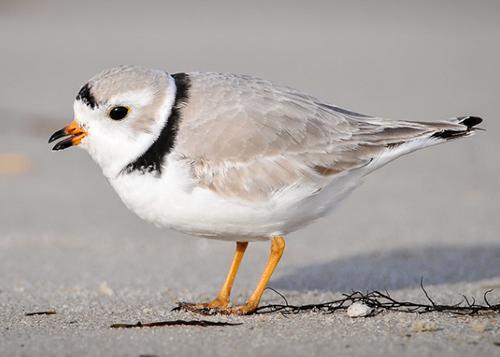
While we are still a ways out from ideal beach weather, many of Connecticut’s shorebirds have already returned to shoreline habitats across the state, with some mating pairs already looking after eggs!
Species such as the piping plover, least tern, and American oystercatcher have very limited suitable habitat to raise their young and face many other conservation challenges, including off-leash dogs and overcrowding from pedestrian beach traffic. The combination of these factors makes raising their young incredibly stressful and hazardous.
By respecting the fencing and yellow signs warning of piping plover and least tern nesting sites, you can help alleviate the significant stress these birds are often forced to endure. With your help, we can #SharetheShore.
More on the piping plover . . .
| |
White Memorial Bat Cam Is LIVE | |
|
Last year, the DEEP Wildlife Division and White Memorial Conservation Center in Litchfield established a "Bat Cam" in a barn at White Memorial where female big brown bats give birth to and raise their young every year.
The best part about this project is that you and your family and friends can help us learn more about bats by using the livestream to monitor the activity of the colony.
The cameras are now LIVE, and you can toggle between four different camera angles. Although there isn't much bat activity now, that will soon change as we transition to the warmer months of spring, so be on the lookout!
Learn more about the Bat Cam . . .
| |
Join Us for a Program about Connecticut's Bobcats | |
|
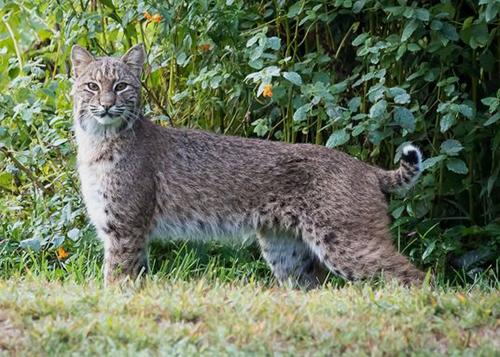
The bobcat is the only wild cat found in Connecticut and the most common wild cat in North America. In 2017, the DEEP Wildlife Division initiated a bobcat study to investigate bobcat habitat use in different housing densities in Connecticut. After several field seasons, wildlife biologists have learned quite a bit about the behavior of this feline.
Join us on Sunday, April 28, 2024, at 1:00 PM for the Friends of Sessions Woods (FOSW) Annual Meeting at the Sessions Woods Wildlife Management Area in Burlington, Connecticut. Following a brief FOSW business meeting, DEEP Wildlife Division Biologist Jason Hawley will present on the bobcat, providing insight on the natural history of this species and an update on current research being conducted in the state.
Registration is required and space is limited.
Details on how to register . . .
| |
Importance of the State Wildlife Action Plan | |
|
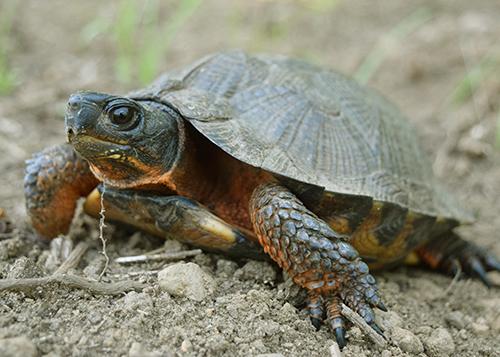
Life for a wood turtle can be tough! Late spring, wood turtles often leave their aquatic habitats in rivers and large streams to either forage or lay eggs in adjacent forests and fields. As they travel to various habitats on land, they may need to cross busy roads to get to where they are headed. Unfortunately, many turtles are often struck by vehicles. Some are collected illegally by people and others can be injured or killed by farm machinery. Most wood turtle nests are unsuccessful due to predators, such as raccoons, who like to eat turtle eggs. Human development and activities have eliminated and degraded wood turtle habitat in Connecticut and across the species’ range. Remaining populations of this charismatic turtle are mostly isolated, declining, and in need of our help.
The State Wildlife Action Plan determines how Connecticut’s wildlife and natural places will be protected over the next decade. Wood turtles were designated as a Species of Greatest Conservation Need in Connecticut’s 2015 State Wildlife Action Plan and will likely retain this status for the upcoming 2025 revision of the Plan. Select this link to learn more about the Wildlife Action Plan and how you can be involved.
Is there a population of wood turtles or potential habitat in your town? Town conservation commissions and local groups, such as land trusts or nature centers, can make a difference for wood turtles by protecting and restoring riverine habitats and adjacent lands. You can help by engaging with groups like these. Observations of wood turtles can be reported to CT DEEP’s Natural Diversity Data Base.
More on the State Wildlife Action Plan . . .
| |
|
Stay Connected!
Follow us on Social Media
| |
|
-- Quick Links --
Your Feedback Is Important to Us!
Send your comments or suggestions to deep.ctwildlife@ct.gov
|  | |
The Connecticut Department of Energy and Environmental Protection is an Affirmative Action/Equal Opportunity Employer that is committed to complying with the requirements of the Americans with Disabilities Act. If you are seeking a communication aid or service, have limited proficiency in English, wish to file an ADA or Title VI discrimination complaint, or require some other accommodation, including equipment to facilitate virtual participation, please contact the DEEP Office of Diversity and Equity at 860-418-5910 or by email at deep.accommodations@ct.gov. Any person needing an accommodation for hearing impairment may call the State of Connecticut relay number - 711. In order to facilitate efforts to provide an accommodation, please request all accommodations as soon as possible following notice of any agency hearing, meeting, program or event.
This program receives Federal financial assistance from the U.S. Fish and Wildlife Service.
Under Title VI of the 1964 Civil Rights Act, Section 504 of the Rehabilitation Act of 1973, Title II of the Americans with Disabilities Act of 1990, the Age Discrimination Act of 1975, and Title IX of the Education Amendments of 1972, the U.S. Department of the Interior prohibits discrimination on the basis of race, color, national origin, age, sex, or disability. If you believe that you have been discriminated against in any program, activity, or facility, or if you need more information, please write to:
Office of Diversity, Inclusion and Civil Rights
U.S. Department of the Interior 1849 C Street, NW
Washington, D.C. 20240
| | | | |