MONTHLY NEWSLETTER


August 2026

Preserve Calavera Supporter


Update on the Guajome Lake Road Project:

ALSO IN THIS NEWSLETTER:


EVENTS CALENDAR:


✓ August 8- Another Bat Outing at Lake Calavera Preserve- Bat detectors and night vision goggles will be on hand to track our visiting bat neighbors.


Restoration Events

  • August 8- Rancho La Costa, Carlsbad
  • August 15- El Corazon, Oceanside


AND MORE TO READ:


 Our Student Intern, Carlos Lopez, with a Summer Message


 I Love a Clean San Diego: 2025 Annual Report is out


SD County Climate Action Plan: 2025 Report is out


 Wildlife Corner: The endangered Pacific Pocket mouse gets a big win in court!

We need your help to continue to counter the developer's effort to move forward with this terrible project!  

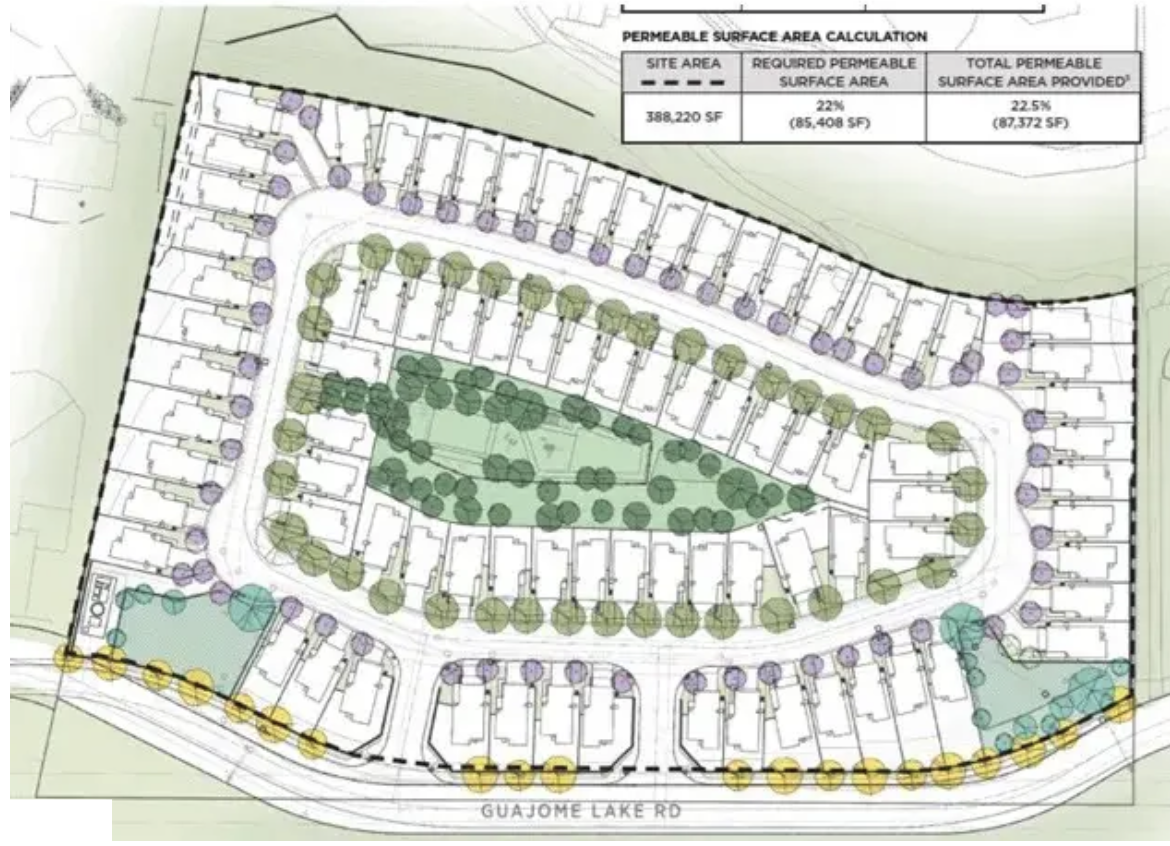
This 83 unit density bonus project, right across the road from Guajome Regional Park, will forever change the rural character of this unique neighborhood and will compromise the wildlife movement corridor. We anticipate at least one, and possibly two additional legal challenges.  


A conceptual plan of the project is below (Figure 3.5). Guajome Lake Rd is visible along the bottom.

The project would be the death knell for the only remaining equestrian area in Oceanside. And it will adversely impact the adjacent Guajome Regional Park and an important wildlife movement corridor. It is a classic example of the worst kind of sprawl development!


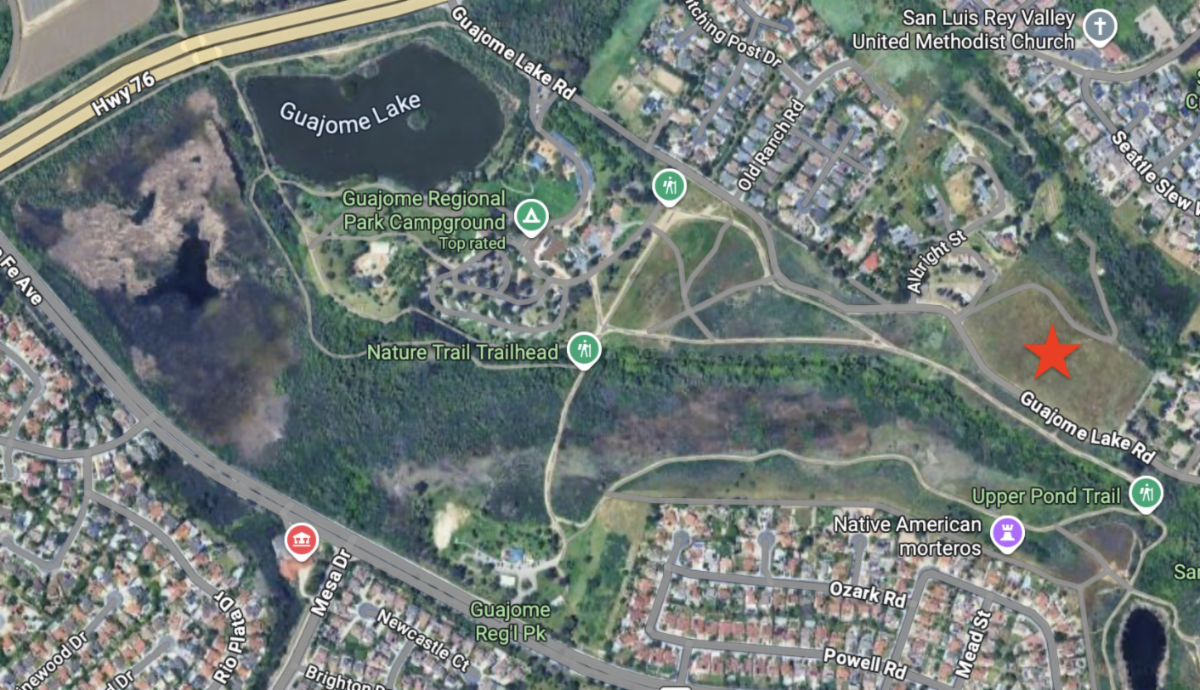
The Google map view below shows the area of Guajome Park which is bordered by Hwy 76 (top left), Guajome Lake Road (adjacent right) and along the bottom by N. Santa Fe Ave. The map is annotated with a red star to show where the Guajome Lake Road Project would be located.

As you view the proximity of this project to this wonderful regional park, we hope you understand why we are so against this project and how impactful it will be on the area.


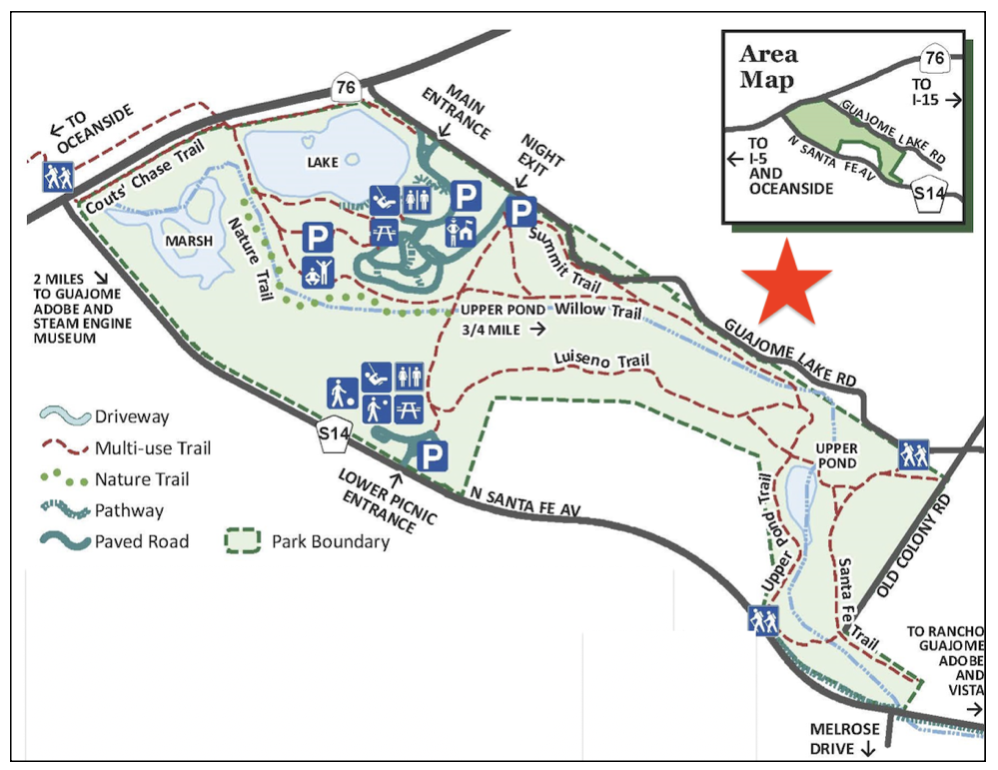
Below is a trail map of Guajome Regional Park (link to complete map). The red star shows the location of the 83 unit Guajome Lake Project. There are several park trails that go alongside Guajome Lake Road and they are directly across the street.

WE NEED YOUR HELP:


If you would like to donate specifically to support the legal challenges that we anticipate, indicate that with your donation. If at some future point in time we are able to recover any legal costs, such donations may be reimbursable.


And just in case you need a reminder, this video, Take a Hike: Guajome Regional Park, was created by SD County. It showcases just how awesome Guajome Regional Park is.

Event Calendar for August

Sat, August 8

Rancho La Costa Restoration 

8:30 am - 10:00 am

We are on Summer Hours

To RSVP or for more info contact:

info@preservecalavera.org

or Anne-Catherine: acrochlevecq@gmail.com

Removing non-native plants and watering native plants as needed.


Prepare: Wear appropriate (preferably long pants/sleeves) clothing, closed-toed shoes, and hat. Bring gloves, sunscreen and water.


Sat, August 8

Bat Outing Event

Begins: 7:00 pm

WhereLake Calavera Dam-Meet by the bathrooms- LINK to map location


Bat detectors and night vision goggles will be on hand to track our visiting bat neighbors.


  • Please use insect repellent to keep the bugs from biting you before the bats get them for dinner.
  • And bring a flashlight to guide you out of the area when it’s time to leave.

Contact Paige for additional info: pdecino@hotmail.com


Check out this night vision video filmed by Philip Hwang at an event in 2024:

Bats feeding at Lake Calavera

Cindy Myers (volunteer bat advocate and community educator with the San Diego Humane Society) will be there to share her expertise and answer questions.


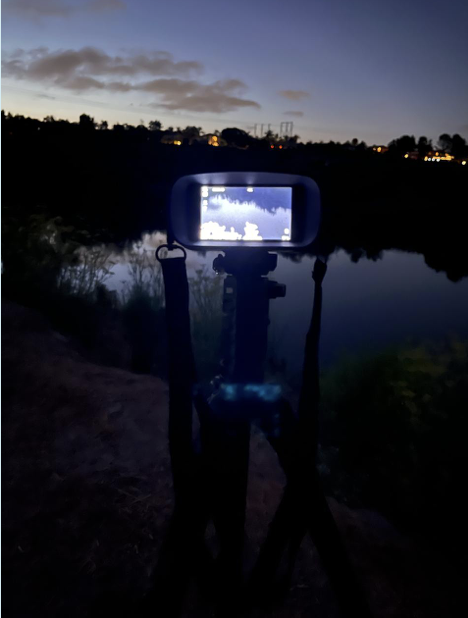
Photo below is from our previous outing. We were able to detect 6 species of bats using the bat detectors.

Be sure to read up on our local bats before you come: The Real Bats of SD County

Sat, August 15

El Corazon Restoration

8:30 am - 10:00 am

We are on Summer Hours

To RSVP or for more info contact:

info@preservecalavera.org

or call Diane:760-724-3887

Removing invasive plants from this site.


Prepare: Wear appropriate (preferably long pants/sleeves) clothing, closed-toed shoes, and hat. Bring gloves, sunscreen and water.


A Summer Update Message From Youth4Climate Intern, Carlos Lopez

The Oceanside team has met in person throughout the summer to research and draft an Oceanside-specific Electrification Resolution for our school district, reviewing a decade of district sustainability records and prior solar and EV procurement agreements to build our case. We're now mapping outreach strategies for the coming school year to grow our base of student and community support.


I've also been working with Un Mar De Colores on their Oceanside Youth Ocean program, mentoring a group of local middle schoolers on ocean literacy and sharing what I've learned through climate advocacy and marine conservation work. Katia, Un Mar's Program Manager, asked me to take on the role of Ocean Mentor for the program, connecting local underserved youth with hands-on ocean science and advocacy experience.

~Carlos Lopez

Preserve Calavera has partnered with SD 350 Climate Action to fund two Youth4Climate intern positions.
Carlos is an El Camino HS student and his role is to engage, inspire and empower other youth in Oceanside to be climate justice leaders. 
You can read about Carlos' previous Tides of Tomorrow Event in our May Newsletter.

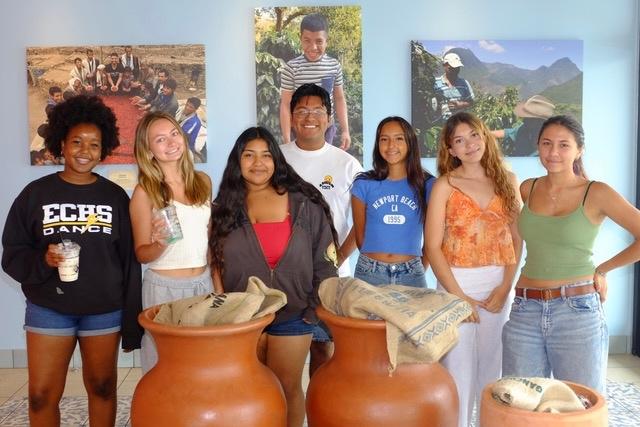
Carlos (center) with his El Camino HS student group. They have been busy writing and researching the Electrification Resolution over the summer.


I Love A Clean San Diego: Their 2025 Annual Report is Out and You Made a Big Difference!

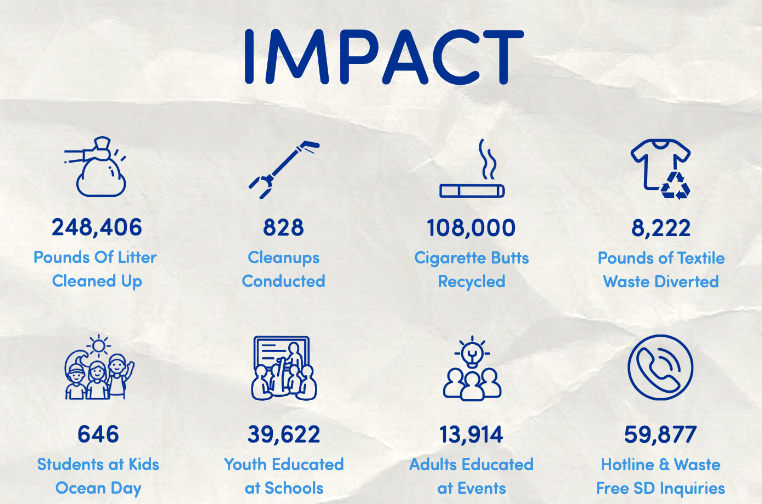
In 2025 I Love A Clean San Diego cleaned up a total of 248,406 pounds of litter and conducted 828 cleanups. 


A great big thanks to all of our local volunteers and we are proud to be part of this county-wide effort.


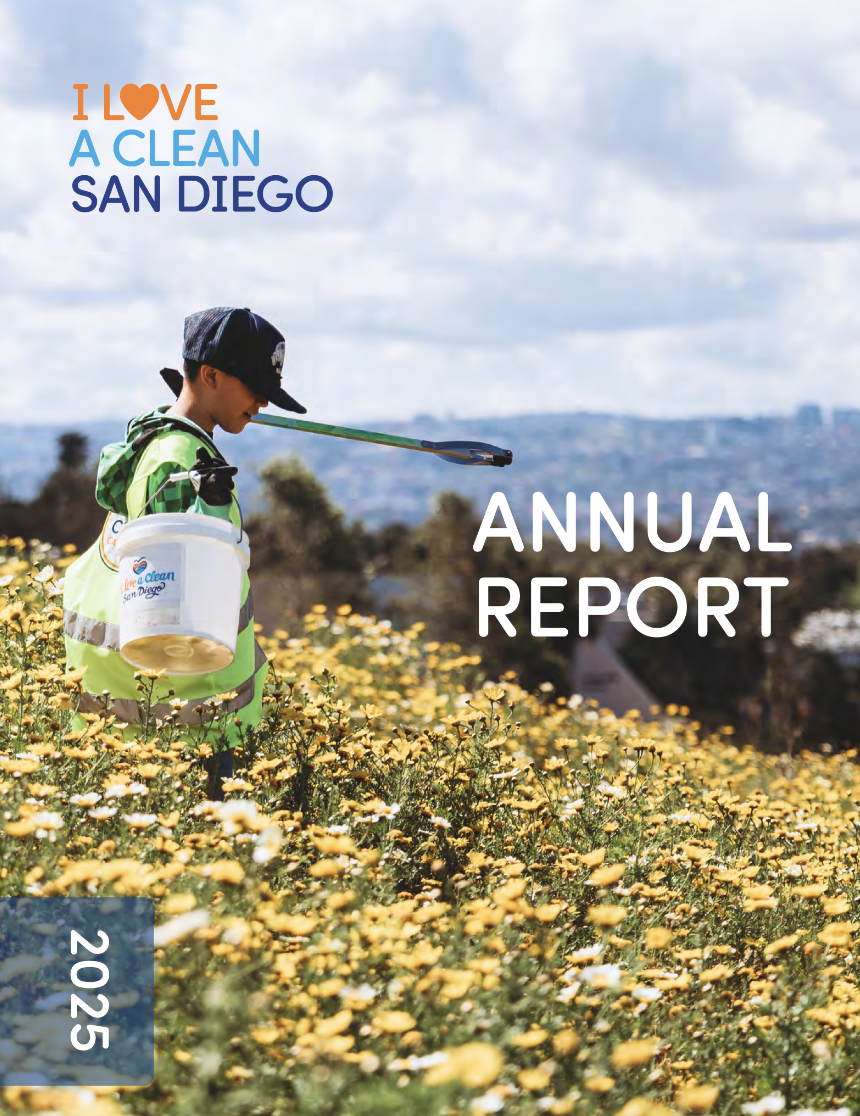
You can check out their inspiring Annual Report. It's an easy read at only 8 pages!

Below is a graphic from the report that highlights the group impacts:

Click below to view report

Can you guess the top 3 littered items from their report?

Check on page 3 of the report to see if you guessed right!

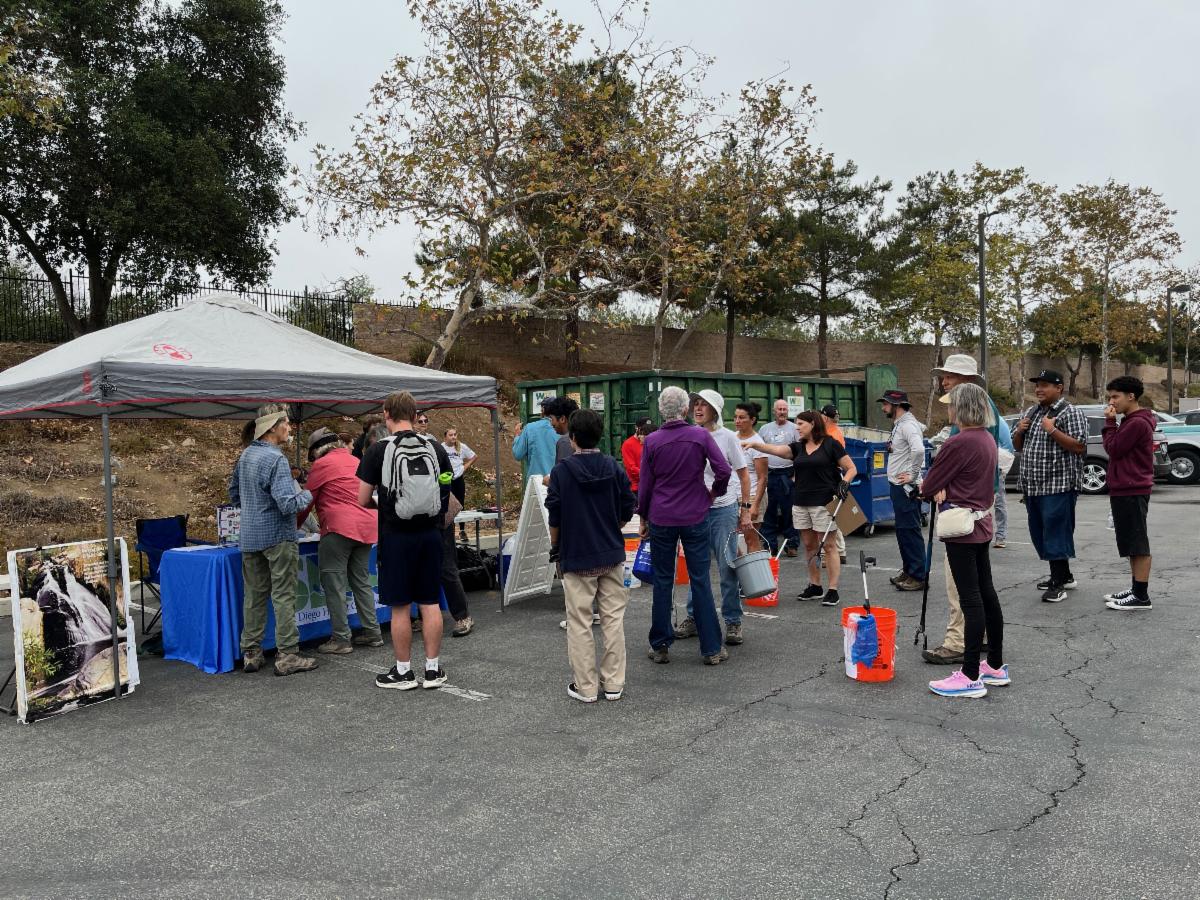
Down memory lane: In September 2025- El Salto Falls (aka Quarry Creek) was one of around 100 sites around San Diego County that was part of the I Love a Clean San Diego's Coastal Cleanup Day. Preserve Calavera sponsored the site along with the San Diego Habitat Conservancy.


Below are volunteers signing up before the event begins.(photo by E. Bartlett)

San Diego County's Climate Action Plan: The 2025 Annual Report is Out

The County recently released its annual report for the County's Climate Action Plan (CAP) which highlights the progress made during 2025.


The County's CAP is a comprehensive plan that outlines 21 measures that contain 70 actions to reduce greenhouse gas (GHG) emissions from activities in the unincorporated area and County-owned facilities throughout the region.


The County's video (at right) gives a simple overview of the County’s Climate Action Plan, greenhouse gases, and climate change.

SD County CAP

The County Website states:

The CAP’s primary goal is to reduce GHGs, including reaching net zero emissions (i.e., we are reducing as many emissions as we are producing) by 2045. The CAP also promotes public health, streamlines housing development, protects the region’s natural resources, and provides investments to help our communities thrive through programs and resources. Monitoring of CAP implementation started in 2025, and the first annual reports became available in 2026.


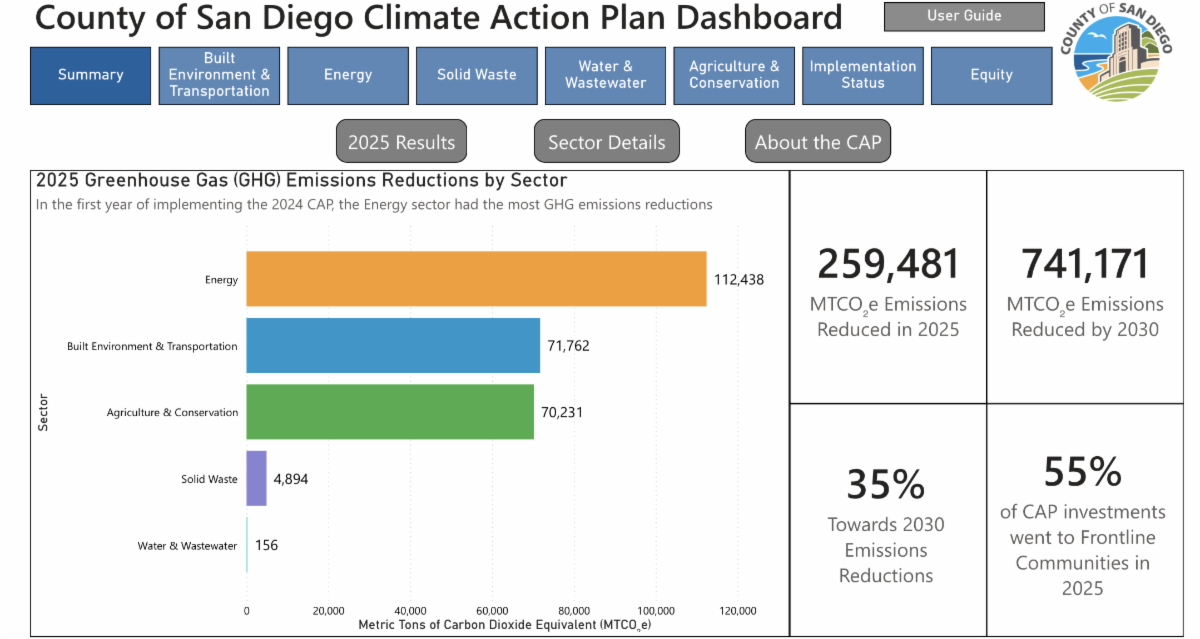
You can go to the CAP Dashboard to learn more. Below is a Dashboard Summary of GHG Emission Reductions by Sector. They use the common climate metric MTCO2e.

MT= metric tons

CO2e = carbon dioxide equivalent.

Carbon dioxide equivalent represents the combination of GHGs that contribute to climate change. Although CO2 represents about 80% of GHG, methane, sulfur dioxide and other gases contribute as well.

The Dashboard graphic below shows the County reduced 259,481metric tons of GHG emissions (MTCO2e) through the implementation of 35 actions with quantified GHG emission reductions. These GHG Climate Action reductions were equivalent to reducing the emissions from removing 60,525 gas-powered vehicles from the road for one year.

But there is still a very long road to travel toward reducing 741,171 MTCO2e by 2030!

Wildlife Corner:

Big Win in Court for a Little Mouse!

One species' extinction is every species' loss.

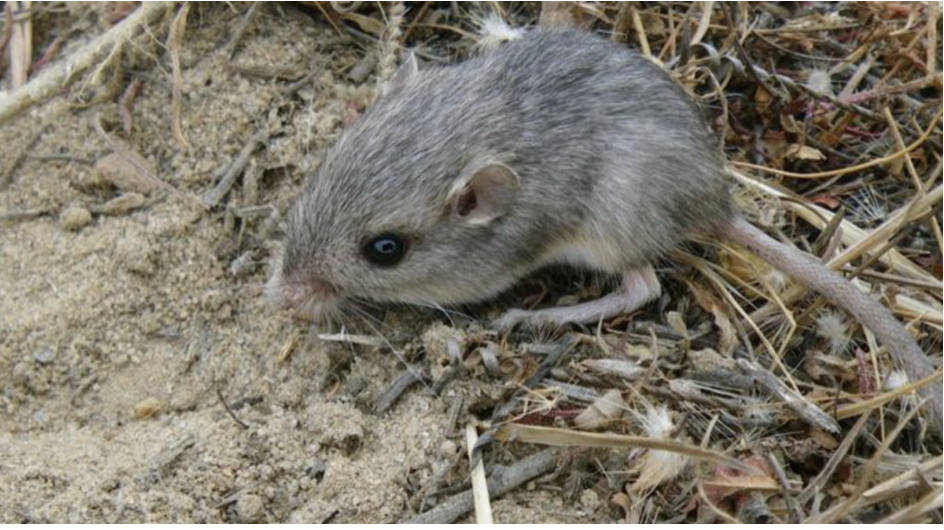
Two parties that were battling for six years finally found themselves in the Orange County Superior Court on July 20th. At the heart of the battle was the diminutive Pacific pocket mouse that looks like it came straight from the pages of a Beatrix Potter story.


On one side of the courtroom was the Center for Natural Lands Management fighting to save a small population of the endangered Pacific Pocket Mouse. On the other side was the city of Dana Point wanting more public access available at a popular hiking trail.

(photo credit USGS)

We are happy to report that the Court issued its decision in favor of CNLM and supporting protection of the Pacific pocket mouse (Perognathus longimembris pacificus). The greatest threats to the Pacific pocket mouse are loss of habitat and fragmentation.


CNLM was entrusted with managing 29.4 acres within the City of Dana Point in 2005. And that is exactly what they were doing. From their website :

Our primary goals are focused on protecting habitat for the Pacific pocket mouse, coastal California gnatcatcher, rare plant species, and other sensitive species that utilize coastal sage scrub and coastal bluff scrub. Due to the small size of the Dana Point Preserve, and its degree of isolation from similar habitats, maintaining conditions to allow the persistence of these endangered and rare species requires focused monitoring and adaptive management. 


Read more about the results of the court case.

And this is an article that gives more background on the story- it was published prior to the court ruling: California town deeply divided over tiny mouse


And a big thanks to the Center for Natural Lands Management for all of their hard work!

The Pacific pocket mouse was believed to be extinct in 1972 until a small population was rediscovered in 1993 at Dana Point headlands. It was federally listed as endangered in 1994. Today, there are only 3 small populations of the Pacific Pocket Mouse. Its historic range spanned from coastal Los Angeles to the Tijuana River Valley near the Mexican border. Along with the Dana Point population, the other two are on Camp Pendleton.


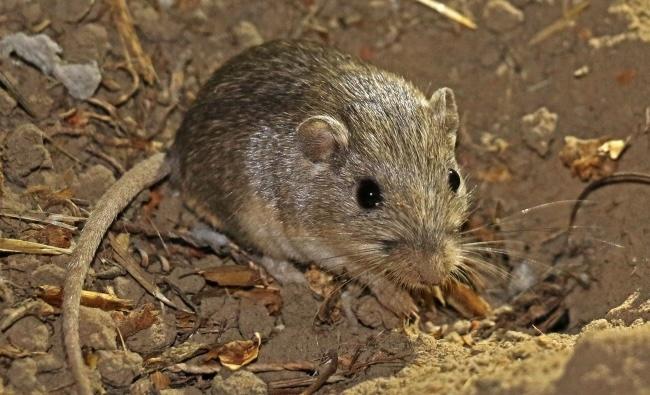
The Pacific pocket mouse gets its name from the external, fur-lined cheek pouches which are quite useful when it forages for food; It primarily feeds on seeds. These tiny creatures play a vital role within their habitat, dispersing native plant seeds and promoting plant growth through their digging activities.


You can read about the Pocket Mouse Monitoring and Research Program on Camp Pendleton.

And enjoy the video above of a Pacific pocket mouse sandbathing at Camp Pendleton in 2015.

Our all-volunteer organization can not do what we do without your help. Your time, talent and donation can make a difference right in your own backyard. 

 Contact us to see how else you could get involved.

To Make a Donation to Preserve Calavera

And Check out our Website


And all of our past Newsletters can be accessed here. Lots of local information about our open space and wildlife issues.