| | |
MONTHLY NEWSLETTER
December 2025
| | Preserve Calavera Supporter | | |
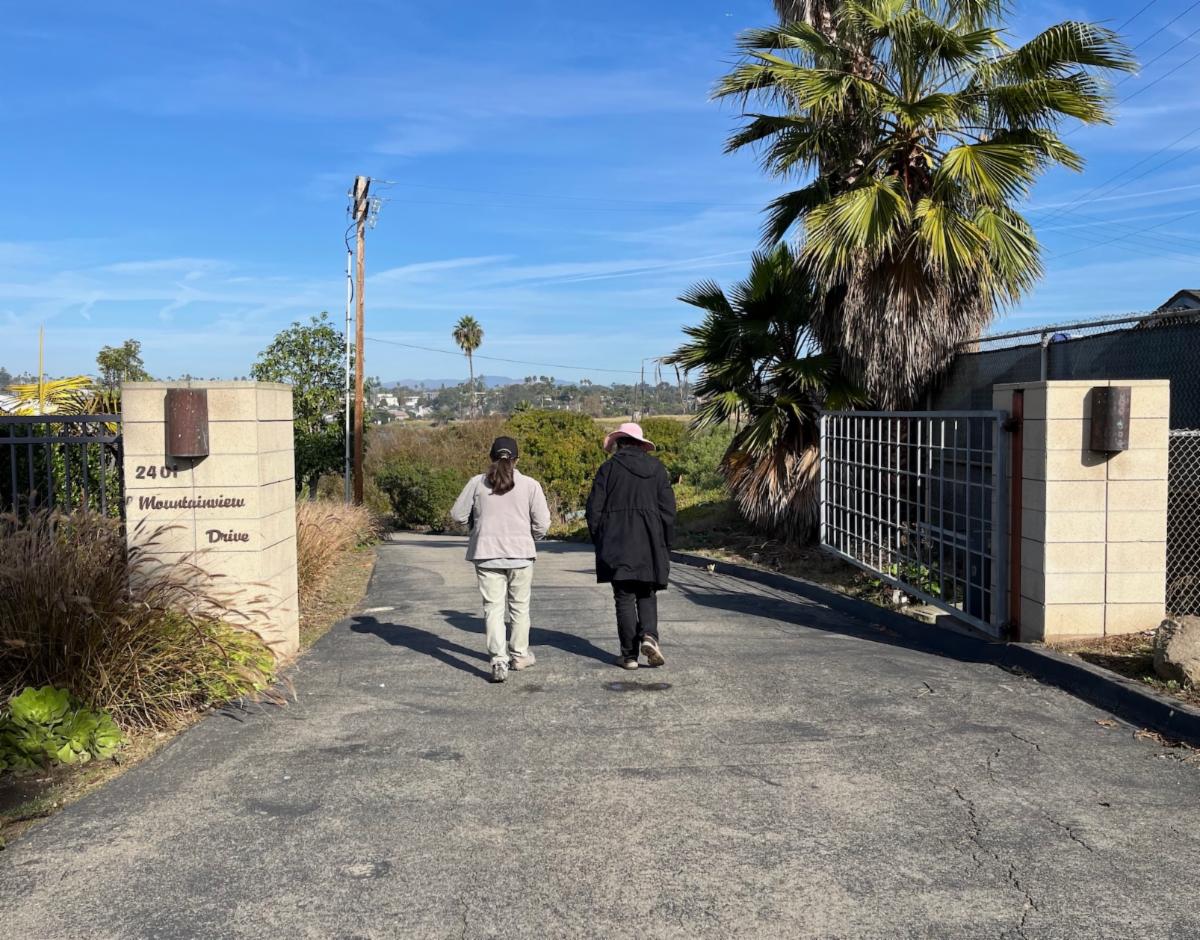
The North Beach Trail is just 0.3 of a mile long but its access to the coast and its connection to a short nature trail along the Buena Vista Lagoon make it special. Up until a few weeks ago, the trail was not accessible to the public due to a locked gates.
The 27 year old saga of the gates and the property owner who erected them finally came to its rightful conclusion. The California Coastal Commission unanimously fined property owner, John Levy, $1.4 million for several violations and ordered him to remove locked gates that blocked public access to North Beach and the Buena Vista Lagoon.
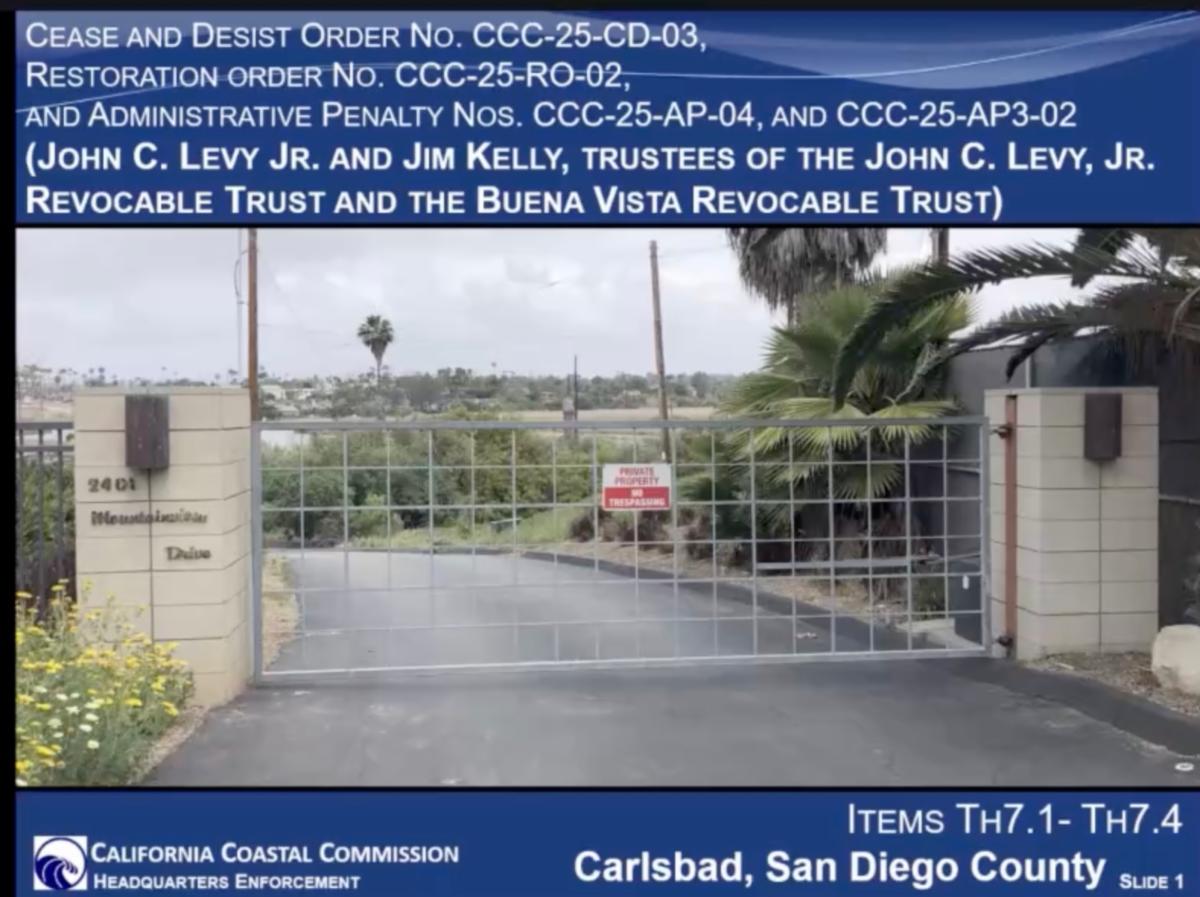
At the Coastal Commission Hearing on October 9, the staff report presentation included a cease and desist order, restoration order and administrative penalties.
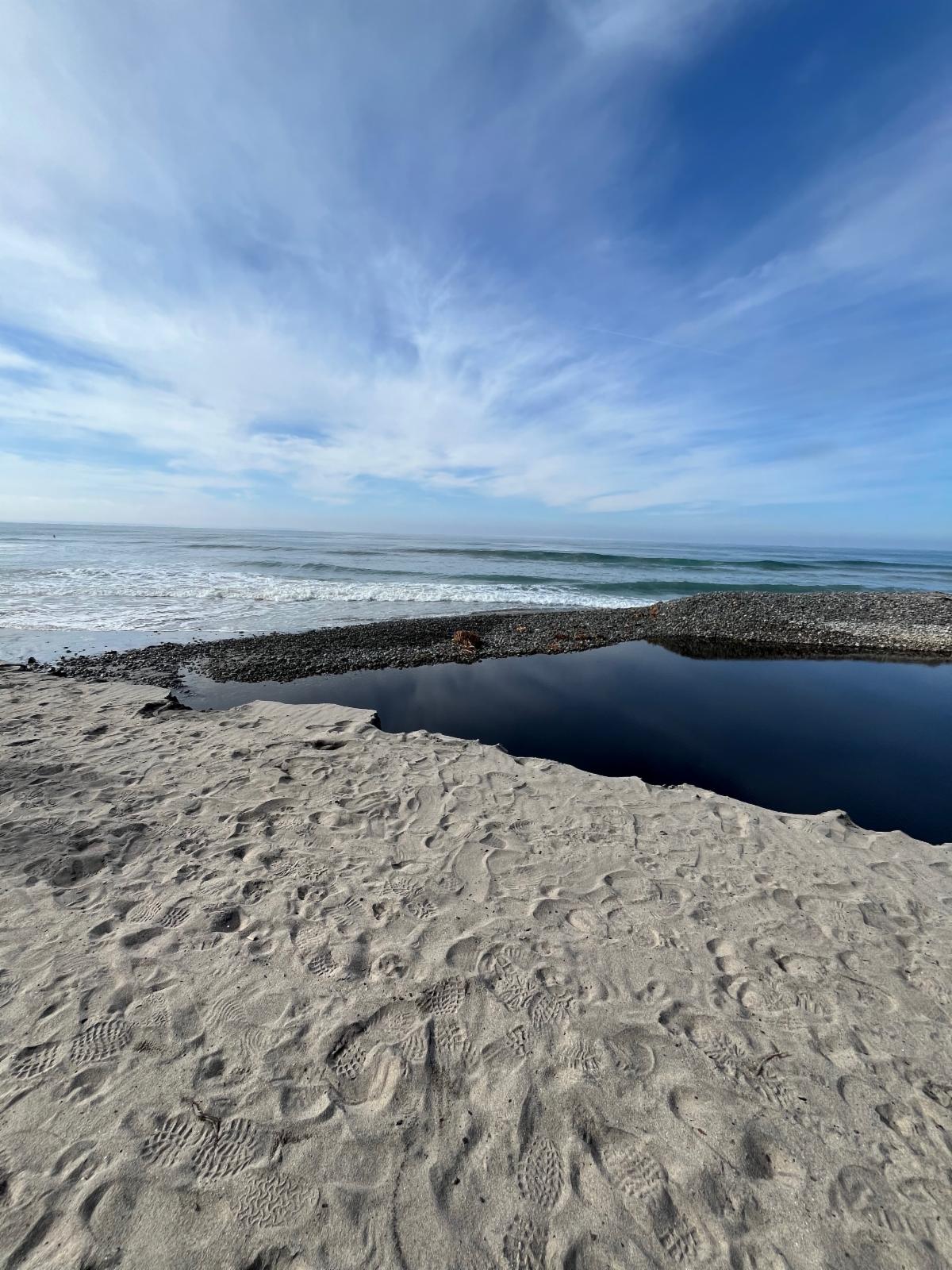
| | The end of North Beach Trail (photo by E. Bartlett) | | |
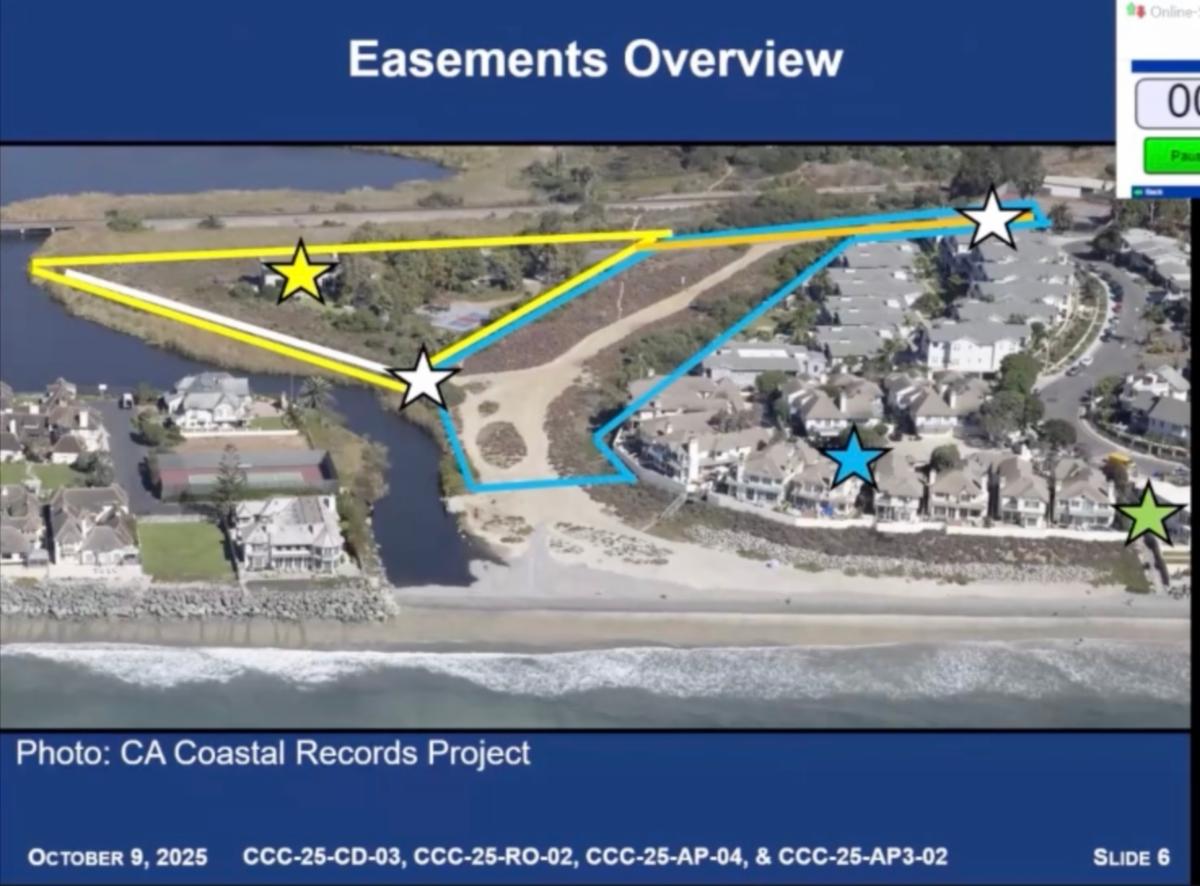
At right, aerial view of the site. ( Screen captured from the Coastal Commission Hearing video log.)
Yellow triangle area is the Levy property.
Blue outlined area is the public easement access property. The trail is visible.
White stars show location of locked gates. Star at top right is Mountain View Dr. (see photo at top). Star at bottom left is lagoon access.
| | | Summary of the Coastal Commission's Ruling on October 9 | | |
Cease and Desist Order- This requires the opening or removal of the locked gates at Mountain View.
The public beach access easement has always been required—although it was ignored by Levy. The Beach HOA Development (represented by the blue star in the map above), which still owns land, supports opening the locked gate.
| | | |
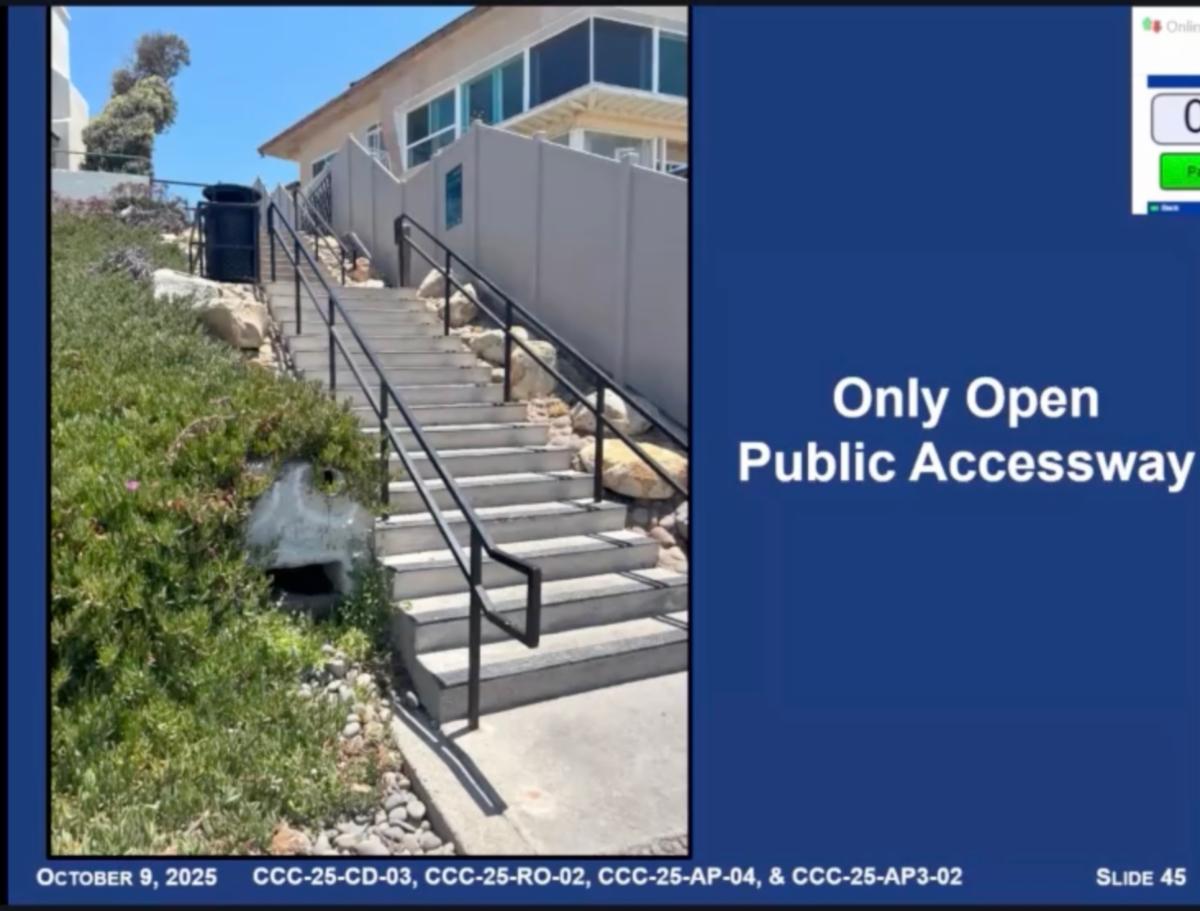
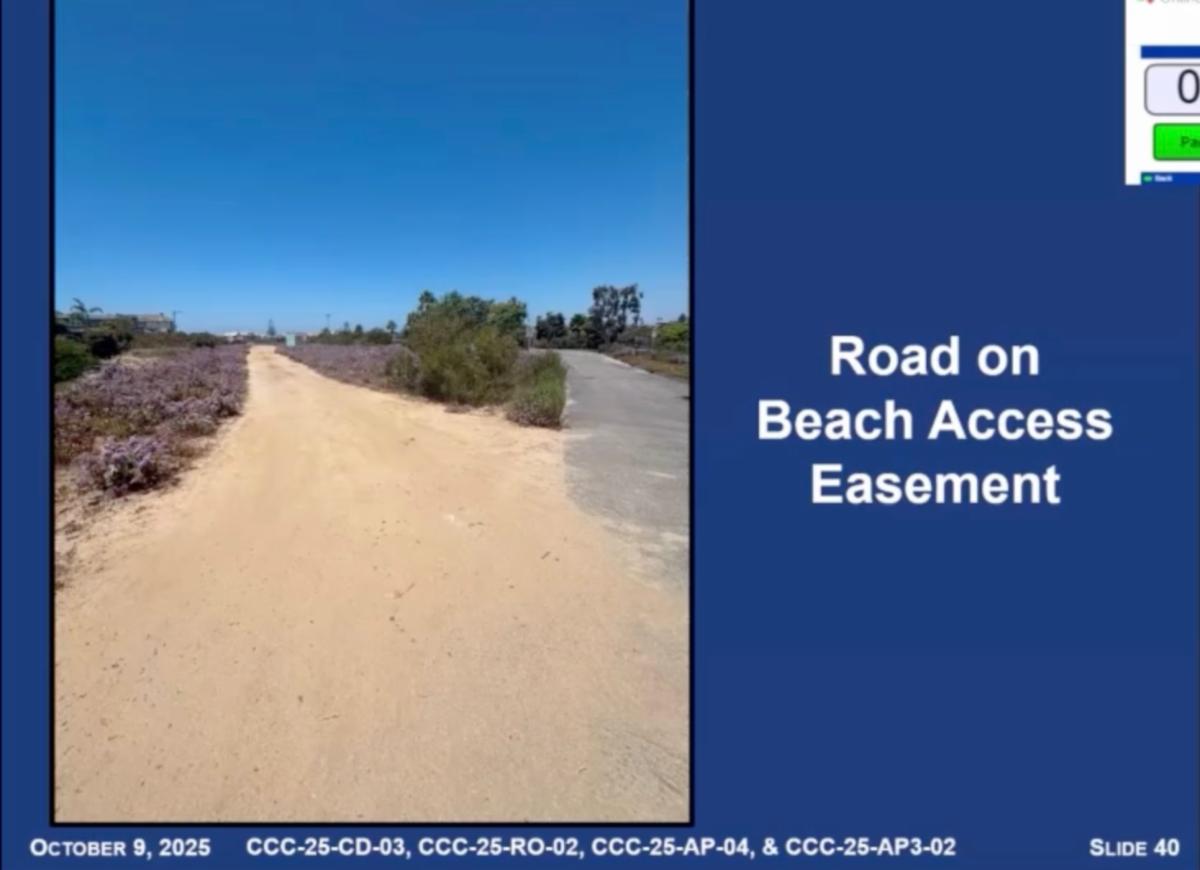
This was also an issue of accessibility since the only other entry way to North Beach is a stairway with 45 steep stairs. The stairs are a major barrier for many who would like to enjoy North Beach. The stairway location is visible on the aerial map above by the green star.
Below left shows the stairway to North Beach which, until the ruling, had been the only public access way. By comparison, the photo on the right shows the trail access to North Beach. (Photos below from Hearing)
| | |
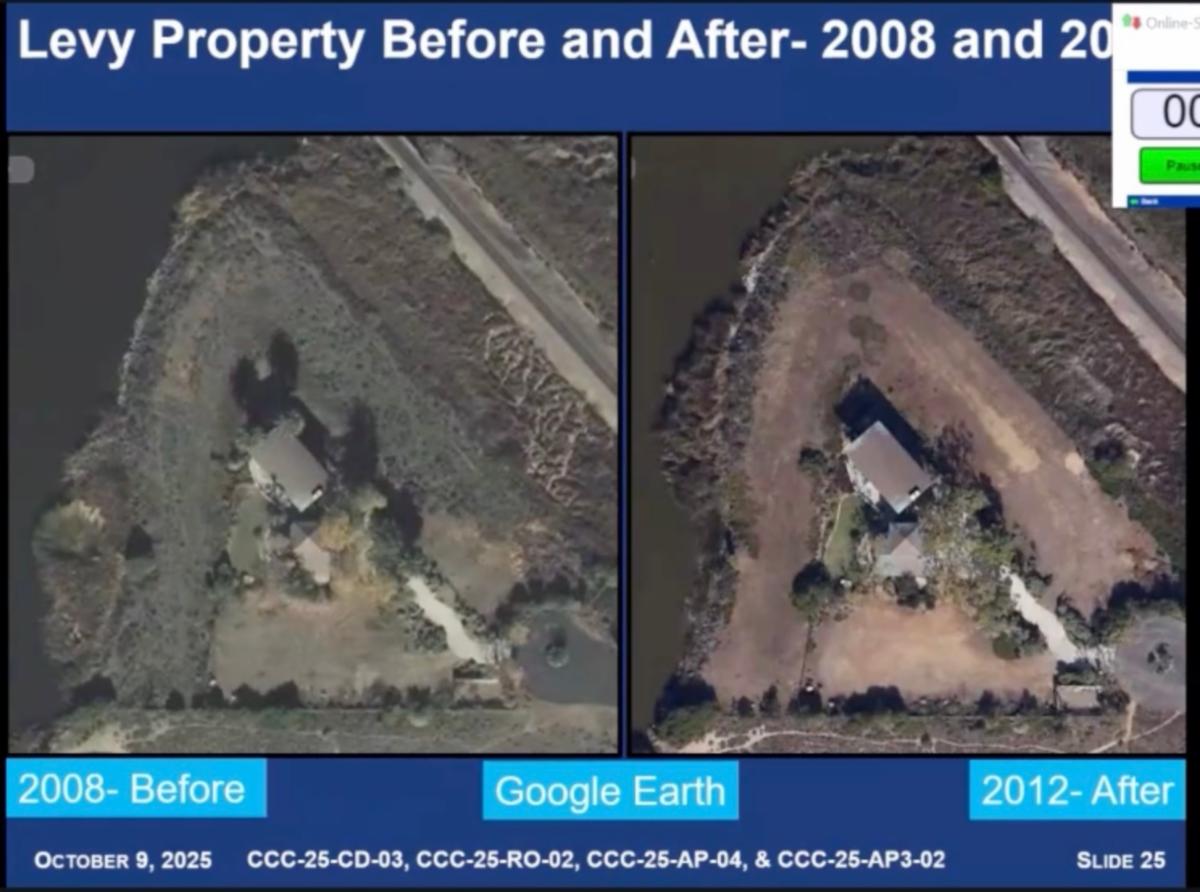
Restoration Order- This requires that the 100 ft wetlands buffer that was destroyed by the property owner be restored.
The photos at right (screen shot from Coastal Commission Hearing) show how the coastal wetlands buffer vegetation was removed from the Levy property. The vegetation (green) was removed to make way for vehicles access and parking (brown).
| | | Please check out the photos that are in Exhibit 8 as part of the Coastal Commission hearing. It will give you the opportunity to see the vegetation surrounding the property over time: Exhibit 8 | | Adminstrative Penalties- A fine of 1.4 million dollars for unpermitted development along the lagoon | | |
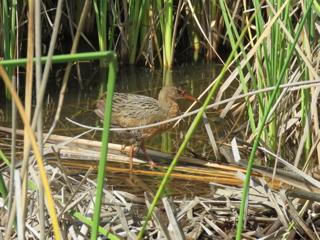
Above: Light-footed Ridgway's rail at Buena Vista Lagoon. Photo by Jane Mygatt
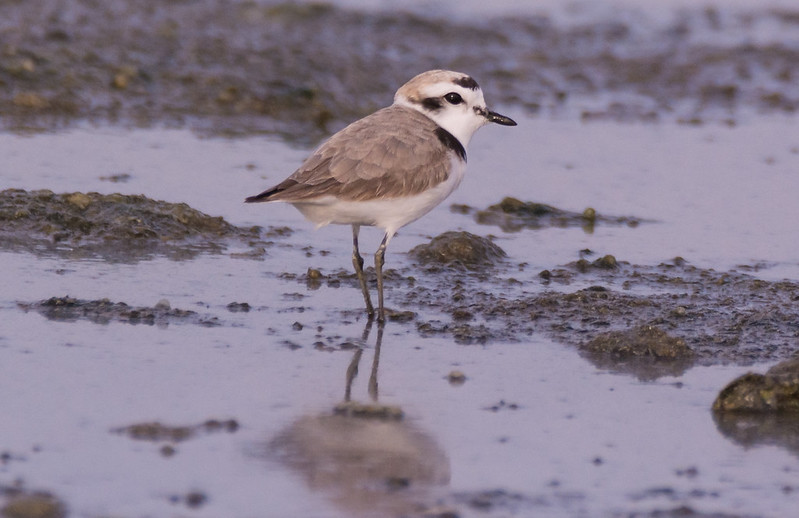
At right: Western snowy plover. Photo by Wendy Miller.
The Ridgway's rail is listed as endangered and the snowy plover is listed as a threaten species under the Endangered Species Act.
| | The vegetative buffer is necessary to protect sensitive wetland habitat and its wildlife. In addition to the endangered Ridgway’s rail numerous waterfowl are known to use the property and it is nearby to a western snowy plover reintroduction area. The lagoon also provides habitat for critical populations of the CA least tern, American peregrine falcon, CA brown pelican and white-faced ibis. (To find out more about our wetlands, please read our October Newsletter.) | | |
There has been a lot that transpired at the site that is better known as the "Levyland" beach access. And Levyland itself is John Levy's property that is adjacent to the public access trail. Until recently, the property had also been listed on Yelp as a Wedding Venue.
We can only skim the surface in our newsletter of the all that transpired over the past 27 years. The staff report conducted at the Coastal Commission meeting is a little under 38 minutes and we hope you will take the time to view it. The hearing begins at the 1:05 time mark; you can click on the link to the meeting below. Immediately following, the property owner was also given equal time to present his position. It is also worth listening to the comments of the commissioners who voted unanimously YES on all 3 motions.
| | |
Preserve Calavera has been involved with this issue for several years. We helped coordinate community input, provided information to city staff and testified at Carlsbad and Coastal Commission hearings.
Those who have property along the coast, and especially adjacent to wetland habitat, must take their responsibility of stewardship seriously. We hope there is proper restoration for this critical habitat. There is no room for us to lose any more wetland habitat, so let's hope that this will be a lesson to others.
| |
Honoring Our Mission in 2025
Protecting, enhancing, and restoring the natural resources of coastal north San Diego County.
| | |
But we can't do anything without strong support from people like you!
- Your volunteer work makes our restoration and water quality programs possible!
- Your emails and comments at public meetings responding to our action alerts makes sure decision makers know that the community cares about protecting our natural resources.
And of course, your donations are needed to support all of our work!
| | Please consider a year end donation, either for any immediate priority- or for one of our ongoing programs like habitat restoration, water quality monitoring or land acquisition. If donating to a particular project, please note under "Designation" (general fund, Water Quality Monitoring, restricted land acquisition or Youth4Climate). | | |
We know the importance of empowering youth in the fight against climate change.
You can also support our partnership with SanDiego350 so they can expand their Youth4Climate Program and we are helping to fund two youth leadership positions right in Oceanside!
And the best news is that a generous resident of Oceanside has offered us up to $10,000 in matching donation funds for the Youth4Climate program.
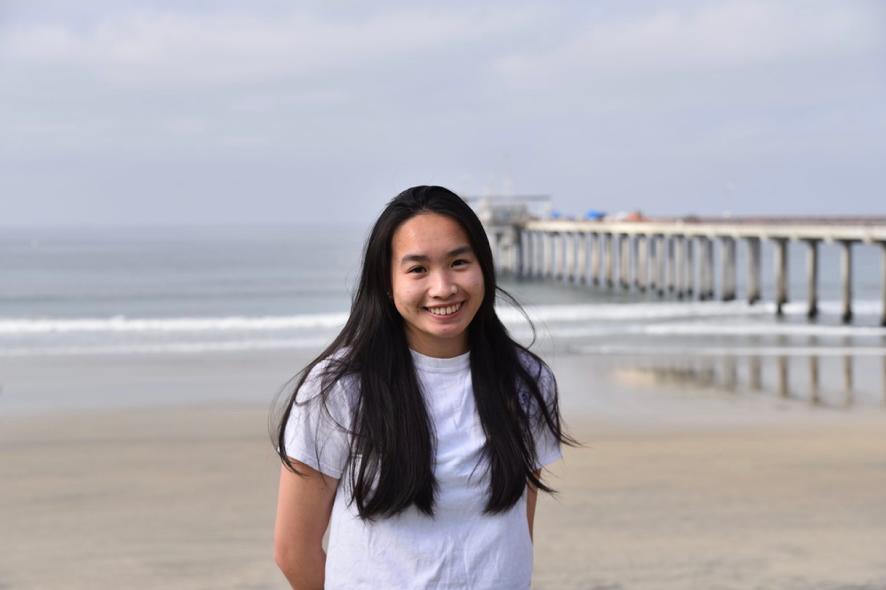
| | Pictured above, Elizabeth Nguyen SD350’s new Oceanside Youth Coordinator. You can read all about her HERE. | | Together, we can continue to protect, enhance and restore the precious natural resources of this area! | |
Throughout 2025, we have continued our preservation and restoration work, water quality testing, community educational events, and efforts to reduce greenhouse gas emissions in our community. | | | | |
Rancho La Costa-
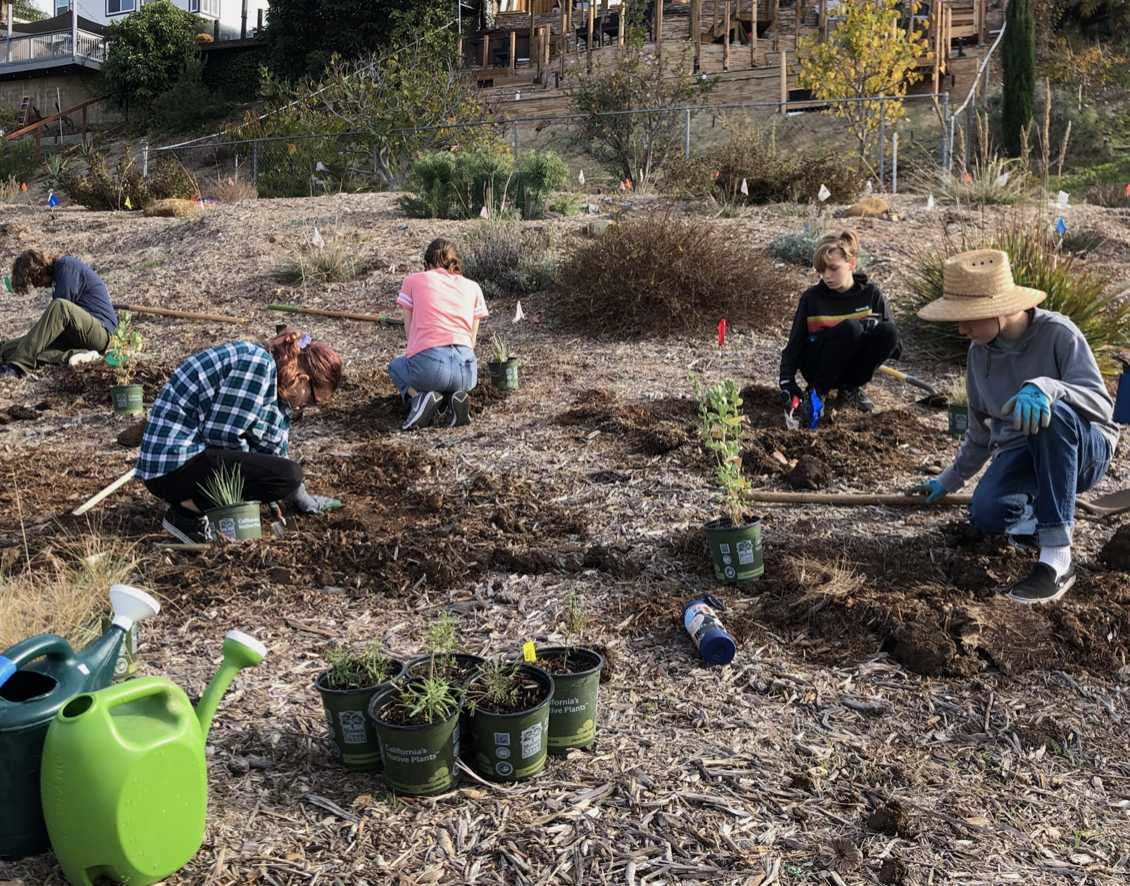
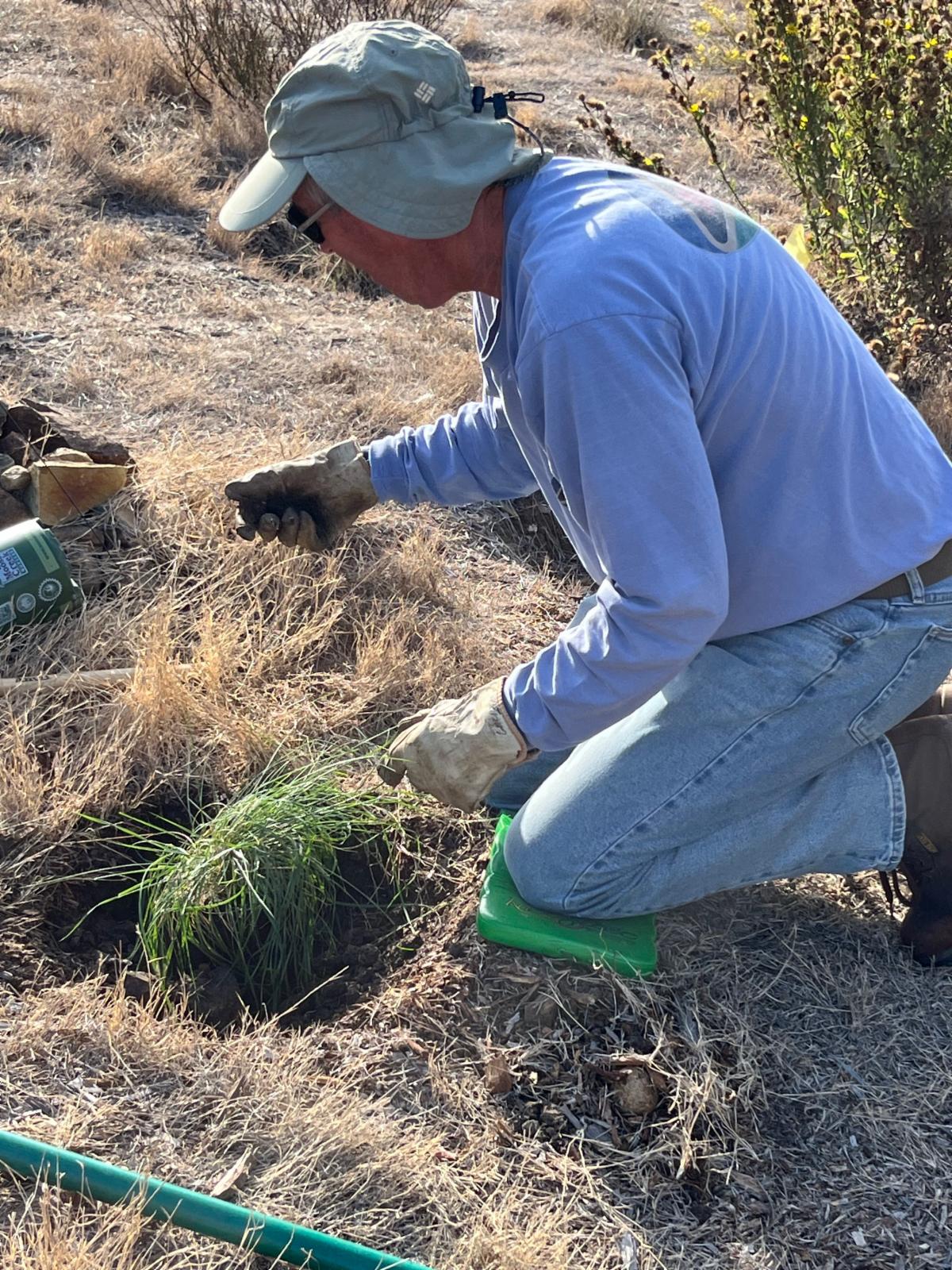
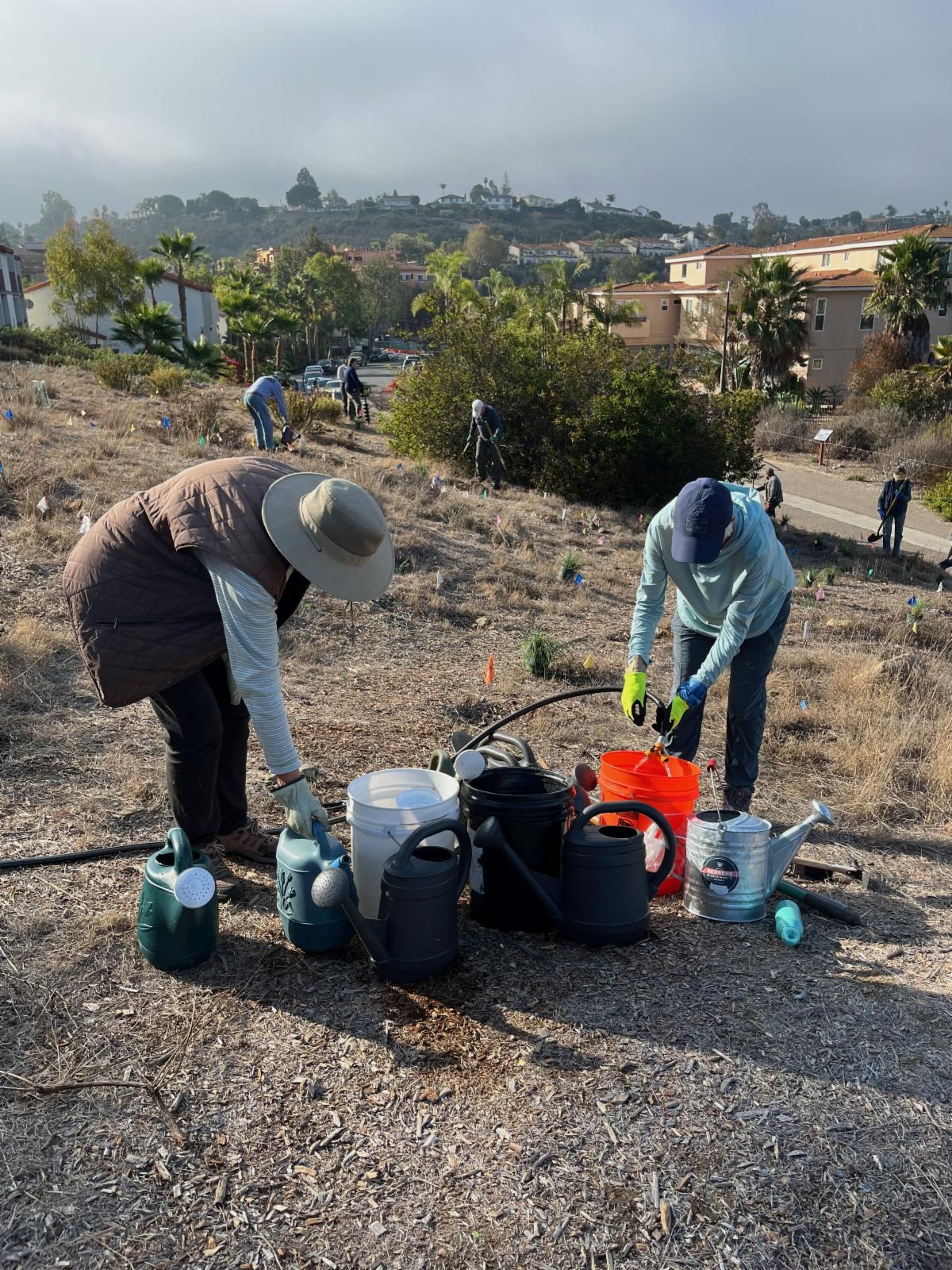
Working with the Center for Natural Lands Management (CNLM), we continue our ongoing efforts at this site that began in 2018. We spent 3 years preparing the hillside for native grass restoration. We have planted over 400 native plants (and scattered hundreds of seed balls) since 2021. We continue our monthly events to remove invasive plants and water as needed.
Below: We added 100 plants this year during our November restoration event. The planting included 8 local native grass and shrub species. A special thanks to all of our hardworking volunteers and CNLM Preserve Managers Juan Troncosa and Byron Watson. We were very fortunate to have Mother Nature on our side and bring rain a few days after the event.
| | |
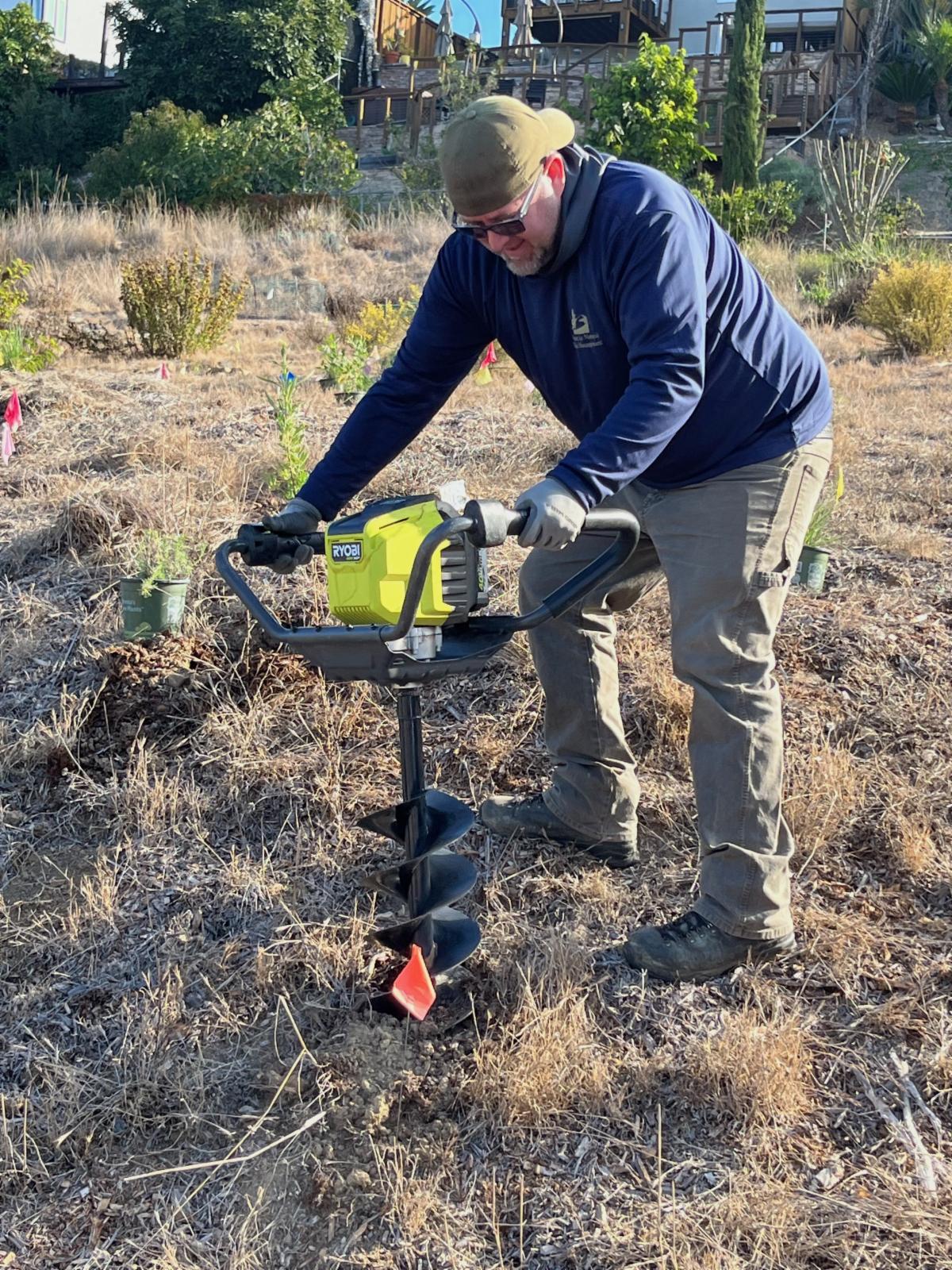
Below: Byron( Watson (CNLM) using an auger to drill holes for the plants.
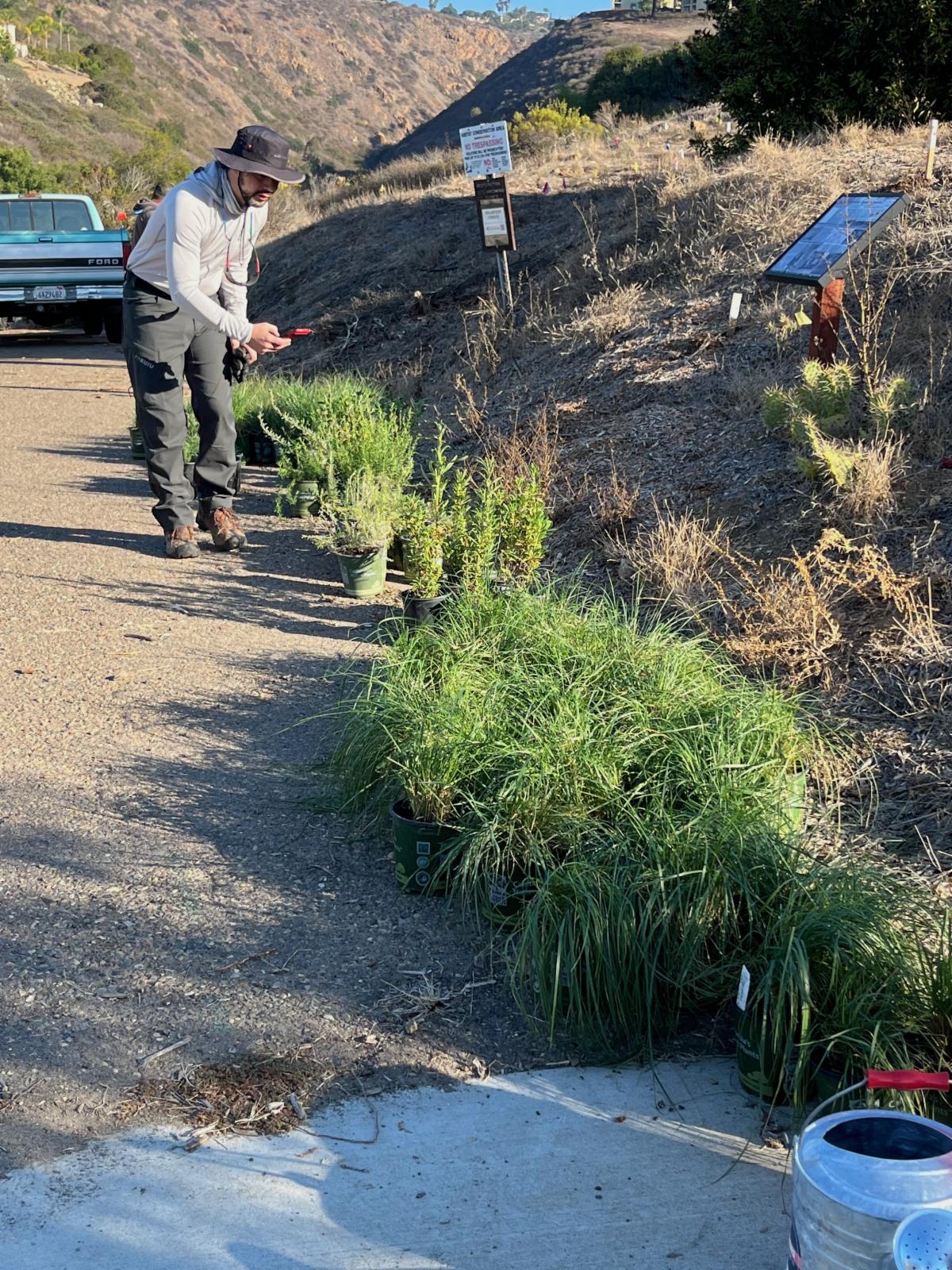
At right, volunteer GT Wharton doing plant inventory.
| | | Volunteers planting and the most important life sustaining ingredient—water! | | |
El Corazon-
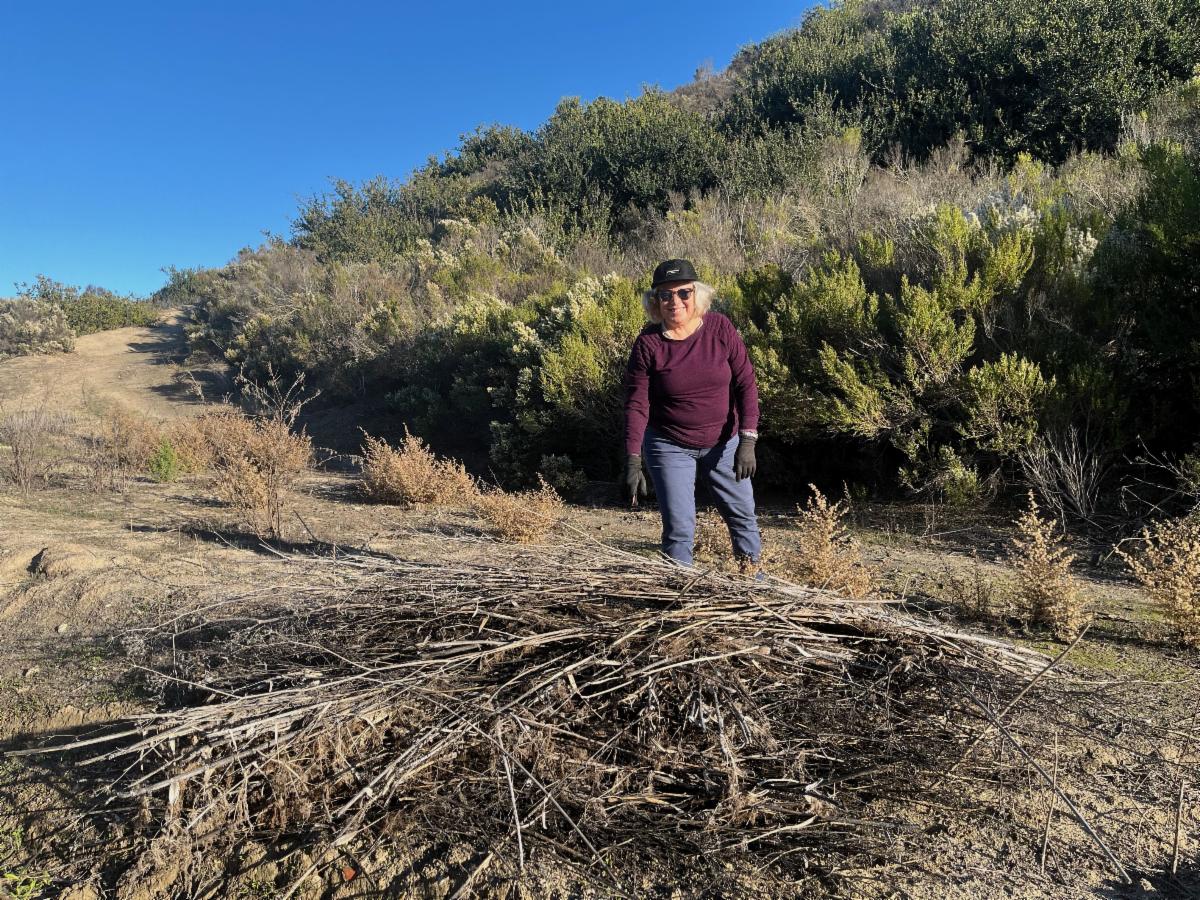
We began this site restoration in 2018 and continue our monthly events. We are focused on controlling the spread of invasive plant species and continue to remove the ubiquitous fennel from the sensitive habitat at El Corazon. At the end of 2025, we can see a lot of healthy coastal sage scrub plants along the hillside thanks to our hardworking volunteers.
| | At right, Anne-Catherine Roch-Levecq (PC board member) is seen next to a pile of invasive fennel that has been left to dry out before it has the opportunity to produce seeds. In the background you can also see coastal sage scrub in its natural habitat. | | | |
La Costa Oaks/Arterro Greenbelt-
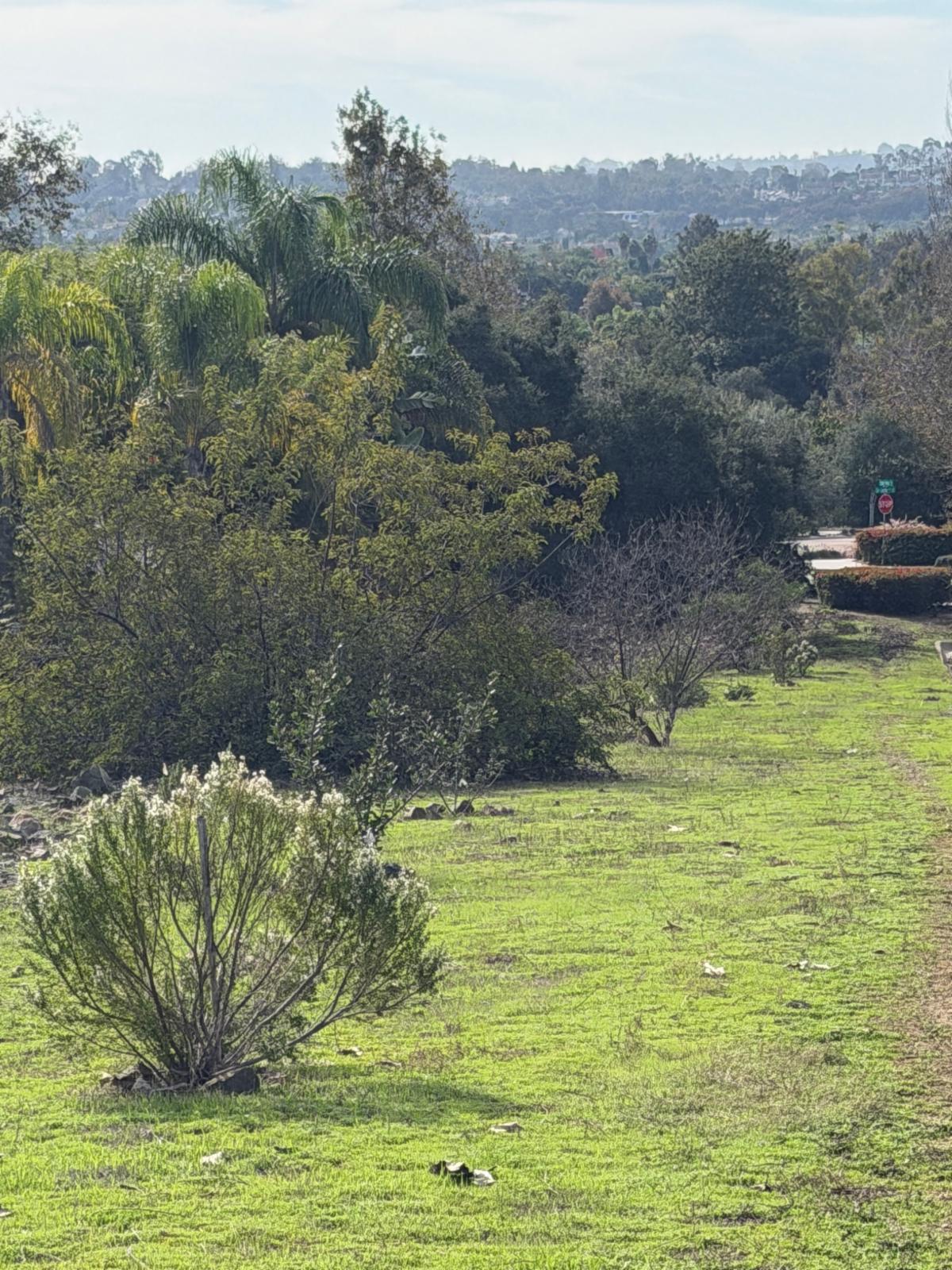
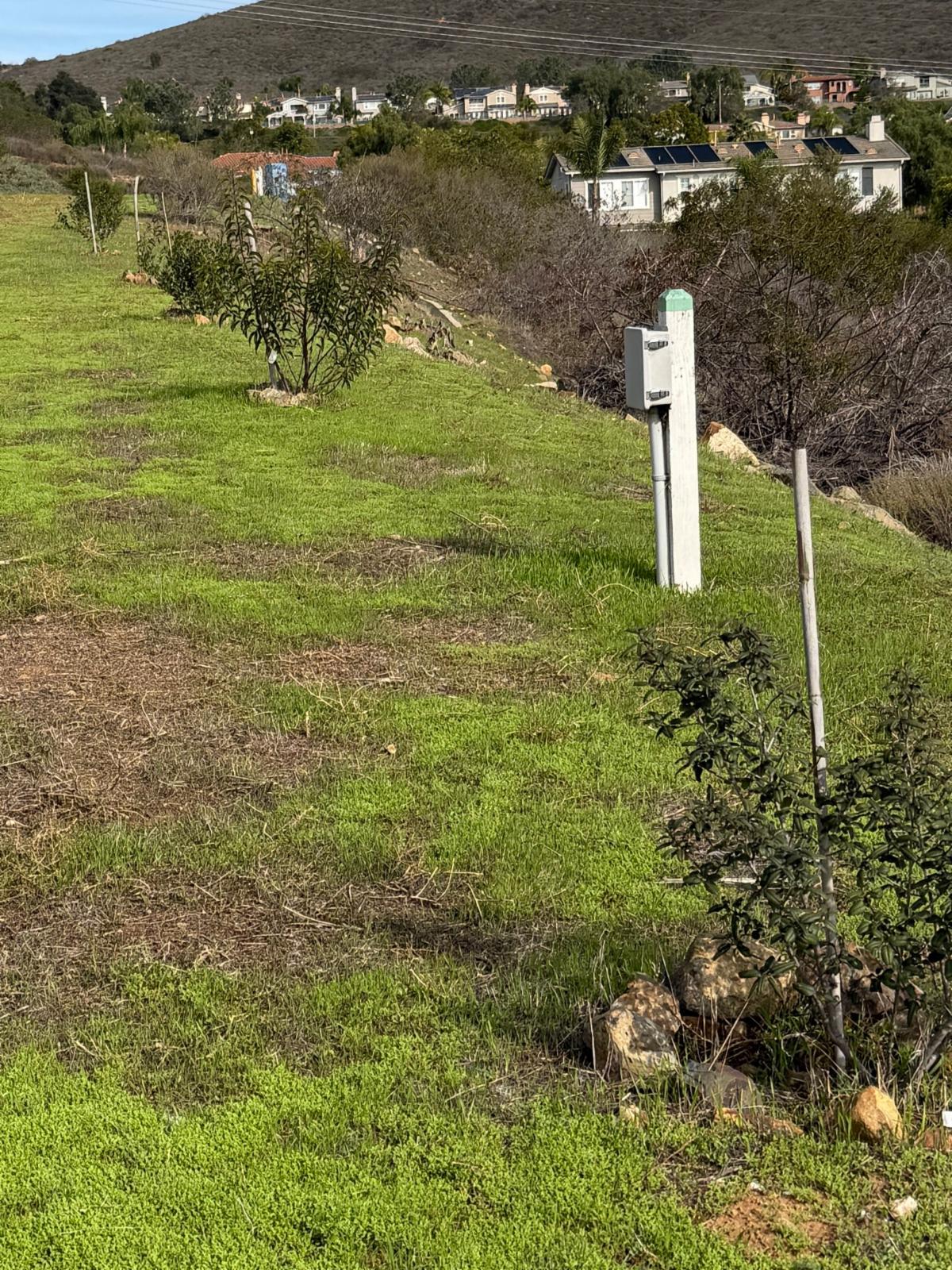
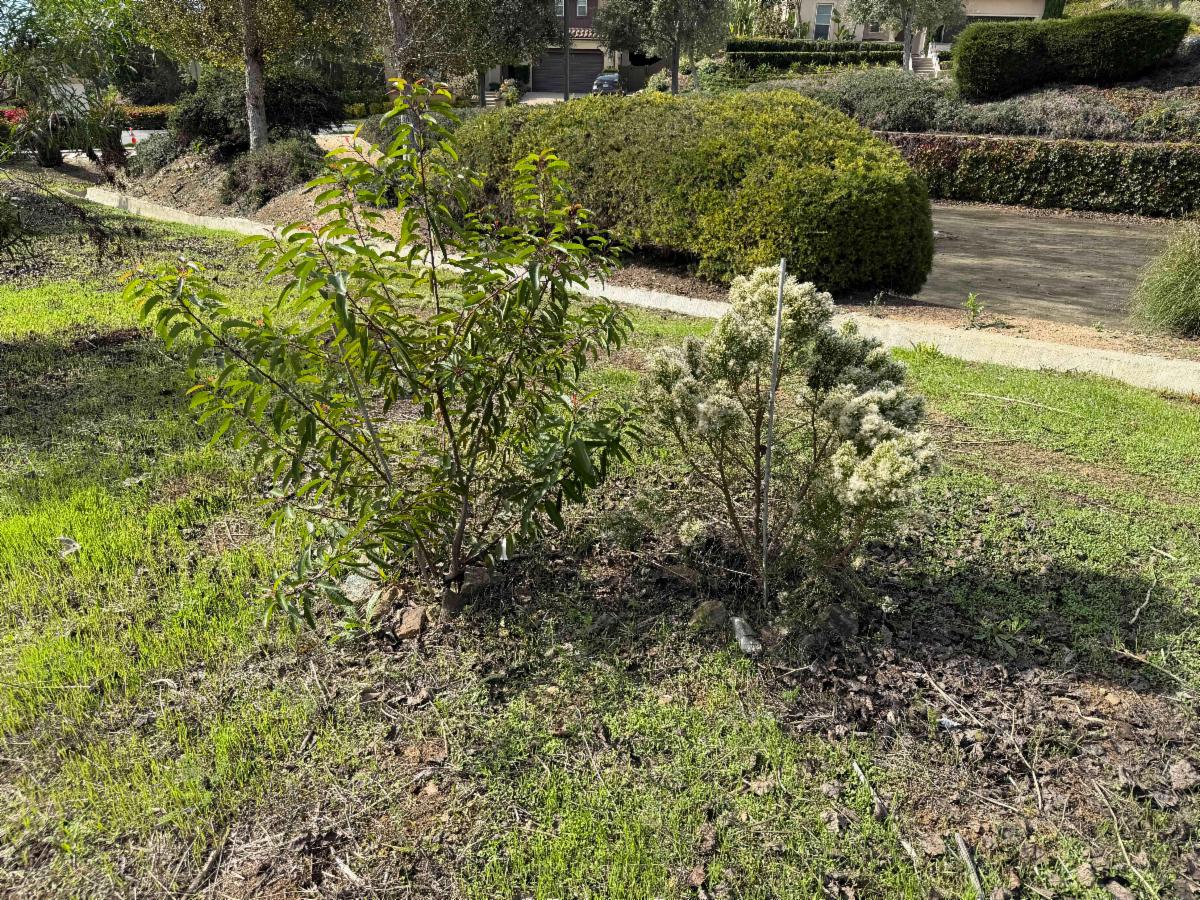
This restoration is the inspiration of David Newman and fulfillment of his CA Naturalist Certification Capstone Project. David is restoring an empty 1.5 acre greenbelt area between two HOAs on Calle Pera in Carlsbad. Initially, we supplied 45 native plants and a group of local volunteers (including Preserve Calavera) helped David do the initial planting in Jan 2023. And David took over from there!
| | |
After managing the site for 3 years, David shared some of his observations:
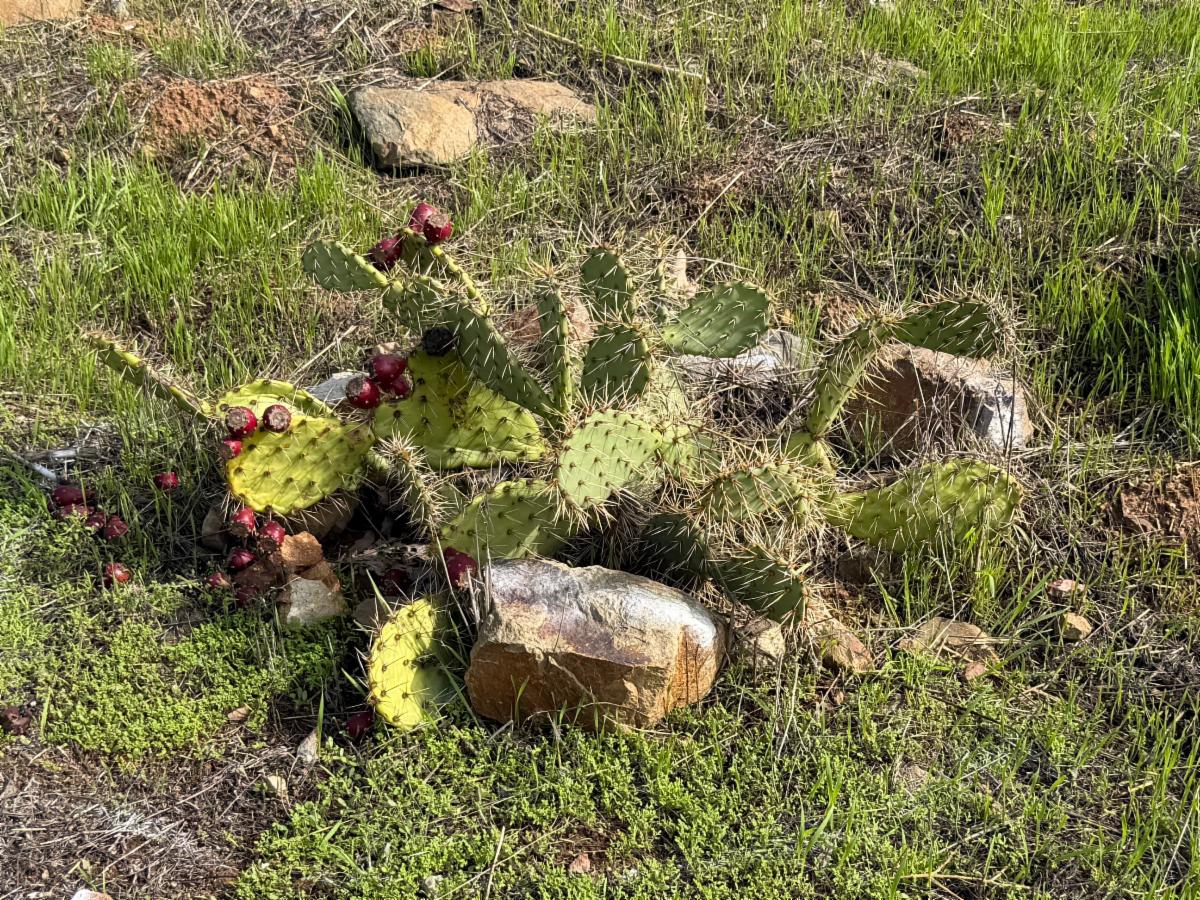
- The plants that have done well are Toyon, Lemonadeberry, Laurel Sumac, Coyote Brush, Coastal Prickly Pear and Coastal Cholla
- The plants that are doing okay are Chaparral Mallow, Coffee Berry, Mission Manzanita and Chamise
- The plants that are not doing as well are Mule Fat, Blue Elderberry, Ceanothus
- Gophers have been the biggest problem on the site. They are responsible for eating the roots on several plants.
| | We hope that David will be an inspiration and role model to others to follow in our local communities. Please contact us (info@preservecalavera.org) if you are aware of a site that may have potential to become a new restoration project. | | |
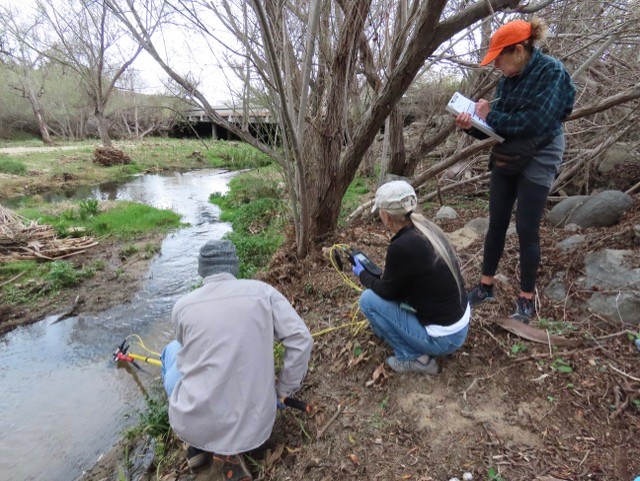
Preserve Calavera continues to monitor 3 Carlsbad sub-watersheds since we took over the task from San Diego Coastkeeper in 2019. True to our nature, this is an entirely volunteer-run program (with yearly recurring costs running about $3000). Without our Project Director, Paige DeCino, none of this would be possible.
Our volunteers monitor the Batiquitos Lagoon (BTQ), Agua Hedionda Lagoon (AHL) and Buena Vista Lagoon (BVC) and do testing testing 6 times a year (bimonthly). You can learn more about our North San Diego County Watershed Monitoring Program, view the sites and our data at this LINK.
| | Volunteers along the Agua Hedionda Creek collecting samples in March 2025. | | |
We look for unusual readings and notify our local stormwater managers of any significant anomalies. We monitor each site for nutrients (ammonia, nitrates, and phosphorus), turbidity, dissolved oxygen, pH, conductivity and bacteria (total coliform and E. coli).
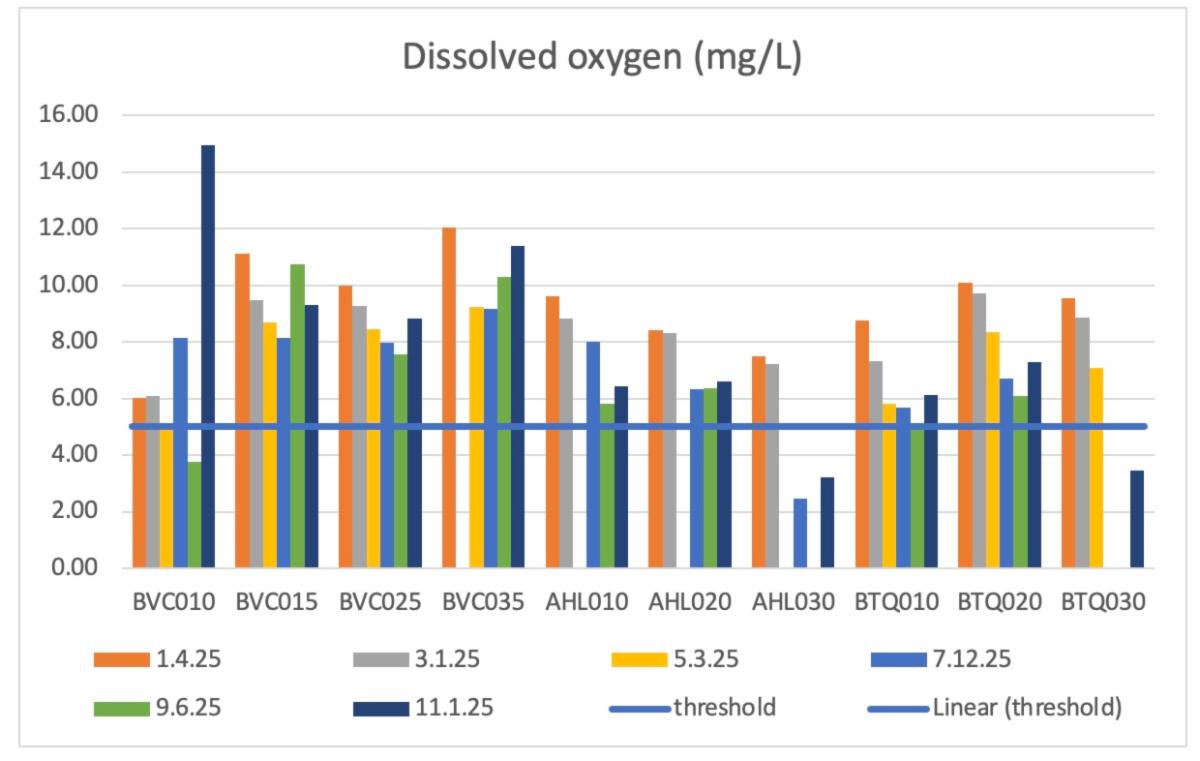
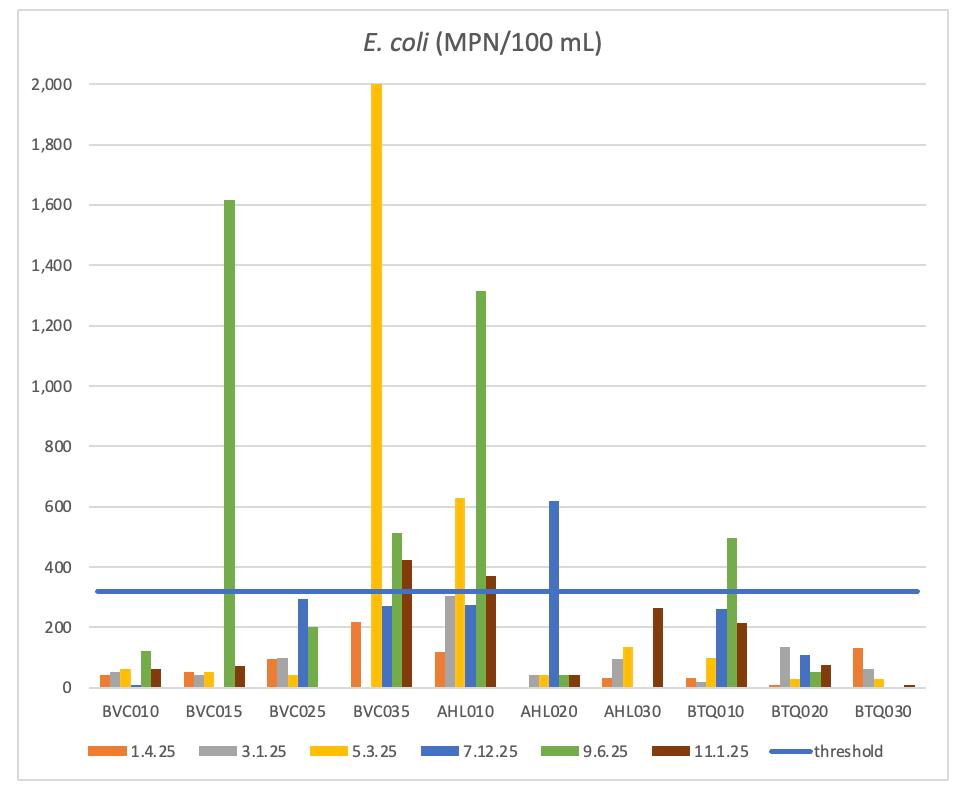
Two representative graphs for 2025 data are shown below:
| | Site ID numbers start with lowest downstream progressing upstream with the higher numbers. See the website for the map of specific sites and more info. | | |
Dissolved oxygen (DO) is important for aquatic animal survival. Factors influencing the amount of DO are photosynthesis in the water and the amount of aeration (soaking up oxygen from the air).
In our region, the Regional Water Quality Control Board has set 5.0 mg/L (the horizontal line in the graph) as the minimum required for a healthy aquatic ecosystem. Generally, our low levels of DO are due to stagnant water.
____________________
E. coli are bacteria that have the potential to be human pathogens (not all are). Water samples are collected in the field, put on ice, then processed in our lab with a US EPA approved method. The number of E. coli vary significantly and can be attributed to random sample variation or feces from any number of warm-blooded animals.
Several samples at left are above threshold.
| | We are always looking for new volunteers. Please contact Paige (pdecino@hotmail.com) to find out more about our water quality testing program. | | Oceanside Greenhouse Gas Emission Reduction Fund: | | Preserve Calavera established the Oceanside Greenhouse Gas Emission Reduction Fund (OGHGERF), the first such fund in the region, to support projects within the City of Oceanside that reduce local GHG emissions. This is a restricted fund which means the contribution is earmarked solely for this purpose and our organization cannot spend it on other projects. | | Our Oceanside Greenhouse Gas Reduction Grant Program Gave Grants to the Following Organizations in 2025: | |
|
Solar Panel Installations and Battery Storage
| | | |
|
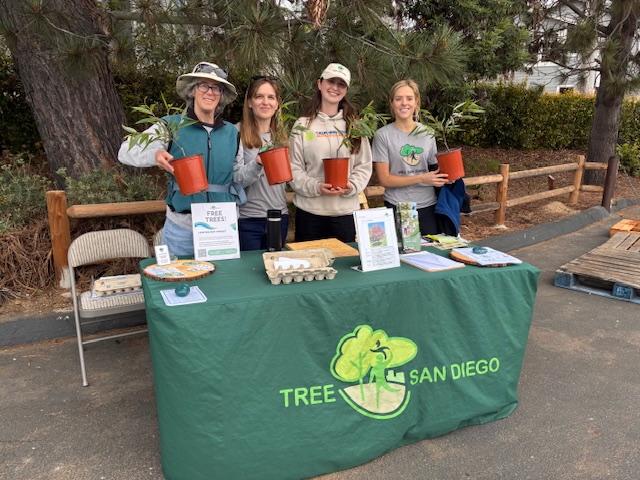
Providing free tree distributions and educational outreach. Not only does this contribute to long-term greenhouse gas reductions through carbon sequestration, it also enhance urban greening, and improves air quality.
| | | | |
| | |
gO'Side Shuttle
Provide funding to support the gO’side neighborhood electric vehicle (NEV) shuttle program serving Downtown Oceanside.
| | | |
| | |
Produce Good
A food recovery organization where edible surplus produce rescued from schools, grocery stores, farms, and backyards stays in Oceanside to feed local residents.
| | | | We have enjoyed hosting and co-hosting a wide variety of events in our local community this year and greatly appreciate our many volunteers of all ages. | |
| | |
El Salto Falls Clean Ups
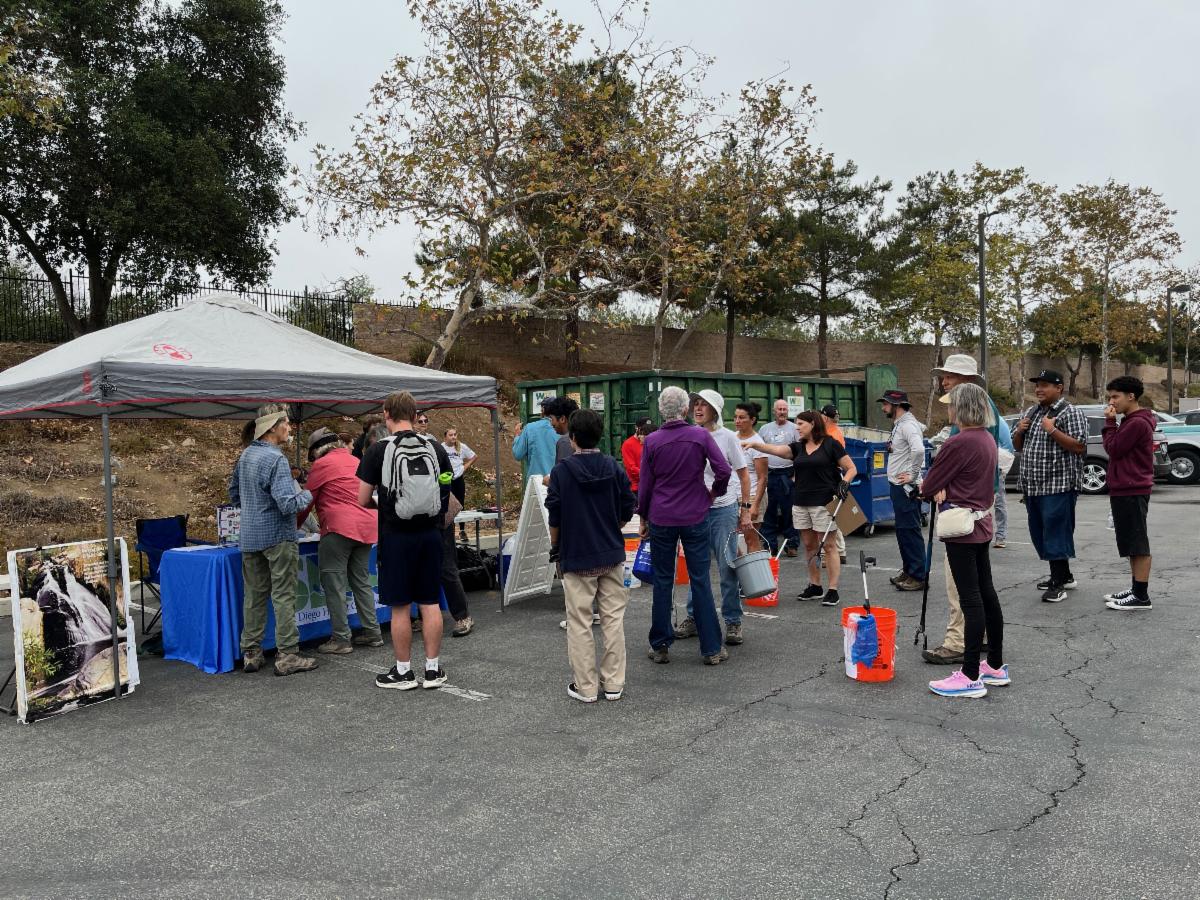
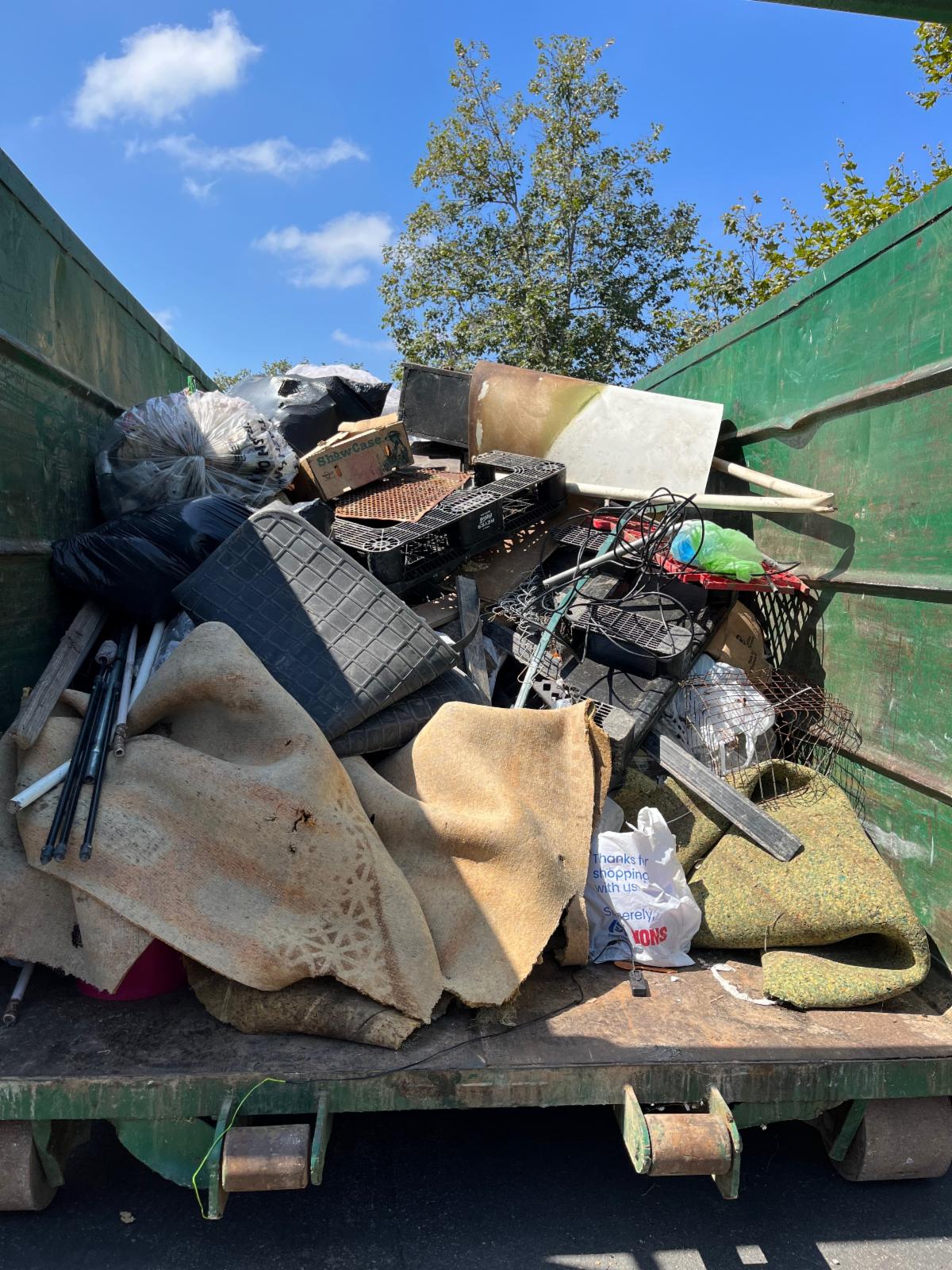
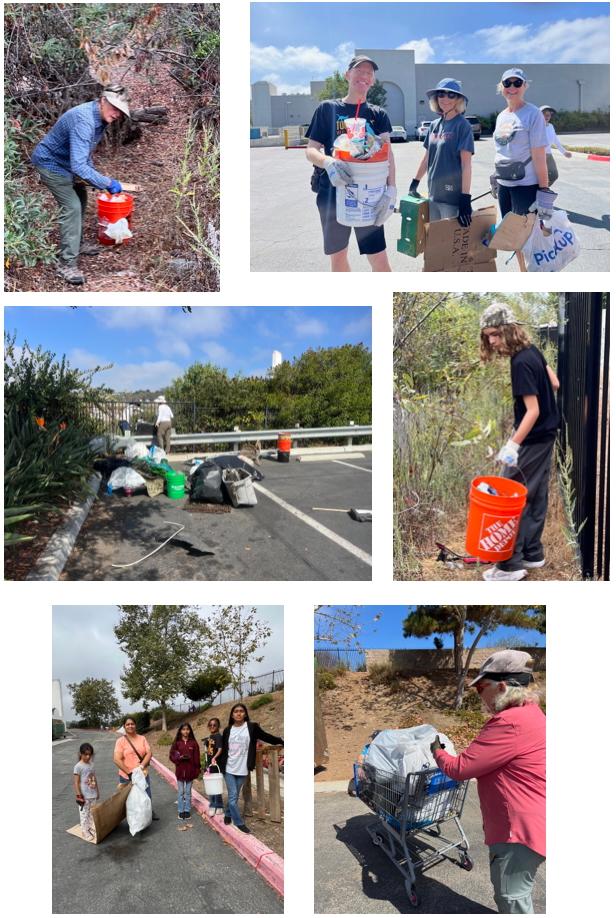
Preserve Calavera and San Diego Habitat Conservancy hosted two clean ups at El Salto Falls sponsored by I Love a Clean San Diego: Creek to Bay Clean up in April (LINK) and Coastal Clean up Day in September (LINK). A big thank you to the 110 volunteers that showed up for these challenging events along the steep creek bank.
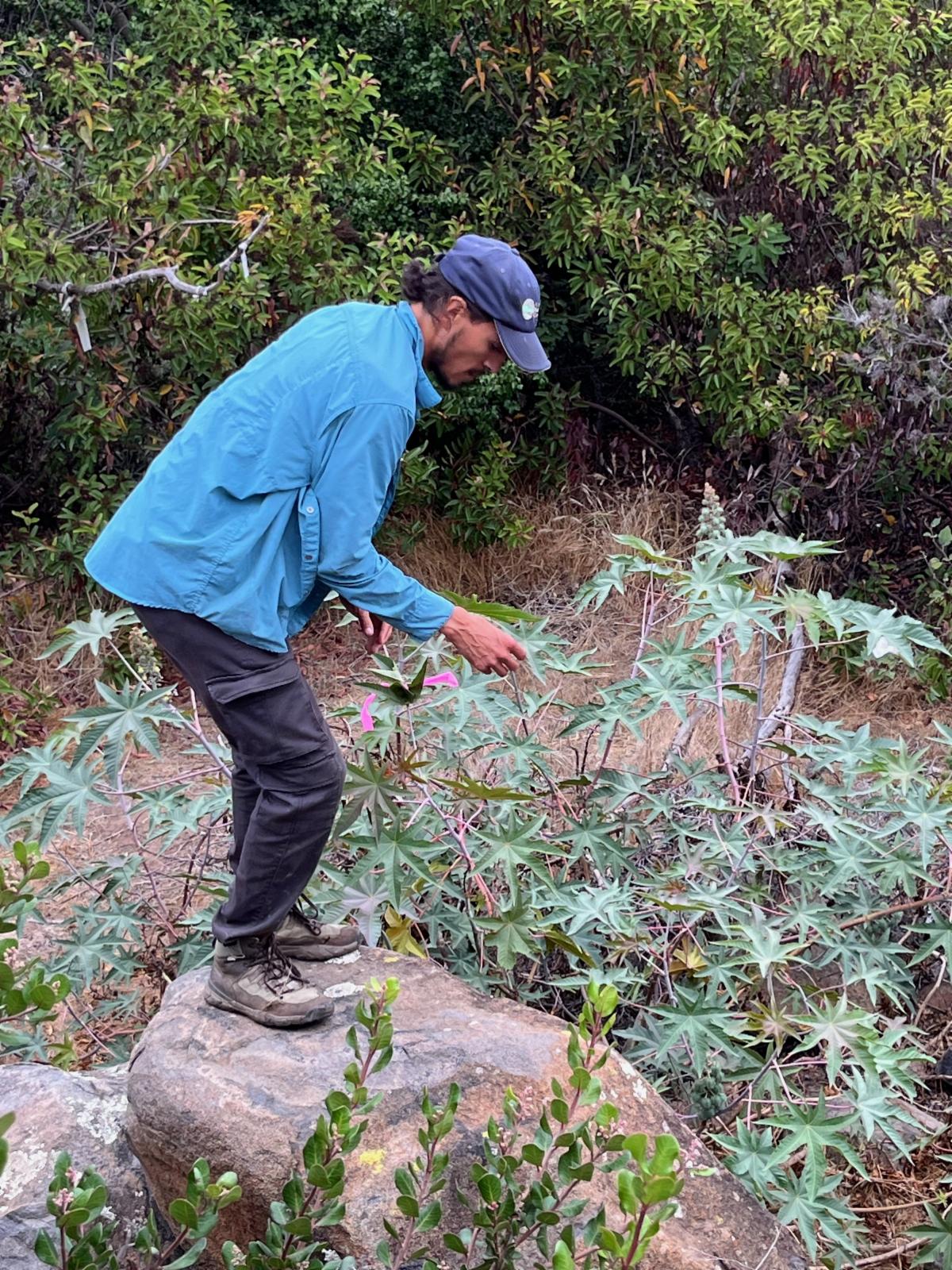
Invasive plant species were also removed. Vince Rivas (SDHC) tagging castor bean for removal; photo at left.
| | | | |
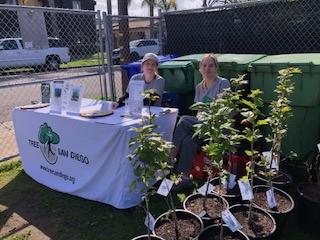
Free Tree Distribution - In March (for Arbor Day) and May we sponsored tree distribution events organized by Tree San Diego.
111 trees have been given away this year and all were native: Coast Live Oak, Honey Mesquite, Sycamore and Black Elder.
Trees benefit our communities in so many way: Tree Benefits
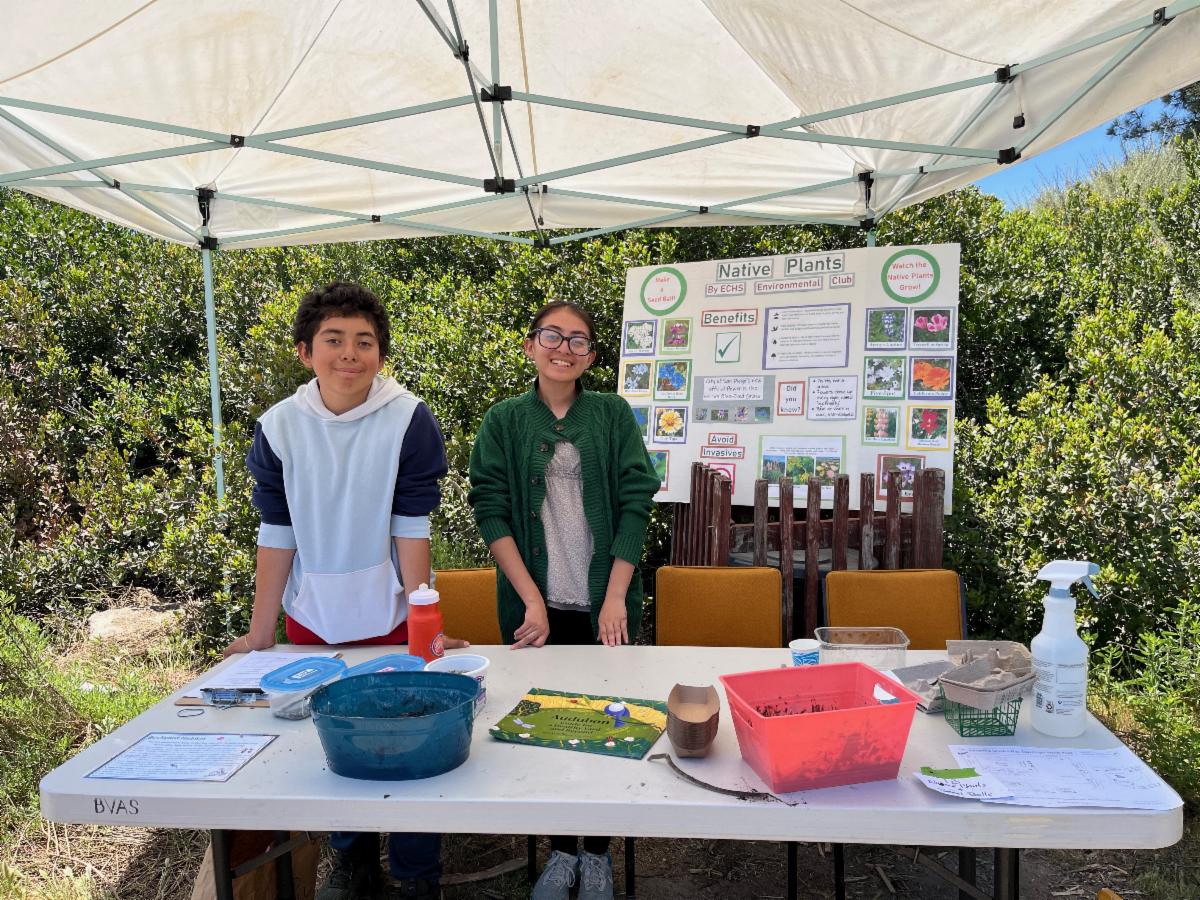
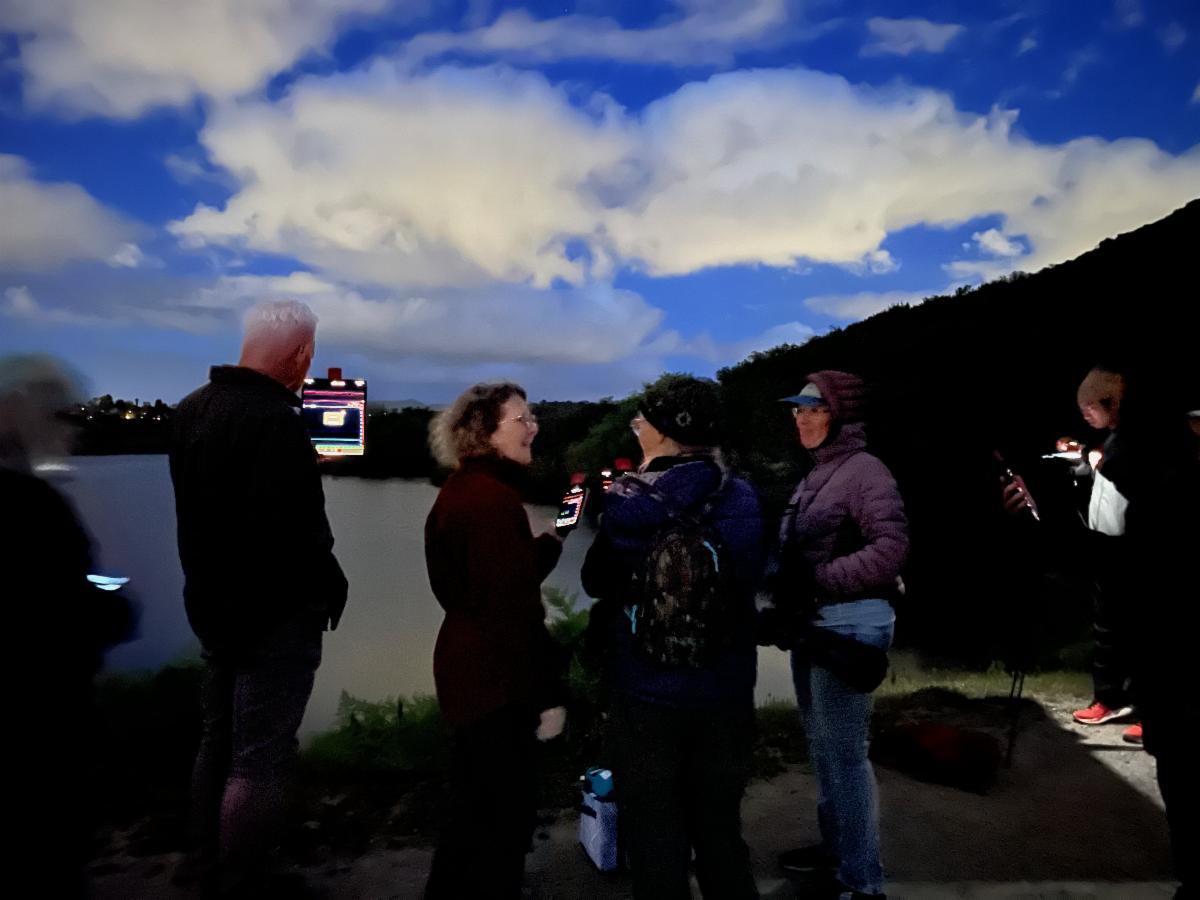
| | Endangered Species Day- Buena Vista Audubon Society (BVAS) and Preserve Calavera cosponsored this annual May event (LINK). It provides an opportunity for the community to learn about the importance of protecting not just endangered species, but all native species and their unique habitats. | | Bat Outing at Lake Calavera- We participated in the City Nature Challenge in April by hosting a Bat Outing. There were about 2 dozen participants; many brought bat detectors and also night vision scopes and cameras. Shown above, Cindy Meyers (volunteer bat advocate and community educator with SD Humane Soc) teaching about our local bats and answering question. | | |
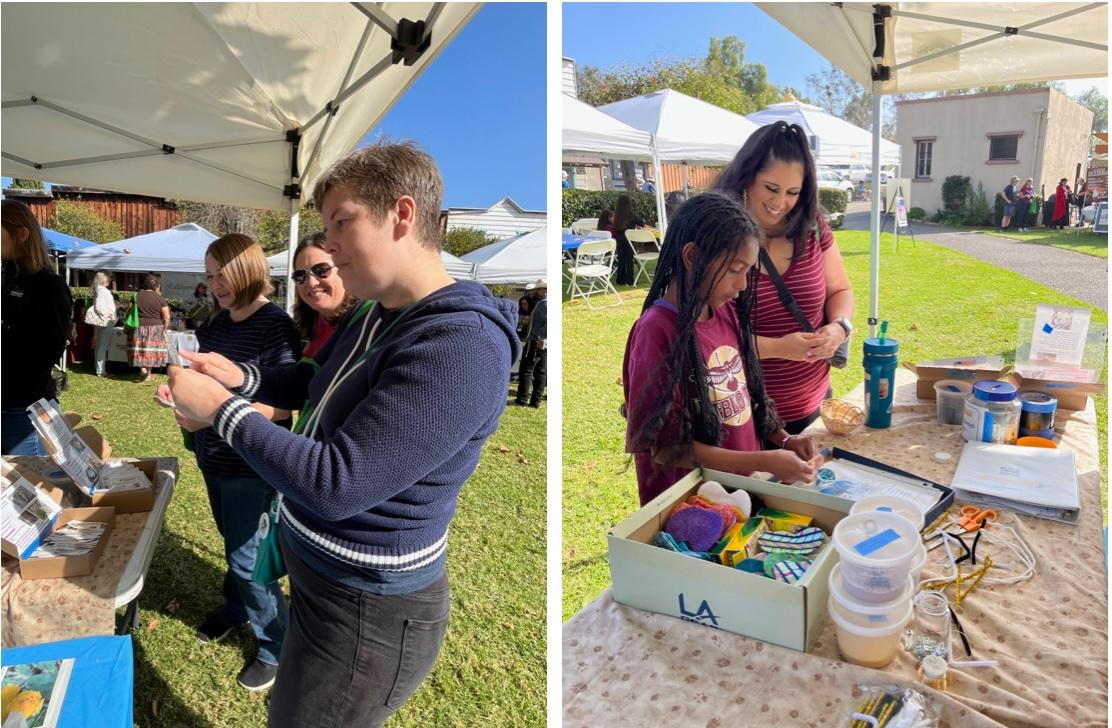
Valley Arts Festival- An annual celebration of Oceanside and its first peoples, today known as the San Luis Rey Band of Mission Indians, one of the seven tribes of the Luiseño nation.
At our event tables, along with sharing info about El Salto Falls, visitors learned about our local pollinators, and were able to make decorative butterflies.
| | Engaging with our local city governments and other agencies | | |
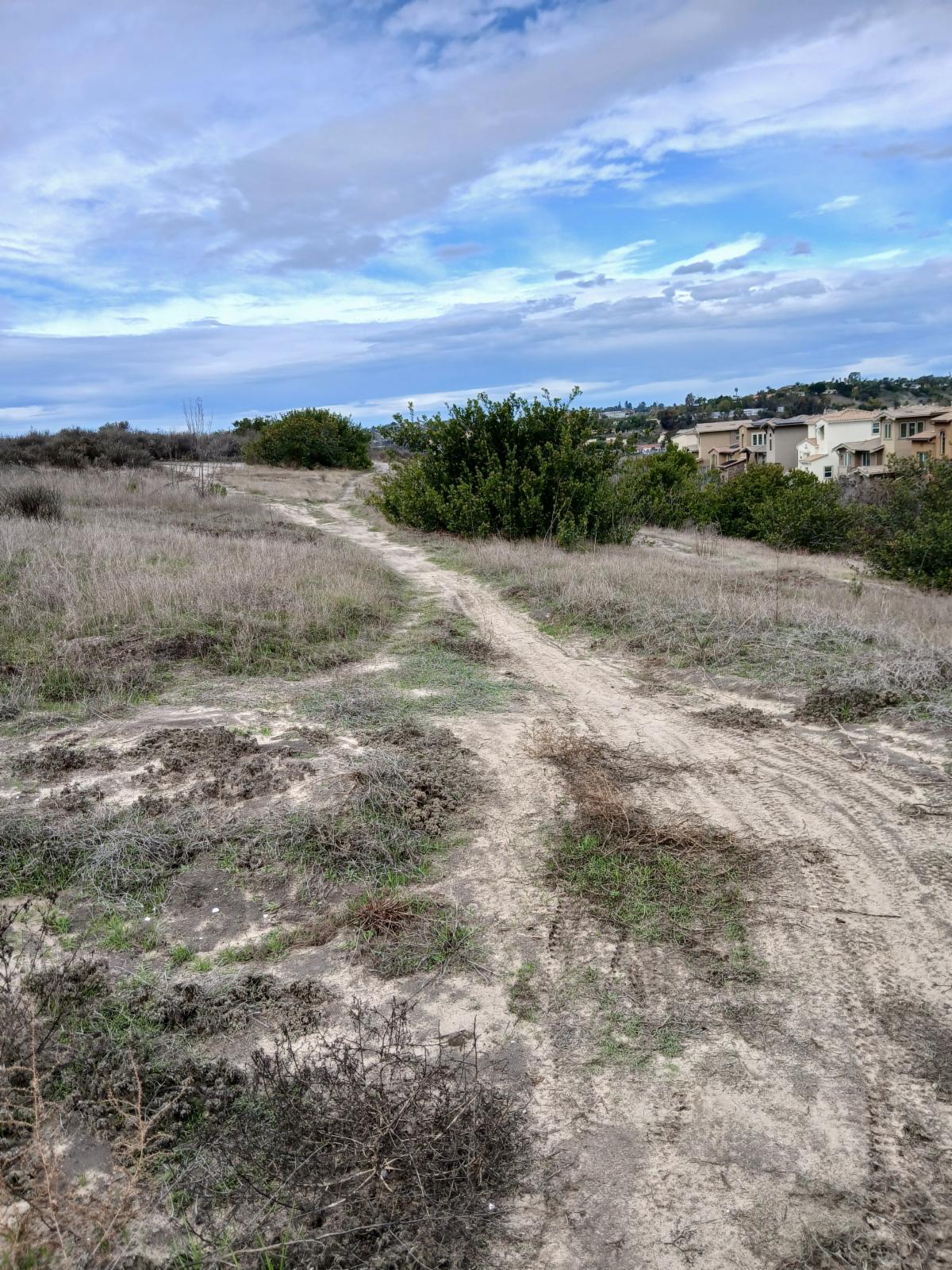
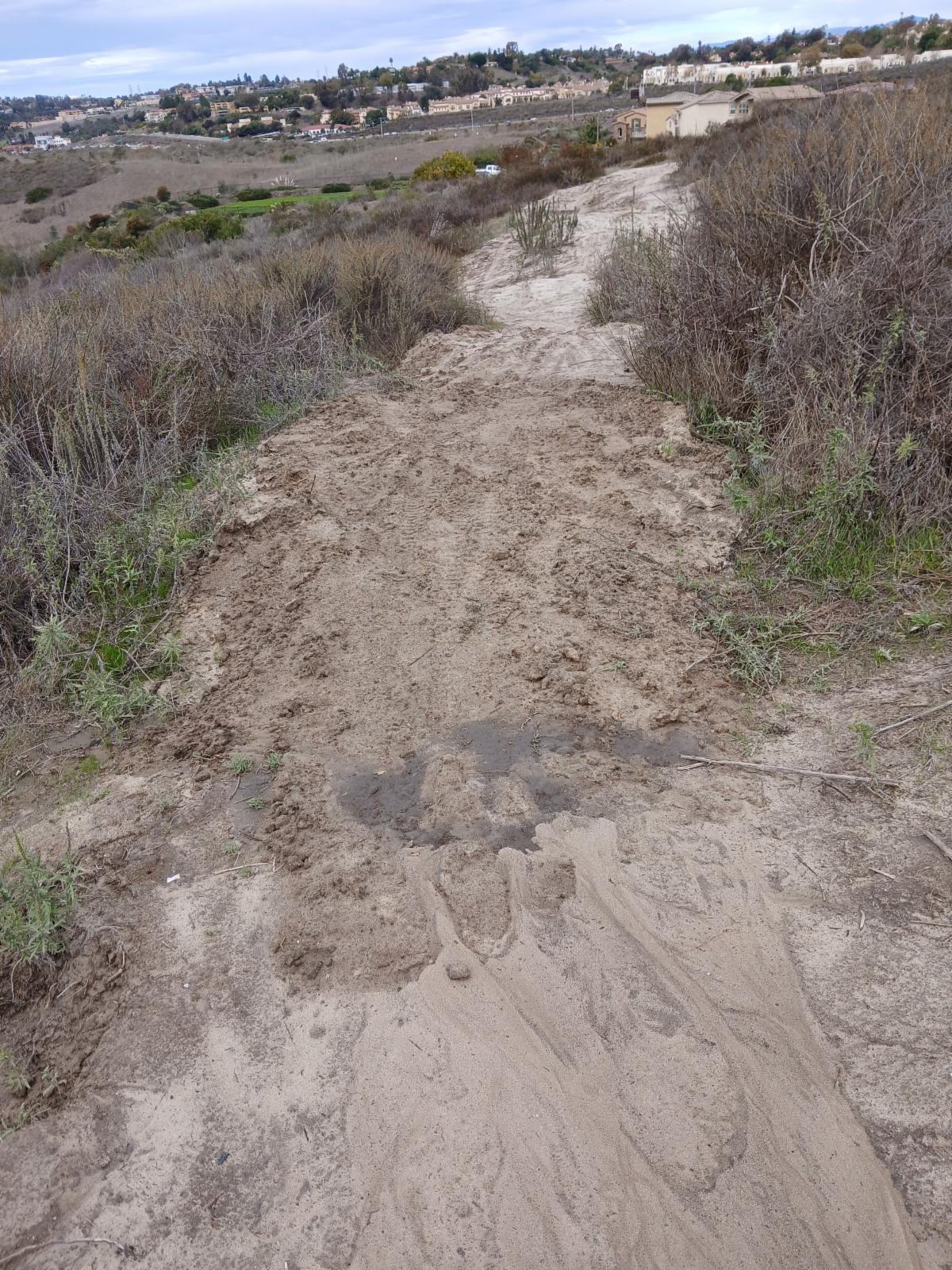
We continue to engage with our local city governments and other agencies to reduce the impacts of new development and enact policies that lower our greenhouse gas emissions, and protect open space. This may be a meeting with city staff or a developer regarding a new project, sending a comment letter or speaking at a city council/planning department meeting. It may also be to report unauthorized uses of our preserved open space (see bike jumps below).
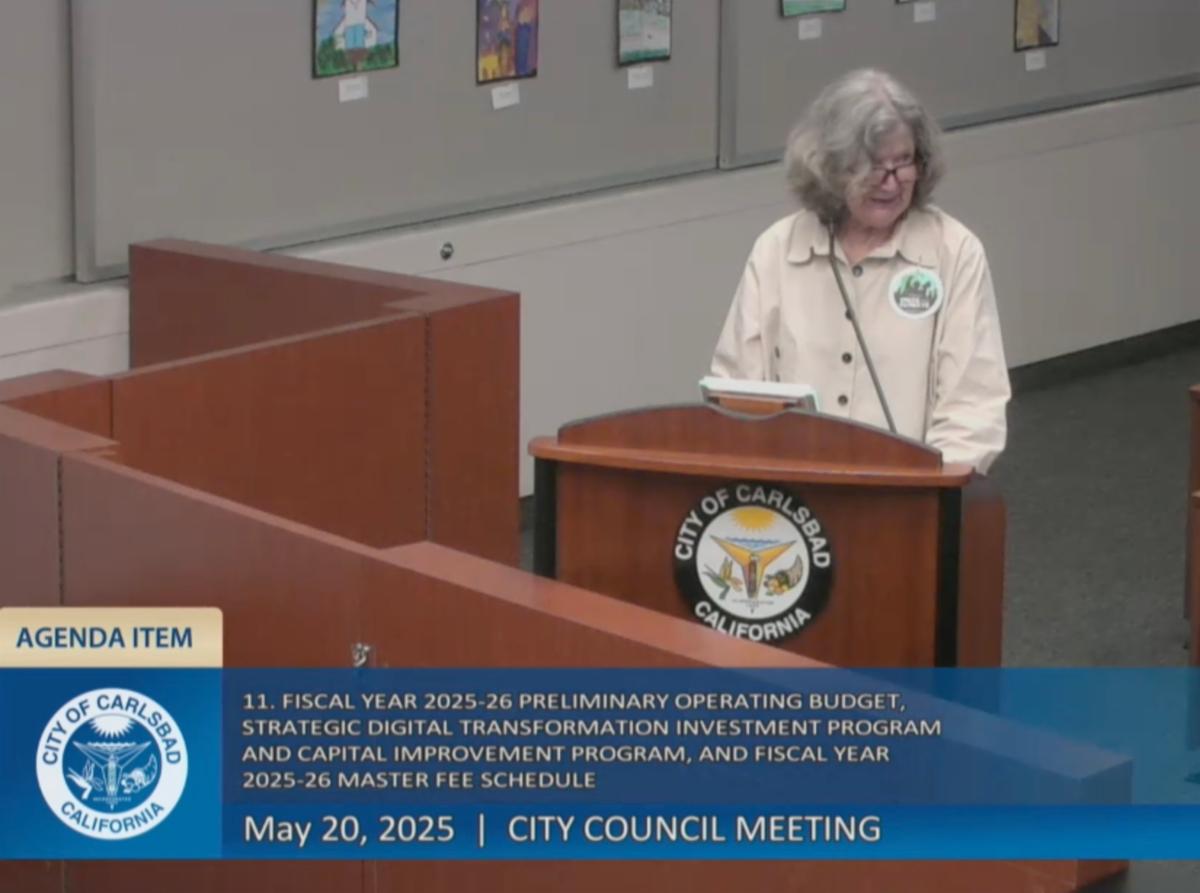
Below left, our Board President Diane Nygaard speaking at a Carlsbad City Council meeting in May. She was expressing concern about illegal trails at Lake Calavera and CHER and asking about 2 additional park rangers to patrol the area.
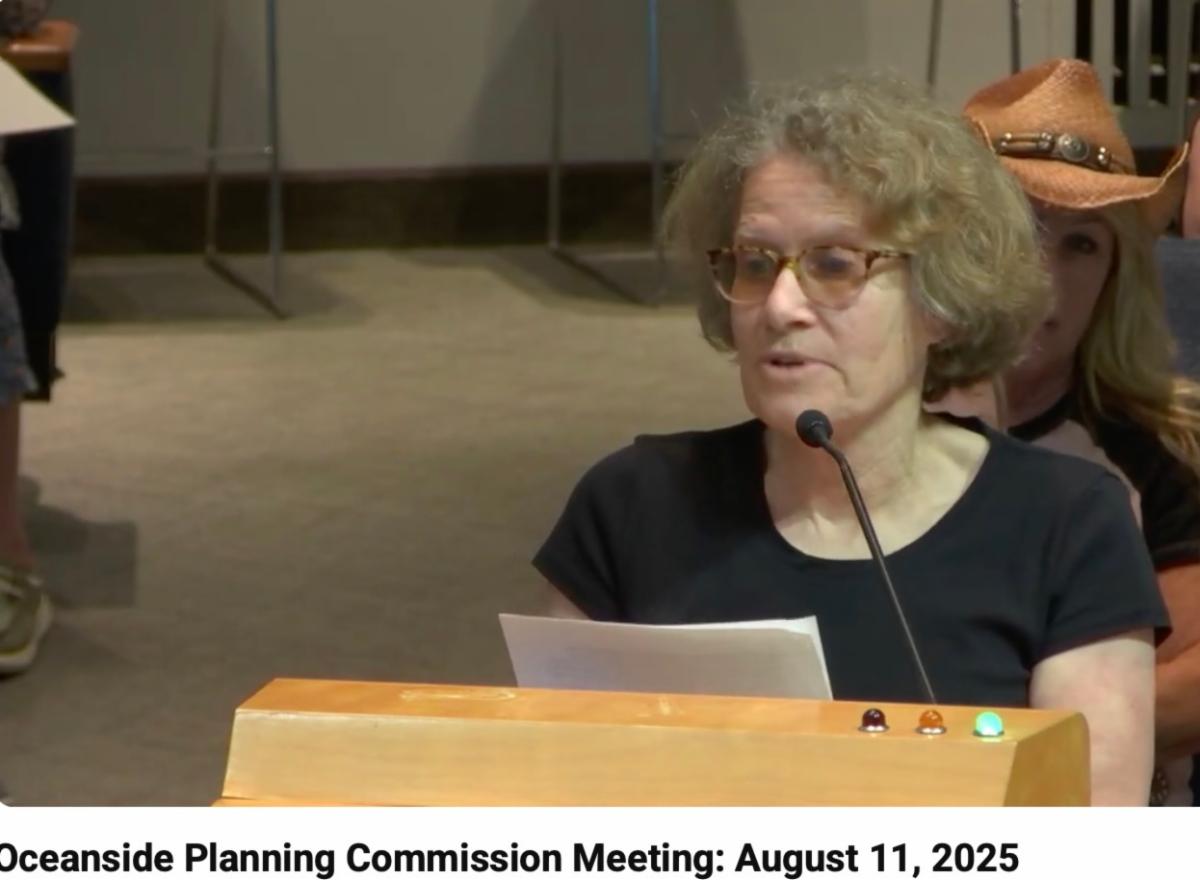
And below right, Board Member Ellen Bartlett speaking at the Oceanside Planning Commission Meeting regarding the impacts a proposed housing development project will have on Guajome Regional Park and the surrounding area.
| | Building illegal bike jumps is another problem that goes along with illegal trails. We monitor areas where they are commonly built and notify proper authorities so the areas can be restored. We took the photos below on November 22 at an illegal bike jump area just off Simsbury Court in Carlsbad. The area had been restored early this year and bike jumps removed. The left photo shows that the bike jumps have not been rebuilt. At right, there is one spot where fresh digging to rebuild a jump can be seen. You can see recent bike tracks and area showing an erosion channel from bikes. | | Event Calendar for December | | |
Thurs/Friday, Dec. 4, 5 (and Jan 2,3)
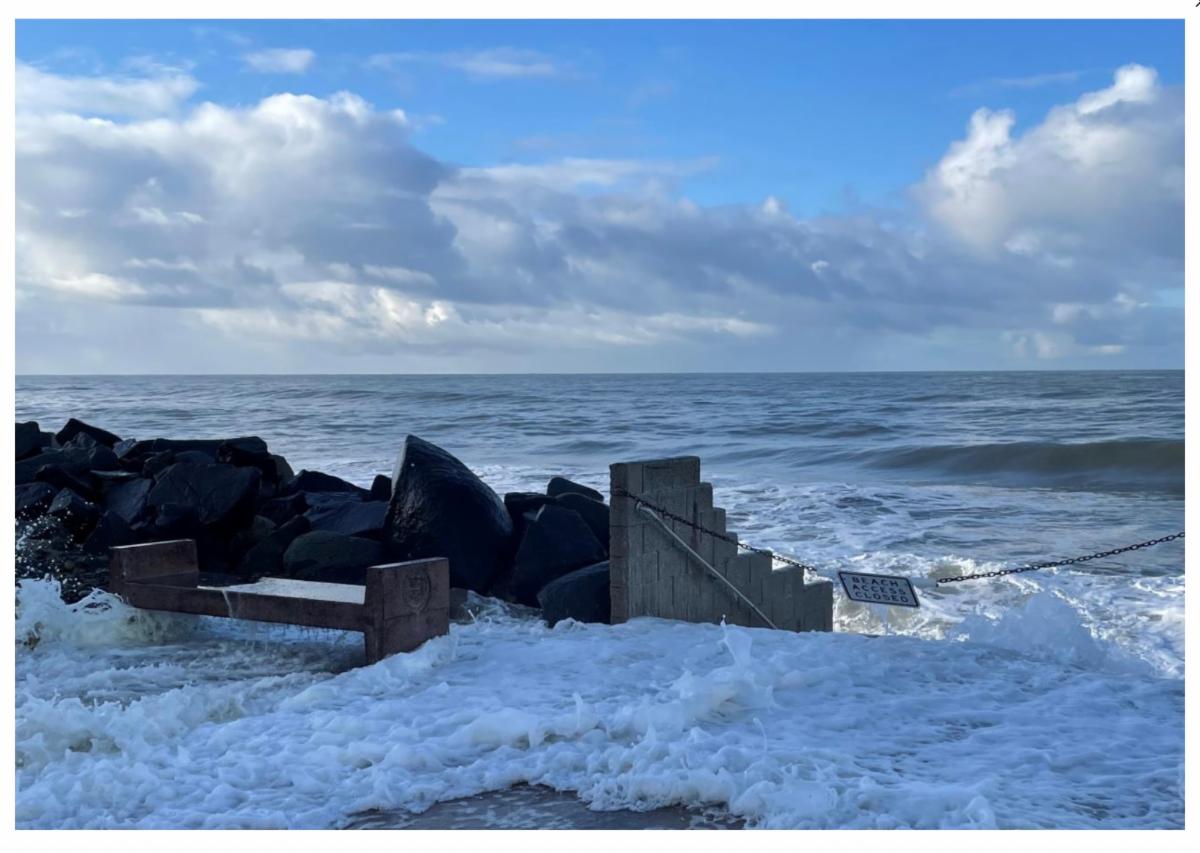
King Tides
CA King Tides Project needs your help to photograph the King Tides, the highest projected tides of the year.Your photos create a record of changes to our shoreline while helping us understand what's vulnerable to flooding now and how sea level rise will impact California in the future.
Find your King Tide dates and times by looking at the pin on their tide map that's closest to where you would like to photograph. Try to take your photos within a half hour of peak high tide, and above all else, make sure you're safe when you do it.
| |  | |
Find out more at the: CA King Tides Project Site
You can add your photos to the website gallery like this one taken at the foot of Hayes St. in South Oceanside last year.
| | |
Sat, Dec. 13
Rancho La Costa Restoration
9:00 am - 10:30 am
To RSVP or for more info contact:
info@preservecalavera.org
or call Anne-Catherine:858-353-6232
| | | |
Removing non-native plants and watering native plants as needed.
Prepare: Wear appropriate (preferably long pants/sleeves) clothing, closed-toed shoes, and hat. Bring gloves, sunscreen and water.
| | |
Sat, Dec. 20
El Corazon Restoration
9:00 am - 10:30 am
To RSVP or for more info contact:
info@preservecalavera.org
or call Diane:760-724-3887
| | | |
Removing invasive plants from this site.
Prepare: Wear appropriate (preferably long pants/sleeves) clothing, closed-toed shoes, and hat. Bring gloves, sunscreen and water.
| | Is There a Naturalist in You? | |
Check out the new syllabus for 2026 Cal Nat Class: LINK
Our California Naturalist certification training in 2026 will be lead by two alumni, Jimmy Kidd and Lisa Kuleto. The class is tentatively scheduled for Tuesday evenings, 5:30-8:30 pm from March 3 through May 5, to be held at the Buena Vista Nature Center.
Check the Preserve Calavera website for information and links will updated as more information becomes available for the 2026 semester.
Registration will open in December. Please contact us at calnat.pc@gmail.com for questions about the course or registration. Please use REGISTRATION in the Subject line when you contact us.
| | |
This 10-week course will introduce you to the wonders of California’s ecology and engage you in the stewardship of our natural environment. This science-based class includes guest speakers, discussions, hands-on activities, field trips and project-based learning to immerse you into the world of coastal sage scrub and chaparral.
The program seeks to foster a committed corps of volunteer naturalists and citizen scientists trained and ready to take an active role in local natural resource conservation, restoration, and environmental education. Preserve Calavera is able to offer this program in partnership with UCSD Natural Reserve Systems and Buena Vista Audubon.
| | Check out this video, made by a former student Phil (class of 2022), and you will get to see the class in action! | | Wildlife Corner: Finding Mushrooms After the Rains | | |
Where's the best place to look for mushrooms after the recent rains?
Best bet is anywhere there are oak trees and fallen logs. Bigger mushrooms poke through the oak leaf duff (layer of organic matter on the ground). Often when you hunker down to look at one you’ll see a different one just nearby.
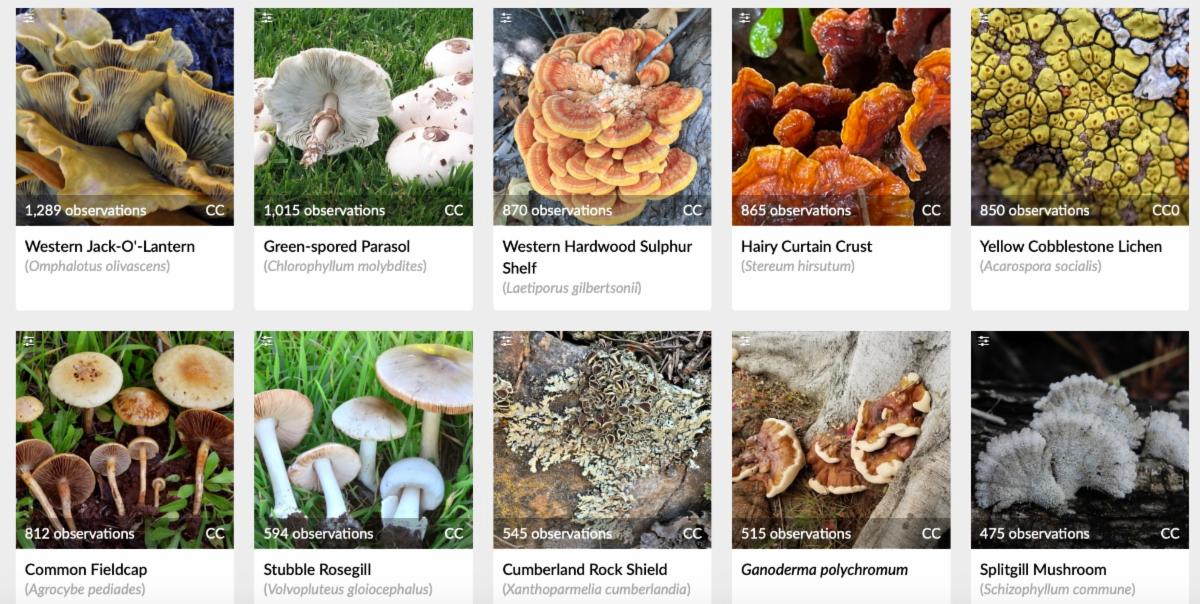
The CA Naturalist History Museum has a helpful list of the 10 Most Commonly Seen Mushrooms in Southern California. This will help you to learn how to identify the mushrooms you're most likely to see this season.
10 Most common Mushrooms listOnc
And just to get you started, here's the first mushroom on the list.
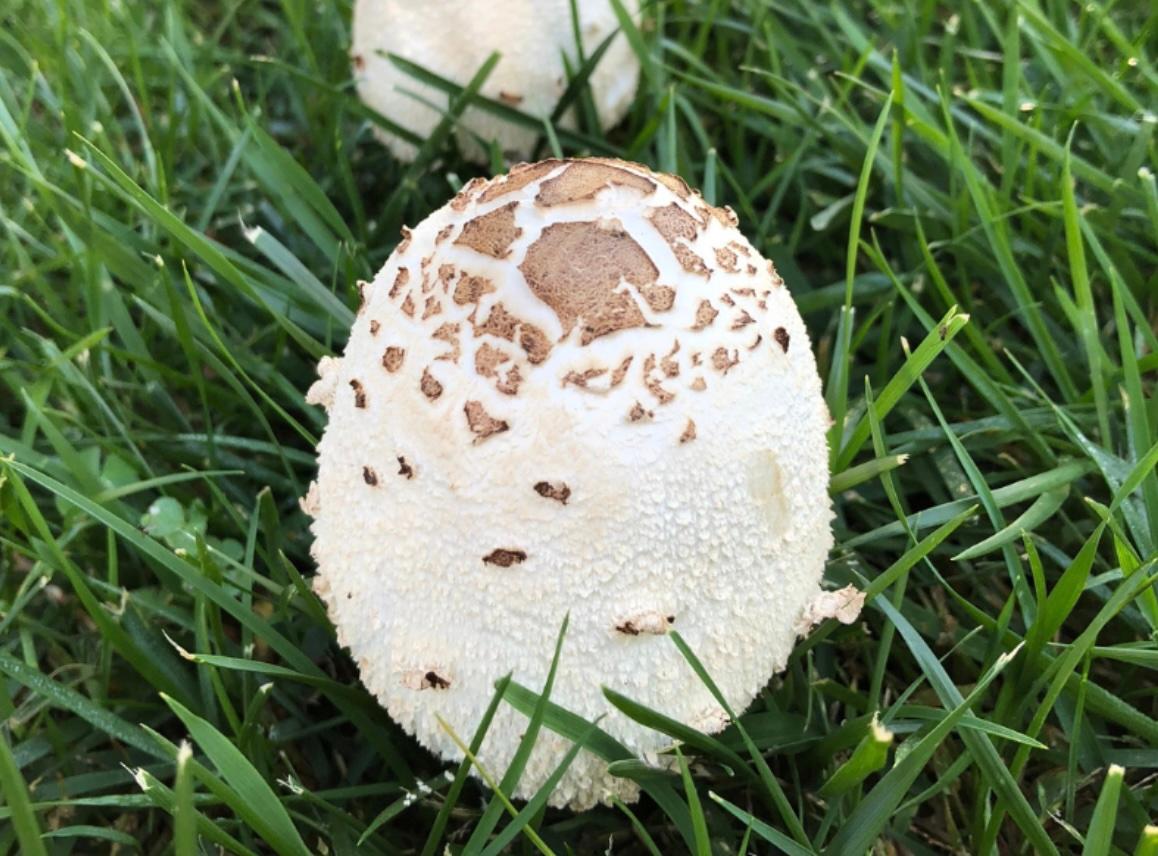
1. Green-spored Parasol a.k.a. Vomiter (Chlorophyllum molybdites)
| |
| | |
It's name is probably a give away that it's toxic!
According to the Nat, this mushroom is often called "the most commonly eaten toxic mushroom in North America" because it looks remarkably similar to a number of other button and field mushrooms. It is distinguishable by its green spores (a rarity in local fungi) and the smooth white cap on top covered in small brown scales. (Vomiter photo credit Rachel Allingham)
| | | | |
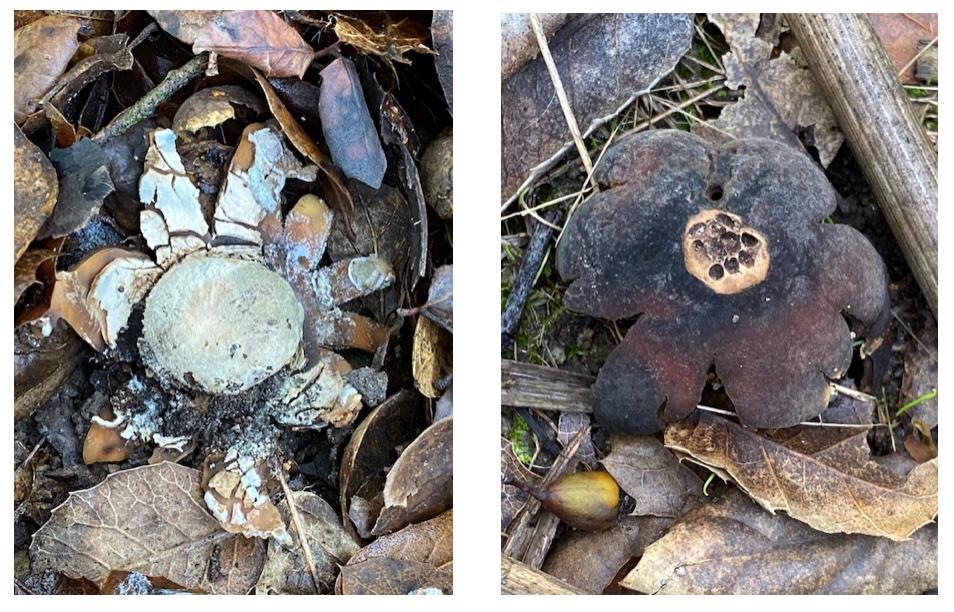
Once you keep your head down on the trail, you will start noticing all sorts of interesting mushrooms. One of the more common ones found under oaks trees are the earth stars. They are a little hard to spot since they blend in with the duff. In the photo you will notice the dried oak leaves as well.
The earth stars below were at photographed at Oak Riparian Trail by Karen Merrill. Earth stars are in the genus Astraeus; within the fungi family Diplocystaceae. Since the genus has a wide distribution, and contains nine species of earth star mushrooms, it is difficult to determine the species.
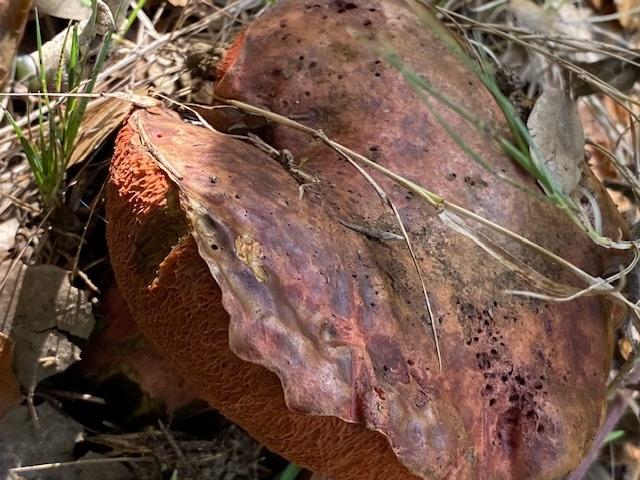
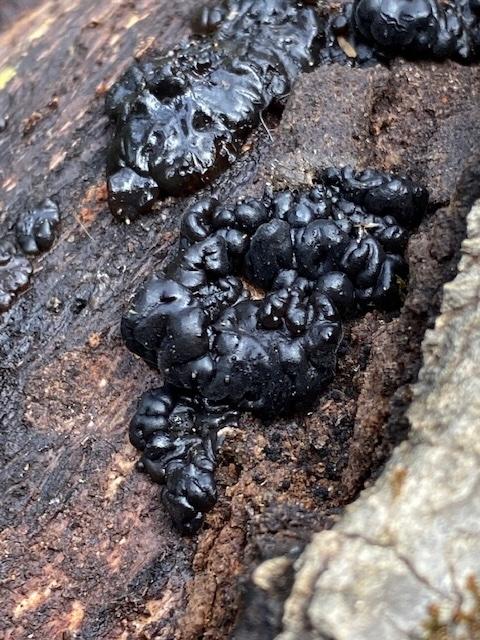
| | And if you run across either of these, don't be fooled; They're not really liver or Black Witches’ Butter. but just weird looking fungi. | | |
Above- liver bolete, Suillellus amygdalinus.
At right- Black witches' butter, Exidia glandulosa.
Photos by Karen Merrill.
| | | You can also check out the top 10 San Diego County observations of fungi reported on iNaturalist and have fun looking for those after the next rains. | | |
Our all-volunteer organization can not do what we do without your help. Your time, talent and donation can make a difference right in your own backyard.
Contact us to see how else you could get involved.
| | And Check out our Website | And all of our past Newsletters can be accessed here. Lots of local information about our open space and wildlife issues. | | | | | |