| | |
MONTHLY NEWSLETTER
July 2025
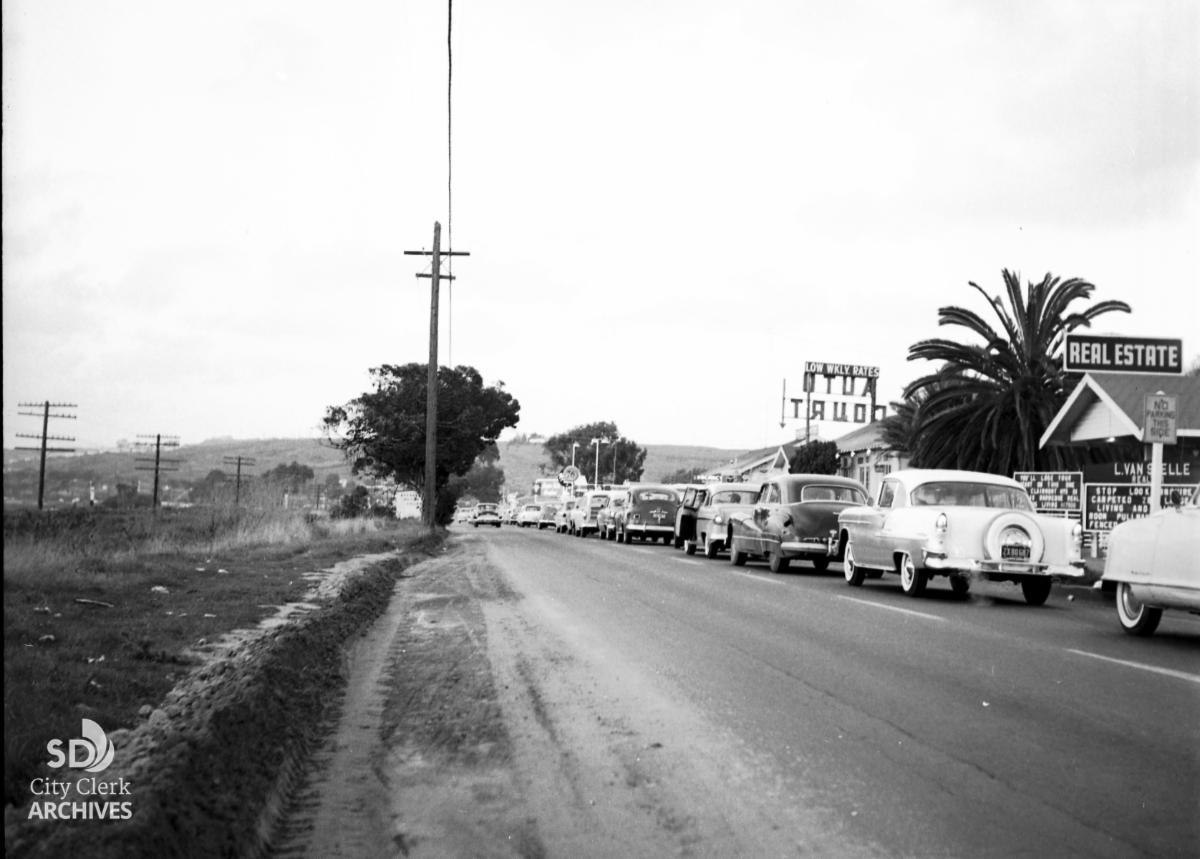
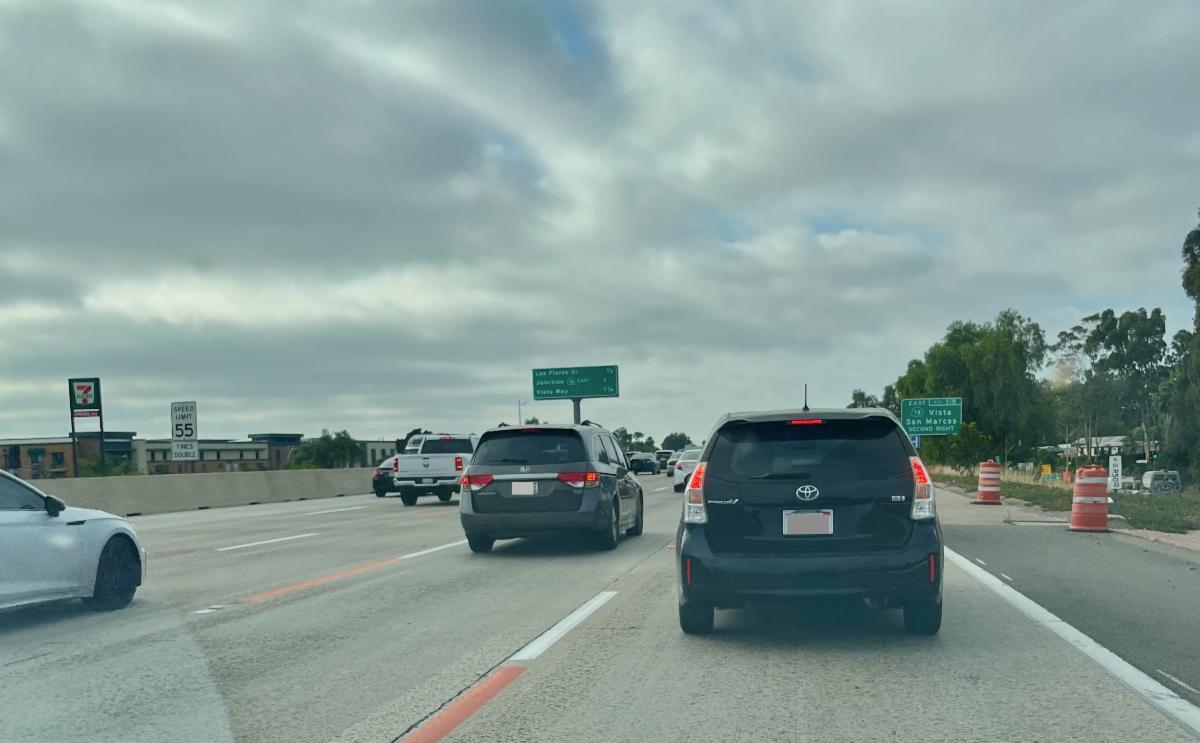
| | | | At left, 1955 traffic north of La Jolla before freeway Interstate 5 was built (credit City of San Diego Digital archives). Above, I 5 today passing through Carlsbad. (photo by E. Bartlett) | |
The First Mile/Last Mile Problem
Breaking away from the convenience of a solo car trip to work/school can pose real challenges but the benefits to the environment and our communities make it worthwhile. And finding ways to add active transportation to one's commute (human-powered mobility, such as biking or walking) has health benefits.
Studies in our region have shown that shifting only 3% from cars to transit would eliminate the need for any freeway expansion—saving billions of dollars.
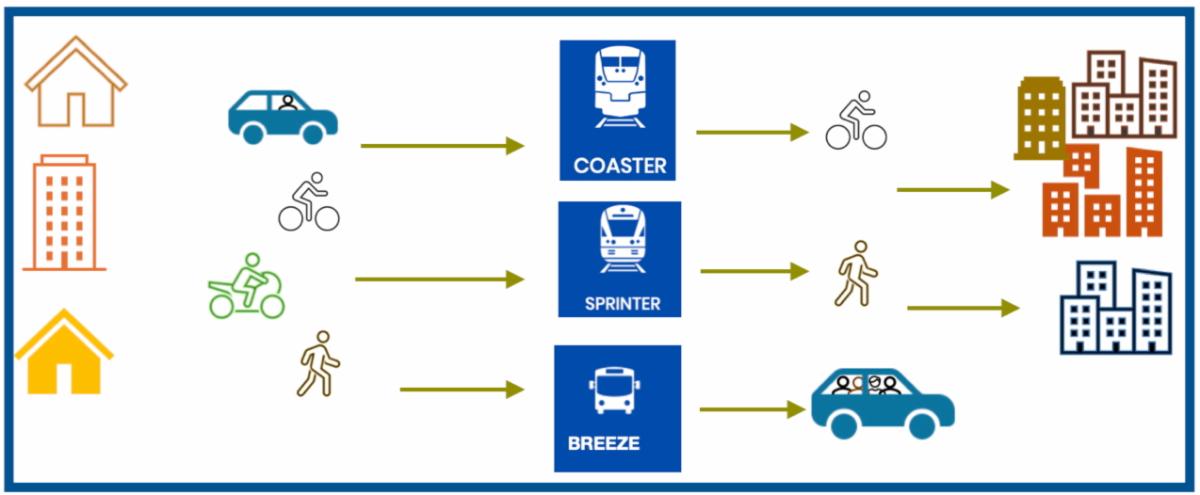
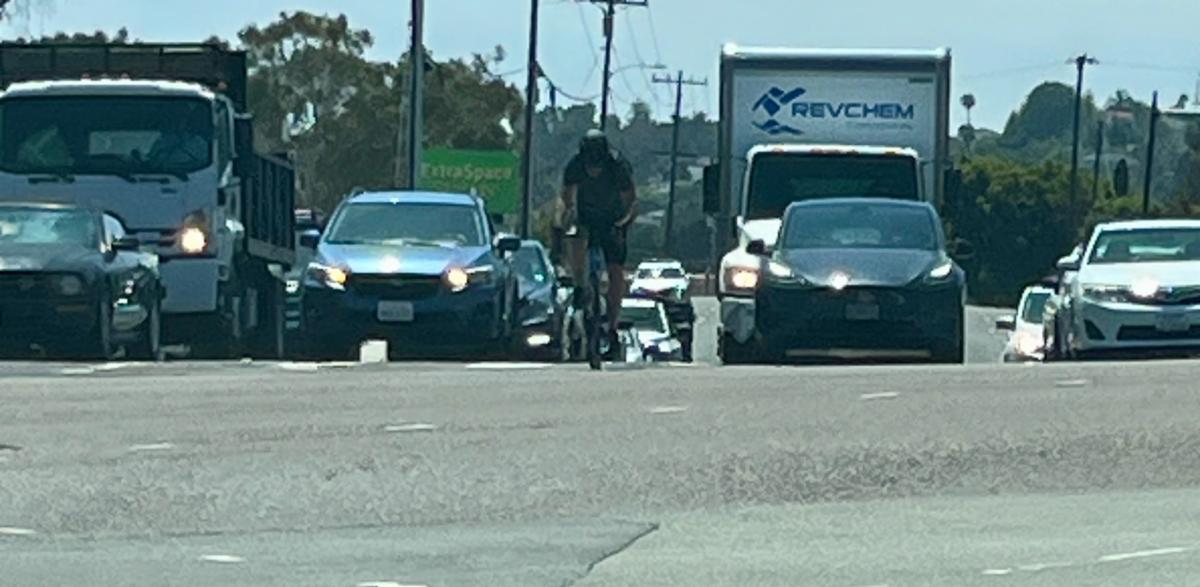
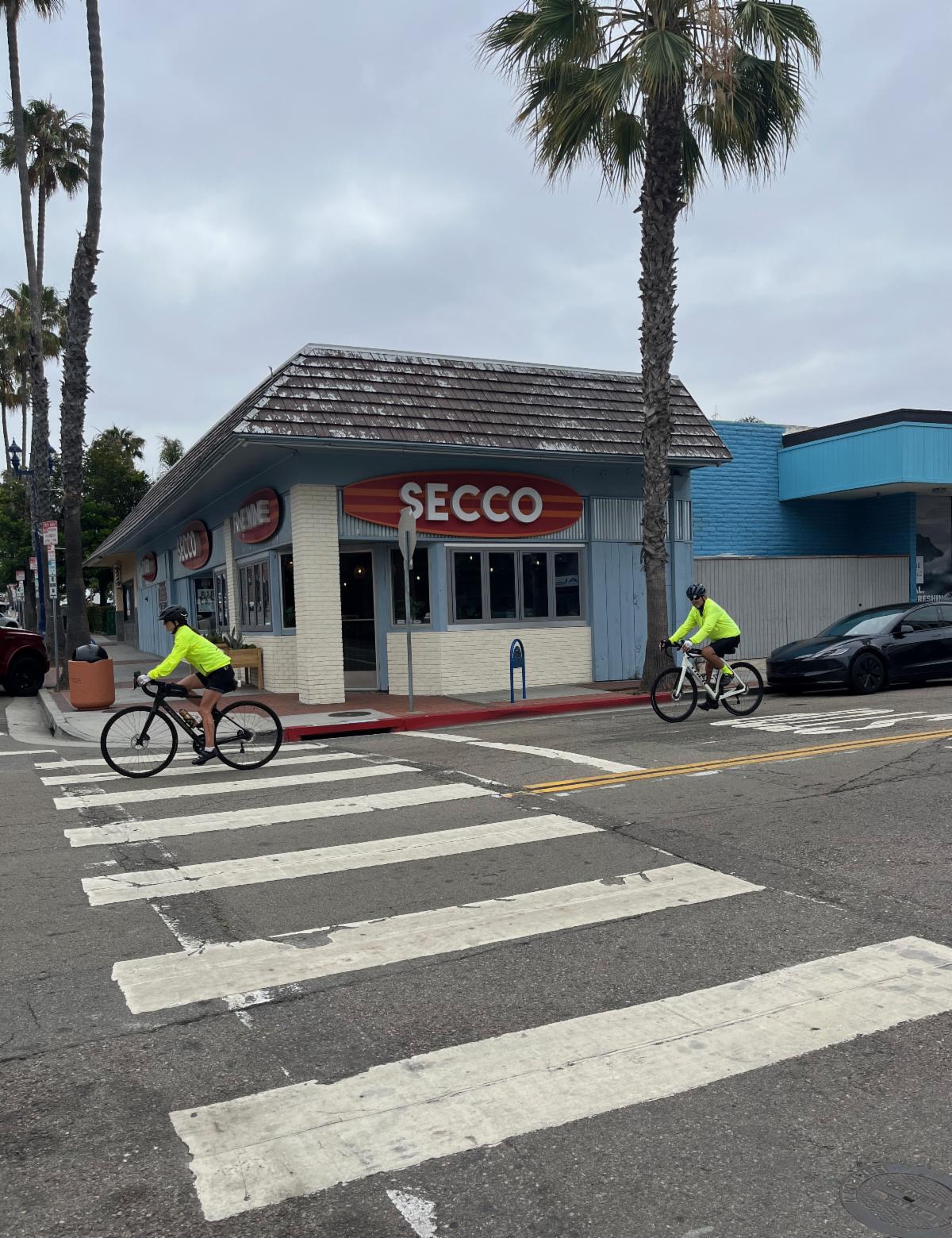
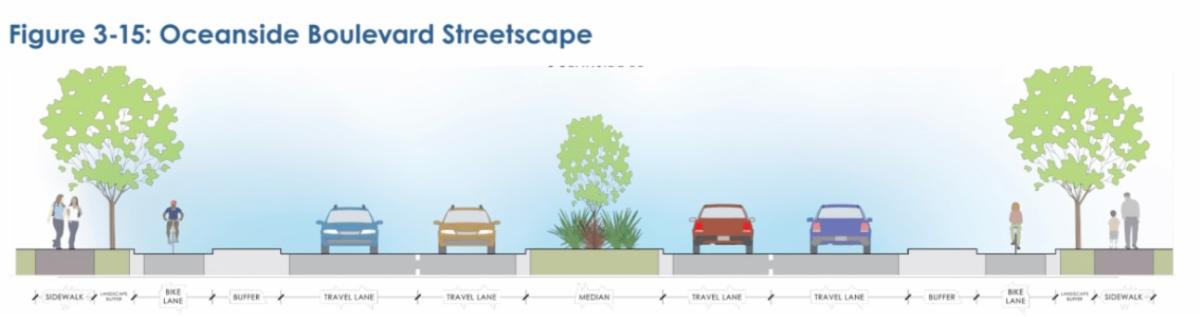
| | | | Exploring alternatives to the solo drive to work involve tackling the first mile/last mile problem for almost all of us; the challenge of getting to transit, and then from transit to our final destination. (Graphic by E. Bartlett) | | A Commuter Behavior Survey of 4,000 people was conducted by SANDAG in 2018 (LINK). Of those who currently drove alone to work, 56% said they would choose an alternative commute at least once a week under the right circumstances. The factors that would encourage them to do so would be improvements in travel time, accessibility, as well as incentives like discounts. When we look at reducing the number of cars on our streets that can make a big difference. You can read more on Solving the First/Last Mile Problem. | | Traditional bikes and e-bikes can be a solution for some commuters; either as a single mode to and from work/school or as part of a multimodal commute. But most streets are still designed to function as a passageway for cars. Although there have been some efforts to redesign streets and add dedicated bike lanes; there is still much work to do. | | Many roads lack adequate infrastructure to accommodate cyclists. Above, bicyclists navigating Pier View Way. At left, bicyclist taking a left turn on Oceanside Blvd to go north on El Camino Real. (photos by E. Bartlett) | | The City of Oceanside’s Smart and Sustainable Corridors Plan outlines strategies along the Mission Avenue, Oceanside Boulevard, and Vista Way corridors for reducing traffic congestion and increase utilization of public transit and other mobility options. You can see the plan HERE and check out some of the design recommendations such as the graphic below. | |
|
Oceanside's Safe Routes to School is part of a nation-wide program that aims to create safer conditions around schools, and to encourage students, parents, and school staff to walk or bike to school. But the City's plan targets just one school a year—which is way too slow to make an impact.
Check out their Safe Routes to Schools video at right.
| |
Getting away from car centered communities involves shifting the focus to concentrating growth in Smart Growth corridors.
But for that to work, we need transportation choices in those corridors so growth doesn't just exacerbate traffic congestion. We need the investment in alternative transportation. And we must make sure that alternative transportation is safe! Safety poses a real issue for folks biking and walking. (Photo by E. Bartlett)
| | | |
The City of Carlsbad’s Sustainable Mobility Plan focuses on traffic safety, reducing greenhouse gas emissions and increasing travel options for everyone throughout the city. You can find out about the plan HERE.
You can also view a short video that describes Carlsbad's plan using the link at right.
| | | |
The City of Vista is Taking Action on the First/Mile Last Mile Front:
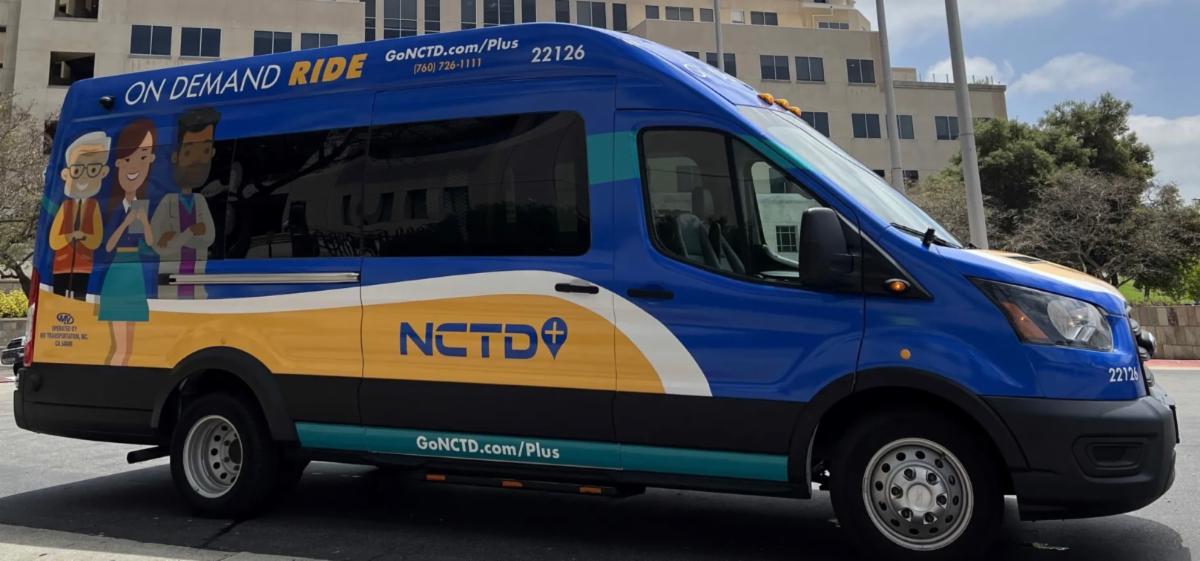
Kudos to the City of Vista for getting past the planning stage and implementing this new service launched in May called NCTD+. It offers on-demand rides within a seven-square-mile service zone in Vista. The zone includes vital community destinations and connects to three SPRINTER rail stations and 79 BREEZE bus stops, increasing local mobility and first-mile/last-mile access.
This is exactly what we need more of! You can read more about the new NCTD+ Service HERE.
The City of Oceanside relaunched its gO’side electric shuttle program for 2025. The shuttle serves a limited area; Downtown Oceanside, South Oceanside, the Oceanside Harbor, and areas East of I-5. It has limited hours that cater to visitors but many locals take advantage of the shuttle. LINK to service.
| |
Our Local Public Transit Options:
Public transit is available and it can be a good option if you live in the right location. Reduced rate eligibility is available for students, seniors and some other groups. Find out more: LINK. And our local colleges/universities are some of our most accessible sites. With that being said, getting to MiraCosta College from a home a few blocks from Oceanside Blvd near Crouch St. for example, may take 40 minutes or more in travel time vs 10 minutes by car.
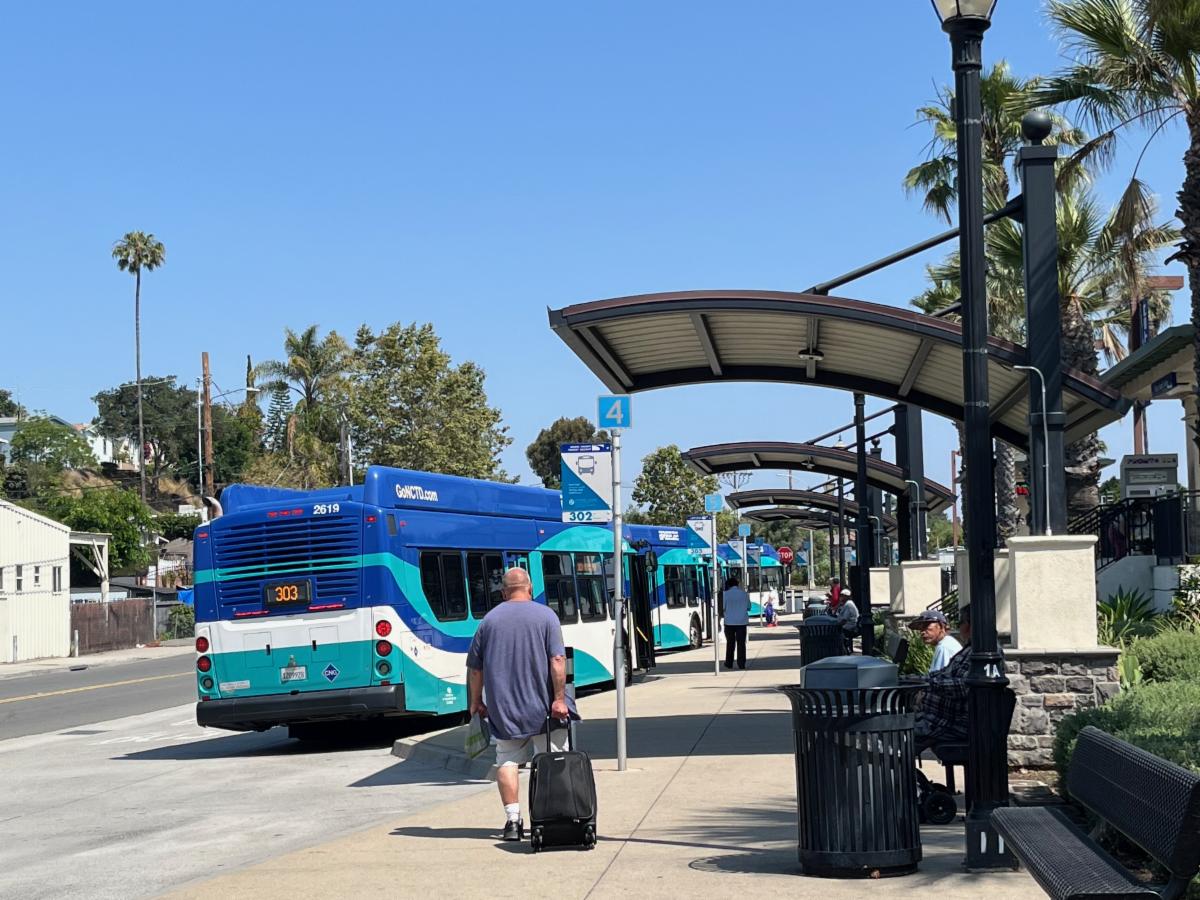
The SPRINTER conveniently runs every half hour Monday thru Friday but there are some frequency gaps on weekends and holidays. And if you want to transfer from the Sprinter to the Coaster, things can become problematic. The COASTER runs every 40 minutes in early morning and late afternoon but time lags can vary from 1 to 2 hours at other times of the day. And there are 30 routes on the BREEZE Bus System in North County that offer a variety of frequency and operational times.
| | | |
Bringing Your Bike Along on Public Transit
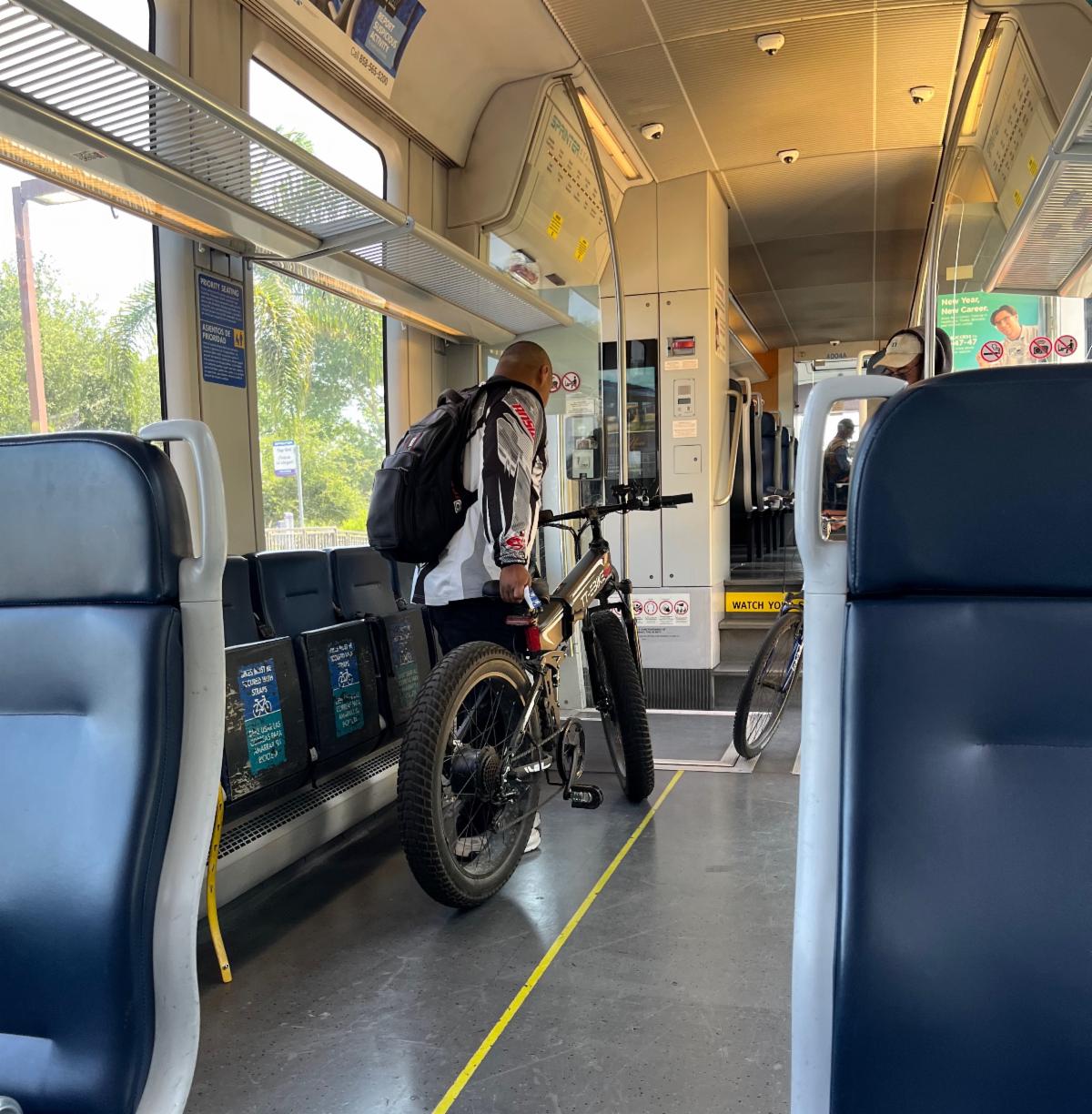
The SPRINTER and COASTER, in general, allow bikes and scooters but please read the NCTD policy for certain exceptions. Every BREEZE bus has a bike rack capable of handling at least two bikes with standard bike tires. Bikes on BREEZE are accepted on a first come, first served basis.
Unfortunately, one of our board members witnessed 3 young teens being denied access to the SPRINTER in downtown Vista on a Saturday around noontime because the bike storage areas were filled. The train attendant said the available space needed to remain open in case a person with a wheelchair boarded. Two stops later, another bike rider was denied access.
| | Above, rider securing his bike on the SPRINTER. (photo by E. Bartlett) | | | |
Is Your Neighborhood Walkable? Maybe Not.
But It Ought to Be!
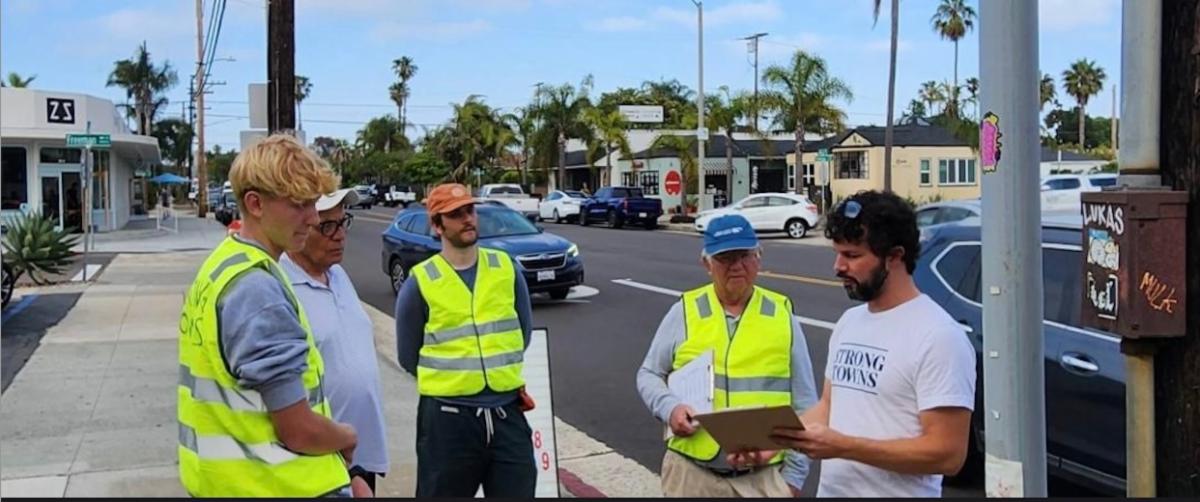
Strong Towns Oceanside advocates for a community built for people, not cars. Strong Towns with a team of local residents, recently conducted a Walk Audit of Vista Way and Coast Highway. The purpose of a Walk Audit is to assess and report on the safety and walkability of a street, intersection or neighborhood — and inspire needed change. In too many communities, people can’t safely walk to where they need or want to go due to a lack sidewalks, crosswalks or other safety features that make streets safe for pedestrians. Please check out the AARP Walk Audit Toolkit for information.
| | |
Above photo shows team leader, GT Wharton, (white tee shirt) with some of the team members. (Photo credit Strong Towns Oceanside).
You can view video of the Team's first ever Walk Audit lead by GT by using the link below. It is very worthwhile, so please check it out. And stay tuned for more audits in the future. Contact Strong Towns Oceanside to get involved.
| | Going Back to Our Original Question; What Can or Should We Do? | | Incorporating multimodal transportation strategies ultimately helps to preserve and protect our natural resources, and decrease greenhouse gas emissions. | |
- There will be less need to build major roadways which diminish our open space and bisect natural wildlife crossings.
- Motor vehicles make up the largest source of carbon emissions
-
Fewer cars means less pollution. And while EV cars have lower impact on climate compared with gas engine cars, this doesn't solve the problem.
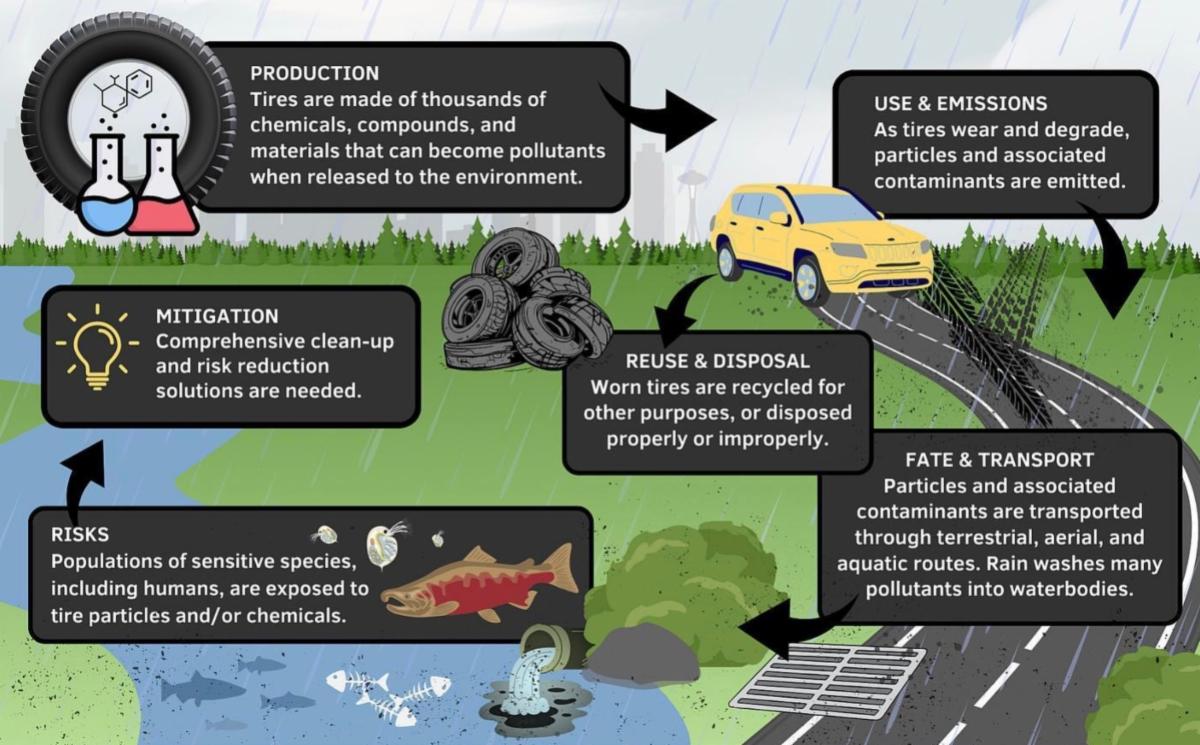
- Then there is the whole issue of tires that is often overlooked.
| | The graphic below illustrates the impacts of tires on the environment, including our precious water waterways. (Source) | | Incorporating Active Transport strategies ultimately helps to keep us healthy | | |
Active transportation is human-powered mobility, such as biking, walking and skateboarding. And it is good for your health; providing we work to make our streets safe. Active transportation requires a dedicated network of sidewalks, bike lanes, bike paths, overpasses, crosswalks, and bike racks to ensure people can get where they need to go safely and efficiently (Read more)
There is solid evidence showing an improvement in one’s health and well-being when ditching the car in favor of walking or biking to work. According to the World Health Organization, studies specifically investigating impacts of walking and cycling found:
- walking for 30 minutes or cycling for 20 minutes on most days reduces mortality risk by at least 10%;
- active commuting is associated with about a 10% decrease in risk for cardiovascular disease and a 30% decrease in type 2 diabetes risk; and
- cancer-related mortality is 30% lower among bike commuters
| | So What are Some Things We Can Do? | |
- Make the extra effort to use the NCTD for your trip. There are some trips we all take that are more accessible from public transit than others. Start with something easy like the SD County Fair.
- Try carpooling to work/school one day a week if you are currently a solo driver. Ask your employer to get involved so you can connect easier with follow employees.
- Lets bring back school buses for transporting our kids to school. The majority of our bus transport was discontinued back in the 90s. But seeing the traffic congestion around our neighborhood schools should signal the need for the new zero emission school buses.
- Ask your employer about working from home on 1 or more days during the week or working a 4 day week if your job permits.
- If your are planning to move to new housing, look for a place along a public transit route that is accessible for some of your daily travels.
- Get involved in groups that support alternate transportation like Strong Towns.
| | NCTD has partnered with the Fair and MTS to offer the Fair Tripper combined fare. Fair Tripper tickets are available for same-day sale at ticket vending machines and via the PRONTO mobile app. | Find out about CA statewide funding program that will put 1,000 new, zero-emission school buses on the road. And lobby your local school district and school board. And learn more at the Electric School Bus Initiative. | |
Of Course we recognize that change does not come overnight and it can be difficult to accomplish, but the alternative is worse. We need to find ways to reduce our footprint on Planet Earth, and all the small steps we can take will add up to a better future for the generations to come.
Some Resource Links: UN Climate Action, World Resource Institute, National Geographic
| | |
"The greatest threat to our planet is the belief that someone else will save it."
Robert Swan
| | | |
Sat, July 12
Rancho La Costa Restoration
8:30 am - 10:00 am
We are back on summer hours
If you would like to volunteer you must RSVP to:
info@preservecalavera.org
or call Anne-Catherine: 858-353-6232
| |  | |
Removing non-native plants and watering native plants as needed.
Prepare: Wear appropriate (preferably long pants/sleeves) clothing, closed-toed
| | |
Sat, July 19
El Corazon Restoration
8:30 am - 10:00 am
We are back on summer hours
If you would like to volunteer you must RSVP to:
info@preservecalavera.org
or call Diane: 760-724-3887
| | | |
Removing invasive plants from this site.
Prepare: Wear appropriate (preferably long pants/sleeves) clothing, closed-toed shoes, and hat. Bring gloves, sunscreen and water.
| | Good News: North County Land Purchased for Conservation | | |
The San Diego County Board of Supervisors approved the purchase of about 540 acres of property in North County for $5.1 million to expand its conservation efforts.
Located within a designated conservation area in Santa Ysabel, the land will expand an existing 6,900-acre preserve slated to protect habitat for sensitive species including the mountain lion, mule deer, Stephens’ kangaroo rat and Engelmann oak. Read more.
We need a lot more of this!
| | photo credit SD County News Center | | | Wildlife Corner: California Buckwheat | | |
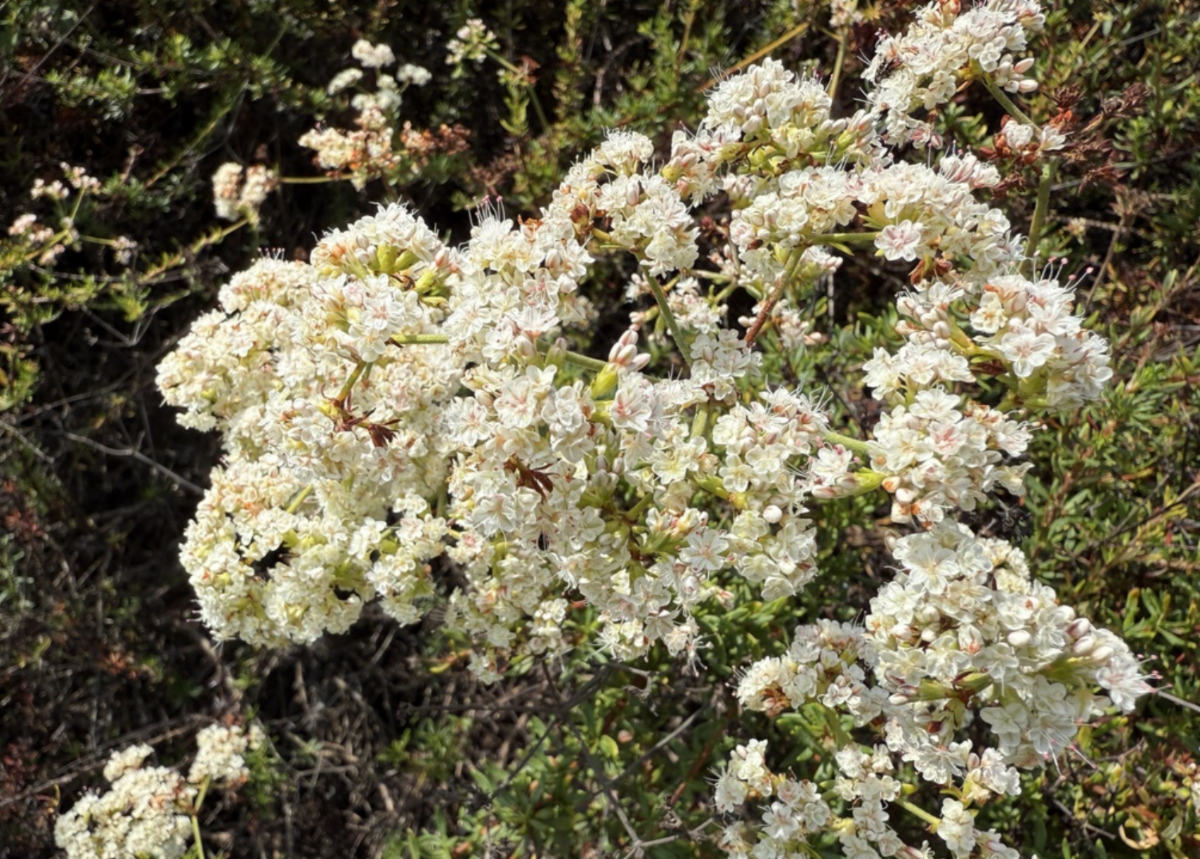
What's great about our native California buckwheat besides flowering all summer long and attracting a variety of pollinators? It's super easy to grow!
So if you have a sunny place in your yard with poor soil and where nothing seems to ever grow, that may just be the perfect place for California buckwheat (Eriogonum fasciculatum). And once its root system takes hold, it can live up to 50 years, requiring only the seasonal rainfall.
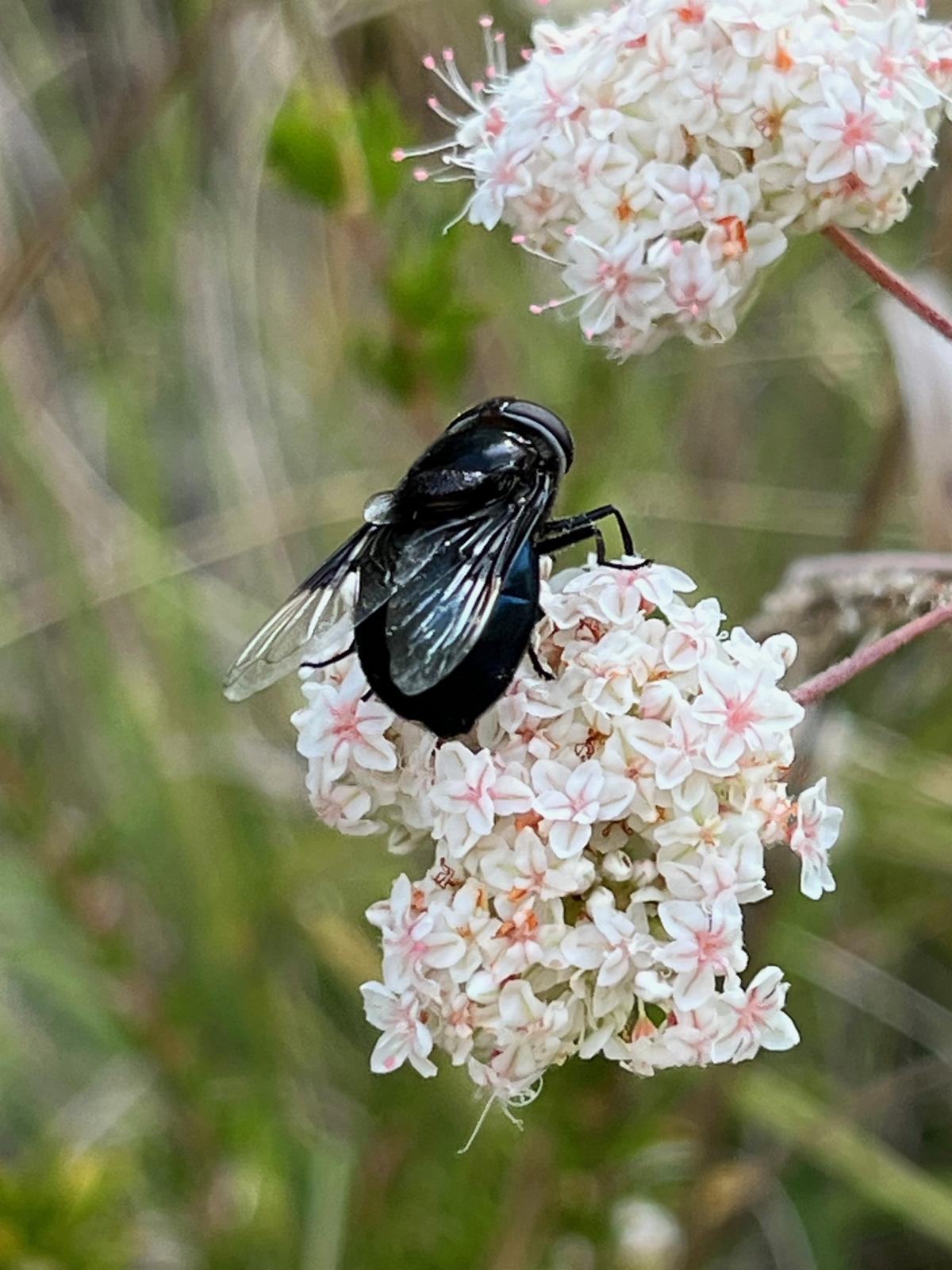
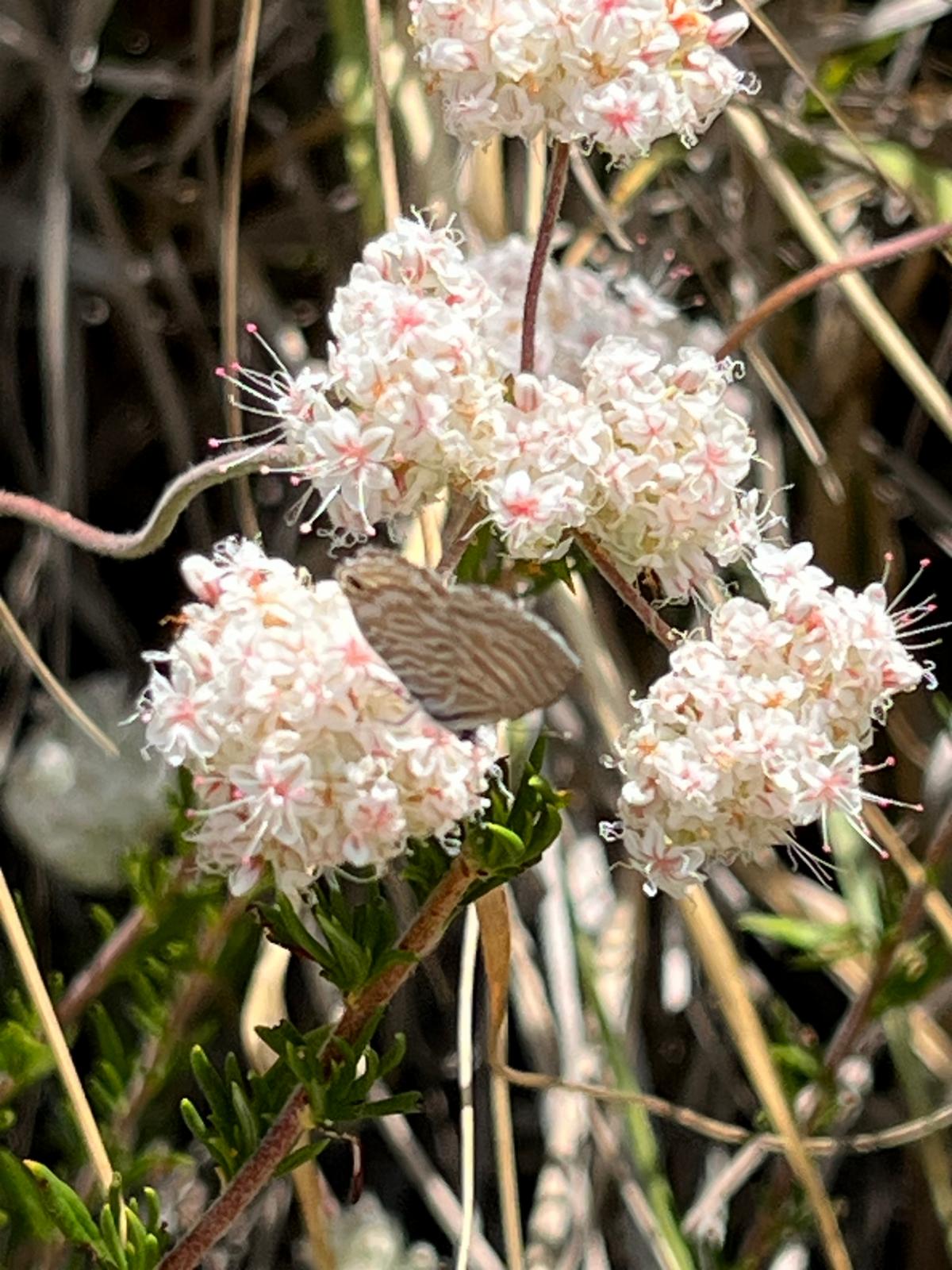
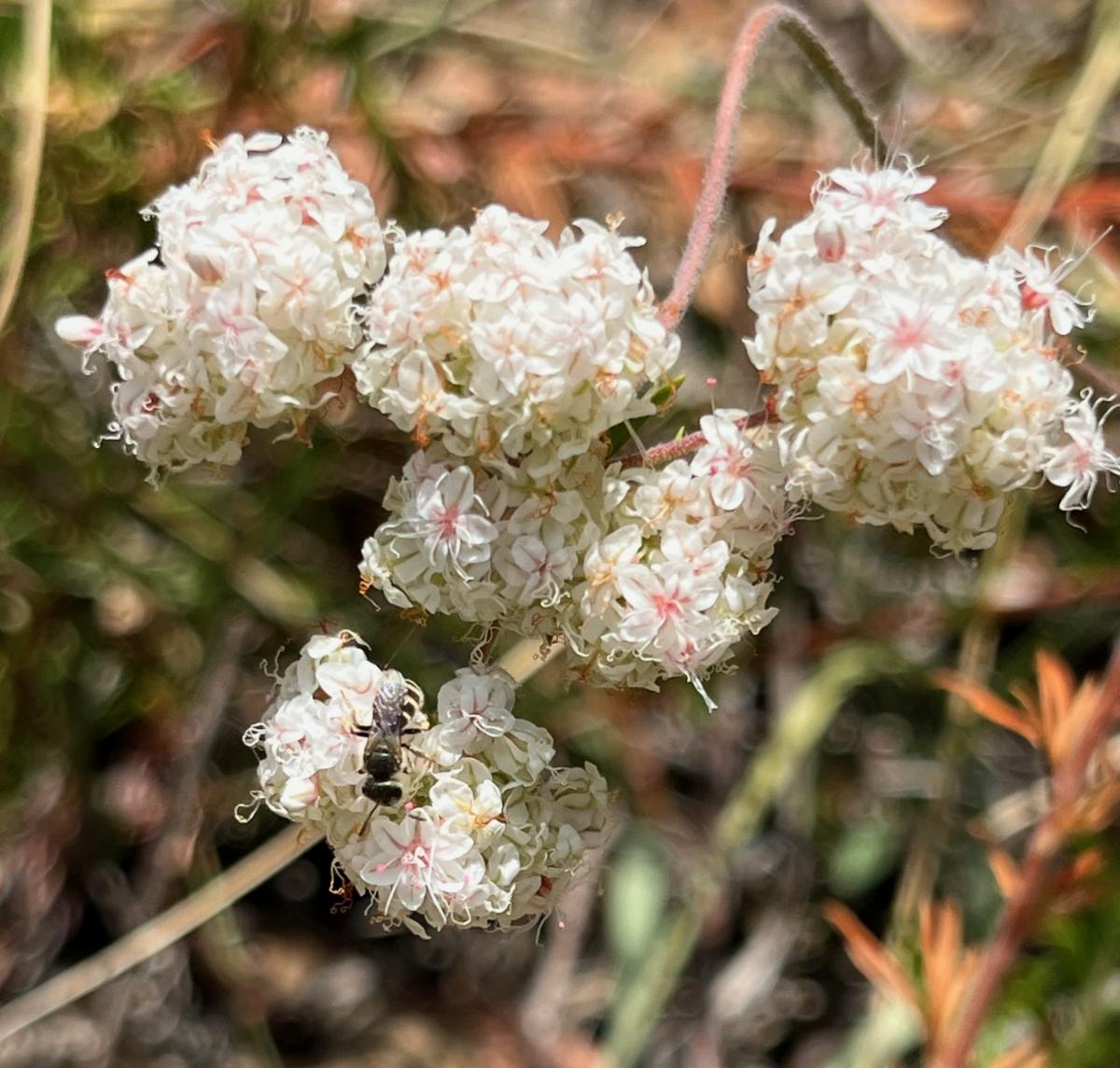
Along with a flowery show for months, buckwheat attracts a huge variety of wildlife. Check out some of the insects on our local buckwheat! Insect photos below by E. Bartlett from her yard in Oceanside.
| | Buckwheat above, photo credit Robert James | | |
The Mexican cactus fly, Copestylum mexicanum, is a member of the Syrphidae family. As you can see in the photo, it is quite large; in fact it is the largest flower fly we have in Southern California.
Members of this family are also known as hoverflies. They are aptly named because they can be often observed hovering around flowers similar to bees and they are very effective pollinators.
| | |
The marine blue (Leptotes marina) shown above is a common butterfly in our area. It can be identified by its white and brown "tiger stripes" on its ventral wings —which are seen when wings are closed like in the photo.
It gets its name from the blue or blue-purple coloring of the dorsal wings—which can be seen when the wings are open.
Marine blues aren't picky and will generally feed on nectar of whichever small flowers are in bloom.
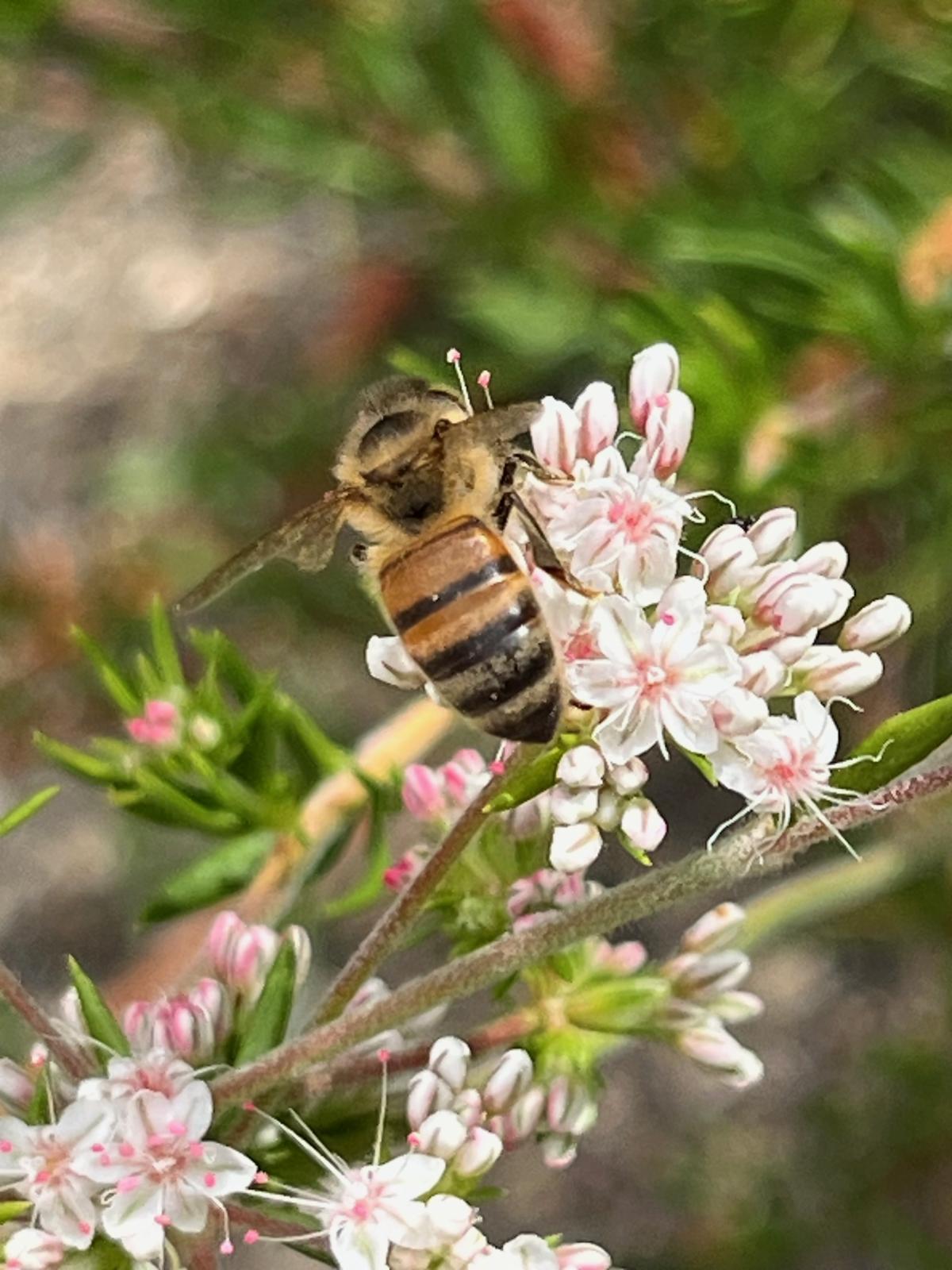
| | Above left is a native sweat bee. Sweat bees belong to the Halictidae family; the second-largest family of bees. Although they are not aggressive they got their name because they are attracted to human sweat. | And, at right, the ever present honey bee (Apis mellifera) which was brought to California for honey and beeswax production. As happens with many introduced species, honey bees took over. New research has revealed that honey bees often account for more than 90 percent of pollinators observed visiting flowers of many plant species in San Diego. Read more:Natural Reserve System,UC | | |
According to pollination ecologist Dr. Keng-Lou James Hung, “because of [its] generalist nature, buckwheat could benefit a very large diversity of pollinators that may enter urban gardens.”
As part of Dr. Hung’s thesis work at the University of California, San Diego, he documented insect pollinators of 53 plant species in coastal sage scrub habitats. Of the approximately 400 pollinator species observed, over half of them were seen foraging on California buckwheat. In his experience, California buckwheat “is among the most important plant species in [San Diego] for sustaining both the diversity and abundance of [its] native pollinator populations!”
Read more about it: SD Horticultural Society article.
| |
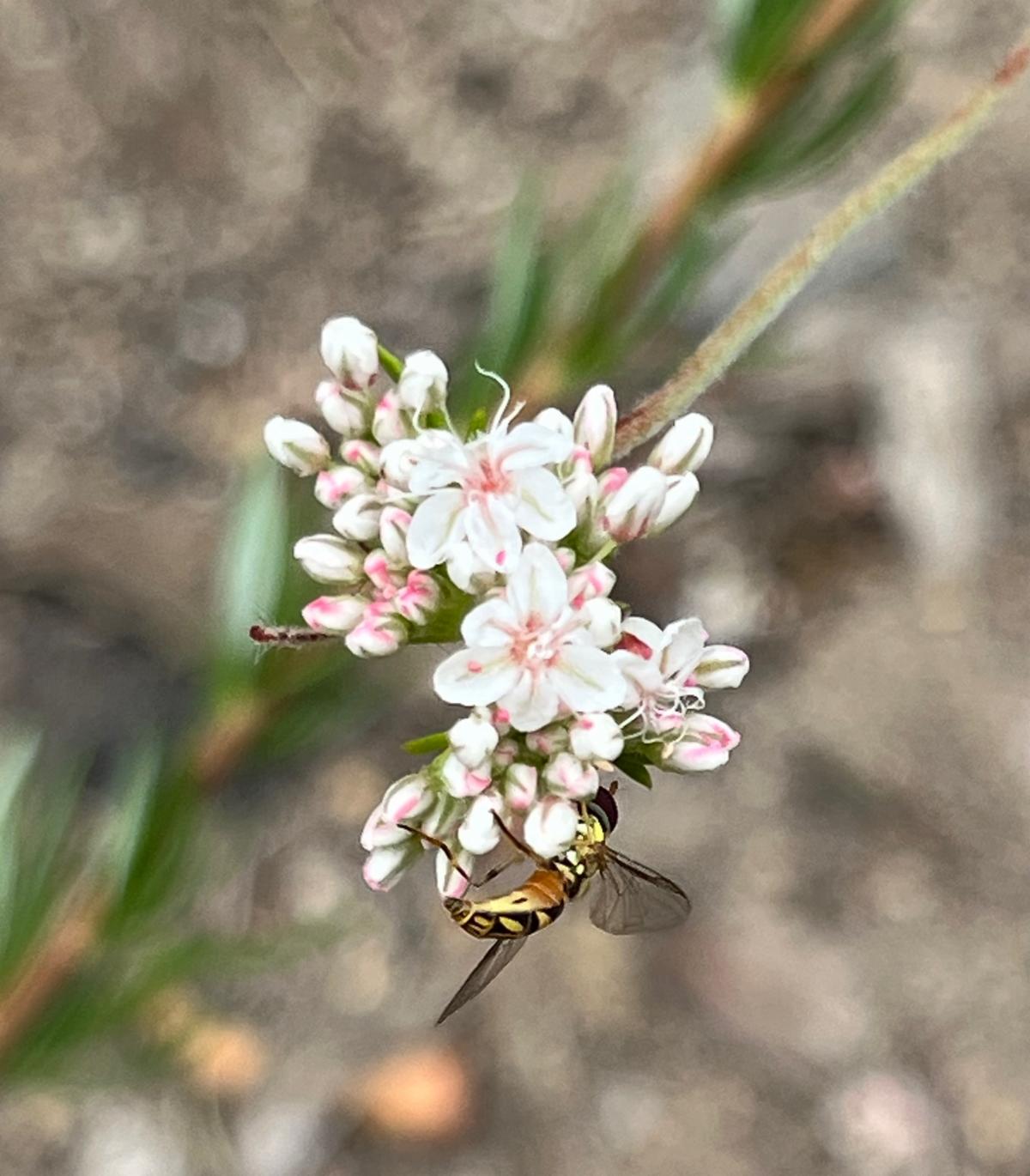
Another hoverfly—Oblique Streaktail (Allograpta obliqua). Their larvae are important predators of aphids.
| | |
Our all-volunteer organization can not do what we do without your help. Your time, talent and donation can make a difference right in your own backyard.
Contact us to see how else you could get involved.
| | And Check out our Website | And all of our past Newsletters can be accessed here. Lots of local information about our open space and wildlife issues. | | | | | |