| | |
MONTHLY NEWSLETTER
June 2026
| |
Preserve Calavera Supporter
| | Everyone Needs a Place to Call Home | | |
We can all agree that we need more housing in San Diego County but how do we accomplish that and what kind of housing should it be? And how will Senate Bill 79, the Abundant and Affordable Homes Near Transit Act, affect the County when it goes into effect on July 1, 2026?
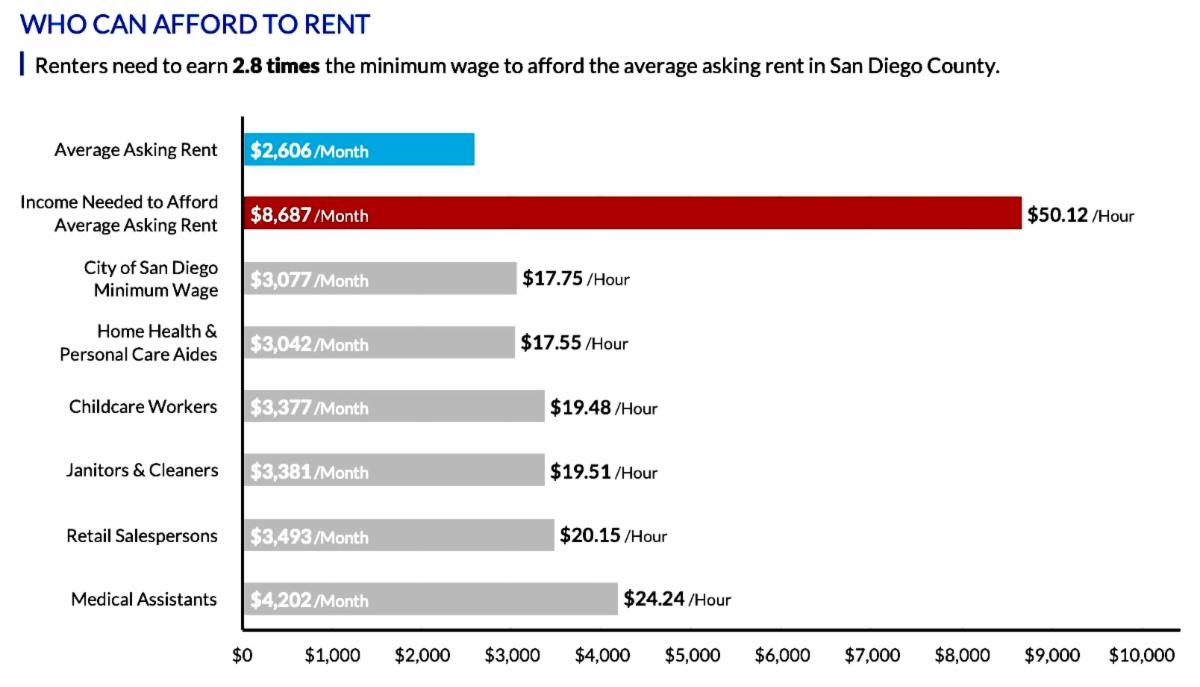
The graphic below from the San Diego County 2026 Affordable Housing Needs Report clearly illustrates our affordable housing problem. The average asking rent in the county is $2,606 per month. While renters need to earn 2.8 times the minimum wage to afford the asking rent.
| | |
While housing and transit advocates support the SB 79 and argue that removing zoning barriers is essential to solving the state’s housing crisis, North County cities and SANDAG oppose it. Cities are concerned about the lack of local control and believe it’s an overreach to force them to approve high density development projects at specific sites while disregarding their community needs and substituting a one-size-fits-all approach.
SB 79 fast tracks development which may cause undesirable and unnecessary environmental impacts. These impacts would be compounded since there is no funding for infrastructure to go along with the bill.
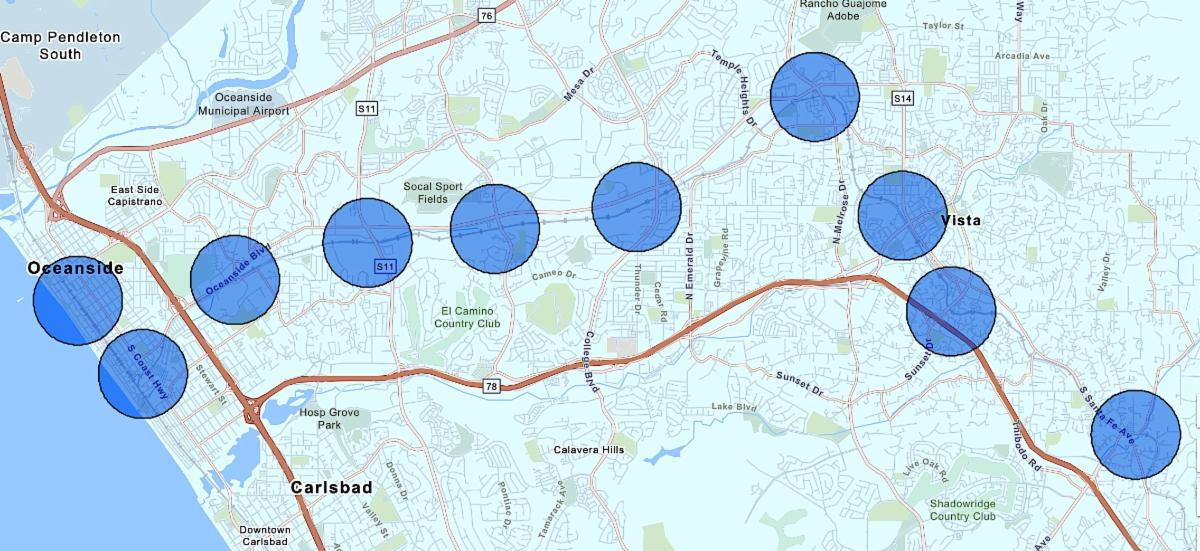
| The law will potentially apply to 15 Sprinter line hubs along Oceanside, Vista, San Marcos and Escondido. But the Coaster Line with fewer trips per day is exempted which also means the city of Carlsbad does not include any potential hubs. The map below displays the SB 79 Eligible Areas in Oceanside and western part of Vista. To see all 15 potential sites in North County use the map viewer link just above. | | It should be noted that SANDAG is responsible for determining which stations meet the criteria of SB 79. SANDAG has yet to make that determination, so cities are just making their "best guesses" about which stations will be included. | | |
The Center for Housing Policy and Design (at UCSD) wrote an article in November 2025 titled, What does SB79 mean for San Diego? An excerpt from the article:
SB 79 requires local governments to allow housing projects of up to 55 feet in height and 80 units per acre within a half-mile major transit stations that have very frequent service. Projects within a quarter-mile are eligible for higher density. Cities can still set their own standards that these housing development must meet and, in some cases, can rearrange allowable density near the stations. Also, transit agencies such as MTS and North County Transit District will now have zoning authority over land that they own in these areas, meaning cities have little control over such development.
| | |
Data on Commute Times and Method of Transportation (SD County 2022) showed that most workers in San Diego County drove to their jobs, whether that be in an auto, truck, or van (77.5%) or on a motorcycle (0.4%). Only 2.4% of residents in San Diego County relied on public transportation, 3.1% on walking only, 1.1% on some other method of transportation, 0.5% on biking to work, and 15% worked at home and did not commute.
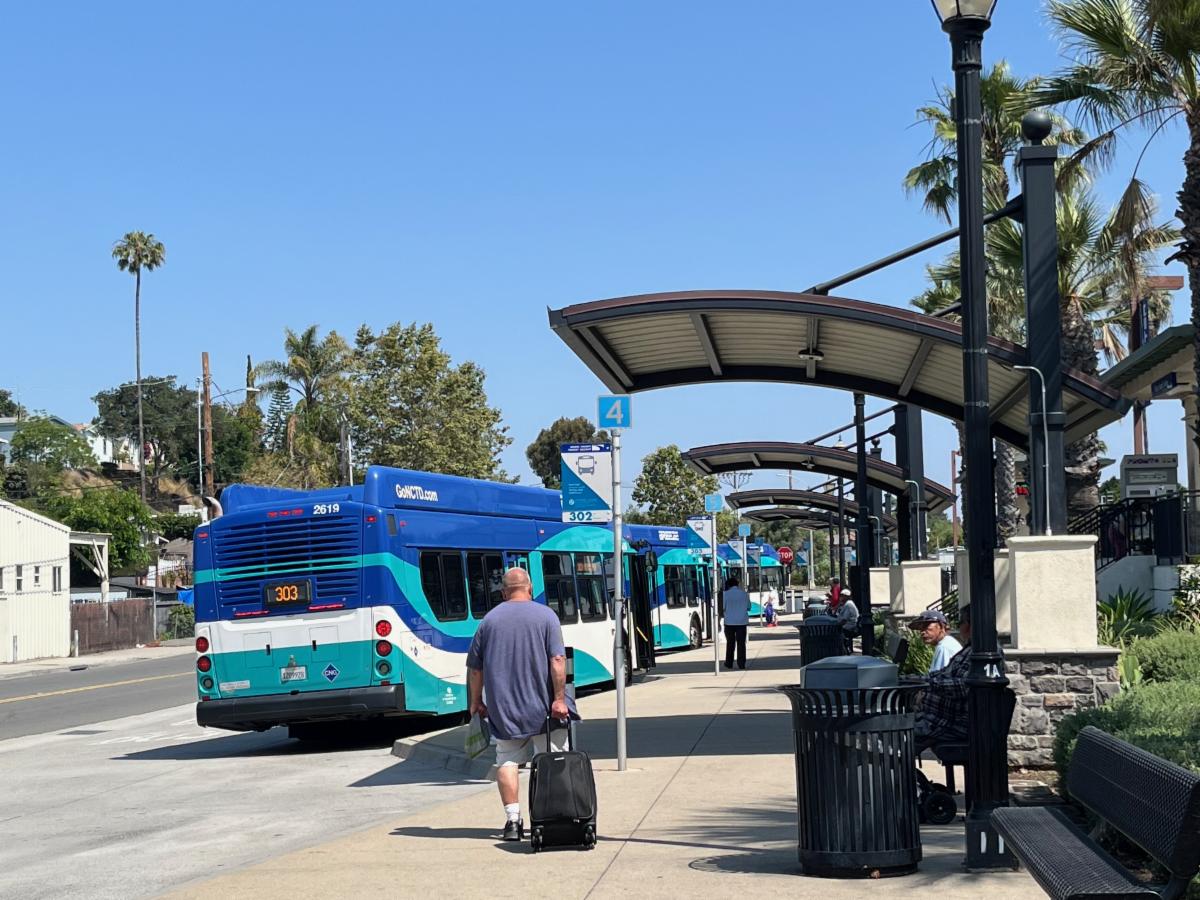
Building a lot more housing at transit hubs is no guarantee that people will use public transportation; we need the infrastructure to support this transition.
You can read more about tackling our car dependency problems in our August 2025 newsletter. (Photo by E. Bartlett)
| | So How Will SB 79 Affect Our Affordable Housing Shortage? | | |
The city of Oceanside could potentially have 7 new high density housing clusters along the Sprinter line. But there is no guarantee that there will be enough affordable housing for low-income renters.
SB 79 projects that have more than 10 units must set aside:
* 7% of units as extremely low-income housing, defined as 30% or less of the area median income (AMI); OR
* 10% of units as very low-income housing, defined as 30 to 50% of the AMI; OR
* 13% of units as low-income housing, defined as 50 to 80% of the AMI.
Considering the large need for affordable housing in our area, choosing one of the above for each project does not really meet the needs of a city such as Oceanside.
Our Regional Housing Needs:
The Regional Housing Needs Allocation (RHNA) is a state-mandated process that quantifies existing and future housing needs within the San Diego region.(SANDAG Open Data Portal) It requires local jurisdictions to plan for their allocated amount of housing units. In order to meet our housing needs, we need more housing at all income levels. But most critically, It's hard to imagine how setting aside one of the low percentages shown above (7%, 10% or 13%) under SB 79 will make a substantial dent in our affordable housing crisis.
| |
| | |
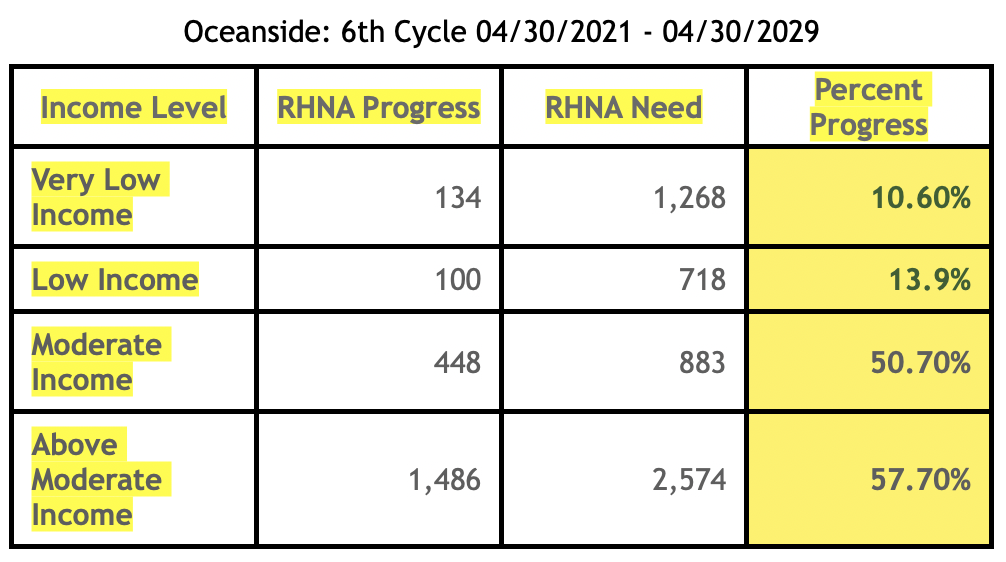
Looking at Oceanside's progress toward its 6th Cycle RHNA need, shows the largest progress gap in the Very Low Income and Low Income Levels. (Chart data from SANDAG Open Portal.)
| | | | |
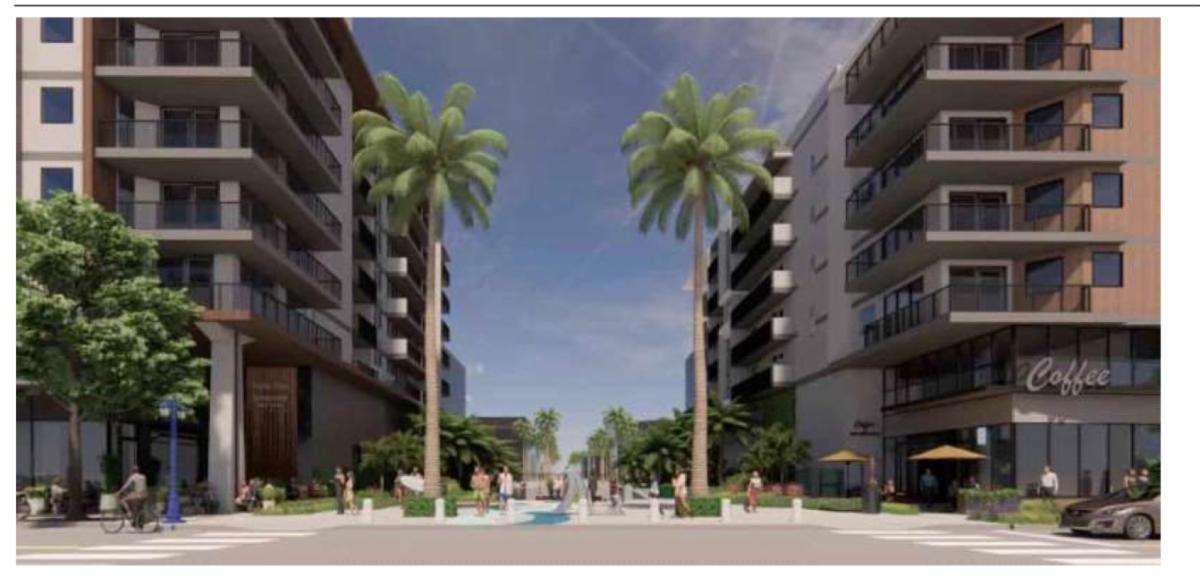
In January of this year, The Oceanside City Council approved a mixed-use development downtown near the intersection of North Myers Street and Mission Avenue. Of the 373 total housing units, 38 are reserved for low-income residents. (SD County Area Median Income (AMI) and Income Limits)
Rendition at right. (source: City records)
Neither Oceanside's current housing agenda nor the agenda imposed by SB 79 will make transformative change to our genuine housing needs.
| | SB 79 Takes Effect on July 1: Does It Affect Oceanside's Climate Action Plan? | | Oceanside is currently updating its General Plan Update, Smart & Sustainable Corridors Specific Plan and Climate Action Plan (Onward Oceanside Site) but SB 79 becomes effective on July 1. Oceanside is expected to update its Climate Action Plan in June, before SB 79 takes effect. This is to ensure the City can adopt a Transit-Oriented Development (TOD) Alternative Plan. A local jurisdiction has the option to modify certain SB 79 applicable sites or development standards, provided the ordinance or plan meets the requirements. An alternative plan allows Oceanside to shift required housing capacity away from vulnerable areas and toward better-suited locations, while still complying with state housing density mandates. | | |
Use your Voice to Participate in Civic Planning:
- Contact your local representatives if you have questions or concerns about a how a development project will impact the environment.
-
Lobby for more and safer walking paths, bike paths and tackling the first mile/last mile problem with public transit. (Read more about first mile/last mile problem in our July 2025 Newsletter)
-
Attend your local city council and planning commission meetings and workshops to comment on proposed housing projects. You can sign up for emails/other communication regarding development in your community:
City of Oceanside
City of Carlsbad
City of Vista
Support Organizations Such as Ours that advocate for smart and affordable housing and preserving our natural resources.
Make the Extra Effort to Use Alternative Transportation Whenever You Can: Use public transit whenever there is an opportunity, carpool, ride a bike or walk.
| | |
Sat, June 13
Rancho La Costa Restoration
8:30 am - 10:00 am
We have changed to our Summer Hours
To RSVP or for more info contact:
info@preservecalavera.org
or Anne-Catherine: acrochlevecq@gmail.com
| |  | |
Removing non-native plants and watering native plants as needed.
Prepare: Wear appropriate (preferably long pants/sleeves) clothing, closed-toed shoes, and hat. Bring gloves, sunscreen and water.
| | |
Sat, June 20
El Corazon Restoration
8:30 am - 10:00 am
We have changed to our Summer Hours
To RSVP or for more info contact:
info@preservecalavera.org
or call Diane:760-724-3887
| | | |
Removing invasive plants from this site.
Prepare: Wear appropriate (preferably long pants/sleeves) clothing, closed-toed shoes, and hat. Bring gloves, sunscreen and water.
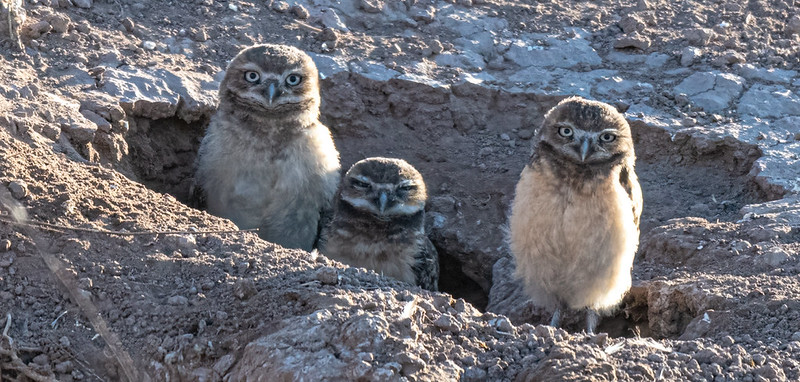
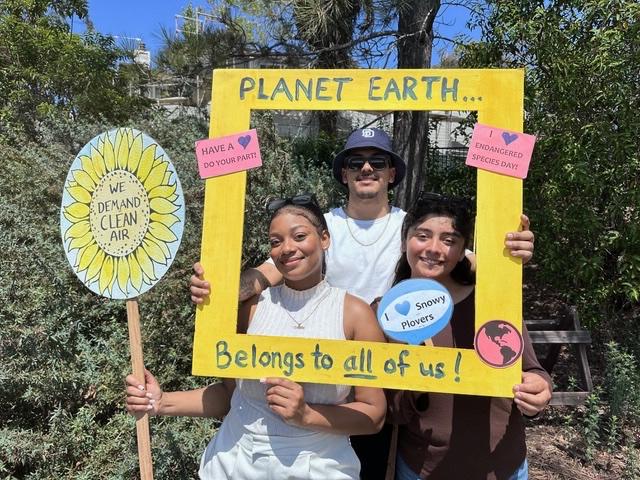
| | Every Day is Endangered Species Day at the Buena Vista Nature Center | | Always time for a photo op! Planet Earth does belong to all of us! Photo above by Liz Candelario. | | |
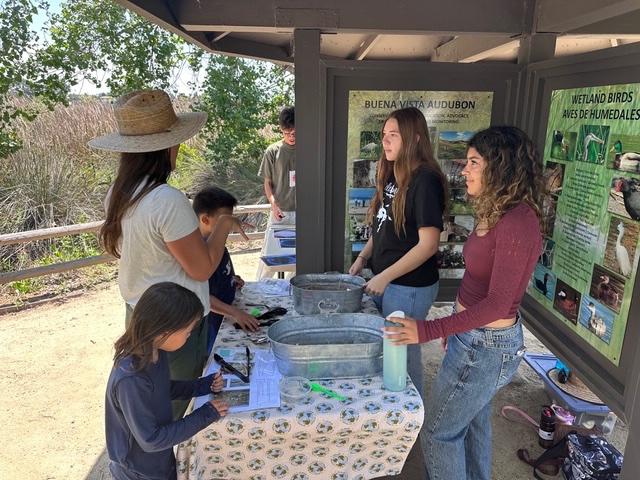
This yearly event, cosponsored by Buena Vista Audubon Society and Preserve Calavera, provided time for the community to learn about our local plants and animals and their habitats. Held on May 16th at the Nature Center, there were 182 visitors along with 60 volunteers who worked to make this another fun and educational day.
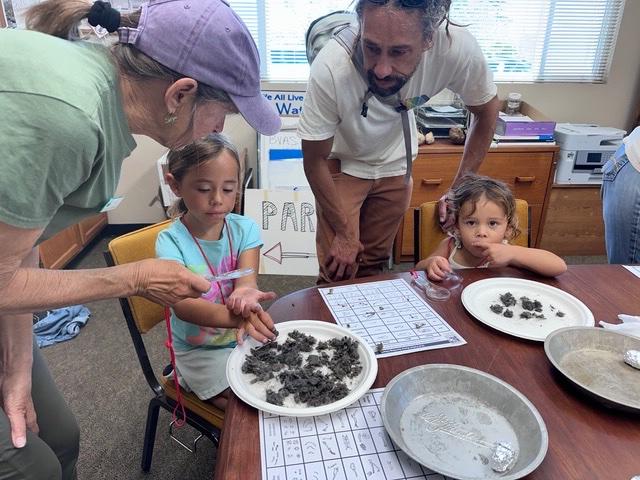
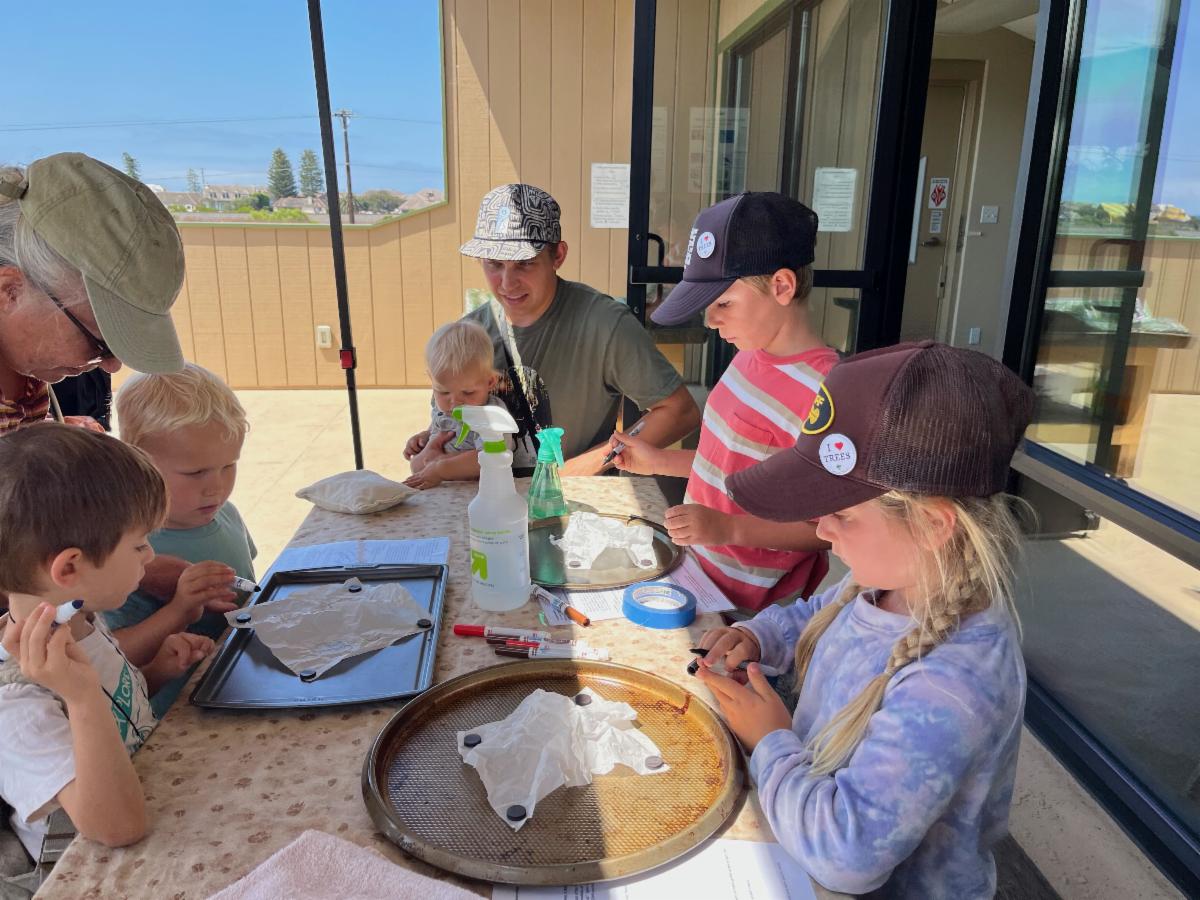
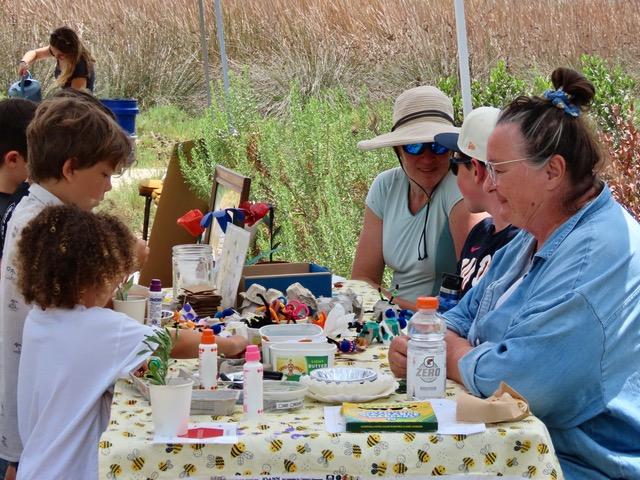
A great hands-on learning experience for all the kids:
| | |
Dissecting owl pellets to find out what owls eat. (Photo by Liz Candelario)
Making a mini-watershed model. (Photo by Rocco Valluzzi)
| | |
Learning about plastic pollution in the environment. (Photo by Liz Candelario)
And designing a pollinator. (Photo by J. Cannon)
| | |
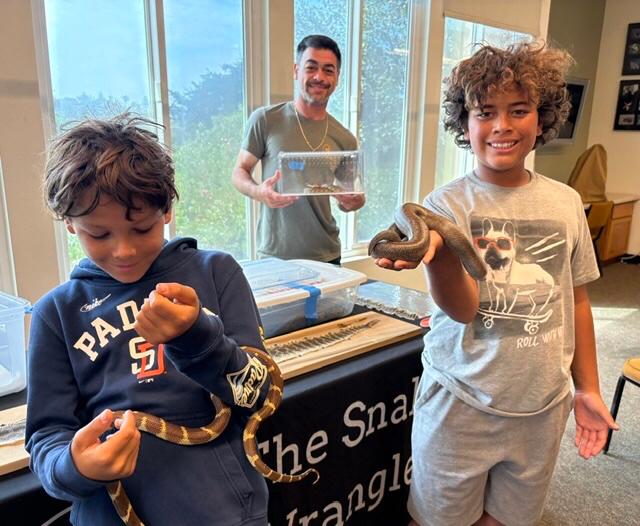
Snake Wrangler Tai Knight brought some local ambassadors to the delight of (most of) the visitors. (photo by Liz Candelario).
Snake Wranglers safely remove and relocate snakes to their natural habitats, Check out the Snake Wranglers Website.
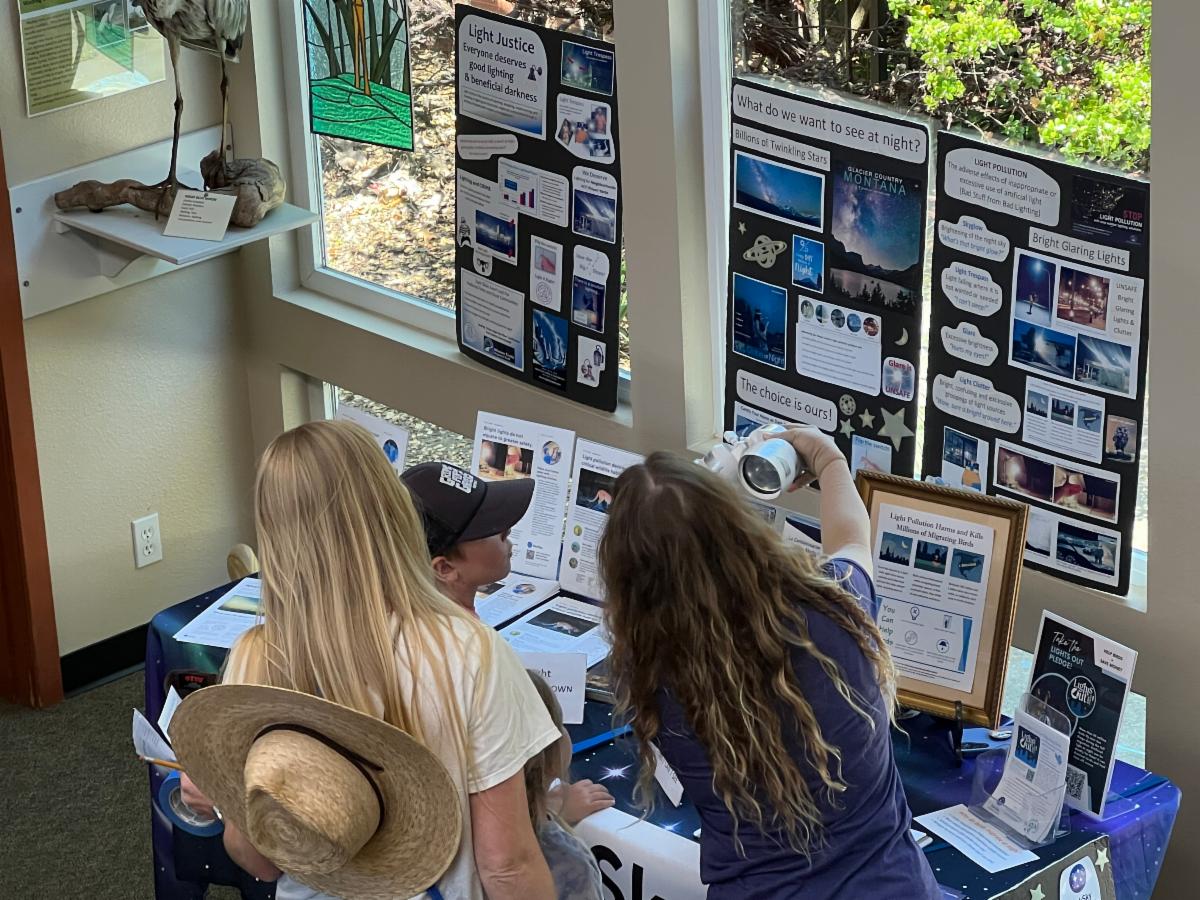
Below Cathy Handzel with Dark Sky San Diego County explains the various styles of outdoor lighting and what you can do to decrease your impact and help our wildlife at night. (Photo by P. DeCino)
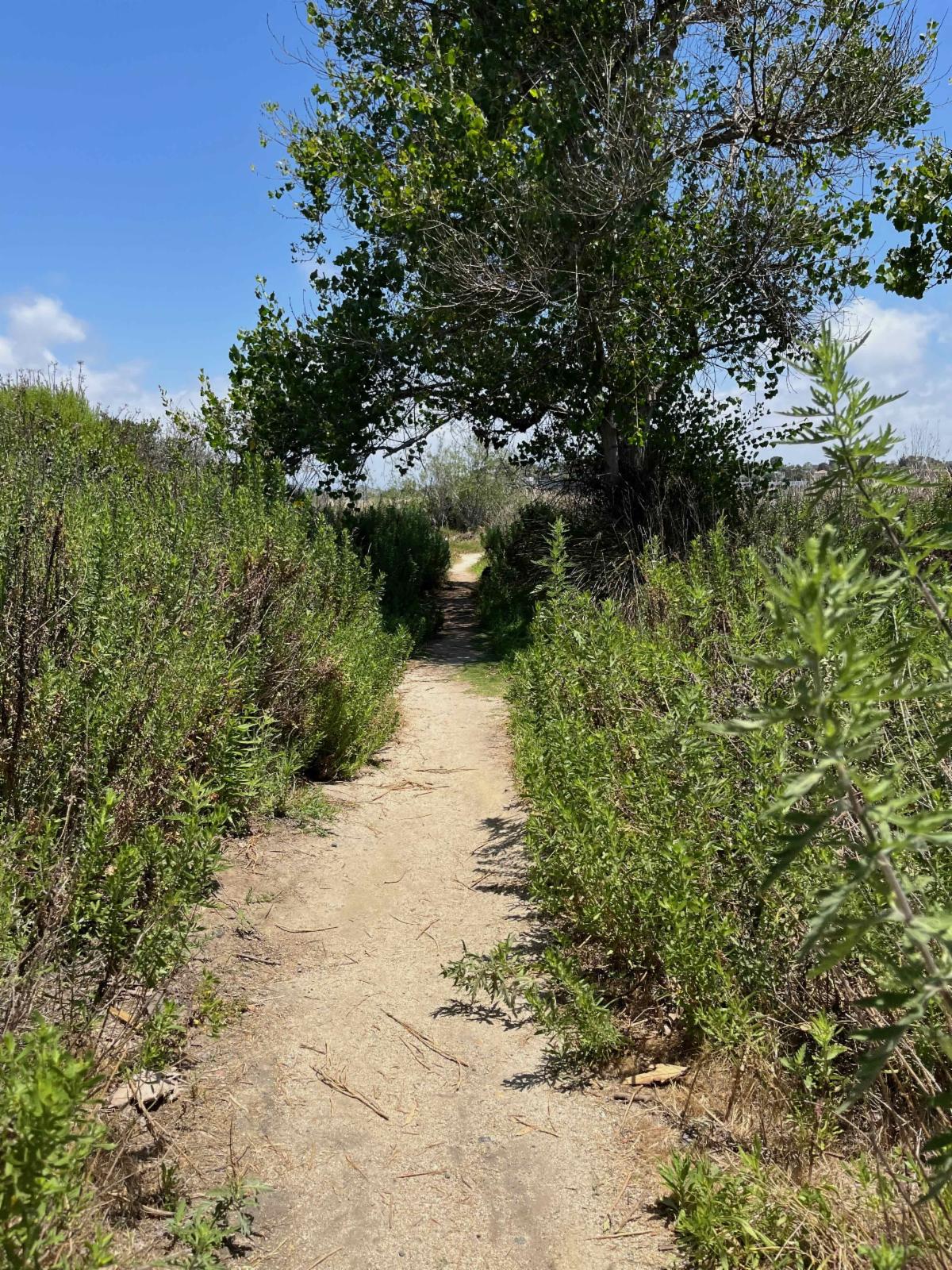
| | | | | Nature Center trail. (Photo by Rocco Valuzzi) | |
Our very own San Diego County claims the unfortunate distinction of being home to more imperiled plants and animal species than any county in the US. Which makes educational events in our community like these all the more important. Imperiled species are those plants and animals whose populations have decreased so dramatically that they are at risk of extinction! That number will continue to get worse if we don’t work harder to protect them and their habitats.
We are all in this together when it comes to protecting our imperiled species!
| | A Successful Quilt and Fabric Art Fundraiser | |
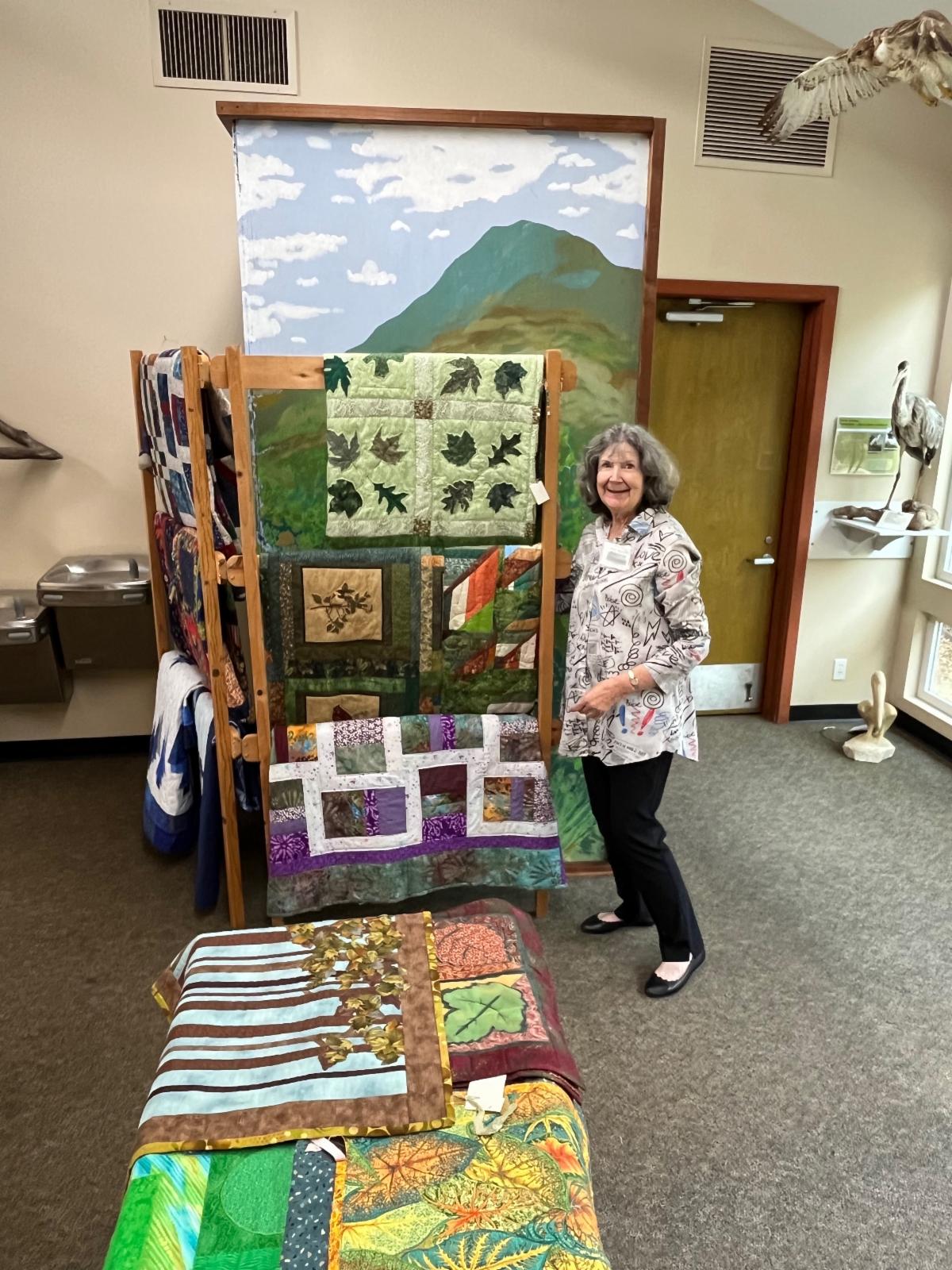
A fun time was had by all at the Fabric Art and Nature Sale at the Buena Vista Nature Center on May 3. A total of $4,030 was raised through the sale of 53 quilt/fabric art items. These funds will be used to benefit local conservation work.
The 53 quilts/fabric art items were beautifully designed and sewn by Preserve Calavera's Founder and Board President, Diane Nygaard.
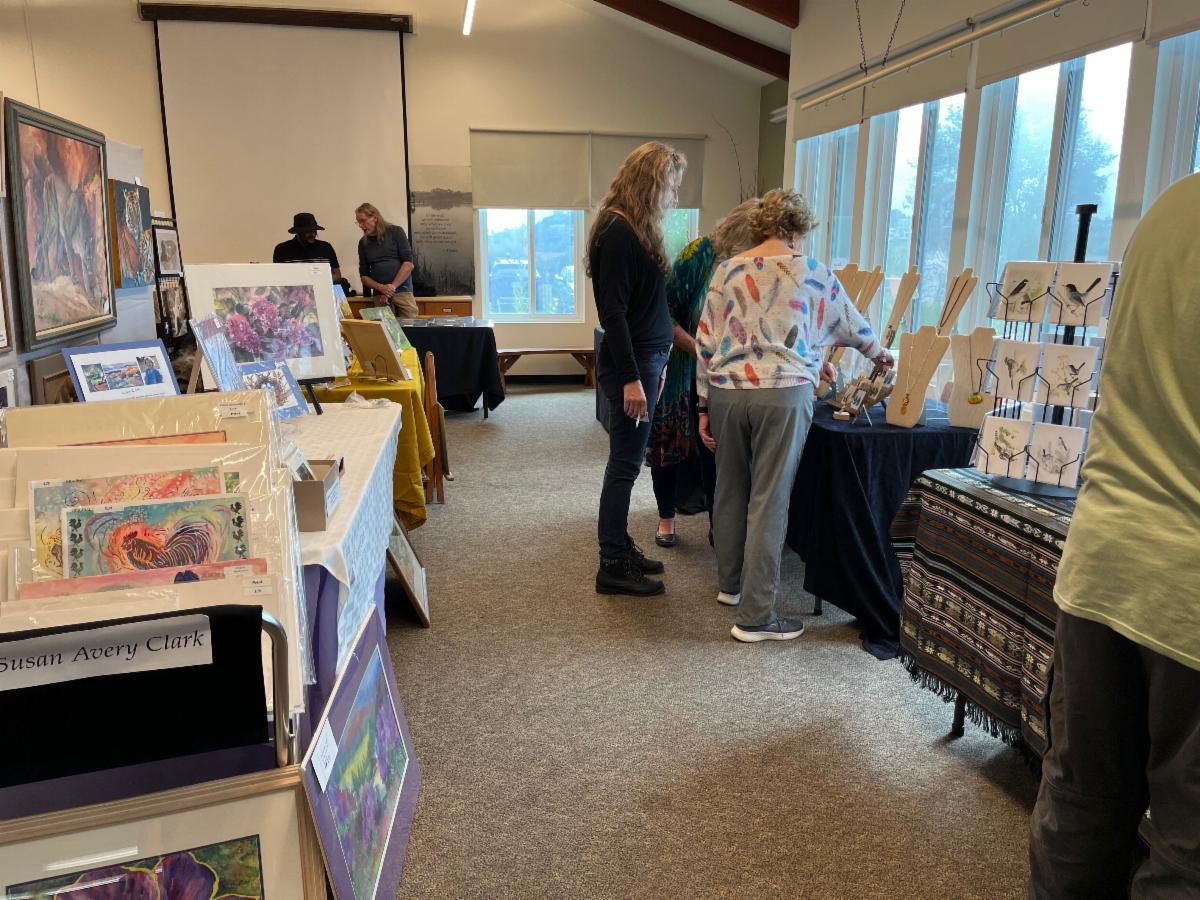
There were also a over a dozen local artists who displayed nature art themes through a variety of mediums (below). Photos by E. Bartlett
| | Diane shown below with just a few of the many quilts she created in her "spare time." | |
Volunteer Spotlights
A group of 10 juniors from Rancho Buena Vista High School were selected to participate in the Global Sustainability Project. The students, along with their teacher Kayli Dugas, have been working with us in the Water Quality Lab. We have been spotlighting a few each month. This summer the students will be heading to Costa Rica to work with sea turtles.
| |
Hi, my name is Khloe Wood and what inspired me to get motivated to join the global sustainability project was a former biology teacher of mine, Mrs. Frank. I’ve always been passionate about science and wanting to make a difference using it, but she encouraged me to be a part of this project.
As well, a shout out to Mrs.Dugas because ever since she found out I was interested in joining the project she encouraged me to take the opportunity since it would be a good way to get in touch with my community and also bond with some of my classmates who felt the same way.
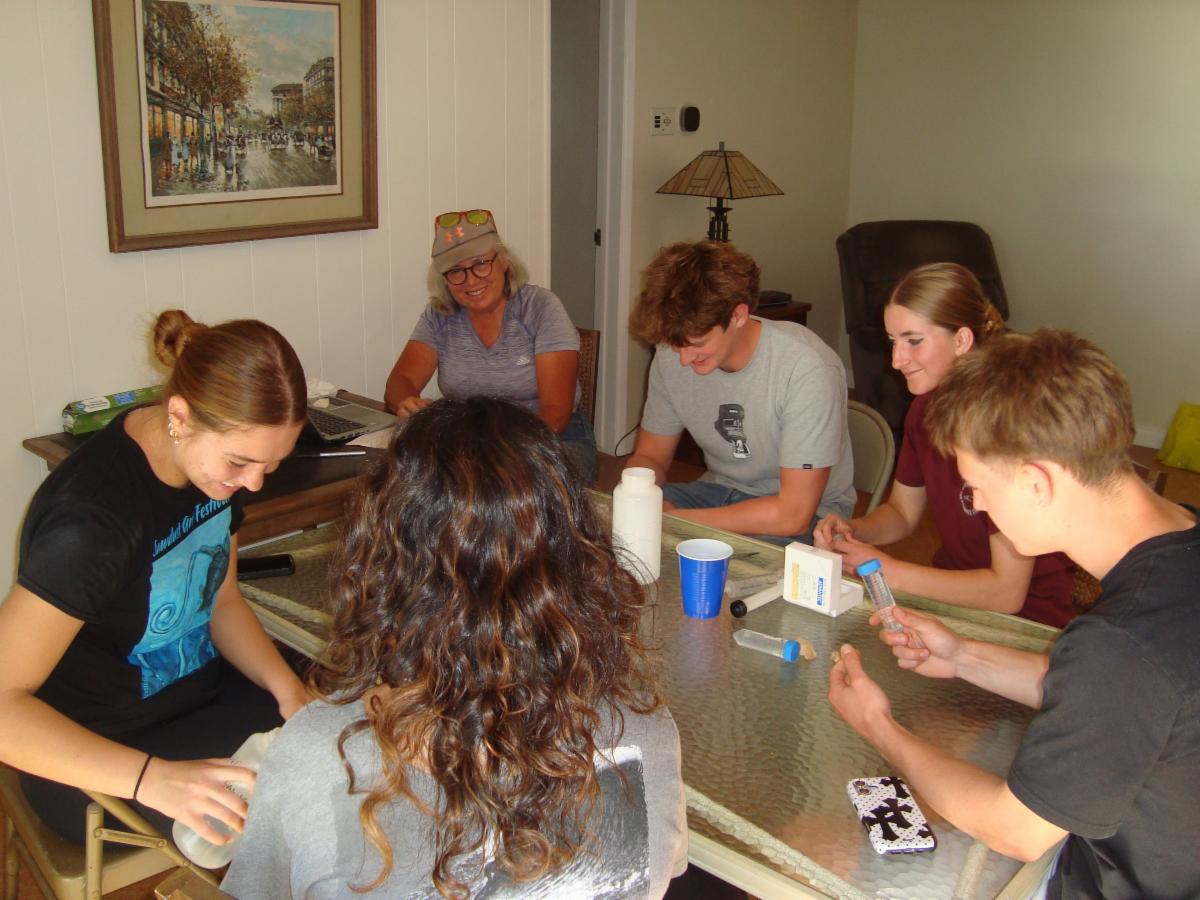
Khloe, far left, enjoying water filtering with her classmates and PC board member Anne-Catherine. (Photo credit Aaron Rodriguez)
| | My thoughts on the Preserve Calavera water quality testing is that it has been really fun and cool to be involved in such a hands on project that helps make a difference in the environment especially while still being in high school. My favorite part of the water quality testing so far has been filtering the samples with my classmates and having the most fun laughing while doing so and also working in the lab because I feel like that’s something not very many kids my age get to do. | | | |
My name is Mariana Barrantes:
What motivated me to participate in The Global Sustainability Project was the opportunity for me, as a high school student, to have real field experience. When I heard our school was planning a research trip to Costa Rica I was beyond excited and knew I had to apply. My dad is from Costa Rica so I grew up going to Costa Rica to visit family, eating Costa Rican food and listening to Spanish music. Costa Rica is half of who I am and I am so excited to work directly with the Leatherback sea turtles on the Caribbean Coast. The Global Sustainability Project has given me an opportunity to have a unique experience doing fieldwork in high school. Environmental science is an often overlooked field so this opportunity is truly one in a million.
About me:
Some of my hobbies include painting, playing guitar, singing, theater and dancing. I am a part of our school's dance team as well as our theater department. I am heavily involved in the arts in all aspects, and am extremely invested in my education and making the most of the opportunities in front of me. My favorite classes right now are Advanced Forensics and AP Lang. Outside of school I love going to the beach, thrifting, going out to get coffee and hanging out with my friends.
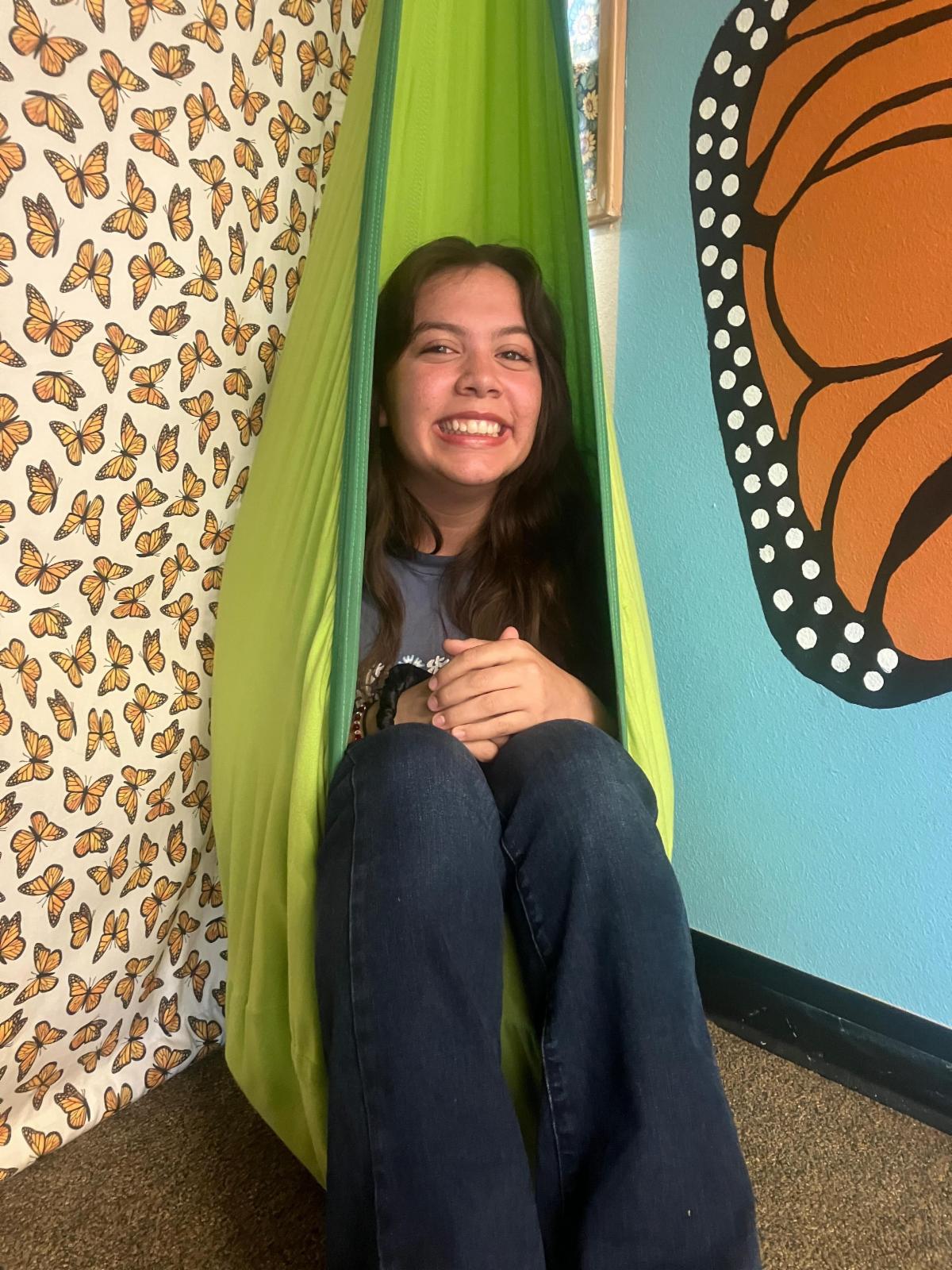
Photo at right: Mariana having fun hanging out with the butterflies on Endangered Species Day.
| | As for Preserve Calaveras water quality testing experience, I have learned so much. The issue of water quality was probably the furthest in the back of my mind before I had the opportunity to work with Preserve Calavera. Working with Paige, Anne-Cathrine, and all the other volunteers, I have become so much more aware of the severity of issues with water quality in our local watersheds. Being able to work in the Water Quality Lab, going out and collecting the physical samples, and actually having that data be used is such a rare opportunity especially for high school students. | | | | Wildlife Corner: Restoring Pink Sand Verbena in Oceanside | | |
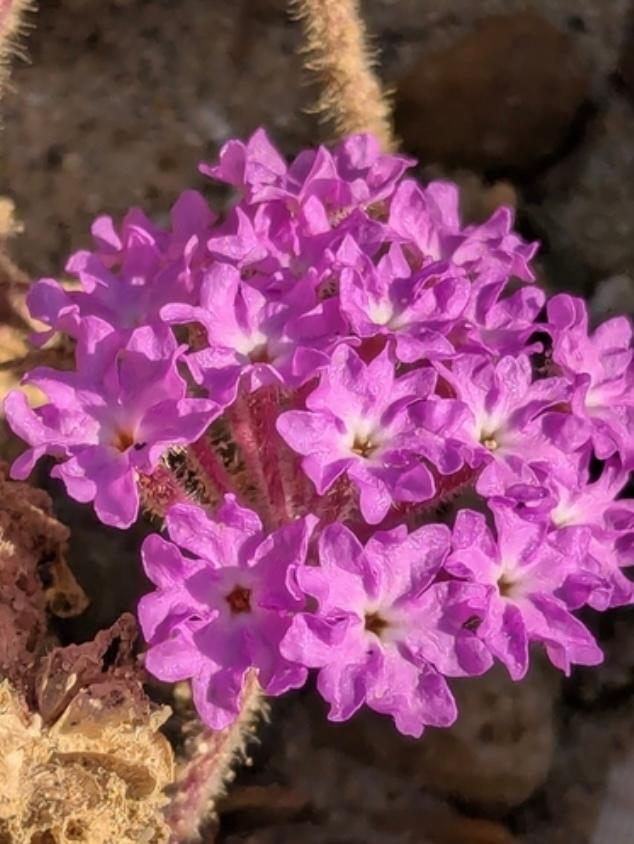
Pink sand verbena, Abronia umbellata, is restricted to open sandy coastal habitats and found along beaches and sand dunes from Baja California to southern British Columbia.
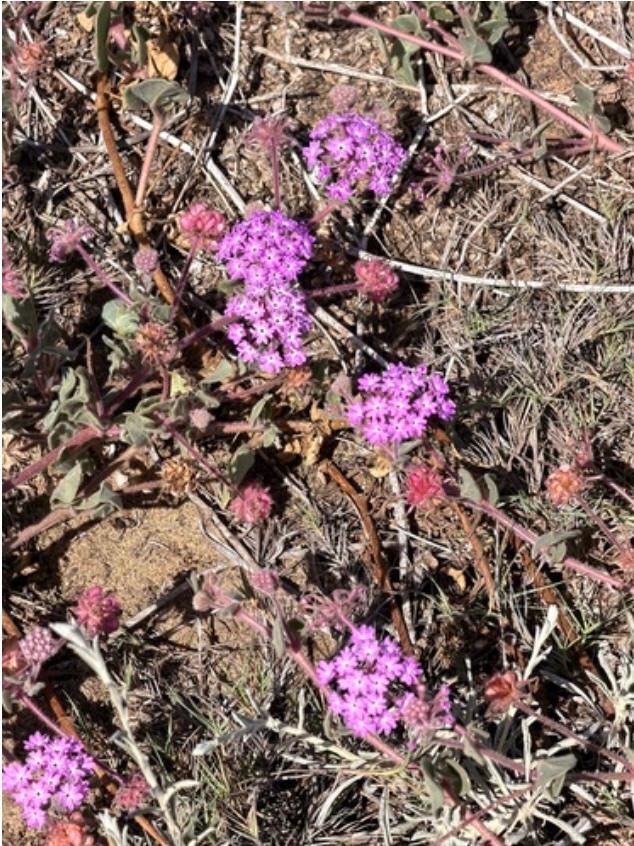
It's a low growing plant with succulent leaves and brightly colored pink flowers that stand out within the backdrop of the beige-colored sand. The photo at right was taken at Torrey Pines Reserve by Susanbar.
This species is threatened by destruction of its habitat and the growth of invasive species such as European beach grass. It is also vulnerable to climate change.
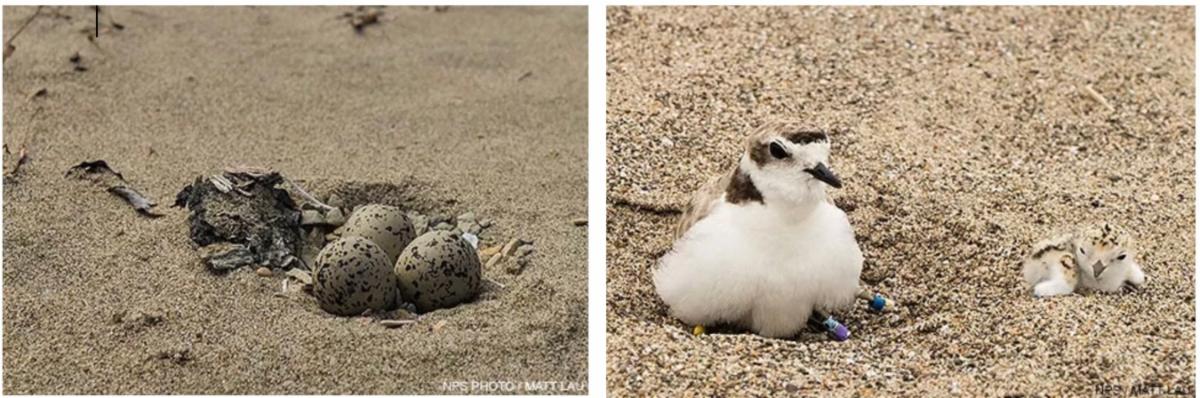
Pink sand verbena has an important role to play (along with the beach suncup) as a sand dune stabilizer. The plight of the threatened snowy plover is also intertwined with this dune plant. The snowy plover relies on the plant for foraging and ground cover. It lays its eggs in shallow depressions on the sand so the low-growing cover of sand verbena helps to hide its nest from predators.
| | | Below: A snowy plover nest showing eggs that lay exposed and vulnerable on the sand. At right: Snowy plover and recently hatched chick. Photos credits NPS/Matt Lau | |
The city of Oceanside has been involved in a pilot project to restore Oceanside's sand dune habitats. Jayme Timberlake, Coastal Zone Administrator for the city of Oceanside, provided this summary of the ongoing pilot program:
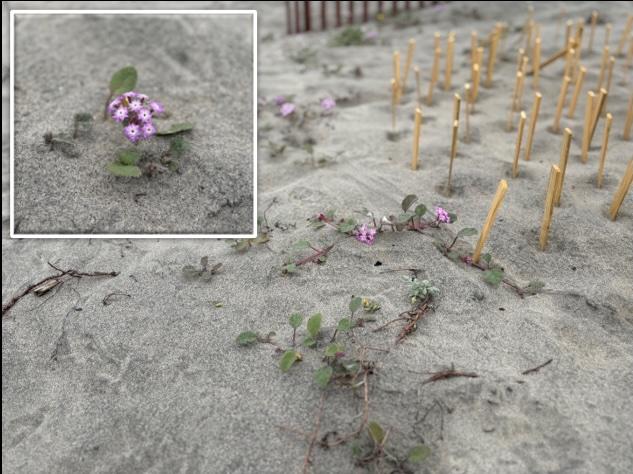
The North Oceanside Coastal Dune Restoration Pilot Project, installed in January 2026, focuses on restoring historic dune habitats to support natural coastal processes. Targeting Harbor Beach, the mouth of the San Luis Rey River, and the North Strand, the project seeks to demonstrate the benefits of low-profile, low-cost natural dune infrastructure, which can improve coastal resilience, restore habitat, reduce erosion, and enhance the natural character of Oceanside’s beaches. Using techniques like sand fencing and native vegetation planting of pink sand verbena and beach sun cup, the project restores approximately 1.05 acre of dune habitat. Nearly fully funded by the U.S. Fish & Wildlife Service, this effort is an important step toward showcasing how nature-based solutions can support both habitat restoration and shoreline resilience.
Jayme provided the photo below, showing off some of the flowers blooming after the spring rains. It takes hard work and requires and time and lots of patience, but seeing plants growing on a site is always such a great reward.
| | |
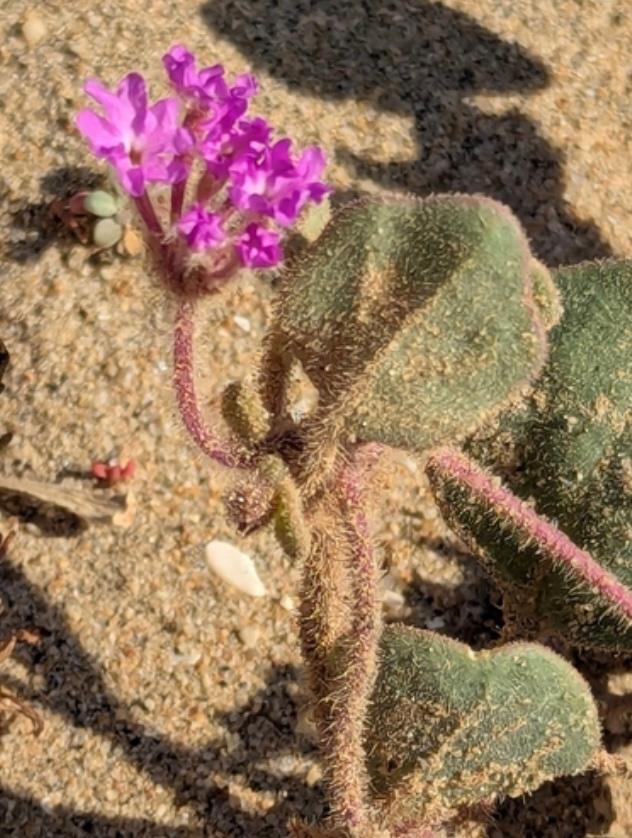
Pink beach verbena photos below taken at Torry Pines Preserve by Kristen Sweeney. At right the succulent leaves and stems are visible. The thick and fleshy leaves help retain moisture in dry, windy conditions.
| | Our all-volunteer organization can not do what we do without your help. Your time, talent and donation can make a difference right in your own backyard. | | | Contact us to see how else you could get involved. | To Make a Donation to Preserve Calavera | | And Check out our Website | And all of our past Newsletters can be accessed here. Lots of local information about our open space and wildlife issues. | | | | | |