| | |
MONTHLY NEWSLETTER
June 2025
| |
Congrats to the California Chaparral Institute for prevailing in their lawsuit that stops Cal Fire from clearing millions of acres of native habitat! Read more below.
| | | | | | Trails on our public lands/preserves allow us to experience the joys of exploring nature while minimizing the environmental impact. We are fortunate to live in an area with such a variety of unique habitats; including coastal sage scrub, oak riparian forest, grassland, and chaparral. Staying on designated trails and following trail rules helps us to protect the diminishing open spaces that our local wildlife call home. | |
But, It's not always clear which are the authorized trails or what the rules are.
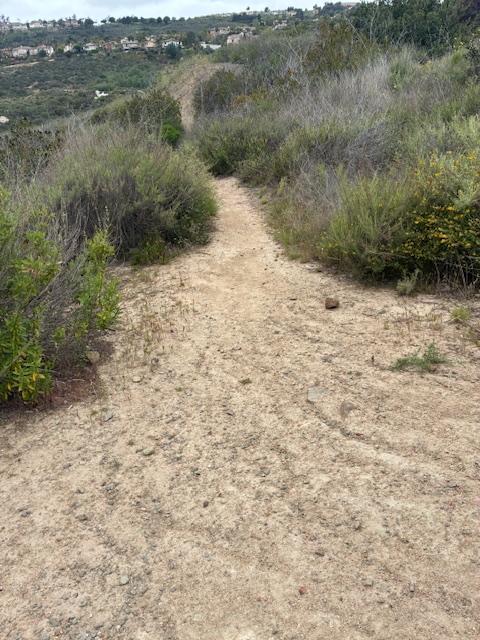
Although some trails are clearly marked and easy to follow, that may not always be the case. It can be easy to accidentally stumbled on to an unauthorized or illegal trail even if you have the best intentions to be a good steward of the environment. Signage could be missing or what appears to be authorized trail may actually be an animal trail that quickly became easy access for human hikers.
Illegal trails will generally originate from wildlife trails.
Animals will often find the easiest route for moving through terrain just as people do. Some trails are used by a variety of wildlife, so over time the path becomes well worn. This is the most common way that unauthorized hiking trails get created.
And illegal trails can appear quite rapidly. The illegal trail at right, located within Lake Calavera Preserve, was just a few months old when the photo was taken. It can be easy to mistake an animal trail for one that is meant for human recreation. Unfortunately, some of the wildlife trails do look inviting as a hiking trails.
| | Mt. Calavera trail photos by A. Roch-Levecq | |
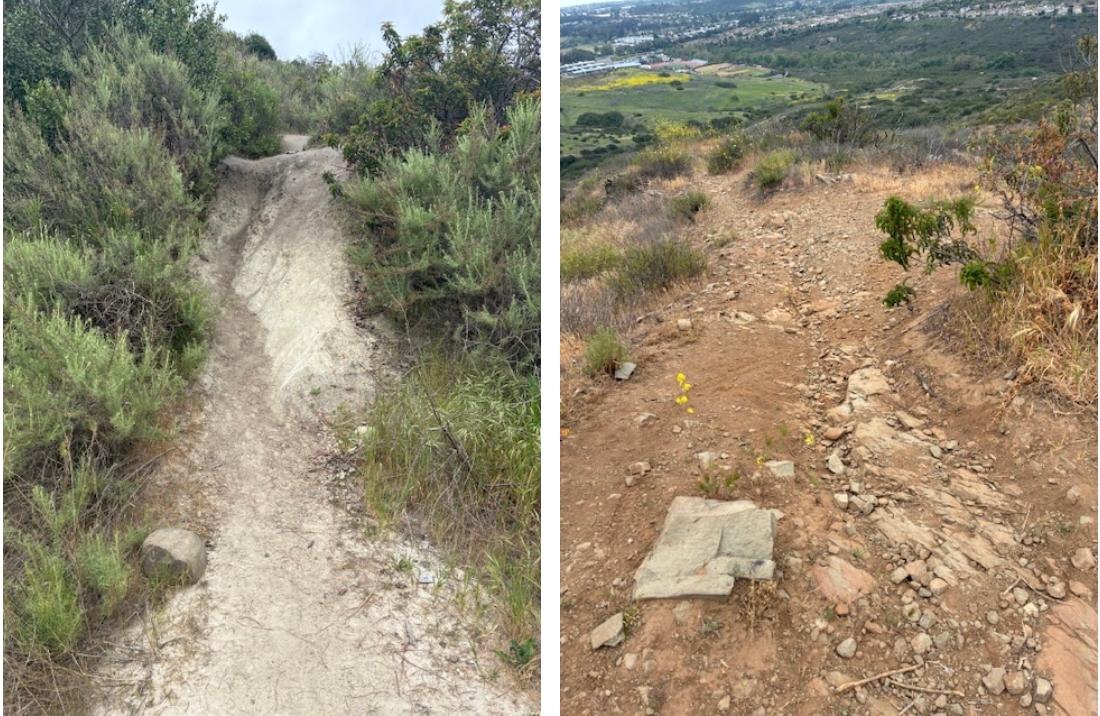
Illegal bike trails can be particularly destructive.
Biking is allowed on authorized trails within Lake Calavera Preserve but not Carlsbad Highlands Ecological Reserve (CHER). This can be somewhat confusing since the two open space areas in Carlsbad share a common boundary. Illegal bike trails have been highly destructive in both areas. To learn more about Lake Calavera Preserve and its vicinity: LINK
E-Bikes cause far more damage than regular bikes because of their heavier weight and higher speeds (as well as hazards to hikers). There is also a problem with inconsistent rules. Some places consider e-bikes like a motorized vehicles, as such, they are not allowed on trails. While other places consider them a regular bikes, in this case, they are allowed on permitted bike trails.
Photo at left shows damaged cause by illegal trail. At right, The summit at Mt. Calavera is mostly barren now while it used to have a chaparral ecosystem even just a few years ago. Bike damage is evident.
| |
It's safer on trail!
-
Exposure to poison oak: Poison oak is trimmed along the trails but not once you go off trail. The oil from Poison Oak can cause an itchy rash, which then turns into water blisters. Read more here:LINK
-
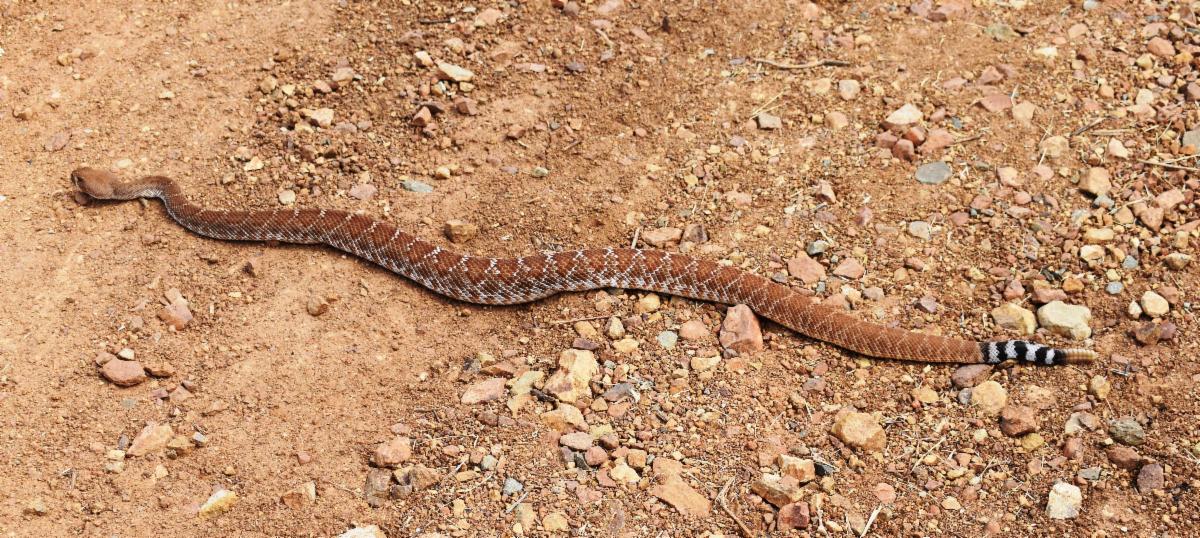
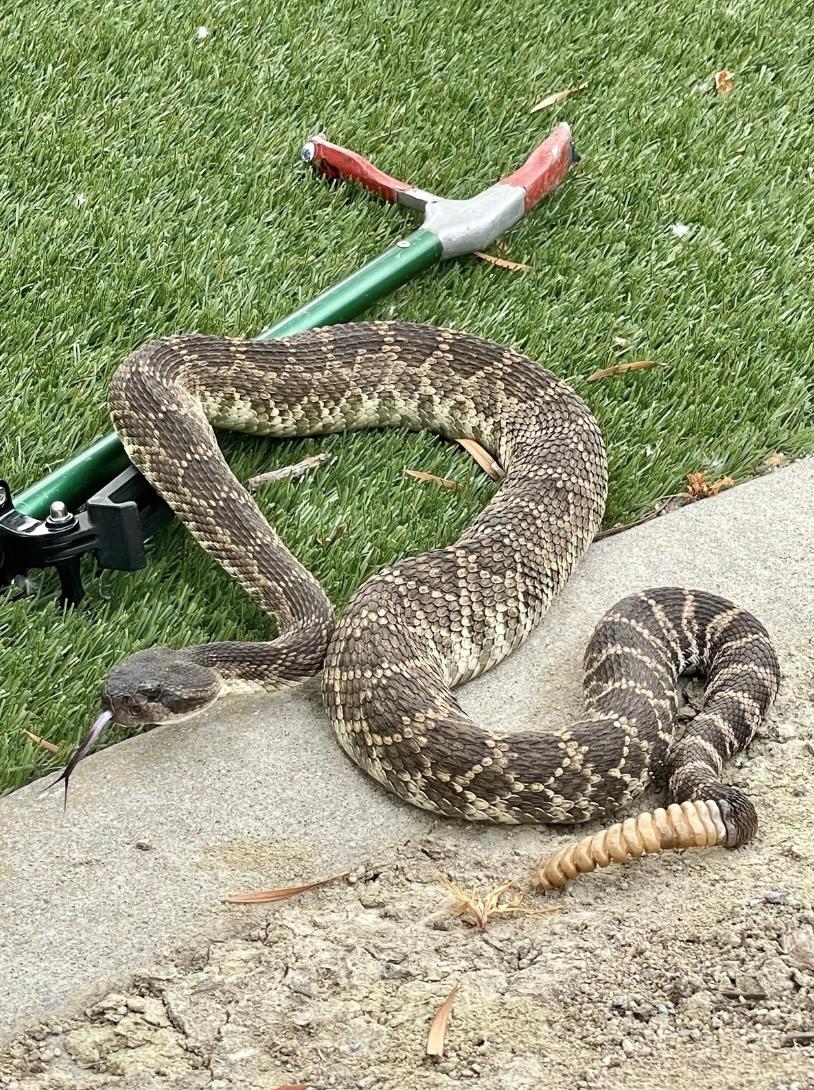
Wildlife such as snakes are easier to spot on a trail: A snake sleeping on a trail is far more visible on an open cleared trail than off in the brush.
| | | | Diamondback rattlesnake on the trail at Lake Calavera. Photo by Preserve Ranger Todd Nordness (Center for Natural Lands Management). | | | |
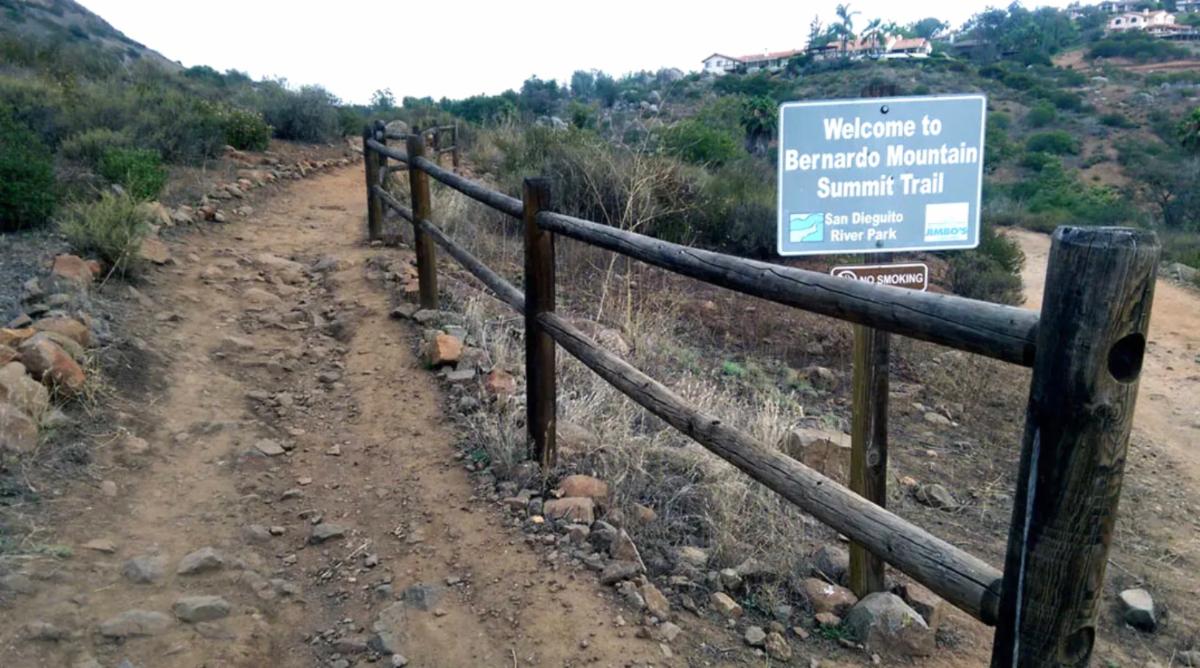
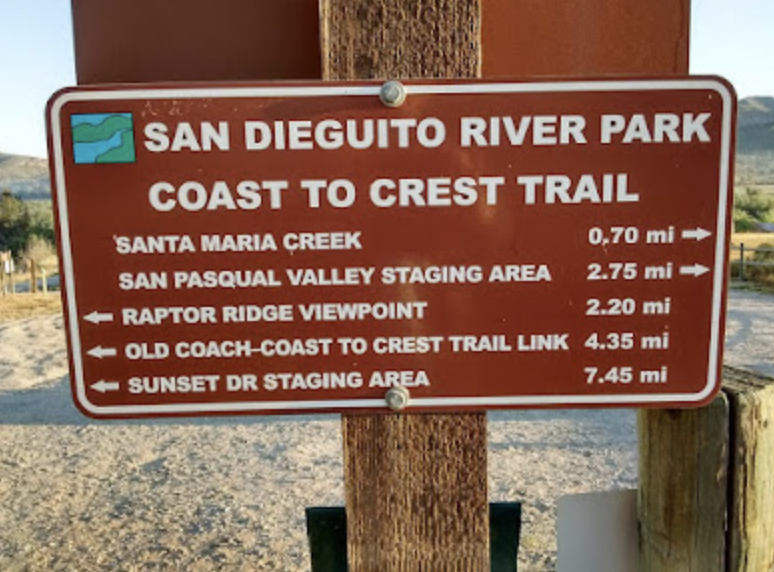
✔Know before you go. Trail maps and trail use rules and regulations are readily available online. If you research the ahead, you are less likely to accidentally stray along an inviting looking but unauthorized trail.
Some informative trail links:
| | |
✔Teach others about unintended consequences.
There are gentle ways to remind someone you happen upon who may be damaging the habitat. Here are a few examples:
- Please don't do that. It's bird nesting season and that can disturb the mother and the entire nest can be lost.
- Dog poop can contain things that hurt our wildlife—so please pick up after your pet.
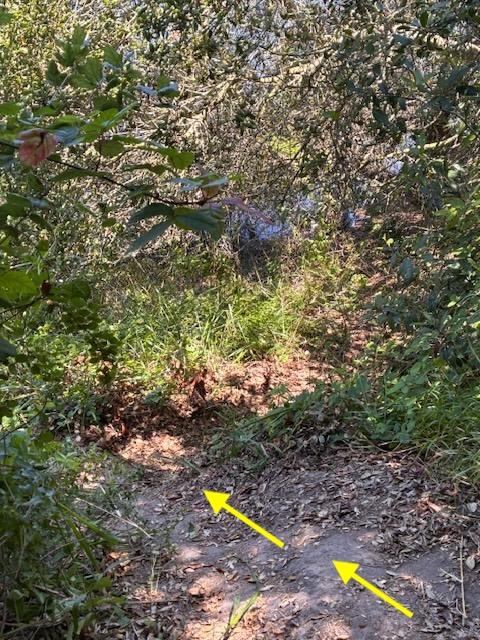
Share your knowledge about the effects of hiking/biking on unauthorized trails with others; particularly young people who may not be aware of the long term damage they are causing. The photo at right shows an unauthorized trail encroaching on a grove of oak trees at Lake Calavera Preserve; yellow arrows mark the unauthorized trail.
| | | Let's examine the unintended consequences of the oak grove trail. The ecosystem within the oak tree grove is made up of many components that may be damaged as the ground is trampled around the trees; including the tree roots, understory plants, mycorrhizal (fungal and root) networks, soil microbes and animal shelters. Soil compaction also can reduce water absorption which can further cause soil erosion; especially in hilly areas. | | |
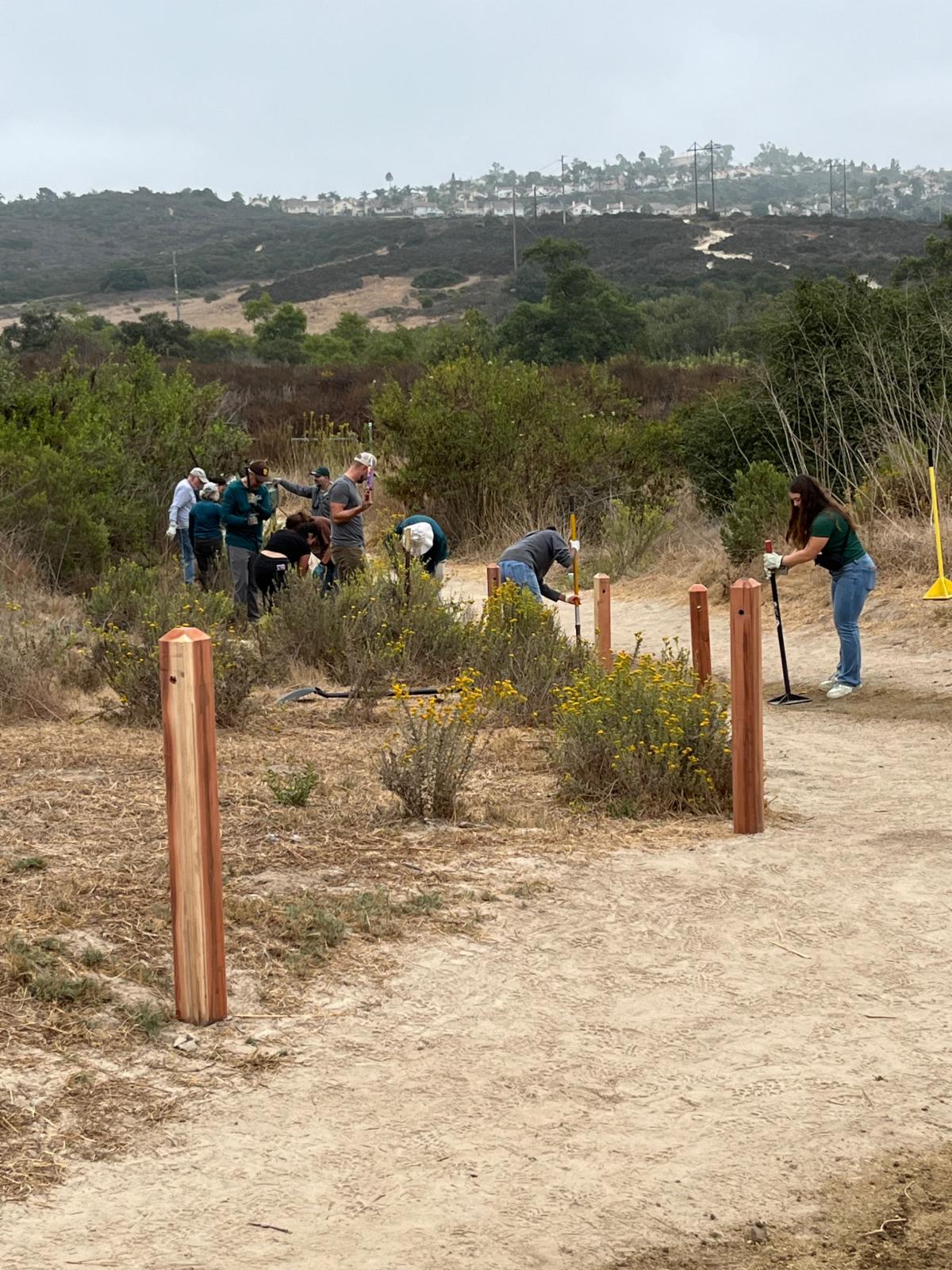
✔Join a trail volunteer program. Trail volunteers are critical for maintaining and preserving trails. Well maintained trails with signage and fencing can help to prevent unauthorized/illegal trails.
At, right, volunteers are working on fence building at Lake Calavera Trail Head to celebrate National Public Lands Day (September 2024 photo by E.Bartlett).
You can find out more about Carlsbad's Trail Volunteer Program: LINK
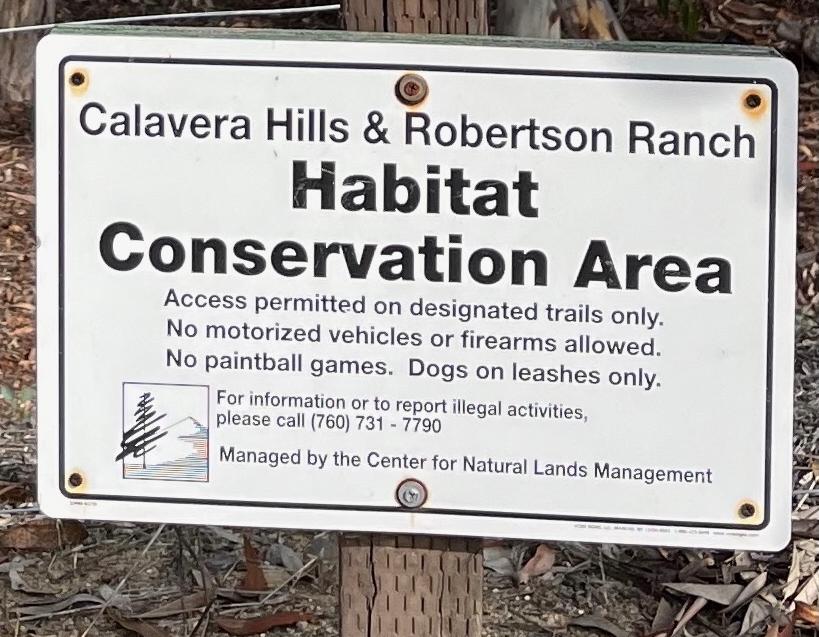
✔Report Unauthorized trails, vandalism or repair needs to the proper authorities.Look for posted signage along the trail. There will generally be a phone number you can use to report a problem.
| | | |
So take a hike! And make sure to stay on the trail!
(Photos by E. Bartlett)
| | |
Sat, June 14
Rancho La Costa Restoration
8:30 am - 10:00 am
We are back on summer hours
If you would like to volunteer you must RSVP to:
info@preservecalavera.org
or call Anne-Catherine: 858-353-6232
| |  | |
Removing non-native plants and watering native plants as needed.
Prepare: Wear appropriate (preferably long pants/sleeves) clothing, closed-toed shoes, and hat. Bring gloves, sunscreen and water.
| | |
Sat, June 21
El Corazon Restoration
8:30 am - 10:00 am
We are back on summer hours
If you would like to volunteer you must RSVP to:
info@preservecalavera.org
or call Diane: 760-724-3887
| | | |
Removing invasive plants from this site.
Prepare: Wear appropriate (preferably long pants/sleeves) clothing, closed-toed shoes, and hat. Bring gloves, sunscreen and water.
| | CA Chaparral Finally Prevails Against Cal Fire to Save Native Habitat | |
|
For the past 20 years, the CA Chaparral Institute has been trying to get Cal Fire to stop their habitat clearance projects relating to chaparral and sage scrub. Why? Because these projects were actually making the landscape more flammable!
Cal Fire had been trying to circumvent state law by redefining native shrublands as having only 10% cover. So, according to Cal Fire, if 90% of all shrubs were cleared from a naturally dense, contiguous chaparral community by herbicide, shredding, or prescribed fire, it would still be a healthy shrubland.
Thankfully saner heads prevailed at the California Appellate Court on May 30th.
CA Chaparral Institute won on every point:
- The Board of Forestry (Cal Fire’s boss) abused its discretion.
- The Board failed to address the impact of type conversion of chaparral and sage scrub to non-native, weedy landscapes.
- Cal Fire’s habitat clearance projects will cause type conversion.
- Cal Fire’s habitat clearance projects will increase the flammability of the landscape.
- Cal Fire habitat clearance projects relating to chaparral and sage scrub should be suspended pending further analysis.
- The court agreed our evidence was substantial.
Links that explain the lawsuit and the court ruling:
All of us owe a debt of gratitude to the CA Chaparral Institute and a special thanks to Richard Halsey (Institute Director and Founder). Kudos for your perseverance over the past 20 years.
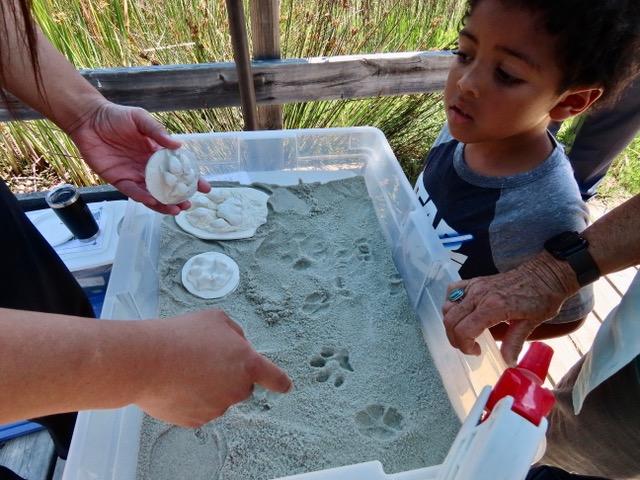
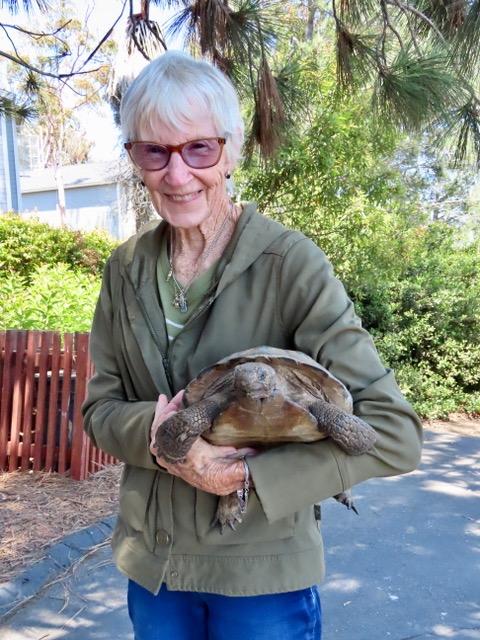
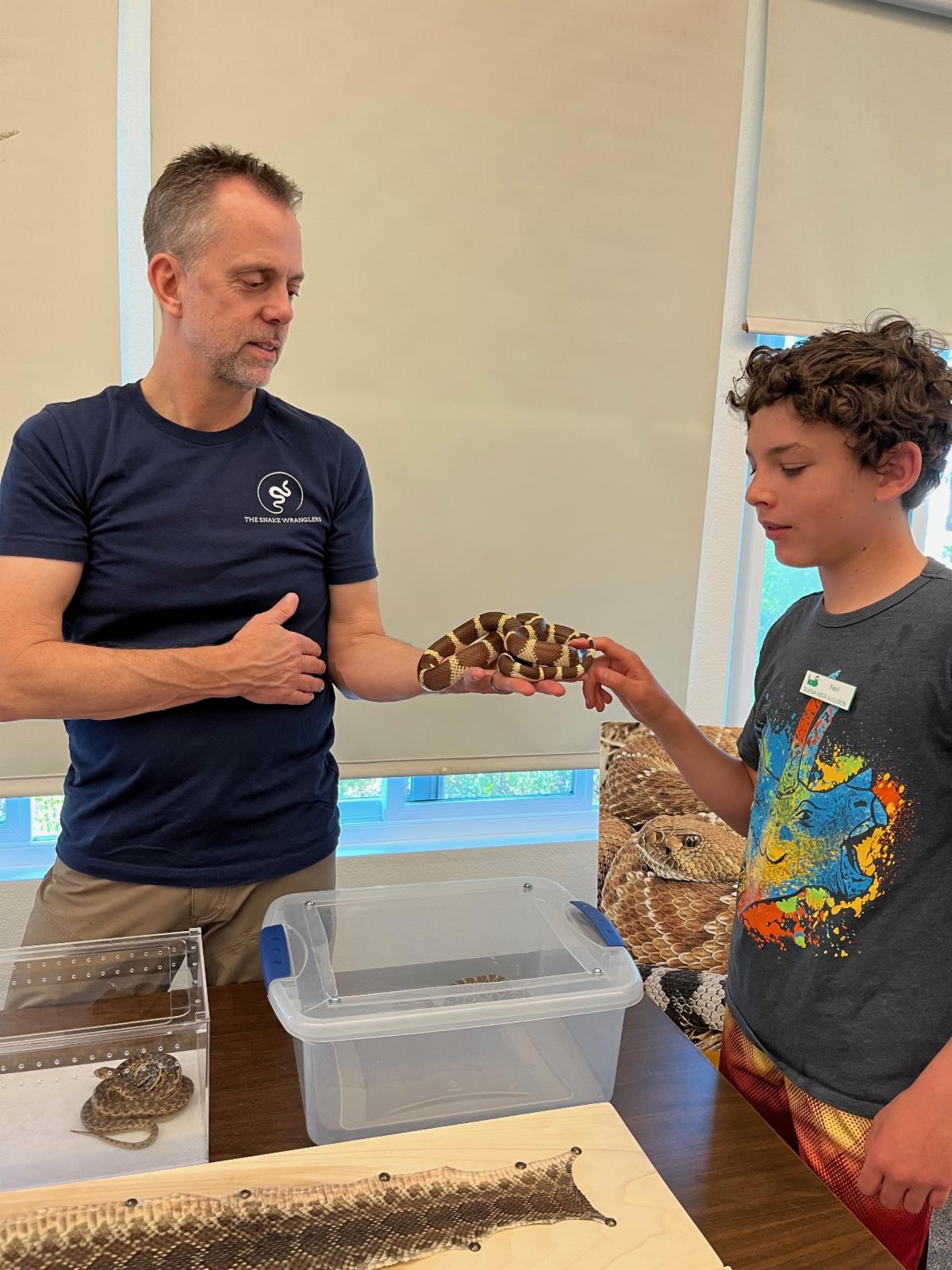
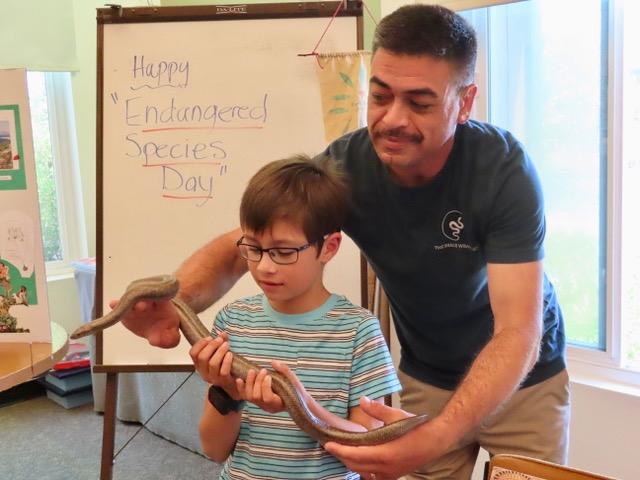
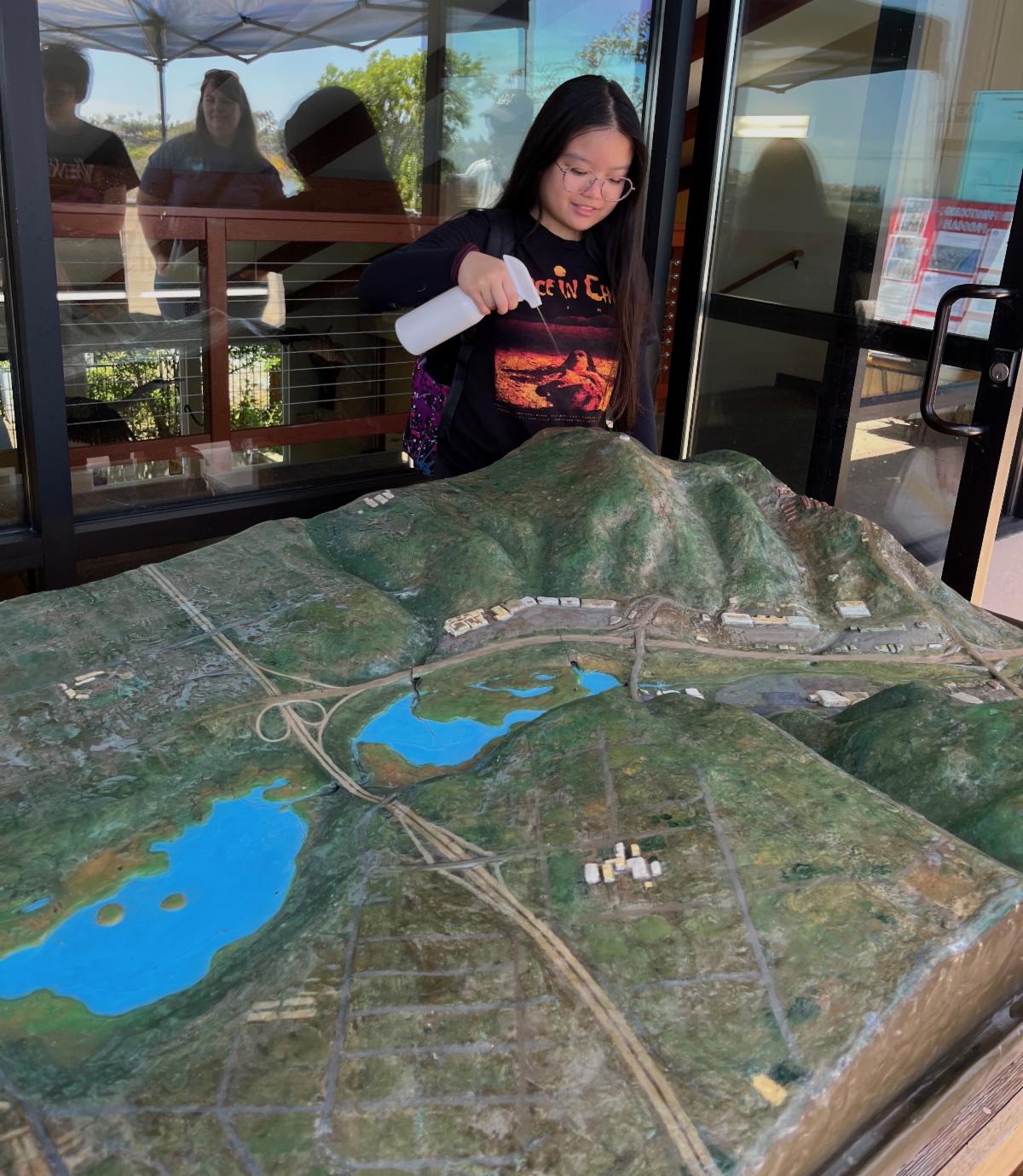
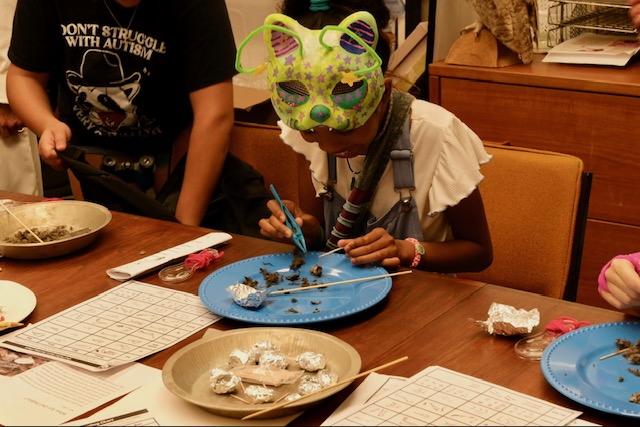
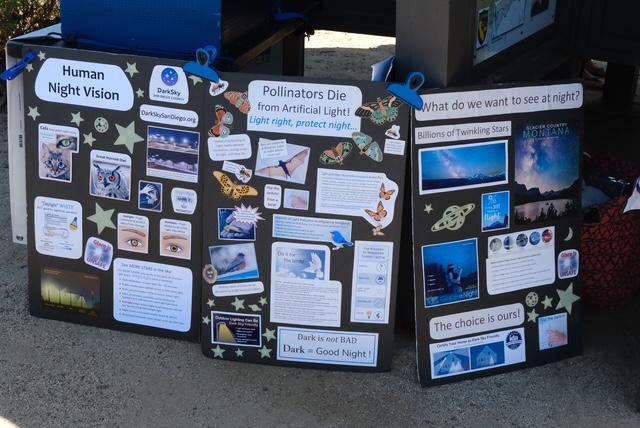
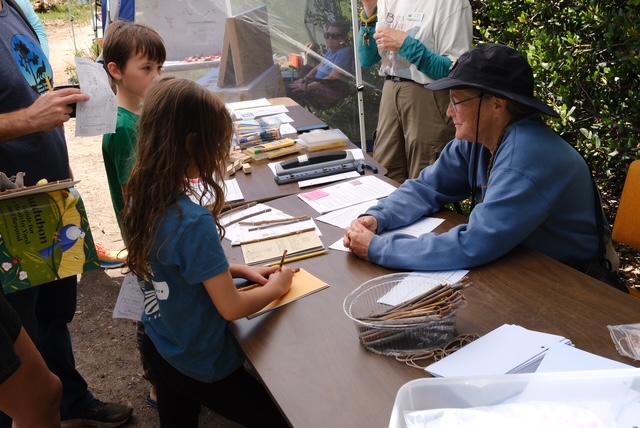
| | | | Endangered Species Day at the Buena Vista Nature Center | | The Nature Center, sitting adjacent to the Buena Vista Lagoon Ecological Reserve, is the perfect setting to host the annual Endangered Species Event. The event, cosponsored by Buena Vista Audubon Society (BVAS) and Preserve Calavera, provided an opportunity for the community to learn about the importance of protecting not just endangered species, but all native species and their unique habitats. | Creating animal tracks and learning which species make them. And Dovie with a magnificent native Desert Tortoise. (Photos by J. Cannon) | | | The Snake Wranglers brought some local ambassadors to the delight of (most of) the visitors. At left volunteer wrangler David Newman with a CA king snake (photo by E.Bartlett). At right Tai Knight showing off a rosy boa (photo by J. Cannon). You can read more in Wildlife Corner below. | | There was far too much going on to describe it all here—you will just have to mark your calendar to come next year and experience everything for yourself! | | Modeling a watershed (photo by E. Bartlett) | | Dissecting owl pellets (photo by E. Candelario) | | Dark Sky-how does artificial light affect the natural world? And connecting kids with nature through journaling. (Photos by E. Candelario) | | | |
Our very own San Diego County claims the unfortunate distinction of being home to more imperiled plants and animal species than any county in the US. Which makes educational events in our community like these all the more important. Imperiled species are those plants and animals whose populations have decreased so dramatically that they are at risk of extinction! That number will continue to get worse if we don’t work harder to protect them and their habitats.
We are all in this together when it comes to protecting our imperiled species!
| | "The greatest threat to our planet is the belief that someone else will save it." Robert Swan | | Greening Oceanside with our OGHGER Funds | |
|
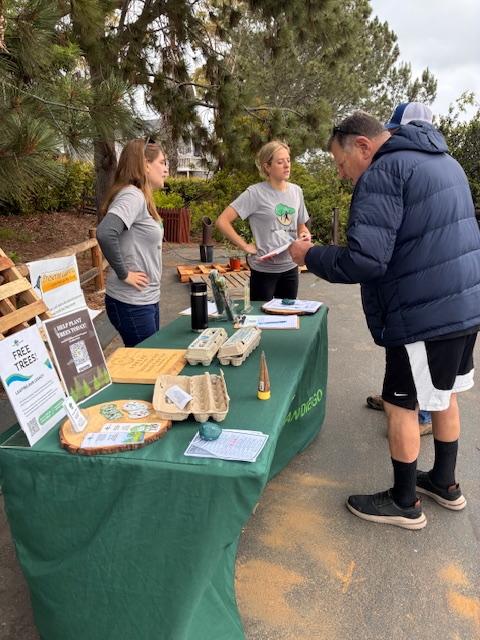
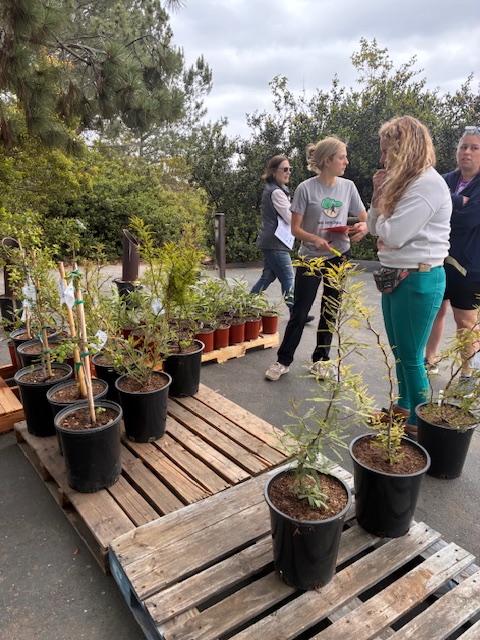
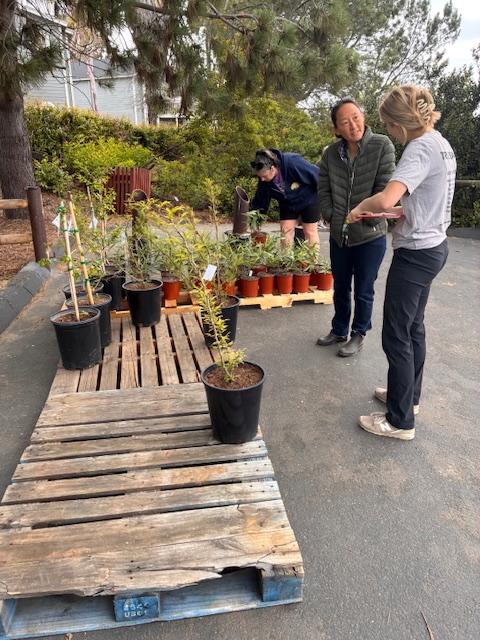
Preserve Calavera sponsored another Free Tree Distribution Event on Saturday, May 17. The event was organized by Tree San Diego and held at the Buena Vista Nature Center. All trees were native: Costal Live Oak, Honey Mesquite, Sycamore, and Black Elder. Prior to the event, Oceanside residents registered to pick up their trees.
Along with their intrinsic value, trees benefit our ecosystems in so many ways: Tree Benefits.
Improving the tree canopy cover (TCC) in neighborhoods is always rewarding. TCC is low in Oceanside, at about 17%, while it should be at 35%. In lower income and underserved neighborhoods, it is even lower, significantly under 10%. So this event was targeting those neighborhoods.
Preserve Calavera established the Oceanside GHG Emission Reduction Fund (OGHGERF), the first such fund in the region, to support projects in Oceanside that reduce local GHG emissions.
Preserve Calavera has given away 111 trees so far this year in Oceanside. 71% went to disadvantaged areas with low tree canopy cover per the census map.
| Along with collecting their trees, residents also were able to bring home some seedballs for planting that contain local wildflowers. 70 trees were given away during the event. | | | | | Wildlife Corner: California Kingsnake | | | | |
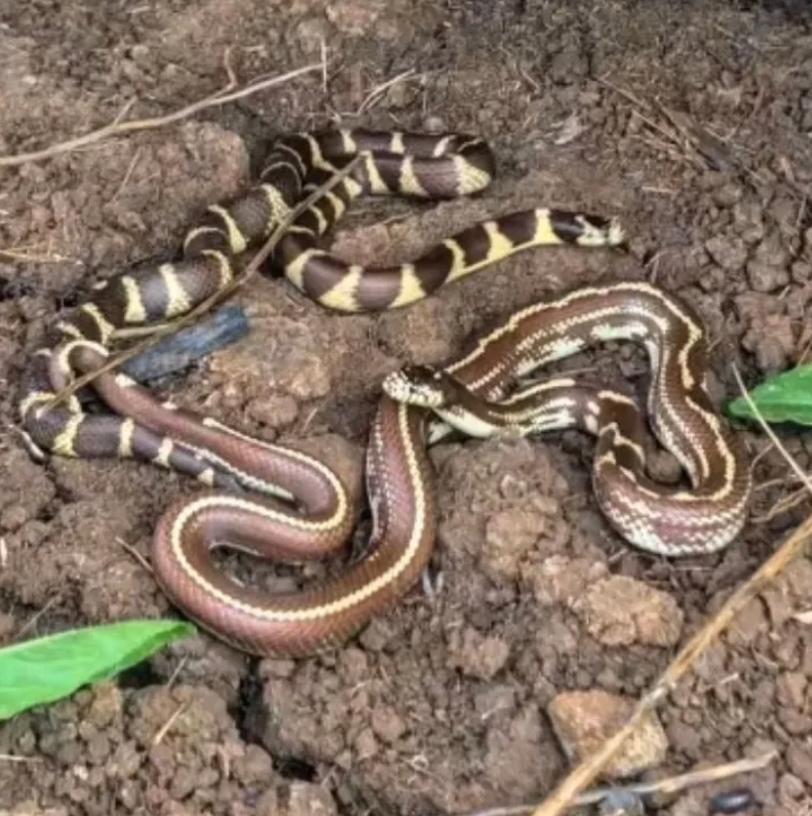
There is a good chance that if you have been in this area for a while, you have spotted at least one (and likely more than one) kingsnake. The California kingsnake (Lampropeltis getula californiae) is one of the most common snakes in our area; so it's good to know that it is non-venomous!
What's in a name?
This snake is named a "King" because it preys on other snakes; even venomous ones. Since they prey on rattlesnakes, be sure to thank the next kingsnake you encounter; they are immune to rattlesnake venom.
Kingsnakes use constriction to kill their prey; which involves coiling around and asphyxiating it. Prey is then swallowed whole. Along with snakes, they have a varied diet which includes small rodents, birds, frogs, lizards and eggs of all kinds.
| | |
CA kingsnakes have a range of colors and markings but most have alternating dark bands with light bands; commonly black or brown alternating with white or pale yellow. The variety of color morphs have evolved to allow the snakes to blend into their natural surroundings. More about CA kingsnakes: OaklandZoo
So what should you do if you see a kingsnake?
Leave it be! And if it's around your home, it will help with natural pest control.
| |
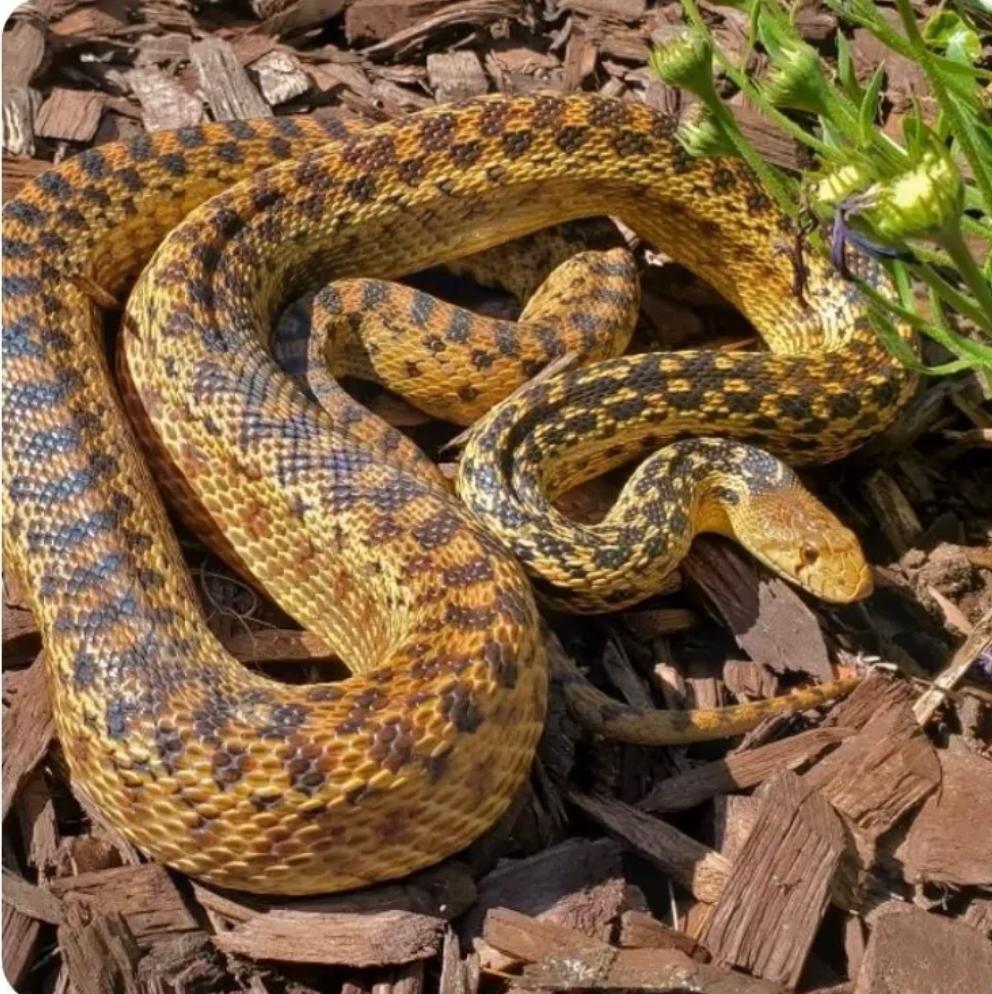
There are 3 other common snakes in San Diego County and 2 are venomous (photo credits Snake Wranglers)
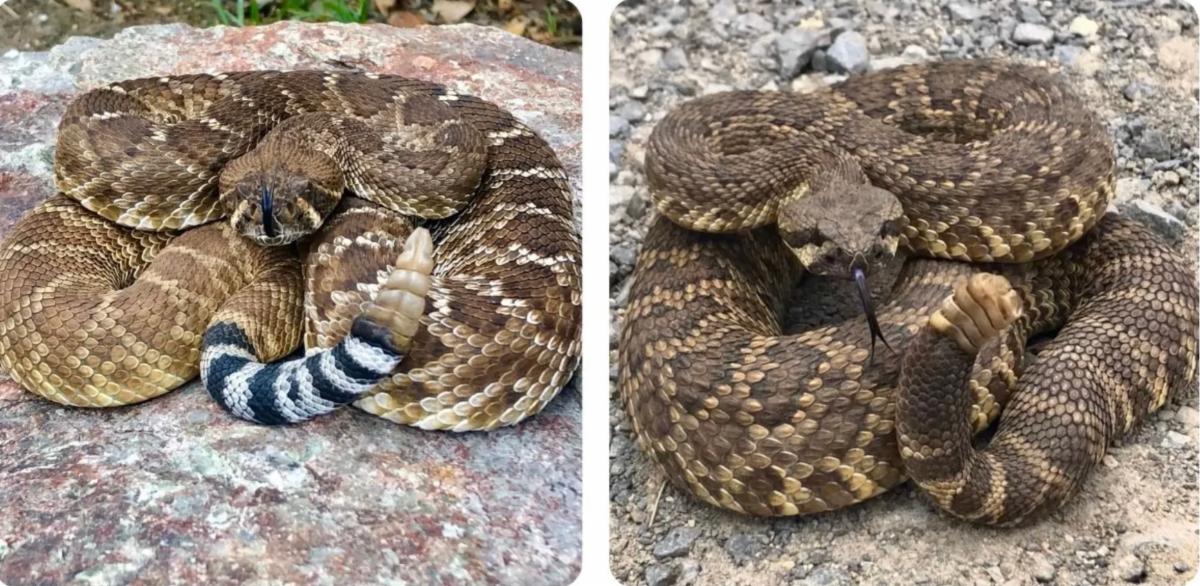
| | San Diego gopher snake: nonvenomous | | Red diamond Rattlesnake and Southern Pacific Rattlesnake: both are venomous | | |
Besides staying away from it, what should you do if you have a problem with a venomous snake?
Call the Snake Wranglers for assistance: ( 619) 204-5117 or go to their website:
Snake Wranglers
| | |
The Snake Wranglers are a group of dedicated volunteers who will come out and remove and relocate snakes. They have rescued 222 snakes so far this year. And they are 100% funded by donations.
Humane snake relocation involves safely capturing and transporting snakes to suitable habitats away from human activity. The Snake Wranglers are trained professionals who use proper tools and techniques to minimize stress, ensuring the snake's well-being while maintaining ecological balance.
The Snake Wranglers want to send a message to treat snakes with kindness; they are not evil, just misunderstood.
Check out their WEBSITE. It is filled has a wide variety of helpful and very interesting information including:
- Local Snake ID
- Snake Removal
- Education
- Training
- And you can find out the story of how the dedicated Snake Wranglers came to be
| | |
Our all-volunteer organization can not do what we do without your help. Your time, talent and donation can make a difference right in your own backyard.
Contact us to see how else you could get involved.
| | | And Check out our Website | And all of our past Newsletters can be accessed here. Lots of local information about our open space and wildlife issues. | | | | | |