| | |
MONTHLY NEWSLETTER
May 2026
| |
Preserve Calavera Supporter
| |
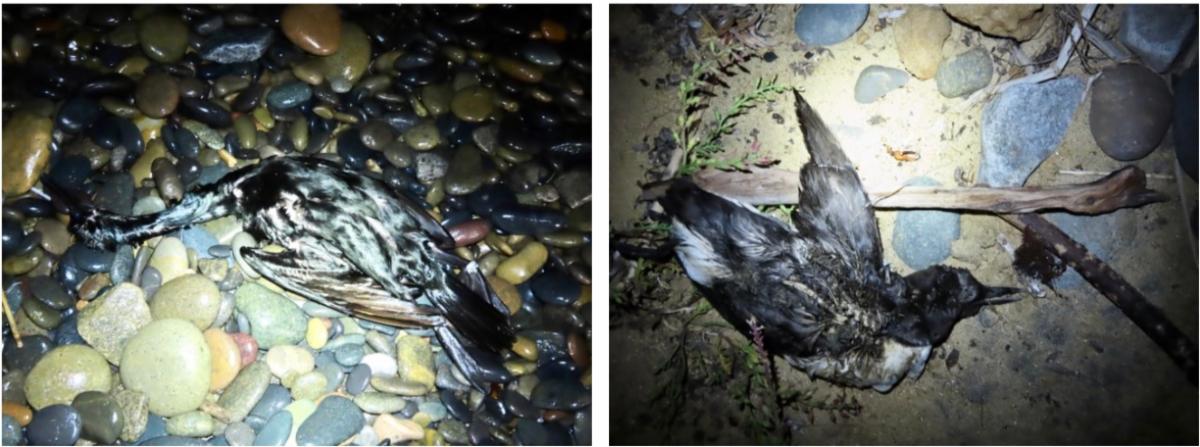
HAVE YOU ENCOUNTERED ANY DEAD BIRDS ALONG
OUR COAST RECENTLY?
| | Watch the CBS News Video above to find out more about Seabird deaths along California coast (March 31) | | |
The recent die-offs are believed to be caused by what is know as "the Blob" (not to be confused with the alien creature from the sci-fi movie made in 1958).
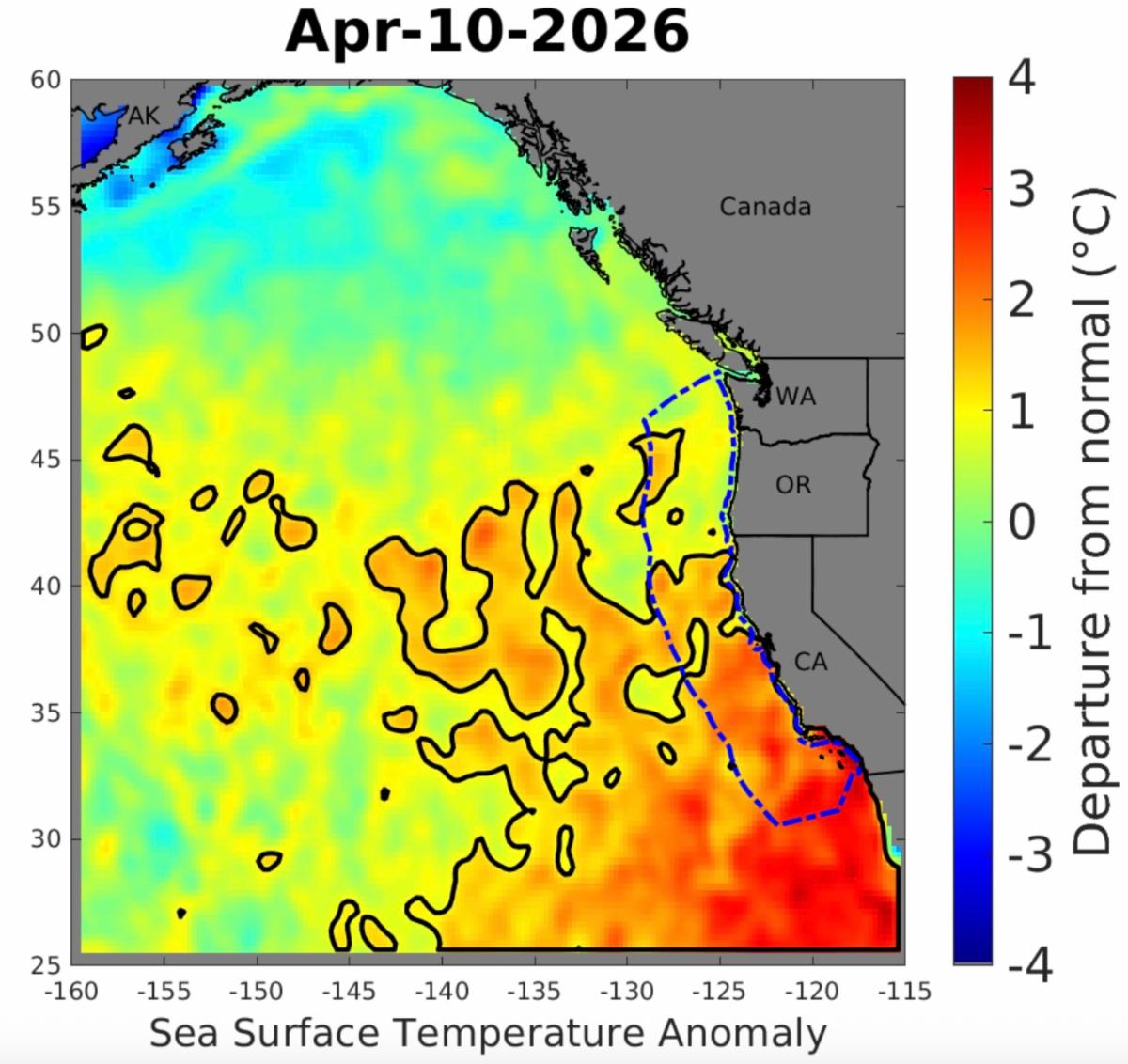
The Blob in the Pacific Ocean is a mass of warm water linked to changes in climate and ocean ecosystems. The Blob is caused by a combination of warmer air temperatures, changes in the patterns of wind speed, and the persistent mass of warmer water along the equator known as ENSO. The warmer water is poorer in nutrients and holds less oxygen than colder water. Small forage fish move deeper to escape the warm water which makes it more difficult for diving birds like cormorants to find enough food.
| |
The map above shows large portions of the coastal region along the US west coast, particularly off central and southern California, continue to be impacted by the large marine heatwave officially named NEP25A. Source NOAA | | |
MORE ABOUT THE BLOB
In 2013, a mysterious pool of warm water developed off of Alaska. This marine heatwave was so persistent and unusual that it initially defied explanation. The pool lingered in the sub-Arctic Bering Sea and Gulf of Alaska through winter, and then quickly expanded south along the Pacific Coast. By summer of 2014, the heated mass of water stretched from Alaska to Mexico and had been nicknamed “the Blob.”
Excerpt above from: EarthDataNASA
The original Blob was over a 1000 miles wide and up to 300 feet deep, it reappeared in 2019 and then again in 2025.
The "Blobtracker" was developed by oceanographers from NOAA Fisheries’ Southwest Fisheries Science Center as an experimental tool for natural resource managers. Read more.
| | | |
WHAT CAN YOU DO TO HELP?
The CA Department of Fish and Wildlife has these recommendations:
Report stranded seabirds:
* Call your local Wildlife Rehabilitation Facility or Project Wildlife-San Diego direct link.
Report dead seabirds:
* Residents can report dead wildlife to CDFW’s Wildlife Health Laboratory using the Mortality Reporting Form, which helps biologists monitor the event. Please include photos if possible.
Support a local wildlife rehabilitation facility; such as Project Wildlife SD:
Contact a permitted wildlife rehabilitation facility intaking seabirds directly for how best to assist.
Report marine mammals:
* To report a dead, injured or stranded marine mammal in California, call the NOAA Fisheries West Coast Region Stranding Hotline: (866) 767-6114. Information on species and regional stranding contacts may be found on the NOAA Fisheries website(external link)
Officials ask the public not to touch, harass, attempt to feed or take photographs with debilitated seabirds. Do not attempt to remove any fishing lines or embedded fishing hooks from entangled birds.
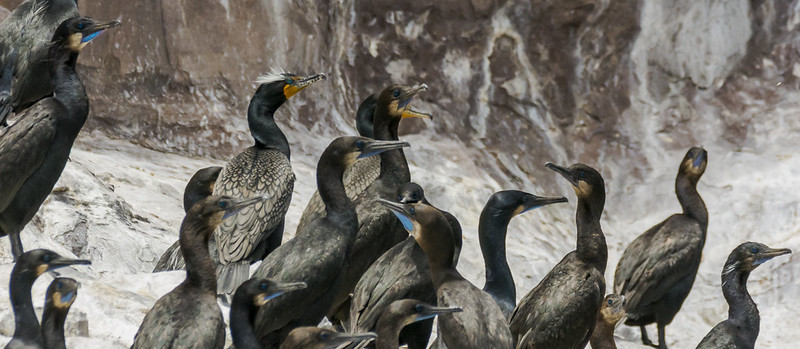
| | Above: Brandt's Cormorants and Double-crested Cormorants. Photo by Wendy Miller | | |
Sun, May 3
Buena Vista Audubon Quilt and Nature Art Sale
10 am - 2 pm
Location: Buena Vista Audubon Nature Center
2202 S. Coast Hwy, Oceanside
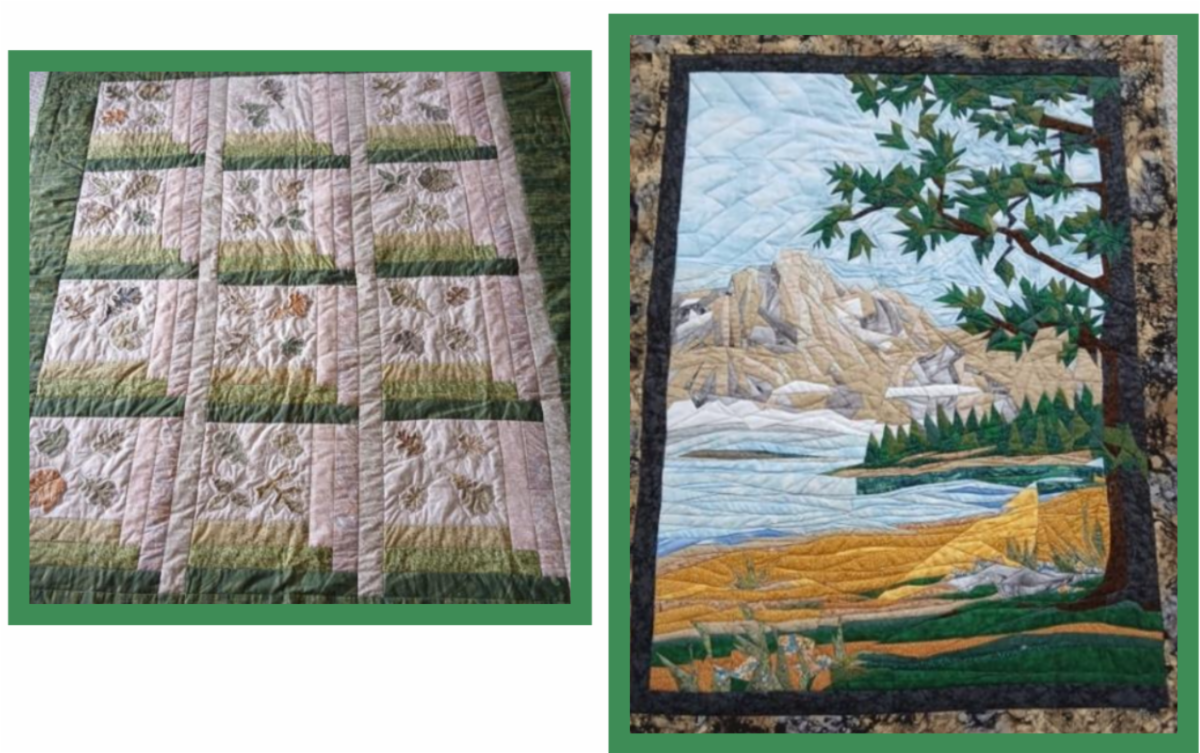
The sale will feature quilts created by Preserve Calavera's Board President, Diane Nygaard, and over a dozen local artists using a variety of mediums.
Studio Ace will provide a free all-age Make n' Take Workshop.
For more info: BVAudubon.org
and Event FLYER.
| |  | |
All quilt proceeds benefit local conservation work
This event is co-sponsored by Preserve Calavera, Studio Ace and the Oceanside Museum of Art.
| | |
Sat, May 9
Rancho La Costa Restoration
9:00 am - 10:30 am
To RSVP or for more info contact:
info@preservecalavera.org
or Anne-Catherine: acrochlevecq@gmail.com
| | | |
Removing non-native plants and watering native plants as needed.
Prepare: Wear appropriate (preferably long pants/sleeves) clothing, closed-toed shoes, and hat. Bring gloves, sunscreen and water.
| | |
Sat, May 16
El Corazon Restoration
9:00 am - 10:30 am
To RSVP or for more info contact:
info@preservecalavera.org
or call Diane:760-724-3887
| | | |
Removing invasive plants from this site.
Prepare: Wear appropriate (preferably long pants/sleeves) clothing, closed-toed shoes, and hat. Bring gloves, sunscreen and water.
| | |
Sat, May 16
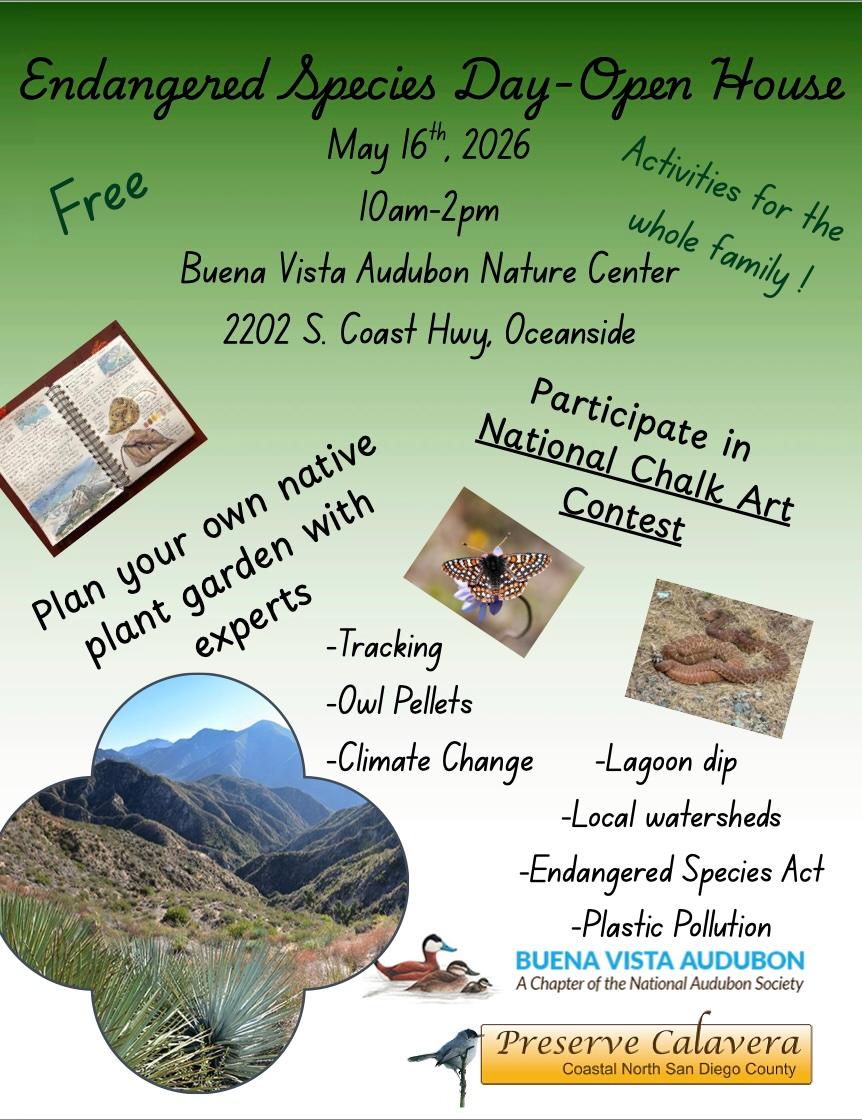
Endangered Species Day Open House
10 am - 2 pm
Come join in fun and educational activities at this year’s Endangered Species Day!
Location: Buena Vista Audubon Nature Center
2202 S. Coast Hwy, Oceanside
This event is sponsored by Buena Vista Audubon and Preserve Calavera.
This Event is free and lots of fun for the whole family!
Check out our flyer for more info.
FLYER
*Parking is limited. Please walk, bike, carpool, or use nearby street parking.*
| | | | We Need Your Help in the Ongoing Battle Against the Guajome Lake Homes Project | | |
We knew it was too good to be true!
In January the Oceanside City Council unanimously denied the terrible Guajome Lake Homes project. You can read more about the Oceanside City Council denial and the reasons for it:
But a few weeks ago the developer sued the city and is trying to get the court to require that the project gets approved.
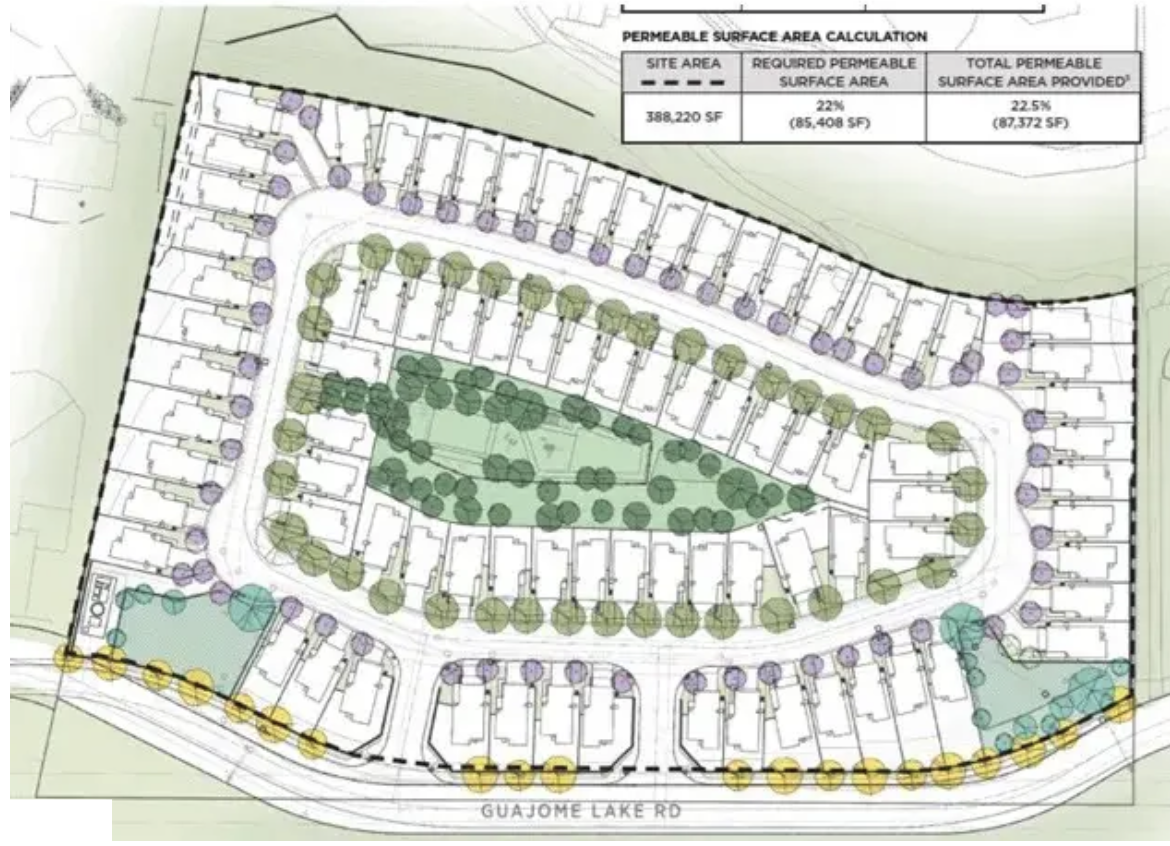
This 83 unit density bonus project would be the death knell for the only remaining equestrian area in Oceanside, will adversely impact the adjacent Guajome Regional Park, and is a classic example of the worst kind of sprawl development.
We need your help to support the litigation needed to oppose this development.
Please help us by making a donation to our litigation fund. Here are 3 ways to donate:
-
Follow this link to our website. Please designate the funds for Guajome Lake Homes Litigation: Network for Good
-
Send a check to: Preserve Calavera, 5020 Nighthawk Way, Oceanside, CA— In the Memo designate for Guajome Lake Homes Litigation
-
Visit our Quilt and Nature Art Sale on Sunday (see calendar) and give Diane Nygaard a check in person.
| | |
Above: Check out this video created by SD County. It showcases just how awesome Guajome Regional Park is.
Below: Map of the proposed Guajome Lake Homes Project (City of Oceanside)
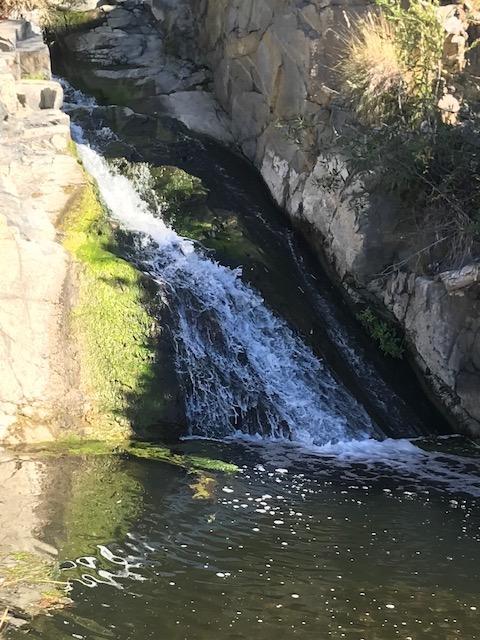
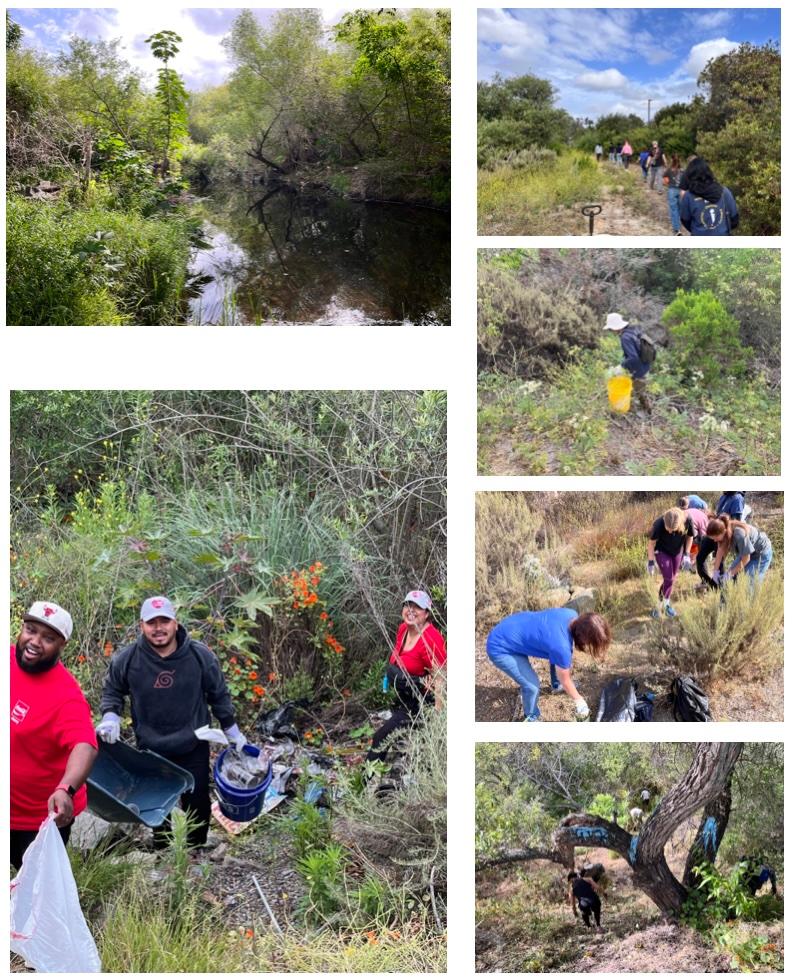
| | Coastal Clean Up Day at El Salto Falls | | On April 25, El Salto Falls (aka Quarry Creek) was one of more than 100 sites around San Diego County that was part of the annual Creek to Bay Cleanup. Once again, Preserve Calavera sponsored the site along with the San Diego Habitat Conservancy(SDHC). | | |
It is heartening to see that our past efforts, including the installed fencing, continue to have positive effect on the site. And continuing the downward trend, there was less trash at the site than the previous year. This allowed us to concentrate on removing invasive species.
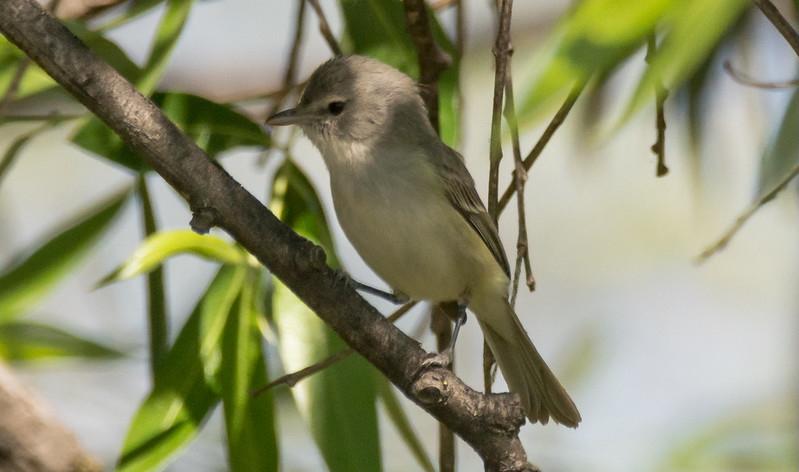
El Salto Falls has been identified by the Luiseño people as a sacred site for tribal religious ceremonies and its significance in their cultural history. It is also home to endangered, threatened and sensitive animal and plant species—including the Least Bell's Vireo, a small song bird placed on the endangered species list back in 1986 due to its loss of habitat.
| Least Bell's Vireo photo by Wendy Miller | | | The steep terrain and dense vegetation around the creek always make the clean up events additionally challenging for our volunteers.(Photos by V. Rivas and E. Bartlett) | | |
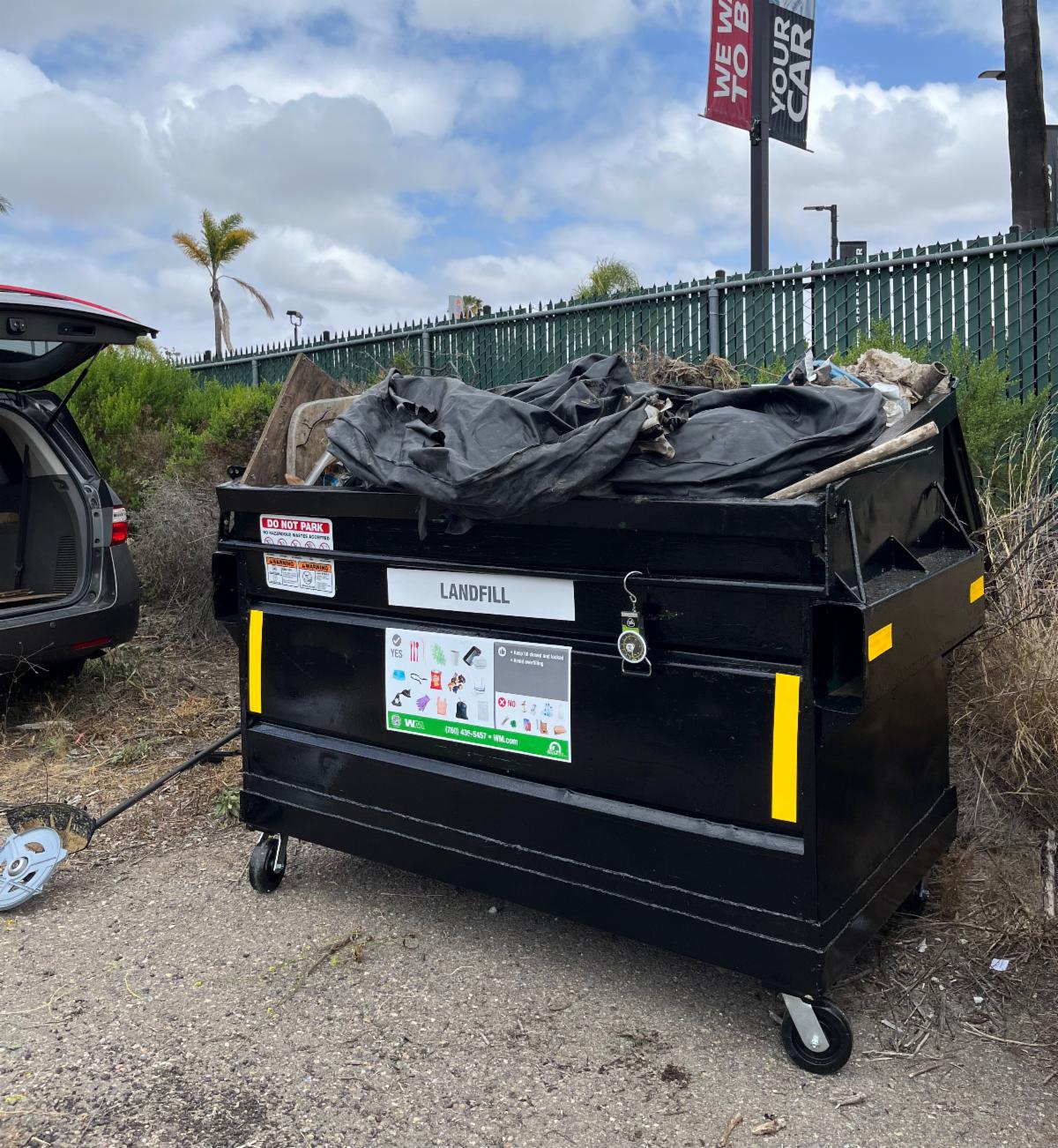
We filled the trash dumpster to the brim!
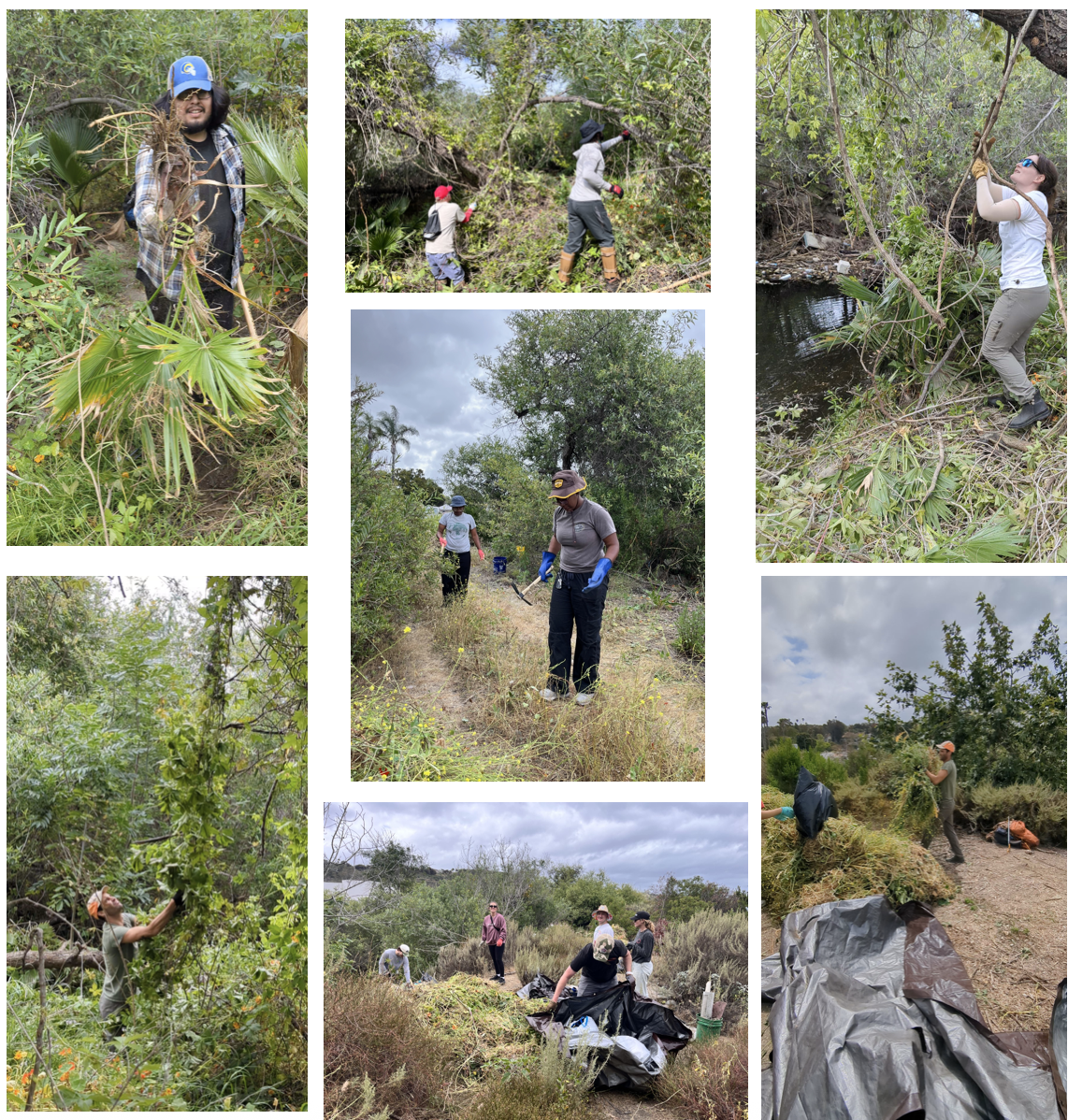
Much of our focus for this event was to remove invasive species from the area.
Unfortunately there are a variety of prolific invasives growing along the creek area.
Volunteers targeted:
- Garden nasturtium (Tropaeolum majus)
- Virginia creeper (Parthenocissus quinquefolia)
- Shortpod mustard (Hirschfeldia incana)
- Castor bean (Ricinus communis)
- Fan palm (Washingtonia robusta)
- Crown daisy (Glebionis coronaria)
| | | Quarry Creek Preserve has been set aside as protected habitat. Invasive plant species have been growing prolifically and crowding out native plant species which native birds depend on. Along with the least Bell's Vireo (see photo above), other protected bird species found at the site include the White-tailed Kite (Elanus leucurus) and the Coastal California Gnatcatcher (Polioptila californica californica) which we chose for our logo 25 years ago. (Photos by V. Rivas and GT Wharton) | | |
CLEAN UP EVENT BY THE NUMBERS:
53 volunteers
450 pounds of trash
60 pounds of recycling material
250 pounds of scrap metal
30,000 square feet of invasive plant species removed
| | |
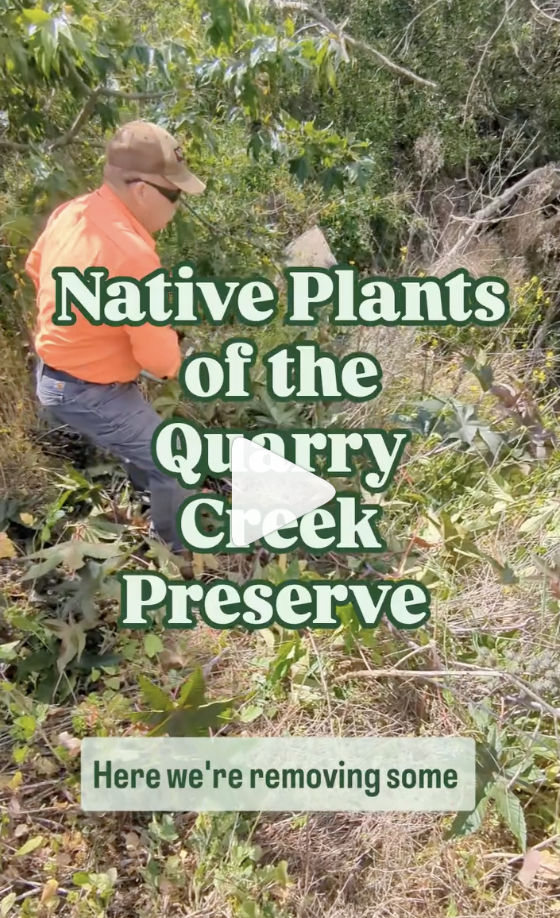
Check out the clean up event videos below. They are created and posted on oceansidecleanup by GT Wharton.
GT made the last video on Native Plants at last year's clean up event but it is worth seeing a second time.
| | |
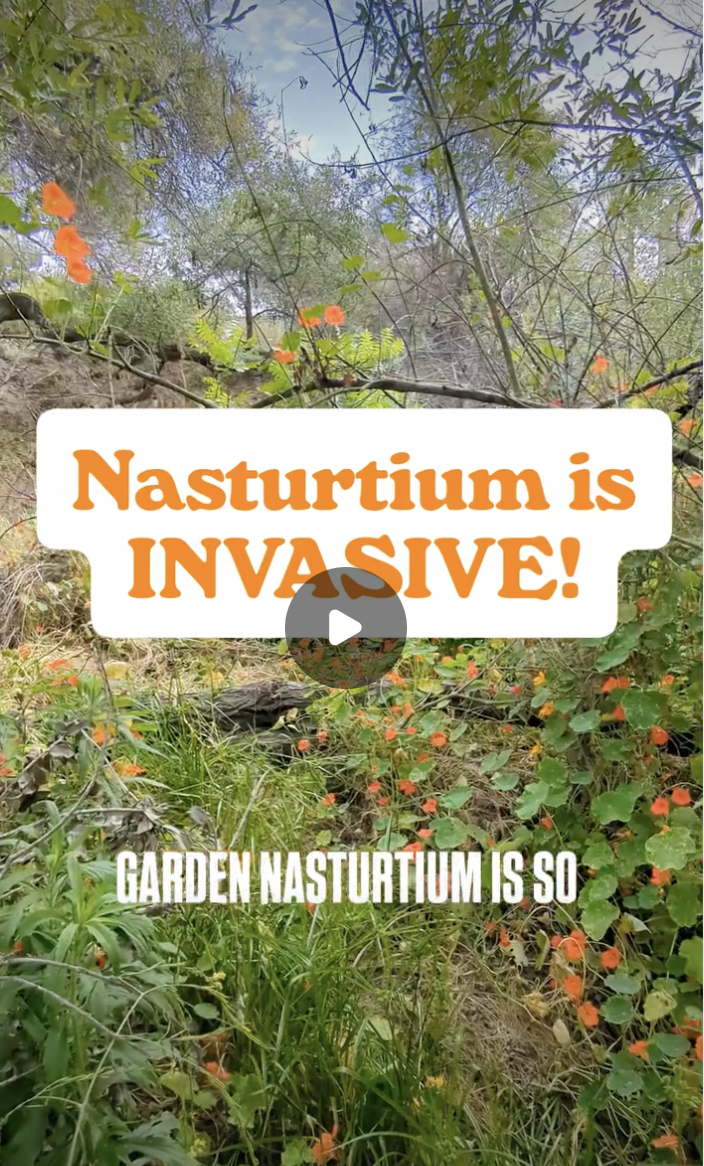
The Nasturiums Sure Are Colorful. So Why Are They a Problem?
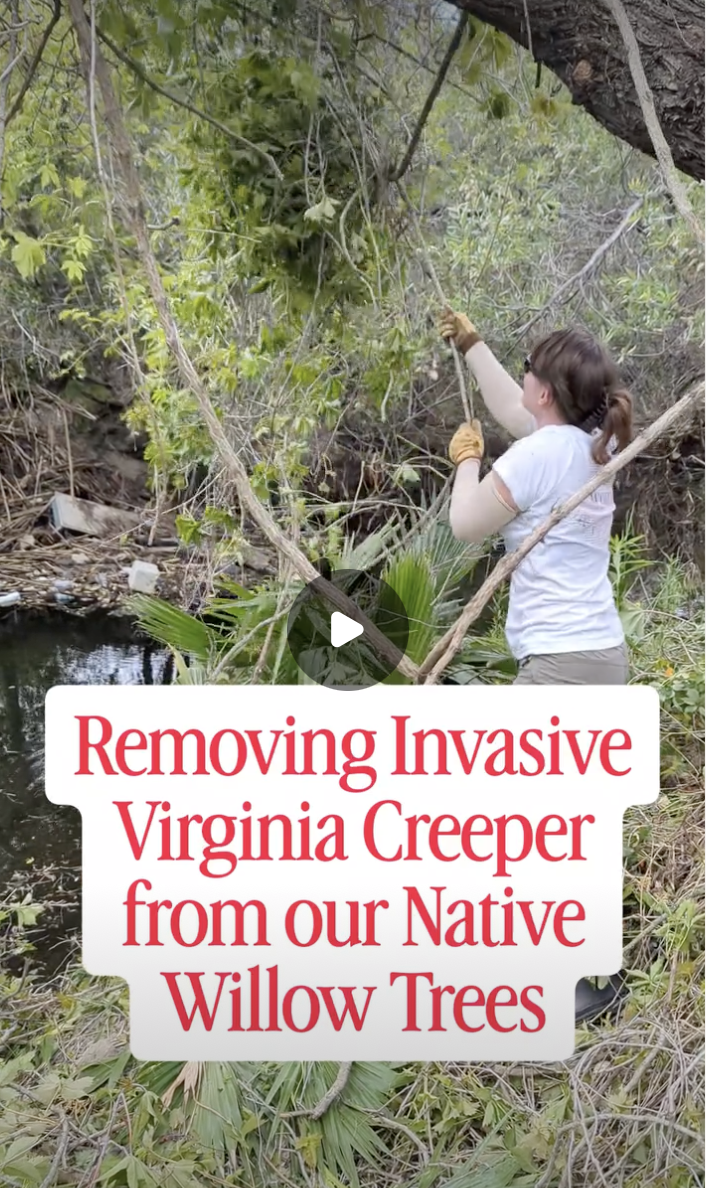
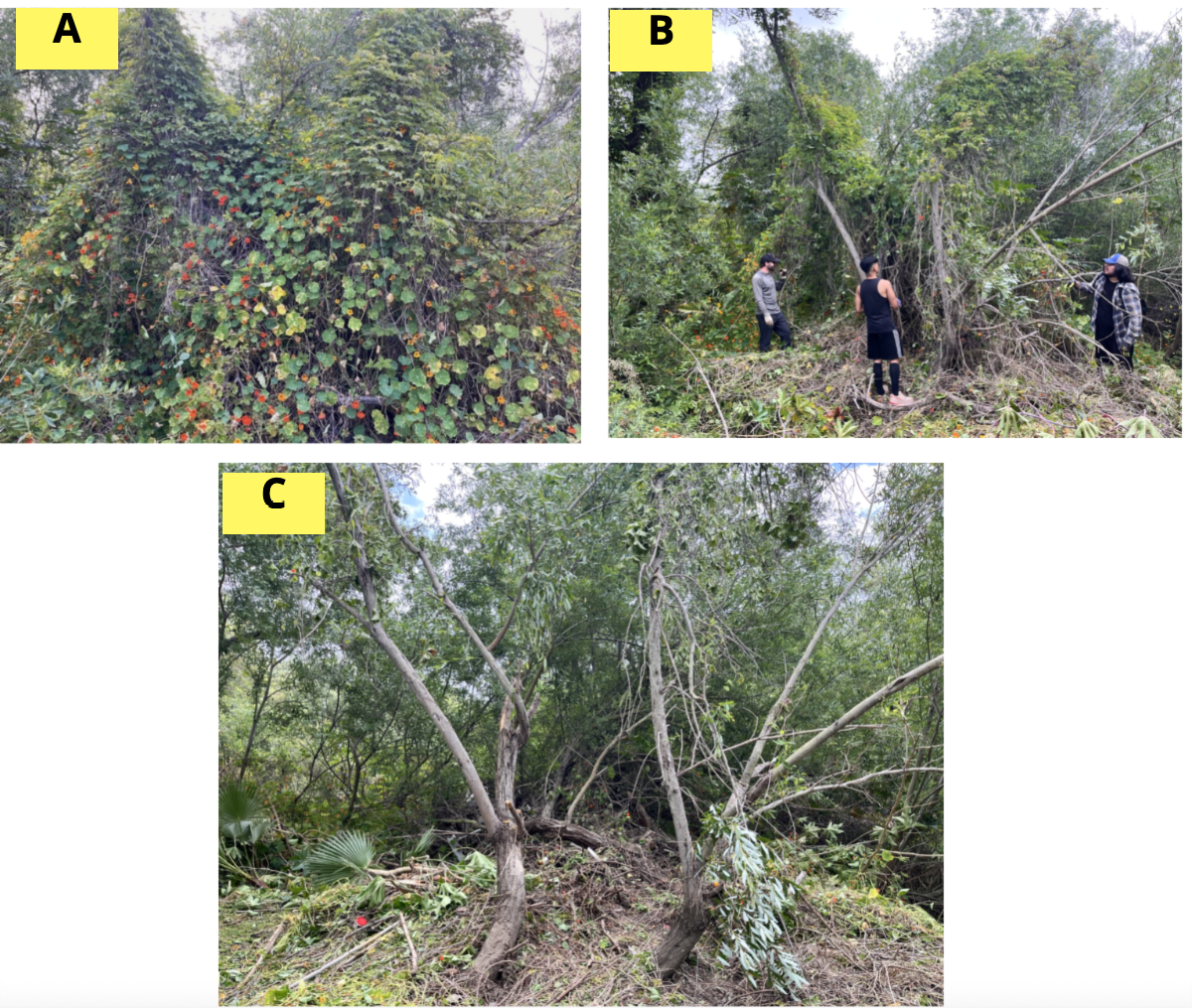
It's impossible to see the Goodding’s black willow trees (Salix gooddingii) in picture A. They have been completely blanketed by invasive nasturtium and Virginia creeper. Volunteers were able to free these native trees from the suffocating invasives. We now are hopeful that these fast growing trees will make a full recovery. (Photos by V. Rivas)
We need native trees to support our native wildlife!
| | Tides of Tomorrow: North County Youth Climate Gathering | | |
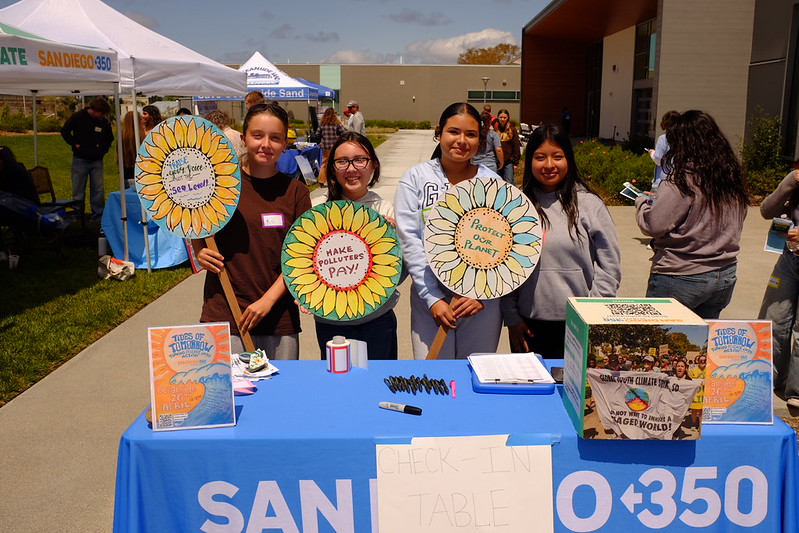
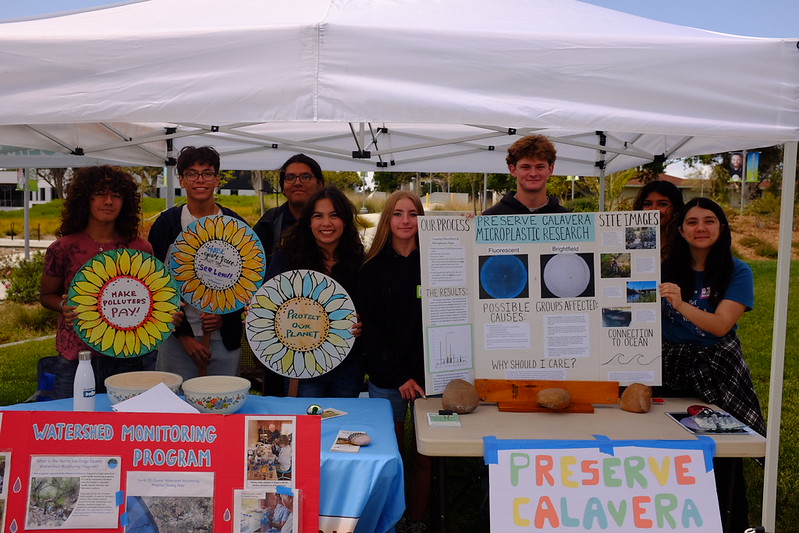
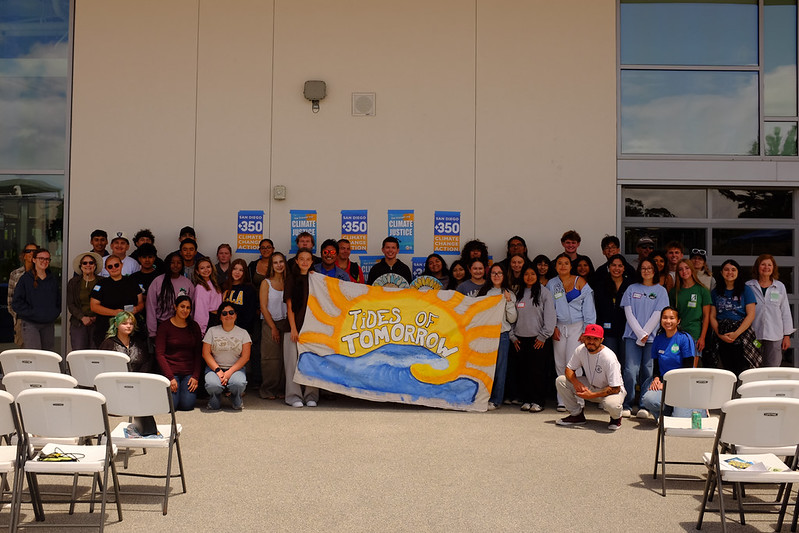
Youth4Climate, the youth of team of San Diego 350 Climate Action, celebrated Earth Day on April 26th with Tides of Tomorrow, an event for high school and college students across North County. The free, hands-on event at MiraCosta College gave students opportunities to engage with scientists, and find out about coastal climate issues.
Preserve Calavera has partnered with SD 350 Climate Action to fund two youth positions through our Oceanside Greenhouse Gas Emission Reduction Fund.
| | | | | |
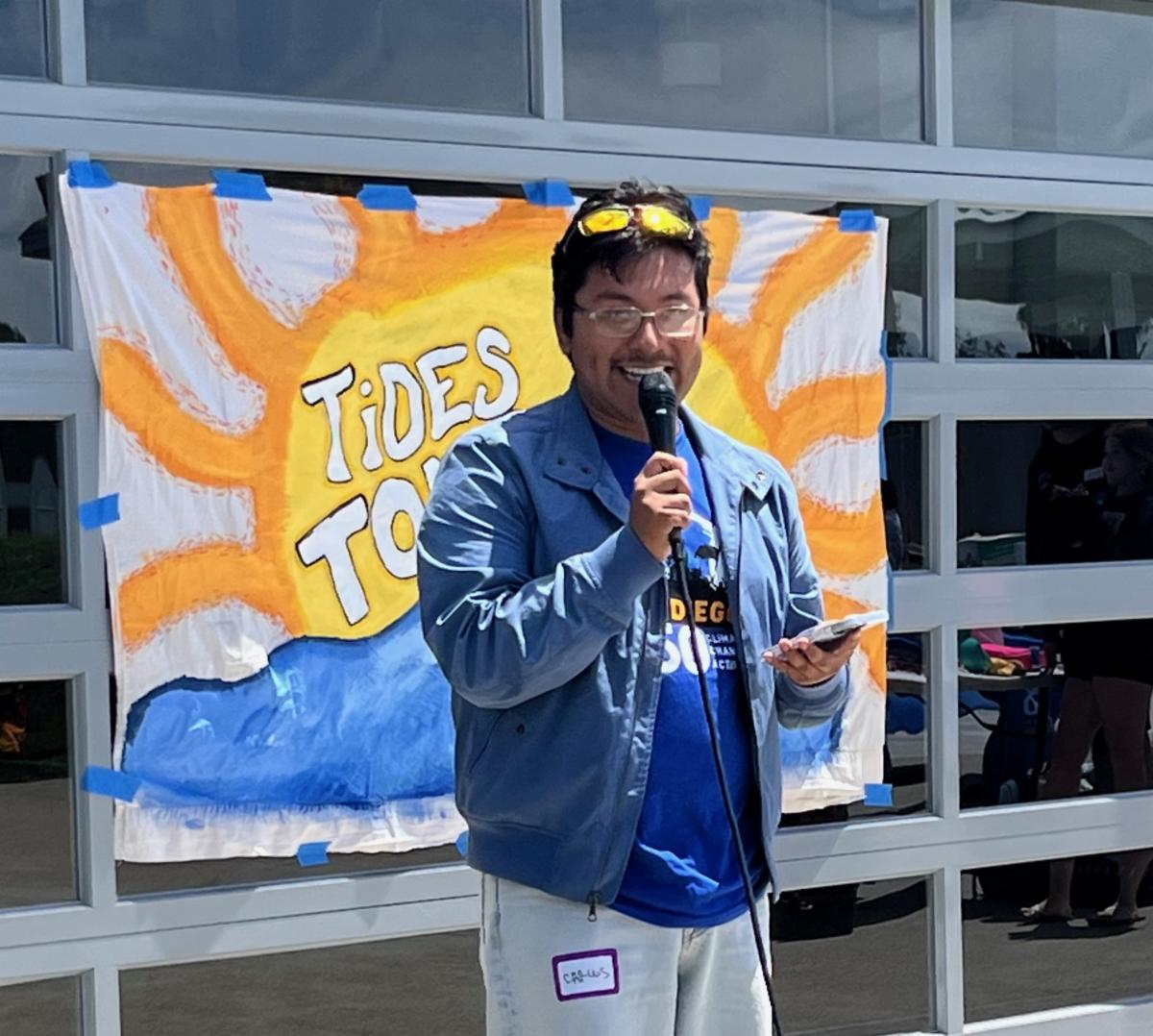
Carlos Lopez, an El Camino HS student, was the event organizer. He is a Youth4Climate Intern and his role is to engage, inspire and empower other youth in Oceanside to be climate justice leaders.
| | | | |
In his opening speech at the Event, Carlos said:
I grew up two miles from the Oceanside beach. For most of my life, I never thought the ocean had anything to do with me. Nobody handed me a research paper. Nobody told me I could work at Scripps one day. The coast was just there, in the background, something other people cared about, in ways I didn’t understand yet.
That changed when people started letting me into their work and treating me like I belonged there. And I have spent the last year trying to build a space where that happens for more students – students who grew up near the water but never felt like the water was theirs. That is where this event came from.
| | | |
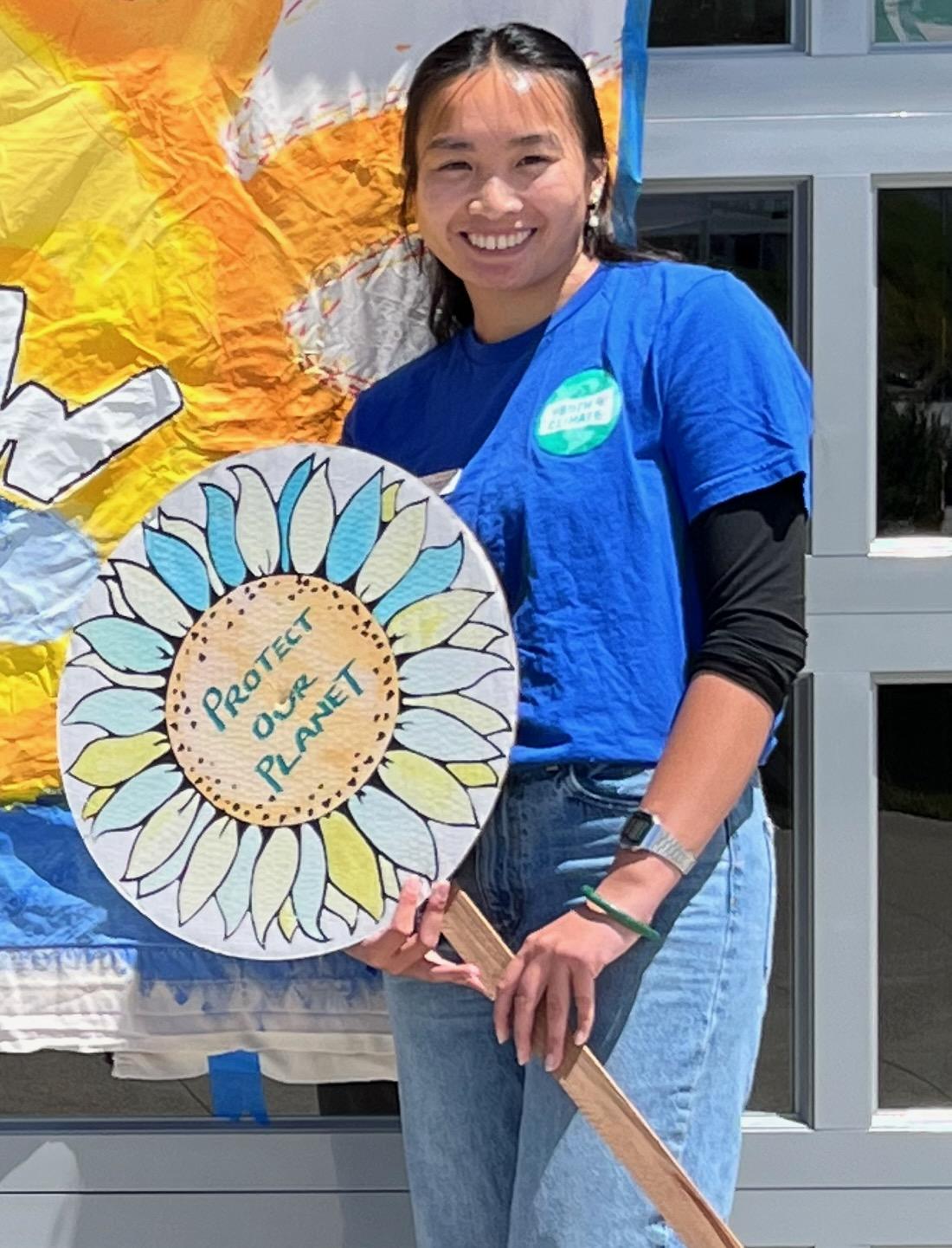
Elizabeth Nguyen was hired as Youth Coordinator Intern in Oceanside to support and supervise Carlos’ activities, build community relationships and and support youth-led organizing, campaigns and events. She has a degree in Marine Biology from UCSD.
Youth4Climate is a network of high school and middle school students doing climate work across San Diego County. They plan events, run campaigns, push school board policy, and build community among youth.
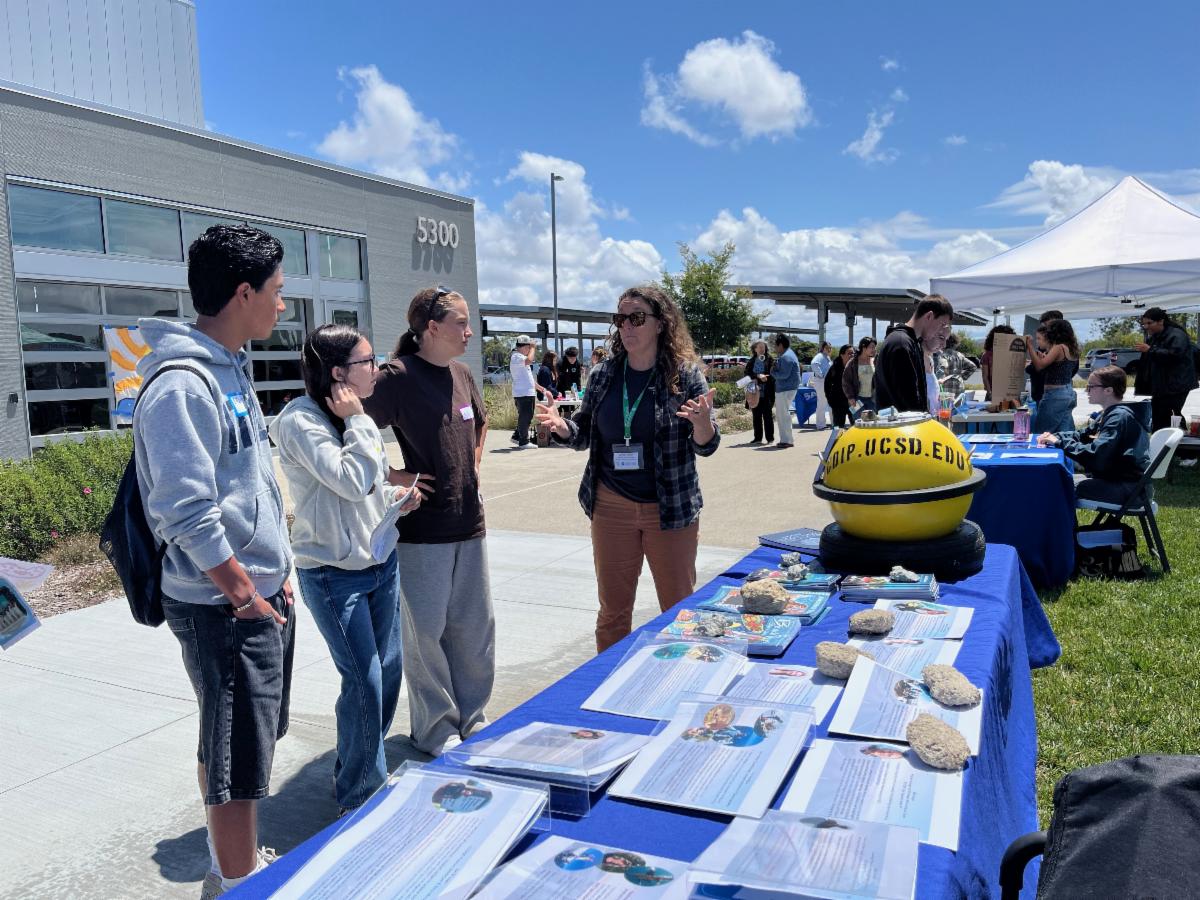
| | | Danielle Muller (at right) talking with students. A scaled-down model of a CDIP buoy is on display. Photo by E. Bartlett | | |
Danielle Muller, SCCOOS Program Coordinator at Scripps and U.S. Coast Guard licensed ship captain was a guest speaker for the event. She described for the students what two decades in marine biology actually looks like as a career and inspired them to find out more.
Students explored seaweed art and California kelp ecology with Scripps Oceanography Researchers, connected with Save Our Sand Organization and the Sierra Club and found out about career paths in marine science and environmental work.
| | | Two Easy Ways to Make a Difference From Home | | |
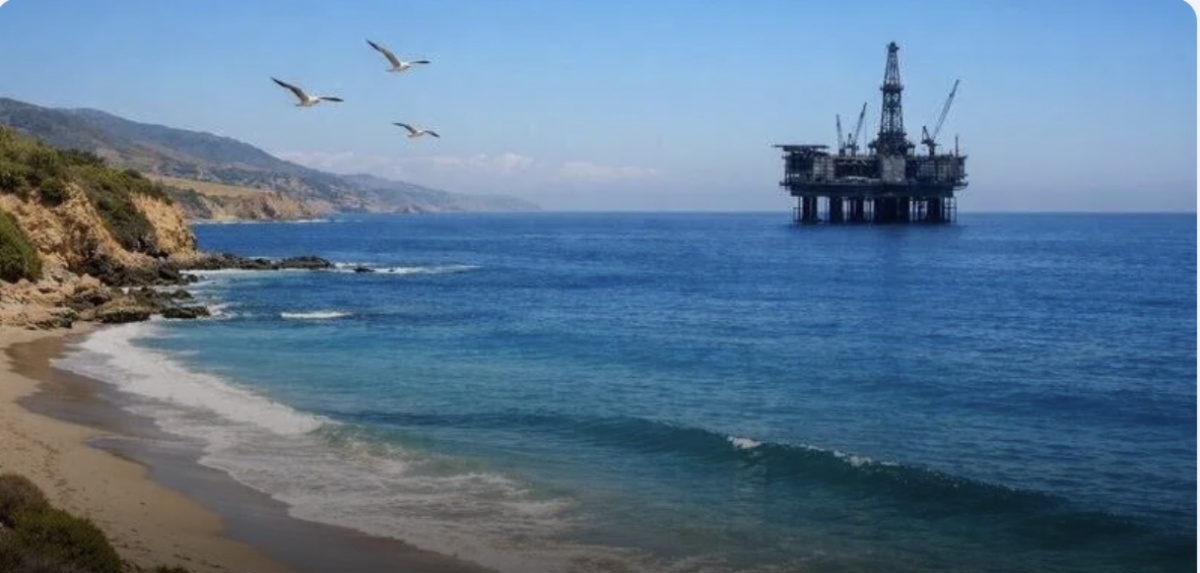
Sign the Petition to Stop Offshore Drilling in CA:
Offshore drilling in California disrupts marine life, causing pollution and increasing the risk of devastating oil spills. The process releases toxins into the air and water, endangering both human health and wildlife. In the past, catastrophic oil spills along the California coast have led to tragic loss of marine life, harmed local economies reliant on tourism and fishing, and inflicted irreversible damage on already fragile ecosystems. California's beaches, once vibrant and full of life, are at constant risk due to continued drilling activities.
| | | |
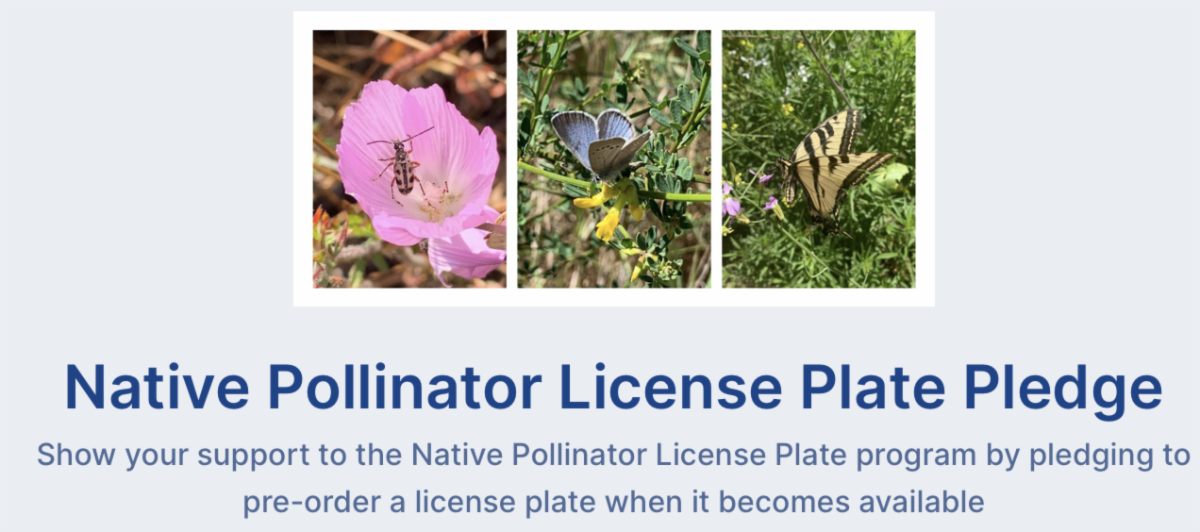
Take the Native Pollinator License Plate Pledge:
Native pollinators are essential for human food security, but their populations have fallen catastrophically under the combined assault of habitat loss, pesticides, and disease.
Establishing a License Plate program is a rigorous process that requires the approval of the DMV and the support of a State Agency. It also includes gathering the public interest and getting 7,500 California Pollinator License Plates pre-ordered by California drivers.
| | The establishment of a California Pollinator License Plate program will help education and conservation programs for native pollinators and their natural habitat. | | Wildlife Corner: Brandt's Cormorant | | |
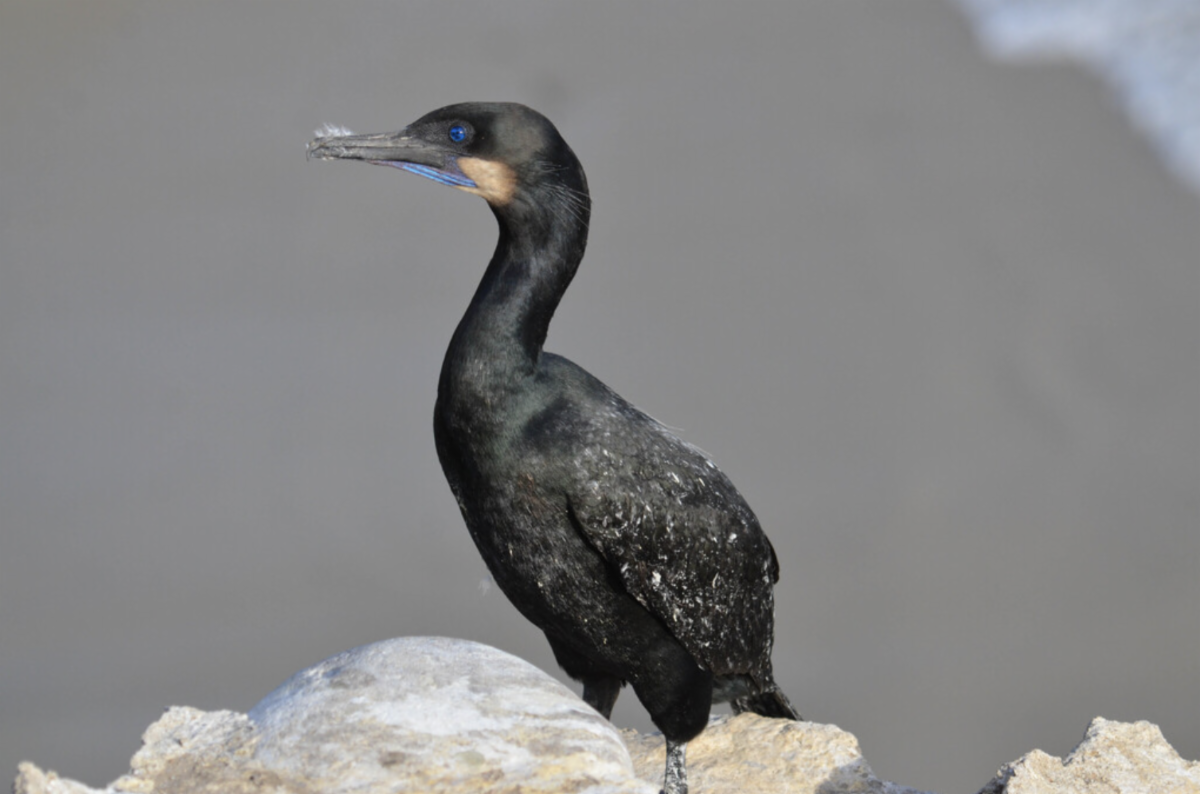
Brandt’s Cormorant (Urile penicillatus) is a marine bird found only along North America’s Pacific coasts and it is the most common cormorant species along coastal San Diego County. Like all cormorants, they have a long skinny neck and a hooked beak.
Don’t be confused it you see Brandt’s Cormorant called by the scientific name Phalacrocorax penicillatus. It was formerly classified in the genus Phalacrocorax, but a 2014 study supported reclassifying it and several other Pacific cormorant species into the genus Urile.(Wiki)
| | |
| | |
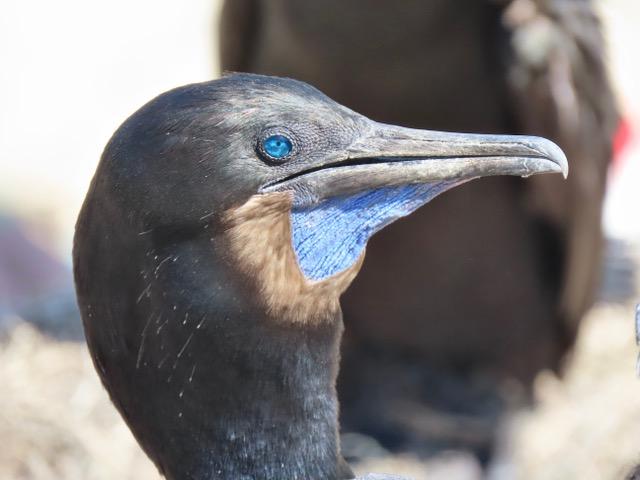
Brandt's Cormorants have striking crystalline blue-green eyes. During mating season both females and males display blue throat pouches. Both characteristics are visible in the photo. (photo by J. Cannon)
As they raise their chicks, the blue throat color fades—somewhat like human newlyweds reorganizing priorities from looking good enough to attract a mate, to the hard work of gathering enough resources to support ever-hungry babies.
| | | | |
Brandt’s Cormorants generally nest and roost on rocky islands, coastlines, and cliffs. There is a colony that nests on the sea cliffs in La Jolla—which is where these photos were taken.
For a detailed look into their breeding behaviors, check out 70MilesofCoast.
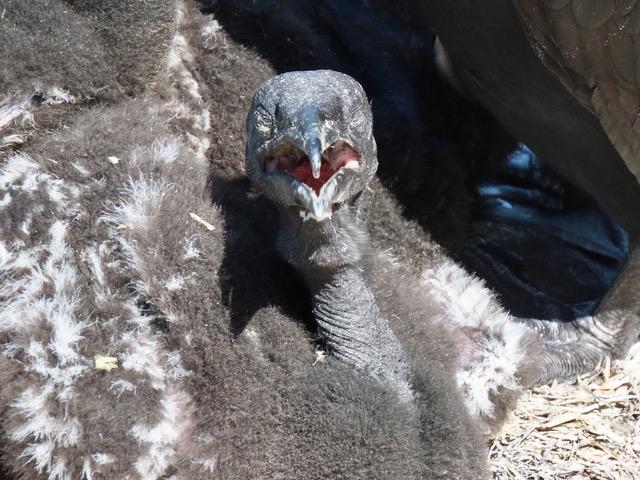
A very fuzzy nestling below. (photo by J.Cannon)
| | |
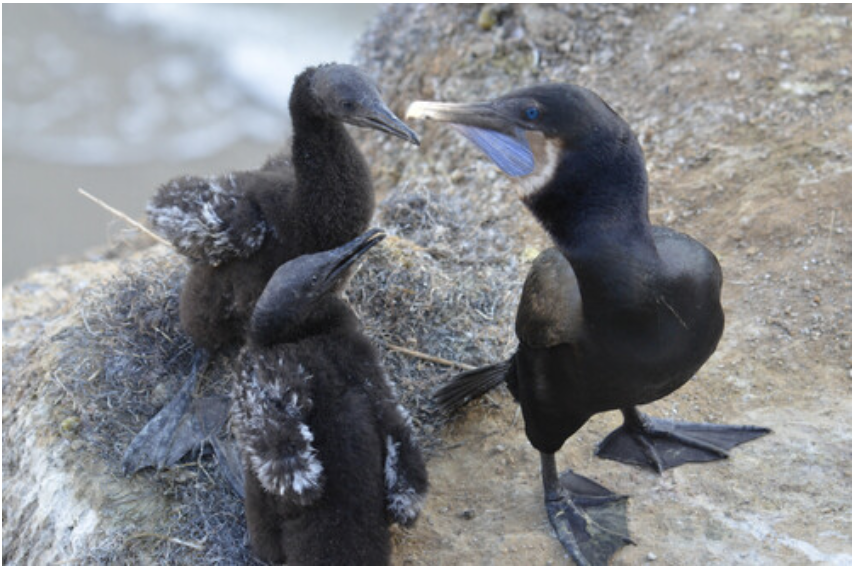
Nestlings with parent that still displays its blue throat patch. (photo by Steensfindings) Non-breeding birds are entirely black.
Below the cormorant's long thin neck is on display. They are large birds and both sexes are similar in size, measuring in length between 2 and 3 feet, weighing 3 to 6 pounds, and with wingspans that reach nearly four feet across. (photo by Steensfindings)
| | |
The bird is named after Johan Friedrich von Brandt, the German zoologist that first documented the species.
The name cormorant is derived from the Latin corvus (raven/crow) and marinus (of the sea). They were nicknamed sea ravens or sea crows. These nicknames highlighted their dark plumage, hooked beaks, perching behavior and predatory fishing habits, which led people to associate them with ravens or crows that live and hunt in marine environments. In reality, cormorants are more closely related to pelicans.
| | | |
Cormorants have superior swimming ability and they are experts at deep diving to hunt fish. Using their hooked bills, they chase their prey toward the surface, grab and crush it with their bill, and swallow it head first.
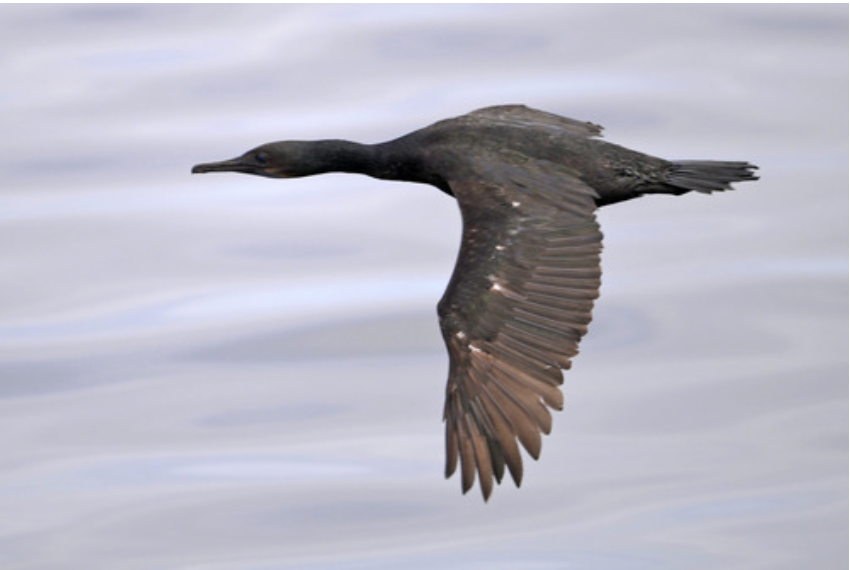
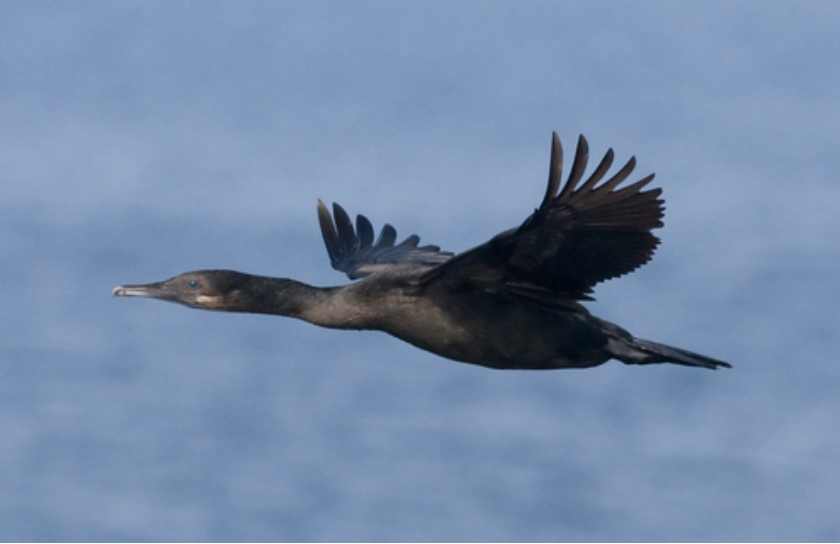
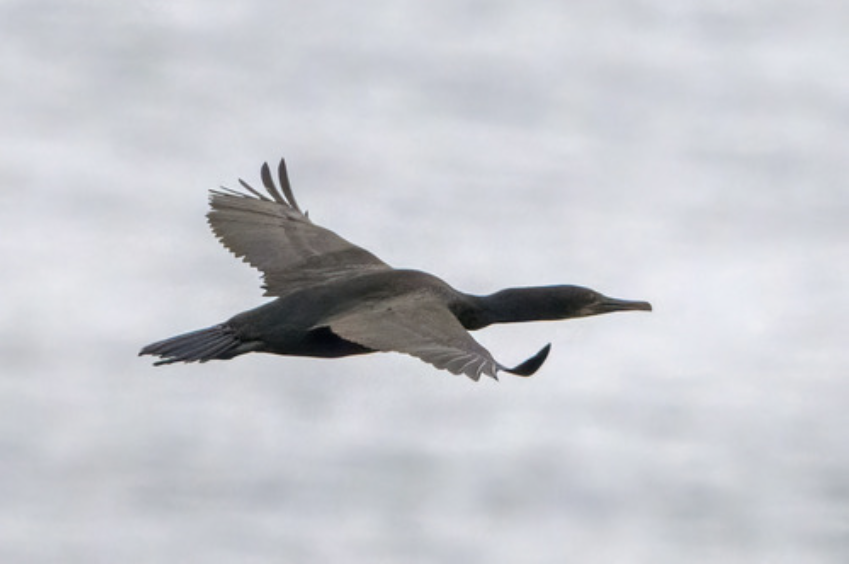
The cormorant's flight does not match its swimming prowess. For a bird, the cormorant is relatively heavy. Although its wings can span 3-4 feet, its heavy body is still a hindrance in flight. The cormorant overcomes its high wing load with great speeds (which provide greater lift) and continuous flapping of its wings.
Find out more about Brandt's Cormorants: All About Birds
| | |
Brandt's Cormorants are magnificent birds when you see them in flight. Enjoy these photos by
Trent R. Stanley:
| | Our all-volunteer organization can not do what we do without your help. Your time, talent and donation can make a difference right in your own backyard. | | | Contact us to see how else you could get involved. | To Make a Donation to Preserve Calavera | | And Check out our Website | And all of our past Newsletters can be accessed here. Lots of local information about our open space and wildlife issues. | | | | | |