| | |
MONTHLY NEWSLETTER
May 2025
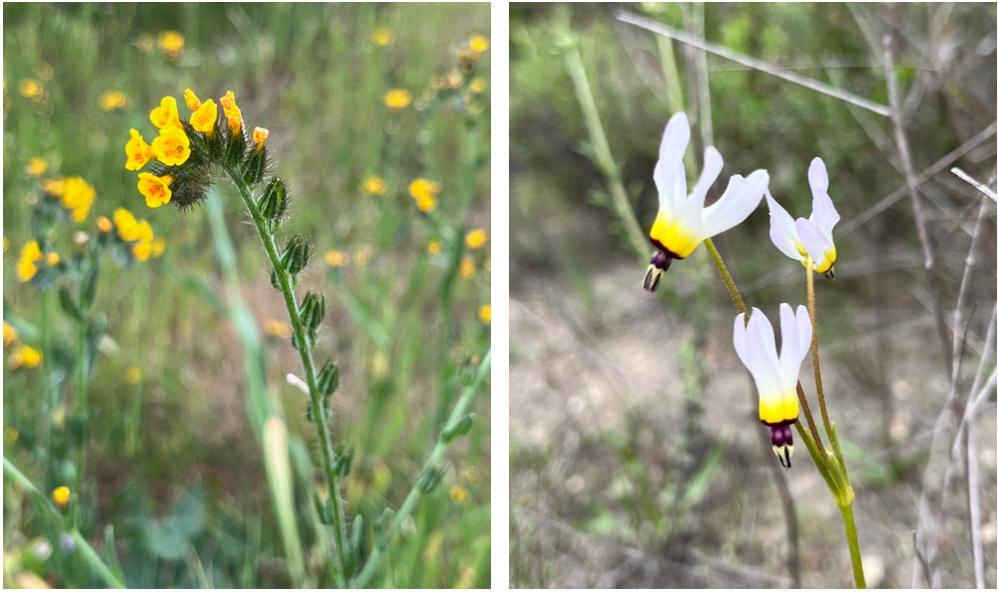
| | Walking along trails in our local preserves in springtime gives one the opportunity to delight in the variety of spring flowers. And along with the iconic California poppy, there are so many more flowers to enjoy such as the delicate fiddlehead and the shooting star shown below. | |
But if you aren't an expert, it can be tricky to figure out which plants are native to our area and which have managed to arrive either accidentally or purposefully from elsewhere.
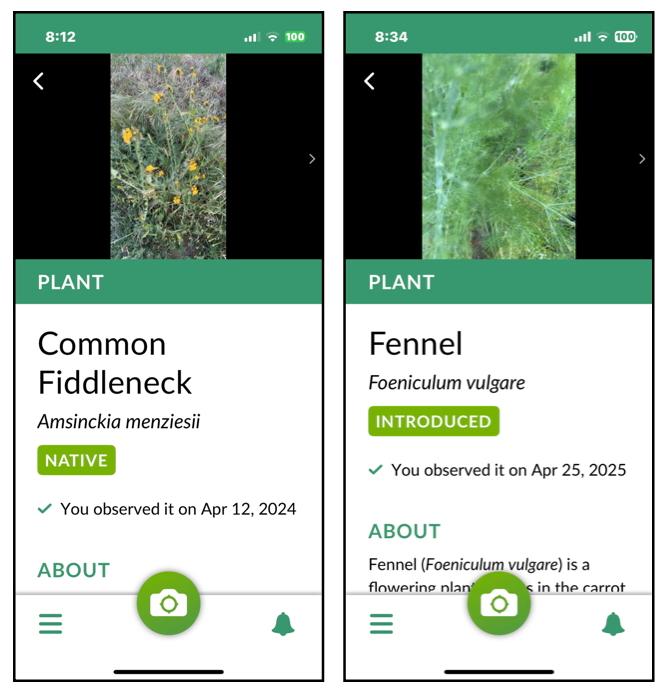
Identifying flowering plants has become much easier recently due to apps like SEEK by iNaturalist and the camera on your phone. Along with plant identification, the plant is also labeled as Native or Introduced.
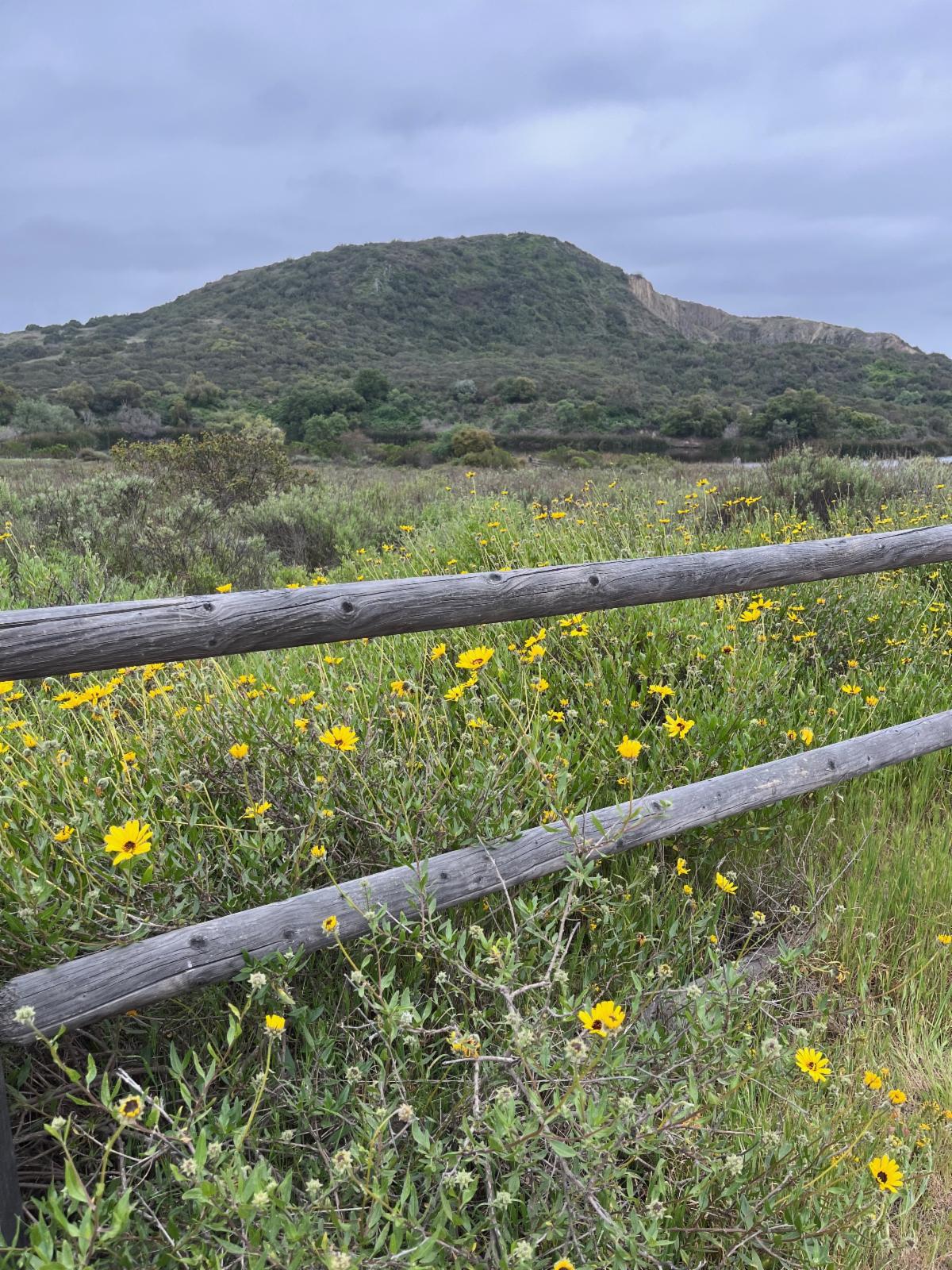
| | | Bush Sunflower (CA brittlebush) Photos by E. Bartlett
| | | While you are enjoying the wildflowers, you can also keep your eyes open for some of our local pollinators. And if you are quick enough to take a snapshot, you can also upload them to SEEK.
Although there are lots of local pollinators, including butterflies, moths, birds, bats and even the wind, the most efficient pollinators are bees. iNaturalist currently has a Bees of San Diego County Project that aims to catalogue all bees of in our county. Observations will help determine locality and seasonality as well as behavior.
At this writing the Bee Project has documented: 53,496 observations, 223 species, 1,471 identifiers 6,074 observers.
Although honey bees are the most numerous species in our county, by far, San Diego County has the highest number of native bee species in the continental US, estimated at about 650.The honey bee was brought to California in the late 1800s, and it is the primary species maintained by beekeepers to this day for both its honey production and pollination activities.
| | |
In the examples using SEEK, one can learn that the fiddleneck, which is commonly seen, is a native. While fennel, which is also commonly seen at Lake Calavera, was introduced (and has become invasive in many areas).
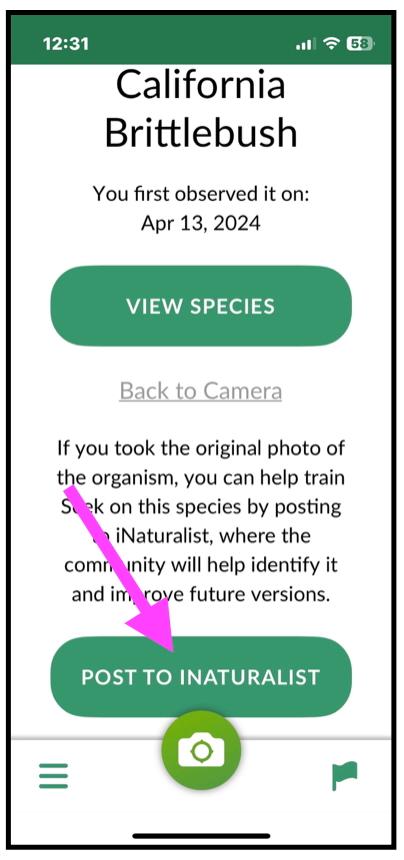
Along with helping to identify the plants and animals around you, iNaturalist can also use your observations for generating data for science and conservation. To include your observations for the scientific community at large, you can simply click the link that says "POST TO INATURALIST" while using the SEEK app. Magenta arrow below.
| | | |  | |
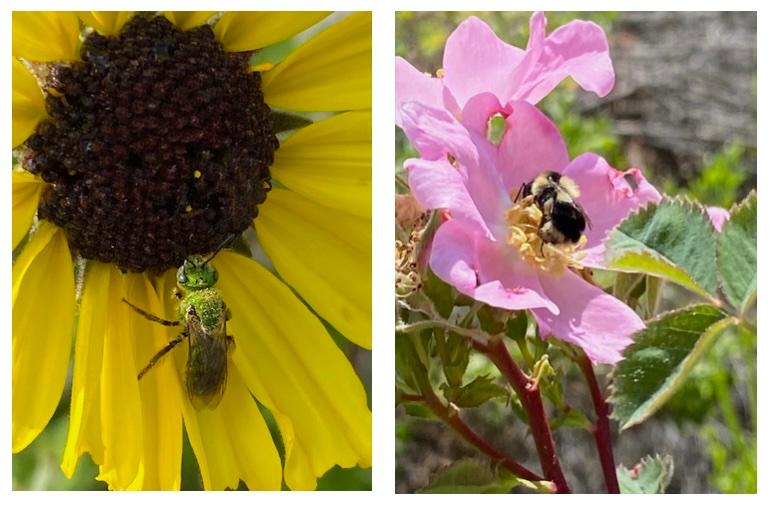
Some of Our Local Native Bees
Left: Sweat bee and black tailed bumble bee (photos by. K Merrill)
-
You can find out more about how honey bees have impacted our local flora and native bee species HERE.
-
And read about some of our common urban pollinators HERE.
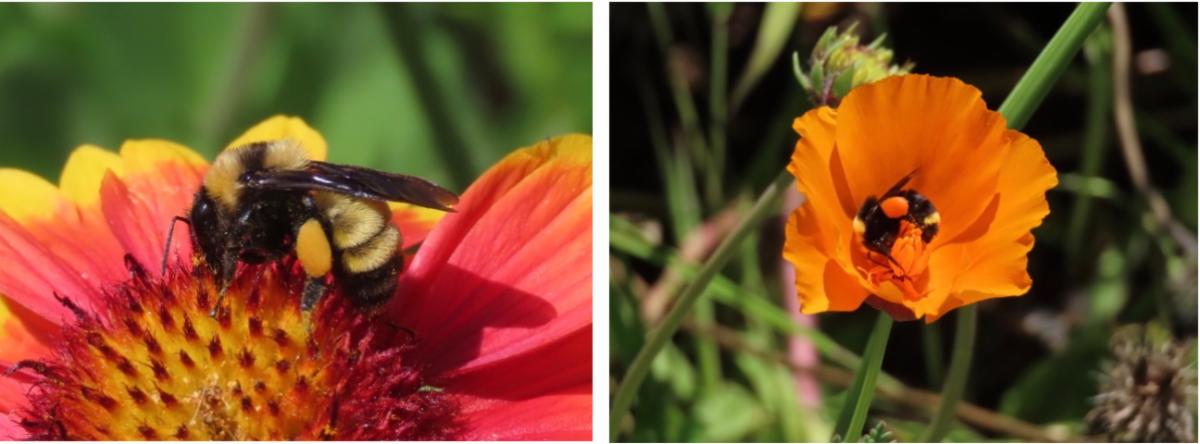
| | | Below: Sonoran bumble bee and yellow-faced bumble bee; pollen sacs are visible (photos by J. Cannon) | |
| |
The City of San Diego Goes Native!
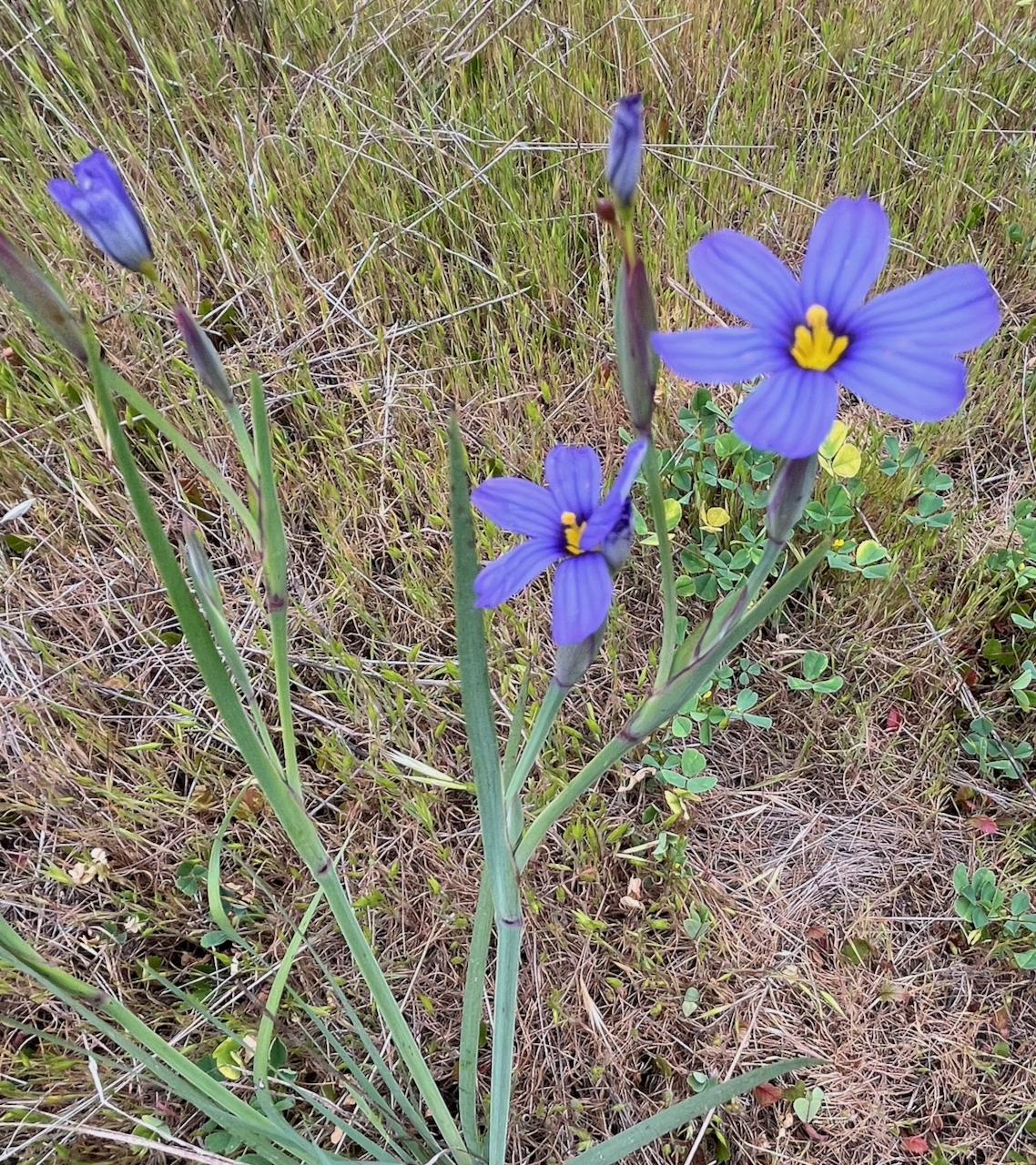
In 1964 the City of San Diego adopted the non-native carnation as its city flower. We are happy to report that it was finally replaced with the native blue-eyed grass during an exciting March Madness bracket style "floral face-off."
Eight contenders were vying for the title. But in the end, blue-eyed grass narrowly beat out the bush sunflower, 1,204 votes to 1,170 votes.
The others contenders were: black sage, bladderpod, blue elderberry, California buckwheat, California rose and Cleveland sage. The contenders were primarily selected based on environmental benefits, Kumeyaay cultural significance, and conservation status. Read more.
(Blue-eyed grass photo by E. Bartlett)
| | | | |
You Can Go Native Too!
The eight native plants listed above are also great contenders for your yard. They are all fairly easy to grow and along with their flowers, you will have the opportunity to enjoy the pollinators they will attract.
The California Native Plant Society offers a planting guide for San Diego County: CNPS Planting Guide
And you can support CA native bees with these 10 plants:UC Davis Arboretum
| | |
Sat, May 3
Unite for Climate March
11 am - 2 pm
Where: Waterfront Park
1600 Pacific Hwy, San Diego
Please take a moment to RSVP and be sure to invite 5-10 friends to join you.
| | | |
This will be SD 350 Climate Action's first post-COVID large-scale climate march and will feature inspiring speakers, tabling by community partners, and other activities.
Climate disasters are ramping up and hitting close to home, hurting communities of concern the most. Wildfires, flooding, extreme heat – we can’t let this be California’s new normal.
| | "The greatest threat to our planet is the belief that someone else will save it." Robert Swan | | |
Sun, May 4
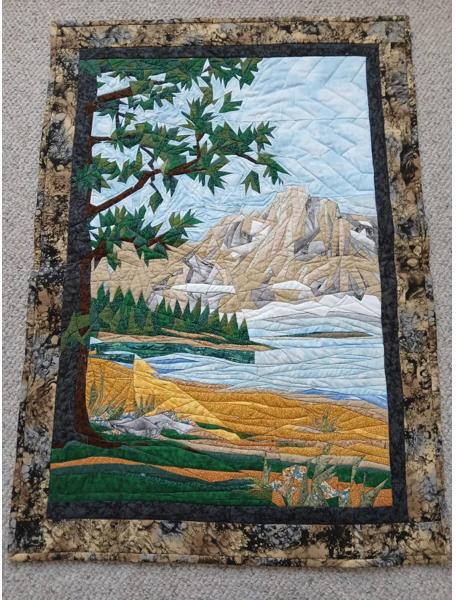
Fabric and Nature Art Sale- Help us raise funds to continue our conservation efforts
10:00 am - 4:00 pm
Where: Buena Vista Audubon Nature Center
2202 So. Coast Hwy, Oceanside
Event sponsored by Preserve Calavera, Buena Vista Audubon Society, Studio Ace, and Oceanside Museum of Art
| | | |
The event is featuring quilts, wall hangings, table runners and table toppers created and donated by Diane Nygaard (these proceeds will go to local conservation efforts). In addition there will be a variety of artwork by a dozen local artists in many mediums.
And Studio Ace is providing a free Make ‘n Take workshop for kids of all ages!
Check out and share the EVENT FLYER
| | | | |
Sat, May 10
Endangered Species Day at BVAS Nature Center
10:00 am - 2 pm
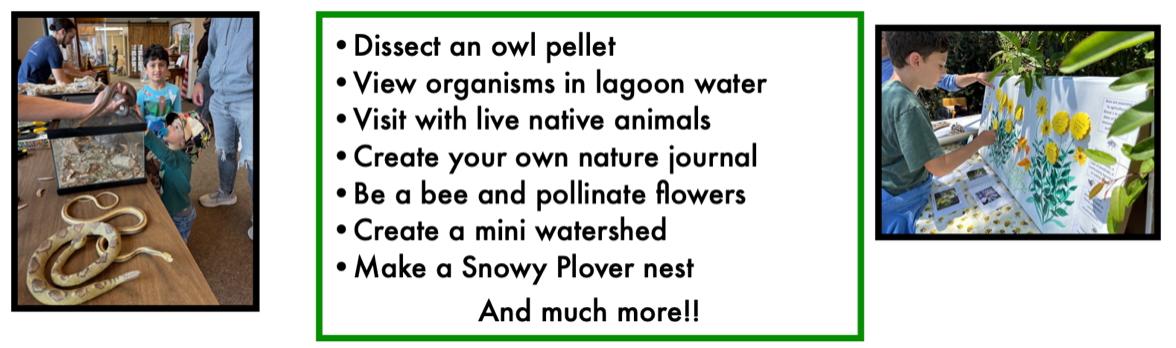
What: Come join in fun and educational activities at this year’s Endangered Species Day!
Where: Buena Vista Audubon Nature Center
2202 So. Coast Hwy, Oceanside
This event is sponsored by Buena Vista Audubon and Preserve Calavera.
| | | |
This Event is free and lots of fun for the whole family!
Check out our FLYER for more info.
| Parking is limited. Please walk, bike, carpool, or use nearby street parking. | | |
Sat, May 10
Rancho La Costa Restoration
9:00 am - 10:30 am
If you would like to volunteer you must RSVP to:
info@preservecalavera.org
or call Anne-Catherine: 858-353-6232
| | | |
Removing non-native plants and watering native plants as needed.
Prepare: Wear appropriate (preferably long pants/sleeves) clothing, closed-toed shoes, and hat. Bring gloves, sunscreen and water.
| | |
Sat, May 17
El Corazon Restoration
9:00 am - 10:30 am
If you would like to volunteer you must RSVP to:
info@preservecalavera.org
or call Diane: 760-724-3887
| | | |
Removing invasive plants from this site.
Prepare: Wear appropriate (preferably long pants/sleeves) clothing, closed-toed shoes, and hat. Bring gloves, sunscreen and water.
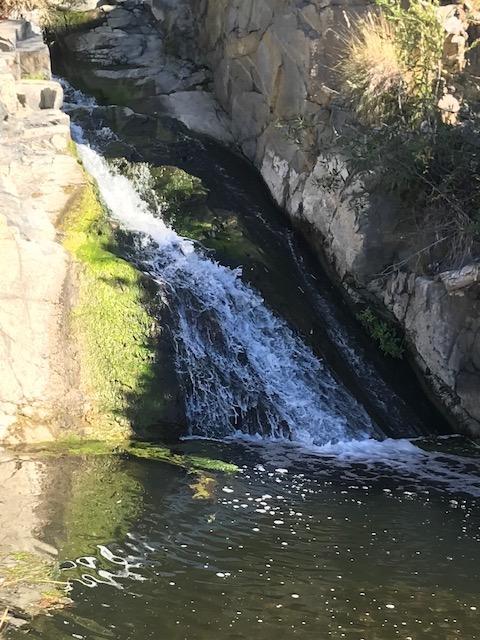
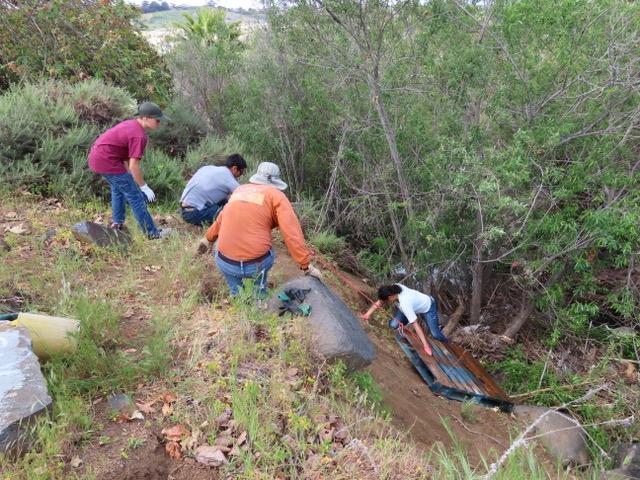
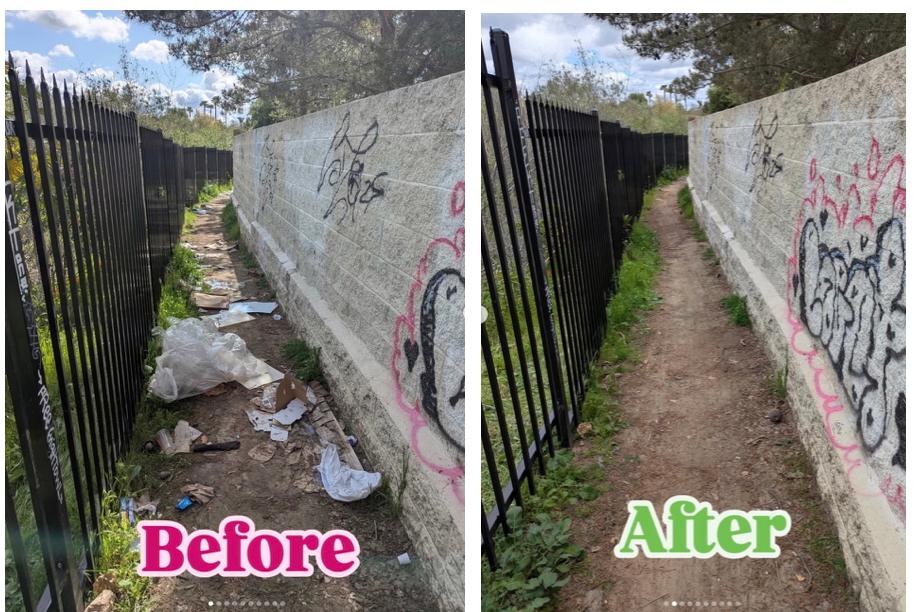
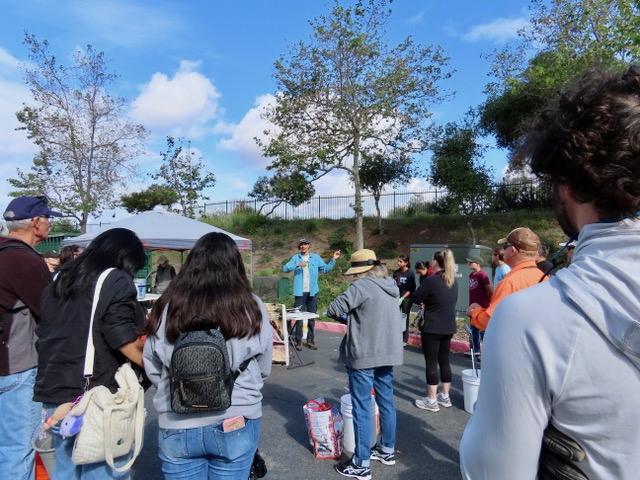
| | Coastal Clean Up Day at El Salto Falls | | On April 26, El Salto Falls (aka Quarry Creek) was one of more than 100 sites around San Diego County that was part of the annual Creek to Bay Cleanup. Once again, Preserve Calavera sponsored the site along with the San Diego Habitat Conservancy(SDHC). | | |
It was heartening to see that our past efforts, including the installed fencing, are having a positive effect. We found a lot less trash this year!
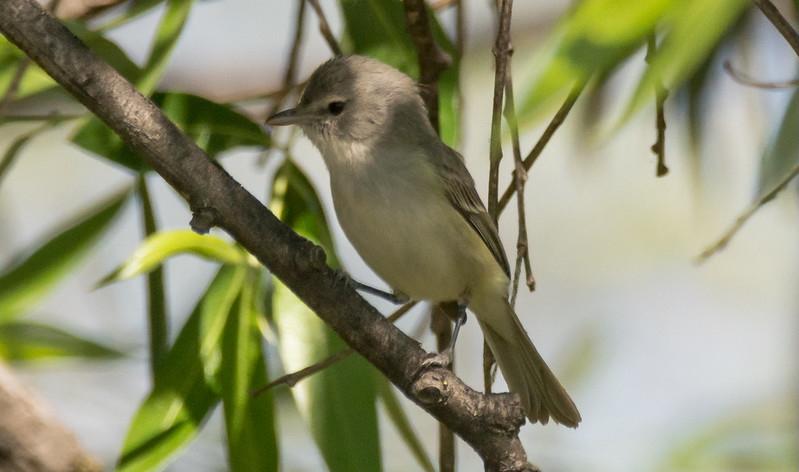
El Salto Falls has been identified by the Luiseño people as a sacred site for tribal religious ceremonies and its significance in their cultural history. It is also home to endangered, threatened and sensitive animal and plant species—including the least Bell's vireo, a small song bird placed on the endangered species list back in 1986 due to its loss of habitat.
| |
Least Bell's Vireo photo by Wendy Miller
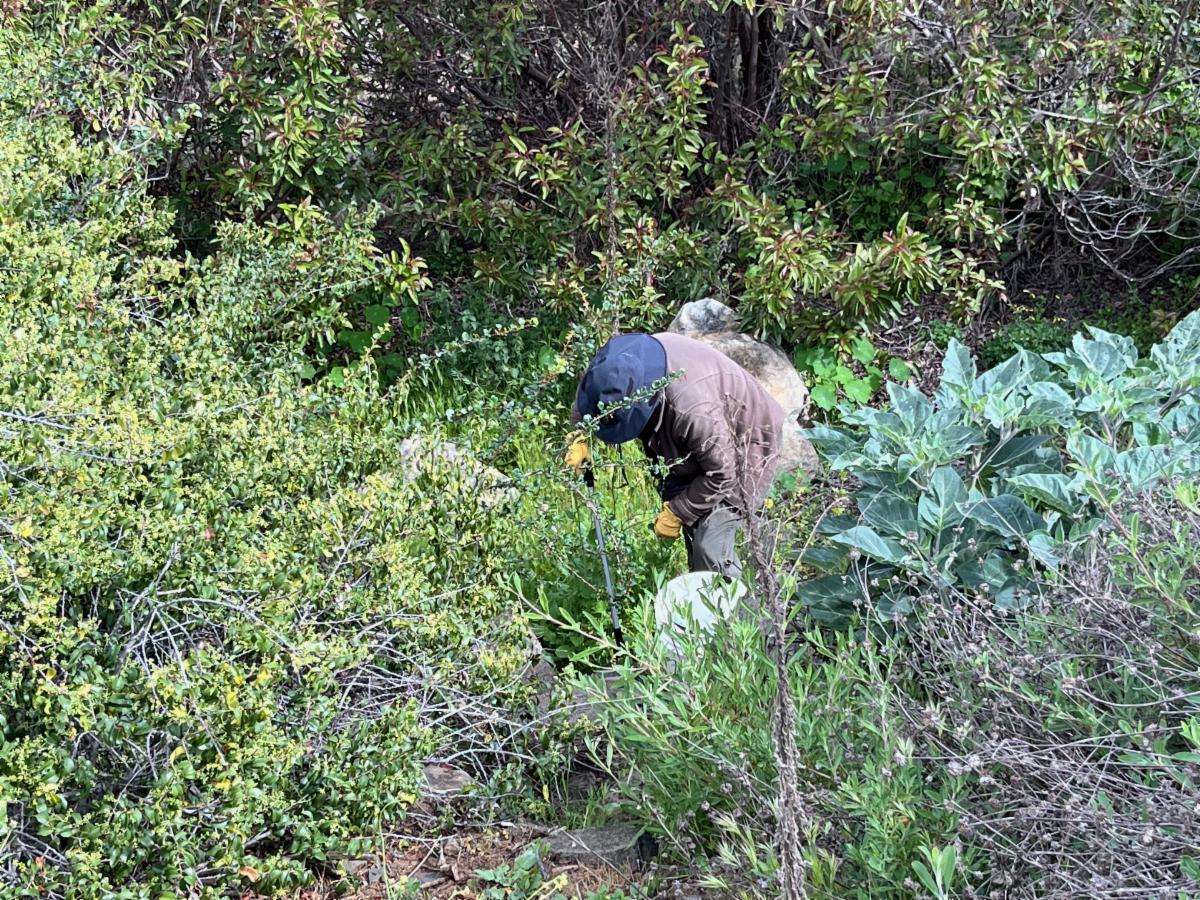
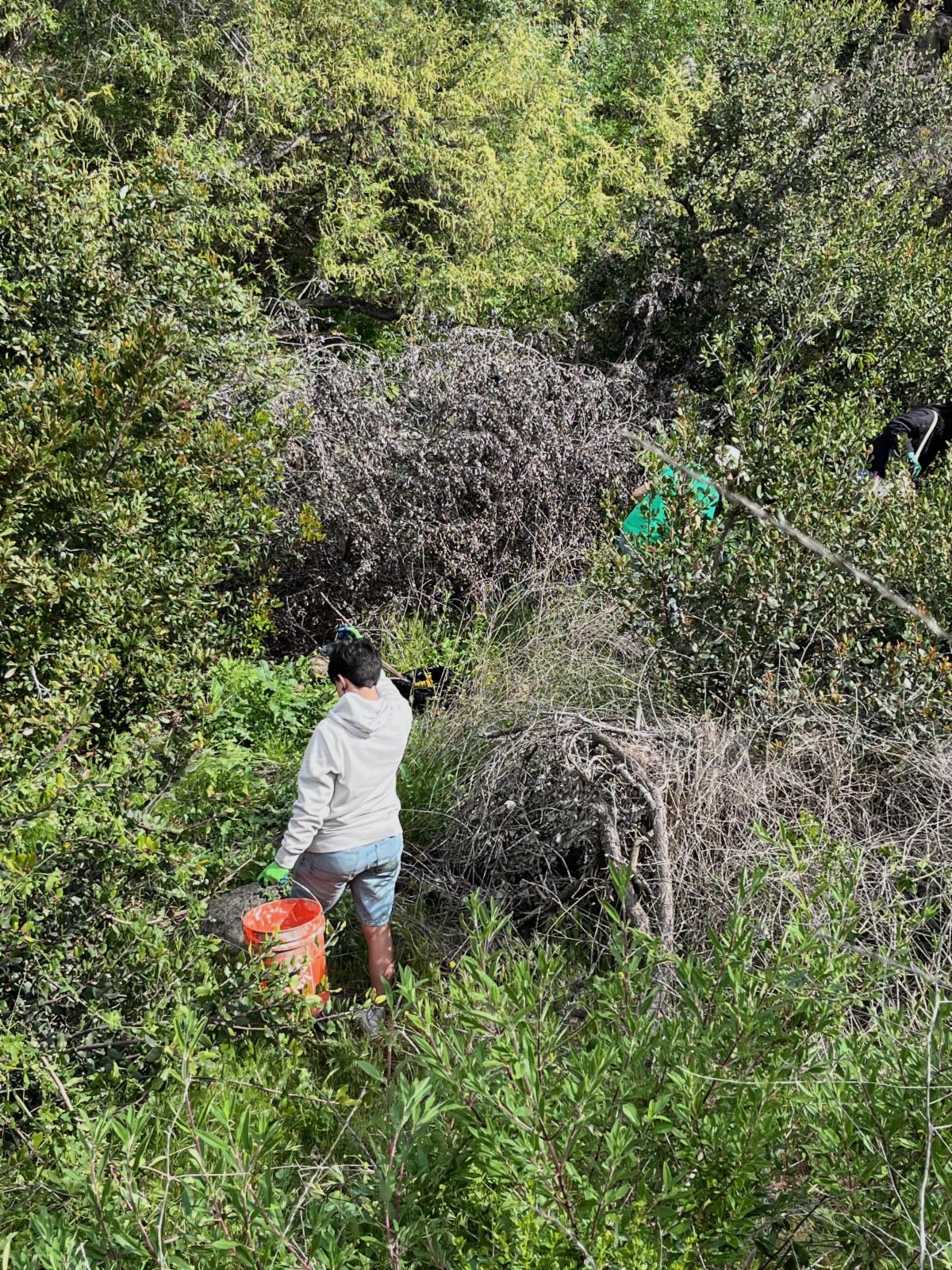
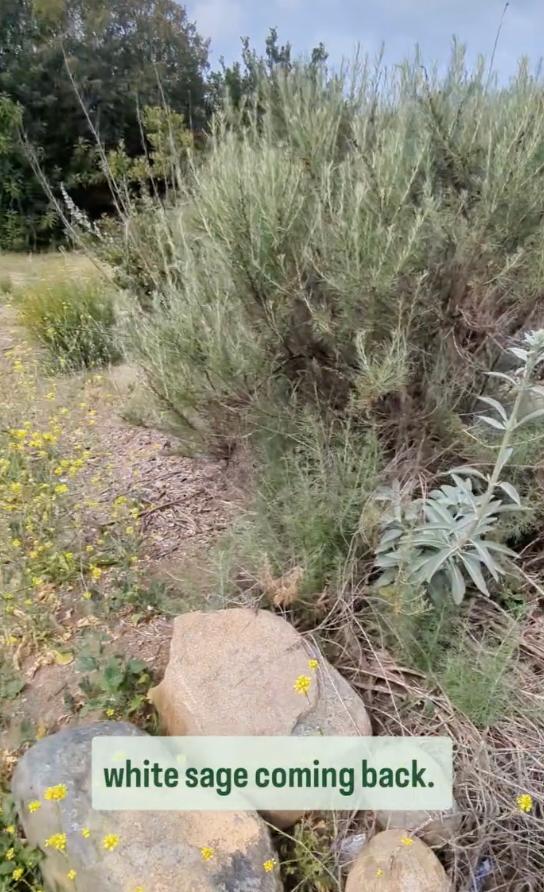
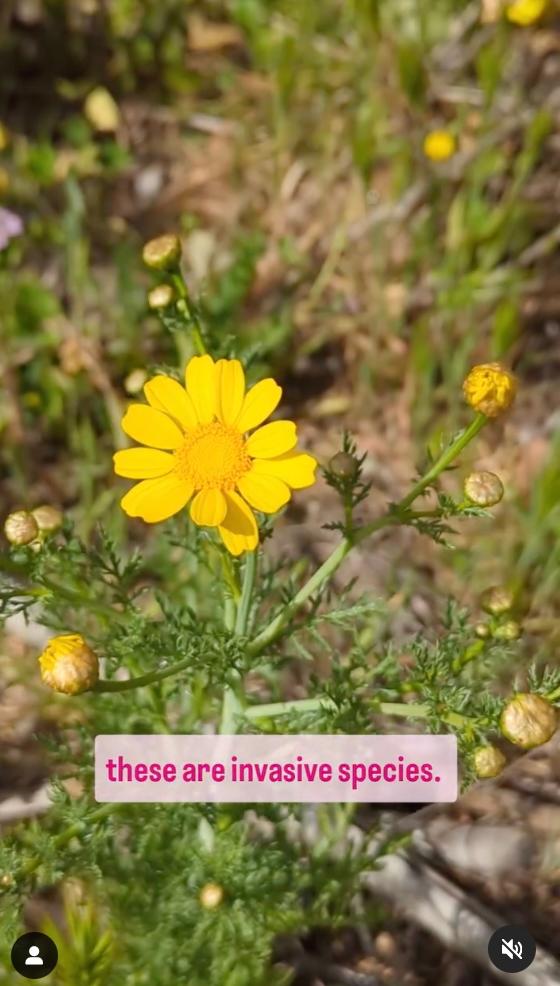
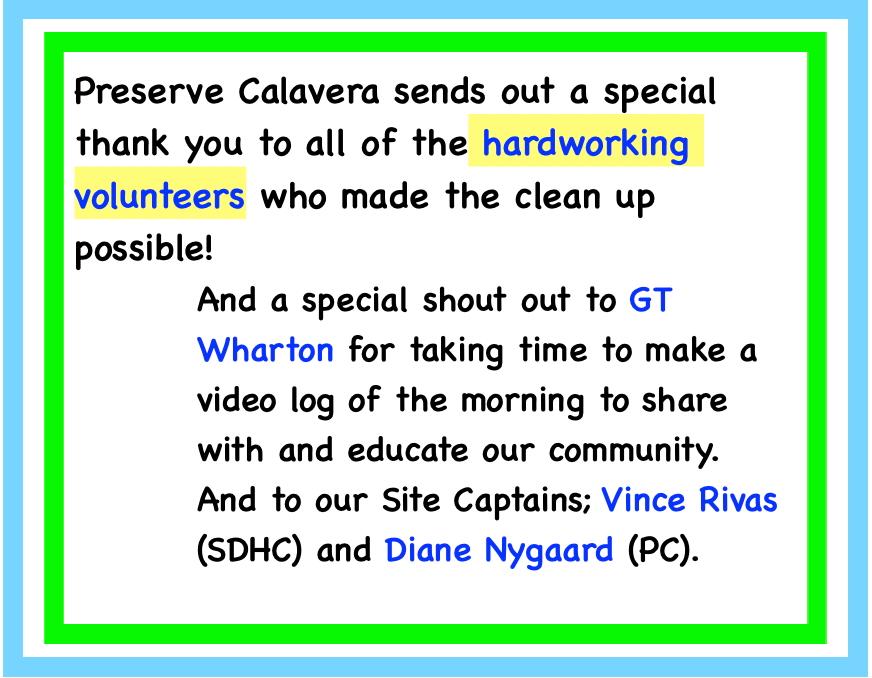
| | | We had lots of enthusiastic volunteers of all ages that were ready to tackle the rough terrain along with the heavy brush. | | | | | Photos by J. Cannon and E. Bartlett | | | For a bird's eye view of what happened, check out the posts below on oceansidecleanup created by GT Wharton. | | |
BY THE NUMBERS:
66 volunteers
over 1,300 pounds of trash
200 pounds of recycling material
250 pounds of scrap metal
And volunteers helped remove weeds on roughly 2,000 square feet of habitat, targeting black mustard, Virginia creeper, and Cape ivy!
| | What Were Those Bats Up To on Friday Night? | | |
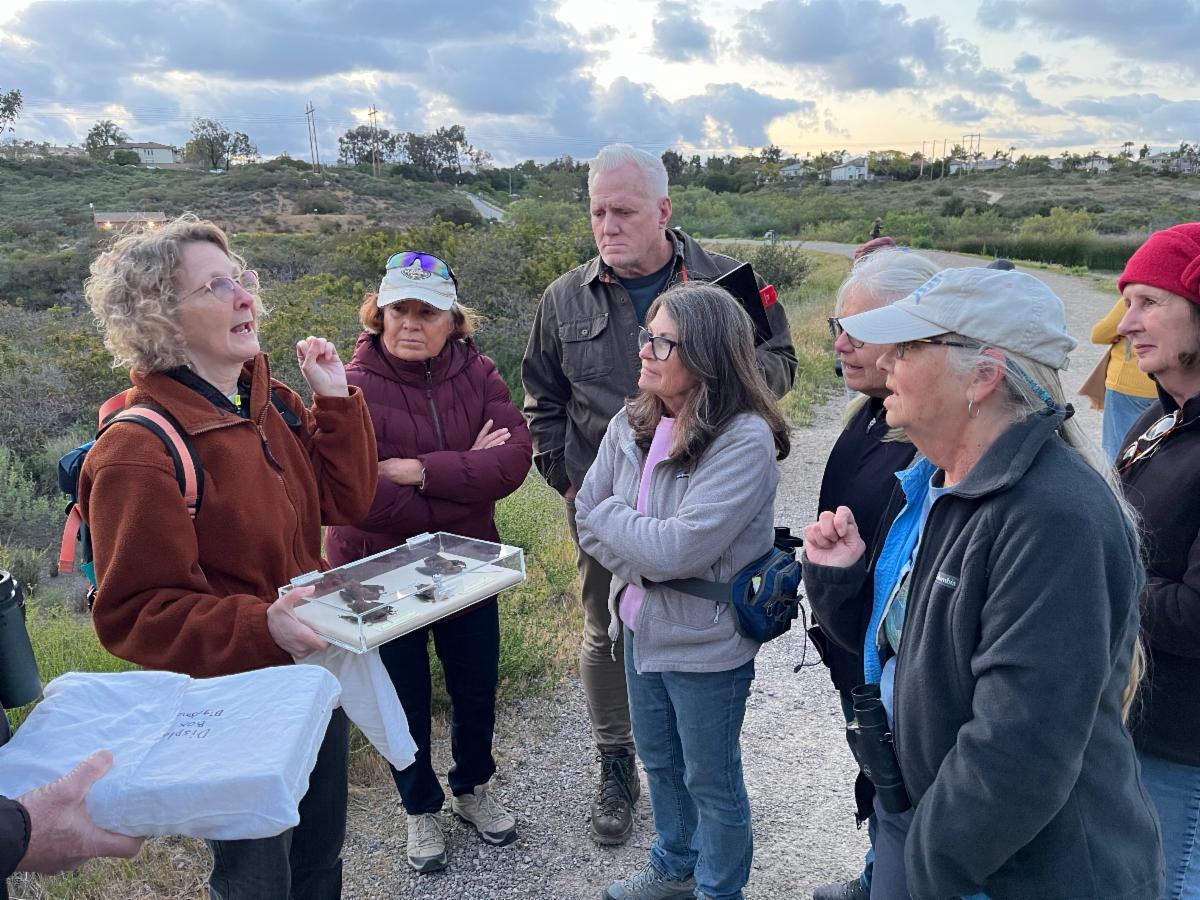
The City Nature Challenge brings people from around the world to share their observations of nature. Preserve Calavera participated by hosting a Bat Outing at Lake Calavera Dam Trailhead on April 25.
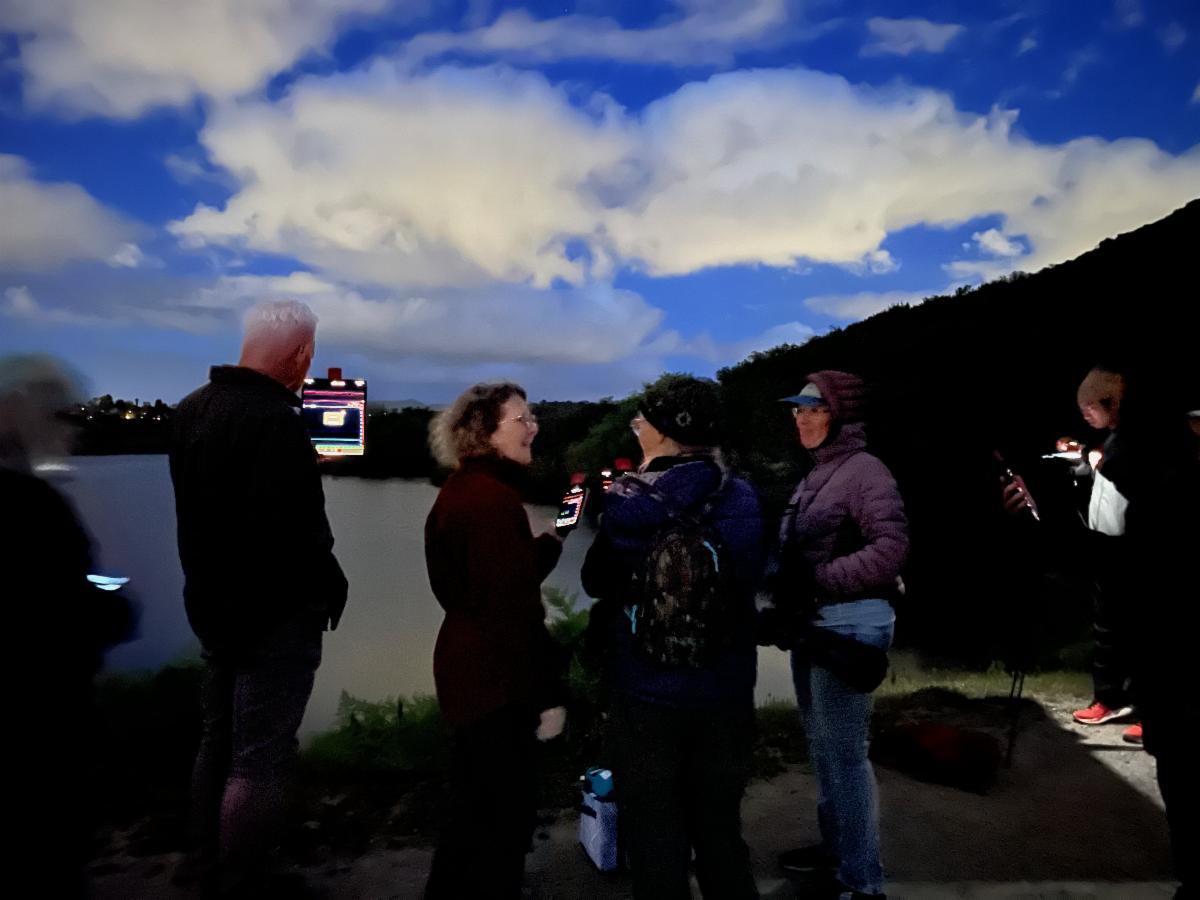
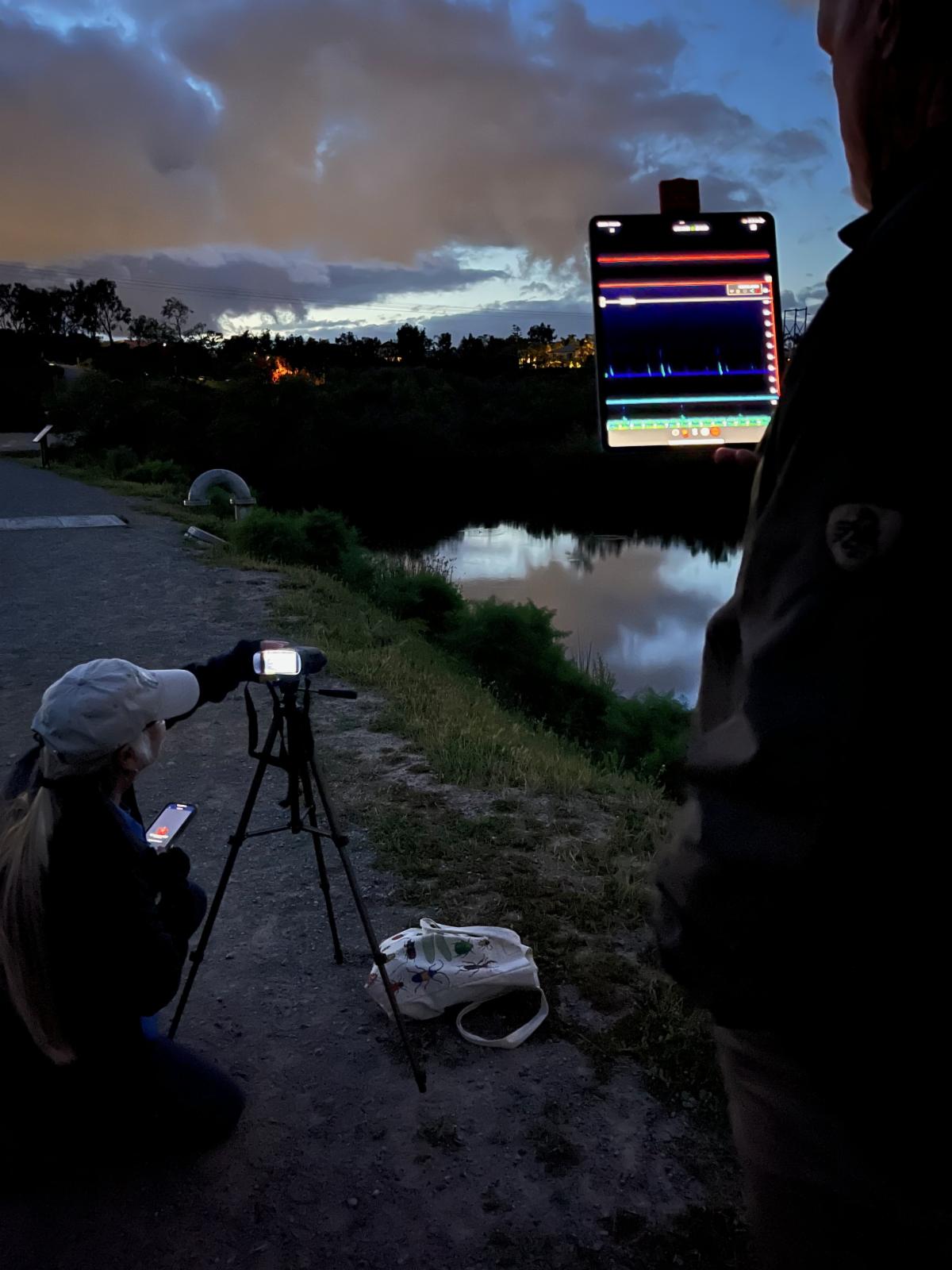
As sunset began on the chilly Friday, about two dozen people convened at the dam to wait for the bats to make their presence known as they arrived to feed on the insects. Many of the participants brought bat detectors (which convert a bat’s call into sounds audible by human ears) and also night vision scopes and cameras.
Mexican Free-tailed bats were the first on the scene, followed by Yuma myotis, canyon bats, big brown bats and (possibly) hoary bats. You can read more about our local bats: Newsletter August 2024
| | Cindy Meyers (volunteer bat advocate and community educator with the San Diego Humane Society) brought taxidermied bat specimens to allow attendees to get a close up look at our local bats. | | Volunteers by Lake Calavera with bat detectors (attached to smartphones and tablets) and night vision scopes. (Photos by E. Bartlett) | | | | | Here are the numbers for participation in the City Nature Challenge in our County: | | | Diane Nygaard Continues to Inspire All of Us to Do More | |
|
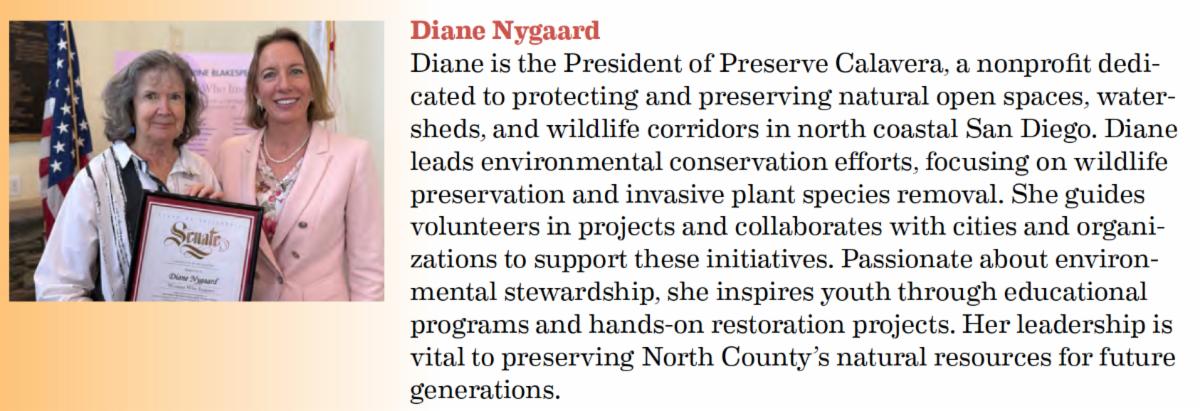
Diane Nygaard, our Board President, was nominated as one of the Women who Inspire In Senate District 38. Diane was nominated by Phil Morin, one of our regular volunteers at the El Corazon Restoration site.
Senator Blakespear congratulated all the nominees during a reception in March for their outstanding work and thanked them for their leadership, service, and achievements. You can read Senator Blakespear's comments about Diane below.
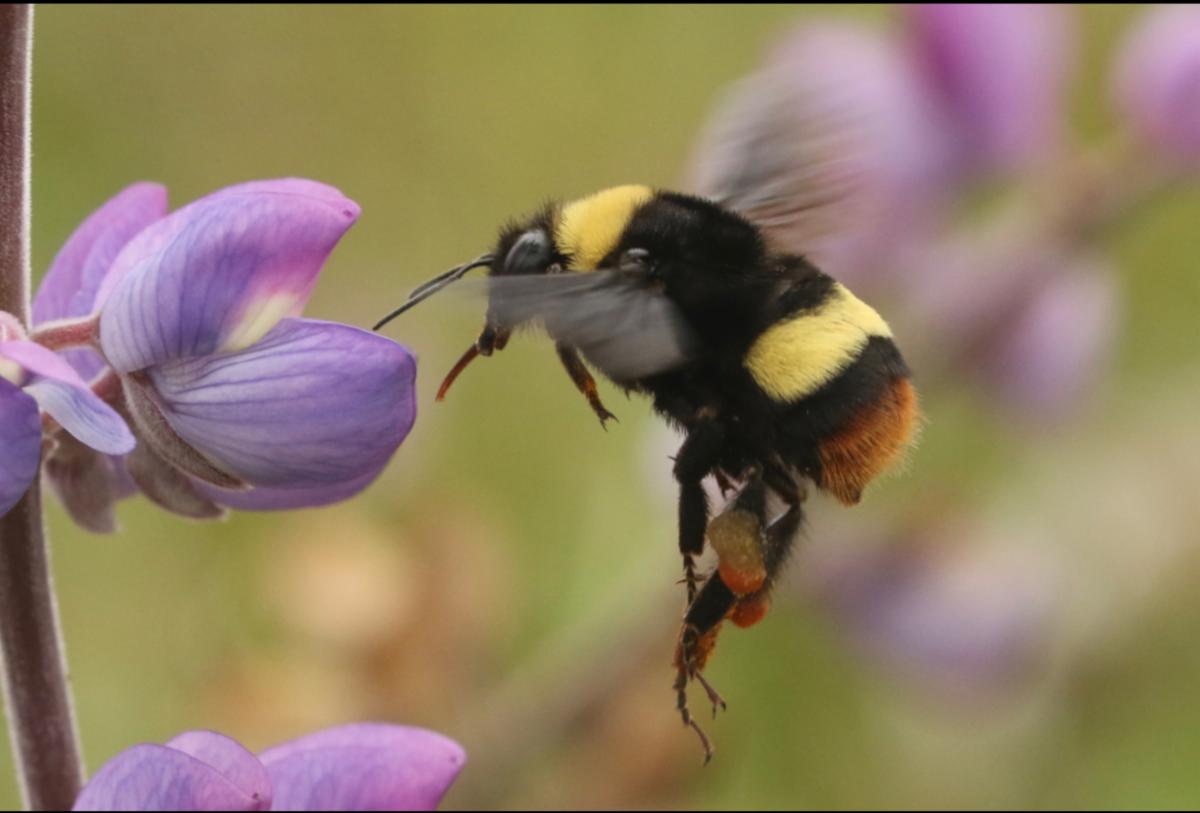
| | | | Wildlife Corner: Crotch's Bumble Bee | | | | |
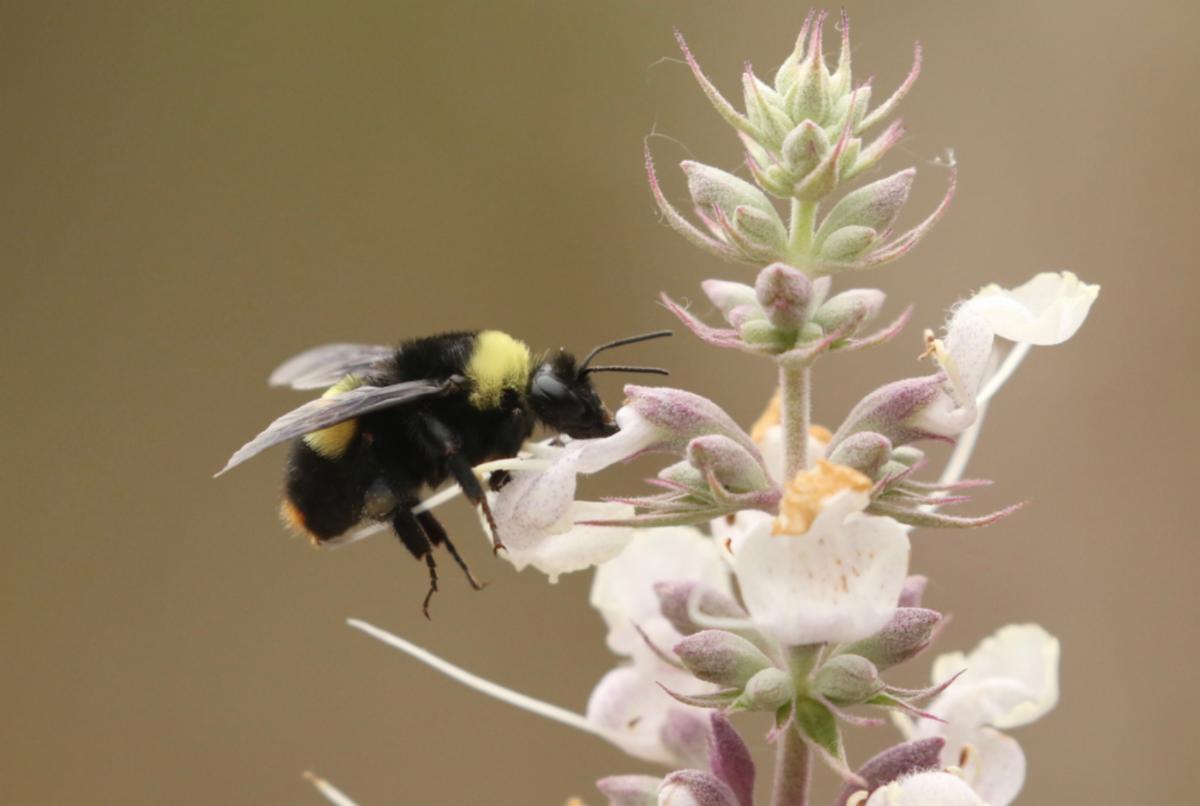
Crotch's bumble bee (Bombus crotchii) is yellow and black and often has an orange bottom like the ones pictured.
This bumble bee is named after British entomologist George Robert Crotch who, interestingly, specialized in studying beetles, not bees. (His biography is worth checking out.)
| |
Bombus crotchii Photo credits Travis Cooper
| | |
Although B. crotchii feeds on a variety of our native flowers, including lupines, medics and sages, one of its favorite nectar sources is the milkweed plant. Its role as a pollinator is beneficial to monarch butterfly caterpillars that depend on milkweed plants as their food source.
The Xerces Society states that Crotch's bumble bee only persists in 20% of its historical range, and has declined by 98% in relative abundance (its abundance relative to other species of bumble bees). This bee historically occurred from the northern Central Valley to Baja Mexico, but currently persists primarily in southern coastal habitats and some areas to the north and southwest of Sacramento. (Read more).
| | | |
Due to significant habitat loss and species decline, Crotch’s bumble bee was included as an endangered species under the International Union of the Conservation of Nature (ICNU) Red List in 2014. It is also a candidate to be listed as endangered under the California Endangered Species Act (CESA) along with several other bee species.
The importance of bees cannot be overstated!
Please read more about: Why Bees are Essential to People and Planet
| | |
Our all-volunteer organization can not do what we do without your help. Your time, talent and donation can make a difference right in your own backyard.
Contact us to see how else you could get involved.
| | | And Check out our Website | And all of our past Newsletters can be accessed here. Lots of local information about our open space and wildlife issues. | | | | | |