|
|
|
MONTHLY NEWSLETTER
November 2024
| |
|
As many of the palm trees planted early in the previous century come to the end of their natural life span, maybe they should be replaced with trees that align with our 21st century knowledge of global warming and also the importance of planting native tree species in our communities.
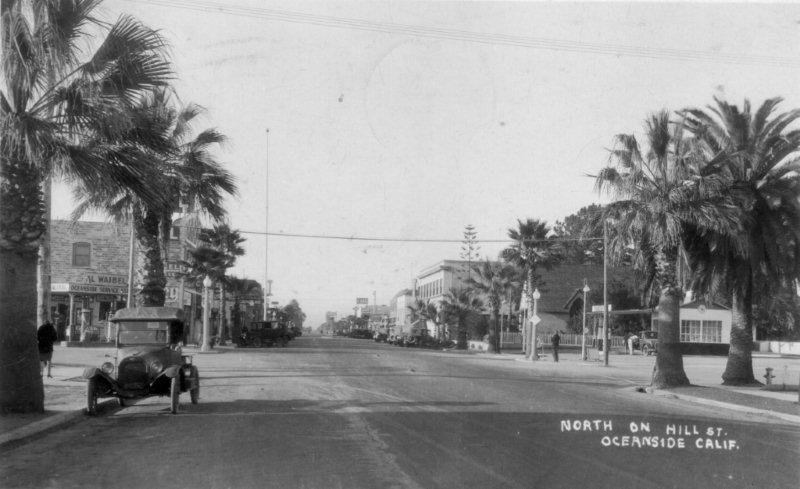
There are a lot of palm trees in coastal North County; they are everywhere. If you are out and about, there is a good chance you will spot a Washingtonia robusta, the Mexican fan palm, rising up starkly on the skyline.
Although we think of palms as trees, they are botanically grass-like plants. Learn more: Palms
| |
Palm trees don’t support our local Climate Action Plans: they don’t encourage the use of active transportation, or provide shade that can reduce building energy use. | |
|
Tree canopies in urban areas have a positive effect on active transportation which promotes healthier lifestyles. Active transportation is using your own power to get from one place to another during leisure activities or commuting. This includes activities like walking, jogging, biking, and skateboarding.
Tree canopies also make bus stops more inviting.
| |
|
|
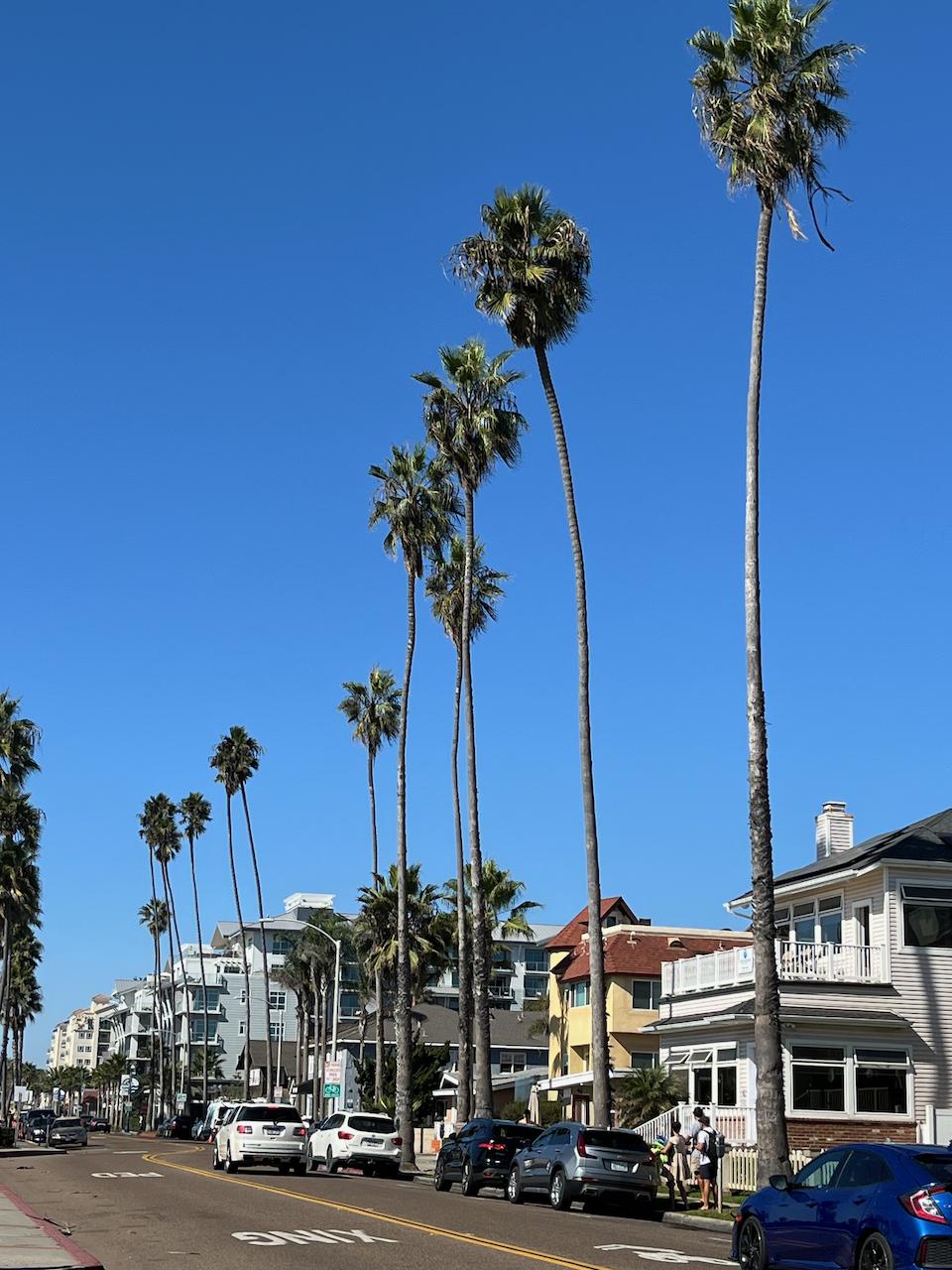
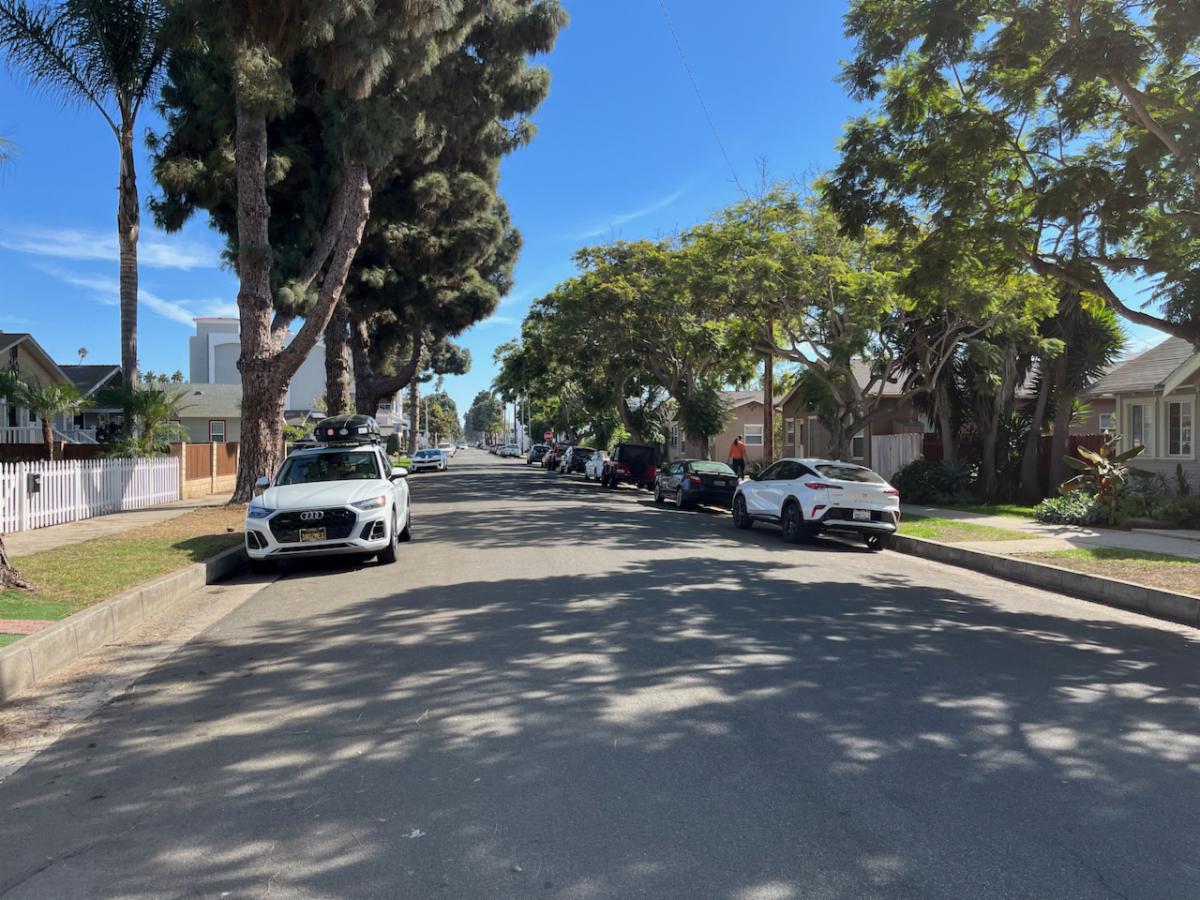
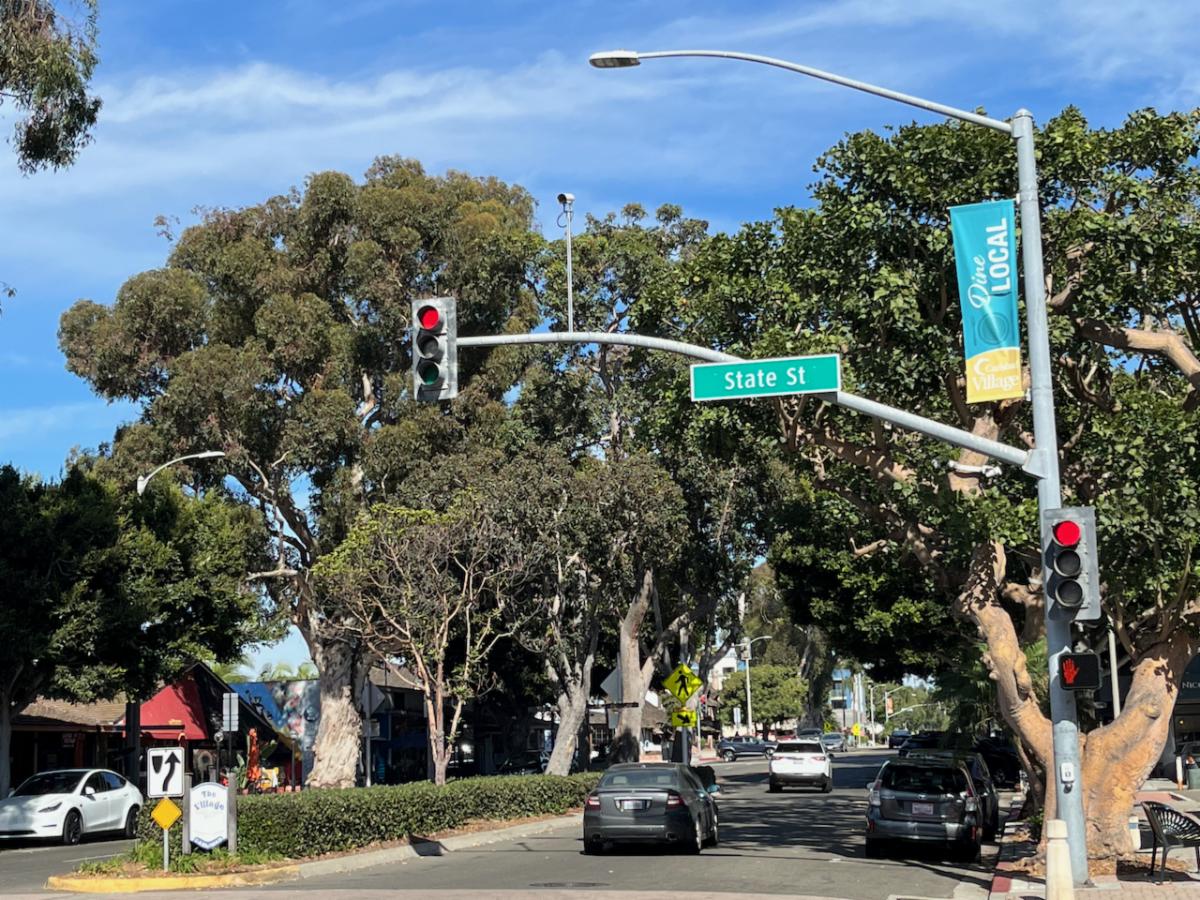
The photos above show the contrast of a palm lined street in Oceanside and a street with a tree canopy in Oceanside (top photo) and a tree canopy in downtown Carlsbad (bottom photo). Although the Mexican fan palm can grow up to 100 feet tall, it offers little shade. (photos by E. Bartlett)
Urban areas are warmer than surrounding rural areas. This is known as the heat island effect. Even on a residential level, just 3-4 shade trees located strategically around a house can cut summer cooling costs by 30-50%. (source:ArborDay)
| |
It is also noteworthy that the cities of Oceanside and Carlsbad do not have facilities to accommodate the composting of palm waste for commercial services. In contrast, the cities of Vista, San Marcos, Escondido and Encinitas all accept palm fronds in commercial organic recycling as well as residential organic recycling. | |
|
The city of Oceanside has a somewhat unclear policy:
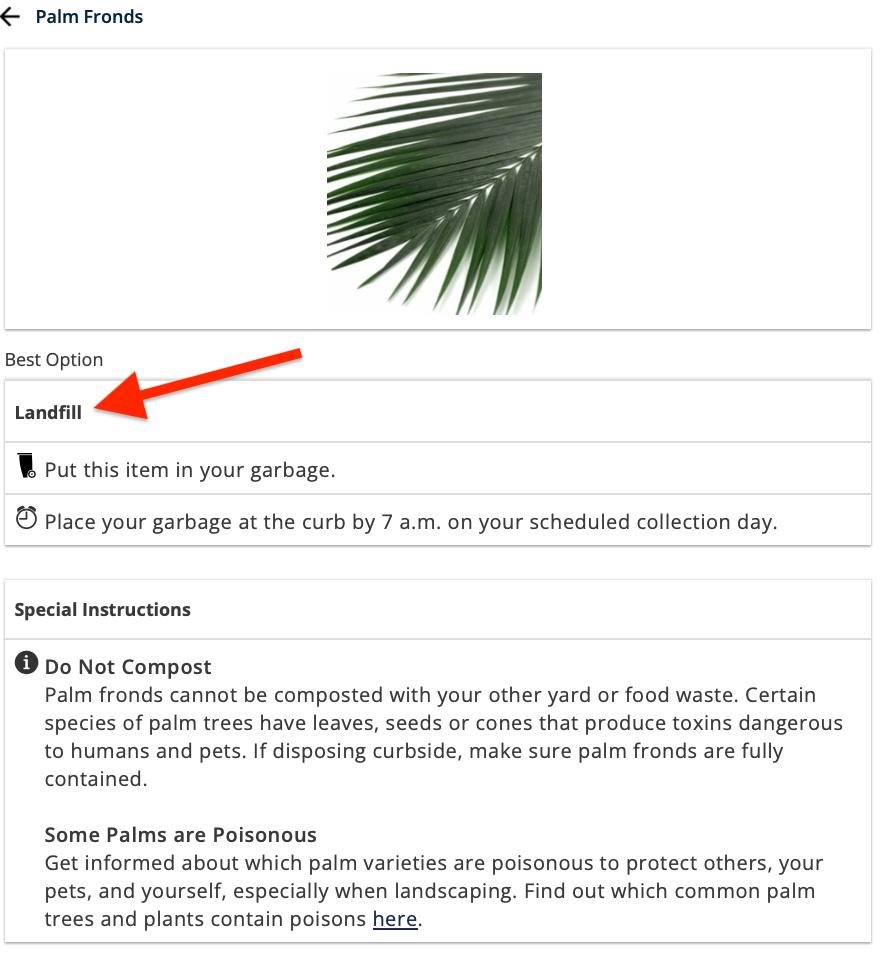
The City of Oceanside"s website (captured at right) specifically states that residential customers place palm fronds in the garbage —destined for the landfill. But a representative for Waste Management stated Oceanside residents can put palm debris in their green waste bin, it will be hauled to and processed at their site, and further noted that Residential Collection picking up the green waste have no palm material restrictions.
The residential palm waste is turned into a fibrous mulch product, specifically Orchard Mulch at the El Corazon facility. It is unclear at this time why the city of Oceanside has not corrected its website information.
Commercial customers and Landscapers are expected to separate palm waste from other green waste at the source. The palm waste must be brought to a landfill facility.
| |
|
If one considers:
The city of Oceanside has 47,135 trees in its most current inventory. The two most common trees are the Mexican fan palm (9.89%) and the queen palm (11.43 %). When the pygmy date palm and king palm are added in, palms makes up 32.14% of the tree inventory; or 15,149 trees.
The city of Carlsbad currently maintains about 28,000 inventoried trees. They have around 1400 palm trees which accounts for about 5% of the inventory.
That makes a lot of palm waste currently going into our local landfills.
| |
|
The City of Carlsbad also has an unclear palm waste disposal policy:
Neither the city of Carlsbad nor Republic Services specifically mentions the handling of palm fronds or its disposal on their respective websites. When we first inquired about the handling of palm waste, we were given conflicting information.
Initially the city stated the following when specifically ask about palm waste:
All organic material, food and yard waste, is transferred to the Otay Mesa Compost Facility in Chula Vista, California, where it is processed to be turned into compost and mulch."
As we inquired further, we received this statement from the Sustainable Materials Division:
Yes, you are correct that palm fronds and trunks are not accepted as compostable material due to their tough, fibrous structure and slow decomposition rate. Therefore, palm fronds and trunks are disposed of in the landfill.
| |
Non-Native Palm Trees are Invasive as Well as a Fire Hazard | |
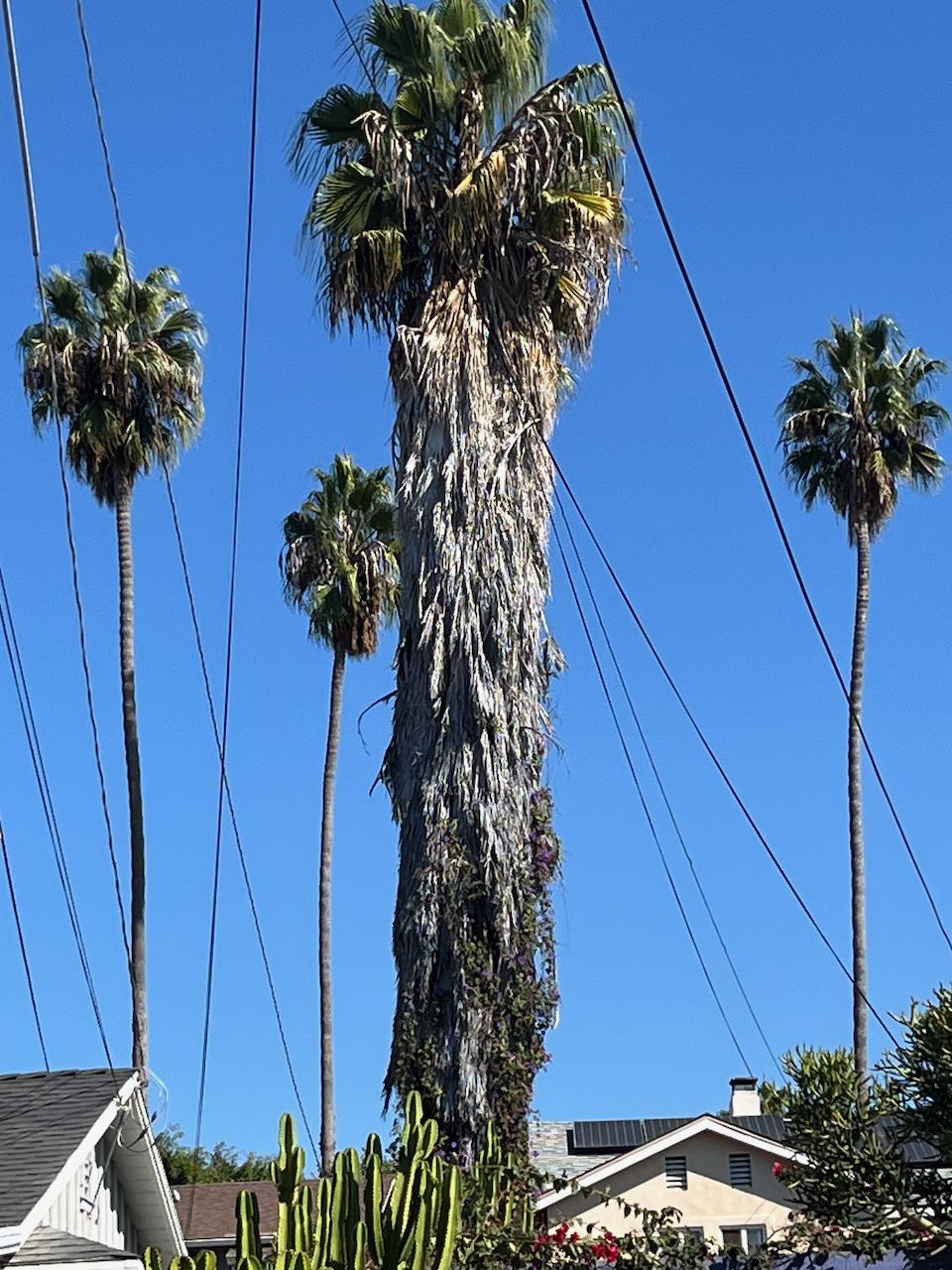
The Mexican fan palm and the Canary Island date palm (Phoenix canariensis) are the most common non-native palms found in San Diego County canyons. These palm trees grow at an alarming rate and the dead skirts are an unwelcome brush fire fuel. | |
|
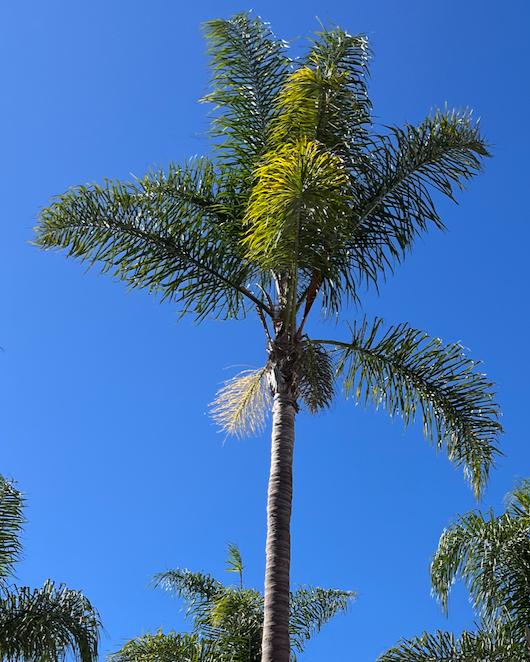
The photo shows a palm tree with an untrimmed skirt. Along with being a fire hazard, the skirt can also create a dangerous situation if it falls down on top of a person or property. (Photo by E. Bartlett)
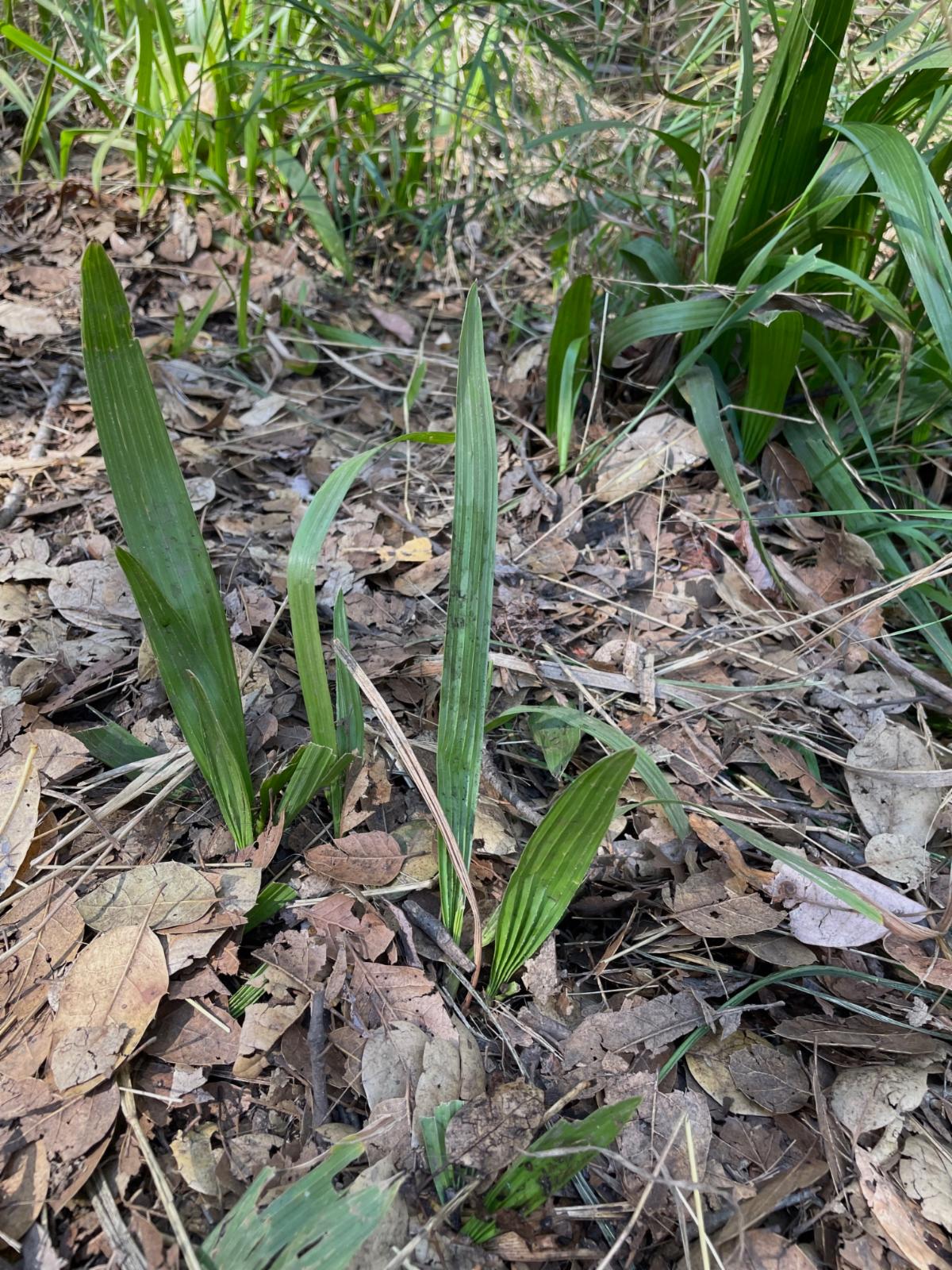
Palm trees are prolific seed producers which can travel to new places via birds and water and the seeds readily germinate. You can spot them everywhere among landscaped areas as well as our growing in preserves and open spaces.
The palm seedling shown in the photo were spotted alongside the creek at Oak Riparian Park.(Photo by J. Bockman)
| |
|
What are some things we can do to diminish impacts caused by the plethora of non-native palm trees?
- Don't plant any new palms around your home and discourage others from planting them.
- When a palm tree dies, replace it with a tree that will provide a shade.
- Be watchful for invasive seedling that have germinated so they can be removed.
- If there is a new project going up in your city, contact the developer/planning department and find out if they are planning to use palm trees in the landscaping. If they are, explain the detrimental aspects of palms to them.
- If you live in Oceanside or Carlsbad, contact waste management services and ask why they are unable to recycle palm fronds from commercial landscaping as our neighboring cities can.
| | | |
California's Only Native Palm Tree | |
|
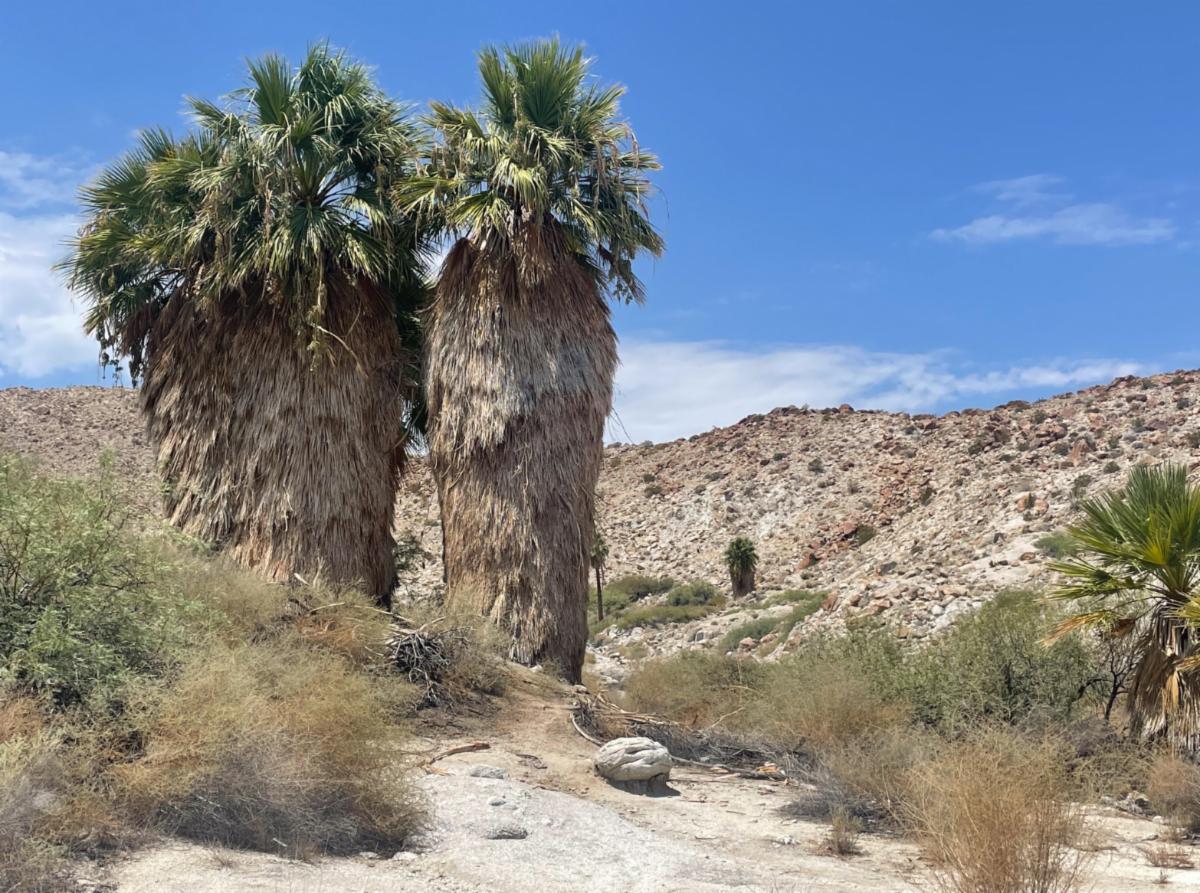
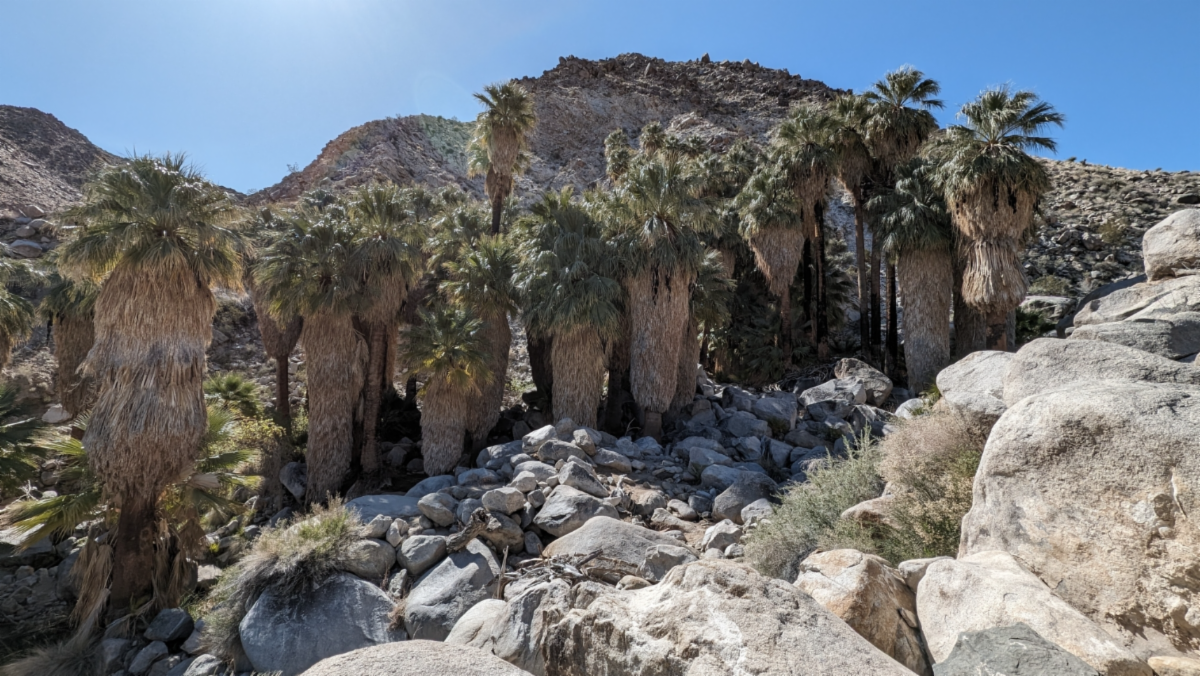
Our native palm tree, the California fan palm (Washingtonia filifera), rises well above the landscape looking like a guardian over the desert shrubs. The palm, named in honor of George Washington, is native to southern California, southwest Arizona, Baja California, and Sonora, Mexico.
You can readily spot the palms clumped together within the desert oases of Palm Springs and Twenty Nine Palms. The fan palms are primarily found in riparian habitats clustered along year-round sources of water such as streams and springs, and seeps. (Photo credit J. Brighton)
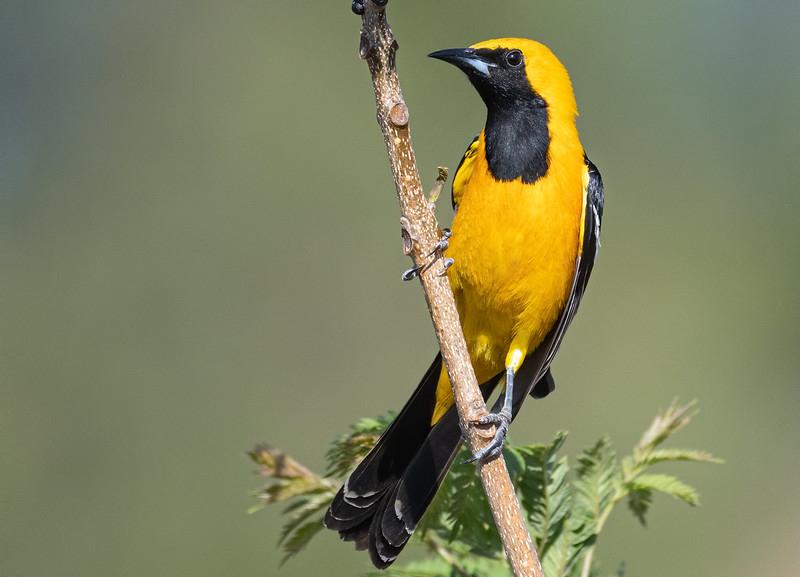
The California fan palm is a keystone species—providing food and shelter, for a variety of wildlife including the canyon tree frog, Pacific chorus frog, Baja ratsnake, western yellow bat and many birds. Of particular note, the hooded oriole uses this palm's unraveling leaf fibers to make nests.
This palm is a keystone species within its desert habitat but it is not suited to our landscaped areas nor urban centers, so let's leave it within the desert oases providing benefits for the wildlife. You can learn more about our native palm and the wildlife it hosts: Washingtonia filifera
| |
Event Calendar for November | |
|
Sat, Nov 9
Rancho La Costa Restoration
9:00 am - 10:30 am
To RSVP or for more info contact:
info@preservecalavera.org
or call Diane:760-724-3887
| |  |
|
Removing non-native plants and watering native plants as needed.
Prepare: Wear appropriate (preferably long pants/sleeves) clothing, closed-toed shoes, and hat. Bring gloves, sunscreen and water.
RSVP by 12 noon the preceding Thursday so we can confirm space is available and provide details of meeting location.
| |
|
Sat, Nov 16
El Corazon Restoration
9:00 am - 10:30 am
To RSVP or for more info contact:
info@preservecalavera.org
or call Diane:760-724-3887
| | |
|
Removing invasive plants from this site.
Prepare: Wear appropriate (preferably long pants/sleeves) clothing, closed-toed shoes, and hat. Bring gloves, sunscreen and water.
RSVP by 12 noon the preceding Thursday so we can confirm space is available and provide details of meeting location.
| |
|
Sat, Oct 16
Valley Arts Festival- Heritage Park
11:00AM-4:00PM
Location:
Heritage Park
220 Paytri Park
Oceanside
| |
For additional info about this event:
Studio ACE Valley Arts Festival
| | |
|
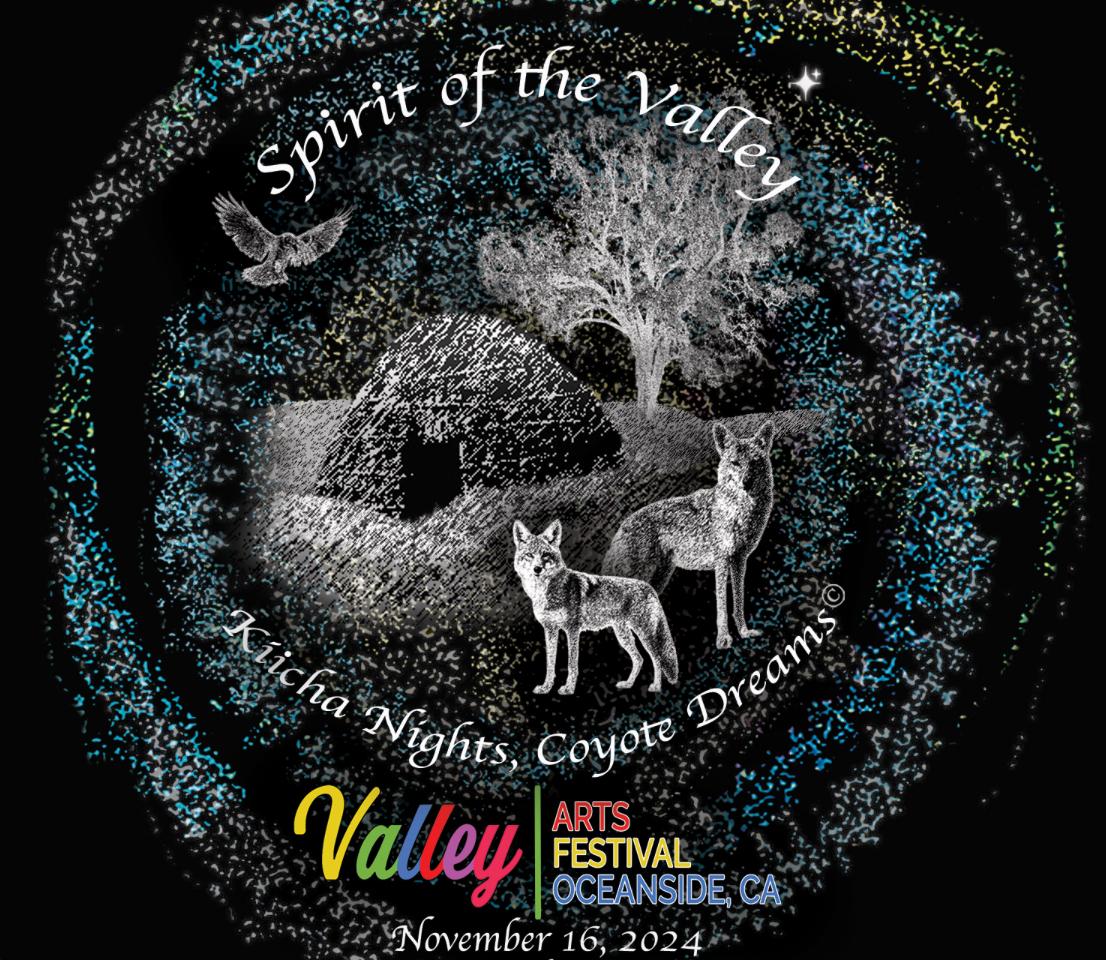
A celebration of Oceanside and its first peoples, today known as the San Luis Rey Band of Mission Indians, one of the seven tribes of the Luiseño nation.
This year’s free family-friendly festival is themed: Spirit Of The Valley: Kíicha Nights, Coyote Dreams.
This year's event will includes:
- traditional drumming, Native American flute music, and youth dancers accompanied by Red Warriors Drum Circle
- the educational area will include a three-quarter size Kíicha ( the traditional home of the Luiseño people and traditional), Luiseño basket weaving demo, historic cultural items, and educational posters and model
- a variety of interactive and participatory family-friendly activities, including interactive basket weaving with the Paa'ila Basket Weavers
- Preserve Calvera will be at the events making seed balls (containing native wildflowers) and butterfly crafts
| |
|
Sun, Oct 17
King Tides Educational Event
8:45 AM - 9:30 AM
EVENT FLYER
This is an opportunity to see the impact of a king tide – a preview of what climate change will bring. Presenters will answer questions on climate change, sea level rise and habitat impacts.
Location:
Meet at the parking lot at the South Carlsbad State Park just north of La Costa Avenue. We’ll be near the bathrooms and beach.
| You can also head down to your local beach November 15-17 and December 13-15 to view the King Tides—check your local tide tables. | | |
|
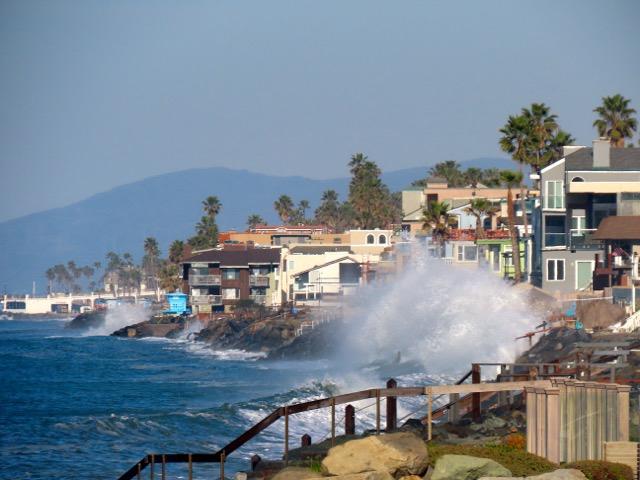
This is also a state-wide event highlights the effects climate change is having on rising sea levels. King tides are the highest of the high tides which can show what we can expect in the future as our planet continues to warm. The California King Tides Project asks for your help again this year to photograph the highest predicted high tides of the year.
King Tide in Carlsbad: photo 01/23 by J. Cannon
| |
|
Our all-volunteer organization can not do what we do without your help. Your time, talent and donation can make a difference right in your own backyard.
Contact us to see how else you could get involved.
| |
And Check out our Website | And all of our past Newsletters can be accessed here. Lots of local information about our open space and wildlife issues. | | |
Is There a Naturalist in You?
Registration is now open for CA Naturalist Certification. Class begins in February 2025
Follow this LINK for general info and registration
| | |
|
Our California Naturalist certification training in 2025 will be lead by two alumni, Jimmy Kidd and Lisa Kuleto. The class will be on Tuesday evenings, 5:30-8:30 pm from Feb. 4 through April 8th.
Contact:
Contact us at calnat.pc@gmail.com for questions about the course or registration.
Please use REGISTRATION in the Subject line when you contact us.
| | |
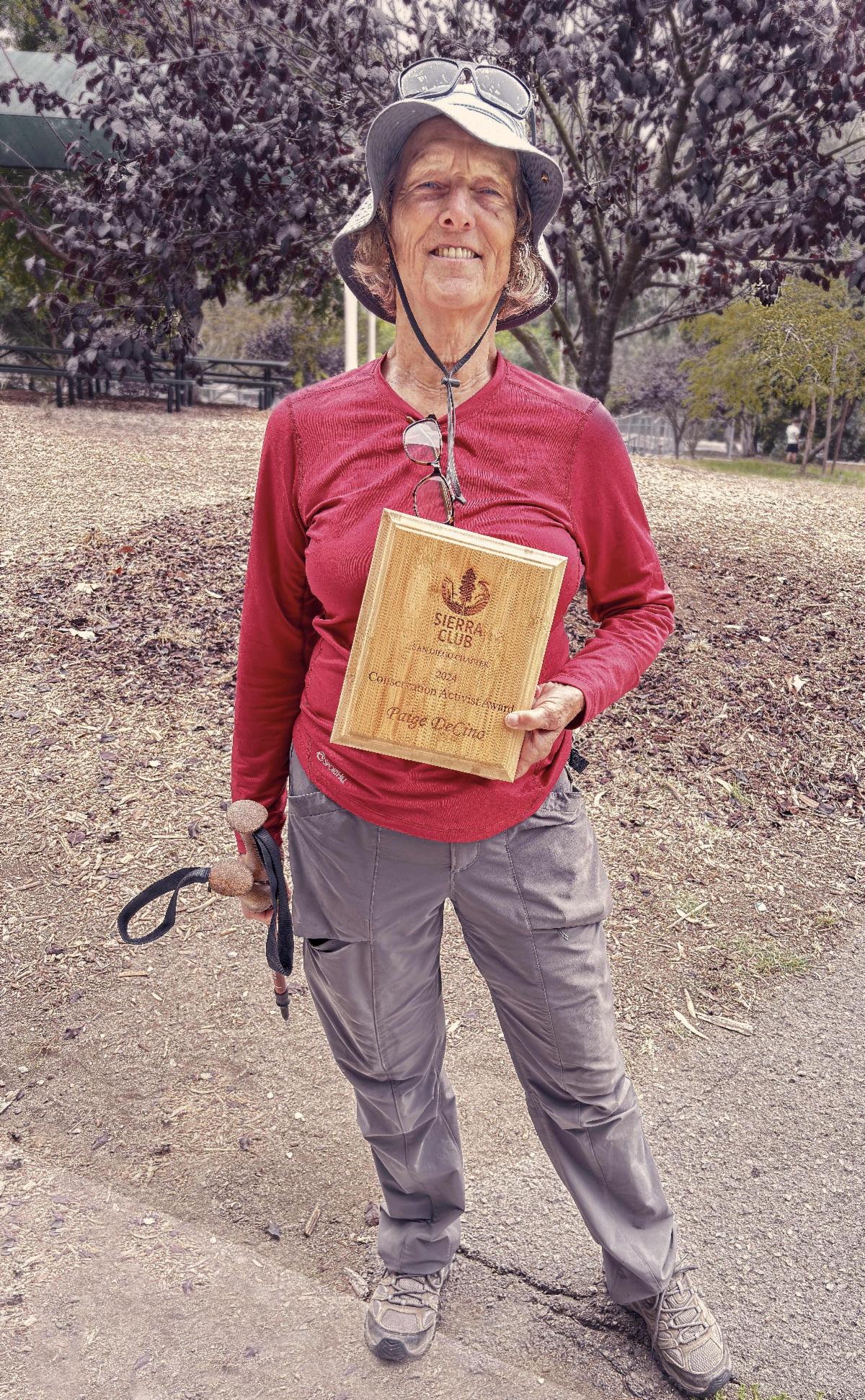
Paige DeCino, one of our Board Members, Received Sierra Club Conservation Activist Award for 2024 | |
|
A well-deserved award was presented to Paige by the Sierra Club San Diego Chapter. The Conservation Activist award is presented to those who have done outstanding work to forward the Chapter’s conservation mission—to promote and implement the conservation objectives and policies of the Sierra Club.
Here are just a few of the many awesome things Paige has been involved with:
- co-founder and continues as Co-Chair of the San Diego Chapter Carlsbad CAP Team
- serves as a representative for Carlsbad on the Community Advisory Panel for Clean Energy Alliance
- active member of the NCCG Political Committee
And of course, Paige is a long-time board member for Preserve Calavera. Along with her other board commitments, she initiated our local watershed monitoring program-which included designing the protocols, setting up a lab, training volunteers, and she continues with the responsibilities of Project Director
| |
|
We would also like to congratulate Mary Clarke on her Sierra Club award and thank her for her longtime commitment to conservation planning in North County
Mary received the Sierra Club's Joanne H. Pearson Memorial Award in Environmental Public Advocacy along with a $1000 check for her tireless efforts for many years. This is awarded annually to a Sierra Club San Diego volunteer who is committed to protecting public rights as they relate to land use or environmental protections in the greater San Diego region.
Mary is co-chair of the Multiple Species Conservation Plan/Multiple Habitat Conservation task force in North County. She has been actively engaged in conservation of wildlife and habitat for over 20 years!
Thank you Mary for your committee to protecting local habitats and wildlife!
| |
Wildlife Corner: Turkey Vultures | |
|
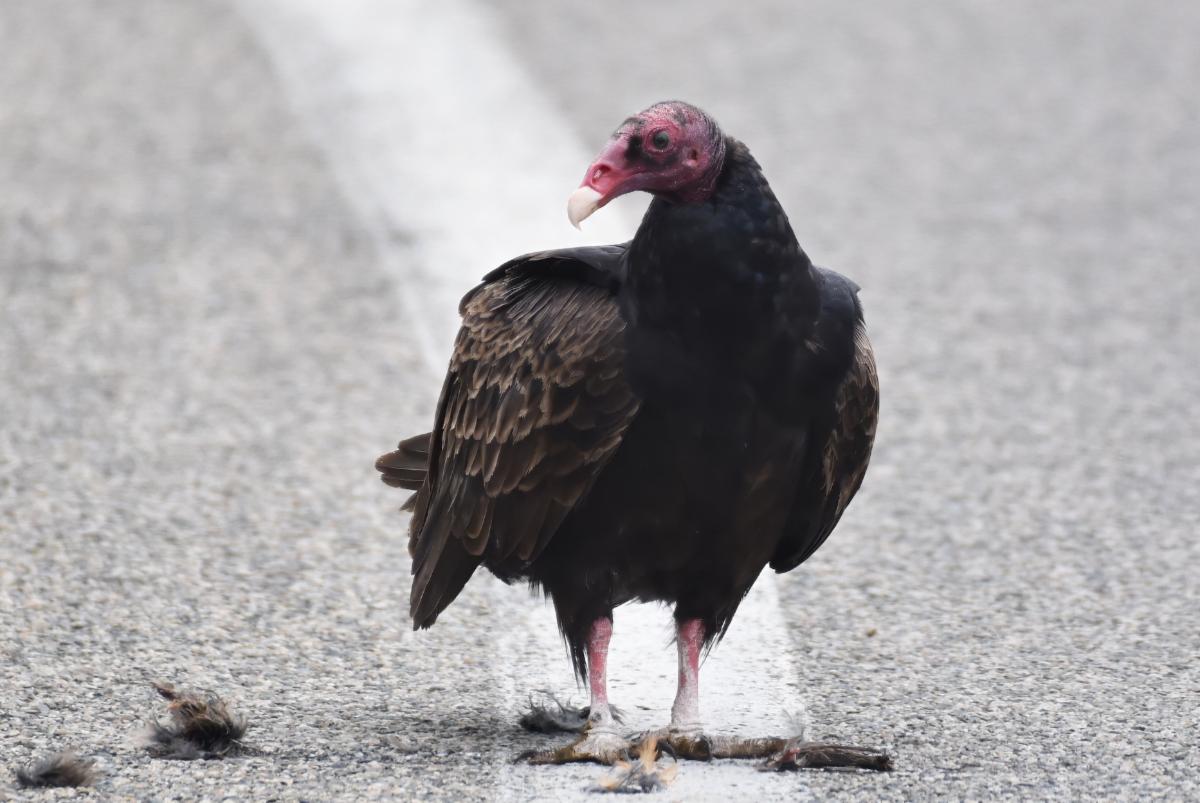
Turkey vulture just finishing its lunch on Gopher Canyon Road in Vista.
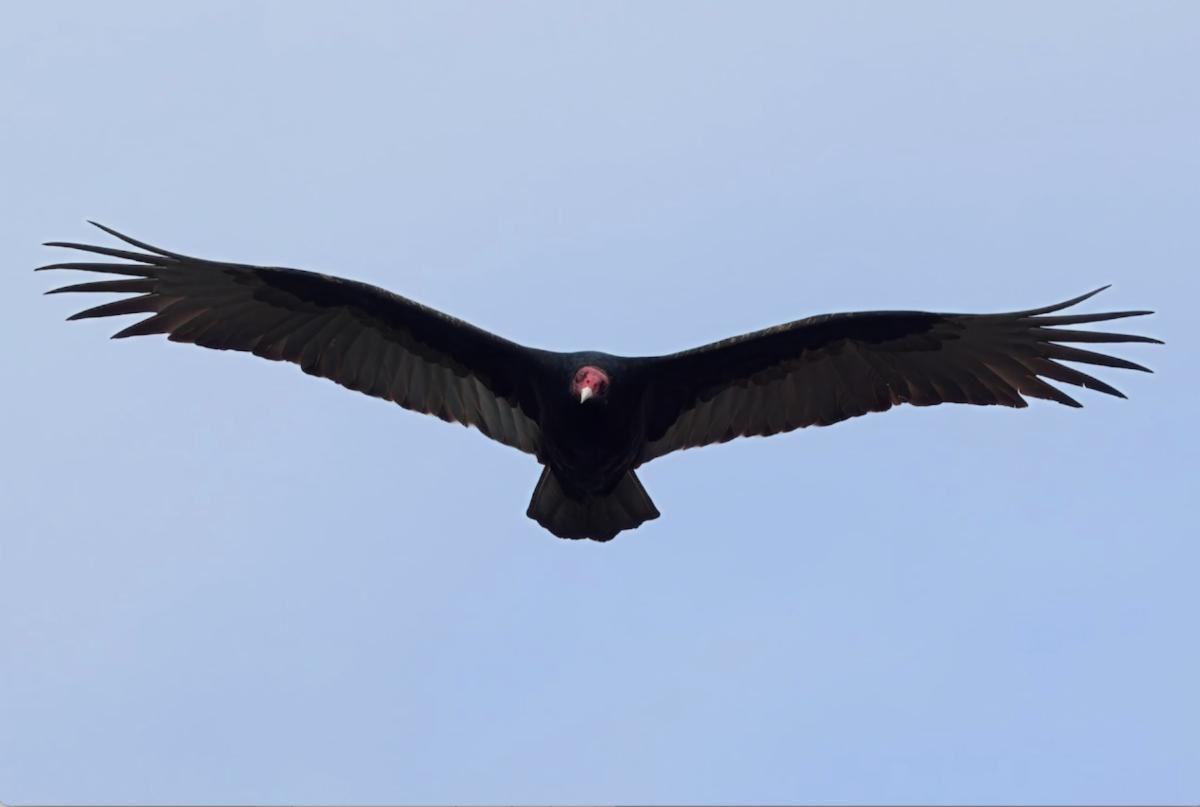
And a turkey vulture soaring above Agua Caliente Park in the eastern part of the county. (photos by P.Langen)
| |
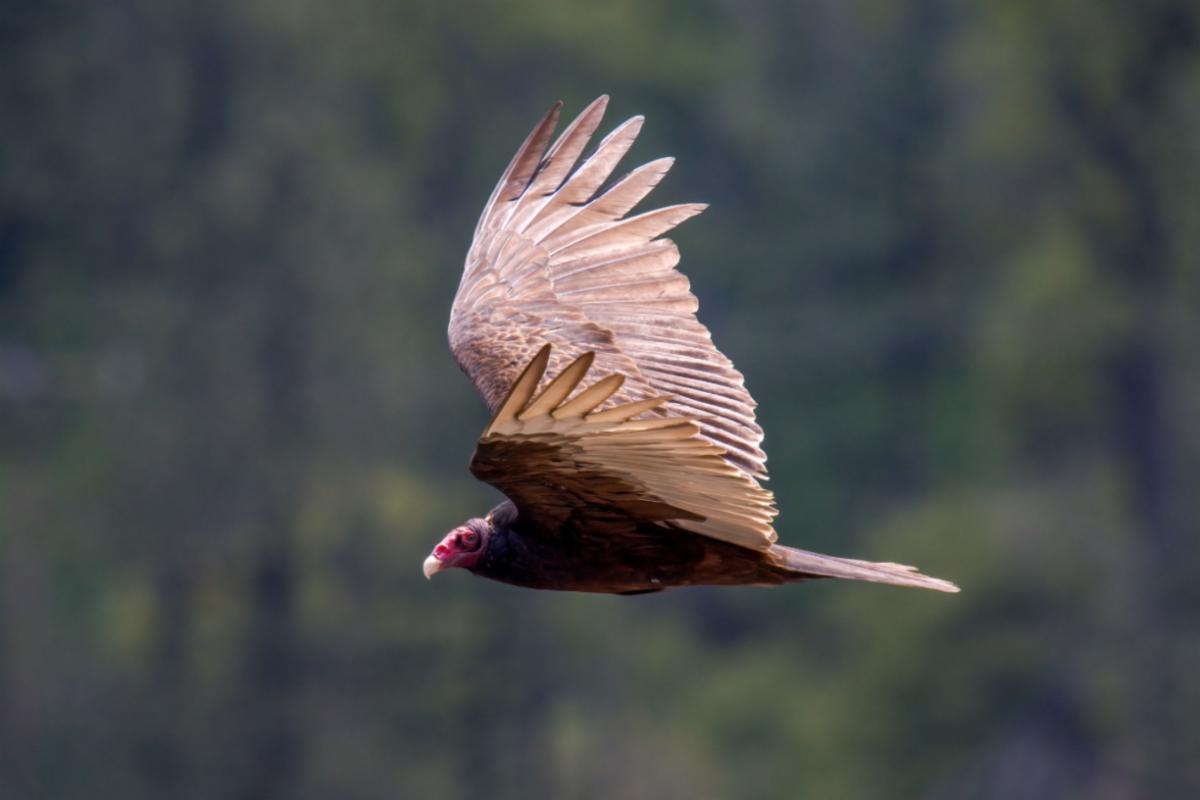
You may have noticed turkey vultures gliding in large circle; they are very hard to miss when they fly overhead. Circling on thermals (warm air currents) enables them to to save energy. Turkey Vultures often hold their wings in a V-shape.—this specific wing position helps them stabilize themselves if there is a turbulent patch of air.
While airborne, they use their exceptionally keen sense of smell to detect decomposing animals. Through their nostrils, they can detect potential meals for miles around, Their sense of smell is renown in the avian world. Other scavenger birds rely on the turkey vulture to alert them to the next meal.
| |
They might not look like much when you see them eating roadkill but with their impressive 6 foot wingspan, they are quite magnificent when airborne. The turkey vulture, with its bald, red head and dark plumage, gets its name because of its resemblance to a male wild turkey. | V-shaped wings: photo by A.Newmark | |
|
Turkey Vultures serve as an important clean up crew. By feeding on dead and decaying animals, they (as well as other carrion feeders) play a vital role in keeping our ecosystems healthy. Without vultures, we would have large quantities of maggots and bacteria feeding on roadkill. They help to prevent infectious wildlife diseases like rabies, anthrax and botulism.
Do you want to learn more about these fascinating and misunderstood creatures?
Please take a little time to watch this super educational video provided by the LA Zoo. And make sure to share it with any nearby kids: Turkey Vultures in an Urban Environment
| | | | |