Council of Producers & Distributors of Agrotechnology
The Business Council for Agrotechnology | | |
CPDA is pleased to welcome new member Zschimmer & Schwarz.
As the business council for agrotechnology, CPDA is pleased to welcome our newest member. Membership support drives CPDA’s advocacy on key issues, including reducing EPA’s PRIA and non-PRIA registration backlogs and advancing science-based Endangered Species Act solutions.
| | Zschimmer & Schwarz is a global specialty chemicals company providing high-performance formulation components for the agrochemical industry, including surfactants, esters, polymers, and phosphonates. Backed by deep formulation expertise and application know-how, they enable their partners to develop more efficient, stable, and sustainable crop protection solutions. | |
| President's FY27 Budget: Proposal Calls for Significant EPA Reductions | |
The Administration released portions of its FY27 budget, proposing a 52 percent reduction to EPA funding to approximately $4.2 billion. This is consistent with the FY26 request, which Congress did not adopt.
The proposal includes reductions across multiple accounts, including State Revolving Funds and categorical grants. Within the pesticide program, requested PRIA-related funding is $118.8 million, reflecting reductions in Environmental Programs and Management and Science and Technology accounts. PRIA 5 identifies approximately $166 million in annual appropriations as the level needed to fully support the program. The FY27 request is roughly 28 percent below that target and approximately 12 percent below the FY26 enacted level of $134.5 million.
The budget maintains focus on chemical safety, ESA implementation, and pesticide exposure, while proposing targeted investments in permitting and case management, including automation, improved tracking systems, and expanded use of AI tools. The Agency sets a goal of completing 60 percent of PRIA backlog actions in FY27.
The proposal reduces overall resources while maintaining or expanding program expectations.
| | Appropriations: Focus Shifts to Congress | | |
While the Administration has outlined its FY27 proposal, funding levels for EPA’s Office of Pesticide Programs will be determined through the appropriations process.
CPDA is actively engaged with Congress as that process moves forward. CPDA has submitted more than 35 individual appropriations requests and continues direct engagement with key offices to reinforce the need for robust funding for OPP.
In FY26, while EPA’s overall funding was reduced, funding for pesticide licensing received a modest increase.
OPP’s ability to meet statutory timelines, manage workload, and reduce backlog is directly tied to available resources.
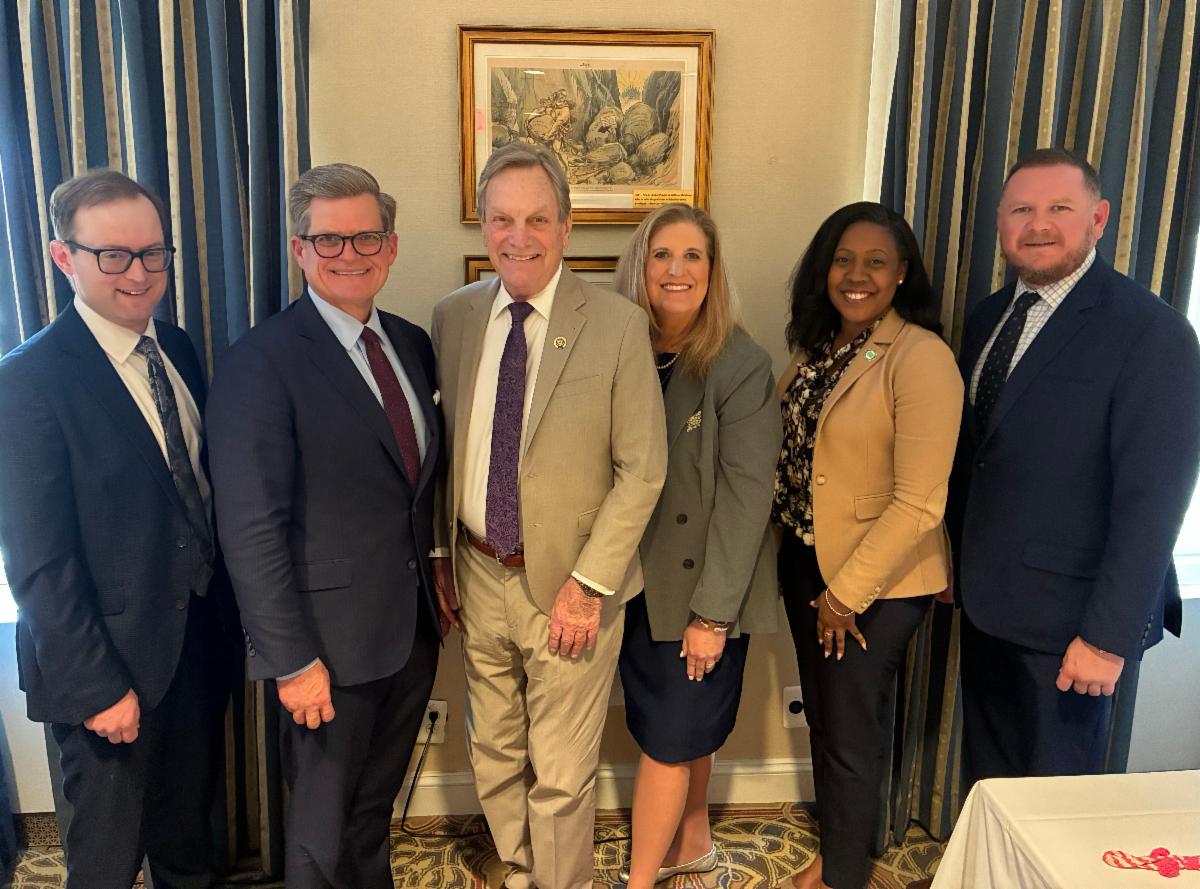
| | CPDA met with Congressman Mike Simpson (R-ID), Chairman of the House Interior, Environment, and Related Agencies Appropriations Subcommittee, which oversees funding for EPA’s Office of Pesticide Programs (OPP). Also pictured are partners from the PRIA Coalition, including the American Chemistry Council (ACC) and CropLife America (CLA), as we continue to advocate for resources at OPP. | | PRIA 6: Inerts Work Moving Forward | |
CPDA is leading efforts of the PRIA Coalition regarding consolidation of inert ingredient fee categories (Table 18) as PRIA 6 discussions continue.
CPDA has scheduled a meeting with key OPP staff to request technical assistance on the following proposals:
- Combine categories that amend tolerance exemptions for food-use ingredients (I002 and I003)
- Combine categories for amendment of non-food-use inert ingredients (I005, I006, and I007)
- Transfer categories for safeners to the Registration Division tables, because of the similarity of data requirements to conventional active ingredients (I011 to I017)
These proposals are intended to better align fee categories with how reviews are conducted within OPP and reduce unnecessary complexity in the current structure.
| | ESA Mitigation: Ongoing Engagement with EPA | |
CPDA continues to engage with EPA’s Environmental Fate and Effects Division (EFED) on the role of guar and poly adjuvants as mitigation options under ESA strategies.
These discussions are focused on expanding practical tools available to applicators and ensuring these technologies are appropriately considered as EPA implements its mitigation approaches.
EPA is expected to release its proposed fungicide strategy later this month, which is anticipated to include additional detail on drift reduction adjuvants. The proposal will be issued for public comment.
CPDA will review the strategy and provide feedback, with an emphasis on ensuring the science is accurately represented and that growers have workable options for compliance.
| | PRIA Annual Report (FY25) | |
EPA’s FY25 PRIA Annual Report reflects continued pressure on both PRIA and non-PRIA workload.
- 1,731 PRIA actions completed in FY25
- 65 percent of PRIA actions completed past statutory decision timelines
- PRIA backlog declined from 1,271 to 1,247 actions
- 2,310 PRIA actions pending at the end of the fiscal year
Non-PRIA workload remains a significant driver of overall volume:
- EPA received approximately 4,300 non-PRIA applications and completed 10,830 in FY25
- Non-PRIA backlog declined from nearly 13,000 to around 9,000 actions
The report also confirms that appropriations funding remains below the level identified in statute to support full program implementation. PRIA fees account for roughly one-third of program funding, with the remainder dependent on appropriations.
| | |
EPA’s third-party workforce assessment identifies a persistent staffing gap across OPP.
- Current staffing: 532 FTEs (466 working-level)
- Estimated need ranges from 556 to more than 700 FTEs depending on workload and efficiency assumptions
- A staffing gap exists in all modeled scenarios
The report concludes that process improvements alone will not close the gap. Additional staffing is required to meet workload demands.
Backlog reduction would require dedicated surge capacity beyond baseline staffing, particularly for PRIA and non-PRIA actions.
| |
CPDA Member Keller Heckman Advanced Pesticides Seminar | |
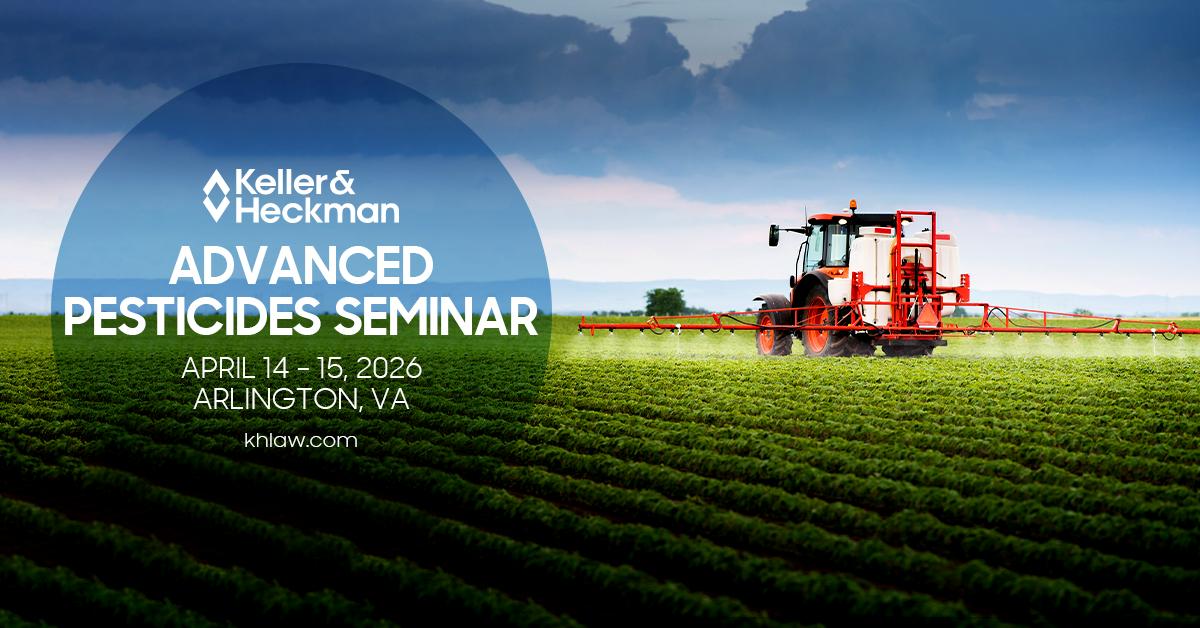
Join Keller and Heckman LLP for its Advanced Pesticides Seminar, April 14 – 15, 2026, in Arlington, VA. Register by March 27 to secure early bird pricing, and CPDA members use code CPDA10 for an additional 10% off.
This two‑day course, led by Keller and Heckman’s experienced attorneys and scientists, covers some of the most challenging and fast‑evolving areas of pesticide regulation, such as advertising and selling pesticides online in compliance with FIFRA and the FTC Act, EPA enforcement practices and resolution strategies, using FOIA and NPIRS to research competitors and assist in registration, PFAS issues arising under FIFRA, managing existing stocks, FIFRA auditing and compliance strategies, registering new uses and inerts, and additional advanced topics.
| |
Incoming CPDA Chairman Lindner Speaks at ICIS World Surfactants Conference in May | |
CPDA is proud to be a media partner for the 16th ICIS World Surfactants Conference, returning to Jersey City from May 6-7, 2026.
If your business touches surfactants in agriculture, crop protection, or formulation, this is the event to be at. Step away from day-to-day operations and connect with senior leaders, uncover new opportunities, and gain insights that drive growth.
Don’t miss the CPDA-led session on emerging opportunities in agricultural surfactants with our incoming Chair, Greg Lindner, along with other key industry presentations.
Watch the promotional video to see why this is the must-attend surfactants event of the year.
| | |
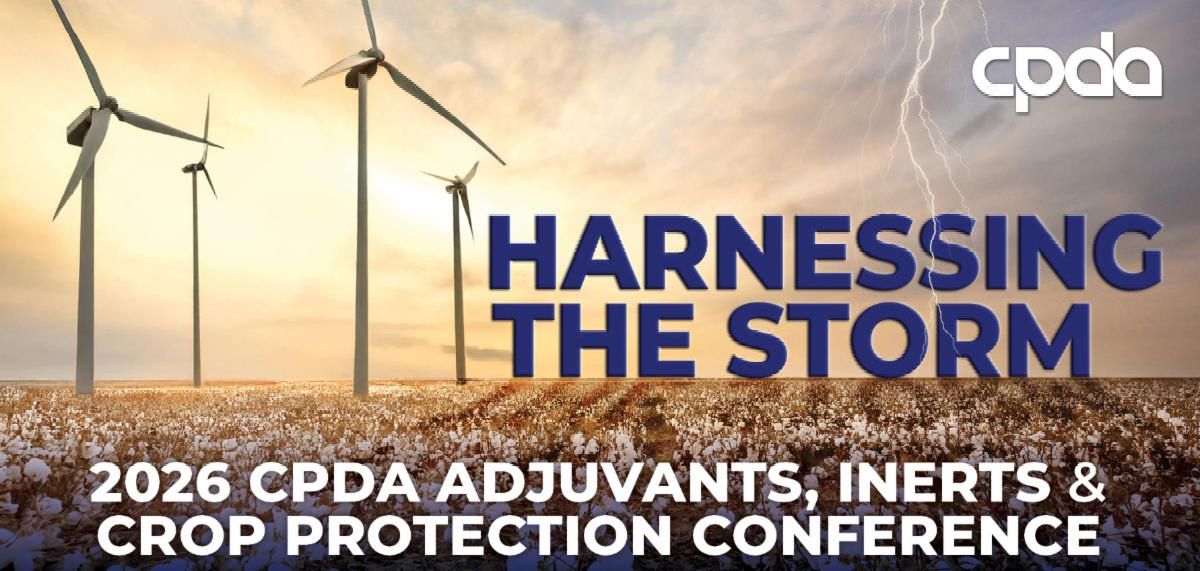
Get Ready to Harness the Storm.
Join industry leaders and innovators in Austin, TX, April 27–30, 2026.
Over three high-impact days, you’ll mix technical deep dives, commercial strategy and regulatory briefings designed to help formulators, registrants, distributors and ag-tech leaders turn disruption into advantage.
You’ll leave the conference with actionable intelligence on formulation and application, up-to-the-minute regulatory guidance, and a network of peers who are shaping the future of crop protection. Highlights include practical sessions on inerts and biologicals, a hard-hitting keynote about the macro forces reshaping U.S. agriculture, EPA and China strategy briefings, and plenty of social programs to reconnect and do business in a relaxed setting.
Who should attend: Formulators, registrants, distributors, ag leaders and anyone building the next generation of crop protection solutions.
| | | | |