|
Greetings leaders,
Every September 8, the world pauses to recognize International Literacy Day. This year's observance carries particular significance: 2026 marks 60 years since UNESCO established the day, with the theme Literacy for People, the Planet and Prosperity. But for those of us who lead schools, literacy isn't something we celebrate for one day.
It is something we build upon every day.
Literacy determines whether a child can access mathematics, understand science, interrogate history, navigate information, communicate ideas, and ultimately participate fully in the world.
That's why literacy belongs at the center of what we focus on Cultivating What Matters Most.
GEORGIA'S LITERACY MOMENT
What Leaders Should Know About the Georgia Early Literacy Act of 2026
This year, Georgia took another significant step in its statewide focus on literacy with the passage of HB 1193, the Georgia Early Literacy Act of 2026. The law expands Georgia's literacy infrastructure across grades K–3, with a significant emphasis on developing and supporting literacy coaching at the school, regional, and state levels.
Among the provisions especially relevant for school and district leaders:
- Establishes a grant program to provide funding for one school-based literacy coach in local public schools serving students in grades K–3.
- Requires school-based literacy coaches to spend no less than 70% of the school day working directly with students and teachers, including coaching educators in evidence-based practices and modeling instruction.
- Provides for regional literacy coaches and leadership literacy coaches across Georgia's 16 Regional Education Service Agencies (RESAs) to support school-based literacy coaches throughout the state.
- Requires the Georgia Professional Standards Commission to establish a literacy coaching endorsement for teachers and other certificated professional personnel.
- Requires unified literacy plans for local school systems and charter schools.
- Strengthens expectations for high-quality K–3 instructional materials aligned with the science of reading, with requirements connected to state funding phased in over time.
Access the signed Georgia Early Literacy Act of 2026
Together, these provisions signal something important: Georgia is not only investing in what students learn; we are investing in the capacity of the adults responsible for helping them learn.
For leaders, that raises an important question: As Georgia expands its investment in literacy coaching, how are we preparing, supporting, and developing the coaches who will help translate that investment into stronger classroom practice?
The passage of HB 1193 raises an important leadership question: How are we developing the people responsible for developing our teachers?
RESOURCE FOR LEADERS
Leadership for Literacy Coaching
What role does the principal play in making instructional coaching matter?
As schools deepen their focus on literacy and invest in the capacity of instructional coaches, this research offers an important reminder: the effectiveness of coaching is shaped not only by the expertise of the coach, but also by the leadership conditions surrounding the coach.
In Leadership for Literacy Coaching: The Principal’s Role in Launching a New Coaching Program, researchers Lindsay Clare Matsumura, Mary Sartoris, Donna DiPrima Bickel, and Helen E. Garnier examine the relationship between principal leadership and teachers’ engagement with literacy coaches. Their findings point to several leadership practices that matter. Teachers were more likely to engage in meaningful coaching when principals treated coaches as valued professionals, positioned them as sources of instructional expertise, and actively participated in the coaching work themselves.
The leadership takeaway: Hiring or assigning an instructional coach is only the beginning. Principals help create the conditions that determine whether coaches are able to influence teacher learning and instructional practice.
As we continue Cultivating What Matters Most, we invite principals and instructional leaders to consider:
Have we simply placed coaches in our schools, or have we created the conditions for them to coach?
READ & REFLECT: As you read the article, consider what your leadership communicates about the role, expertise, time, and influence of your instructional coach.
CULTIVATING THE COACH
If instructional coaches are being asked to strengthen the capacity of teachers, we must also ask: Who is intentionally strengthening the capacity of the coach?
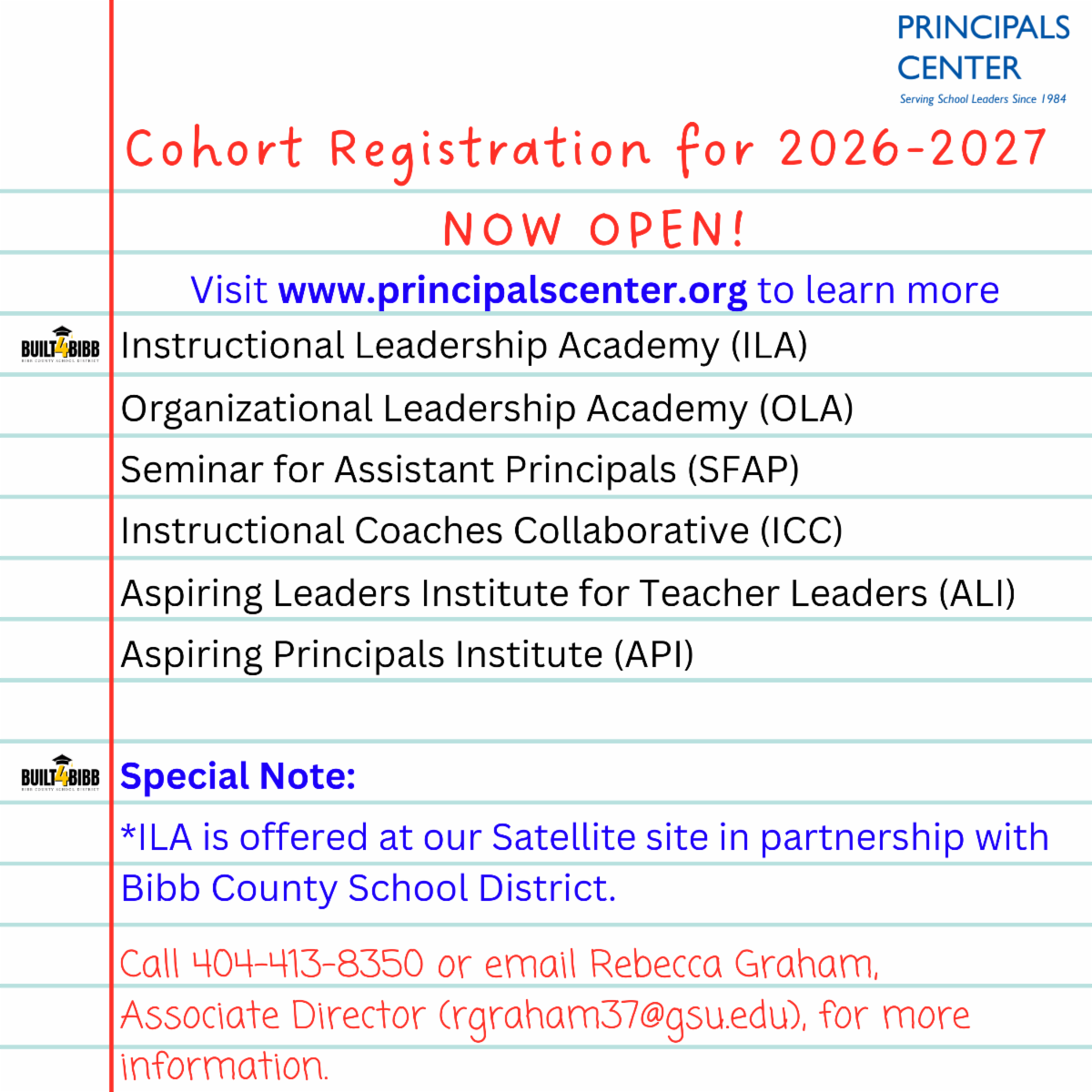
The Principals Center’s Instructional Coaches Collaborative creates a professional learning community designed specifically for instructional coaches to deepen their practice, strengthen their capacity to support adult learners, and grow alongside colleagues who understand the complexity of the coaching role.
Principals, as you consider how you are creating the conditions for coaching to thrive in your school, we invite you to also consider how you are investing in the continued growth and development of the person charged with helping your teachers grow.
Invest in the coach. Strengthen the teacher. Impact the learner.
Learn More About the Principals Center's Instructional Coaches Collaborative by clicking here.
CULTIVATING WHAT MATTERS MOST
On International Literacy Day, we are reminded that literacy is more than the ability to read words on a page. It is the ability to access knowledge, make meaning, find one's voice, imagine what is possible, and participate fully in the world.
For those of us entrusted with leading schools, that makes literacy more than an instructional priority. It is a leadership imperative.
The policies we enact matter. The programs we implement matter. The coaches and teachers we develop matter. And ultimately, they matter because of the children sitting in classrooms across our state whose futures are being shaped by what we choose to cultivate today.
As we mark 60 years of International Literacy Day, may we recommit ourselves to creating schools where every child has access to the instruction, opportunities, and adults they need to become powerful readers, thinkers, communicators, and learners.
Because when we cultivate literacy, we cultivate possibility.
And that is work worth cultivating—together.
With purpose,
Dionne Cowan, Ed.D.
Executive Director, Principals Center
Clinical Assistant Professor
|