Mengelberg's Telefunkens - Vol. 5
Beethoven, Dvořák, Tchaikovsky symphonies & more
| | |
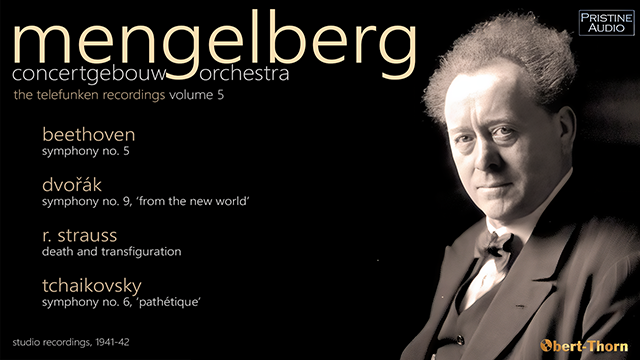
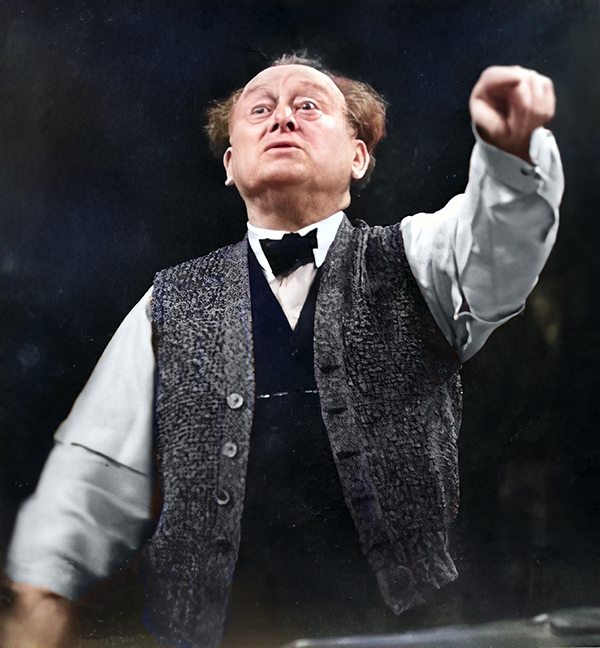
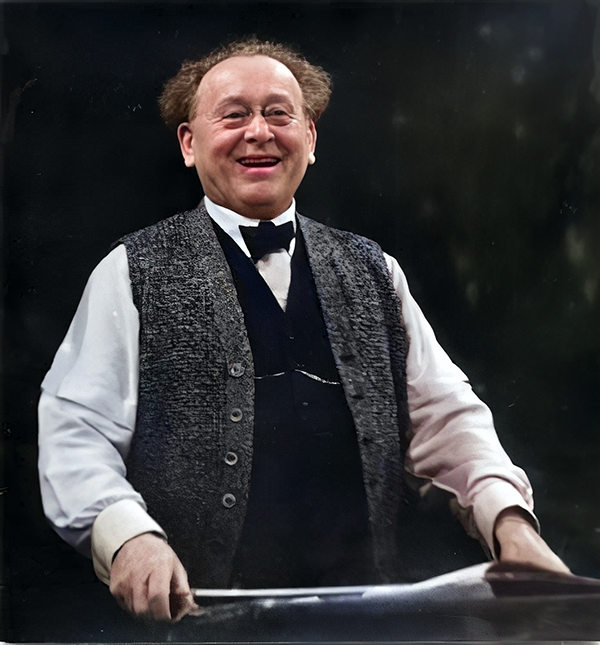
This week at Pristine we continue our celebration of Willem Mengelberg’s 150th anniversary with the fifth volume in our series devoted to his Telefunken recordings with the Concertgebouw Orchestra.
These sessions, from 1941 and 1942, catch the conductor at a fascinating point in his career: still in full command of his orchestra, eager to revisit repertoire he had already set down on disc, and exploring new territory that he rarely touched in the studio. The results make for one of the most varied and compelling instalments in the series to date.
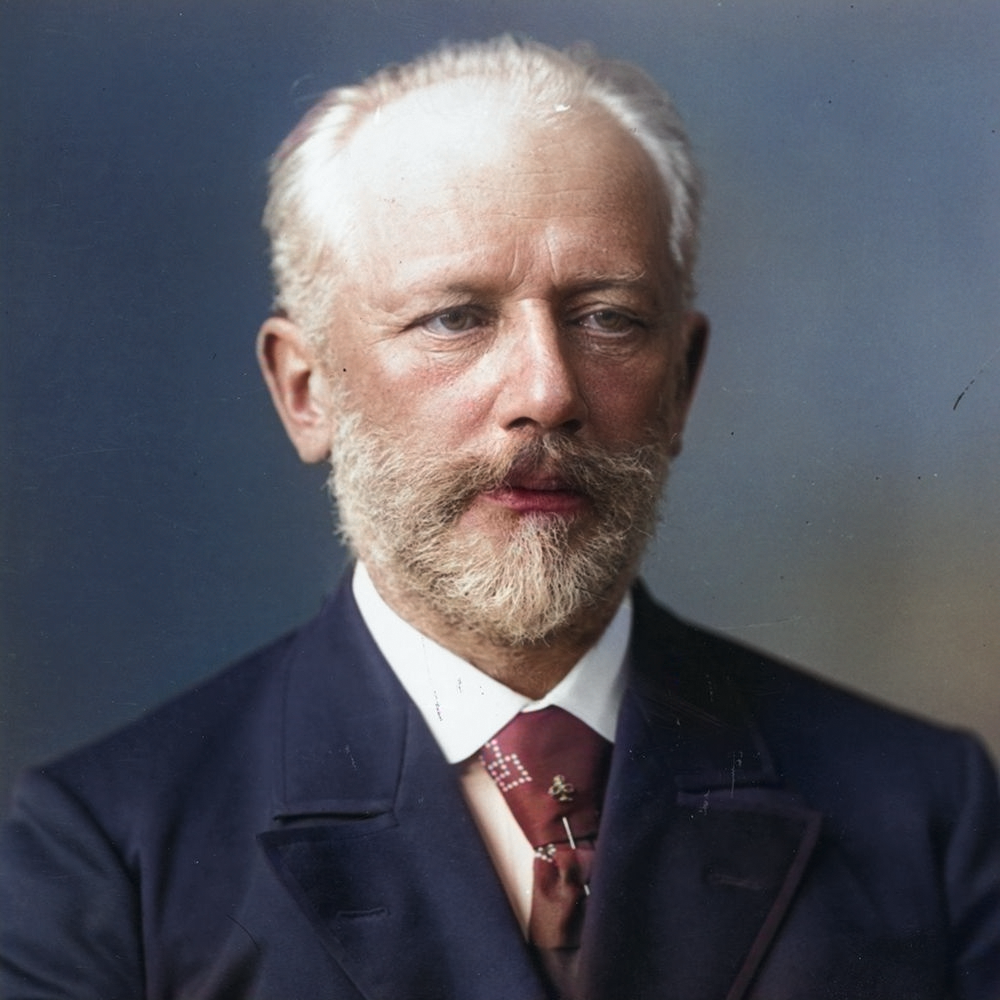
Chief among the highlights is a new account of Tchaikovsky’s (above) Pathétique Symphony, broader and more sorrowful in its closing movement than his earlier 1937 version, and far better preserved in sound thanks to Pristine’s restorations. Just as striking is Mengelberg’s only commercial venture into Dvořák — the New World Symphony — where his typically expansive approach results in a Largo of breathtaking scale and intensity, unlike almost any other interpretation of its time.
Borodin’s atmospheric In the Steppes of Central Asia and a rare Strauss Death and Transfiguration round out the sessions, the latter reminding us of the unique authority Mengelberg brought to a composer who had dedicated Ein Heldenleben to him personally.
The set concludes with a fascinating case of discographic detective work: the long-misattributed 1942 remake of Beethoven’s Fifth Symphony. For decades it circulated under the wrong date, issued in the early 1950s by Capitol from vinyl test pressings but identified by Telefunken and others as the 1937 version. Only recently has the confusion been cleared up, allowing us to hear it correctly placed in Mengelberg’s recording chronology.
Here it is restored afresh from Capitol LPs, while the other works come directly from original Telefunken 78s. The transfers have been superbly carried out by Mark Obert-Thorn for Pristine.
Together these recordings present a vivid picture of Mengelberg’s artistry at the start of the 1940s — a blend of passion, individuality and technical precision, but also a reminder of the quirks, missteps and near-misses of the recording industry of the era.
For listeners and collectors alike, this penultimate volume in the series offers a rare chance to experience Mengelberg’s vision as both interpreter and recording pioneer, and to appreciate how these historic performances still speak with extraordinary force today. Take a listen to the third movement of the Tchaikovsky Pathétique on our website or here, on our YouTube channel - it really is quite marvellous!
| | |
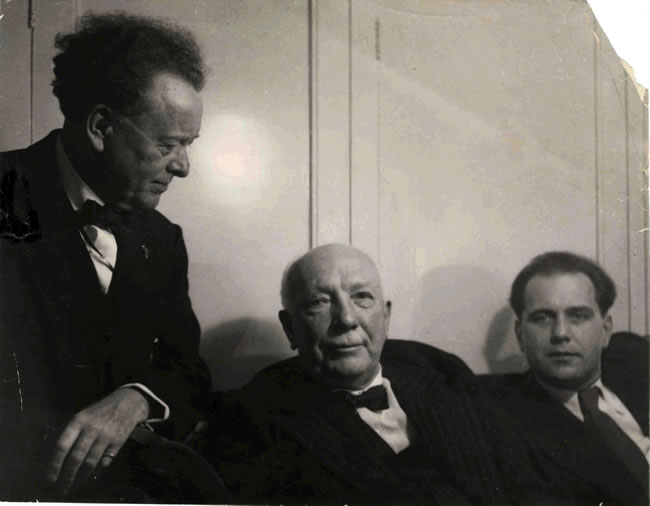
Mengelberg with Richard Strauss
| |
| | |
MITROPOULOS conducts
Shostakovich & Prokofiev (1955/56)
| |
PROKOFIEV Violin Concerto No. 1
SHOSTAKOVICH Symphony No. 10
Live & studio recordings, 1955 & 1956
Total duration: 69:57
Isaac Stern, violin
New York Philharmonic
conducted by Dimitri Mitropoulos
| | | |
| | FRICSAY Mozart: Die Zauberflöte (1954) - PACO226 - 320kbps Ambient Stereo MP3 | |
MOZART Die Zauberflöte
Studio recording, 1954
Total duration: 2hr 22:44
Tamino - Ernst Haefliger
Papageno - Dietrich Fischer-Dieskau
Königin der Nacht - Rita Streich
Sprecher - Kim Borg
Pamina - Maria Stader
Sarastro - Josef Greindl
RIAS Kammerchor & RIAS-Symphonie-Orchester
conducted by Ferenc Fricsay
| | | |
| | FREDERICK STOCK and The Chicago Symphony, Volume 5 (1940-1941) | |
BRAHMS Symphony No. 3
SCHUMANN Symphony No. 4
ENESCU Romanian Rhapsody No. 1
GLAZUNOV Carnaval Overture, Concert Waltzes
WALTON Scapino
Studio recordings, 1940-41
Total duration: 2hr 33:02
Chicago Symphony Orchestra
conducted by Frederick Stock
| | | |
| | MARIA CALLAS The Verdi Opera Collection (studio recordings, 1953-1956) | |
VERDI Aïda (r. 1955)
VERDI Il trovatore (r. 1956)
VERDI La forza del destino (r. 1954)
VERDI La traviata (r. 1953)
VERDI Rigoletto (r. 1955)
VERDI Un ballo in maschera (r. 1956)
Six studio opera recordings in Ambient Stereo XR remasters
Get 13 discs for the price of 12 when you purchase the full set.
| | | |
| | TOSCANINI in Pasadena, Vol. 2: Beethoven, Rossini, Smetana, Tchaikovsky, Wagner (1950) | |
BEETHOVEN Symphony No. 3 'Eroica'
TCHAIKOVSKY Romeo & Juliet Fantasy Overture
SMETANA The Moldau
WAGNER Good Friday Spell
ROSSINI La Cenerentola Overture
EMMETT Dixie
Live recordings, 1950
Total duration: 1hr 45:23
NBC Symphony Orchestra
conducted by Arturo Toscanini
| | | |
| | |
BEECHAM
Bizet: The Fair Maid of Perth (1956)
| |
BIZET The Fair Maid of Perth
(La jolie fille de Perth, sung in English)
Studio broadcast recording, 1956
Total duration: 2hr 14:39
Catherine Glover - Mattiwilda Dobbs
Henry Smith - Alexander Young
Le Duc de Rothsay - Kevin Miller
Ralph - David Ward
Mab - Anna Pollack
Simon Glover - Owen Brannigan
BBC Chorus
Royal Philharmonic Orchestra
conducted by Sir Thomas Beecham
| | | | This Week's Special Offer | | |
Celebrating Walter
Save 10% on all our Bruno Walter this week
| | |
We mark this week the 149th birthday earlier this week of Bruno Walter.
Bruno Walter (1876–1962) was one of the most influential conductors of the twentieth century, admired for his warmth of expression, deep musical insight, and long association with the Austro-German symphonic and operatic tradition. Born Bruno Schlesinger in Berlin, he showed early musical talent, entering the Stern Conservatory at the age of eight and making his debut as a conductor while still in his teens. By 1896, he had begun his professional career in Cologne and quickly progressed through opera houses in Hamburg, Breslau, and Pressburg, gaining a reputation as a skilled interpreter of Wagner and Mozart.
His life and career became closely tied to Gustav Mahler, whom Walter met in Hamburg and later assisted in Vienna. Walter conducted the première of Mahler’s Das Lied von der Erde in Munich in 1911 and became one of the composer’s greatest champions, ensuring Mahler’s music was heard and appreciated in an era when it was often marginalized. His own career blossomed at the Vienna Court Opera and later in Munich, Leipzig, and Berlin, where he was valued for his lyrical, humane approach to music-making, contrasting with the more authoritarian styles of some of his contemporaries.
The rise of the Nazi regime in 1933 forced Walter, of Jewish heritage, to leave Germany. He settled first in Austria, but after the Anschluss in 1938 he emigrated again, eventually making the United States his permanent home. He soon became a frequent guest with the New York Philharmonic, the NBC Symphony, and the Metropolitan Opera, while also conducting widely in Europe after the Second World War. Walter’s interpretations of Mozart, Beethoven, Brahms, Bruckner, and Mahler became benchmarks, praised for their natural flow, expressive depth, and spiritual nobility.
Walter’s final years were devoted largely to recording, particularly for Columbia Records, where his stereo remakes of Mozart and Mahler became reference points for generations of listeners. Though plagued by ill health, he continued to conduct into the early 1960s, leaving behind a discography that remains central to twentieth-century performance history. He died in Beverly Hills, California, in 1962, remembered not only as a great conductor but also as a humanist and interpreter who brought profound warmth and sincerity to the music he loved.
We have 40 releases featuring music conducted by Walter, and for this week there's a 10% discount on all these recordings.
The discount is now active and automatic - you'll see a reduction at the checkout on all qualifying items.
Offer runs until next Friday.
Pristine's Walter selection:
[NB. Prices indicated here are for the MP3 versions without this week's discount]
| |
| | WALTER Bruckner Symphonies 4 & 7 (stereo, 1960/61) | |
BRUCKNER Symphony No. 4
BRUCKNER Symphony No. 7
Stereo studio recordings, 1961 & 1961
Total duration: 2hr 11:30
Columbia Symphony Orchestra
conducted by Bruno Walter
| | | |
| | |
WALTER
Mahler: Das Lied von der Erde (1948)
| |
MAHLER Das Lied von der Erde
Live at Carnegie Hall, New York, 18th January 1948
Total duration: 58:20
Kathleen Ferrier - mezzo-soprano
Set Svanholm - tenor
Philharmonic-Symphony Orchestra of New York
Bruno Walter, conductor
| | | |
| | |
WALTER
Mozart: The Last Six Symphonies (1959-60)
| |
MOZART
Symphony No. 35 'Haffner'
Symphony No. 36 'Linz'
Symphony No. 38 'Prague'
Symphony No. 39
Symphony No. 40
Symphony No. 41 'Jupiter'
Stereo studio recordings, 1959-60
Total duration: 2hr 34:16
Columbia Symphony Orchestra
conducted by Bruno Walter
| | | |
| | |
WALTER NBC Vol. 3:
Brahms, Haydn, Mozart, Weber (1939)
| |
MOZART Divertimento No. 15
MOZART Piano Concerto No. 20
MOZART Symphony No. 40
WEBER Oberon - Overture
HAYDN Symphony No. 92 ‘Oxford’
BRAHMS Symphony No. 1
Live broadcast recordings, 1939
Total duration: 2hr 37:06
Bruno Walter, piano
NBC Symphony Orchestra
conducted by Bruno Walter
| | | |
| | MENGELBERG The Concertgebouw Telefunken Recordings, Vol. 5 (1941-42) | |
BEETHOVEN Symphony No. 5
DVOŘÁK Symphony No. 9
'From the New World'
TCHAIKOVSKY Symphony No. 6 'Pathétique'
R. STRAUSS Death and Transfiguration
BORODIN In the Steppes of Central Asia
Studio recordings, 1941/42
Total duration: 2hr 25:28
Concertgebouw Orchestra of Amsterdam
conducted by Willem Mengelberg
| | | | |
The transfers are, as always, excellent ...
I look forward to the continuation of this excellent series
(MusicWeb International on Vol. 4)
| | |
In celebration of the 150th anniversary of the birth of Willem Mengelberg (28 March 1871), Pristine continues its series of releases surveying the conductor’s recordings with the Concertgebouw Orchestra for Telefunken, the label for which he made the bulk of his commercial discs. They are being presented in roughly chronological order, with this fifth and penultimate volume featuring recordings Mengelberg made in 1941 and 1942. Due to timing limitations on the CD version of this release, Death and Transfiguration is presented following the Tchaikovsky symphony rather than just before the Beethoven, which was its original recording order.
Our present program begins the day following the recording session for Strauss’ Ein Heldenleben which concluded our previous release (PASC 719). The Tchaikovsky Pathétique was a remake of one of Mengelberg’s earliest Telefunken sets (reissued in PASC 624). The biggest interpretational difference between this version from 1937 and the one presented here is in the final movement, which is nearly a minute longer in the later recording, and more appropriately “lamentoso”. Another reason for wanting to remake the set may have been a prominent 50 Hz mains hum, removed from the Pristine restorations, which afflicted all of the conductor’s 1937 Telefunken sessions.
The two days following the Tchaikovsky session were devoted to Mengelberg’s only commercial recording of a work by Dvořák, the New World Symphony (although a 1943 air check exists of a live performance of the composer’s Violin Concerto with soloist Maria Neuss). This very individualized interpretation features an extraordinarily expansive Largo movement. Unfortunately, it suffers from a higher-than-usual complement of surface noise, probably inherent in the masters, as it appears on all copies of which I am aware.
That defect may have been the reason for the non-release of two other tantalizing titles from this group of sessions: a complete recording of the Beethoven Second Symphony, made immediately following the Dvořák on April 24th; and what would have been Mengelberg’s only Sibelius recording, Finlandia, set down the following day. Just before the Sibelius came the recording of Borodin’s In the Steppes of Central Asia, a title common on American Capitol’s dubbed 78 rpm version, but rare in its original Telefunken appearance, used for transfer here.
It would be another year before Mengelberg and the Concertgebouw Orchestra recorded for Telefunken again, and this time their efforts were more consistently successful from a technical point of view. The 1942 sessions began on April 14th with Richard Strauss’ Death and Transfiguration. It is odd that one of Strauss’ greatest interpreters, the one to whom the composer dedicated Ein Heldenleben, left so few recordings of his works. Besides two versions of Heldenleben (New York and Amsterdam), there was only a studio and a live version of Don Juan to attest to his abilities with this repertoire.
The following day, Mengelberg set down a remake of his first recording for Telefunken, the Beethoven Fifth Symphony (PASC 624). In addition to the hum in the 1937 version, there were also a couple ensemble issues that the conductor might have wanted to clean up. Like the previous year’s Beethoven Second and Finlandia, Telefunken never issued it on 78 rpm; but unlike those lost recordings, a release was made by the American Capitol label in the early 1950s on all three formats then in use (78, 45 and LP), dubbed from vinyl test pressings.
However, there was no indication on the Capitol releases that it was the remake from 1942; and as late as 1994, it continued to be reissued on CD by Telefunken, erroneously identified as the 1937 recording. The confusion has only been sorted out in the past couple decades as correctly-attributed reissues of both versions have allowed for comparison. The present transfer has been made from the original Capitol LP, while all other restorations on this release have come from original Telefunken 78s.
Mark Obert-Thorn
| |
| | |
MILSTEIN
The American Columbia Solo Recordings – Volume 2 (1935-42)
| |
BEETHOVEN Violin Sonata No. 8
BRAHMS Hungarian Dance No. 2
CHOPIN Nocturne No. 20
LISZT Consolation No. 3
MOZART Violin Sonata No. 17
PAGANINI La campanella
SCHUMANN Träumerei
Studio recording, 1935-42
Total duration: 62:04
Nathan Milstein, violin
Artur Balsam, piano
Leopold Mittmann, piano
| | | | Worth purchasing for the Stamitz alone | | |
The two principal works that feature on this second volume of Nathan Milstein's shellac recordings for American Columbia are Mozart's Sonata No 17 in C and Beethoven's Sonata in G, both of which feature playing of disarming sweetness and breathtaking agility.
I wouldn't start with the first track, a 1942 recording of Kreisler's arrangement of the 'Mélodie' from Gluck's Orfeo, which although well played sounds edgy.
Tracks 2 and 3 transport us to a different world entirely, by turns filled with expressive refinement and bubbling wit, for the second and third movements of Stamitz's Violin Concerto in B flat. A brilliant account of Kreisler's arrangement of Paganini's La campanella (taken from his Second Violin Concerto) precedes Schumann's "Träumerei" (from Kinderszenen, arr Hüllweck), an arrangement very much of its time, although the performance is a good example of how Milstein could sustain a famous melody at a slow tempo. Next up, better still, is Chopin arranged (by Milstein himself), the Nocturne No 20, beautifully played from start to finish.
The programme ends with a gypsy-style flourish, the Andantino from Smetana's Aus der Heimat (From my Homeland') and Brahms's Second Hungarian Dance. The excellent accompanists are Artur Balsam (a fine pianist in his own right) and Leopold Mittmann.
A good programme for sure (worth purchasing for the Stamitz alone), well transferred by Mark ObertThorn, but to hear of Milstein at his best in this sort of repertoire you need to at least sample his sonically superior Capitol albums from the 1950s with pianist Leon Pommers, or transfers of them (say on 'Eleven Great Violinists of the Twentieth Century' Parnassus, 8/25), by which time his playing had gained extra levels of interpretative refinement.
Rob Cowan
This review was published in the October 2025 edition of Gramophone magazine
| | Andrew Rose | Pristine Classical | www.pristineclassical.com | | | | |