|
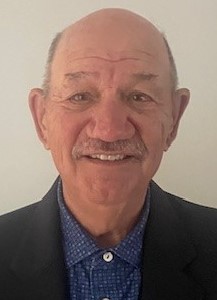
PSI Chapter Note: After a 51-year career in the paper recycling industry, Wayne DiCastri will retire at the end of 2025. Among his many career achievements, he served as PSI Chapter President from 1992 to 1994. Here, Wayne looks back at his life and career—and offers a glimpse into his retirement plans.
When and how did you enter the paper recycling industry? I graduated from the University of Wisconsin-Parkside in December 1973 with bachelor of science degree in business. In January 1974, I took a position at Fort Howard Paper Co. in Green Bay, Wisconsin. I started in the purchasing department, but after about nine months I was given responsibility for buying scrap paper. There were four of us, and we purchased over 30,000 tons per month of mostly high grades to make various tissue products.
What was it about the industry that prompted you to build a career in it? I enjoyed dealing with the scrap dealers and brokers across the country, and most of the ones I was dealing with were successful businessmen and women. I also liked the fact that there were many opportunities to be creative in marketing the various materials. It was, and still is, quite unlike buying or selling manufactured products.
Discuss the various job roles you had as you climbed the ranks in your career. After almost three years at Fort Howard, I left to become the buyer of scrap paper for Brown Co.—now Cascades—in Eau Claire, Wisconsin. This was a great opportunity for me as I was their first person to have sole responsibility for this task, and I had my own department. After about two years there, I decided I wanted to be on the selling side rather than the procurement side, and I went to work at Pioneer Paper Stock Co. in Minneapolis. Jim Chafoulias, the owner, had the vision to start a brokerage division, and he hired me for that task. We then incorporated Pioneer Fibers. Even though I was the only employee at the time, he said I should have the title of president because he thought that title would make it easier to get access to the right people.
What were your proudest and/or most notable professional achievements to you? Together with Jim, we built Pioneer from a Midwestern single-plant operation to the company it is today. Pioneer Industries International now has five plants—New Brighton, Minnesota; Elk Grove Village, Illinois; Kansas City, Missouri; Oklahoma City; and Dallas—and a brokerage arm that does business worldwide. Our business philosophy of providing the very best customer service is ingrained in all our people. In my experience, we are one of the few remaining companies that still has a person answering incoming phone calls. Also, I am proud that we continue to treat our employees like family and have assisted many of them with their life problems.
What were the most significant changes you saw in the paper recycling—and papermaking—business over your career? In my experience, the paper industry, like every other industry, has become much more impersonal. We used to have mill buyers and other mill personnel visit our plants several times a year, and we did the same with the mills. Although we do still get visits, face-to-face interaction outside of conferences is rare. I considered many mill buyers and print customers to be friends. We’d go fishing, hunting, golfing and dining. I knew their families and, in some cases, even their pets. I don’t find that to be the case now. (Or is it just me?)
Most of the smaller specialty paper mills have shuttered, as well as many of the large mills. Mergers and consolidations have significantly altered the selling landscape and, obviously, export has become very important.
What do you like about the paper recycling business today? I like the fact that recycling technology has improved to the point where rejections for quality reasons are rare. Despite the impersonal nature of doing business—or perhaps because of it—it’s much more professional.
What are your defining memories from your term as PSI Chapter President from 1992-1994? My first experience with PSI was in November 1978, my first year with Pioneer. That was when PSI was still part of the National Association of Recycling Industries [a predecessor association of ISRI/ReMA]. My wife and I were attending PSI’s fall conference at The Breakers resort in Palm Beach, Florida. Talk about two fish out of water, that was us! As those were always black-tie events, I remember that a good friend—Jack Rynbrand [of Louis Padnos Iron & Metal Co., Holland, Michigan]—advised me to buy a tuxedo rather than rent. That was good advice. At that conference, I remember attending a Standards & Practices Committee meeting, and I felt that with my mill background, I could be a useful addition to that group. At the time, we did not have any consumers as members. I approached the chairperson to express my interest, and he added me to the committee. During those years, the committee only met for 60 to 90 minutes during the fall conferences, which were always at great resorts, so between golf and gin rummy, not much got accomplished.
The people who know me will still remember that my primary goal at the conferences was to win the golf tournament and get my name on the traveling trophy. (I did it three or four times, I think.) Also, I wanted to win money from Phil Alpert [of National Fiber Supply Co., Chicago], Stan Litman [of Texas Recycling/Surplus Inc., Dallas) and Chuck Cyra [of Donco Paper Supply Co., Green Bay, Wisconsin] at gin rummy. I wasn’t quite as successful with that!
I participated in PSI’s Standards & Practices Committee for many years before getting involved in the group’s officer path. This was after the merger of NARI and the Institute of Scrap Iron and Steel to form ISRI in 1987. Many of us in PSI felt somewhat lost in this new metals-oriented organization.
What were the rewards and challenges of serving as PSI Chapter President? One thing I am most proud of is the PSI scholarship program. I brought the idea to then-PSI President Stan Litman after I found out that ISRI’s Northwest Chapter had a scholarship program. In typical Stan fashion, he ran with it. I believe PSI gave one $500 scholarship in the first year. This year PSI awarded $55,000 in scholarships to 21 students.
The greatest thing about being in PSI is networking with most of the important people in the industry. I personally saw many people become much better businesspeople because of their involvement in PSI. Because of that, I would recommend getting involved for anyone in the industry.
One of my biggest disappointments is that many independent dealers still haven’t joined. ReMa and PSI are working to protect all of our interests on a state and national level, and nonmembers benefit without participating. That has always irked me.
What do you plan to do in your retirement? I’m now 78 years old, and my wife Ingrid and I have already experienced a very good life. After living in Bloomington, Minnesota, for 22 years and Chaska, Minnesota, for 17 years, we now live in Asheville, North Carolina, which last year suffered a horrible hurricane. I’m going to look for some volunteer opportunities, perhaps some group like Habitat for Humanity or a local animal shelter. If I never get on another airplane, I won’t be unhappy.
|