The 2026 North Fork Pride celebration will take place on Saturday, June 27, 2026 from 12n-4p in Greenport! Join thousands in celebrating Pride at the North Fork Pride Parade & Festival.


St Mary's is registered and they say I'll receive more specific information via email tomorrow.

Tomorrow (Thursday July 25), at 11:00 AM will be the time for the decorating crew to get us ready for the Fourth of July Decorating Contest. Please join us if you are able.

Shelter Island 250th Parade

July 4th, 10:00am

We'll have a sign-up sheet before the event.


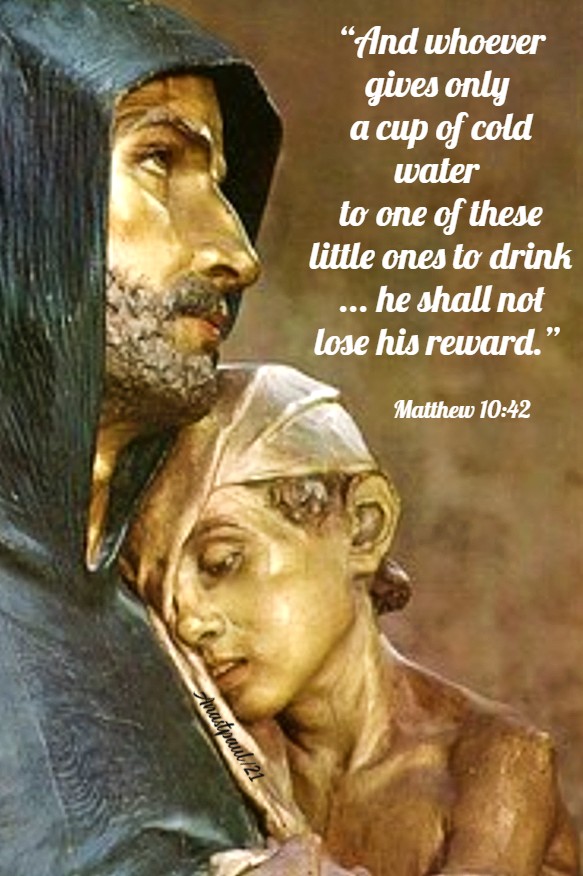
St. Francis and a young leper Mastpaul


This Sunday's Readings and Study Aids


The Collect

Almighty God, you have built your Church upon the foundation of the apostles and prophets, Jesus Christ himself being the chief cornerstone: Grant us so to be joined together in unity of spirit by their teaching, that we may be made a holy temple acceptable to you; through Jesus Christ our Lord, who lives and reigns with you and the Holy Spirit, one God, for ever and ever. Amen.

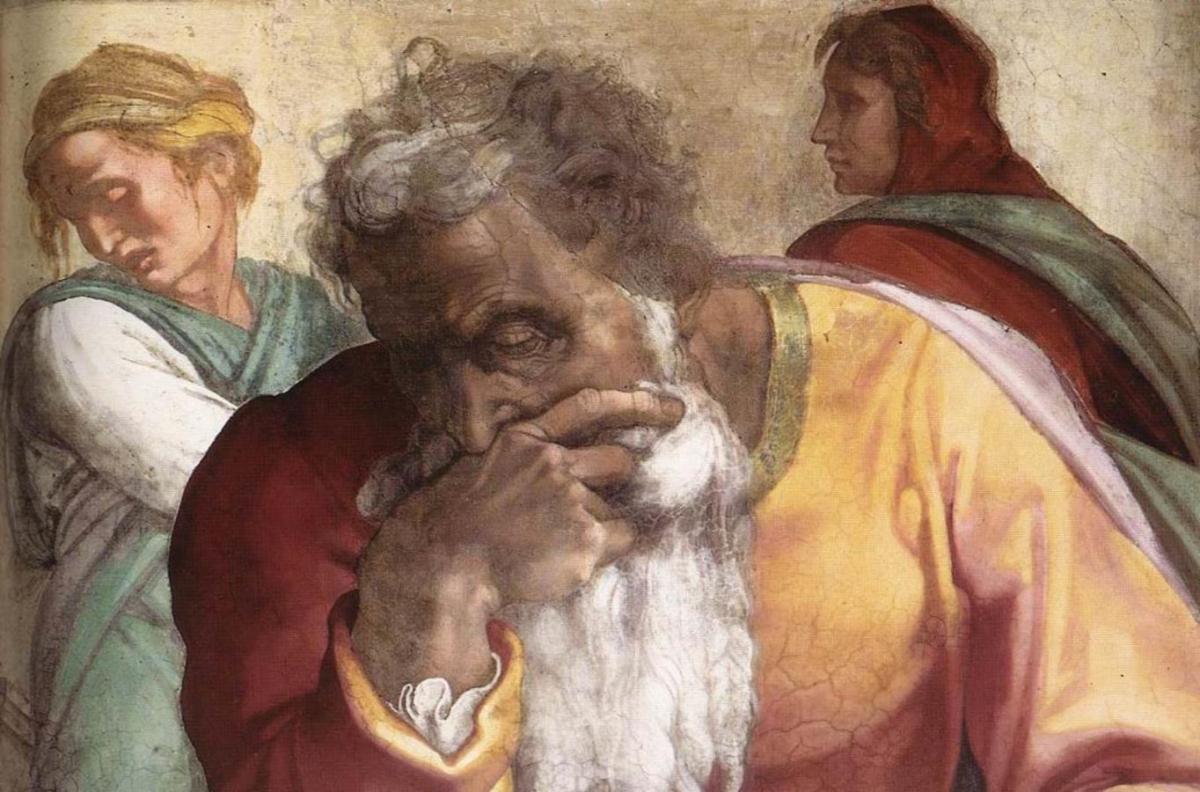
Jeremiah by Michelangelo


Old Testament

Jeremiah 28:5-9

The prophet Jeremiah spoke to the prophet Hananiah in the presence of the priests and all the people who were standing in the house of the Lord; and the prophet Jeremiah said, “Amen! May the Lord do so; may the Lord fulfill the words that you have prophesied, and bring back to this place from Babylon the vessels of the house of the Lord, and all the exiles. But listen now to this word that I speak in your hearing and in the hearing of all the people. The prophets who preceded you and me from ancient times prophesied war, famine, and pestilence against many countries and great kingdoms. As for the prophet who prophesies peace, when the word of that prophet comes true, then it will be known that the Lord has truly sent the prophet.”


The Psalm

Psalm 89:1-4,15-18

Misericordias Domini

1 Your love, O Lord, for ever will I sing; *

from age to age my mouth will proclaim your faithfulness.

2 For I am persuaded that your love is established for ever; *

you have set your faithfulness firmly in the heavens.

3 "I have made a covenant with my chosen one; *

I have sworn an oath to David my servant:

4 'I will establish your line for ever, *

and preserve your throne for all generations.'"

15 Happy are the people who know the festal shout! *

they walk, O Lord, in the light of your presence.

16 They rejoice daily in your Name; *

they are jubilant in your righteousness.

17 For you are the glory of their strength, *

and by your favor our might is exalted.

18 Truly, the Lord is our ruler; *

the Holy One of Israel is our King.


The Epistle

Romans 6:12-23

Do not let sin exercise dominion in your mortal bodies, to make you obey their passions. No longer present your members to sin as instruments of wickedness, but present yourselves to God as those who have been brought from death to life, and present your members to God as instruments of righteousness. For sin will have no dominion over you, since you are not under law but under grace.

What then? Should we sin because we are not under law but under grace? By no means! Do you not know that if you present yourselves to anyone as obedient slaves, you are slaves of the one whom you obey, either of sin, which leads to death, or of obedience, which leads to righteousness? But thanks be to God that you, having once been slaves of sin, have become obedient from the heart to the form of teaching to which you were entrusted, and that you, having been set free from sin, have become slaves of righteousness. I am speaking in human terms because of your natural limitations. For just as you once presented your members as slaves to impurity and to greater and greater iniquity, so now present your members as slaves to righteousness for sanctification.

When you were slaves of sin, you were free in regard to righteousness. So what advantage did you then get from the things of which you now are ashamed? The end of those things is death. But now that you have been freed from sin and enslaved to God, the advantage you get is sanctification. The end is eternal life. For the wages of sin is death, but the free gift of God is eternal life in Christ Jesus our Lord.


Rev'd up for Sunday


The Gospel

Matthew 10:40-42

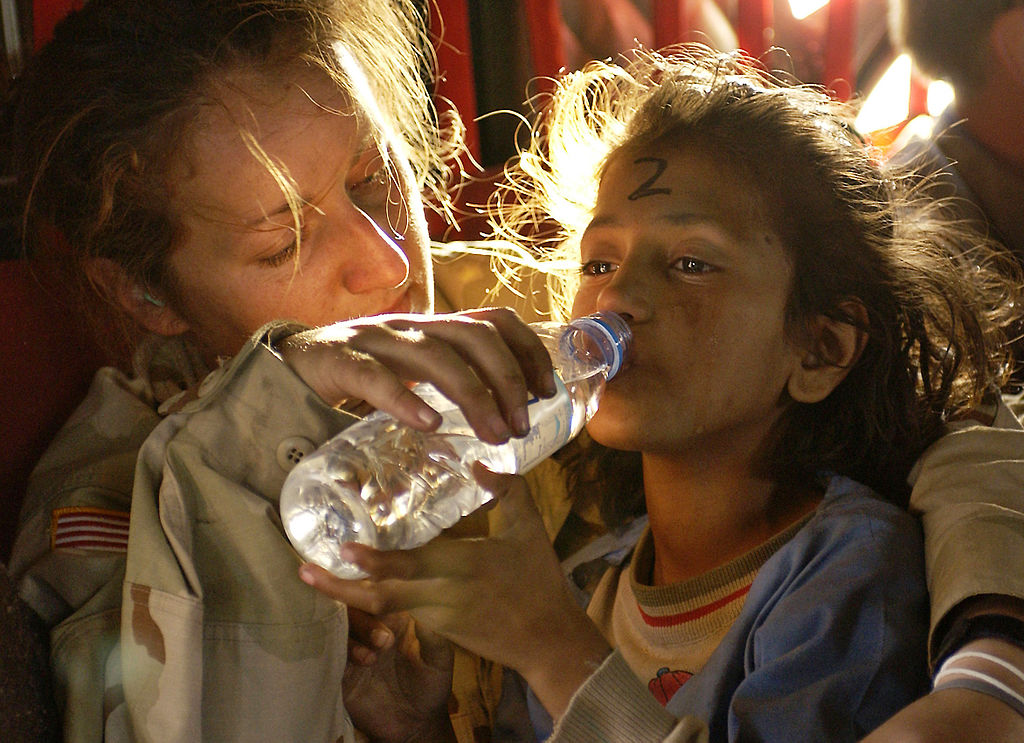
Jesus said, “Whoever welcomes you welcomes me, and whoever welcomes me welcomes the one who sent me. Whoever welcomes a prophet in the name of a prophet will receive a prophet's reward; and whoever welcomes a righteous person in the name of a righteous person will receive the reward of the righteous; and whoever gives even a cup of cold water to one of these little ones in the name of a disciple-- truly I tell you, none of these will lose their reward.”


Matthew 10:40-42

Exegetical Notes

1. v. 42: hena ton mikron touton, “one of these little ones”; this exact phrasing is only found elsewhere in the New Testament in Mark 9:42 and in Matthew’s parallel of it:

“If any of you put a stumbling block [skandalon] before one of these little ones who believe in me, it would be better for you if a great millstone were fastened around your neck and you were drowned in the depth of the sea.” (Matt 18:6)

It must have been an important phrase to Matthew since he upped the ante in his climactic parable of the sheep and goats, using the superlative of mikron (elachistos) in 25:40, 45: “Then he will answer them, ‘Truly I tell you, just as you did not do it to one of the least of these (hena touton ton elachiston), you did not do it to me.'” (Matt 25:45)

2. v. 42: poterion psychrou, “a cup of cold water” gives another link to Matt 25, in giving the thirsty to drink (potizo; Matt 25:35, 37, 42).


Episcopal priests, Michael Hardin and Jeff Krantz, (former rector of Church of the Advent in Westbury), in PreachingPeace.com (Proper 8A), make use of the above exegetical insight to connect Matt 10:40-42 to one of the most important themes for Matthew. They write:

Who are these little ones according to Matthew in chapter 25? They are all those within the community of saints who find themselves in need. The community is called to meet those needs, no matter how small or humble. The emphasis in today’s text is not on the greatness of a prophet’s reward but the certainty that comes from knowing that caring for the “least of these my brothers and sisters” is the believer’s central purpose. There is a logic to the Matthean attitude toward “little ones” in the church. We begin with the scandal narrative. How can the “little ones” be scandalized? If they belong to a community of followers of Jesus and are not cared for they may wonder if Jesus is real since he does not appear to be modeled in the lives of those who claim to follow him. Did Jesus not meet needs, bring healing, show compassion, is that not the story they tell about him? Then why do these followers of Jesus behave differently? We have often interpreted the scandal text to mean that we should not behave in such a way as to cause people to lose their faith, and primarily what is preached is a morality code of do’s and don’ts so we don’t cause offense: don’t drink, don’t smoke, don’t dance, don’t be this, don’t be that because if you do people will be offended.

This text has nothing to do with giving social offense. The gospel is socially offensive; it is actively deconstructing our contemporary human culture. Matthew would turn our heads toward the fruitful display of positive mimesis, to discriminate no longer between the greatest and the least. In so doing we shall find that the least are the greatest and as we care for them we shall demonstrate that indeed we have “received” Jesus and in so doing have “received the One who sent him.” In this we shall fulfill what Matthew understands about being a disciple (mathetes), a follower of Jesus. (from the “Anthropological Reading”)


This speaks volumes, of course, about the Gospel’s values which seek to invert the usual human values which marginalize the least. Hardin and Krantz conclude:

Sadly, the “little ones” are frequently our cultural and ecclesial scapegoats. The little ones; the powerless, the weak, the hurting, the abused and the abandoned make the easiest targets for our wrath. Even so, Christianity has, through its long and storied history, scandalized the world by not taking care of its own little ones. We may say what we like about the greatness of the Bible or God, but our care for the “little ones” in our neighborhoods and in the world speaks a better word about the place of Jesus in our lives. The way we choose to include the marginalized in our societies, with those unjustly accused, these actions constitute our “positive mimesis,” our imitation of the Prince of Peace.

Link to Self-Guided Retreat and Reflections on this Sunday's Scriptures by Episcopal Priest Suzanne Guthrie


P.O Box 1660, 26 St. Mary's Road , Shelter Island, NY 11964
(631) 749-0770
stmarys11964@optonline.net
Facebook  
Feature Heading
Place article copy here. Be sure to make the articles short and concise as people tend not to read much more than a couple of paragraphs. Place article copy here.

Text Link